


Built Landscape
Three staggered volumes on the south-facing slope invite light and nature into the home
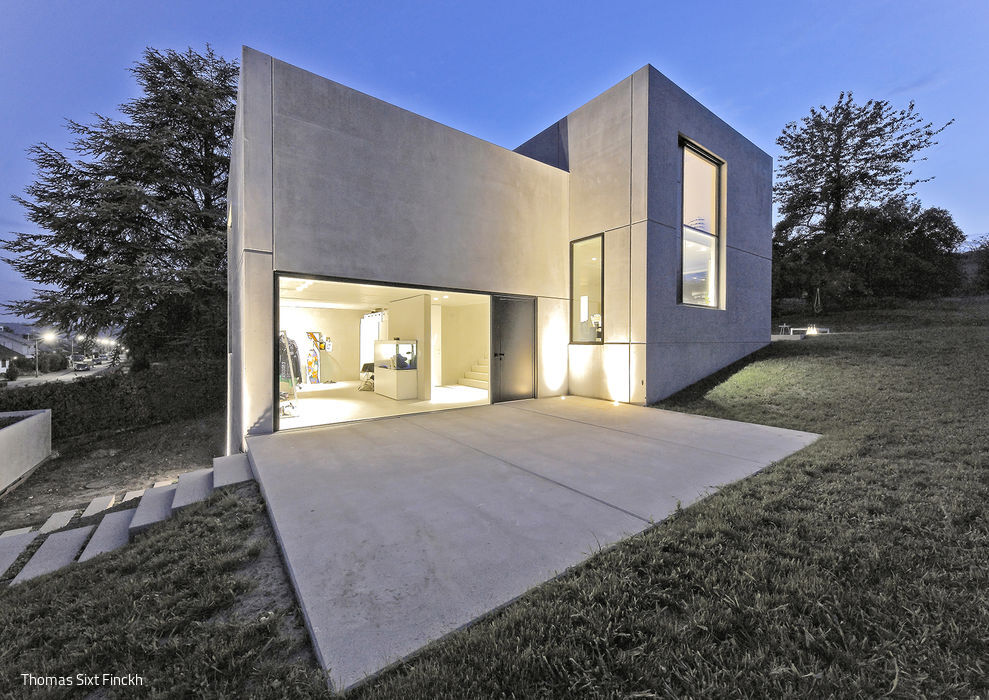
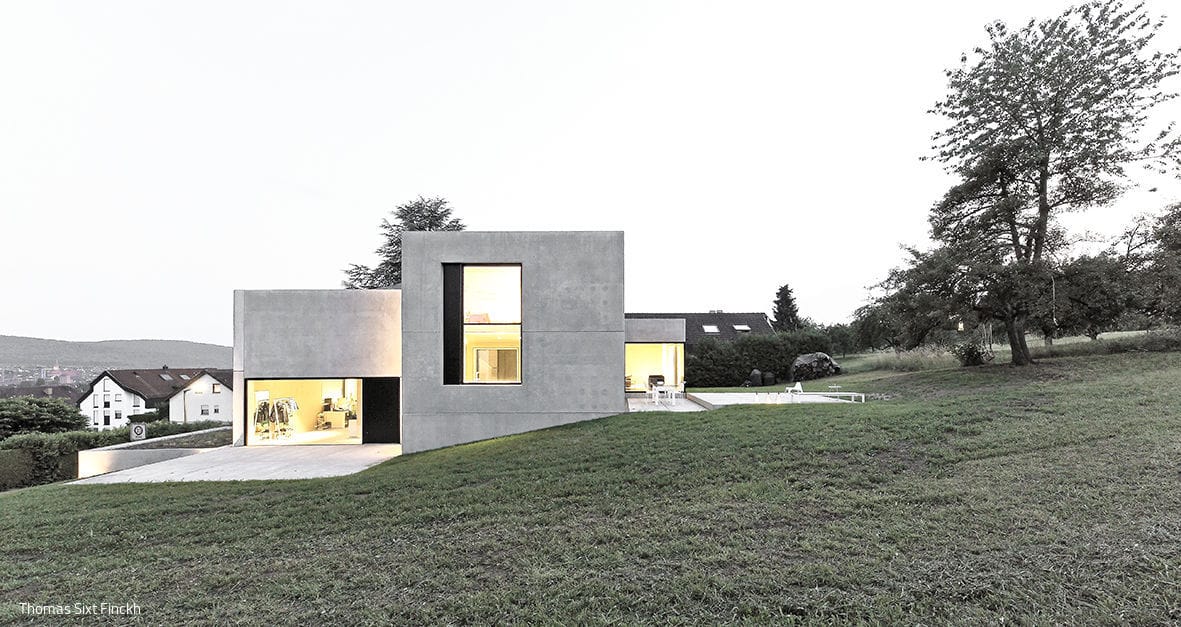
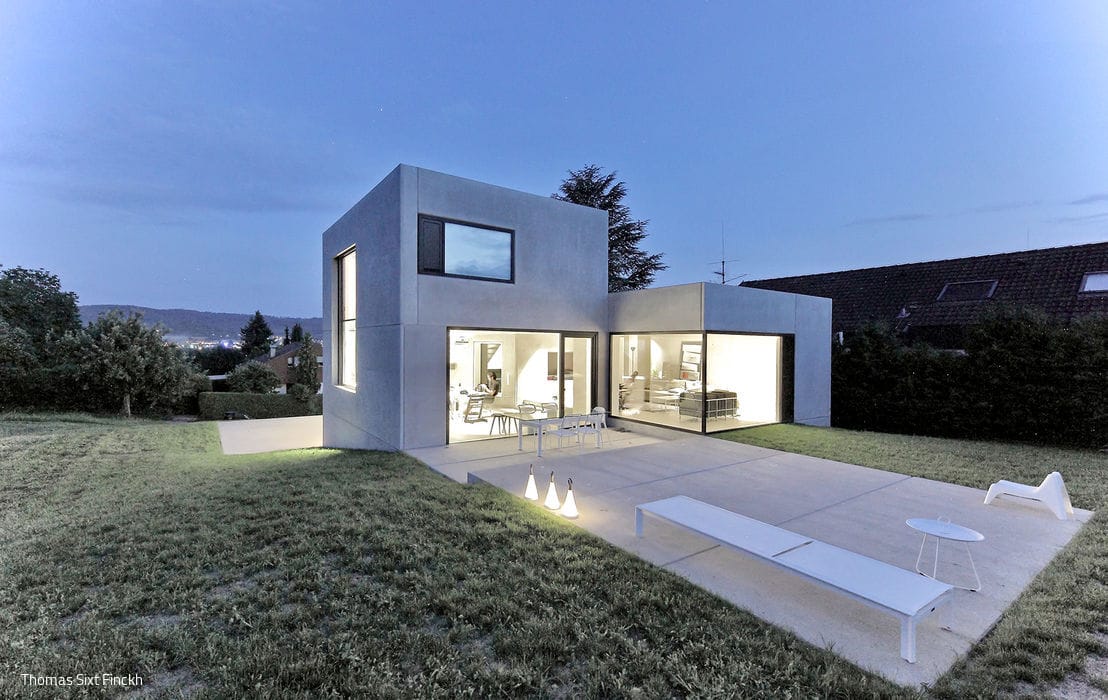
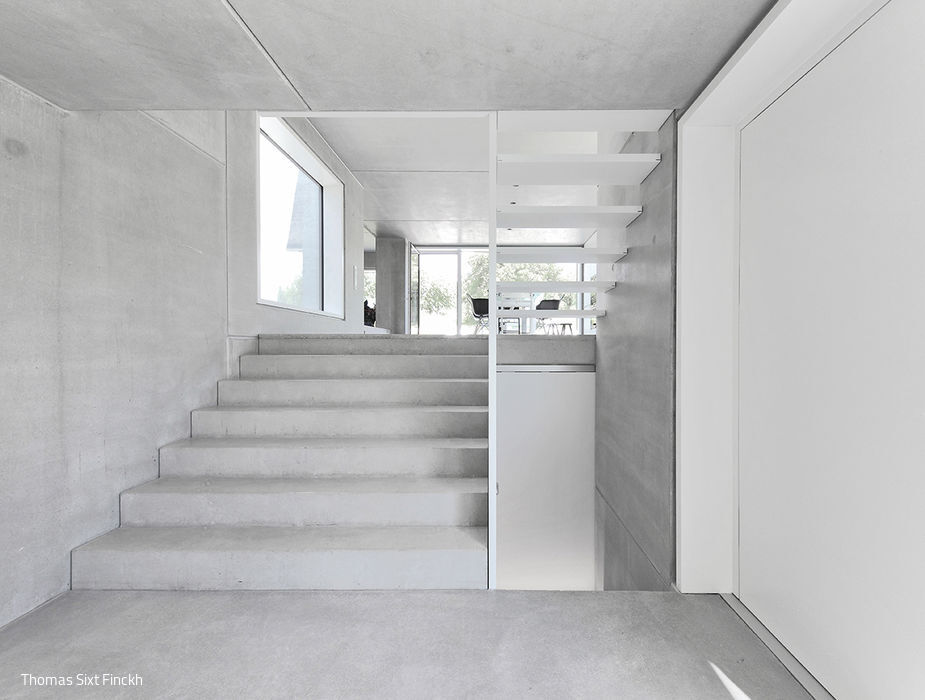
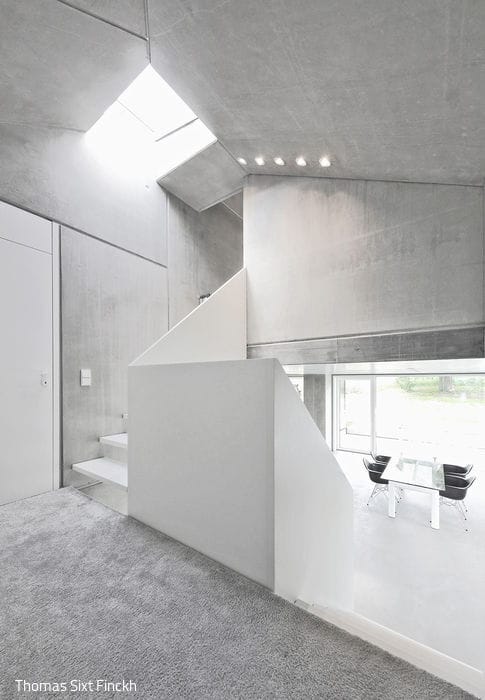
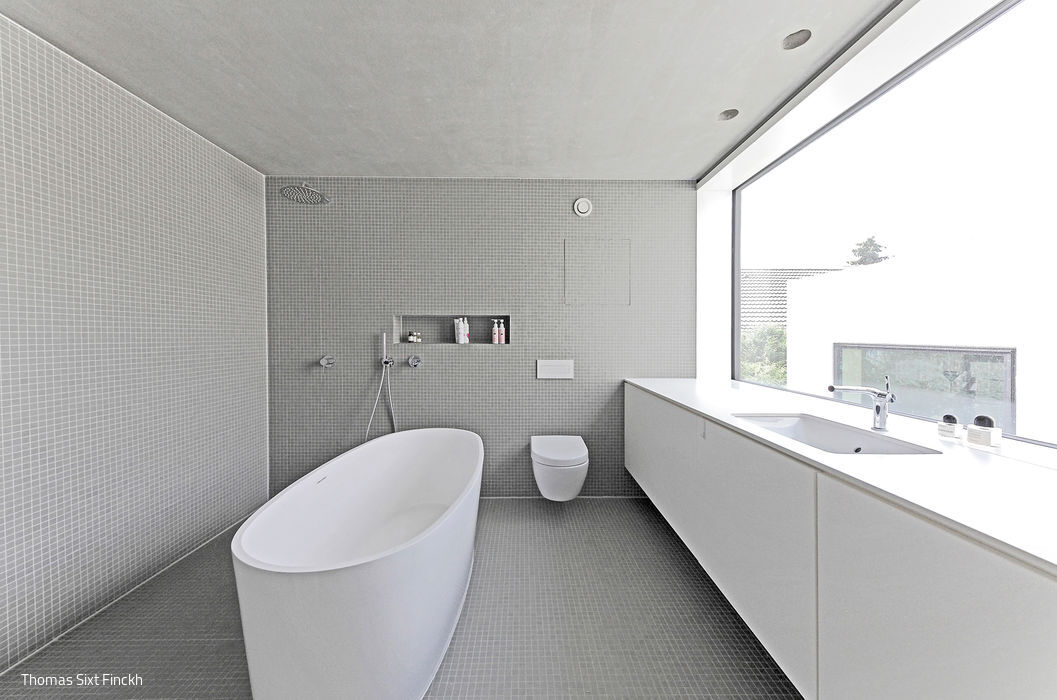
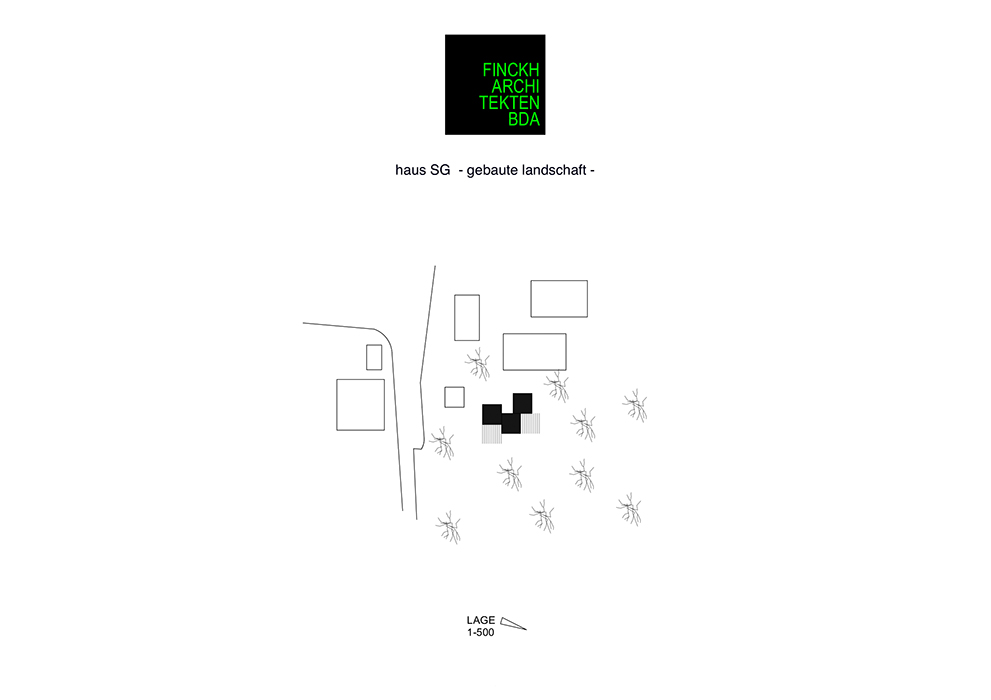
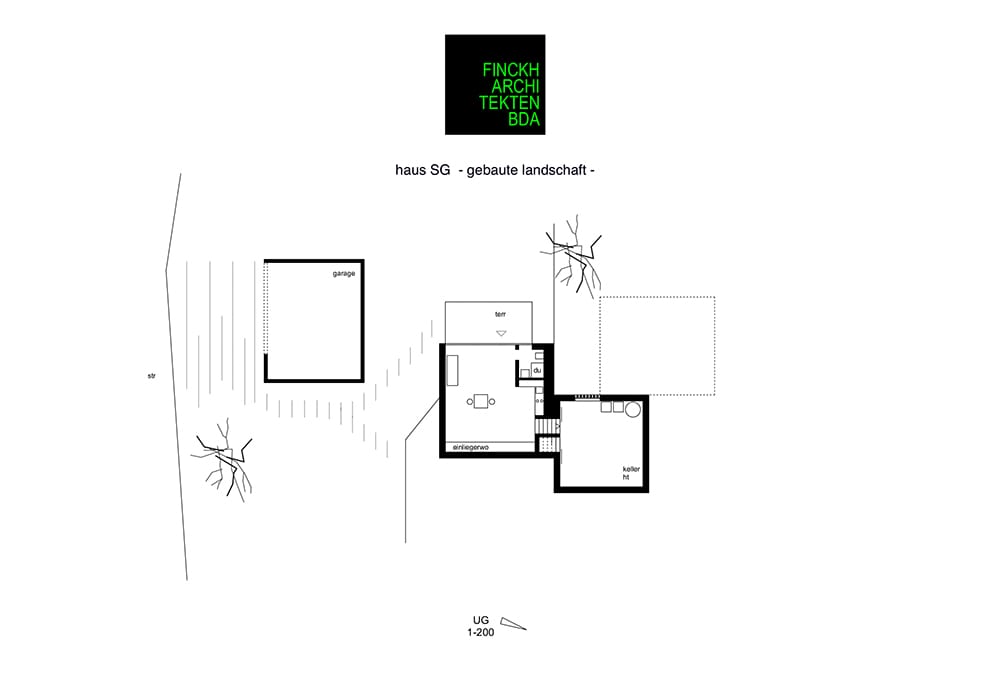
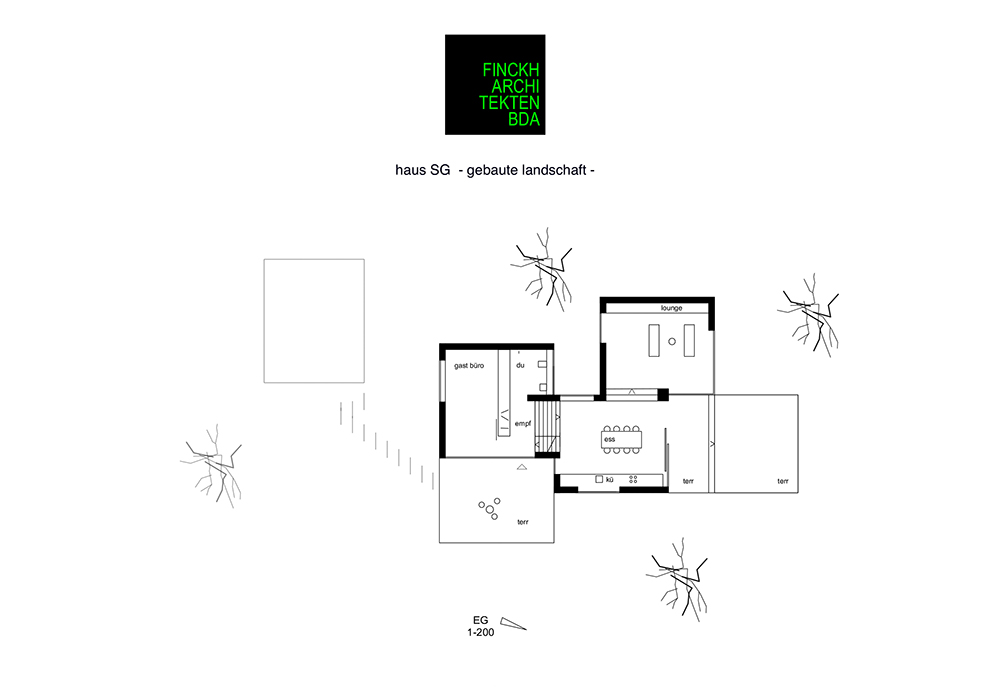
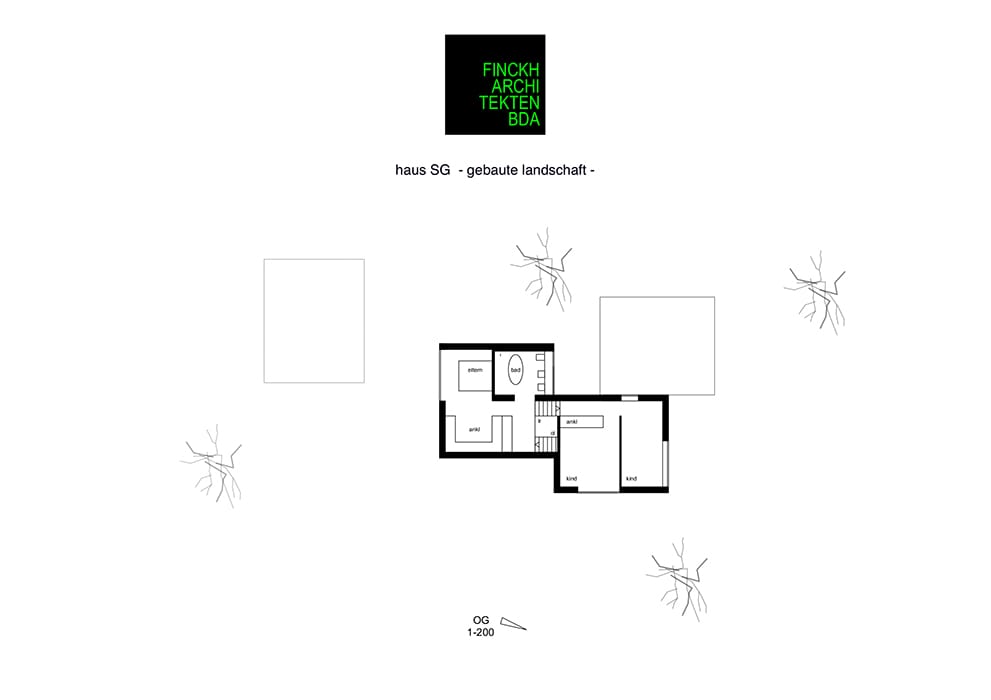
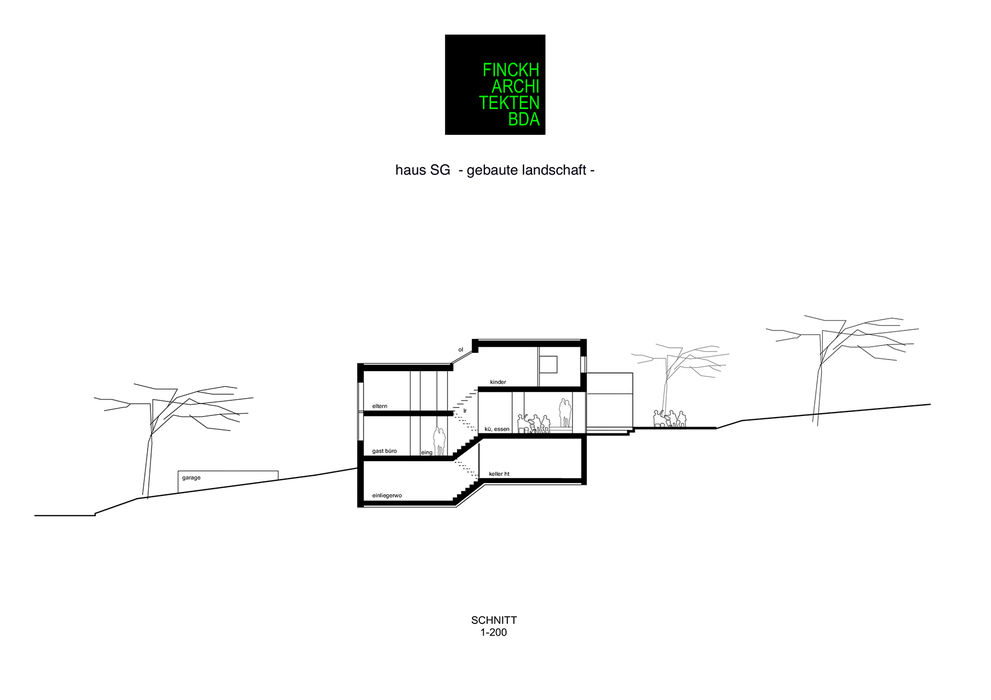
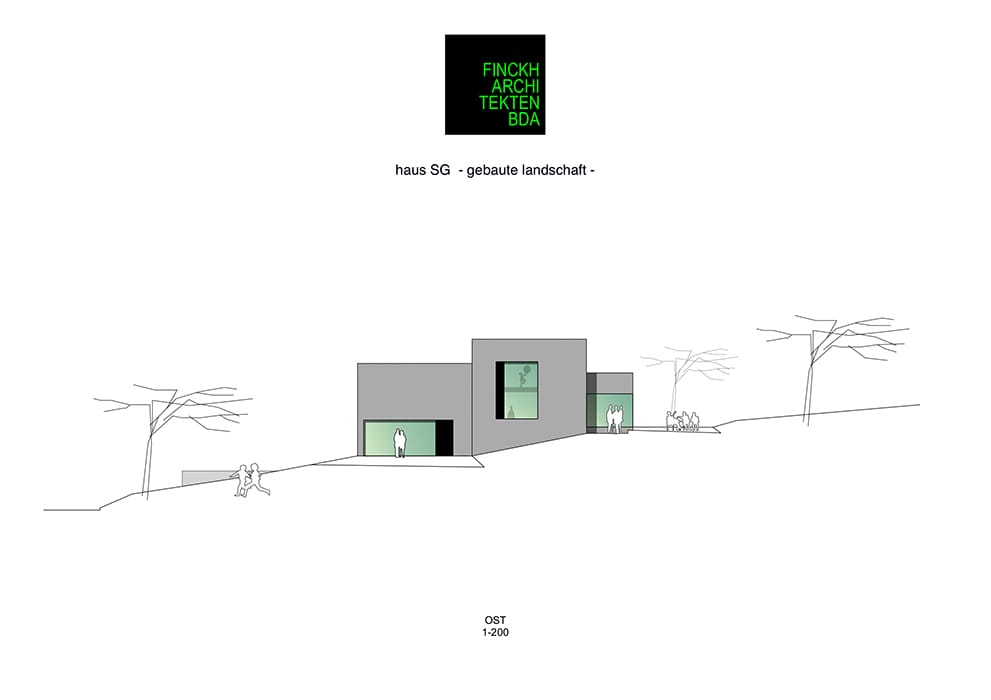
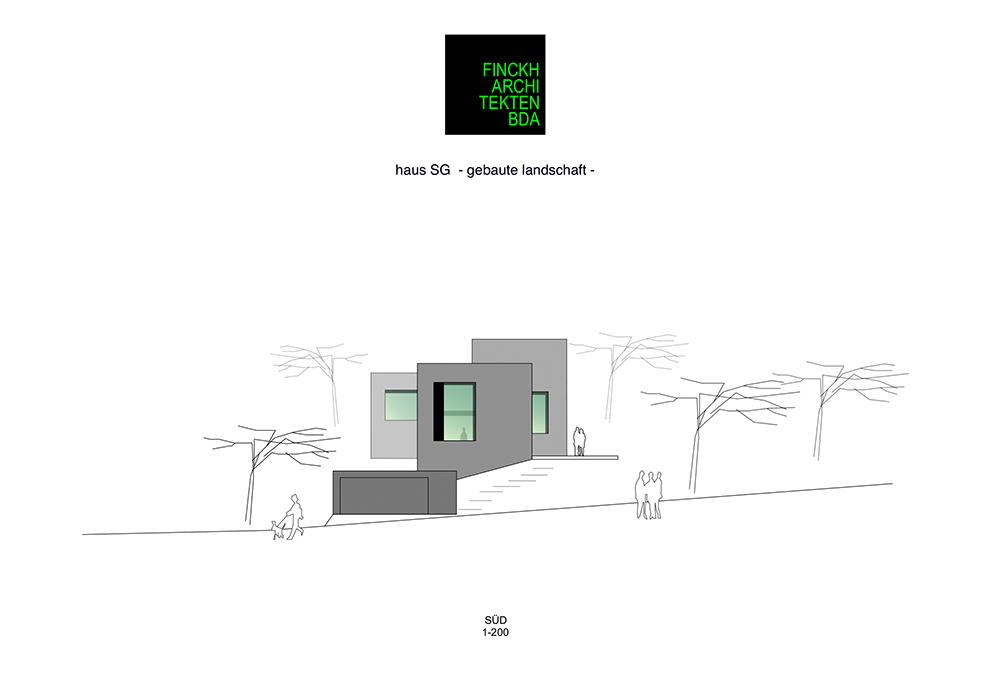
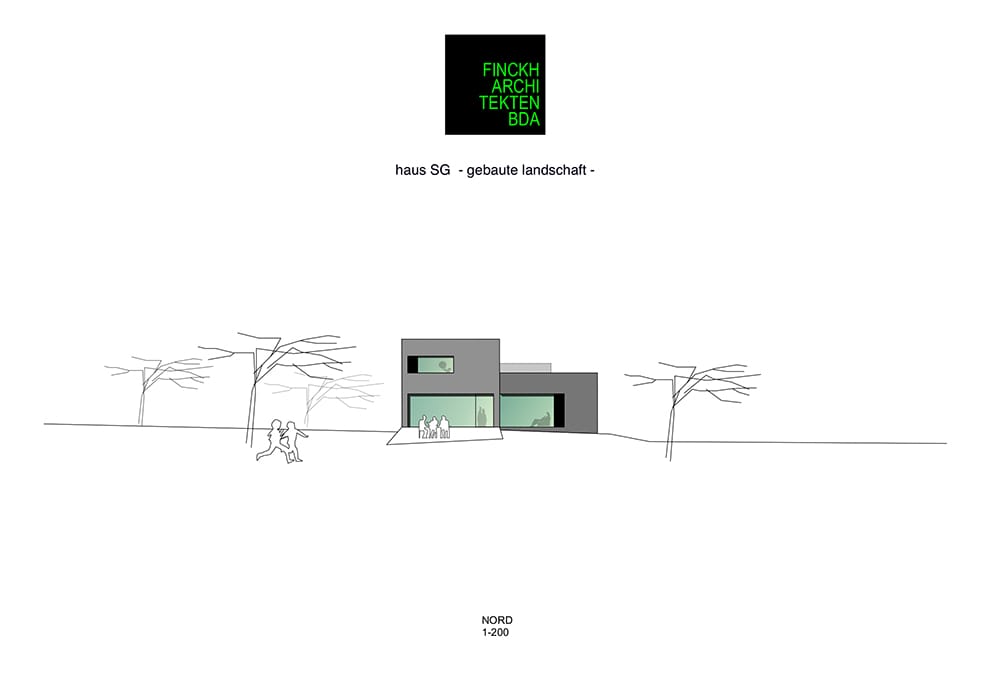
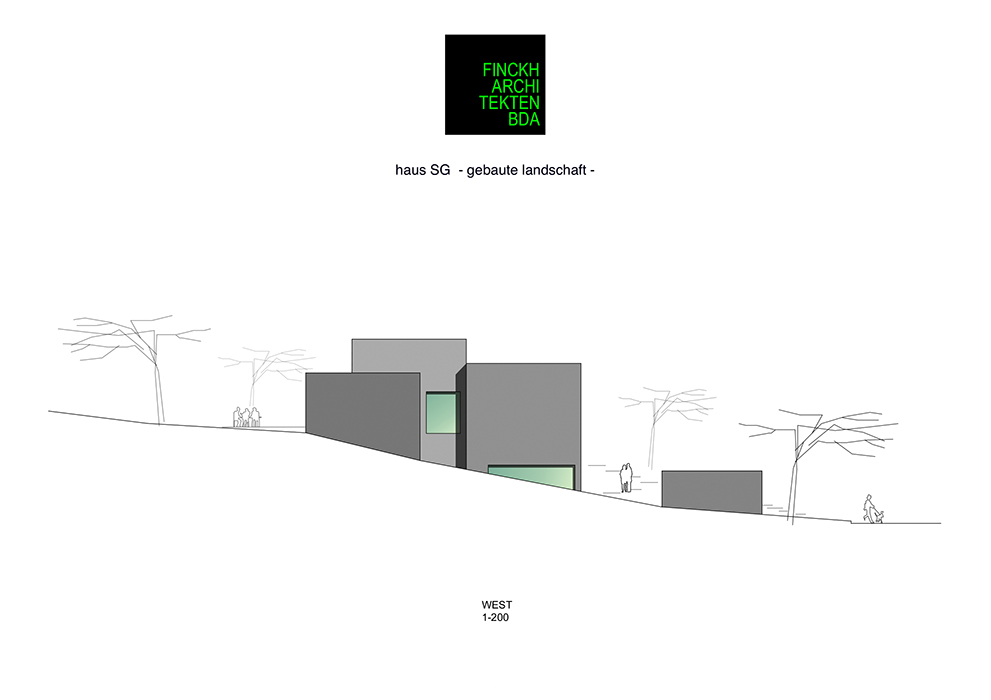
A gentle rise on the south-facing slope provides the foundation for this distinctive residence. Immediately to the north and east lies a protected landscape zone with picture-perfect orchards. The property is flanked to the south and west by other homes at the settlement's edge.
In designing this residence, Finckh Architects looked beyond the built structures of the surrounding area. Their concept digs deeper, emerging instead from the project's unique demands and the site's specific context. The building interweaves with the adjacent landscape, creating a natural transition to the residential zone. This inspired the house's evocative name: "Built Landscape."
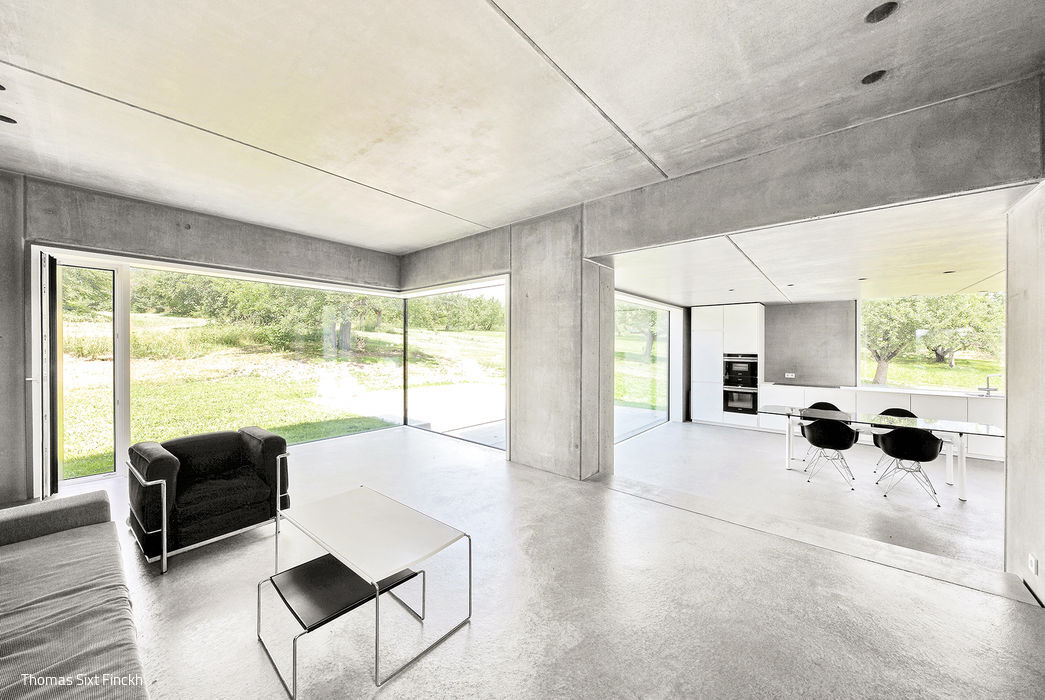
Across 198 m² of living space—plus a 39 m² guest apartment—the building is organized as three equal square volumes, staggered to maximize sunlight throughout the day and create optimal visual connection to the surrounding landscape. These offset levels allow the site's distinctive topography to resonate throughout the interior. The material palette is intentionally restrained: exposed concrete, polished screed, and expansive glazed openings frame the design. Precast concrete "thermal walls" with integrated insulation form the building envelope, while exposed concrete walls and white plaster partition walls define the interior spaces. The composite floor screed has been smoothed and sealed with a matte finish. The ceiling systems integrate radiant heating for thermal activation. The extensively green roof surface seamlessly merges with the landscape.
The energy strategy responds to both seasonal demands: summer cooling and winter solar gain. During summer, motorized screens prevent solar overheating, while nighttime cooling occurs naturally through the central air cavity. The air heat pump can additionally activate radiant ceiling cooling when needed. In winter, low-angle sunlight penetrates the expansive windows, warming the exposed concrete surfaces that act as thermal mass, storing and releasing heat well into the evening.
Photography:
Thomas Sixt Finckh
(Published in CUBE Stuttgart 04|21)

Rediscovering Community
Inclusive housing that connects: café, diverse living spaces, roof terrace, and a green heart
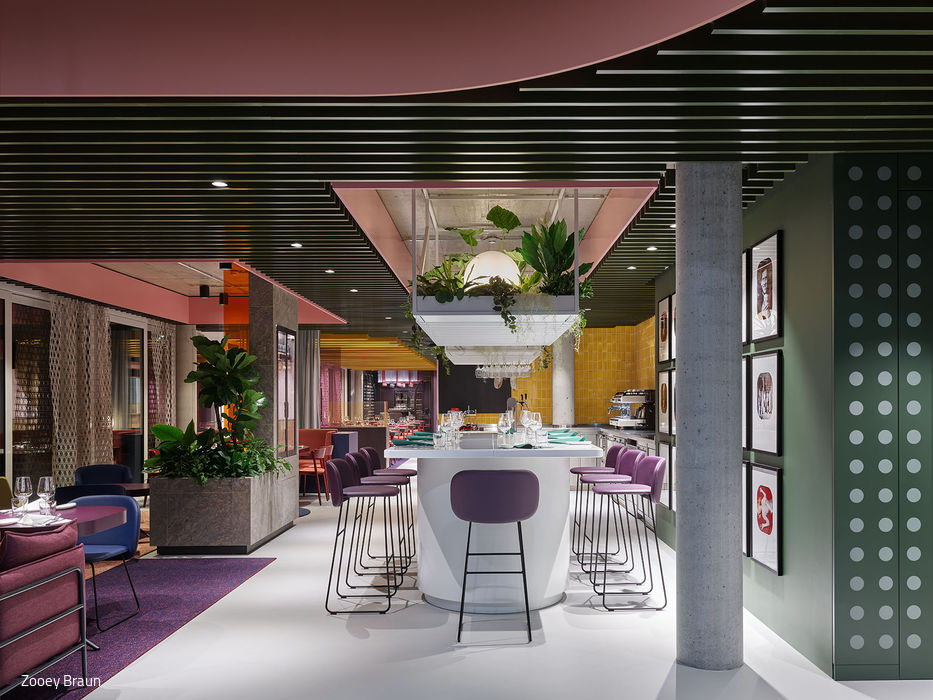
A Textile Journey
La Visione restaurant—where inspired design and distinctive interiors come together.
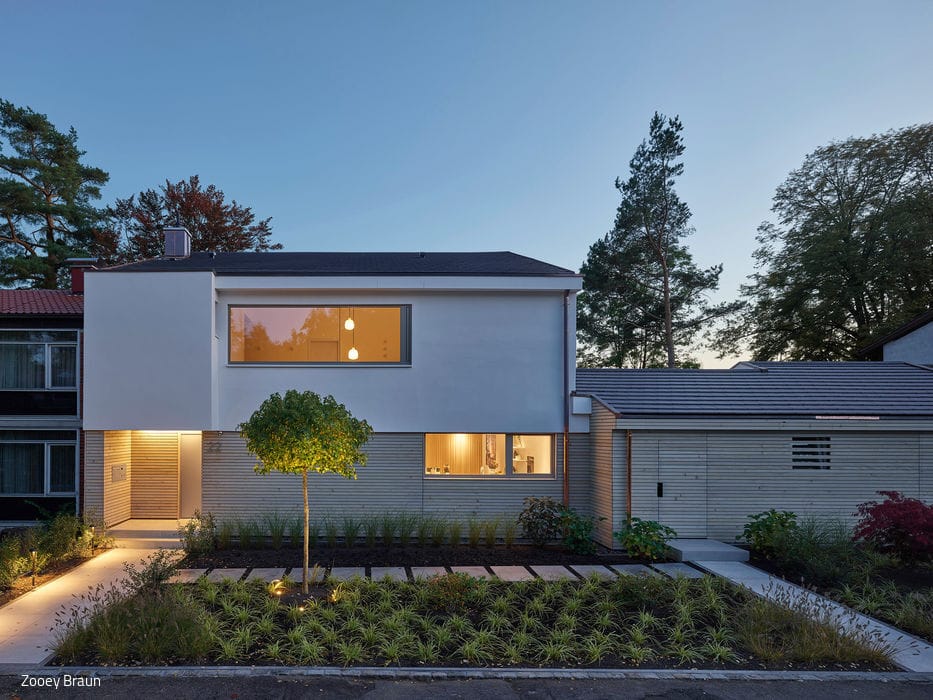
Upcycling
A thoughtfully modernized 1960s terraced house that opens up with renewed character
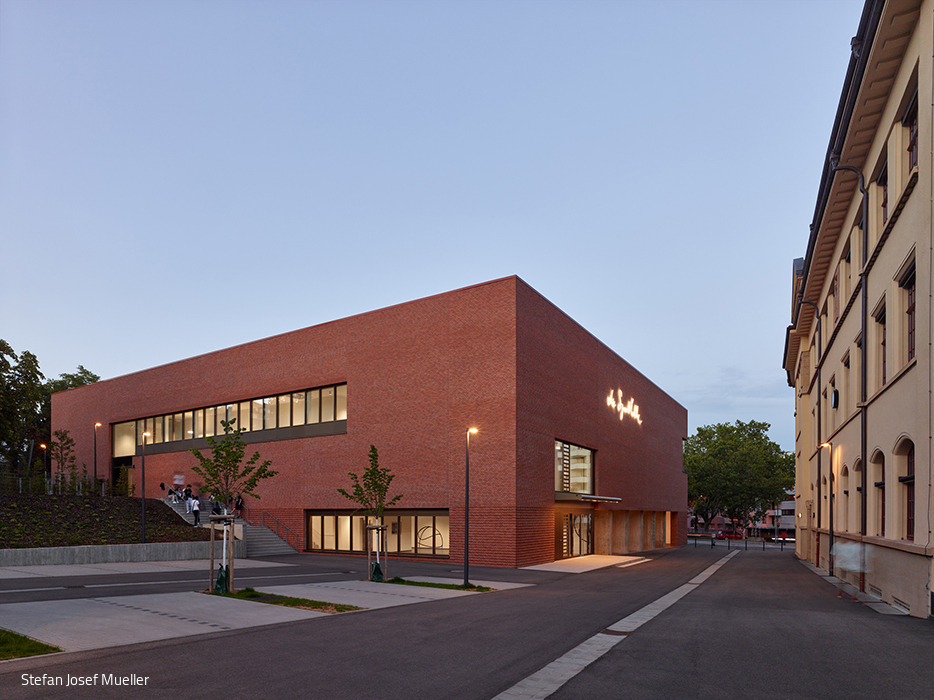
A Thoughtful Homage
A new triple-court sports hall becomes a thoughtful architectural accent for a historic school campus.