


Small house, big impact
A masterclass in urban densification: making the most of a tight urban lot
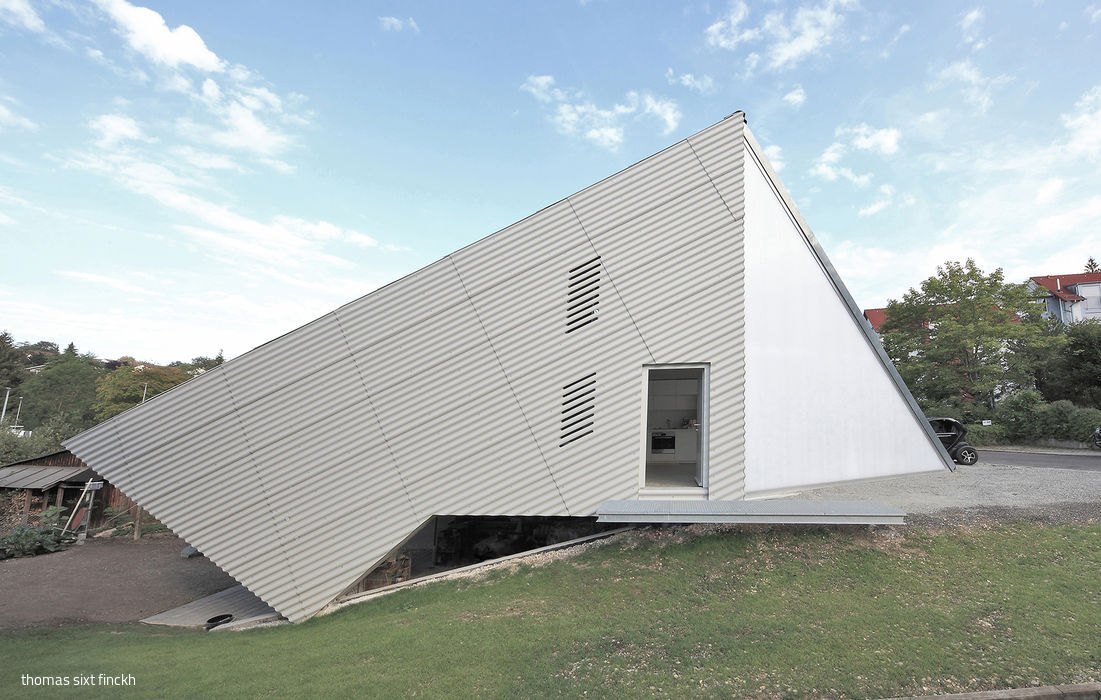




Nestled in a village-like neighborhood perched halfway up the hillside above the Neckar River sits this modest parcel—just 9 metres wide by 33 metres long. For decades, the gently south-sloping terrain had served as a parking lot. Then a spirited retired couple discovered an unexpected opportunity: the overgrown lot was officially zoned for development. Here was their chance to build the modest home they'd always dreamed of. But there was a catch—banks rarely finance mortgages for seniors. The couple would need to make their dream work on a shoestring budget.
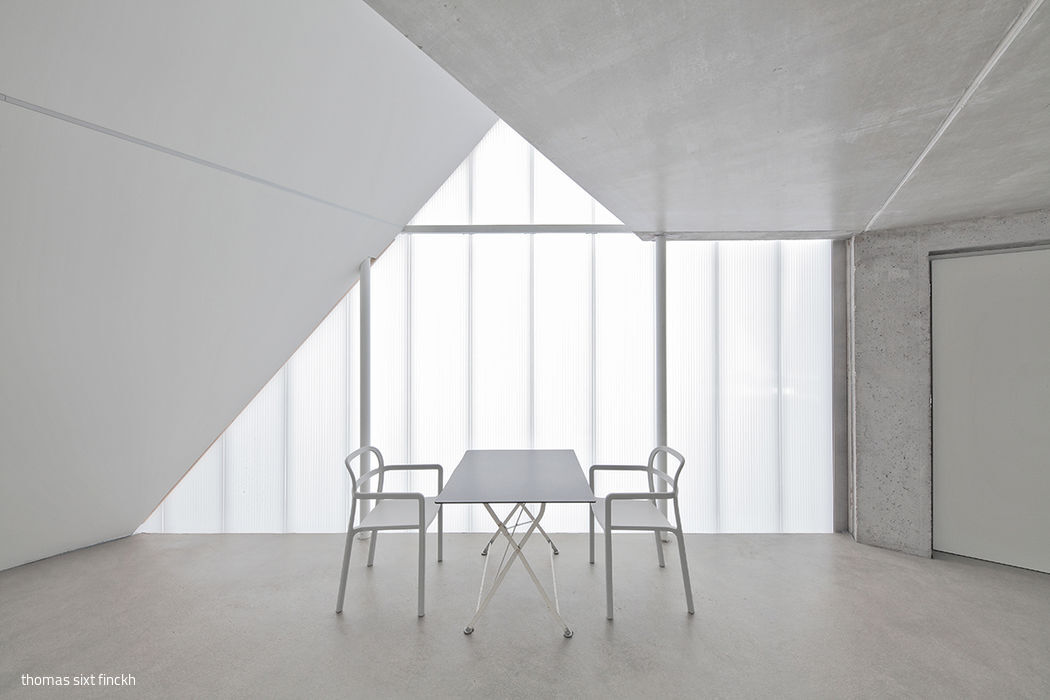
Finckh Architects rose to the challenge with elegant restraint: a simple, streamlined rectangular form. The angled gable wall frames the entry while its translucent polycarbonate facade draws abundant eastern light into the interior. Inspired by rural farm structures, the cubic volume is clad entirely in corrugated cement board. Toward the valley, it appears to float above the terrain, shading the terrace below and providing winter shelter for the residents' motorhome.
The structure employs a hybrid system: reinforced concrete combined with timber framing. Owner involvement, strategic use of affordable off-the-shelf products, and streamlined finishing techniques kept costs within bounds. The exposed concrete ceiling—embedded with heating pipes for radiant warmth—was troweled smooth and sealed clear to serve as the finished floor. This "honest materiality" creates subtle texture and tactile warmth, emphasizing what truly matters. The floor plan follows the same philosophy, eliminating unnecessary circulation spaces and dead zones in favor of a flowing, open interior that feels generous and unconfined.
Here, a small house on a leftover lot becomes a blueprint for urban densification—proving that thoughtful design can yield livable, joyful homes where space is scarce. In this case, the couple gained far more than square meters: they found freedom, light, and daily delight.
Photography Credits:
Thomas Sixt Finckh
(Published in CUBE Stuttgart 02|21)

Innovative Corporate Headquarters
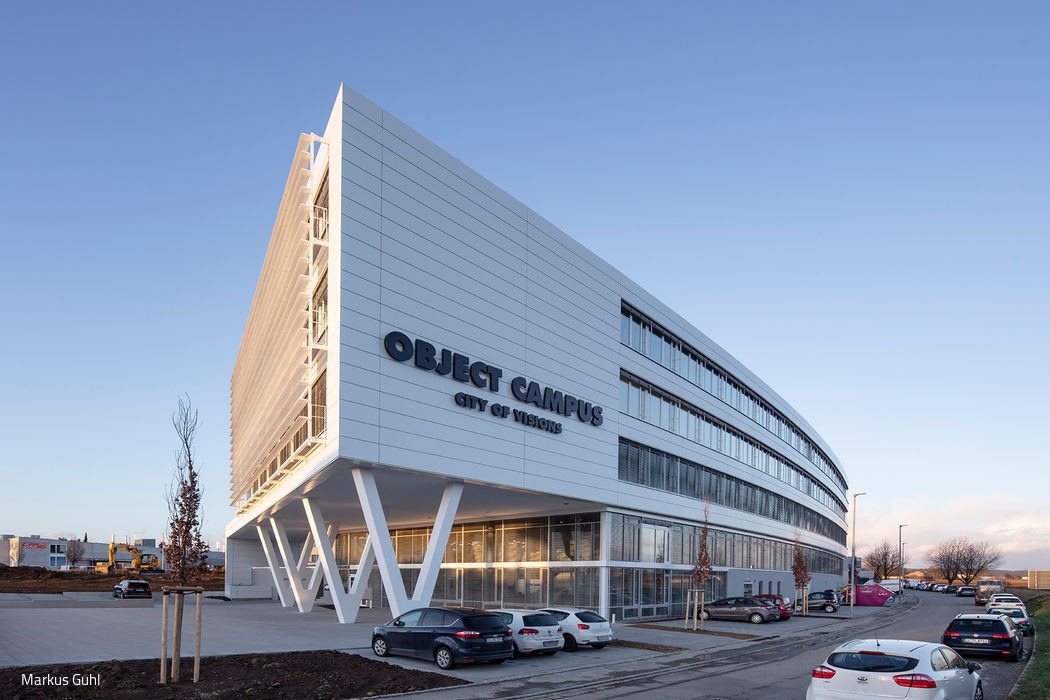
Object Campus – City of Visions: The Future Takes Shape
Rediscovering Community
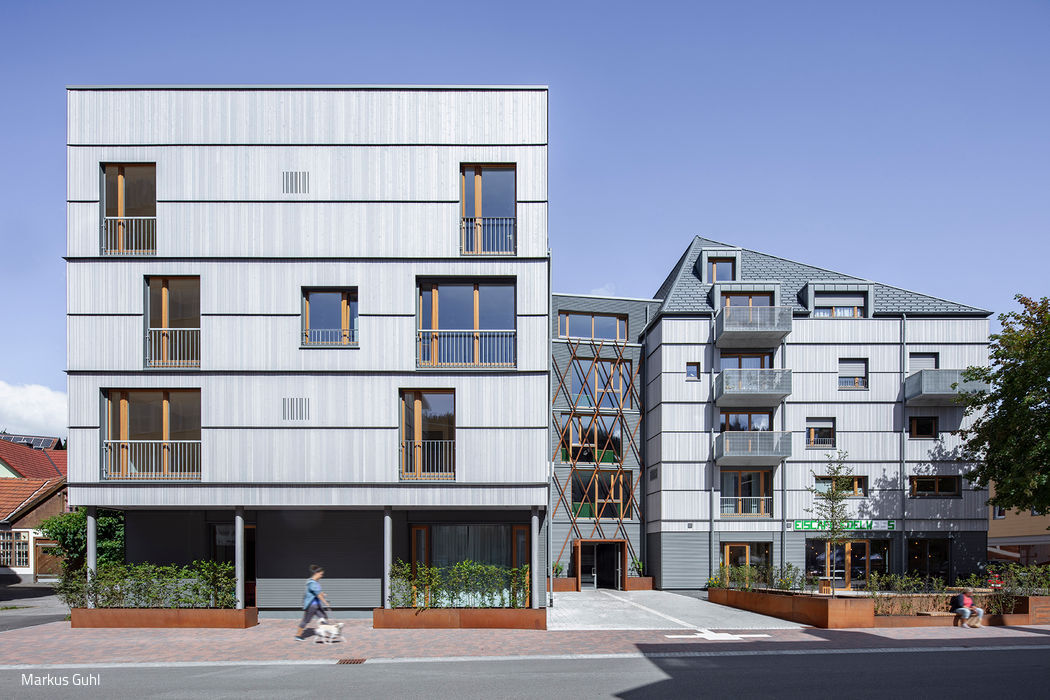
Inclusive housing that connects: café, diverse living spaces, roof terrace, and a green heart
Scandinavian Living
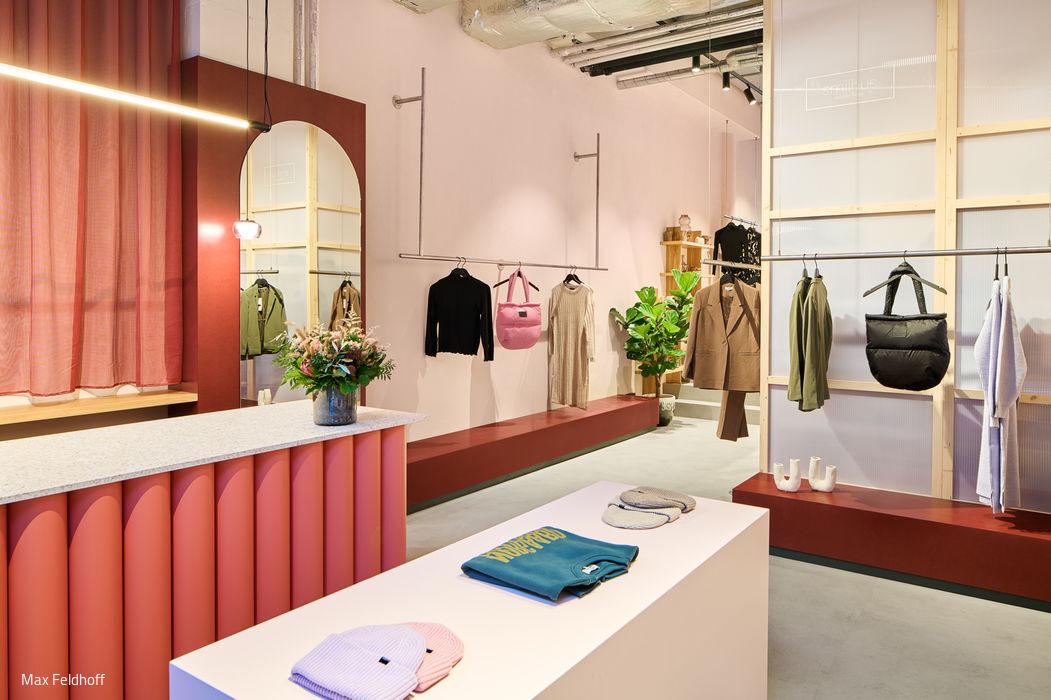
Concept store as retail, event space, and community hub
Room to Discover
Thoughtful Expansion of a Childcare Center