


Colour, contrast, volume
Ester Bruzkus – Visionary interior architect


CUBE: You studied classical architecture at TU Berlin, yet you've clearly shifted your focus entirely to interior design – what prompted that move?
Ester Bruzkus: I prefer to call it interior architecture. My approach has always been rooted in architectural thinking. And we have wonderful interior designers on our team – I learn as much from them as they do from us. The real turning point came right after graduation when I started my own practice. People simply assumed I was better suited to interior work than building skyscrapers. There was one pivotal moment when a client said to me: "Ms Bruzkus, you won't want to be trudging around the construction site in rubber boots, will you?" I'd actually hoped to focus on building construction, but I've since fallen completely in love with interior architecture. I genuinely believe you can create and achieve far more in this field – and there's definitely a gap in how it's taught. I'm grateful for every step of this journey.
What drives your creative process – is it pure inspiration, or does intuition dominate your work?
It starts with planning. The planning phase is always incredibly intensive – understanding what the space tells us, what the client needs, what the spatial programme demands. Design emerges from rigorous planning. That said, inspiration flows from many sources. I travel constantly – recently, Peter Greenberg and I spent two weeks in Finland exploring every building by Alvar and Aino Aalto. It was extraordinary. Before the pandemic, we spent time in India studying Louis Kahn, Le Corbusier, and Pierre Jeanneret. Those experiences deeply inform my work. But inspiration also comes from museums, cinema, the way light moves through clouds – honestly, everything feeds into it.
Your "Green Box" clearly resonated widely – the project has garnered universal acclaim. How do you account for its success?
I'd say it was bold colour choices. But beyond that, the entire project was simply joyful to create. The clients were exceptional – they trusted us, and we trusted them. When that kind of mutual trust exists, something truly remarkable can emerge. That trust invariably shows in the final result.
Did they give you complete creative freedom?
I was genuinely surprised by how much freedom they granted us – my team and me. They were clear about their preferences: they didn't want guest rooms or a maze of small spaces. Instead, they envisioned one large, open living area. We incorporated that into the floor plan from the start. They wanted beautiful bathrooms and a sauna, though the square footage made that a tight squeeze.
Was the central box conceived from the very beginning?
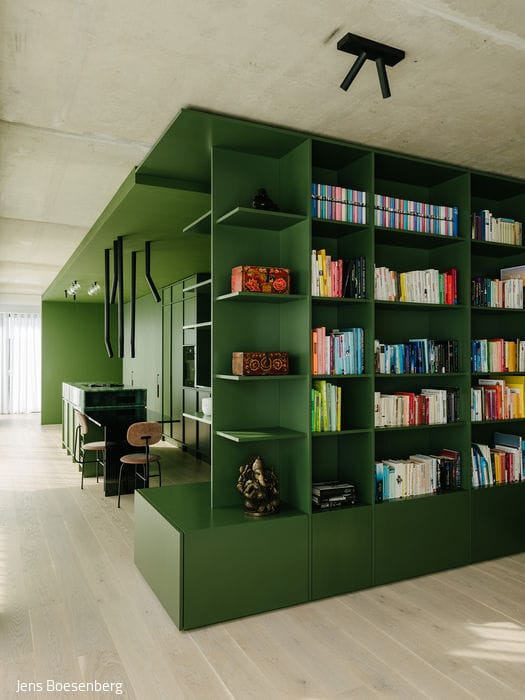
It appeared in the first sketch. The floor plan has two concrete sides and two glass sides. We began planning before the shell was even constructed. But from the outset, you could sense how powerful it would feel – entering from one end and being able to see straight through to the other. That's where the box concept took shape. We centralized the kitchen, bathrooms, and storage – creating a functional core. This allows the space around it to breathe and gives residents unobstructed views to the terrace from nearly every angle. There are glass doors throughout, with some walls fixed in place for visual continuity. Next to the kitchen sits a compact sauna that extends like an accordion, with direct access to the terrace for cooling off. The bedroom is intentionally modest, but floor-to-ceiling windows make it feel expansive – the terrace becomes part of the room. Then there are the wardrobes, a hidden home office, the laundry closet, a bathroom with a soaking tub, and a shower room.
Did you propose the colour palette, or did the clients request it?
We chose light wood flooring together, and then collectively decided to preserve the raw concrete walls and ceiling – not as polished exposed concrete, but authentically raw. This created a neutral foundation: glass, wood, concrete. So the central box needed colour. It could have been navy, grey, or blush. But we all gravitated toward green, and when we showed it to the clients, they loved it immediately. I honestly didn't expect them to say yes so quickly – it felt like a daring choice.
Quite a commanding colour.
Yes, but the green is concentrated in the centre – everything else remains neutral, apart from the plants, of course. So the flat doesn't feel overwhelmingly green. The main focal point most people see is the fireplace, clad in brass. Below it sits a stainless steel shelf for firewood, topped with beige and rose travertine.
I was particularly struck by the natural stone cladding on the kitchen.
Exactly – the backsplash is only behind the kitchen counter. The table extending from the kitchen block is black glass, creating contrast. The project started during lockdown, and suddenly materials vanished. But we drove straight to Steinzeit and hand-selected stones together – it worked beautifully in the end. You can see how architectural every decision is. The entire concept was to consolidate kitchen, bath, and storage into the central box, liberating the surrounding space for the residents to live and breathe. Everything flows from that disciplined planning.
You've mentioned working as a team rather than solo. Do you set the creative direction?
It's complicated – yes and no. There's definitely a recognizable signature to our work. Over two decades, a distinct language has emerged. But it's intensely collaborative, particularly with Peter Greenberg. And frankly, every member of our team is so talented that I learn from them constantly.
How large is your studio?
It fluctuates – typically between 12 and 15 people.
How did you meet Peter?
I was teaching at a summer academy here in Berlin. He came as a visiting American professor – originally from Boston, educated at Yale and Harvard, had taught there. He'd spent years in architectural practice before transitioning to teaching interior design. When we met, he decided to step away from academia and relocate to Berlin. We're equal partners in every sense.
You won the Best of Interior Award 2021 for the Green Box – your second time winning. What project earned you the award in 2018?
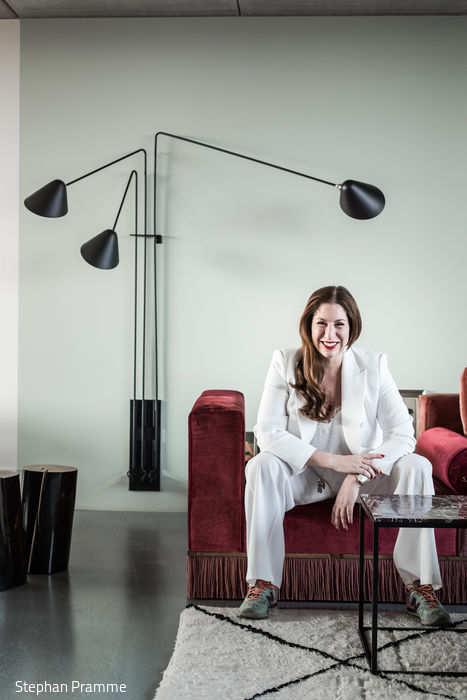
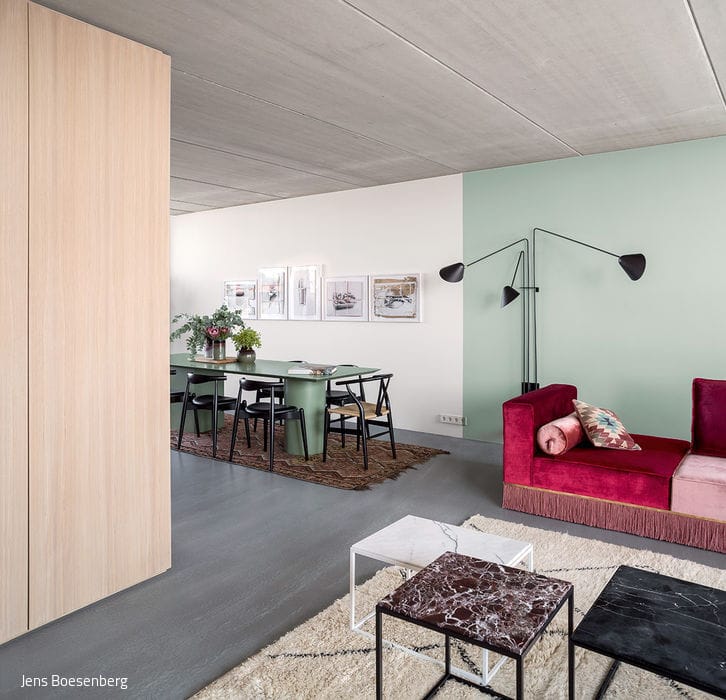
My own apartment – Apartment 2.0. Grey dominates, though the sofa is a striking rose-pink, which I designed specifically for the space. The wall is Le Corbusier light green. There's a wooden box housing the kitchen and bath. The balcony opens onto a terrace that's equally generous – magnificent! The grey concrete floor and ceiling form the base, with the wooden box as the central gesture. But inside, everything pulses with colour. My library is blue, the dining zone is green with a matching green table. The wardrobe is yellow and pink with oak interiors, paired with a pink sofa. Peter and I live here together.
You can sense a language, but I couldn't quite describe it...
Materials are always deployed as complete objects – not as isolated wall treatments, but as volumetric blocks. There's always a conversation happening between them. The kitchen box speaks to the grey library box. The kitchen itself dialogues with the sofa. It all comes down to volume – the choreography of volumes within a space. And always, always, we obsess over perfect edges. I designed a terrazzo washbasin myself, and you can feel that devotion to detail in every inch. Everything stems from the same material language. We applied this same philosophy at Remi, the restaurant in the Suhrkamp building by Roger Bundschuh.
You work with international clients. How do you secure new projects?
Clients approach us – we don't actively pursue business development because our capacity doesn't allow for it. We've just won a significant competition for a spectacular hotel with an excellent architect. Unfortunately, I can't discuss details yet.
A shame. Your philosophy – often quoted – is that one should do the opposite of what's expected, right?
Precisely. We recently completed a project on Kastanienallee called "The Castle" for a New York-based client. Americans tend to gravitate toward plush and cosy aesthetics. But I'd argue that comfort comes from furnishings – sofas, chairs, rugs, curtains – the loose elements. They're the icing on the cake, not the foundation.
Plush upholstery is always welcome...
Why not? We've always championed contrast. Look at Villa Kellermann and Remi – designed simultaneously, yet visually worlds apart. But the underlying design methodology, the visual language, the ideological DNA – it's identical.
Do you commission bespoke pieces?
We don't design standalone chairs or lighting fixtures, but we do develop seating – armchairs, sofas, custom benches like those at Villa Kellermann. My own sofa, we fabricate entirely in-house.
Your colour philosophy – monochromatic, bold, pastel, or a complex mix?
All of it – contrast is everything. In the end, it's always about embracing the unexpected and leveraging contrast. When everything is too harmonious, it becomes boring. When it's too kaleidoscopic, it becomes chaotic. The real magic is orchestrating perfect contrasts – thick against thin, loud against quiet, soft against hard – everything inherent to contrast, yet achieving perfect harmony.
I read somewhere that you haven't entirely abandoned architectural construction?
When someone comes to us and says, "Build us a house," we're absolutely open to it. Right now, we're working on a grand 1913 villa in Grunewald – 1,500 square metres of living space. There's plenty of construction happening there: new windows, significant demolition work. Truth is, we're always building something. It's really a question of what 'building' means in the first place.
Thank you for your time, Ms Bruzkus.
Interview by Christina Haberlik
Ester Bruzkus leads an international architecture and interior design practice in Berlin, known for an impressive portfolio of stylish, award-winning projects. A Berlin native, she studied architecture at the Technical University of Berlin and later at the School of Architecture in Belleville, Paris. Before establishing her own practice in 2002, she worked with Massimiliano Fuksas in Paris and Zvi Hecker in Tel Aviv. Her breakthrough came with the interior design of the Amano Hotel in former East Berlin, followed by 15 hotels for the Azimut brand across Russia and numerous exquisite, prize-winning residential commissions. Her own apartments have been widely published and internationally recognized. Beyond six restaurants and bars created for Michelin-starred chef Tim Raue, her studio has realized L.A. Poke and two restaurants for Dutch chefs Lode & Stijn, notably Remi, which debuted in 2020. Since 2016, she has partnered with Peter Greenberg. Architectural Digest named Bruzkus one of the "Top 200 Influencers in the Design World."
(Published in CUBE Berlin 04|21)

Exciting Transformation
Two Become One – Apartment Berlin X Unveils Expansive New Possibilities
Dark Gems
Two Houses in Stechlin: Returning to Architectural Fundamentals
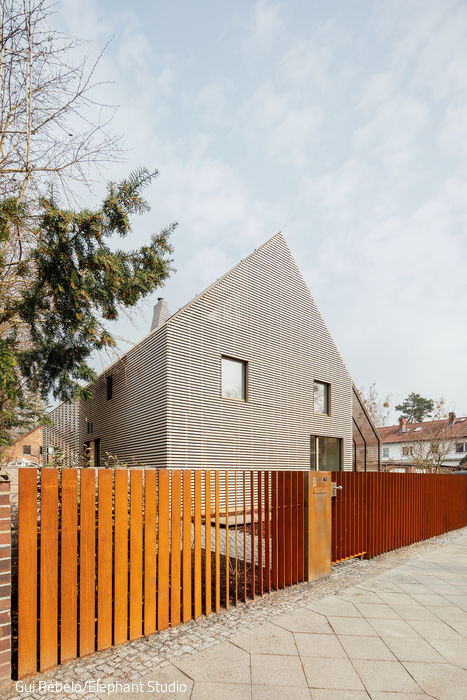
Half Closed, Half Open
Detached house with wooden lattice and pergolas on both facades
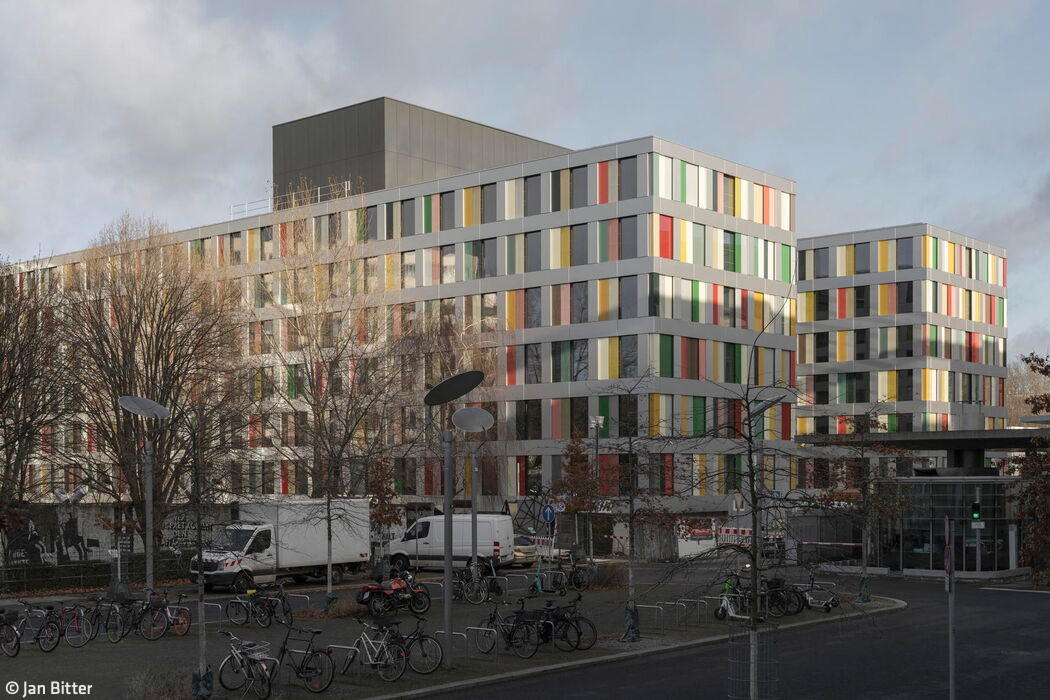
New Colors for Politics
New Government Building Along the Federal Strip