


New Colors for Politics
A New Government Building along the Federal Corridor
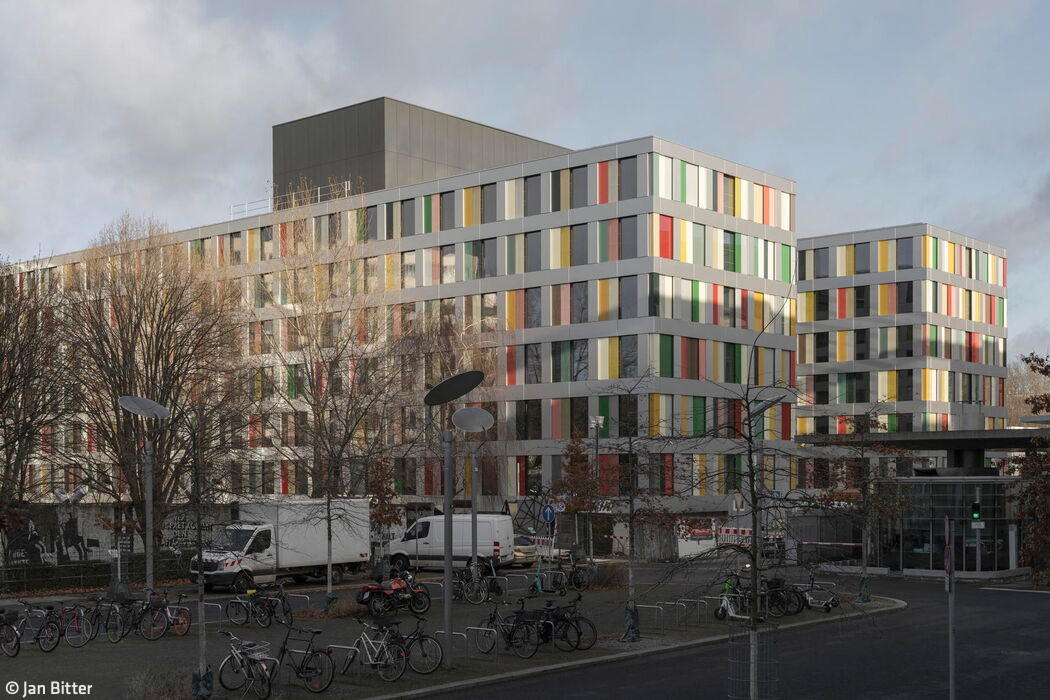
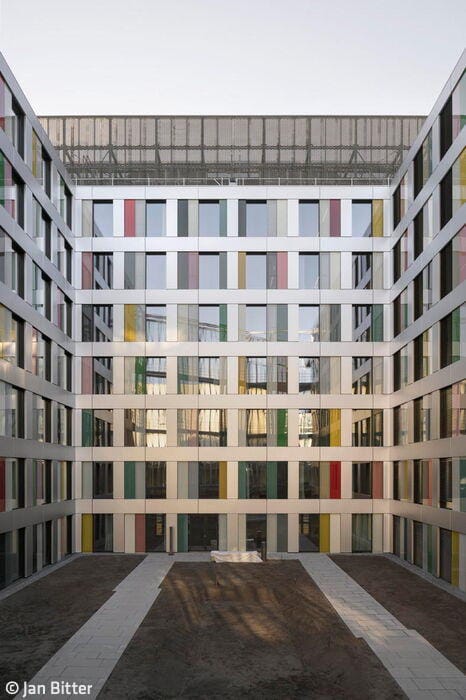
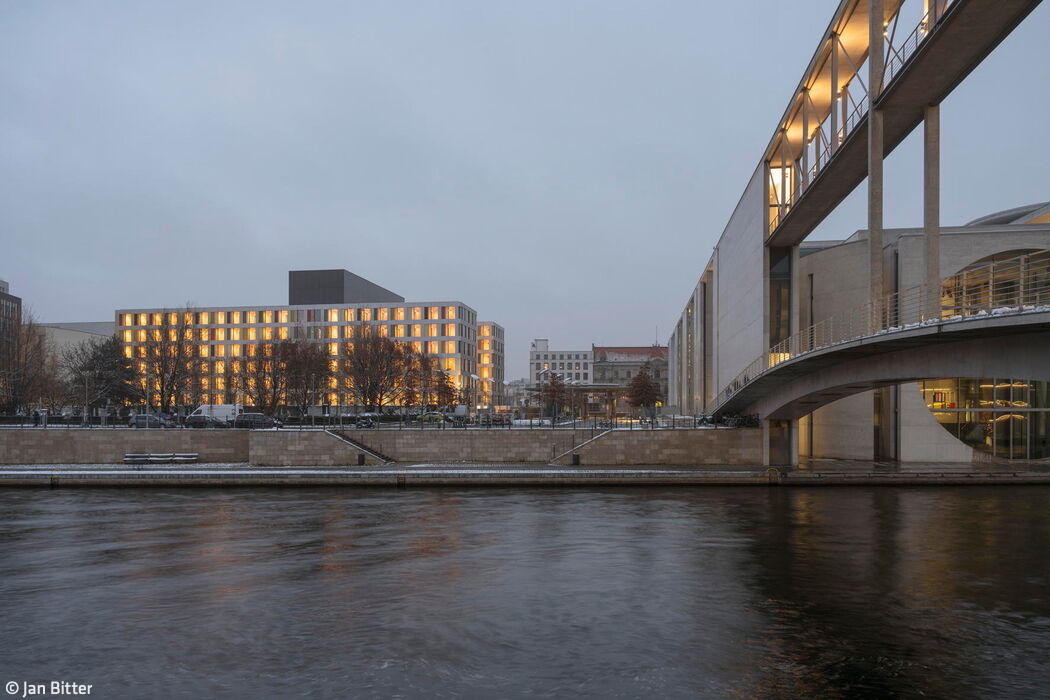
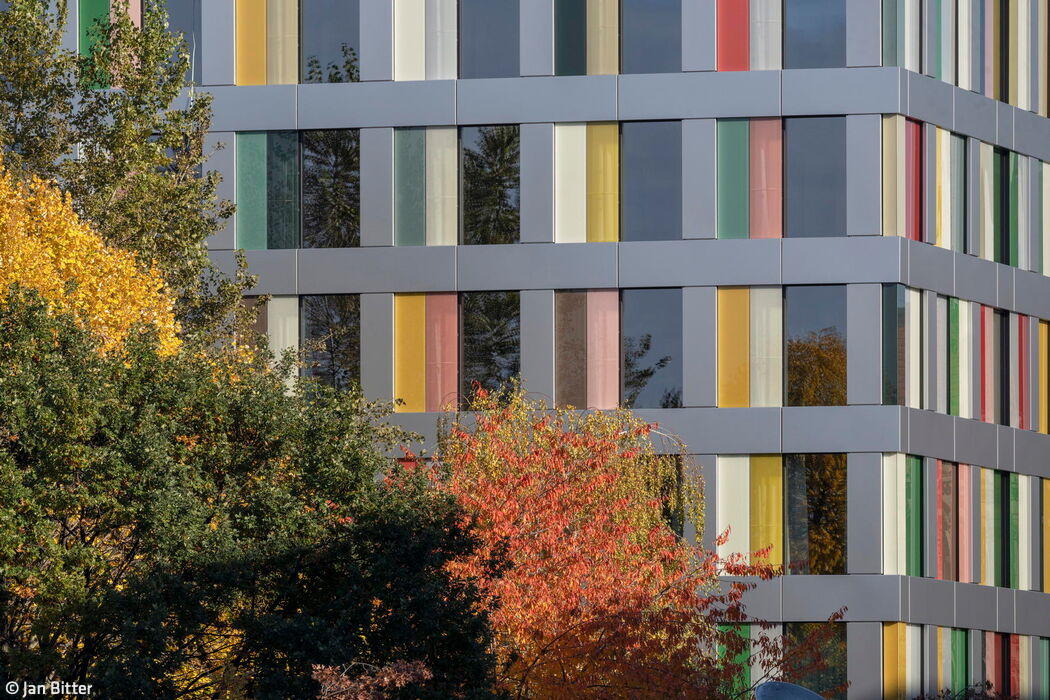
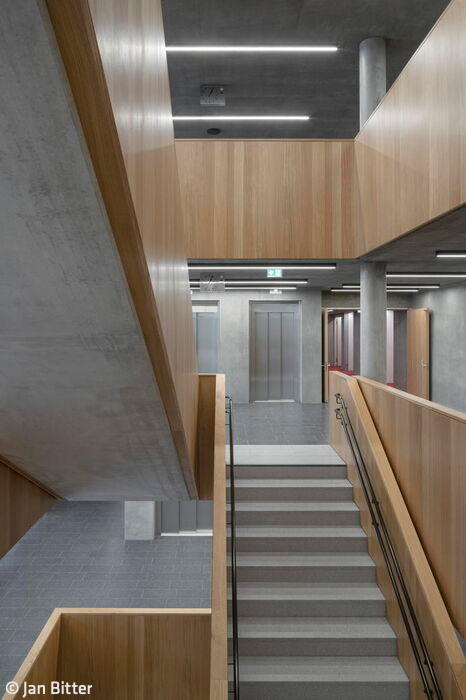
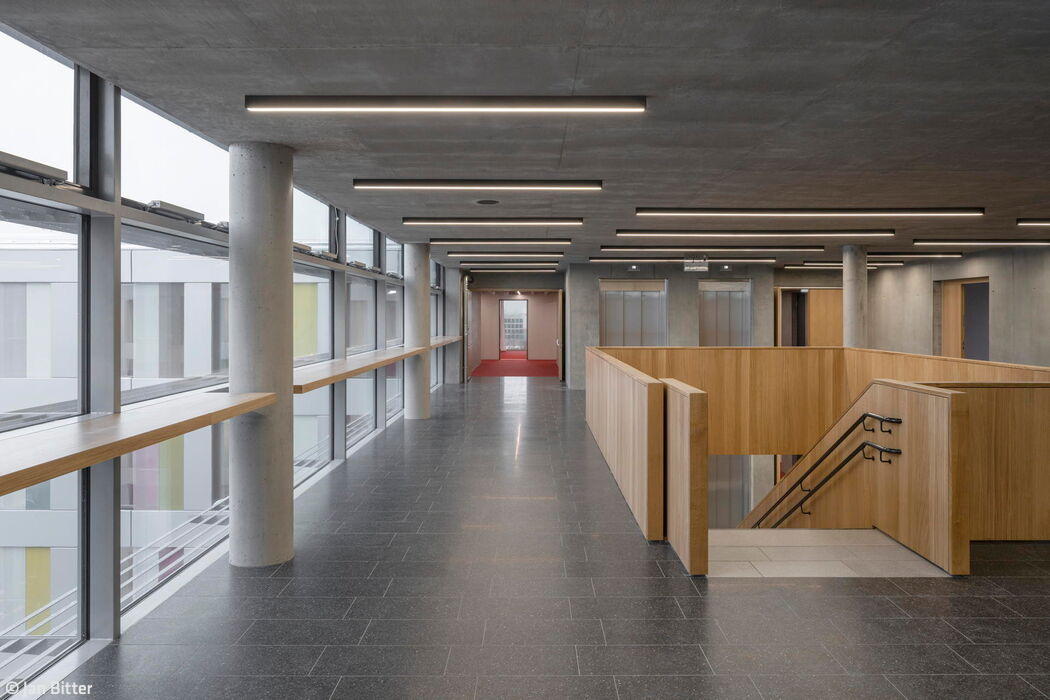
The new building in Berlin's government district unmistakably bears the signature of architects Sauerbruch Hutton. Its façade tells the story: the studio's hallmark is the use of vertical coloured elements—never quite the same twice, always fresh and distinctive. This seven-storey H-shaped extension for the German Bundestag sits along Luisenstraße—or more precisely, between Adele-Schreiber-Krieger-Straße to the southwest and the railway tracks to the northeast. Given the already tightly woven development along the "Band des Bundes," it's remarkable that space was found for a building housing 400 offices. The front wing of the H, with its conference facilities, opens to semi-public access, while the rear, more compact wing contains private offices and concludes with a glass soundproof barrier facing the railway line. When needed, offices can be flexibly combined into two-person units.
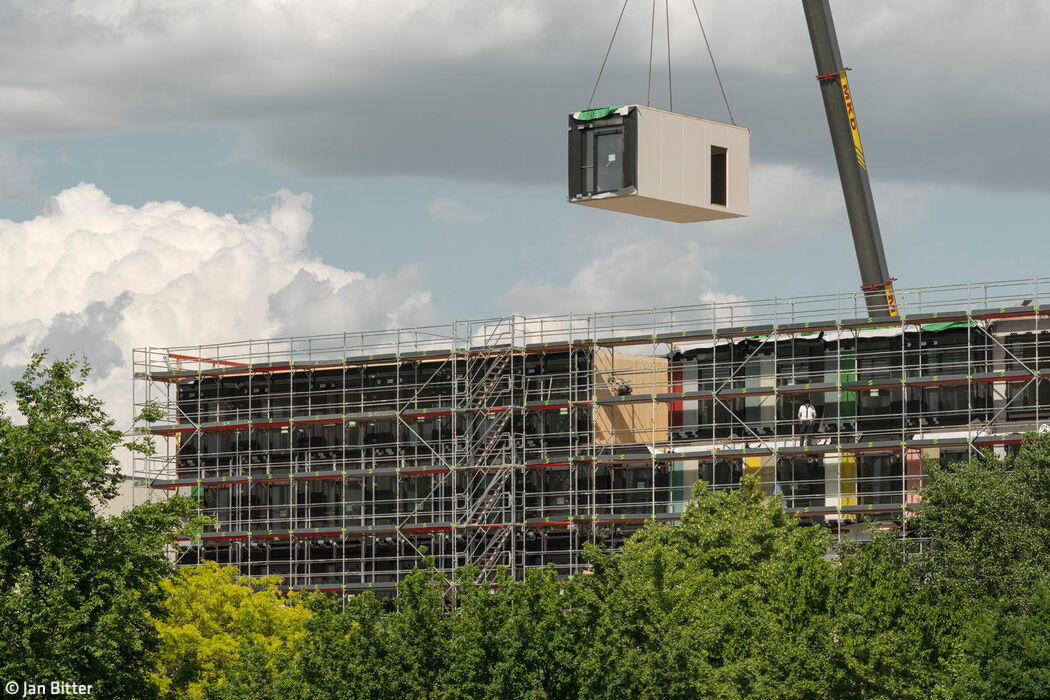
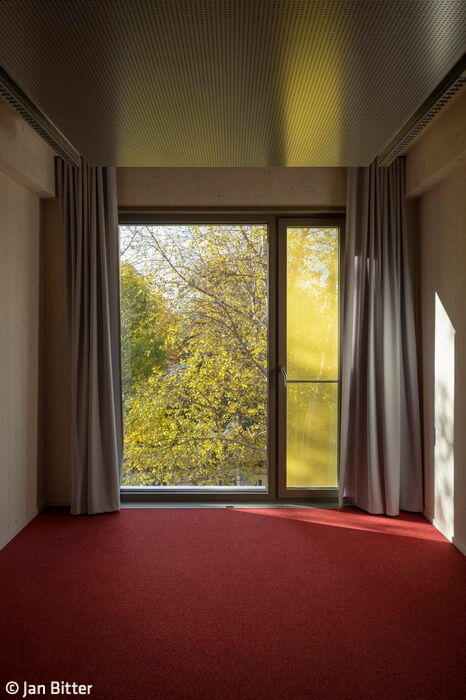
With the 2021 federal elections as a hard deadline and time in short supply, the architects chose modular timber construction. Components arrived factory-equipped with windows, timber frames featuring thermal insulation and integrated solar shading, plus substructures for colored glass façade elements—all ready to assemble. This approach allowed the wooden modules to be erected rapidly and eventually relocated elsewhere if needed. Each module spans 3.20 by 6.75 meters, arranged along central corridors in the building's four wings. Almost entirely made from sustainably harvested solid wood, they were manufactured in Berlin, minimizing transport distances and emissions. The concrete foundation, mechanical spaces, and central atrium were constructed using precast reinforced concrete components.
The competition for the next phase—the "Luisenblock Ost"—has just concluded, with completion targeted for 2027. What's striking is how quickly space demands have escalated since the original government district was built between 1995 and 2000, with the decision to construct "Luisenblock Ost" coming as recently as 2020. The difference is telling: earlier construction operated without today's explicit sustainability mandates—a principle that now guides Sauerbruch Hutton's approach to this project.
Photography:
Jan Bitter
www.janbitter.de
(Published in CUBE Berlin 02|24)

Old Embraces New
A new integrated secondary school takes root in Lichtenberg
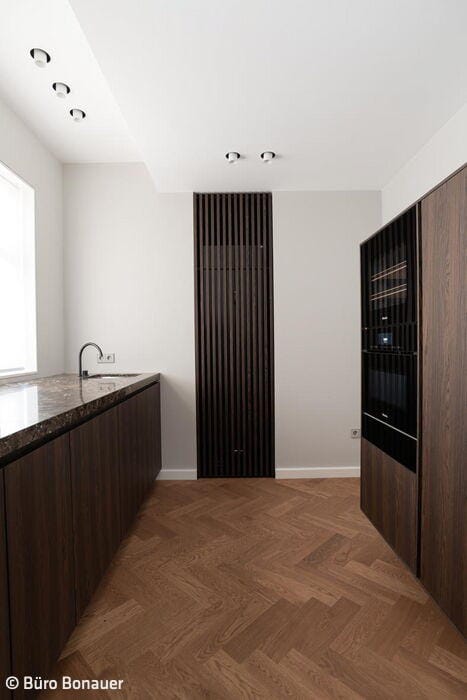
When Spaces Speak
A Timeless Penthouse Emerges in the Former "House of Children"
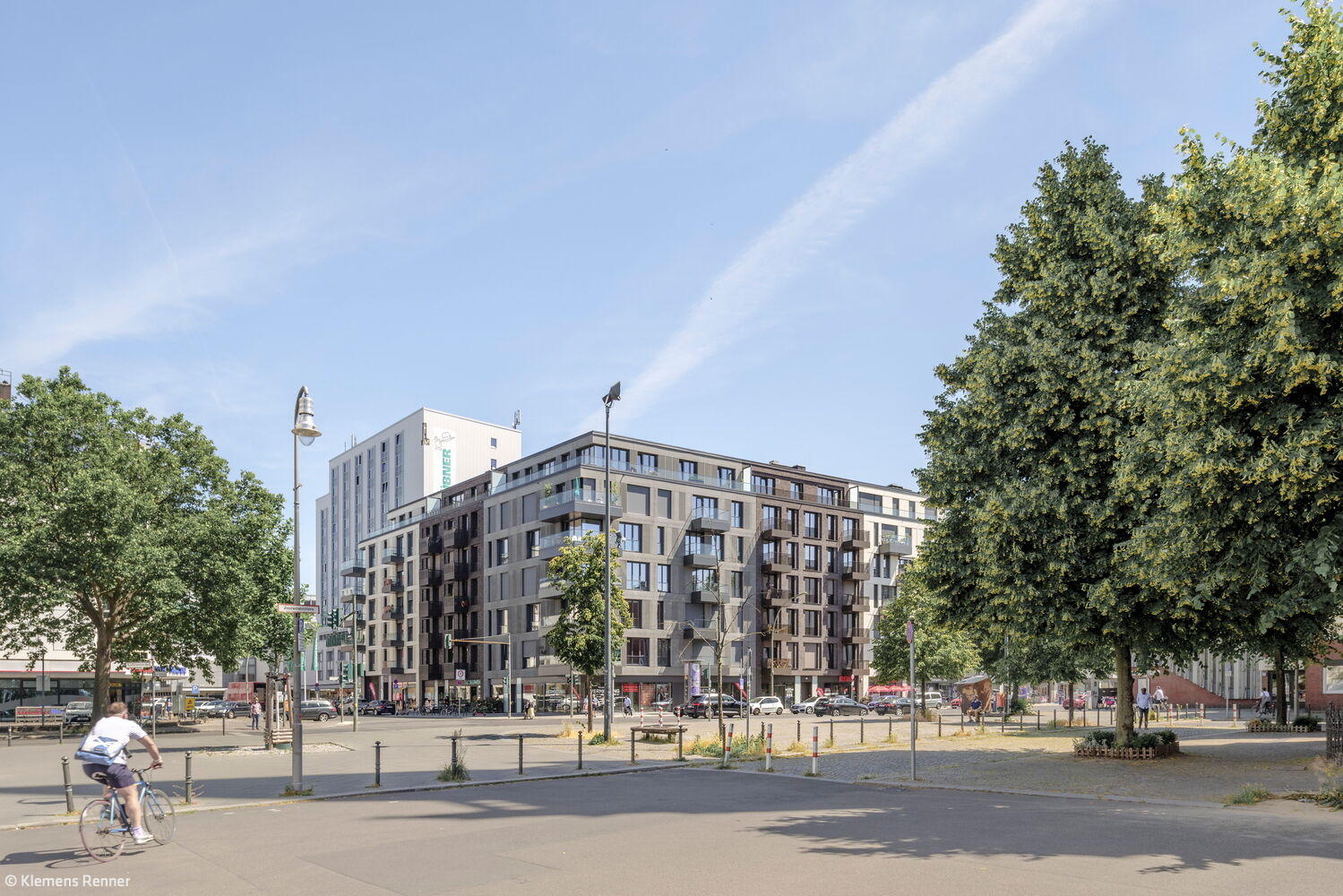
Small-Town Living in the Big City
Schoenegarten: A Housing Project That Excels Through Thoughtful Design
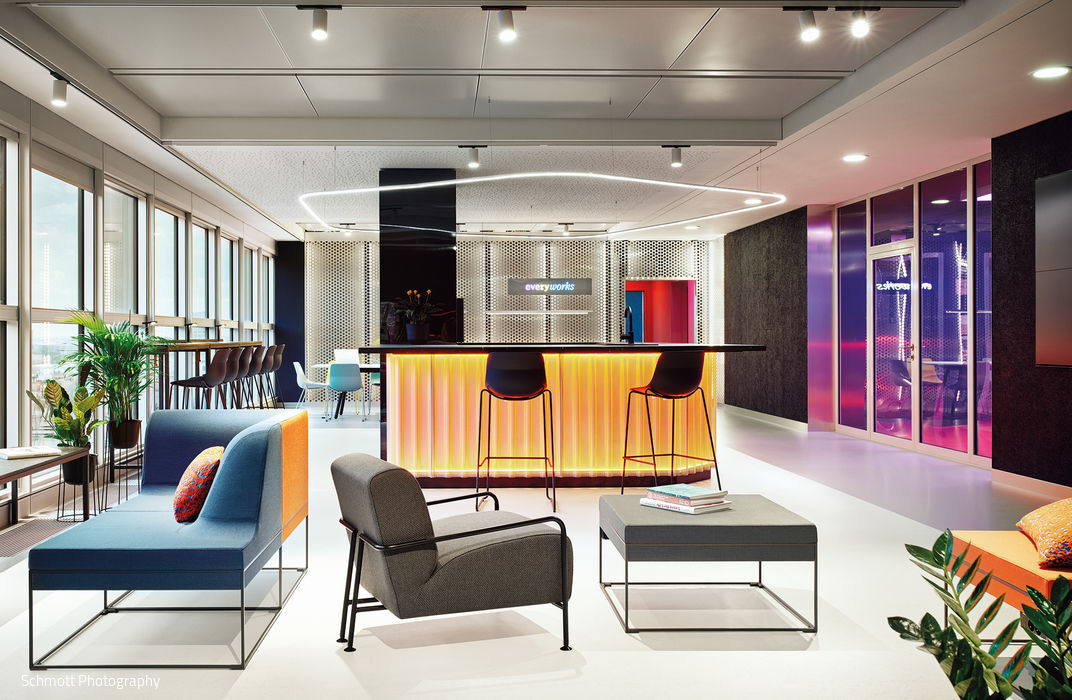
Arriving and Working
Deutsche Bahn's "everyworks" coworking space connects you directly from platform to productivity.