


A village within the city
The heart of the Sülz district captivates with its remarkable diversity of residential forms and uses.
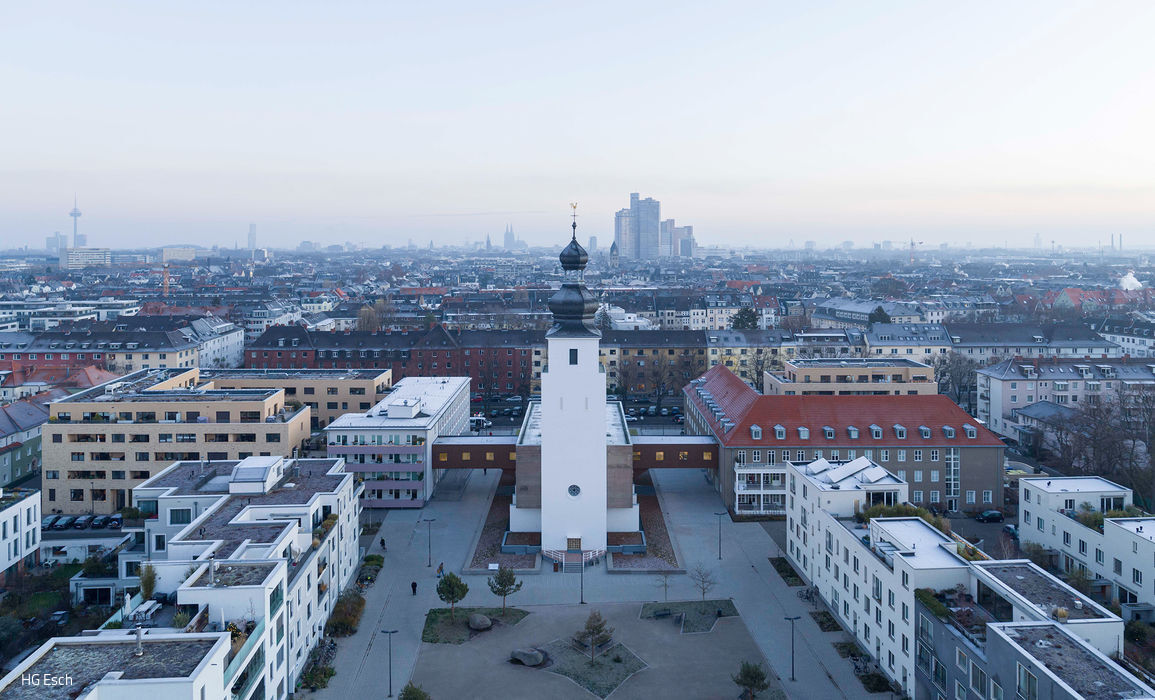
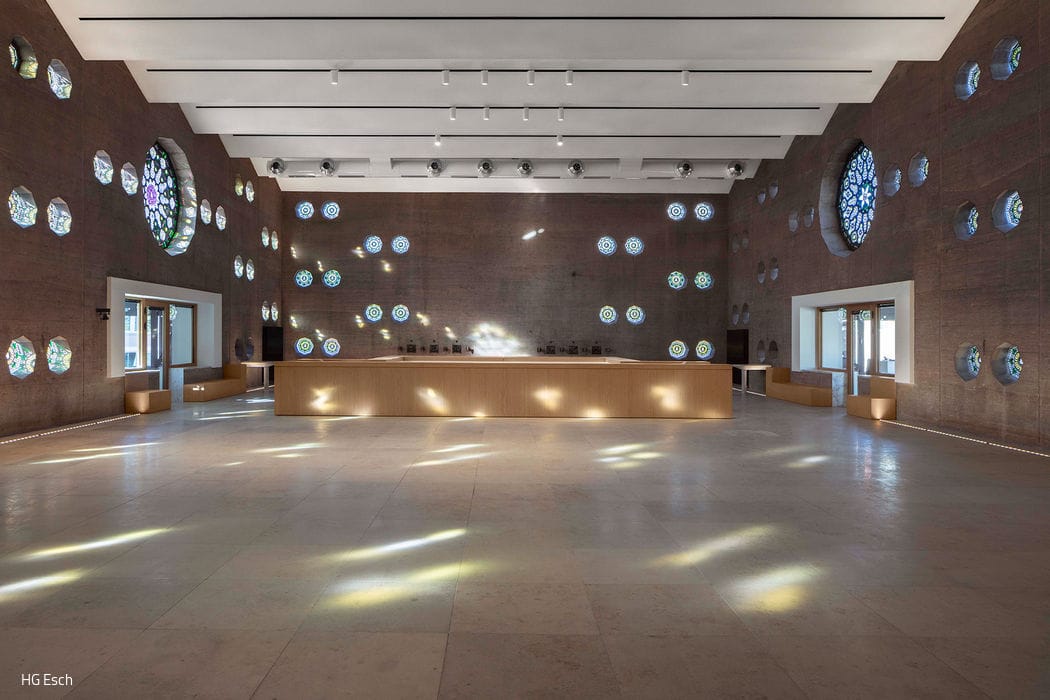
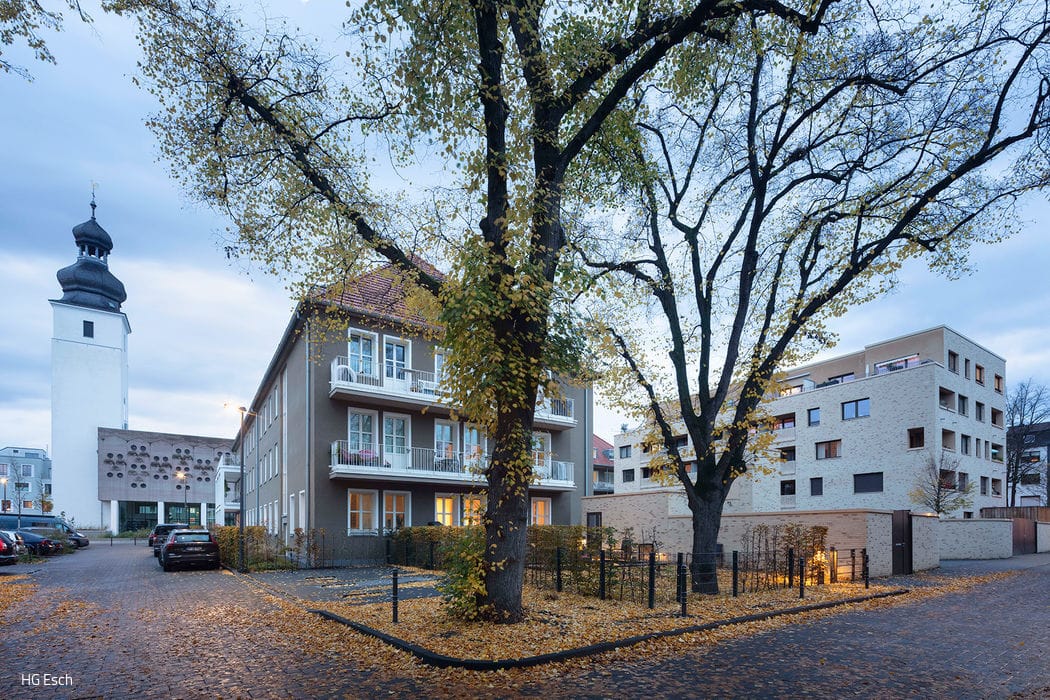
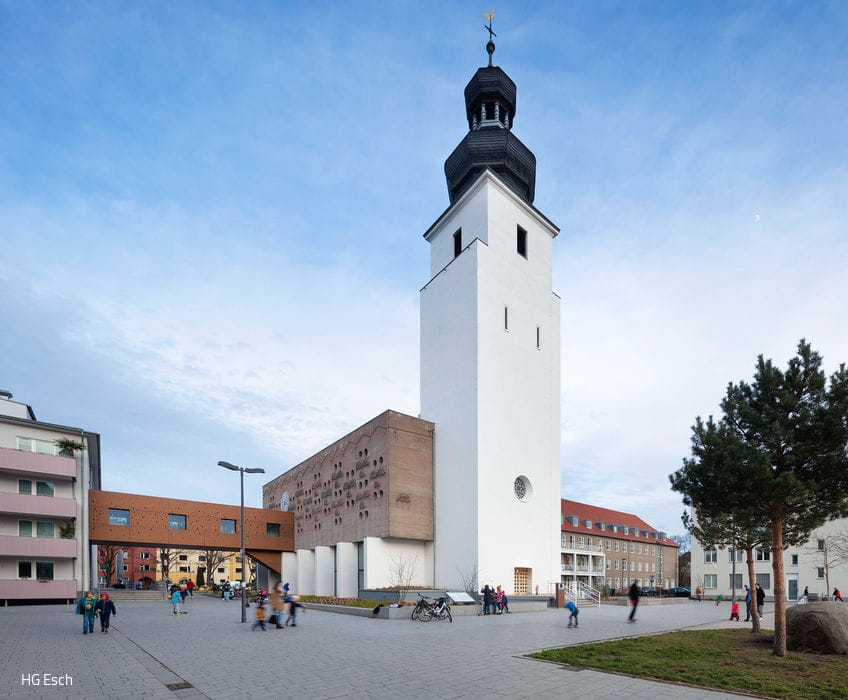
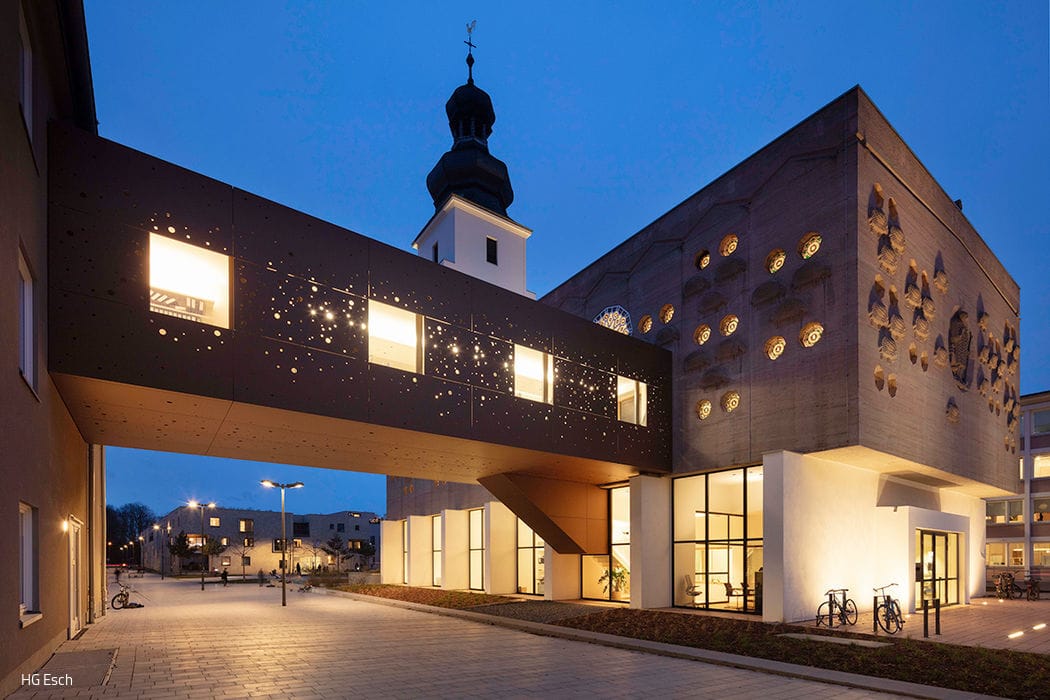
In 1913, plans began for a children's home designed by building inspector Bernhard Klewitz on a 4-hectare site outside Cologne's city limits in Sülz. Centered around the neo-Baroque orphanage church—consecrated in March 1923—the complex grew into Europe's largest children's home, housing as many as 1,200 residents at its peak. Though nearly devastated during World War II, the original complex had comprised residential quarters, a school with gymnasium and swimming pool, and a hospital. Today, only the church tower and a handful of outbuildings survive. During reconstruction, the symmetrical layout was restored with a focus on functionality. Planning for the new church, "Zur heiligen Familie" (Holy Family), began in 1955 under the direction of Dominikus Böhm. When Böhm passed away in August 1955, his 35-year-old son Gottfried Böhm took the helm. The design brief was clear: "a church for children—filled with light and uplifting symbols."
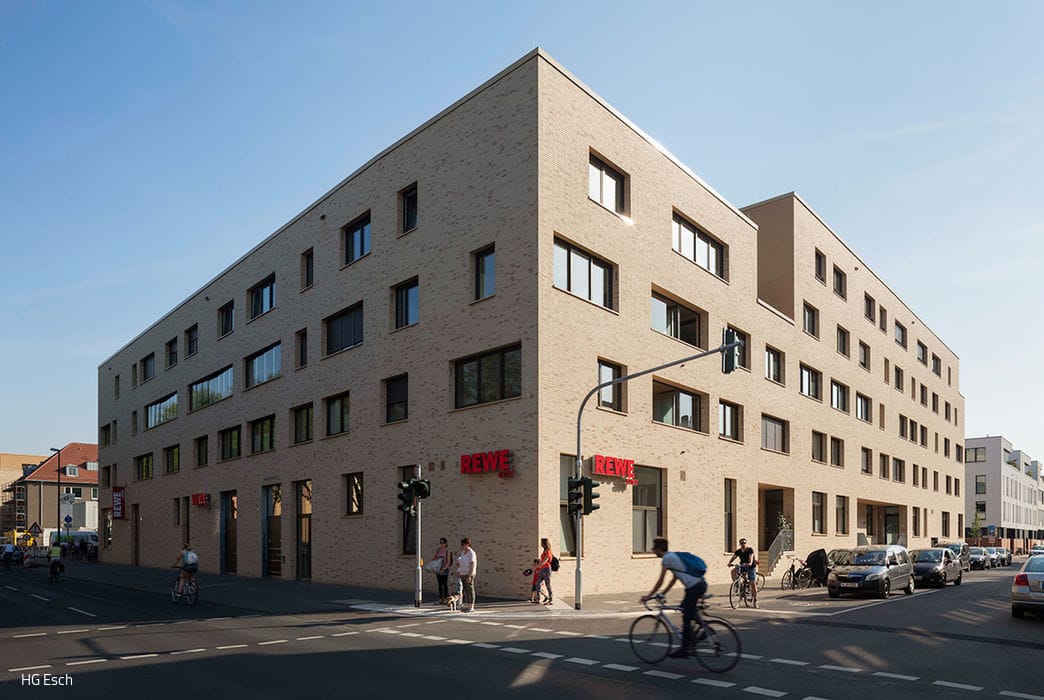
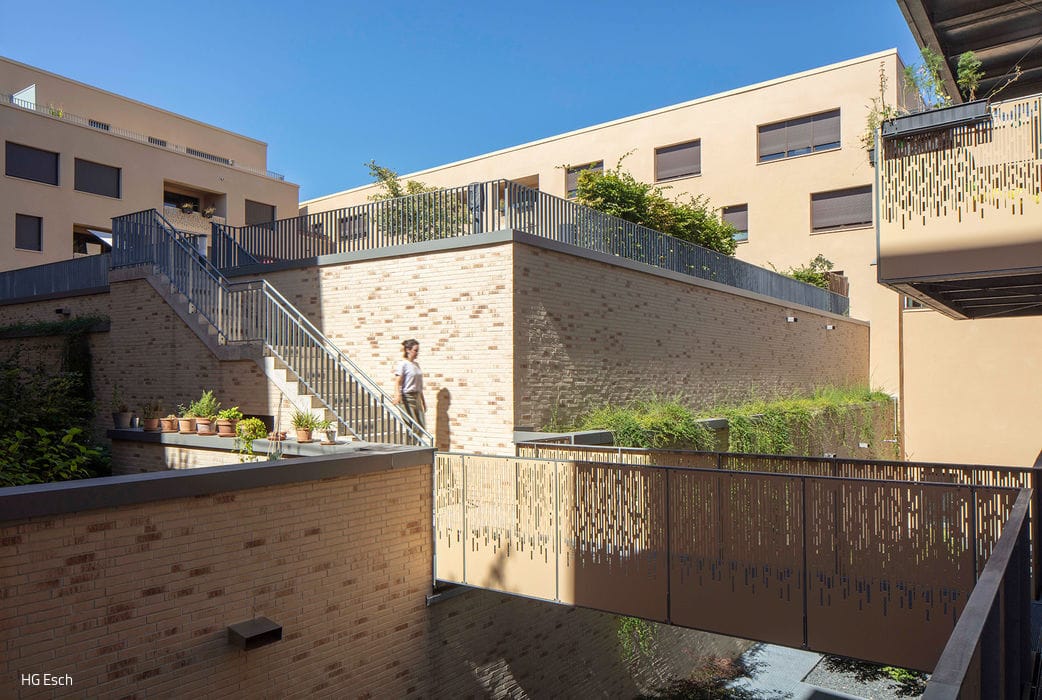
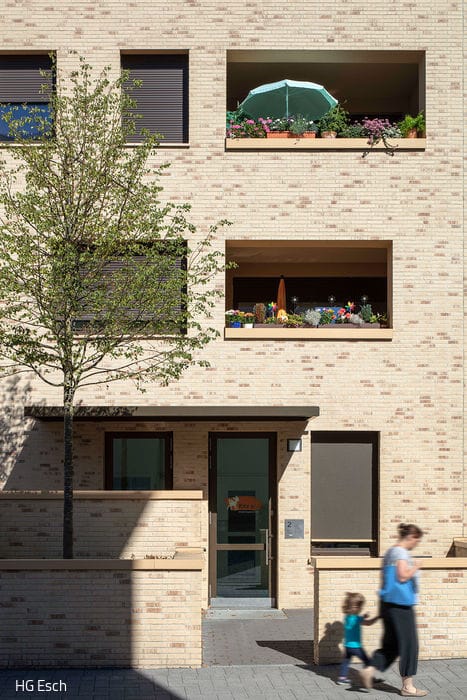
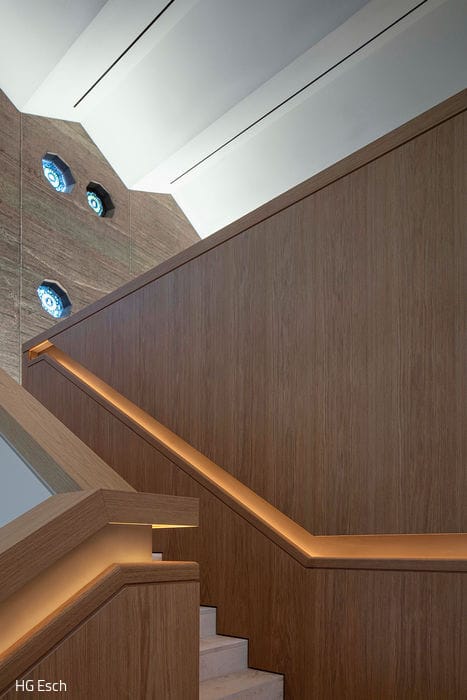
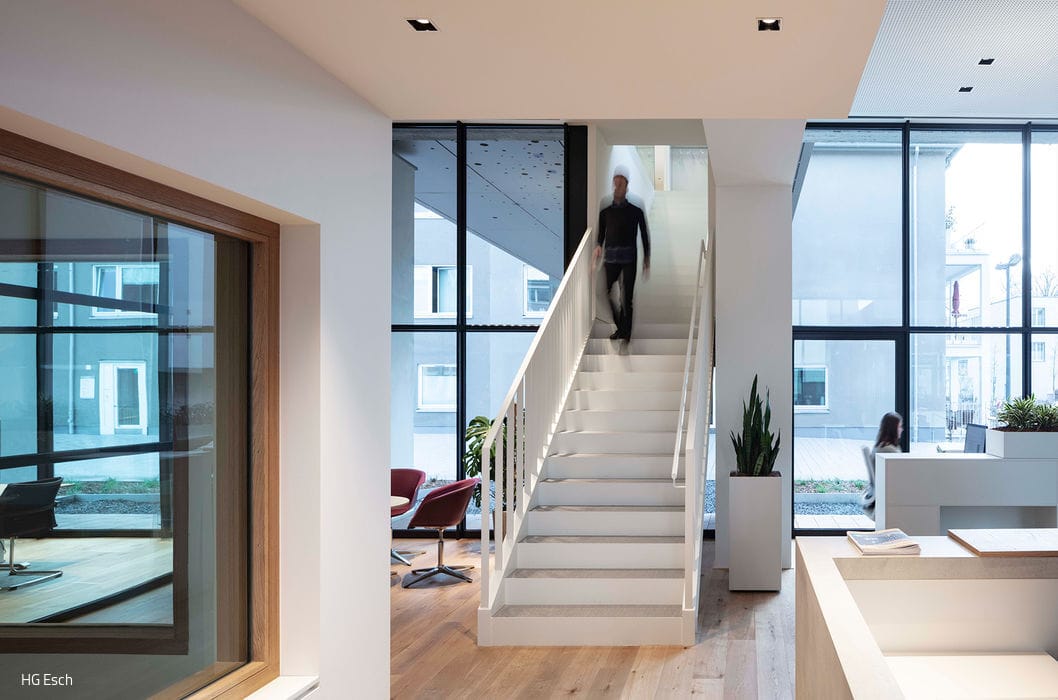
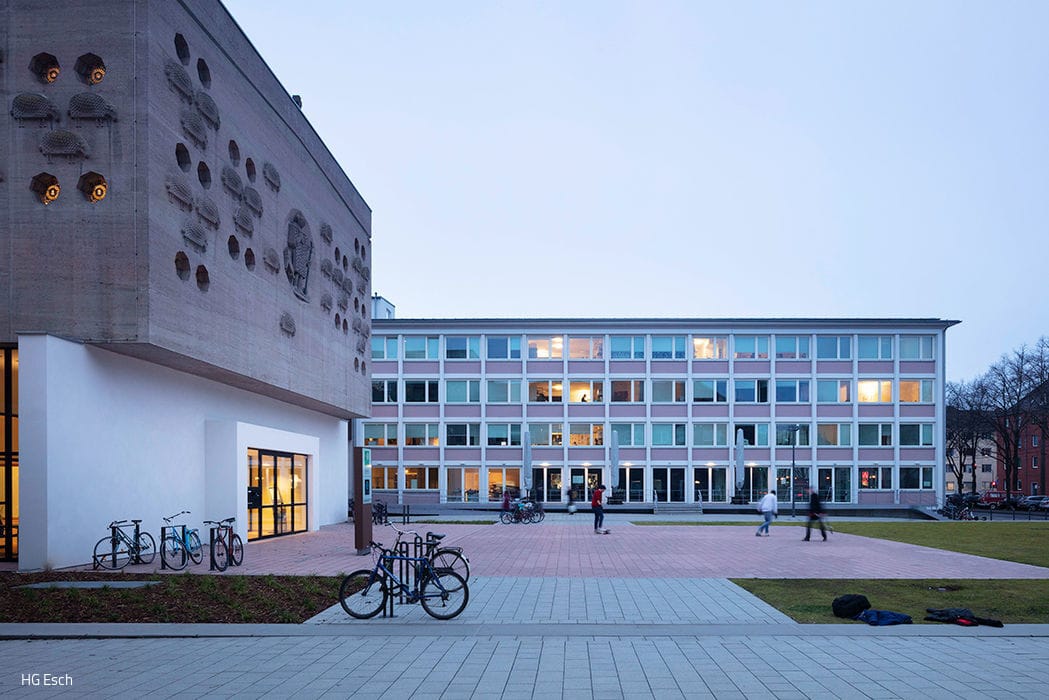
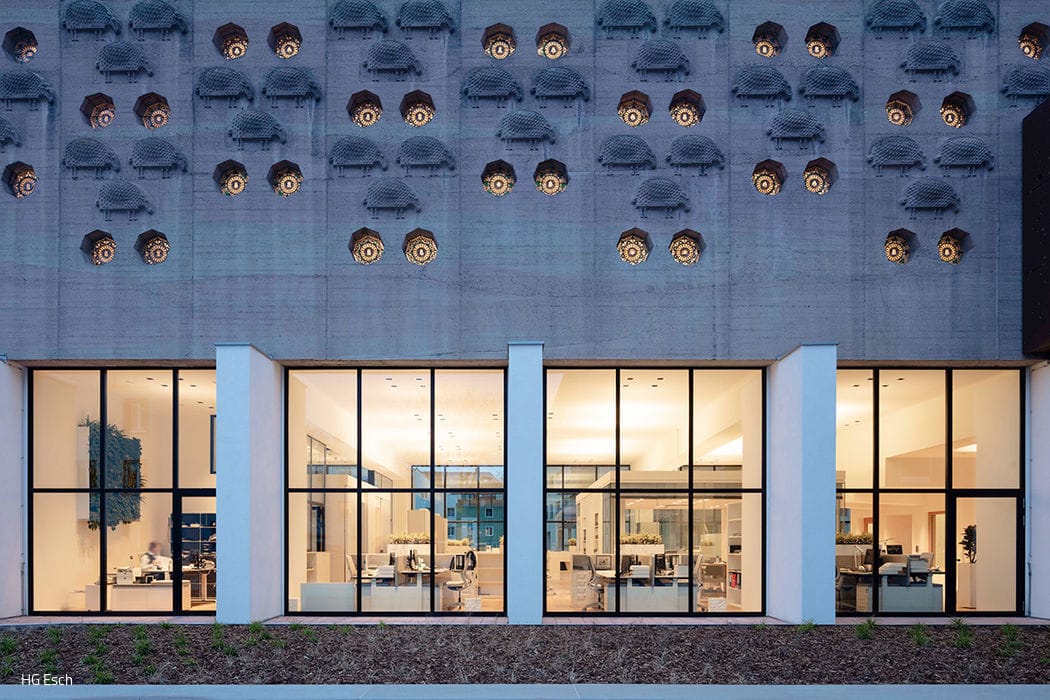
As the children's home closed and its services transitioned to decentralized care, the site underwent a remarkable transformation into a car-free residential quarter beginning in 2010. The protected church ensemble and its two outer wings—the sole survivors of the original complex—were acquired by the Köln-Sülz housing cooperative as the foundation for their new residential project, "anton + elisabeth Genossenschaft leben in Sülz" (anton + elisabeth cooperative living in Sülz). The architectural competition, won by Nebel Pössl Architekten in 2014, resulted in a striking five-story addition that now defines the neighborhood's character and gravitational center. Light-colored brick façades emphasize the buildings' sculptural presence, while carefully orchestrated fenestration—rigorous vertically, freely distributed horizontally—captures the vitality of mixed-use living within a unified aesthetic. The quarter's 140+ residential units represent remarkable diversity: age-appropriate apartments, compact units, student housing, family homes, and group living spaces for seniors and people with physical and cognitive disabilities—all seamlessly integrated throughout the complex. This intentional mixing ensures that age-conscious living and youthful living enrich one another. The historic structures proved equally valuable, accommodating residential groups and student housing. A thoughtful public-private strategy orients balconies and terraces primarily inward, creating tranquil shared courtyards. Beyond the cooperative's communal-space-equipped buildings, the newly constructed neighborhood amenities—a local market, medical practices, day care center, therapy studios, nursery, restaurant, bistro, offices, and a cultural venue housed within the church itself—generate an urban vibrancy rarely seen in contemporary developments. The result: a practical, ecologically conscious neighborhood where daily needs are just a short walk away. The church's adaptive reuse as a cultural space and the cooperative's ground-floor headquarters were conceived in close dialogue with Gottfried Böhm himself and coordinated with heritage authorities and the archdiocese. The poured-concrete interior, originally mixed with red rubble-brick aggregate, was respectfully desacralized. Crucial structural renovations to the connecting bridges between wing buildings were executed as elegant steel frames clad in layered glass and perforated aluminum composite—modern interpretations of the original Brutalist tubes that now frame stunning views of the church and plaza from within.
Photography Credits:
HG Esch
www.hgesch.de
(Published in CUBE Cologne Bonn 02|21)


A Monolithic Statement
The new LVR administration building in Deutz showcases a refined exposed-concrete façade.
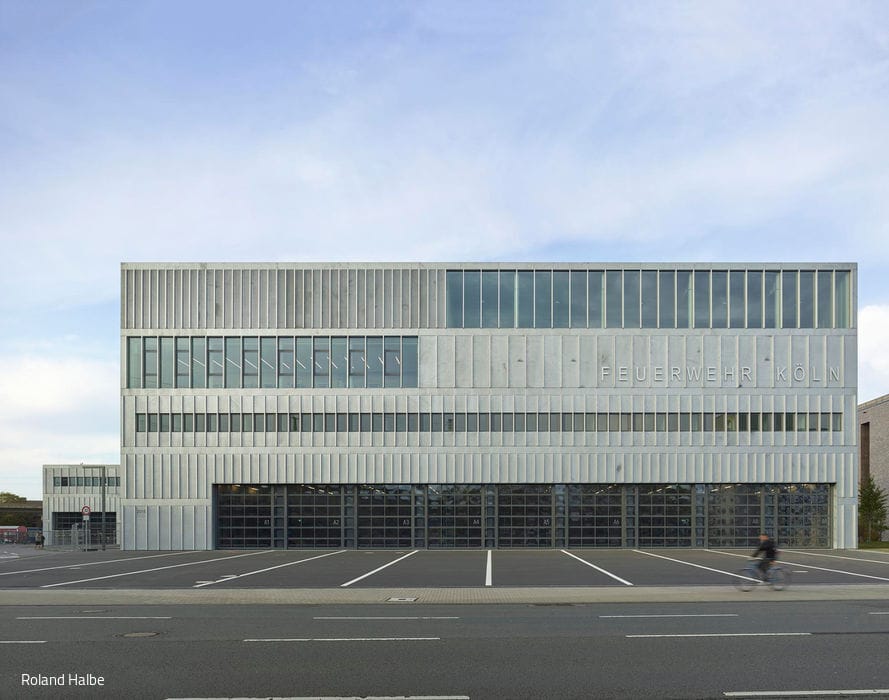
Clean Lines, Ready for Anything
Hot-dip galvanized façade wraps Cologne's new main fire station
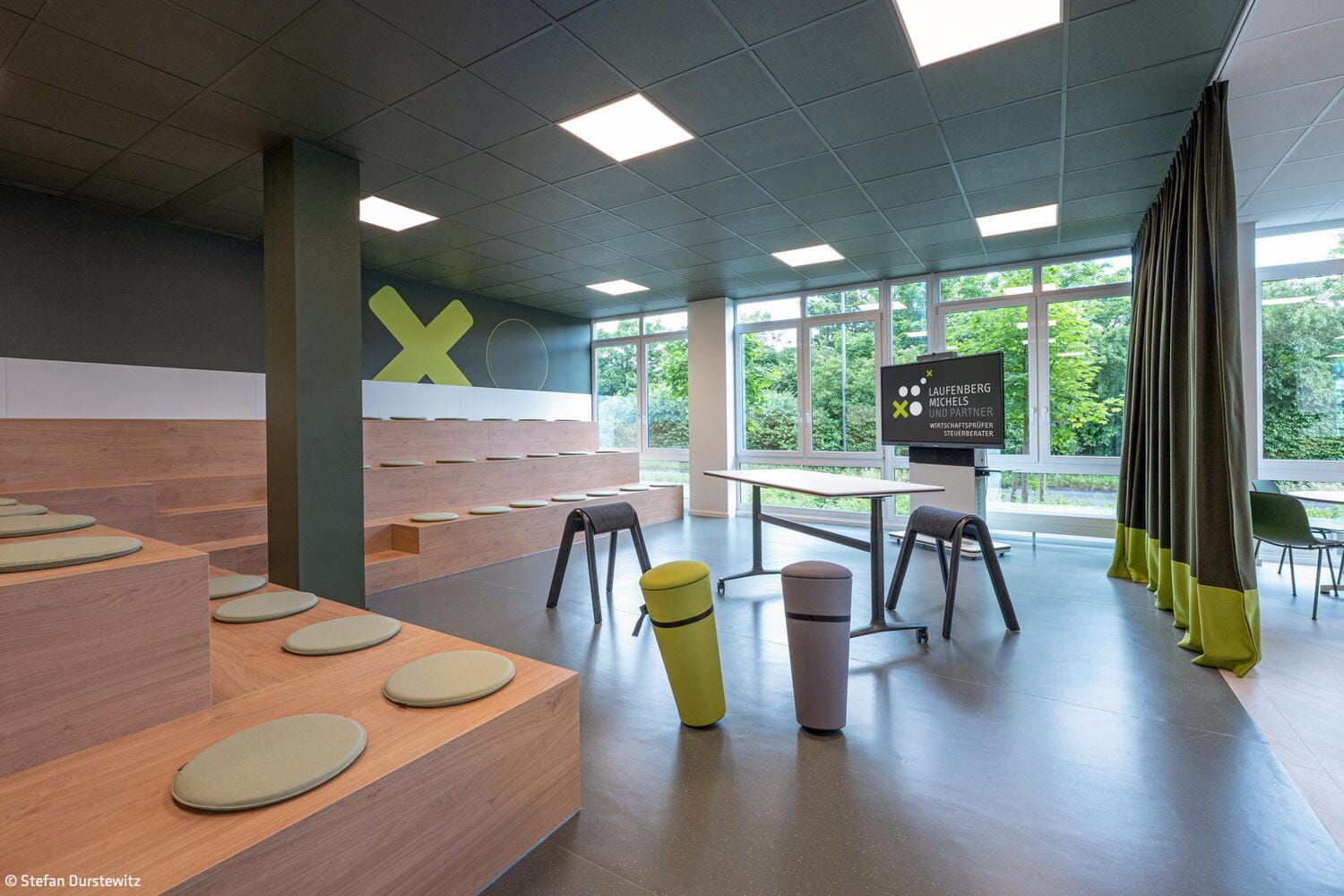
Distinctive & Community-Focused
How a Longerich consultancy embraces teamwork and networking through office design
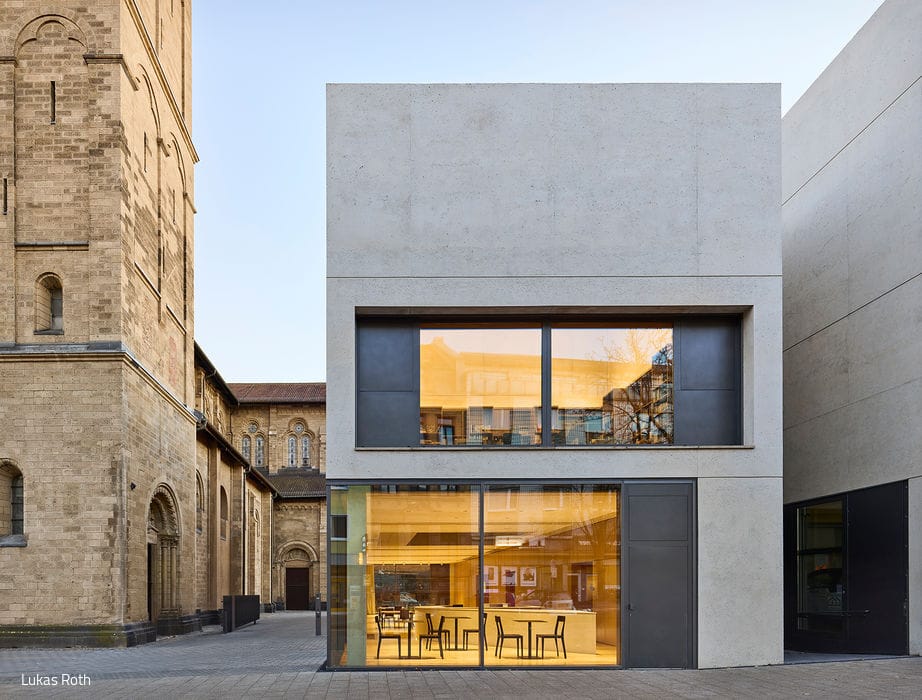
A Balanced Collaboration
The Forum at Deutzer Dom: Urban Gathering Spaces, Inside and Out