


The Blue Thread Connects
The reimagined Emscher Promenade anchors the city's blue-green infrastructure strategy.
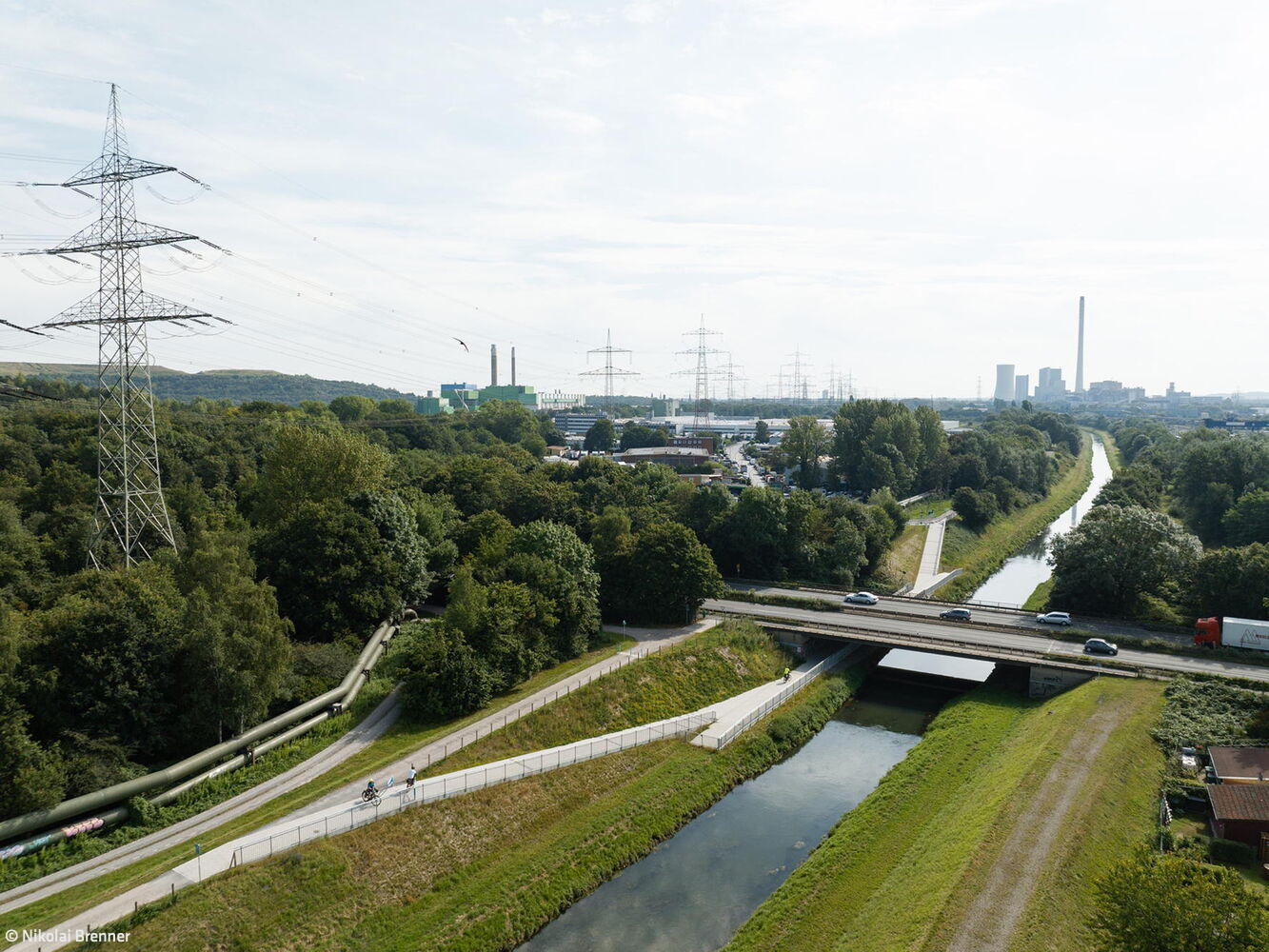
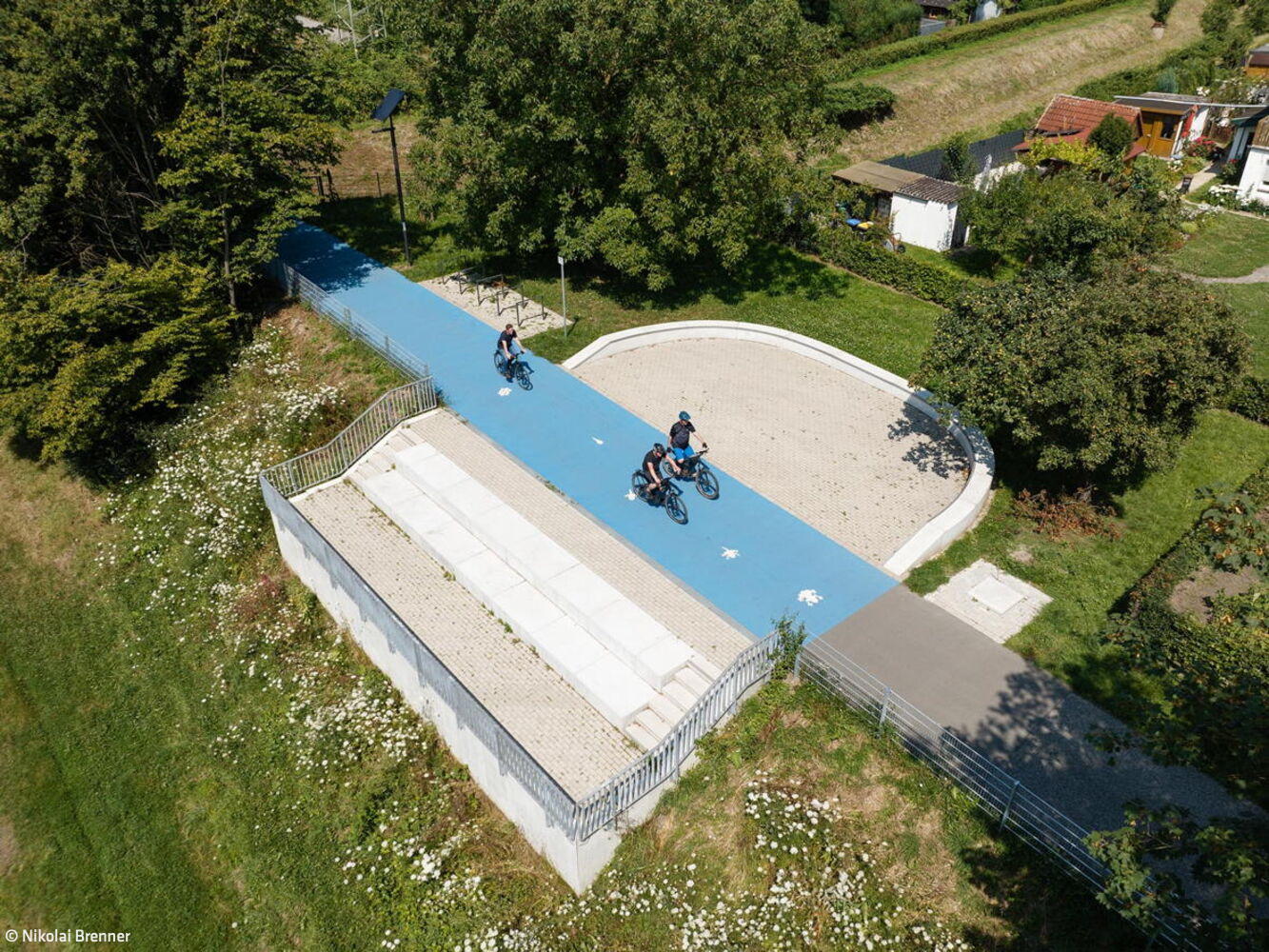
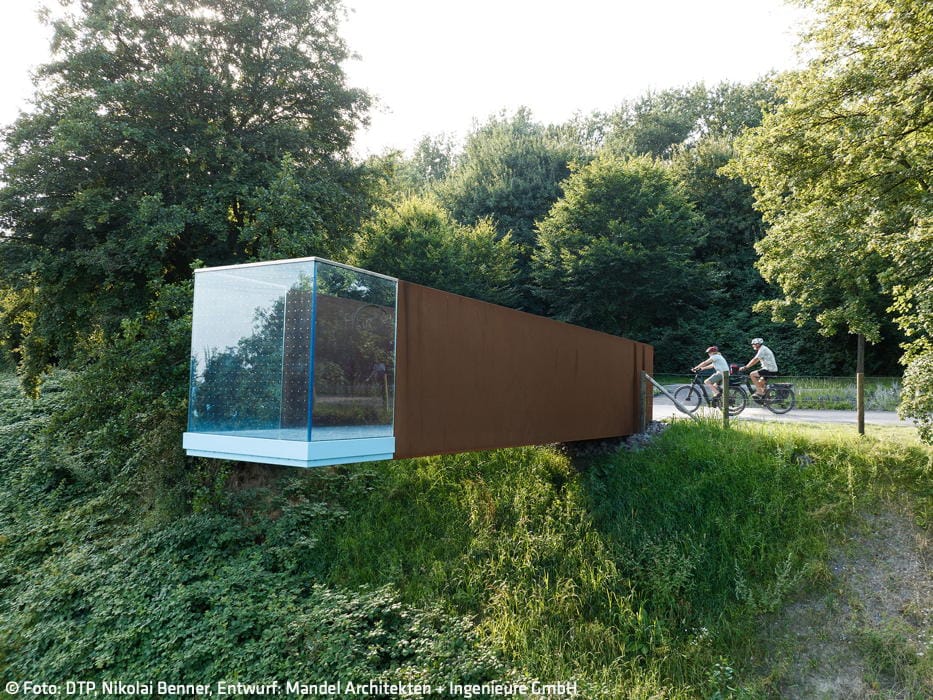
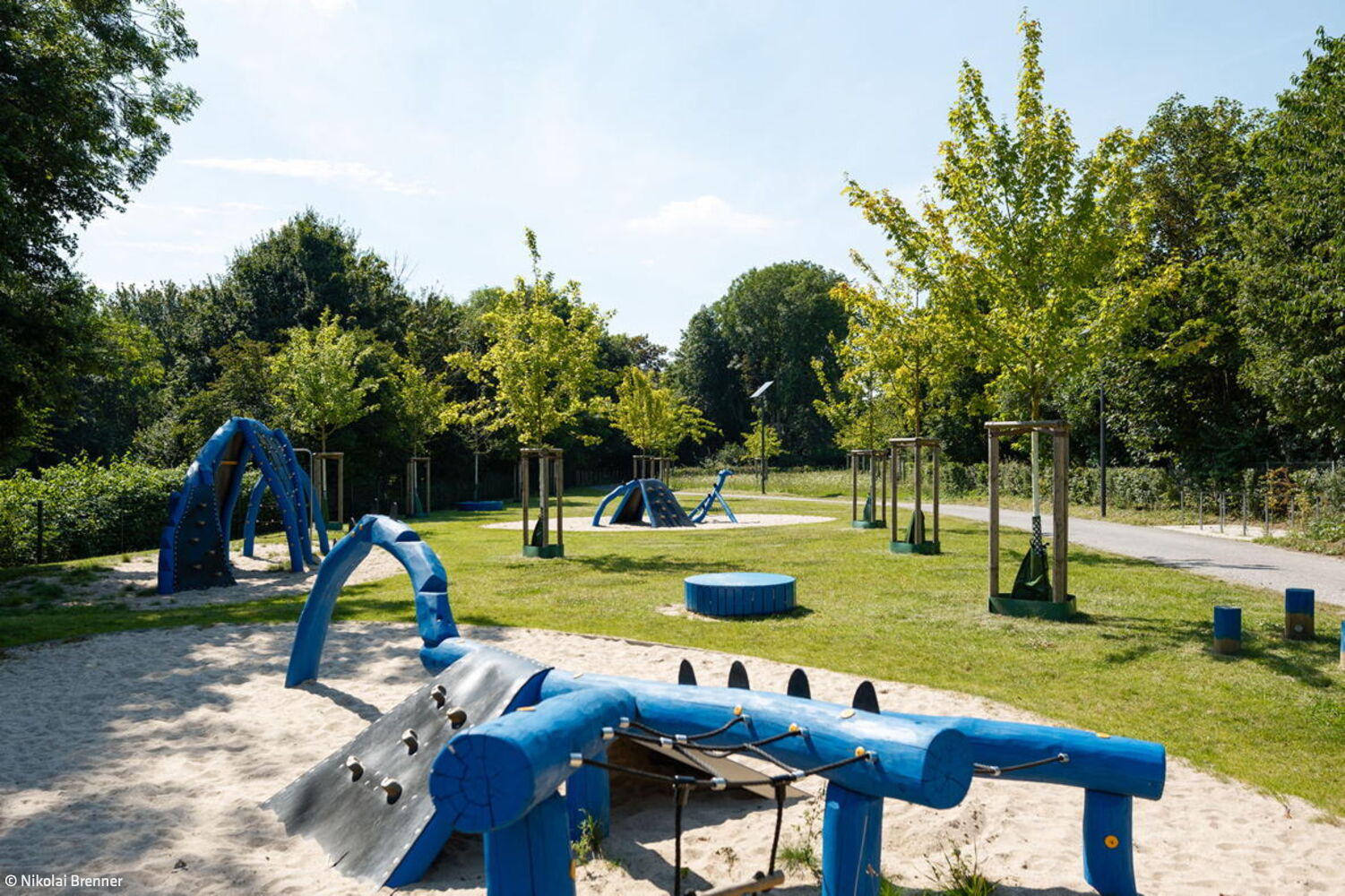
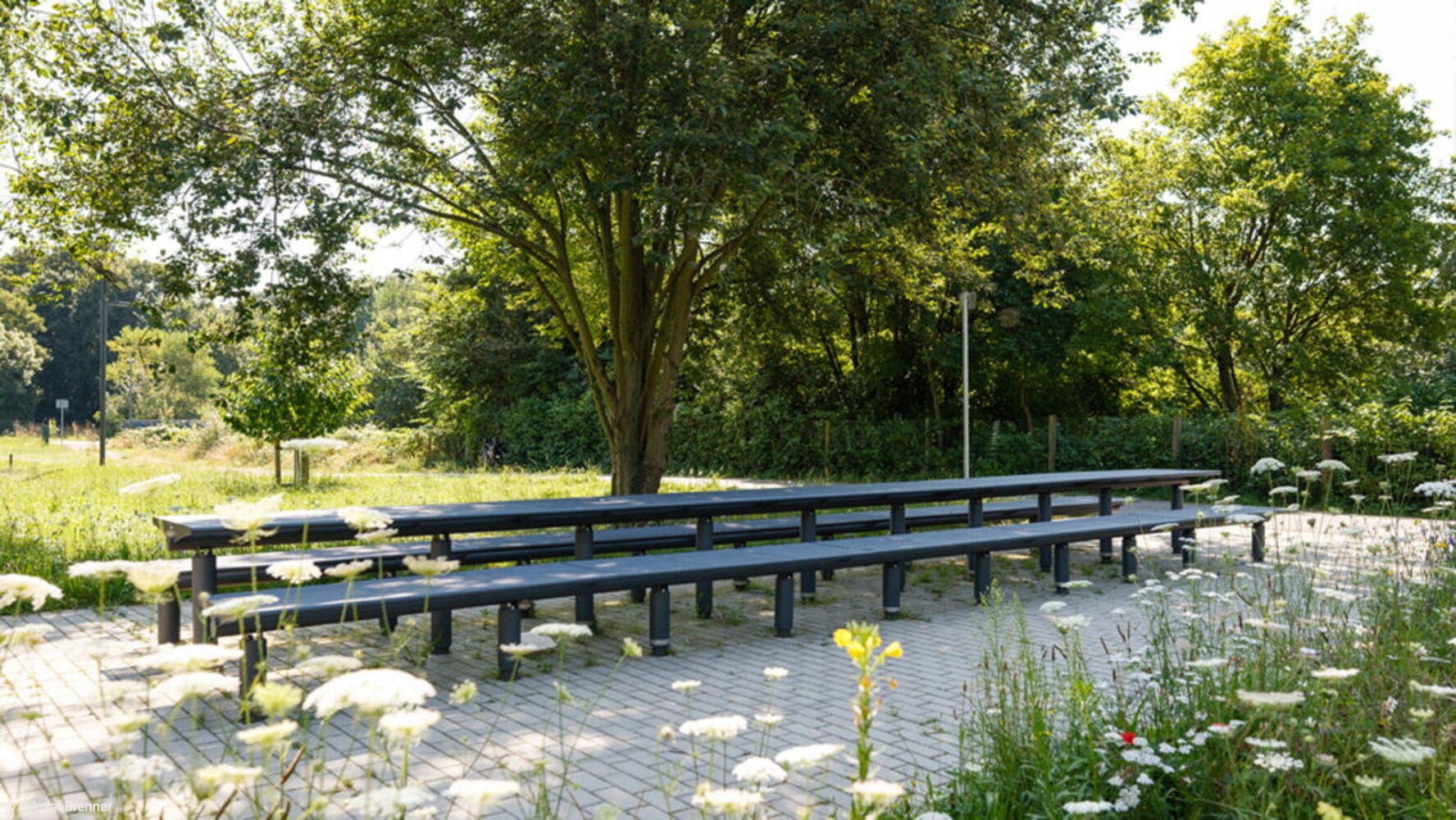
While the Emscher – once notoriously known as the Ruhr's "slurry ditch" – has been restored to cleanliness, the transformation of the waterway is far from finished. In fact, ecological restoration is actively underway, opening new possibilities to reshape riverbanks and adjacent urban landscapes into vibrant, sustainable spaces for the future. DTP Landscape Architects from Essen are key partners in this effort, tasked by Emschergenossenschaft with designing the Emscher Promenade, which spans from Castrop-Rauxel through Recklinghausen and Herne to Herten.
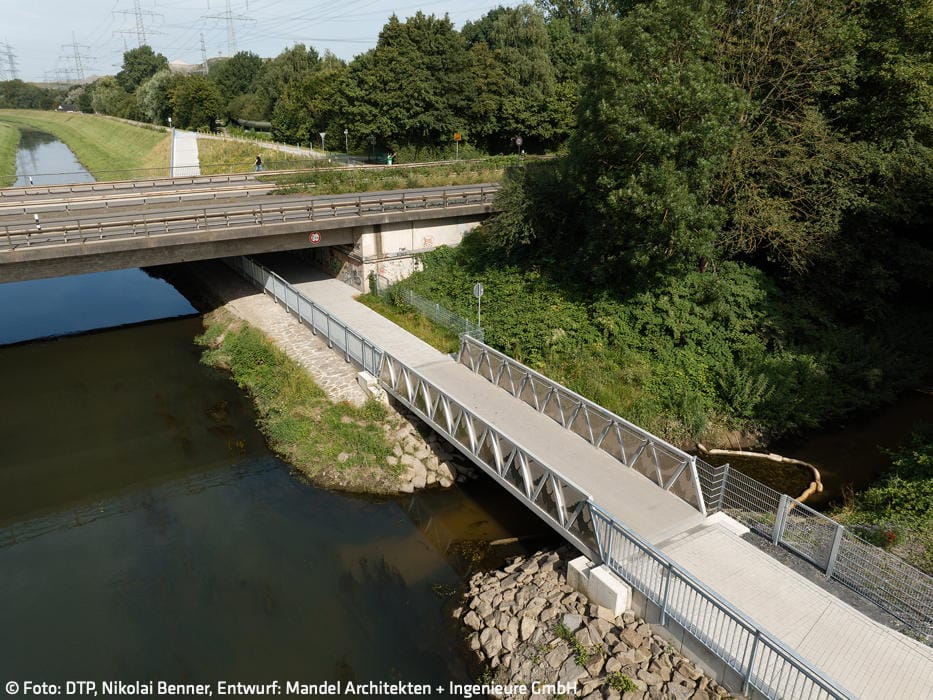
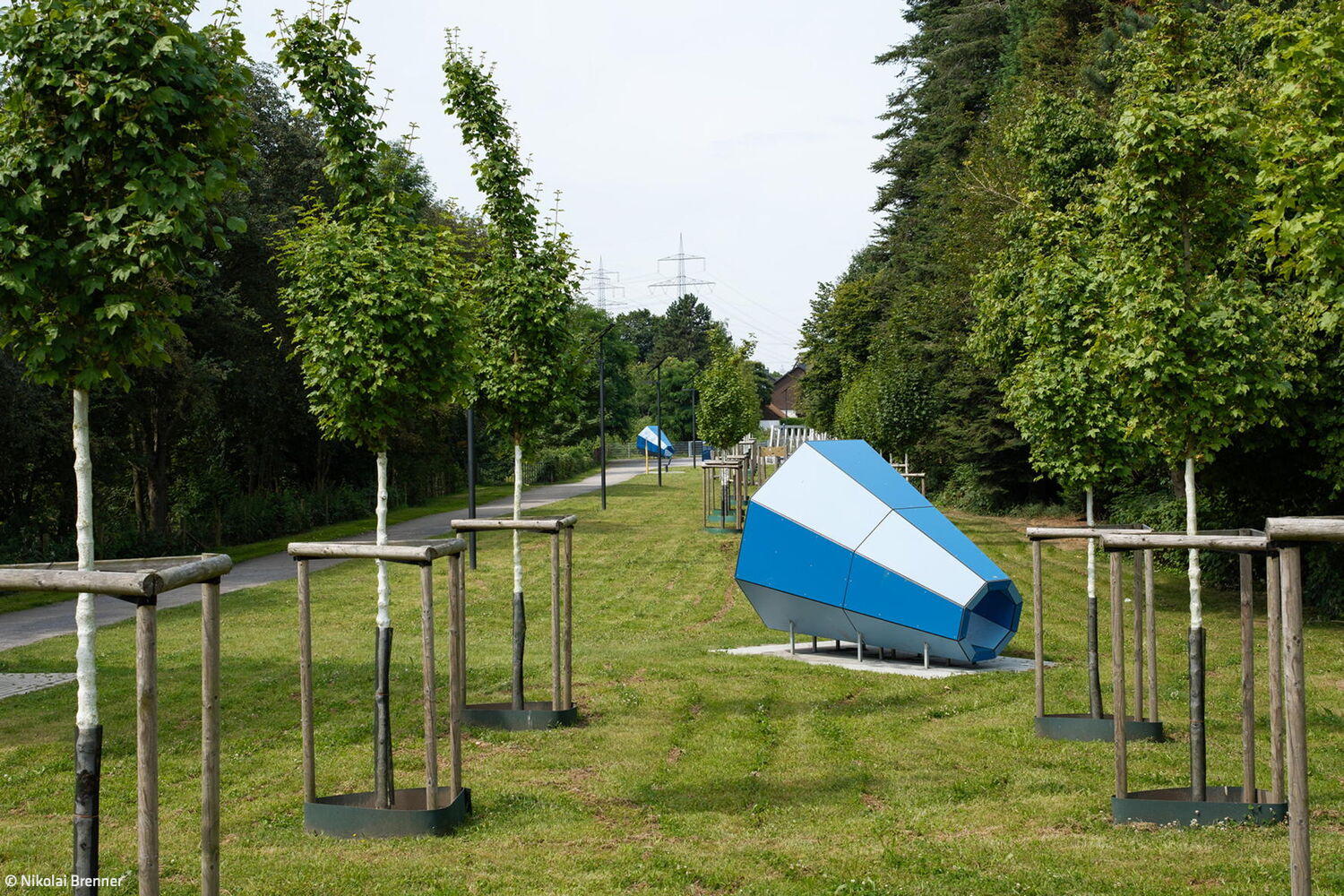
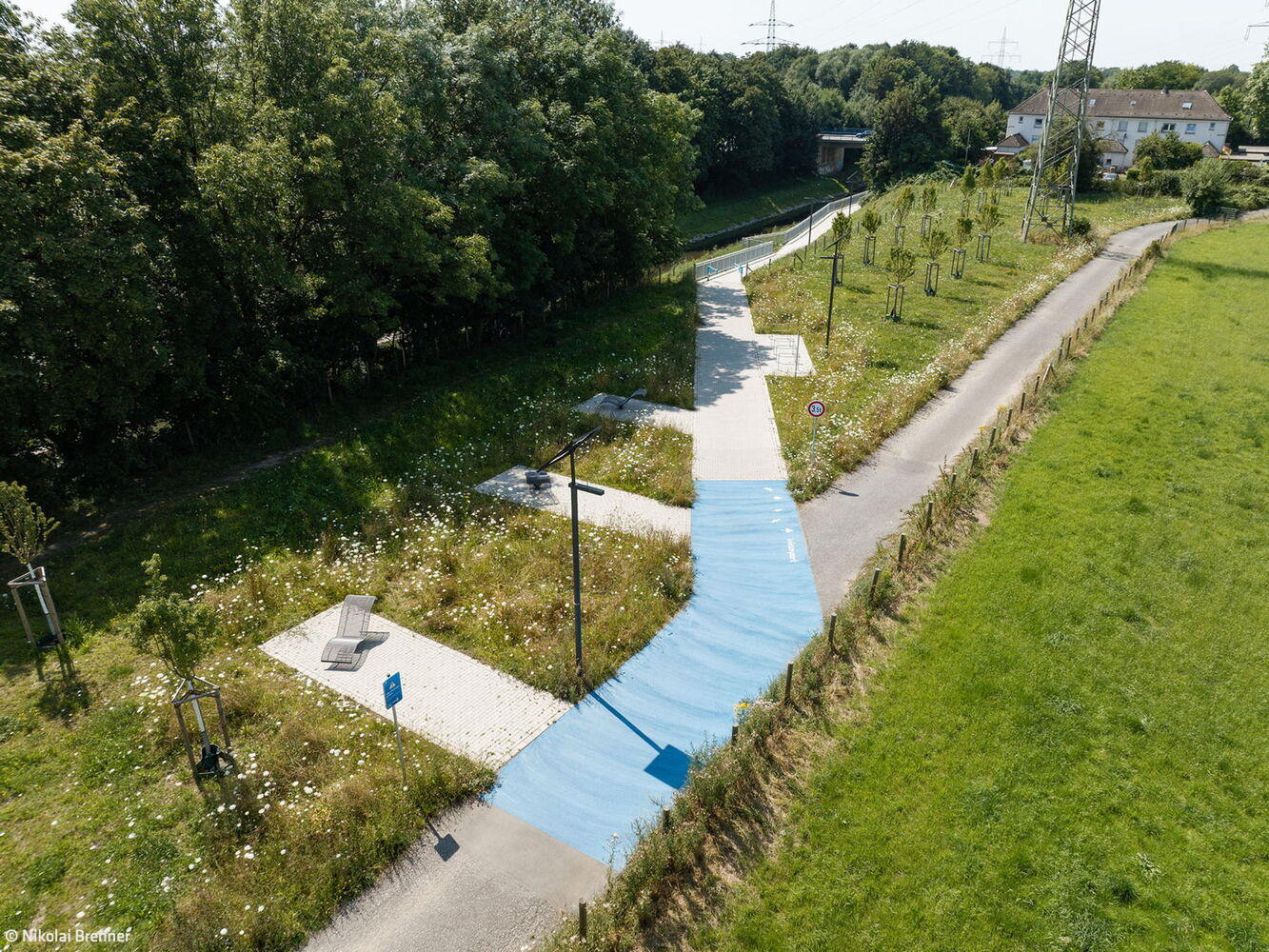
The promenade does far more than simply connect the cities—it creates a sense of place and transforms the Emscher and its surrounding pathways into an attractive destination for the neighborhoods, city, and region. The backbone is formed by the former operating path of the Emschergenossenschaft, now a waterside cycling and pedestrian route. However, it is the enhancement of the riverbanks and the creation of distinctive places that elevate it to something greater: an attractive and multifunctional urban space. Along the approximately 20-kilometer stretch, 25 designed spaces have been created, each addressing local themes, engaging with spatial relationships, or strengthening connections to the surrounding neighborhoods. New bridges and underpasses, as well as striking bridge structures—including an exit platform and a bridge spanning the Schellenbruchgraben, designed by Mandel Architects and Engineers—invite visitors to discover the space in unprecedented ways and enable new connections to public transportation. The Emscher Promenade thus becomes a vital part of the region's blue-green infrastructure. It can be divided into three sections. The first section showcases a typical Ruhr Valley landscape, blending industry, commerce, residential areas, and green space. The promenade responds to this environment with carefully designed places, engaging the senses of hearing and sight, highlighting what is special, and revealing meaningful connections. Examples include the Hellbach Terraces with native trees and benches for lingering, as well as blue-painted, funnel-shaped objects—listening stations—that capture the theme of water and its sounds. The second section focuses on the river's future landscape appeal and its history. Blue horse sculptures, the Emscher Horses, commemorate the wild horses that once roamed here. The striking Emscher Platform, meanwhile, extends far over the river embankment from the path, offering a glimpse of a planned widening of the river as an ecological focal point. The third section emphasizes the connection between the urban space and the river. At the Herdicksfällen, a water experience area has been created. Along the playful blue water serpent that winds across the meadow, visitors can explore and engage. All gathering points, play areas, and learning spaces follow a unified design language, forming the "blue thread" of the Emscher Promenade.
Photos:
Nikolai Benner
www.nikolaibenner.de
(Published in CUBE Ruhrgebiet 03|25)
A Distinctive Collection
New Building Completes the Modern Urban Quarter "Duisburger Freiheit"

A Revitalization Success Story
Recklinghausen's New MarktQuartier: A Vibrant Mixed-Use Destination
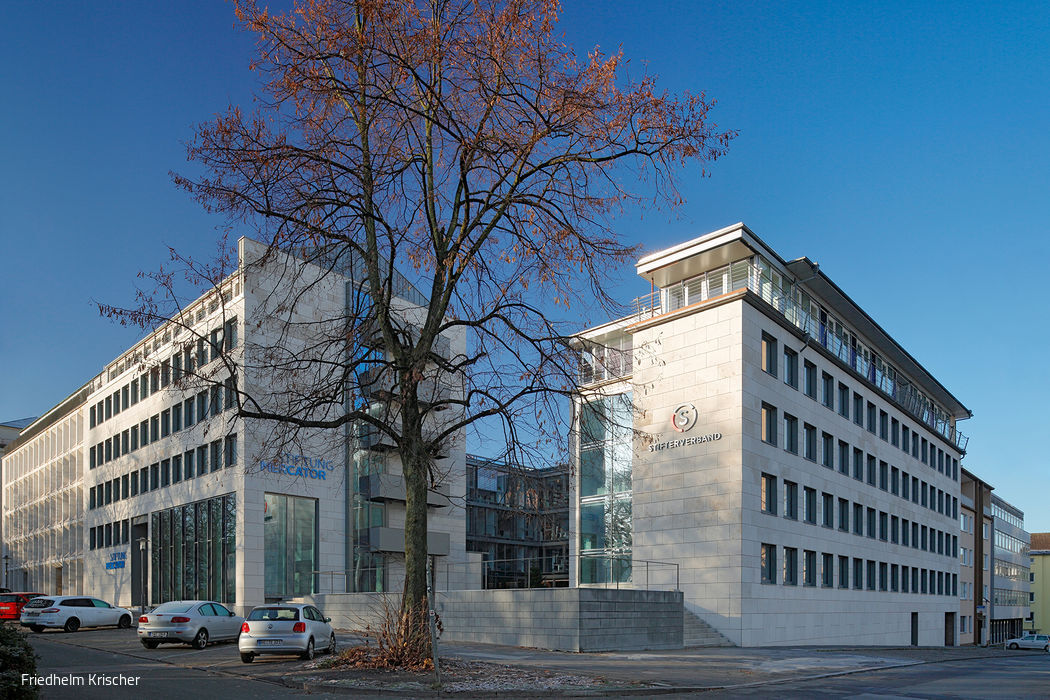
Openness as a matter of course
The Mercator Foundation's Essen headquarters embodies openness, connectivity, and forward-thinking design.

Top Marks for School Expansion
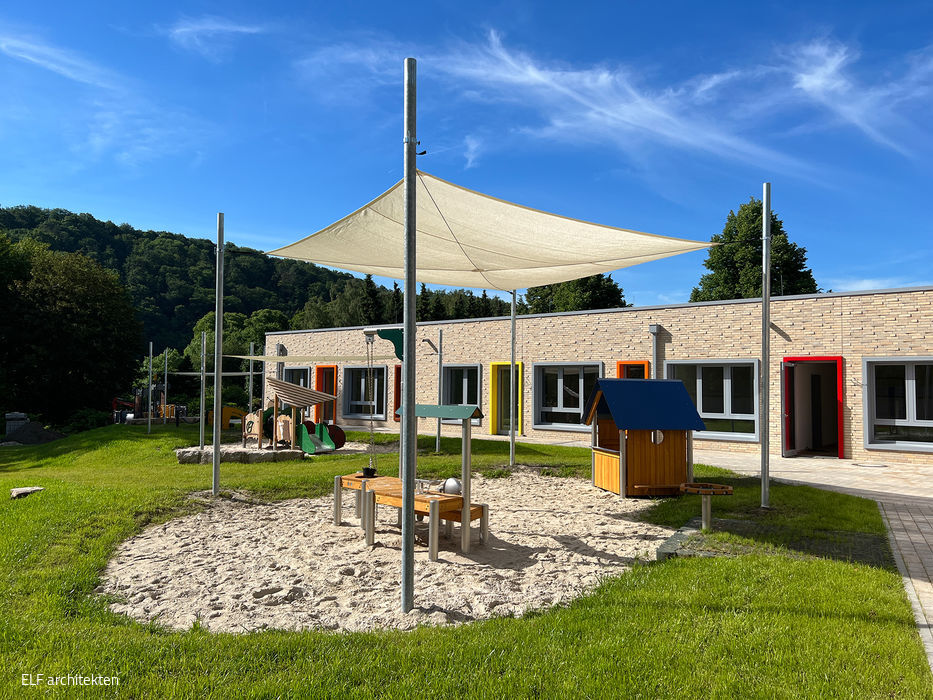
The Glück-Auf school campus in Oberhausen exemplifies thoughtful design adapted to its site.