


Revitalisation Success
Recklinghausen's Vibrant Market Quarter Takes Shape


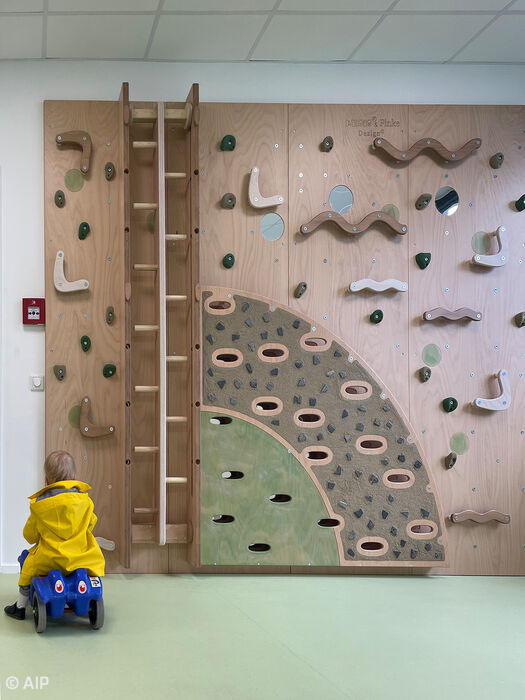
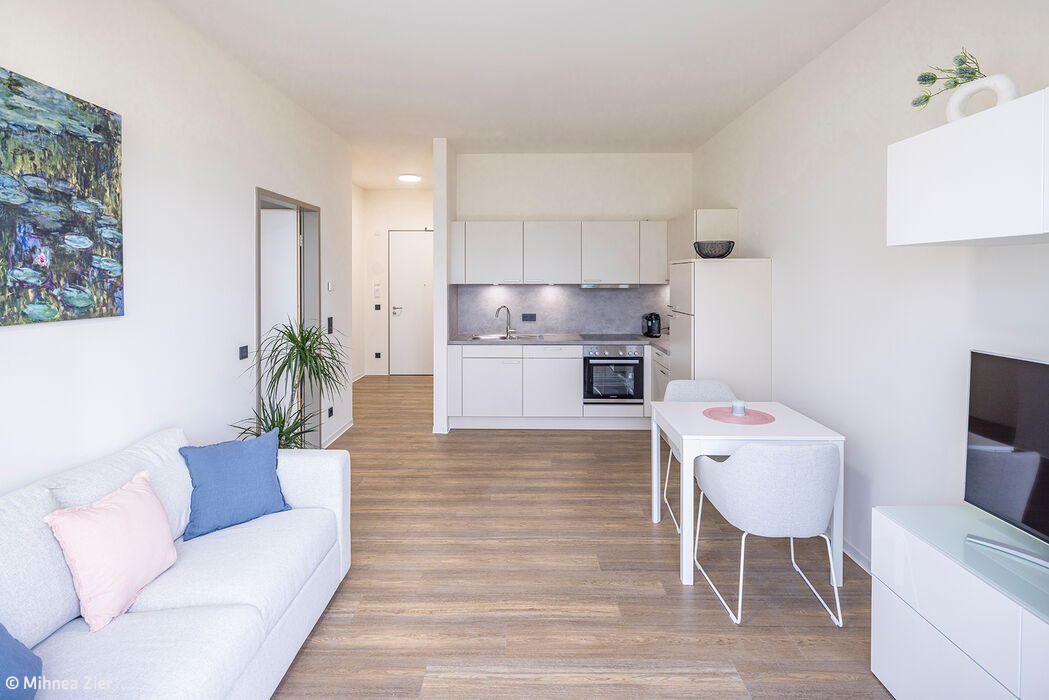

When Karstadt closed its doors in Recklinghausen in 2016, it marked the end of 123 years of department store heritage in the heart of the old town. Today, the MarktQuartier Recklinghausen stands in its place—revitalizing this prominent location with fresh purpose. AIP Architects rose to the challenge, conducting a thorough site analysis before designing and executing a property tailored to diverse uses. From 2018 through the planning phase, the building served as a temporary cultural venue. Upon completion in 2023, the development now thrives with a dynamic mix: retail shops, a café with terrace seating, medical and professional offices, a hotel, a nursery, and assisted living residences—all weaving together a vibrant community destination.
The project's starting point was shaped by the legacy of mining operations. Since 1892, Recklinghausen had experienced ground subsidence of approximately six meters. In the former Karstadt building, this manifested as a tilt of up to 80 centimeters in places. Additionally, the existing ceiling heights and floor thicknesses did not match the original plans. The solution required demolishing part of the structure, adjusting building transitions to accommodate the inclination, calculating lateral loads on supports, and designing lightweight façades. However, the partial demolition also created an opportunity to construct a new hotel wing with additional stories. The historic façade facing the market square was largely preserved and opened up on the upper floors, creating assisted living units with loggias and distinctive red awnings. The atrium, closed since the 1970s, was reopened and now features an attractive courtyard with abundant greenery and a substantial water feature, bringing additional natural light to the property. The adjacent building, formerly the bed storage facility, was extended by two stories, now housing a kindergarten. The crowning touch is the outdoor area with play equipment on the roof surface.
The revitalization has proven successful, as AIP Architekten confirm while emphasizing the particular challenges of this project: "The ground subsidence caused by mining required extraordinarily high precision in the execution planning, as vertical adjustments had to be implemented on every floor. When transforming an existing department store, the key is to anticipate potential obstacles and develop structural solutions that ensure economically viable adaptive reuse." The project earned second place in the polis Award 2024 in the "Reactivated Centers" category.
Photos:
Marcel Kusch
www.marcelkusch.de
(Published in CUBE Ruhrgebiet 03|24)

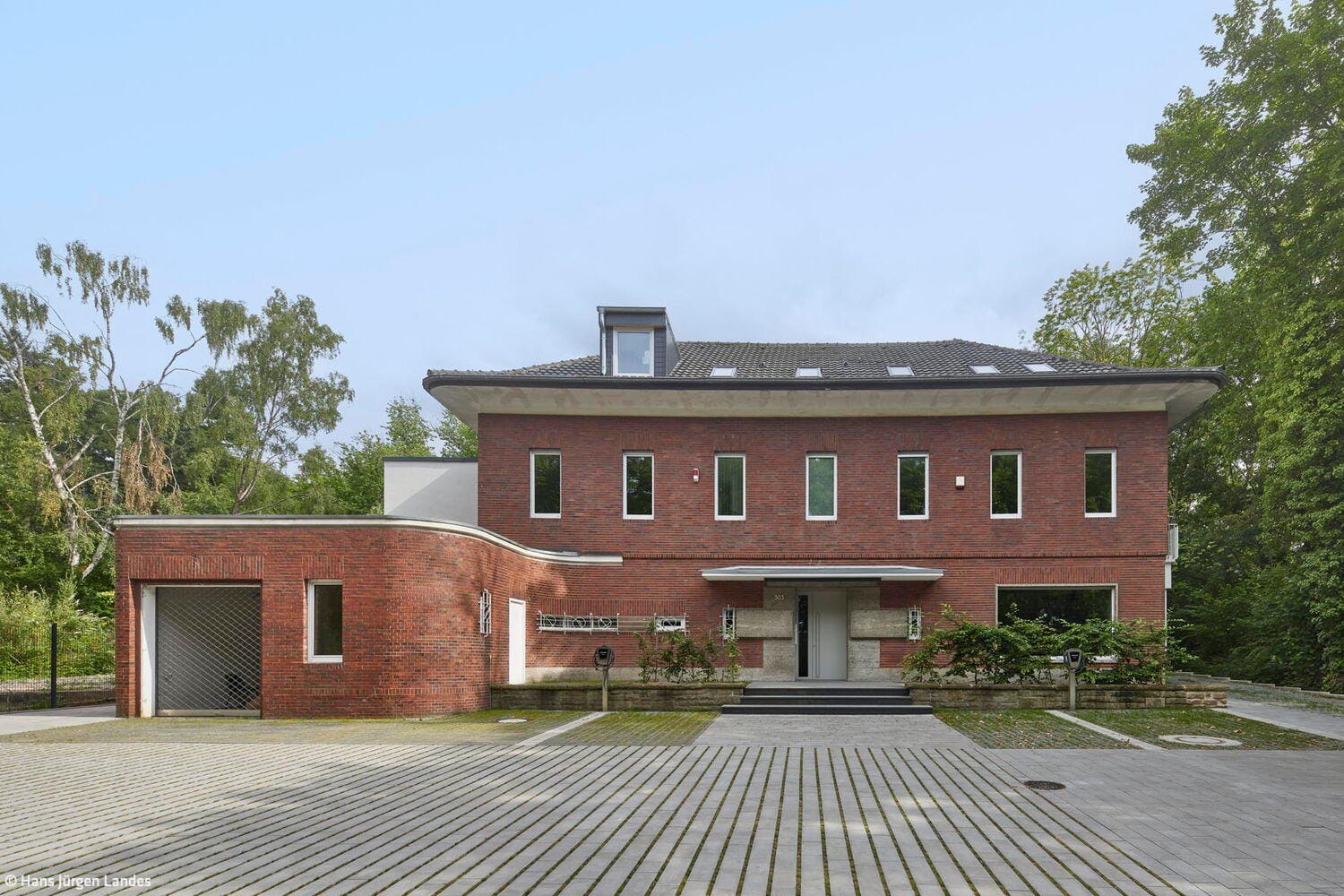
Innovation Within Existing Context
A 1930s villa in Dortmund is transformed into a prestigious corporate headquarters
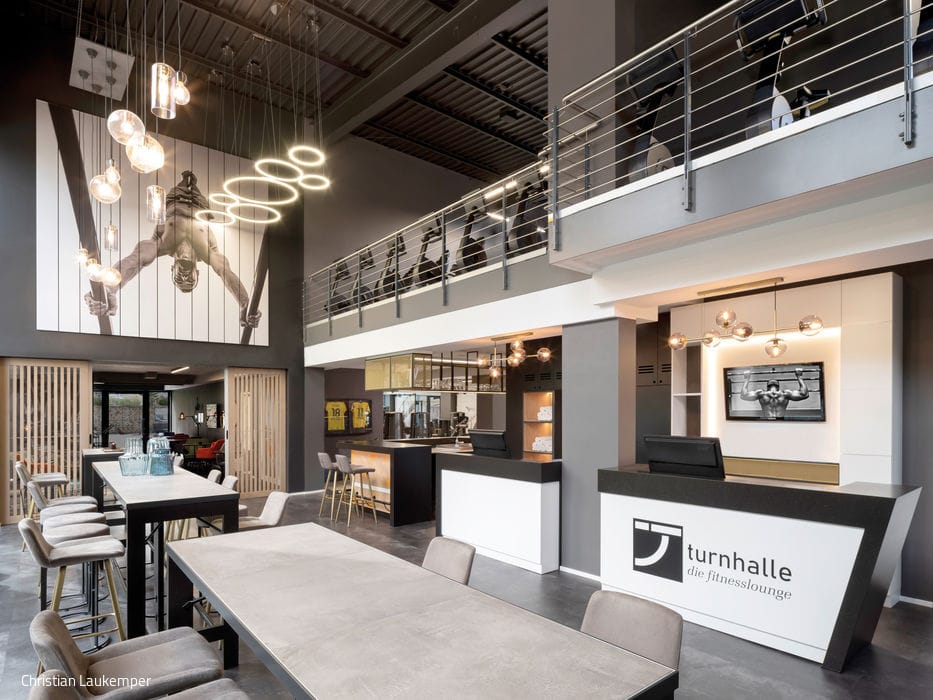
Designed for Leisure
Dortmund Fitness Lounge Reimagined as a Wellness and Performance Destination
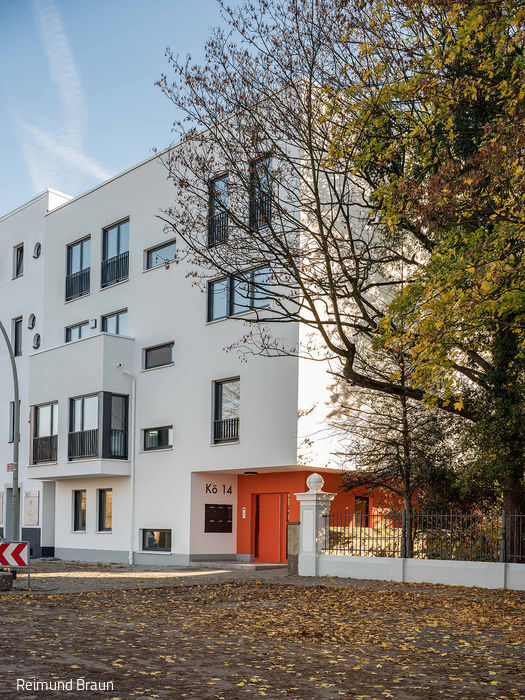
Views of Art and Nature
A Residential Building in Dialogue with Its Landscape
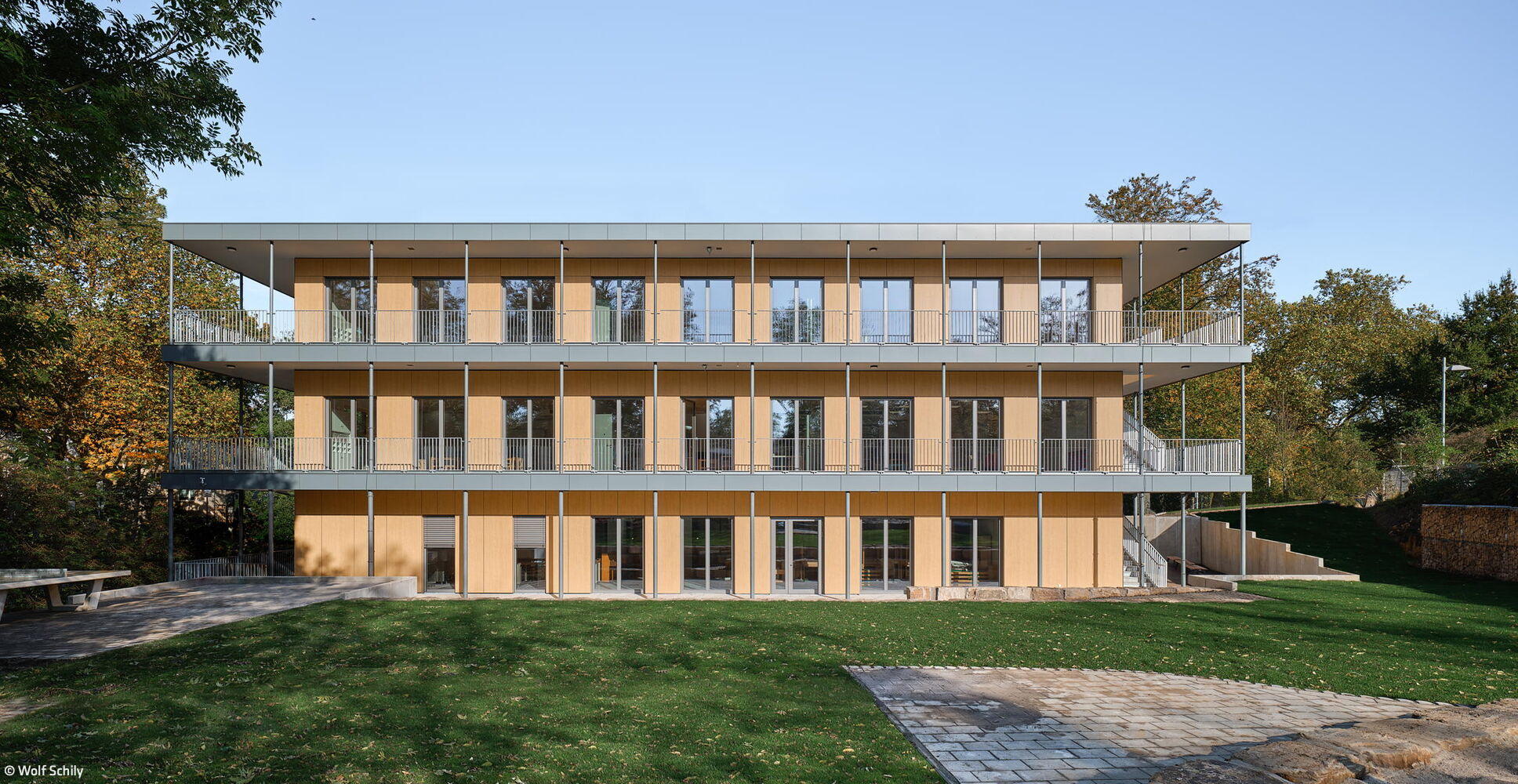
Pavilion with Multiple Qualities
A modular design built for tomorrow: this school structure adapts to countless future uses.