


One Becomes Two
Gabled House for Two Families Transformed into a Villa with Castle Views
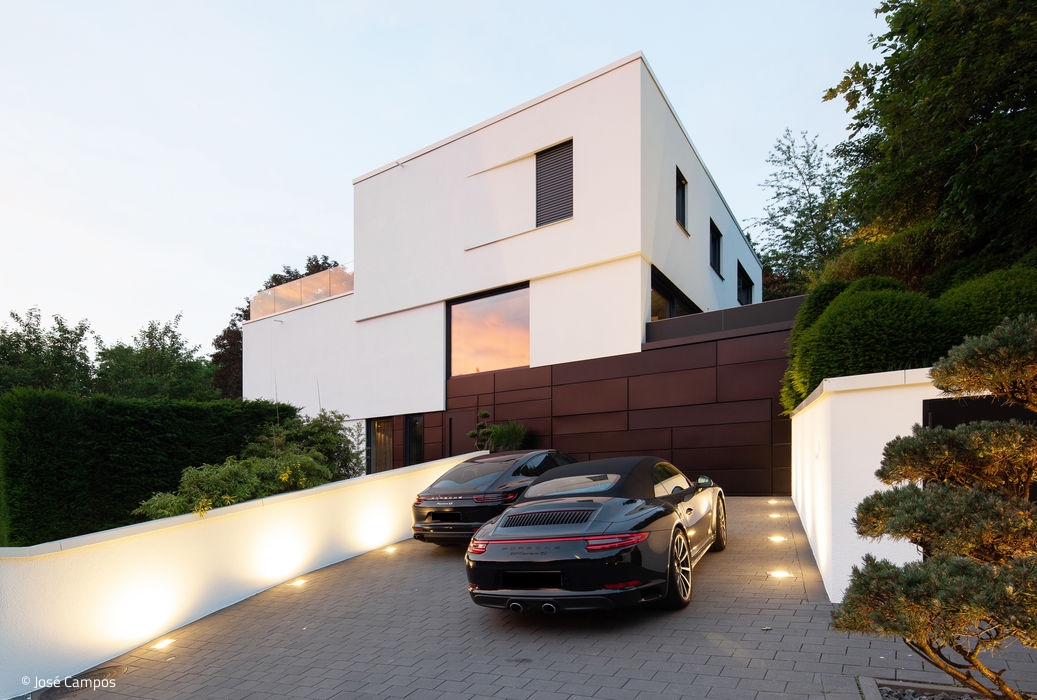
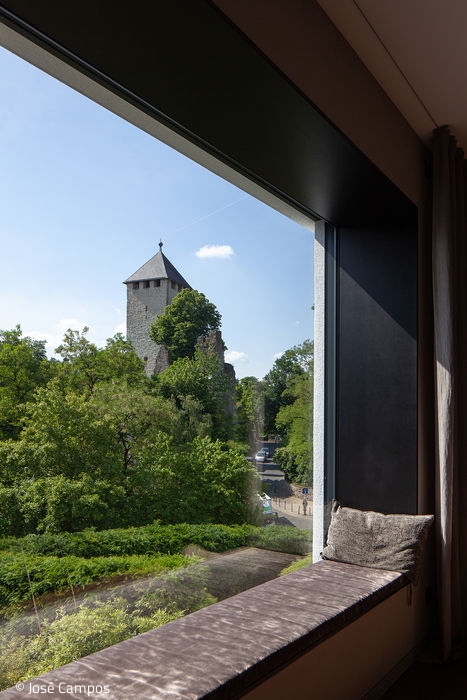
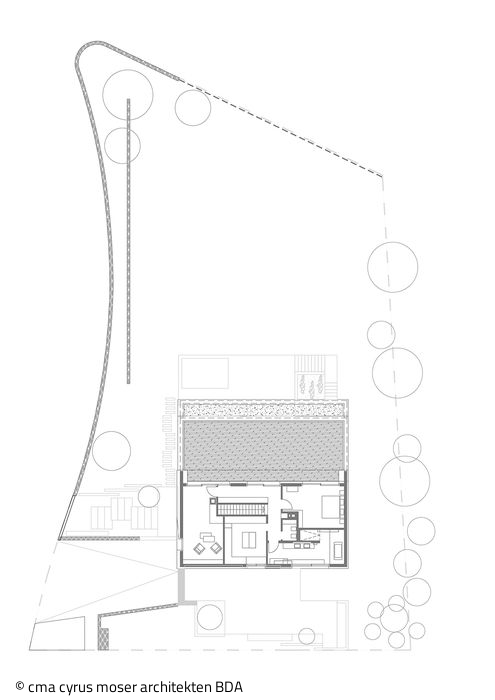
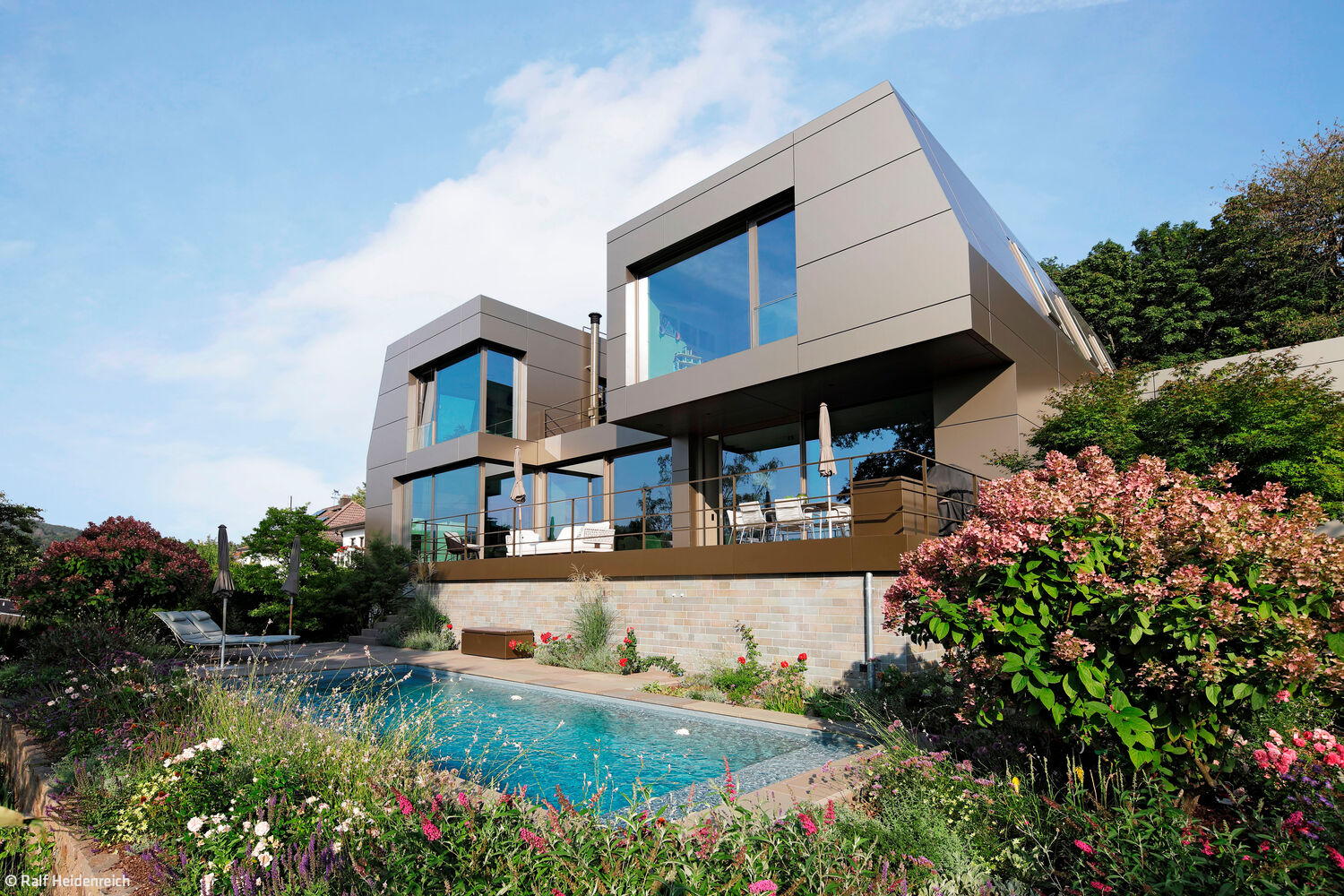
A historic town center, a striking castle ruin, and an ancient city wall. It's hardly surprising that Birnbaum, sprawling across valleys and hills, enjoys considerable popularity. The villa that cma cyrus moser architekten created here through the renovation of a two-family house sits nestled among residential buildings on steeply sloping terrain. Built in 1965 using conventional construction methods, the house featured two residential units: one with a pitched roof, as was customary at the time. One of the original units was located in the basement level, the other on the ground floor with access to a partially finished attic. The clients envisioned transforming the structure into a modern villa through careful renovation.
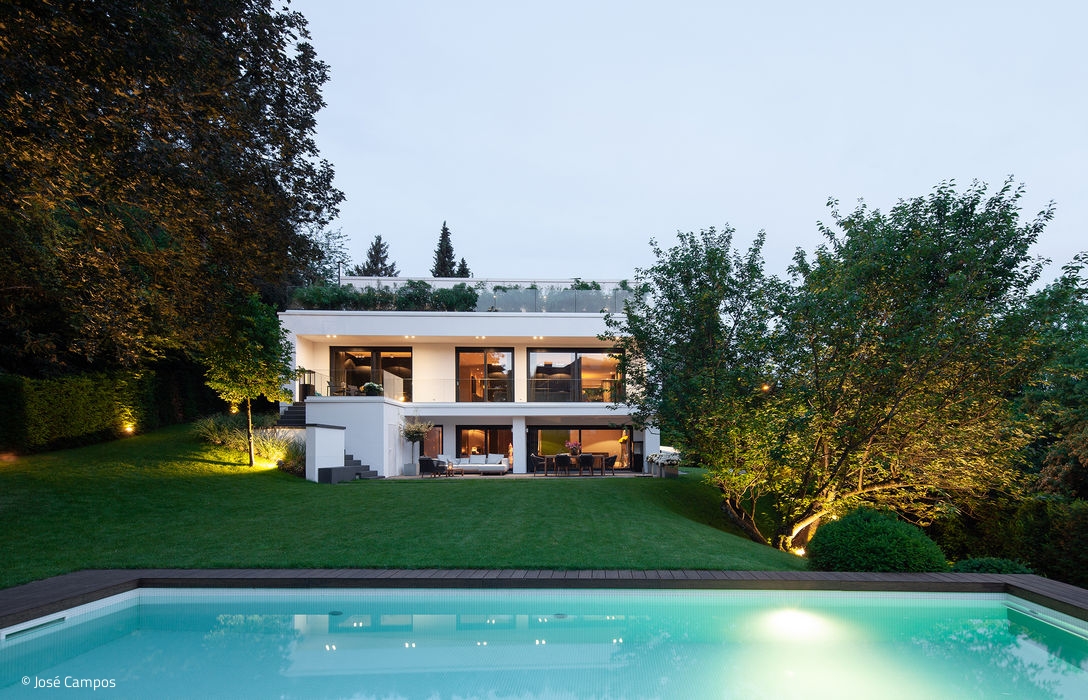
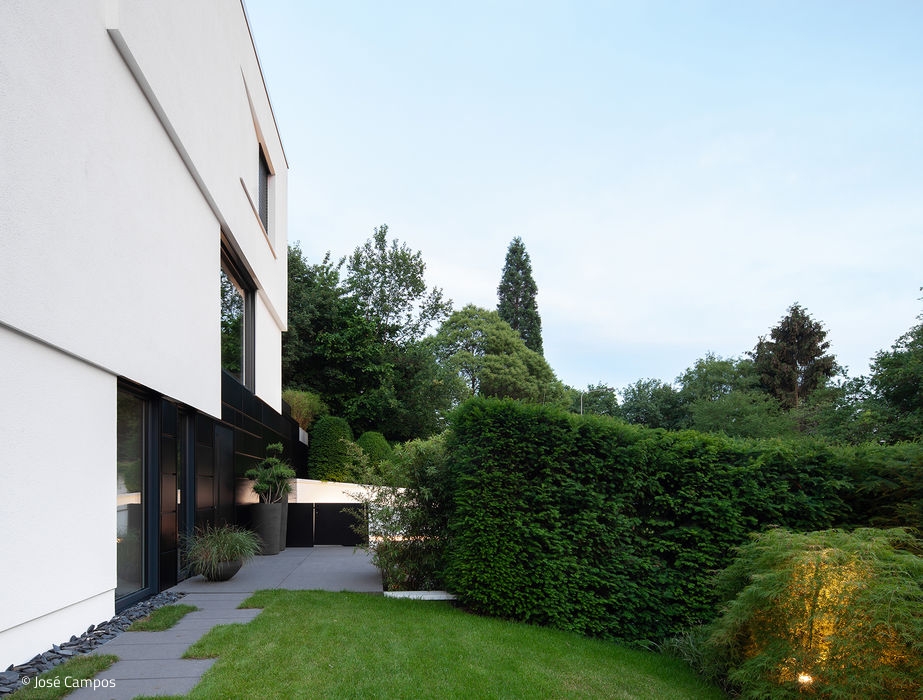
During the renovation, the architects merged both residential units, dismantled the pitched roof, and added a new upper floor with a terrace. A balcony was also introduced on the north-facing façade. In this way, two became one: the single-family home also gained architectural character, now defined by clean, cubic forms.
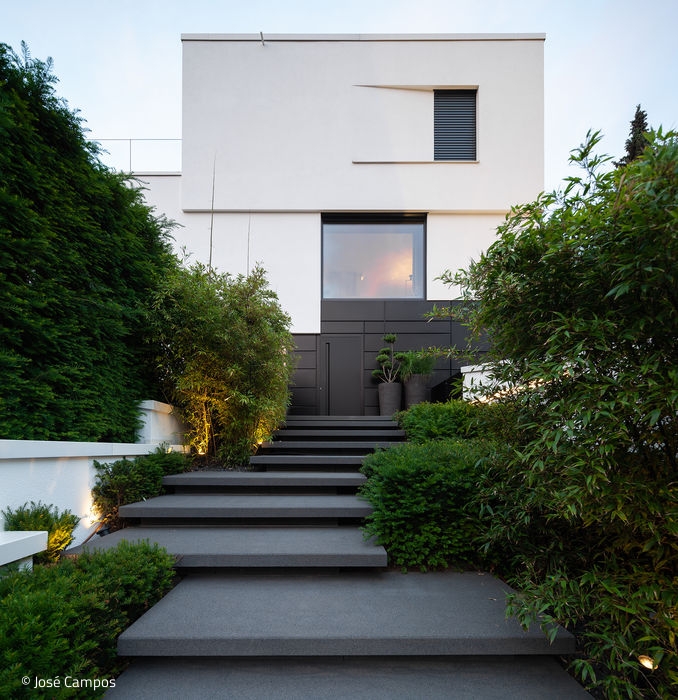
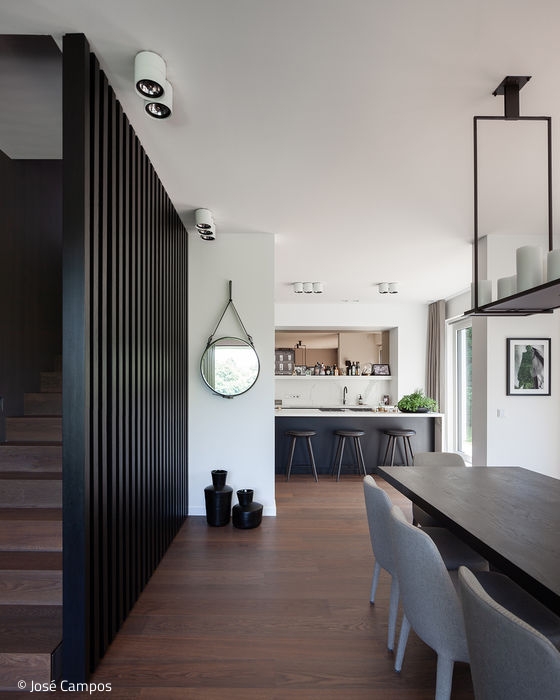
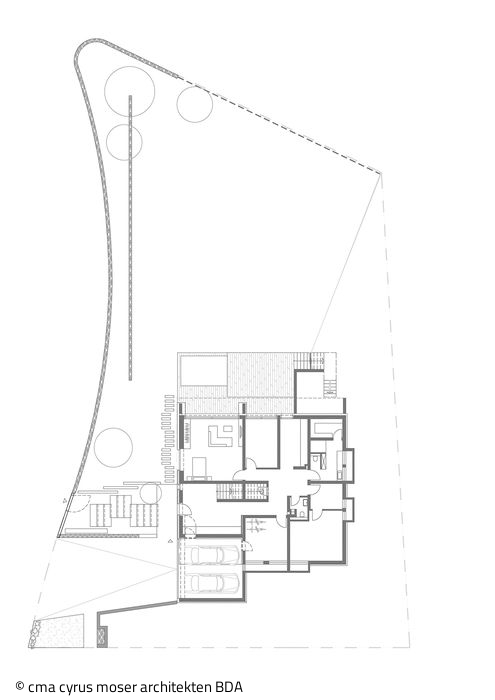
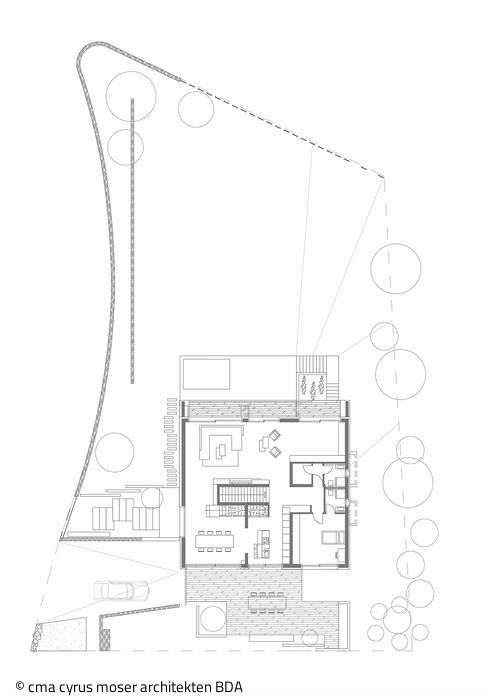
The house's design is shaped by the site's topographic conditions. The entrance was relocated to street level and leads directly into the lower level. From there, a central staircase provides access to the entire house. "The ground floor features carefully zoned spaces that create compelling spatial sequences with a seamless transition to the surrounding landscape," the architects explain.
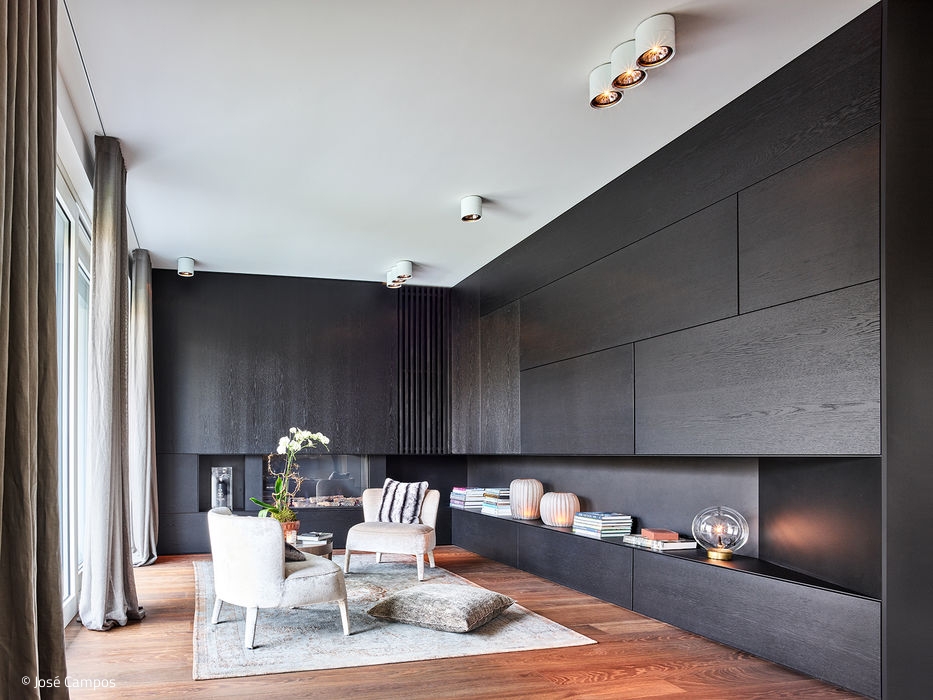
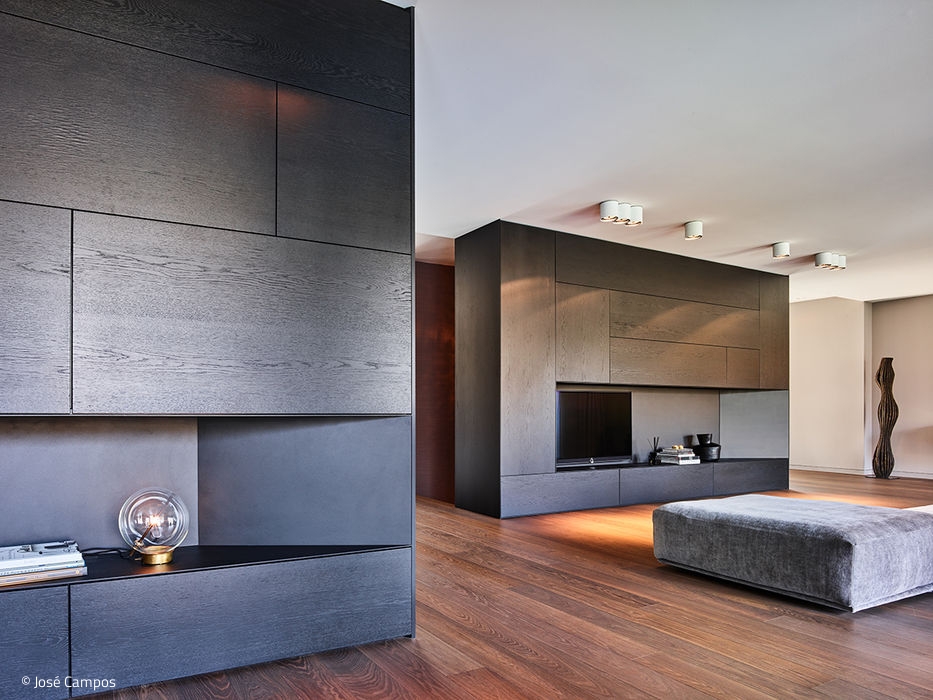
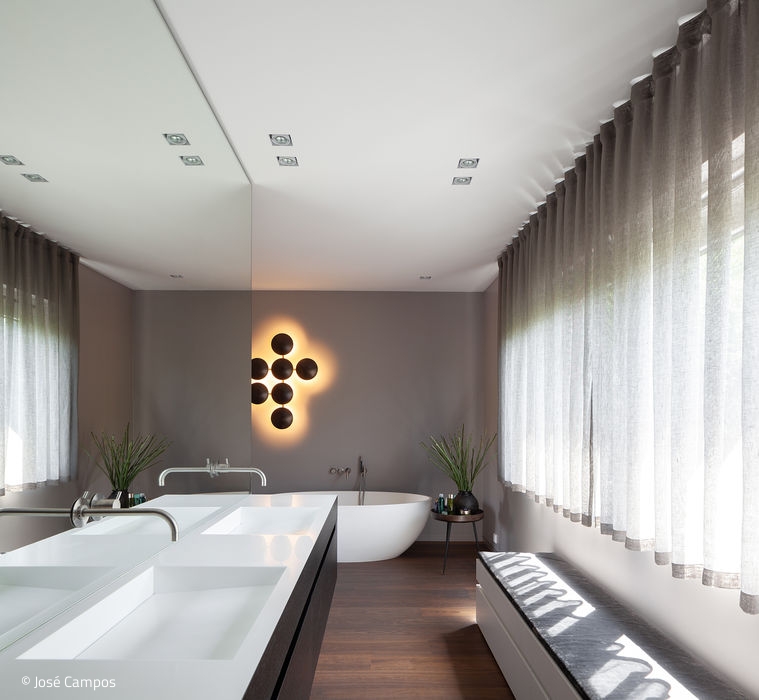
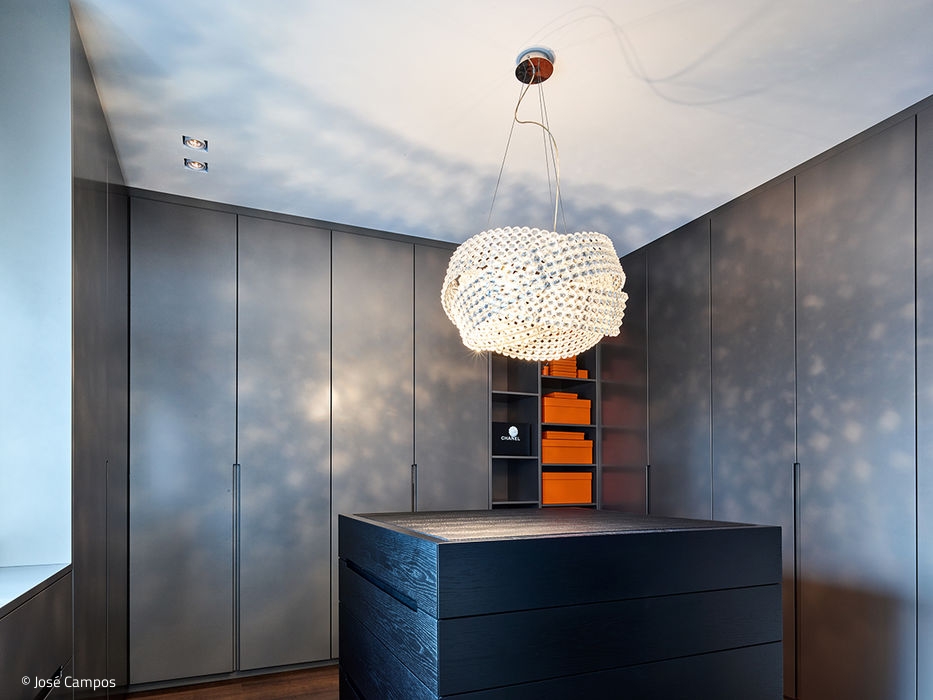
Living areas, kitchen, dining space, two children's bedrooms each with an ensuite shower, and utility spaces are housed in the cube positioned above the basement level. The upper floor is dedicated to the private realm: the master bedroom, dressing room, master bath, and lounge area are located here. "Through collaboration with rumi interior on furnishings, lighting, wallpaper, carpeting, and interior design, a successful balance was achieved between clean exterior lines and inviting interiors. The interplay of gloss and texture, the strategic use of materials combined with atmospheric lighting, creates spaces tailored to the clients' needs." To frame views of Sonnenberg Castle, the architects opened and glazed the façade extensively toward the north and onto the roof terrace.
Wherever possible, the architects preserved the existing building fabric throughout the renovation. Since the former duplex was constructed from a hybrid system of masonry and load-bearing reinforced concrete columns—offering considerable flexibility—the architects had significant freedom in their planning: the pitched roof and existing floor above the ground level could be straightforwardly removed, existing walls on the ground floor could be extended, and a new reinforced concrete floor slab could be added above the ground level.
Photography Credits:
José Campos
(Published in CUBE Frankfurt 03|19)


Central & Green
247 rental units with diverse floor plans on Construction Phase 2 at Henninger Tower
Contemporary Interpretation
Dream house on a hillside with a contemporary hipped roof

Gaining Space & Openness
Renovation creates space and a contemporary home for the family
Boldly preserved
Mainz's Most Prestigious Gymnasium: A Complete Restoration and Expansion