


Japanese Inspiration in Starnberg
Expanding a Timeless Icon: The Starnberg District Office Marks 35 Years
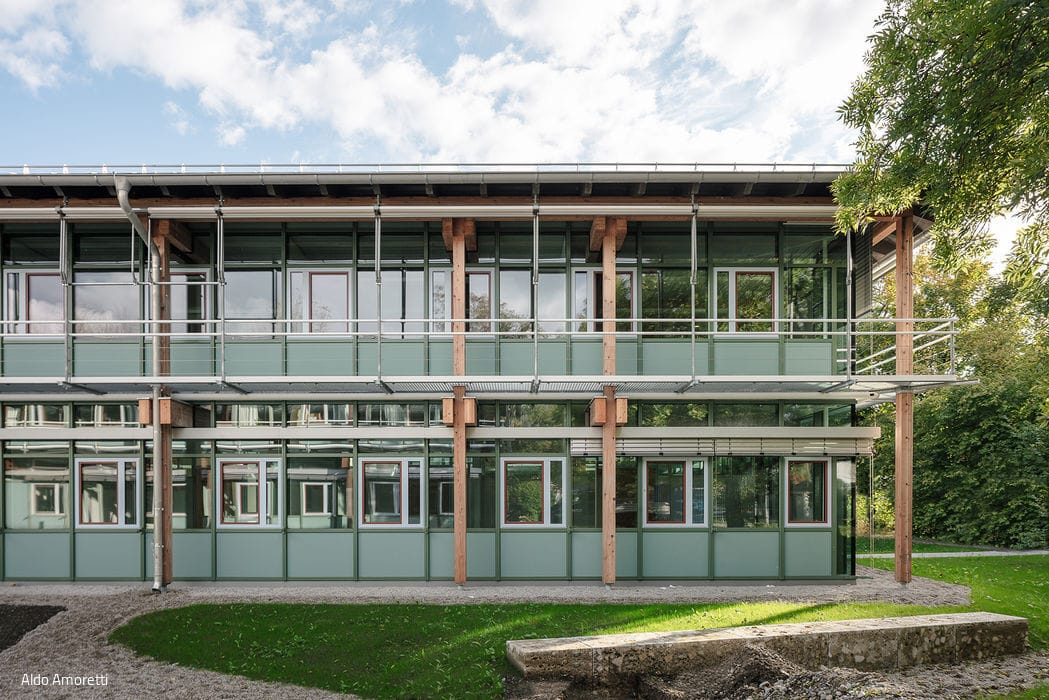
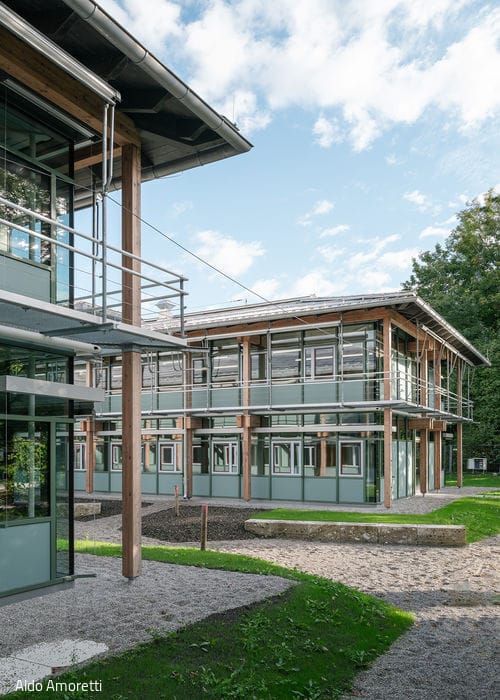
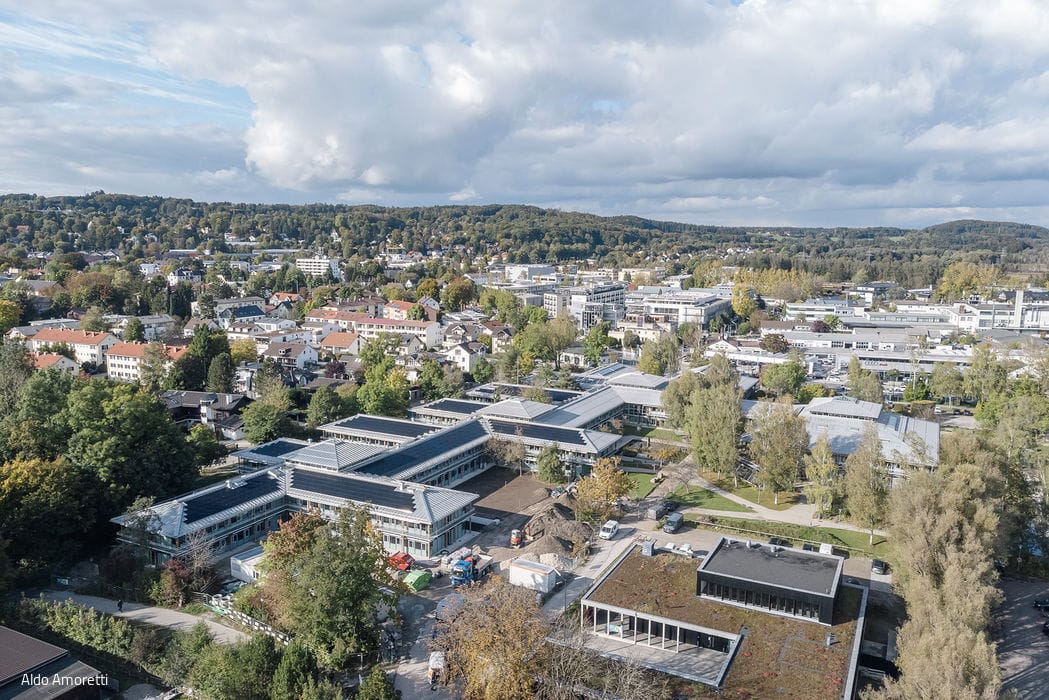
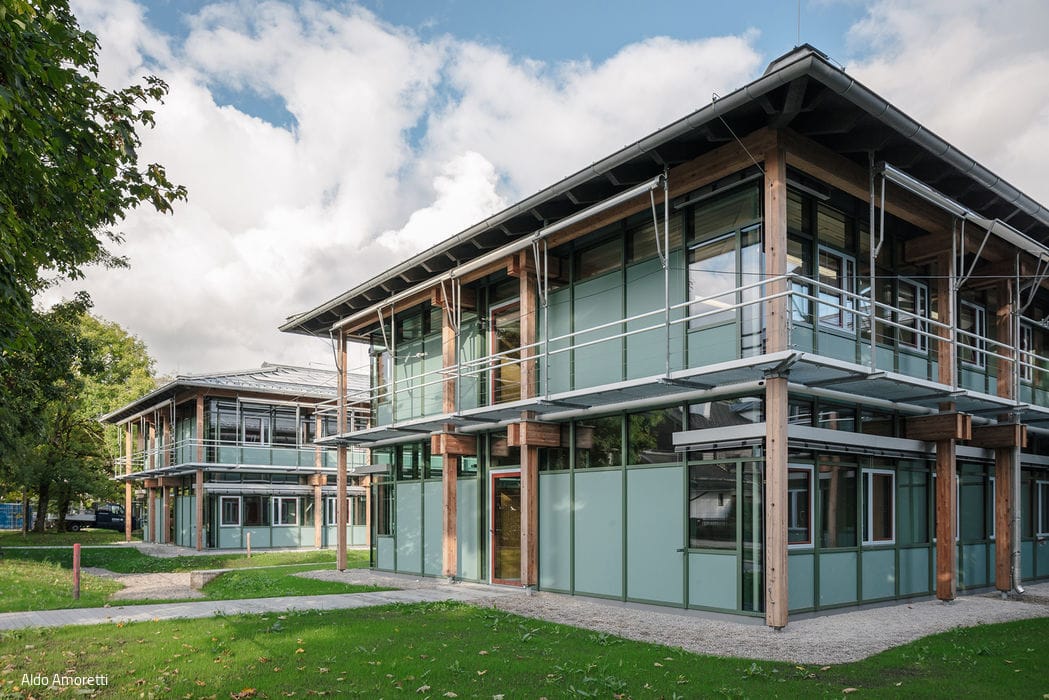
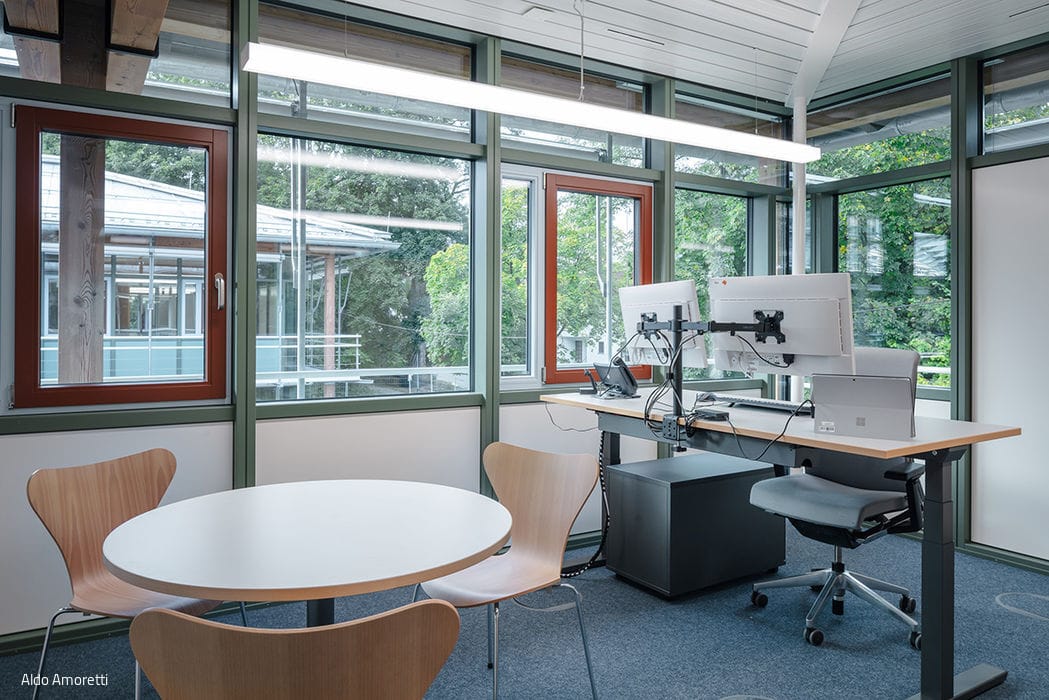
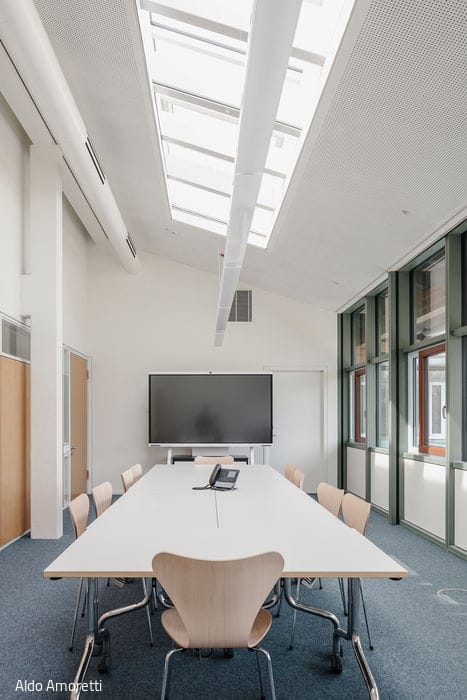
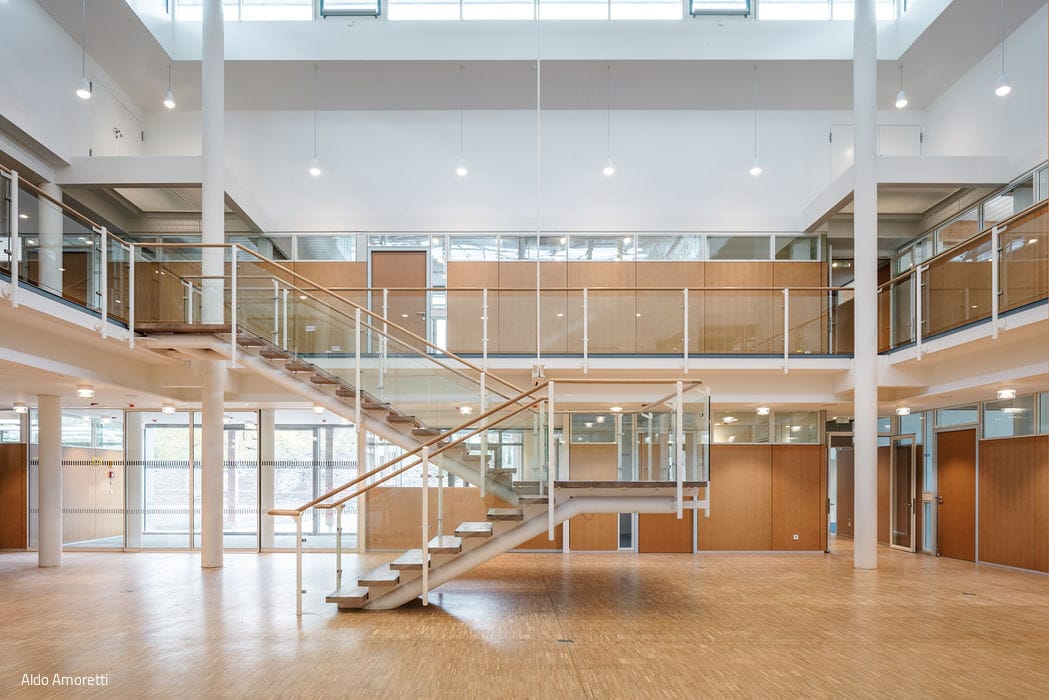
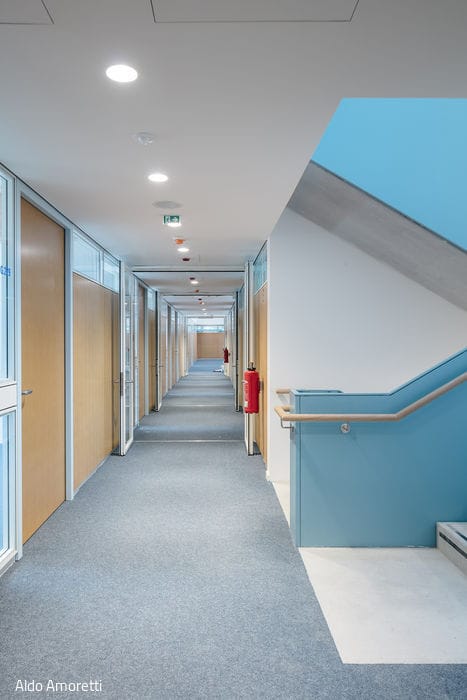
The Starnberg District Office—a hybrid structure of wood, steel, and concrete—stands as a multi-award-winning landmark. Completed in 1987, it garnered the prestigious German Architecture Prize shortly after. Thirty-five years later, this building hasn't required renovation but rather expansion to accommodate growing staffing needs. Completed in autumn 2021, this extension preserves the architectural vision of the original design by Auer Weber, led by the visionary Prof. Fritz Auer, who remains active at 89. Project architect Dominik Fahr, also from Auer Weber, oversaw the implementation.
What made the original building remarkable was its departure from conventional administrative architecture: it resembled a landscape park dotted with Japanese-inspired pavilions—some single-story, some double—featuring gently pitched roof planes. The result? A lightness and grace rarely associated with government buildings. The modular design was intentionally conceived for future expansion, with flexible interior spaces that can be reconfigured as needs evolve. Space was generously allocated: the 9,000 m² site is impressively open, with two-thirds of the area remaining unsealed.
The new extension was carefully designed to echo both the exterior and interior character of the original structure, creating a seamless spatial experience. The goal was clear: staff and visitors should perceive the building as a unified whole, with no visual or functional division between old and new. The project also incorporated a solar photovoltaic system as part of its commitment to sustainability.
The extension provides 160 workstations alongside collaborative and social spaces, designed to KfW Efficiency House 55 standards. Thermal comfort is achieved through component activation—a system where water-filled pipes embedded in walls, ceilings, and floors regulate temperature throughout the building. A groundwater heat pump, powered by the new 250 kWp photovoltaic array, delivers CO₂-neutral heating and cooling. Additional efficiency measures include a highly insulated façade and triple-glazed windows. Any surplus solar energy generated is fed directly into the public grid.
Photography Credits:
Aldo Amoretti
www.aldoamoretti.com
(Published in CUBE Munich 02|22)

Muff's New Cabinet of Wonders
A Munich goldsmith and jewellery designer opens a new chapter in the Graggenau
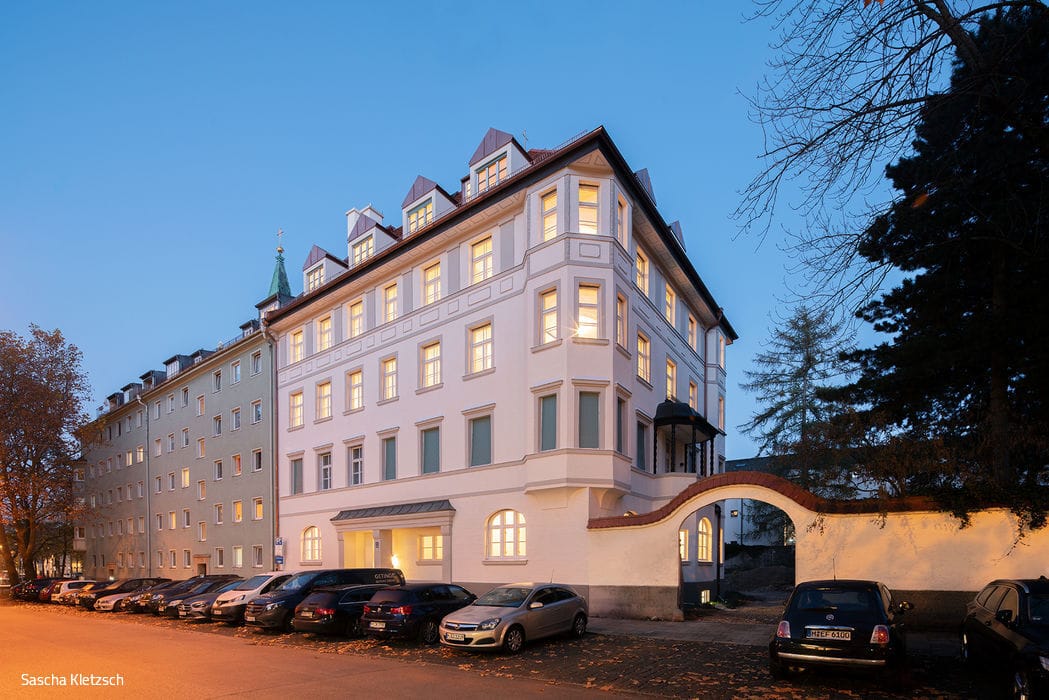
Sacred Becomes Secular
A Heritage Rectory Reimagined as Contemporary Housing
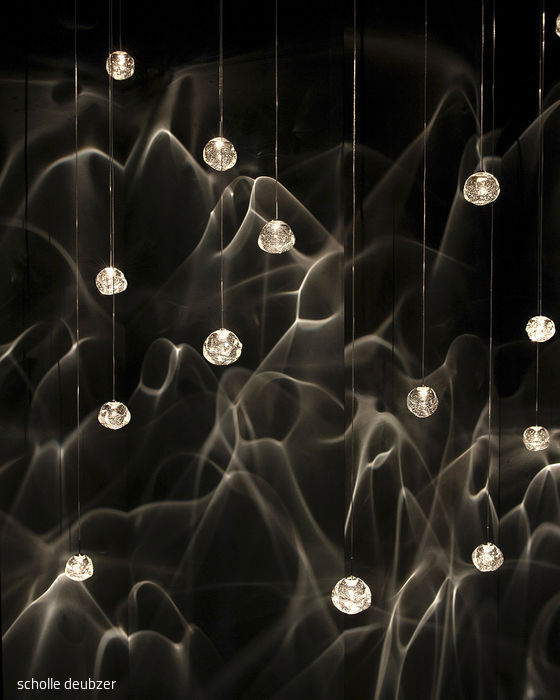
Sculptures in Glass and Light
Handcrafted creations with great charisma
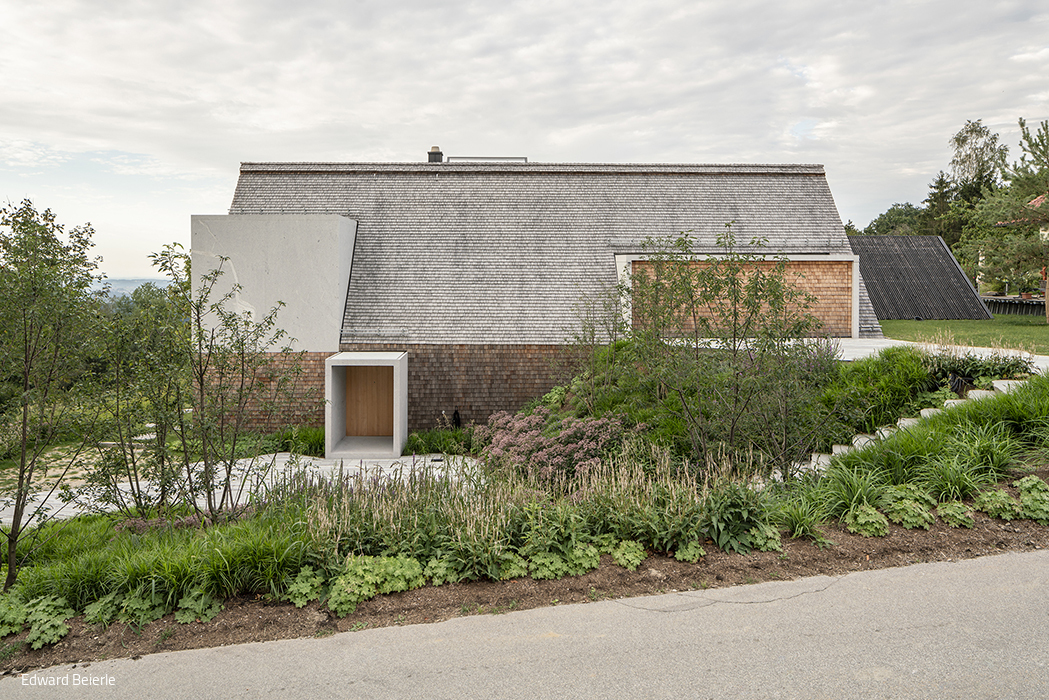
Feldspar, Quartz, and Mica
A granite house: modern reinvention of the traditional Waidlerhaus