


A Discipline All Its Own
With skillful planting, a lush urban garden flourished despite the limited light.

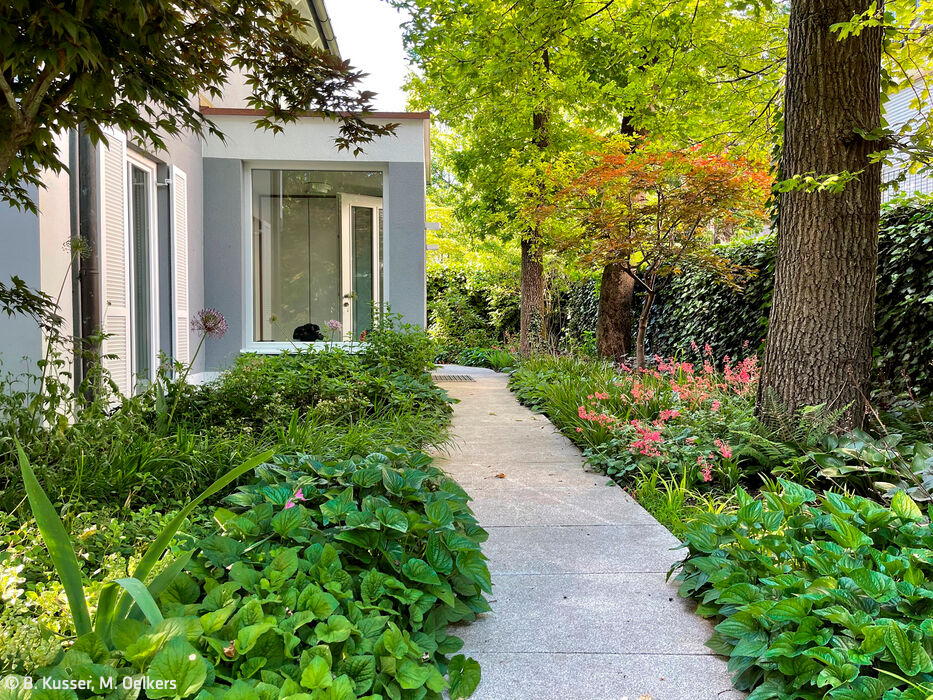
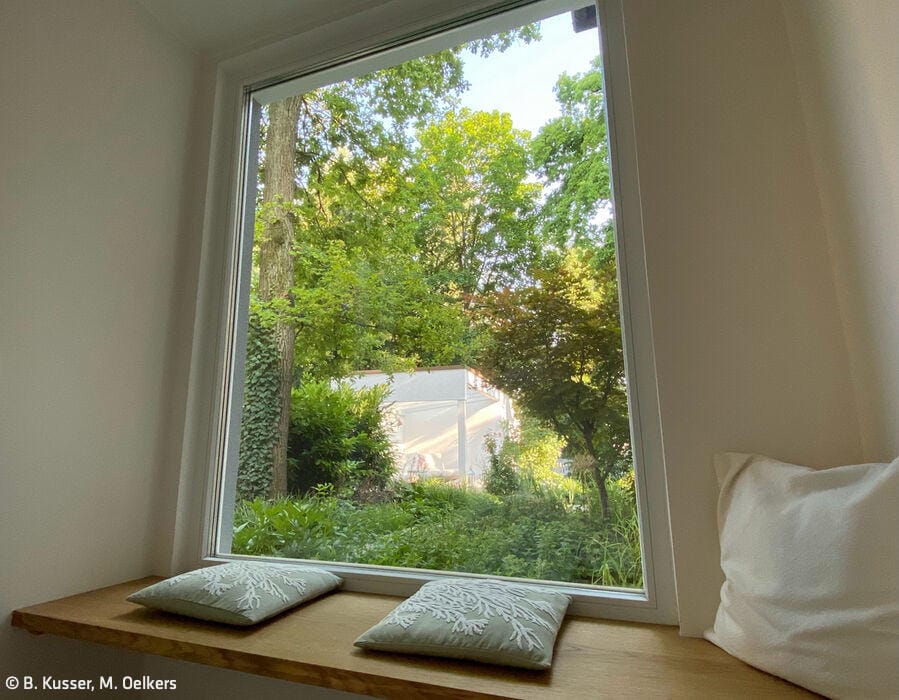
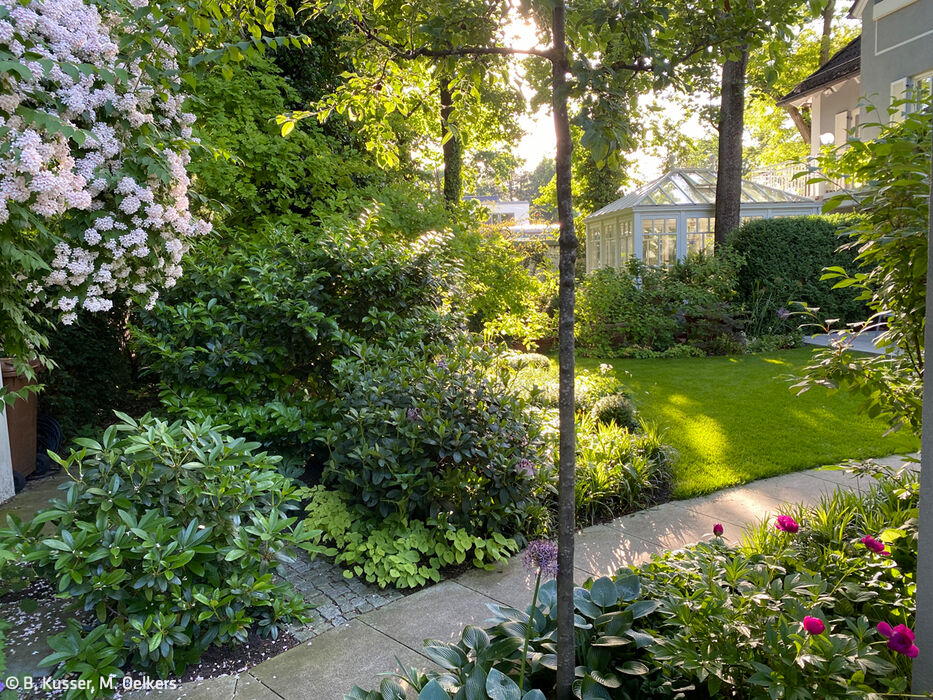
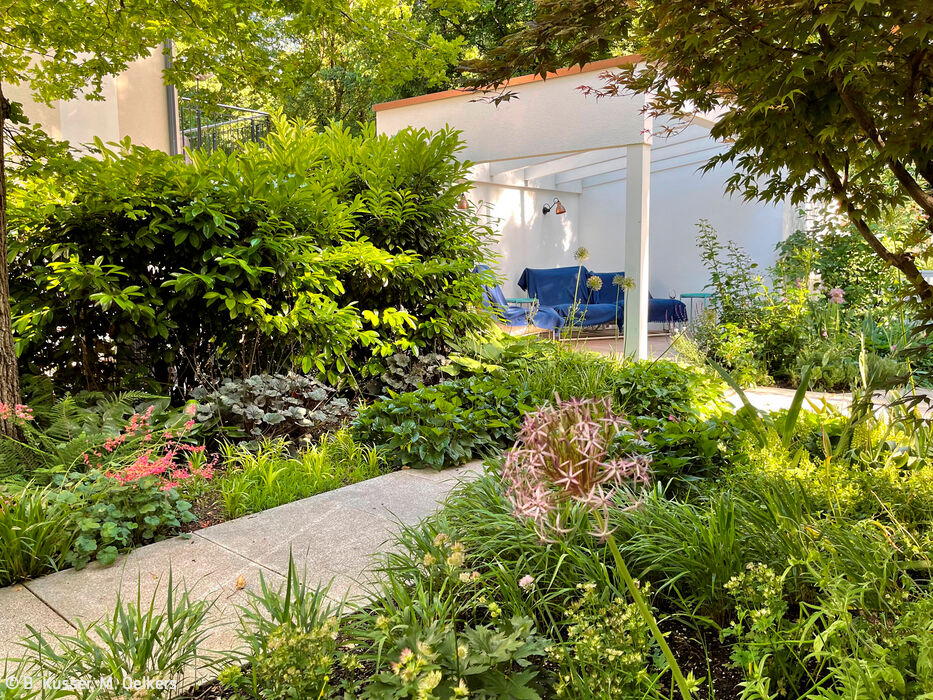
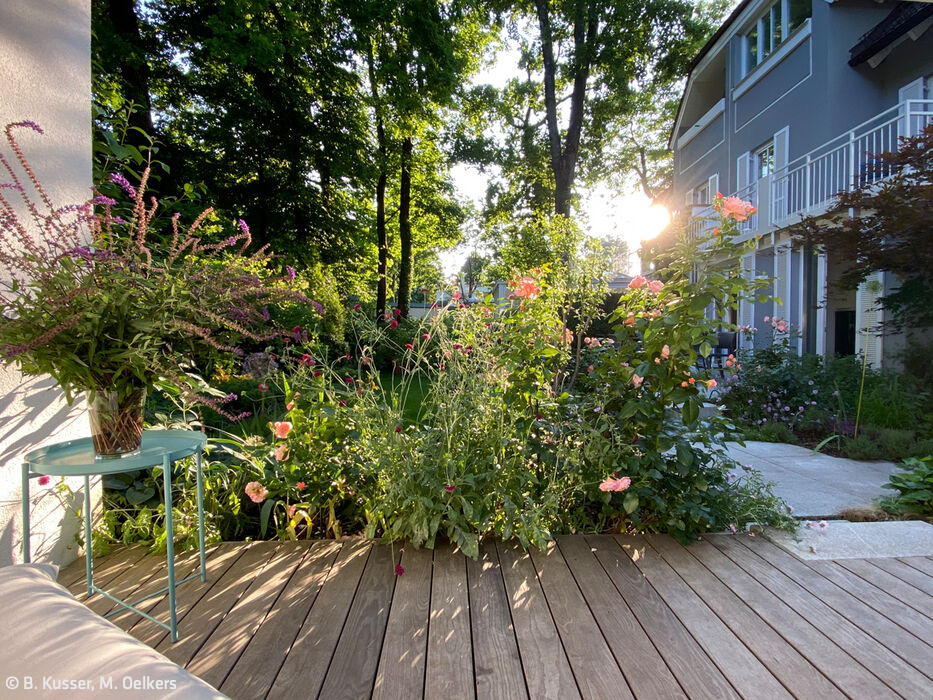
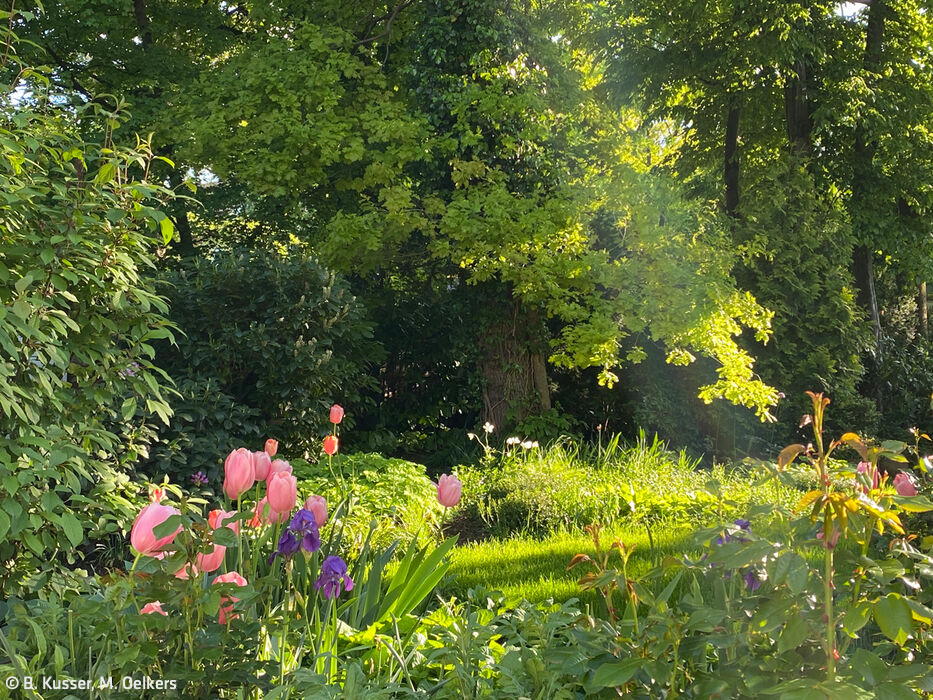
Creating a garden in a major city typically means working within tight spatial constraints. The real challenge lies in balancing relaxation areas with planted zones in a limited footprint. Add to this the complications of poor light and pervasive shade—as was the case here—and the design brief becomes even more complex. Yet Munich-based garden architect Martin Oelkers rose magnificently to the occasion. His work in Obermenzing was honored as one of the most beautiful private gardens of 2022.
Mastering spatial composition—the delicate interplay of boundaries, light, and shadow—is essential to transforming a modest plot into a garden sanctuary. Here, the solution was elegantly simple: a flowing curved path lined with perennial beds that divides the space while allowing the canopy overhead to play its own dance of light and shadow across the ground. The transformation was striking—replacing the original rigid, paved pathway and sparse lawn with something altogether more inviting. One journalist even captured the shift perfectly with the headline "Adieu Tristesse." The redesign began when the house itself underwent renovation, opening toward the garden in new ways. The additions tell the story: a new terrace and a sheltered lounge replaced the old garage. Strategically placed plants—a crab apple at the entrance, a winter-flowering viburnum near the lounge—were thoughtfully positioned to partially obscure sightlines and invite exploration of what lies beyond.
For the areas beneath the towering oaks, the landscape architect selected shade-loving evergreen perennials and woodland species. As Martin Oelkers puts it: "Even beneath tall oaks, you can create a garden worth lingering in. Don't assume that shade means nothing grows—you simply need to select the right perennials and compose shade beds thoughtfully. Here, it's not the flowers that take center stage, but rather the structure and texture of the foliage." It's a discipline unto itself. Maryvonne Liana Schöner from Schöner Gärten spearheaded the detailed plant selection—work that demands a depth of horticultural knowledge most would underestimate. The result is a garden with compelling sight lines in every direction, from house to garden and back again—creating the illusion of far greater space than actually exists. The sophisticated layering of plantings ensures year-round visual interest. And most importantly, it all looks entirely natural, as though the garden had always been this way.
www.landschaftenundgaerten.de
www.schöner-gärten.de
Photography:
B. Kusser
M. Oelkers
(Featured in CUBE Munich 02|24)
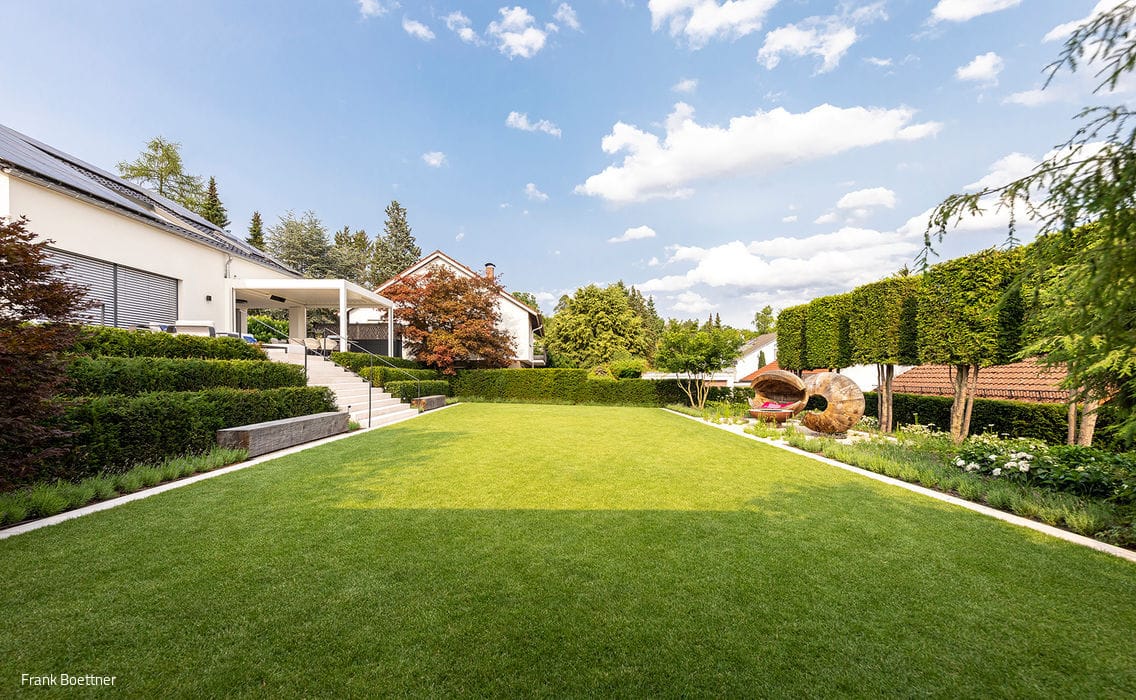


Heights of Design
Roof conversion featuring skylights and windows that flood the space with natural light
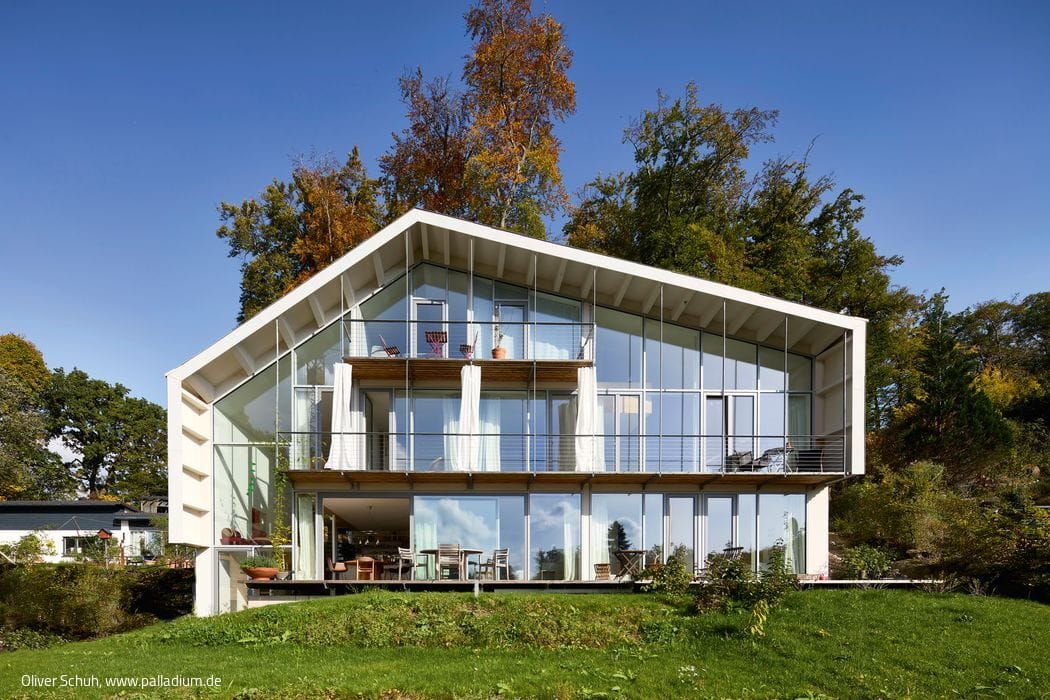
Glass House with Special Effects
A Head-Turning Design That Masquerades as a Single-Family Home
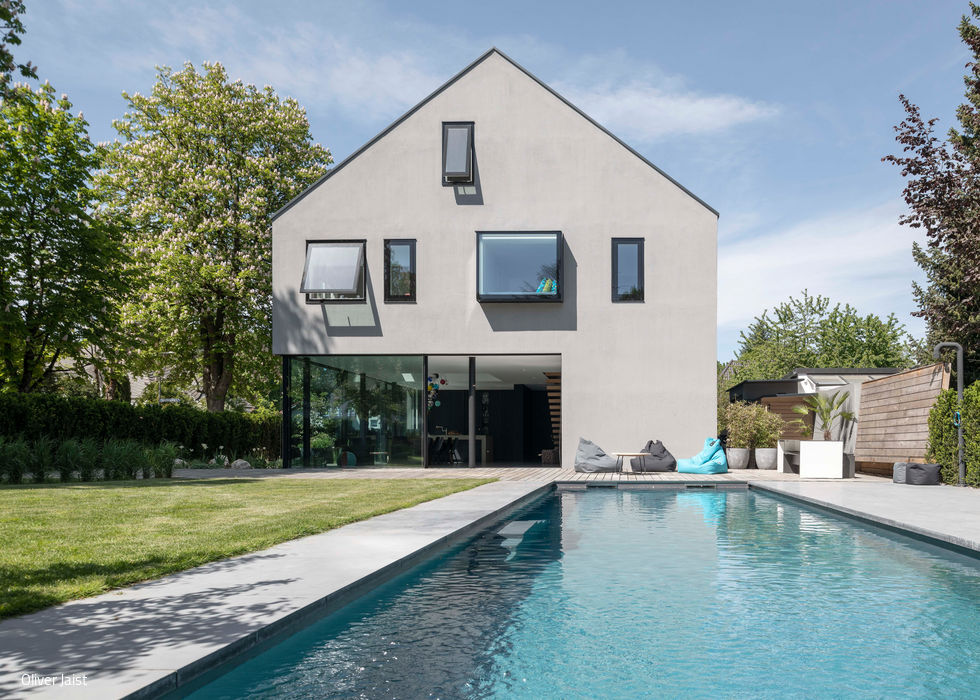
Elegance Through Restrained Design
Contemporary Home in Sendling – Munich's Verdant Residential Quarter
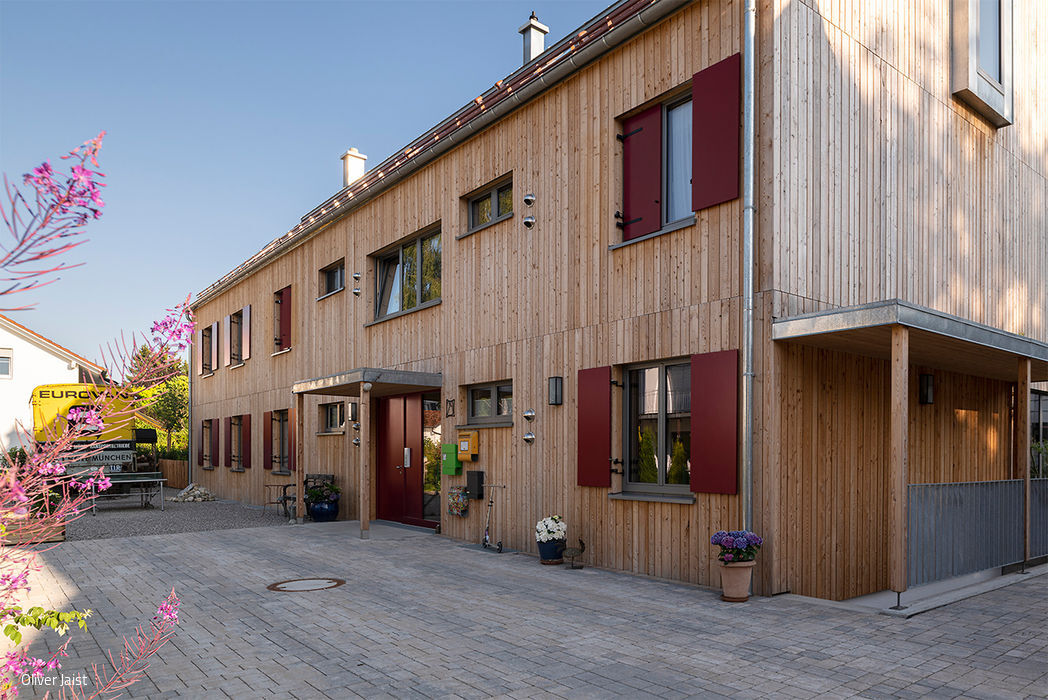
It's better to live together
Multi-Generational Home in Gauting: Five Households, Thirteen Residents