


Connection & Focus
Expanding space for collaborative learning and innovation
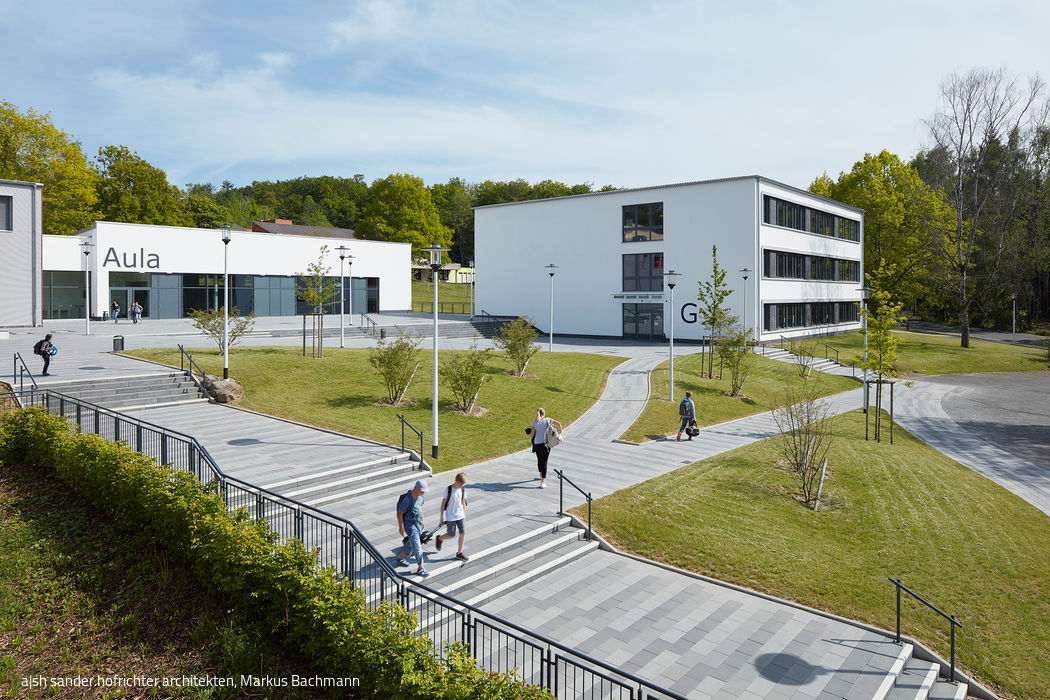
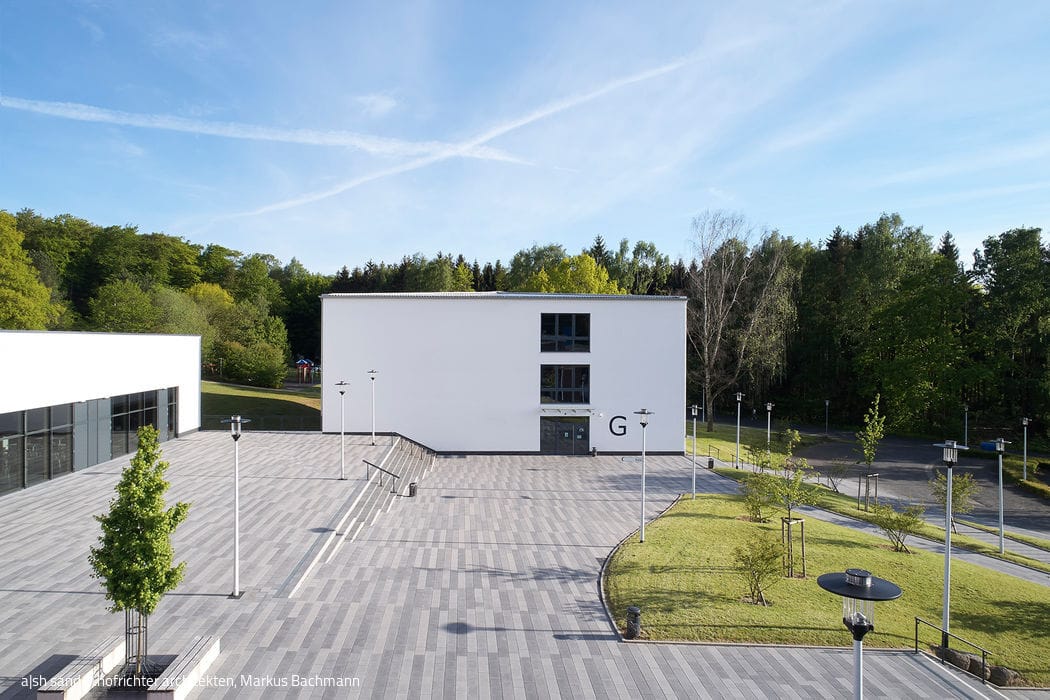



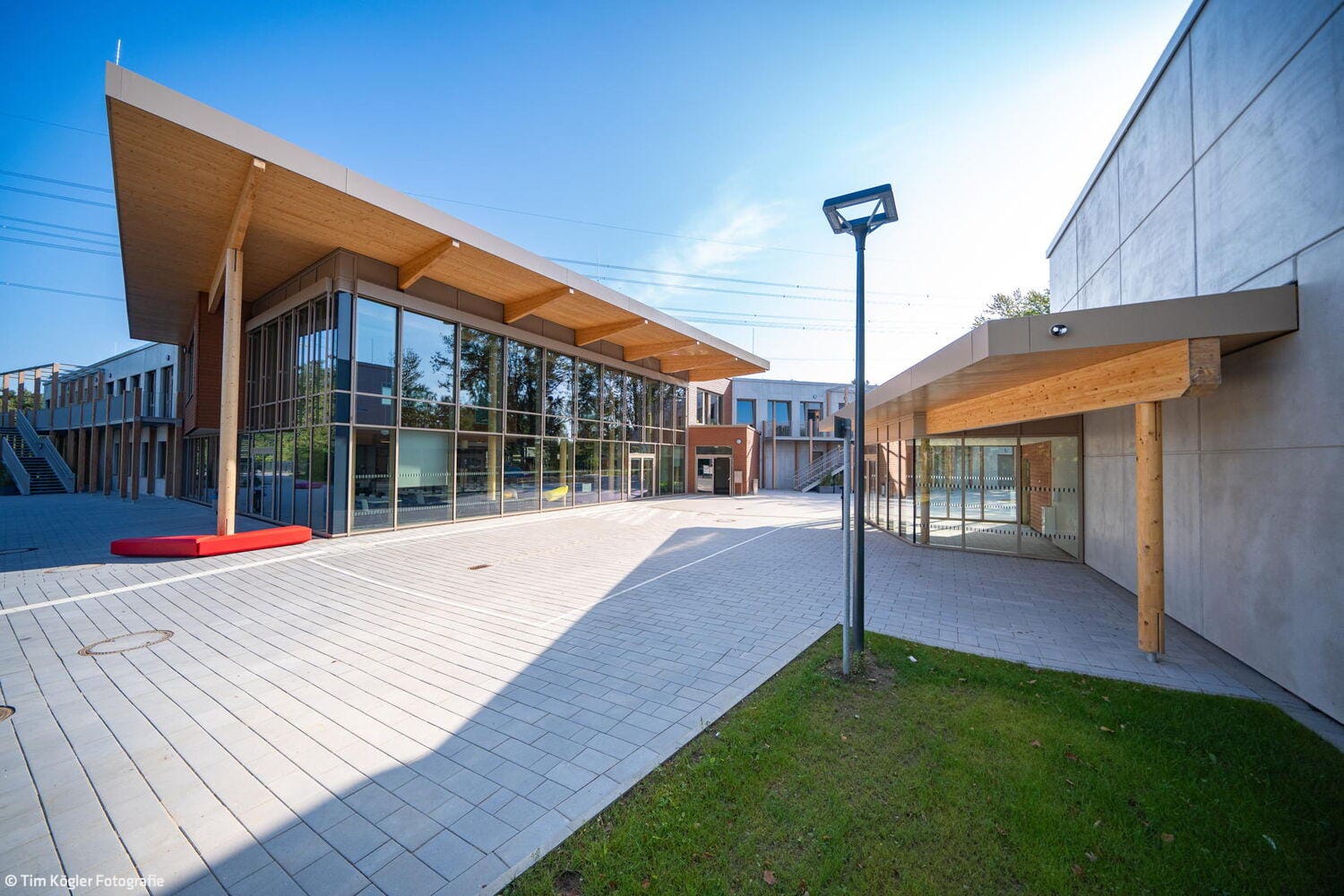
With approximately 1,600 students, the Theo Koch School is the largest in the Giessen district. Faced with rising enrollment numbers at this integrated comprehensive school, expansion became essential. a|sh architects responded by creating two new structures on the campus-style grounds: a learning centre and an auditorium. These buildings thoughtfully frame the schoolyard, transforming the outdoor space into a vibrant social hub. Working with the naturally sloping topography, grand open staircases descend from the street level to the new plaza shared by the auditorium and learning centre.
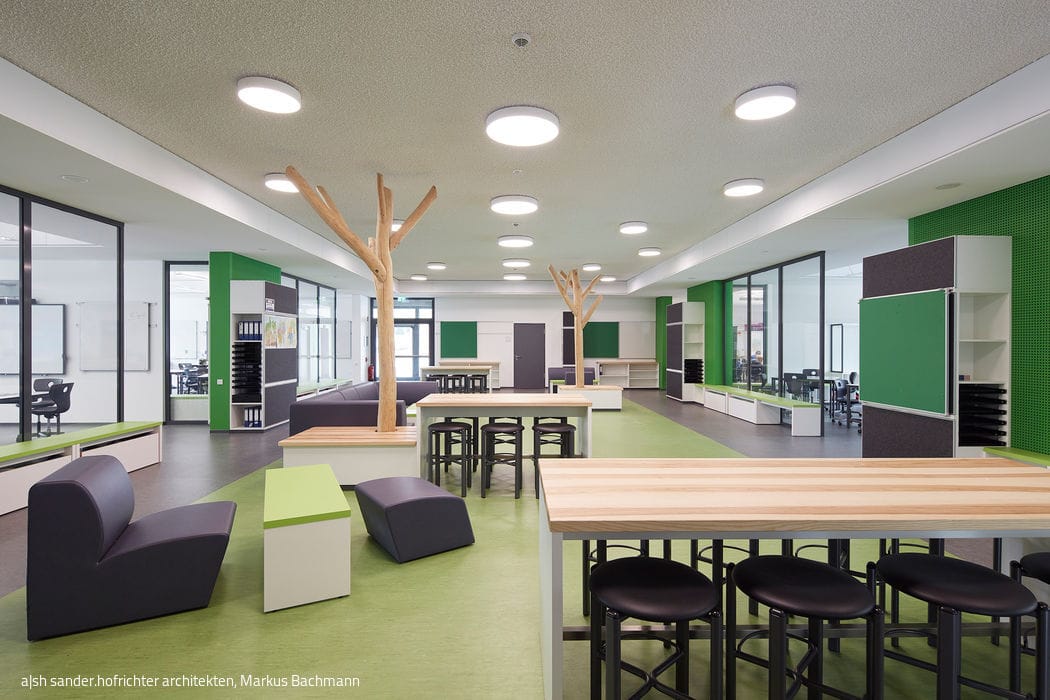
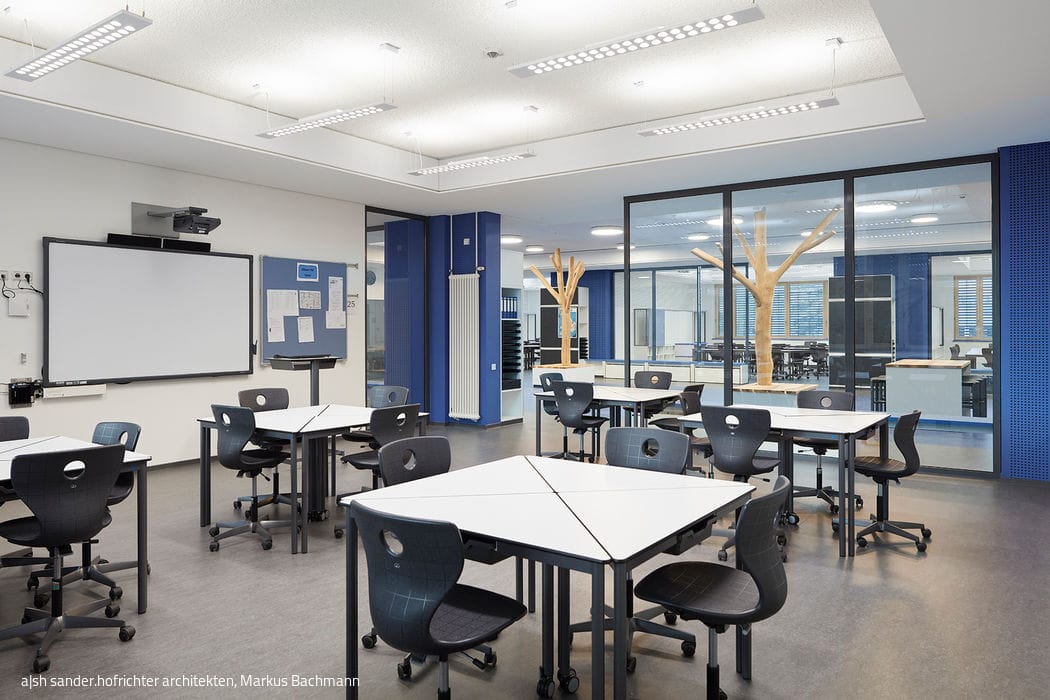
The three-storey learning centre embodies the school's progressive philosophy through its architecture: open learning floors designed without traditional classroom doors create flexible space for innovative teaching methods. "Progressive educational approaches demand equally innovative architectural thinking—from spatial organization to purposeful room programming," explains Torsten Petroschka, managing partner at the firm. "Only through this integration can we build learning environments that genuinely support students' educational growth throughout the school day."
The open learning floors accommodate diverse pedagogical needs—from individual study to small group work, full-class instruction, and cross-grade collaboration. Each floor features a learning cluster: six classrooms, a teacher hub, facilities, and a central gathering space. This shared centre physically embodies the school's teaching philosophy, fostering connection, dialogue, and focus. Full-height glazing maintains visual continuity between classrooms and the central zone.
The new auditorium integrates seamlessly with the existing cafeteria, allowing shared use of existing support spaces. Accommodating 400 people, it serves as a flexible venue for school assemblies, performances, and celebrations. Universal design principles ensure students with disabilities can fully access both buildings and surrounding areas. The design meets rigorous acoustic standards and achieves passive house certification.
Photography Credits:
a|sh sander.hofrichter architects
Markus Bachmann
(Published in CUBE Frankfurt 03|20)
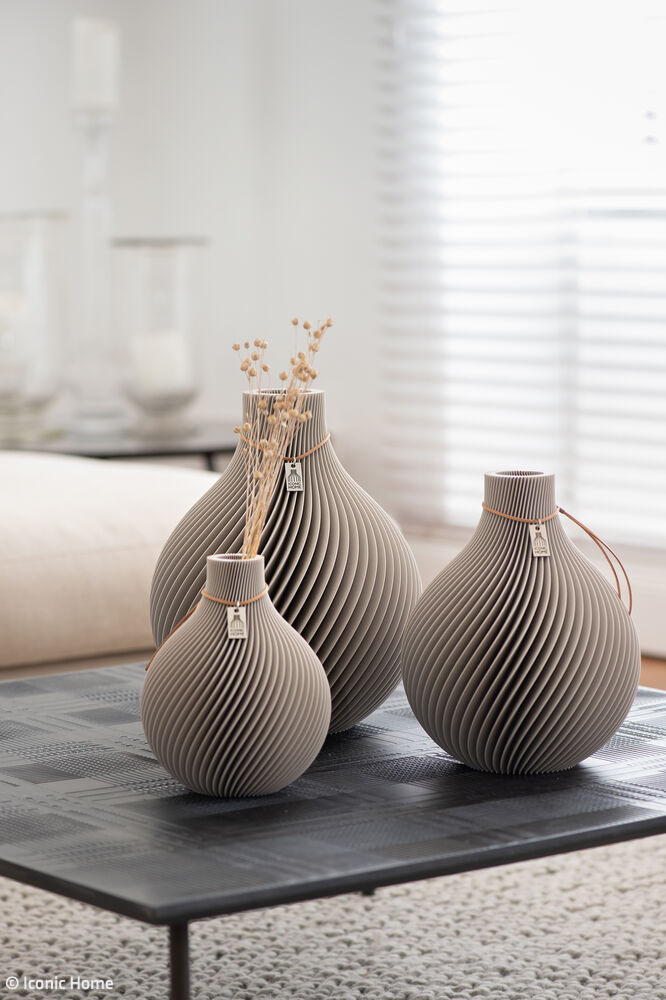
Individual and Timeless
Designer vases with distinctive surfaces, crafted from sustainable bioplastic using 3D printing technology
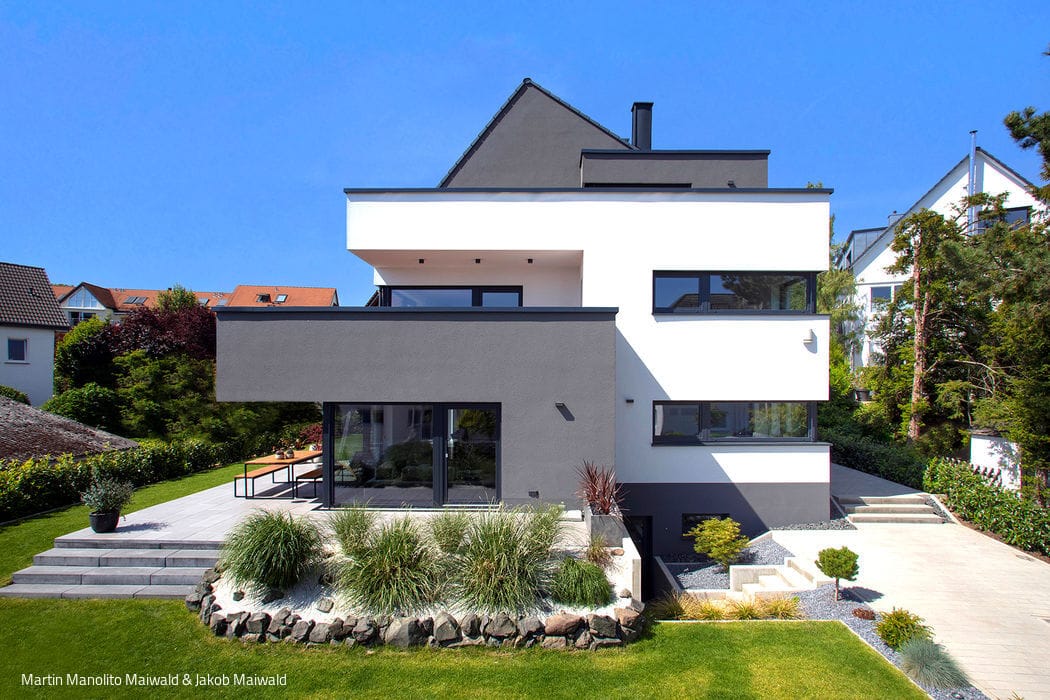
Refined Angles
How Building Codes Led a Family to Their Dream Home
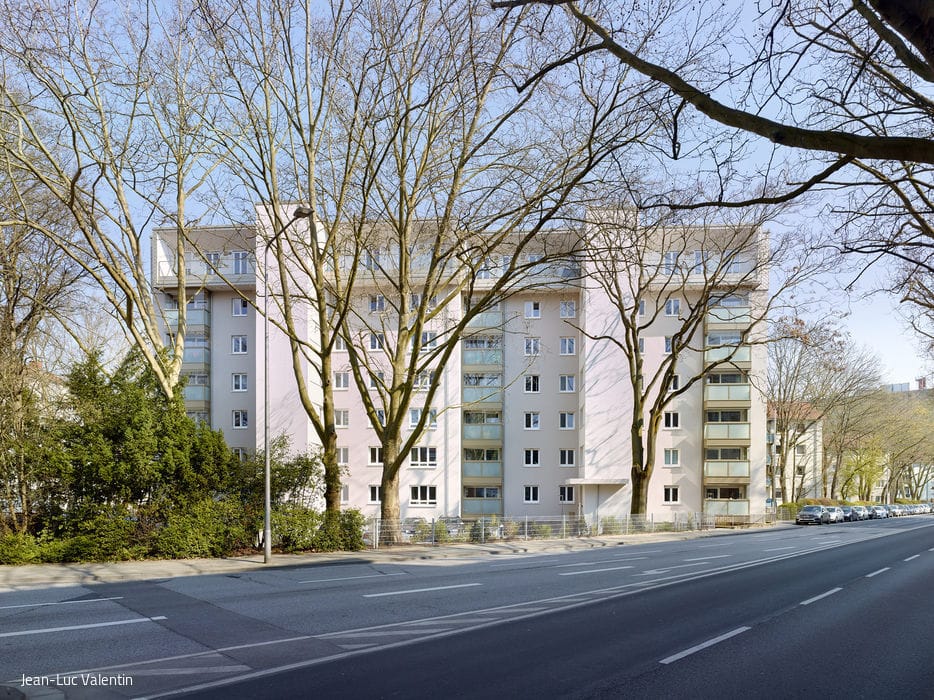
Rising Above Wiesbaden's Rooftops
Timber-frame extension creates premium living spaces
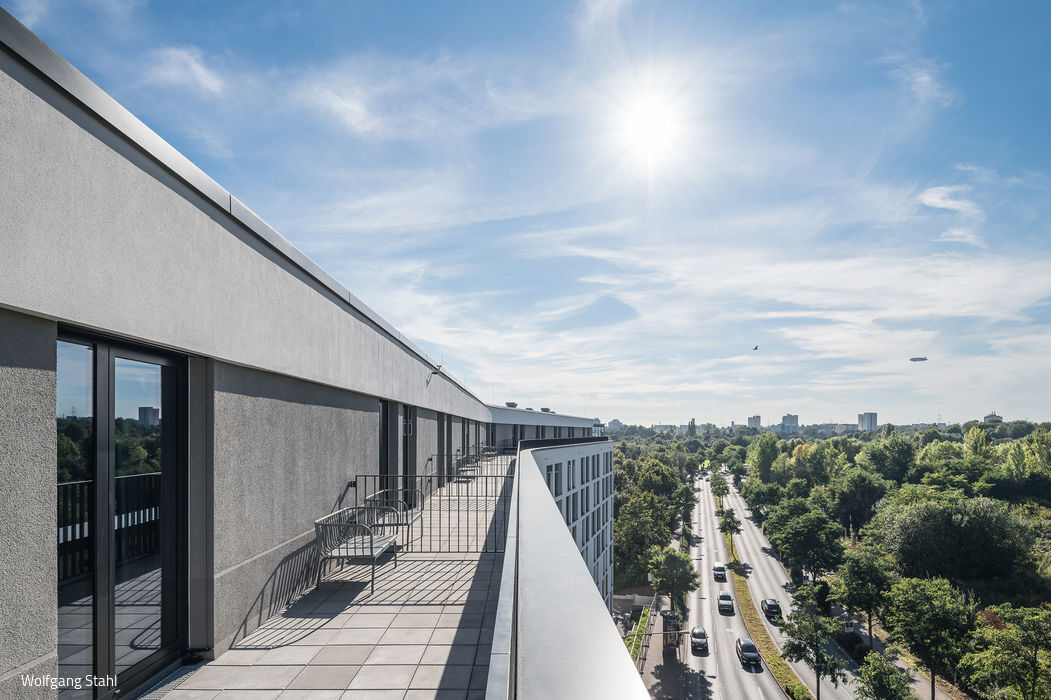
A new home for students
Riedberg Campus: 234 Apartments and So Much More