


Nature as collaborator
The design for a residential complex in Moers thoughtfully preserves existing plane trees
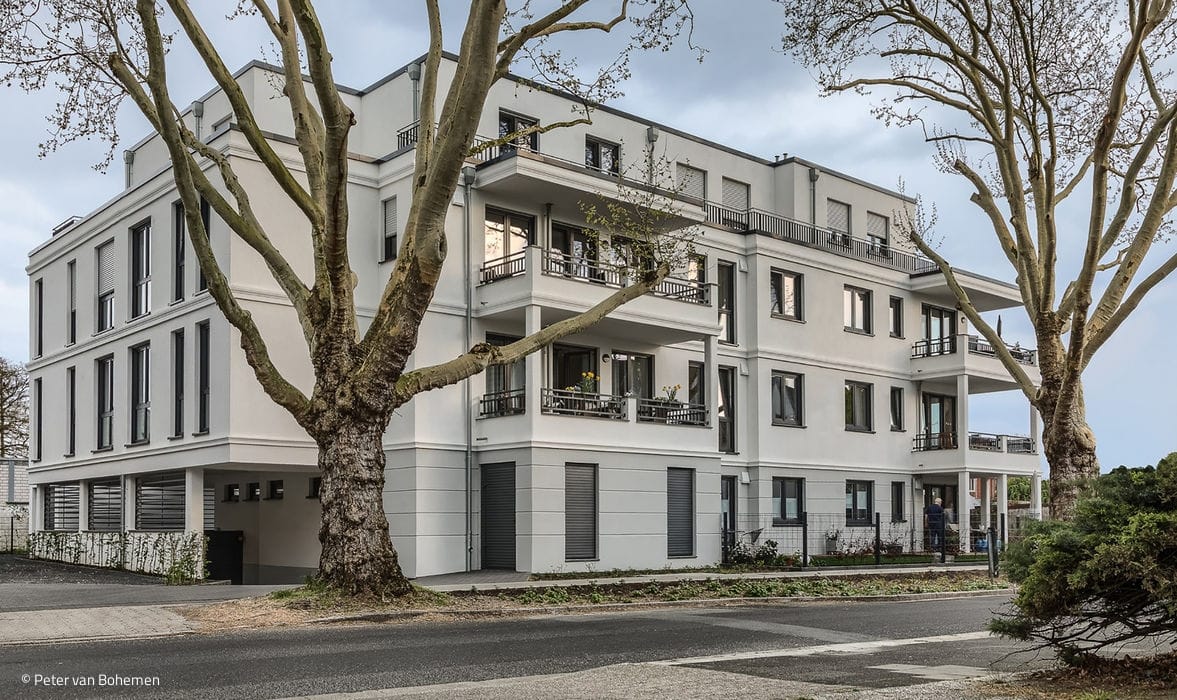
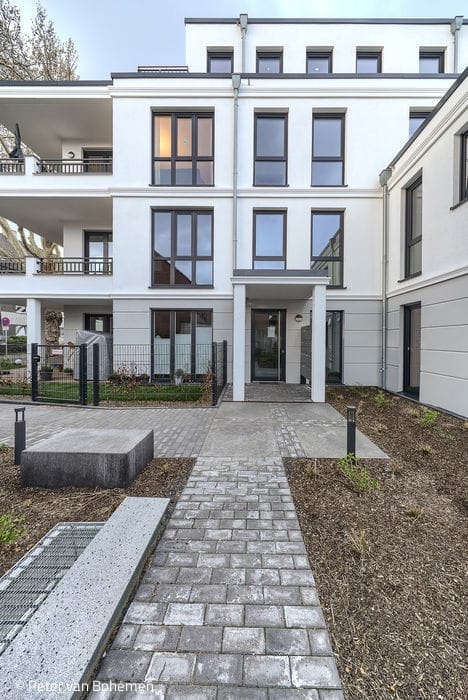
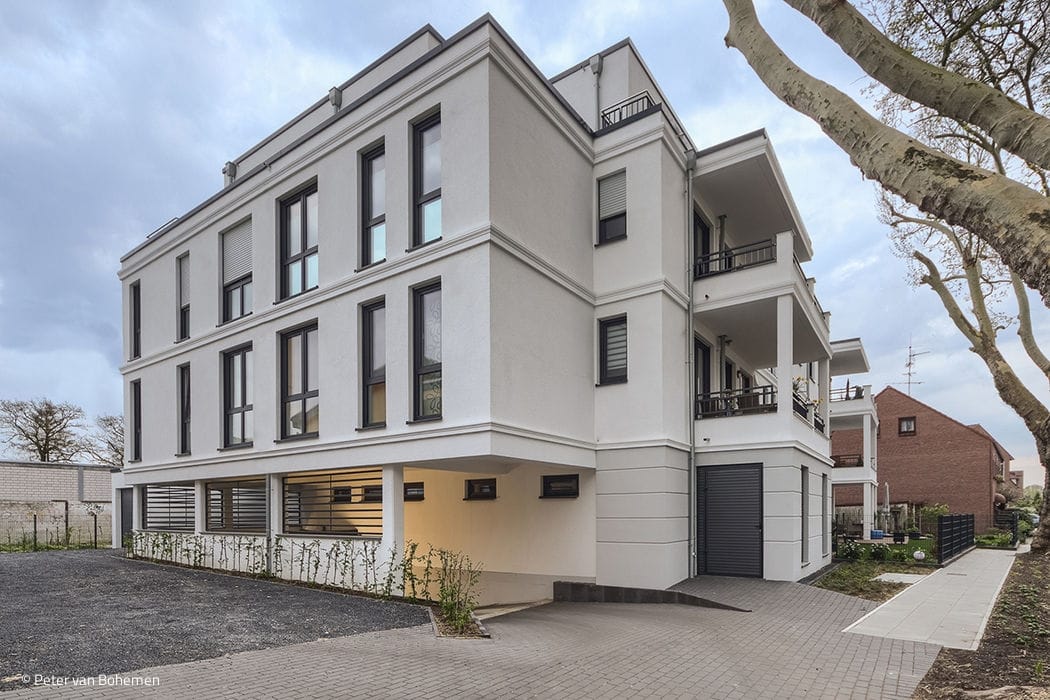
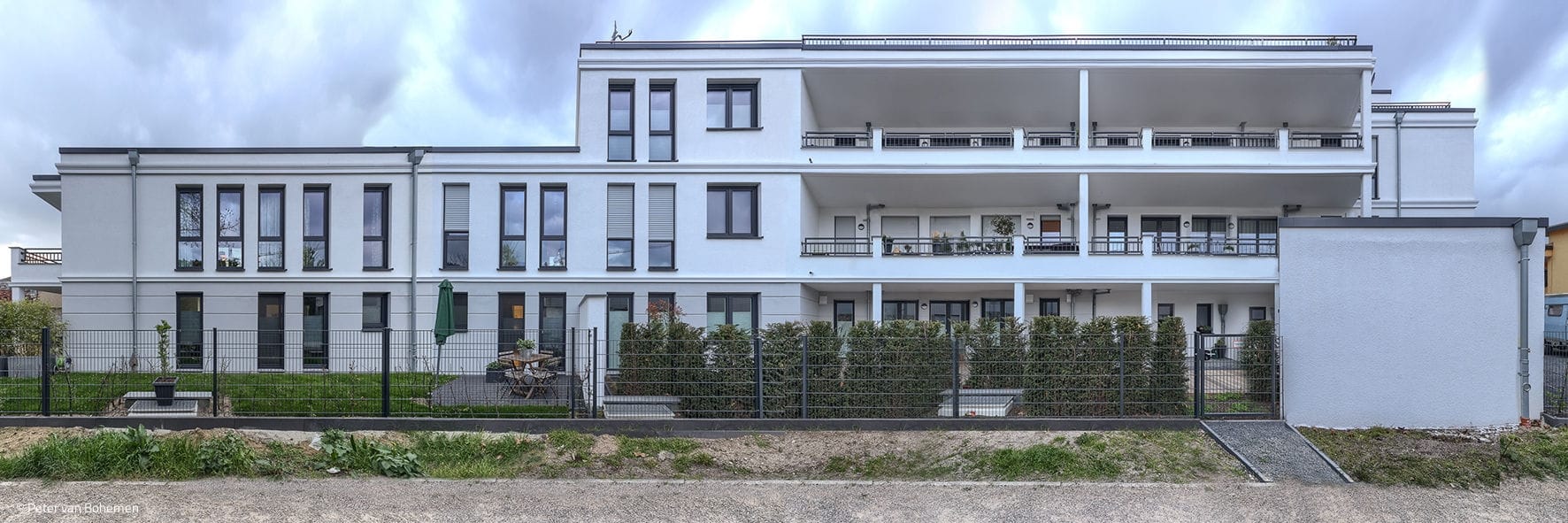
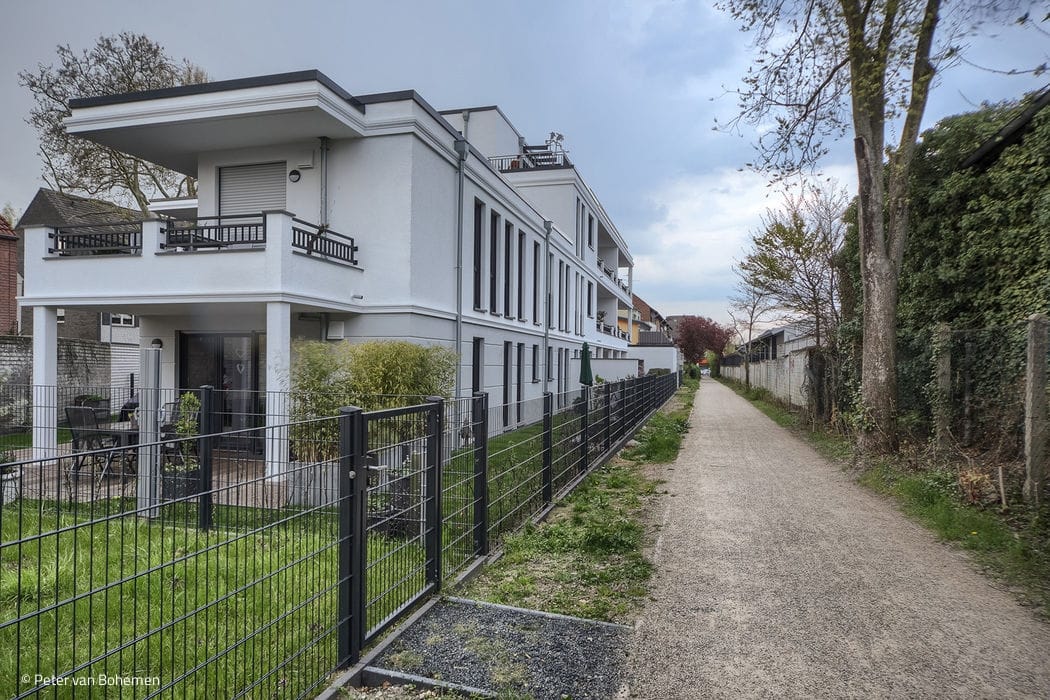
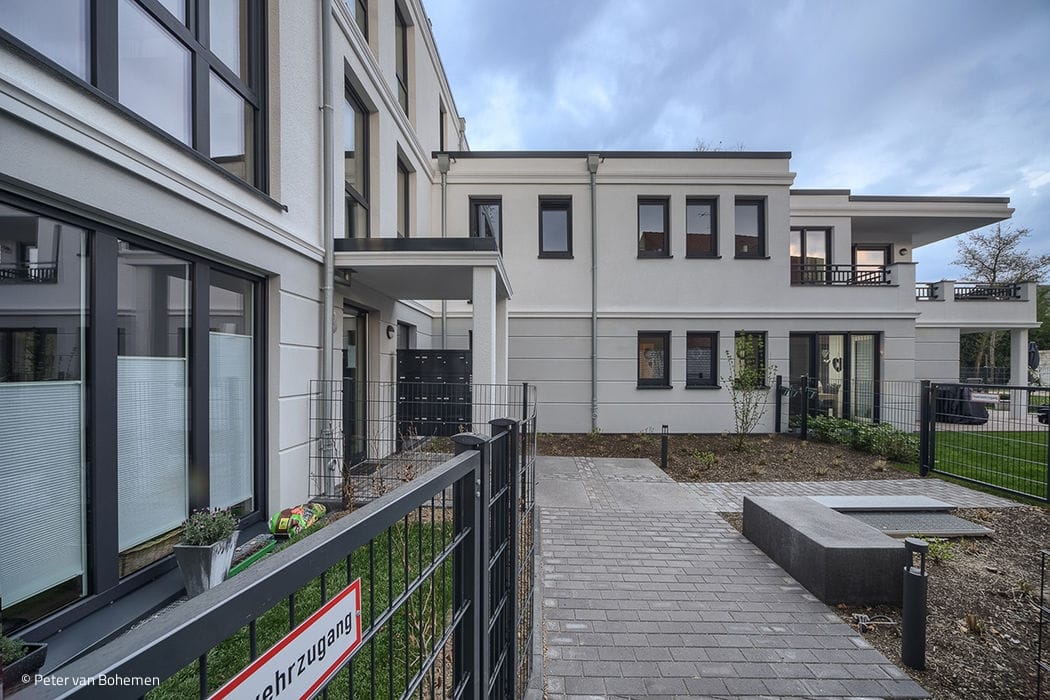
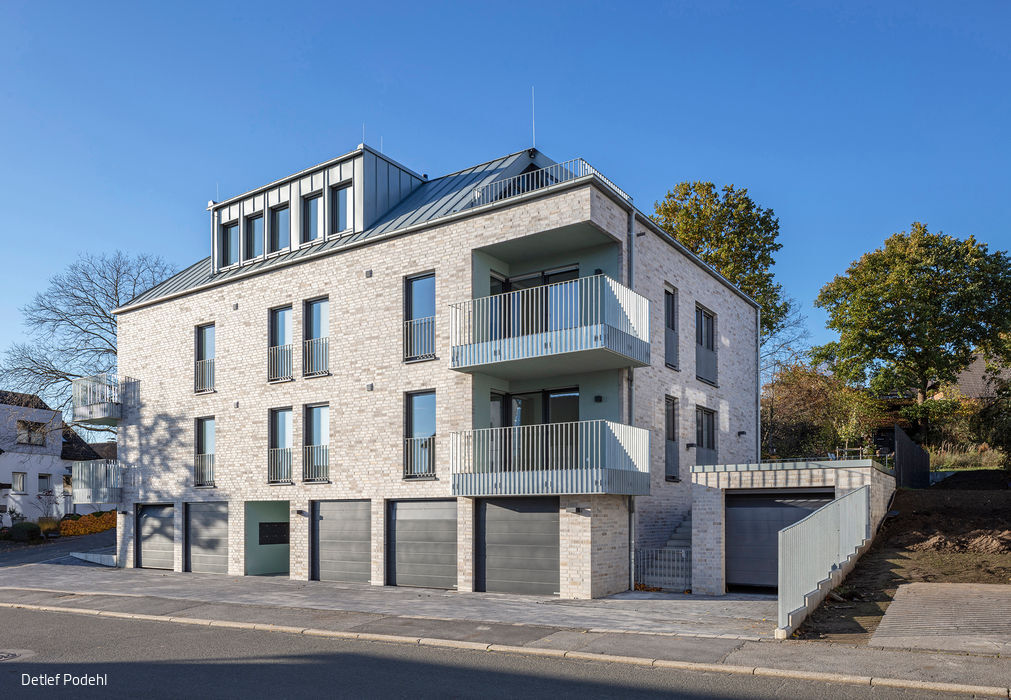
Platanenhof – the name itself reflects the design philosophy behind this new residential complex in Moers, located on the edge of the Ruhr Valley. Fourteen owner-occupied apartments take their name from two magnificent plane trees that define the street frontage. Architect Thomas Stahlmann of Architektur S + R in Moers made their preservation a priority. Rather than compromise the root systems, he eliminated the basement along the street level and cleverly integrated storage rooms directly into the ground floor units. The site itself carries local history: once known as the "Catholic Station," it served as a departure point for Corpus Christi processions to Krefeld, later functioned as a restaurant, and now welcomes contemporary residential living.
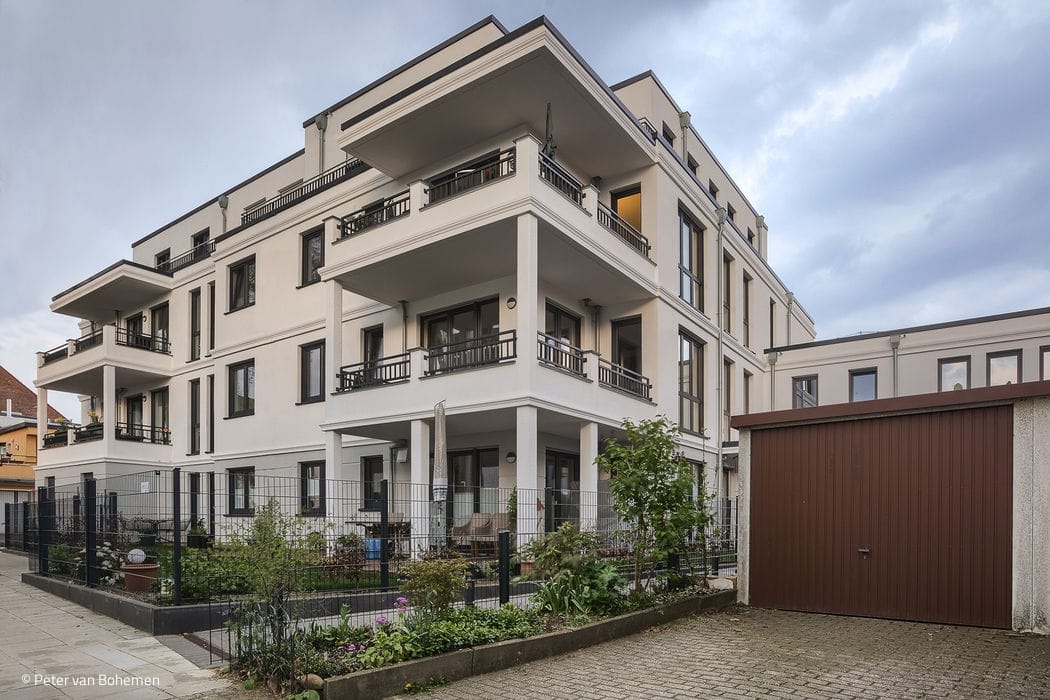
The apartment mix ranges from two to four rooms, spanning 86 to 140 m². Each is designed without barriers and features modern bathrooms flooded with natural light, plus generous sun-filled balconies or terraces. The first floor—the bel étage—distinguishes itself with soaring ceiling heights. Two penthouse units sit slightly set back from the main façade, with one directly accessible by private elevator.
The stairwell is generously scaled and draws daylight through integrated skylights. Underground parking provides ample space for residents' vehicles. Outside, the complex presents a bright, inviting façade. Ground-floor stonework features a rusticated aesthetic, accented by continuous stucco detailing—design elements that convey refined elegance with understated confidence. Structural pillars at the balconies and full-height windows further reinforce the building's sophisticated character.
Environmental responsibility extends beyond preserving the plane trees to the building's energy strategy: district heating supplies both heat and hot water, while the structure achieves KfW Efficiency House 55 certification.
(Published in CUBE Ruhrgebiet 01|20)

Sustainable and Respectful Design
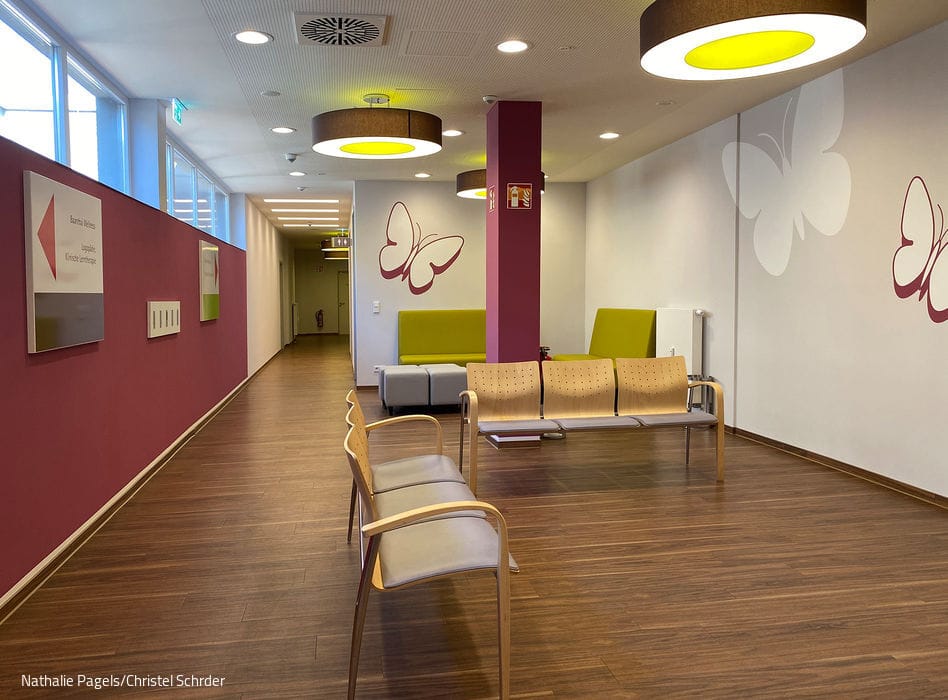
The new Duisburg food bank—designed with both function and fiscal responsibility in mind.
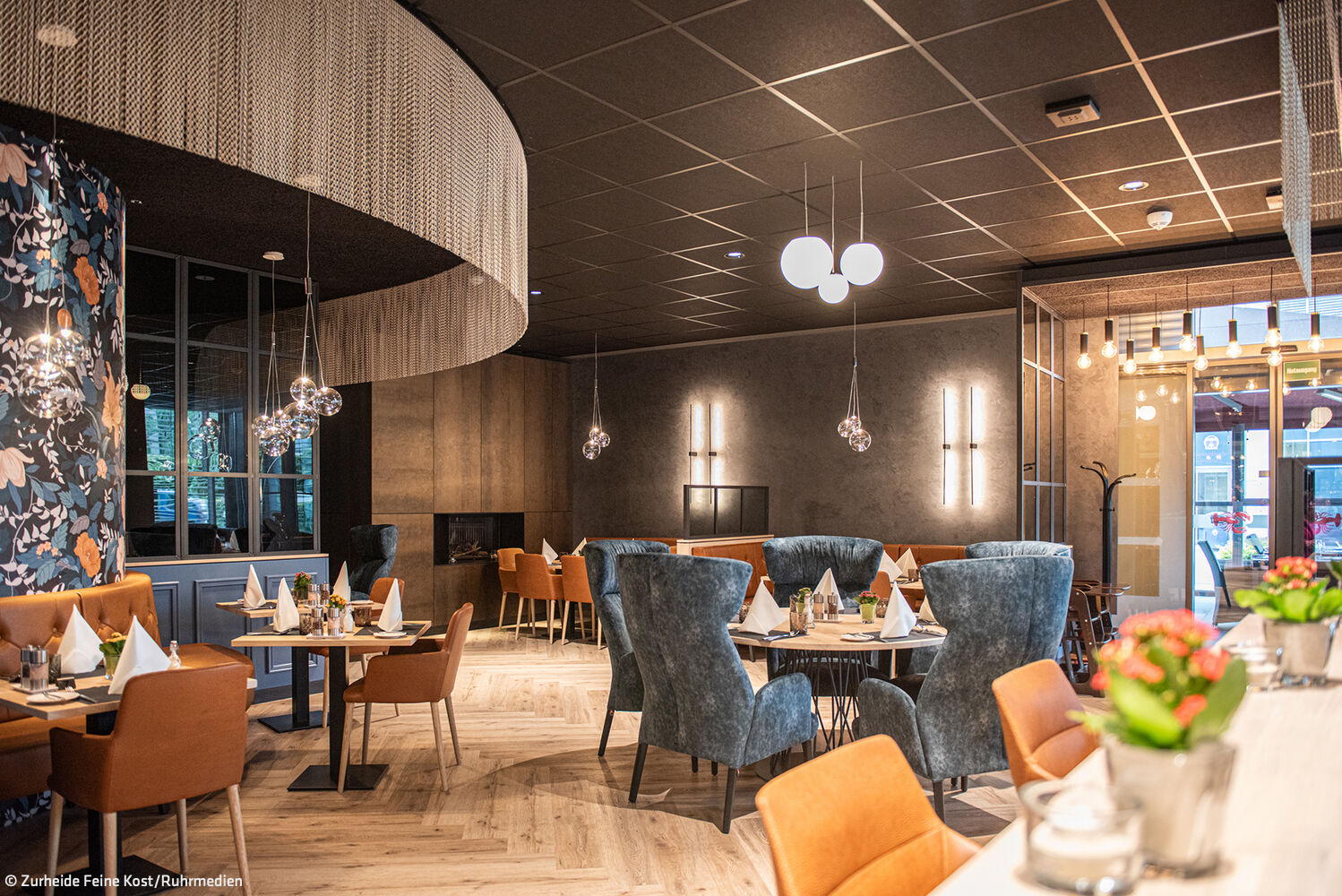
Contemporary Elegance & Taste
After a comprehensive redesign, Bottrop's gourmet restaurant emerges radiant and renewed.
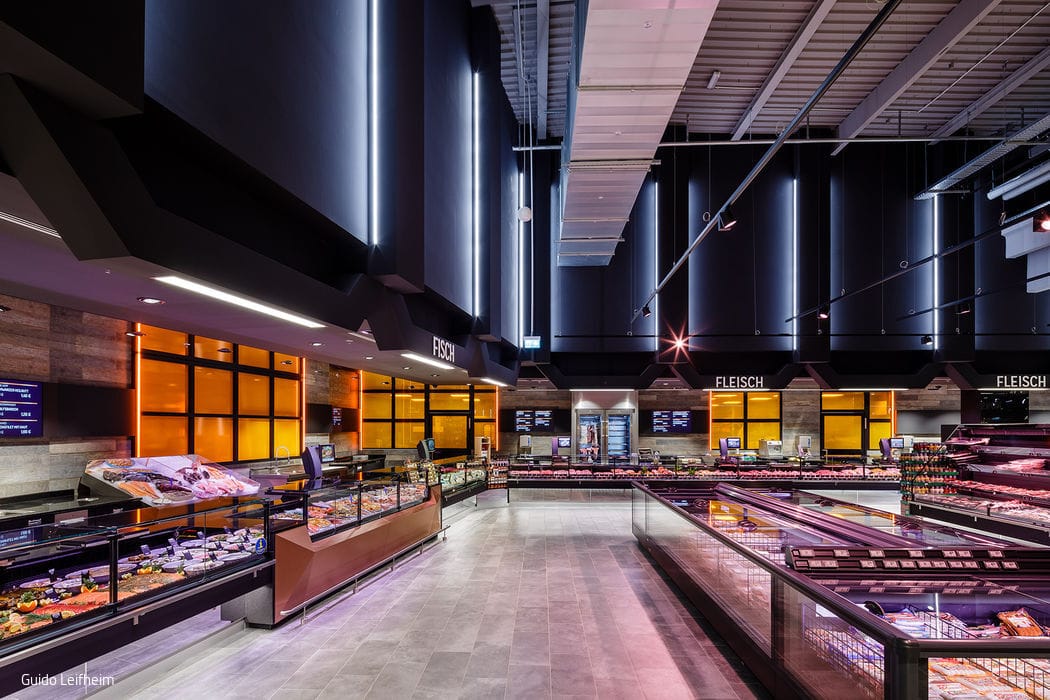
Don't Overshadow the Space
Clean industrial design lets the products shine
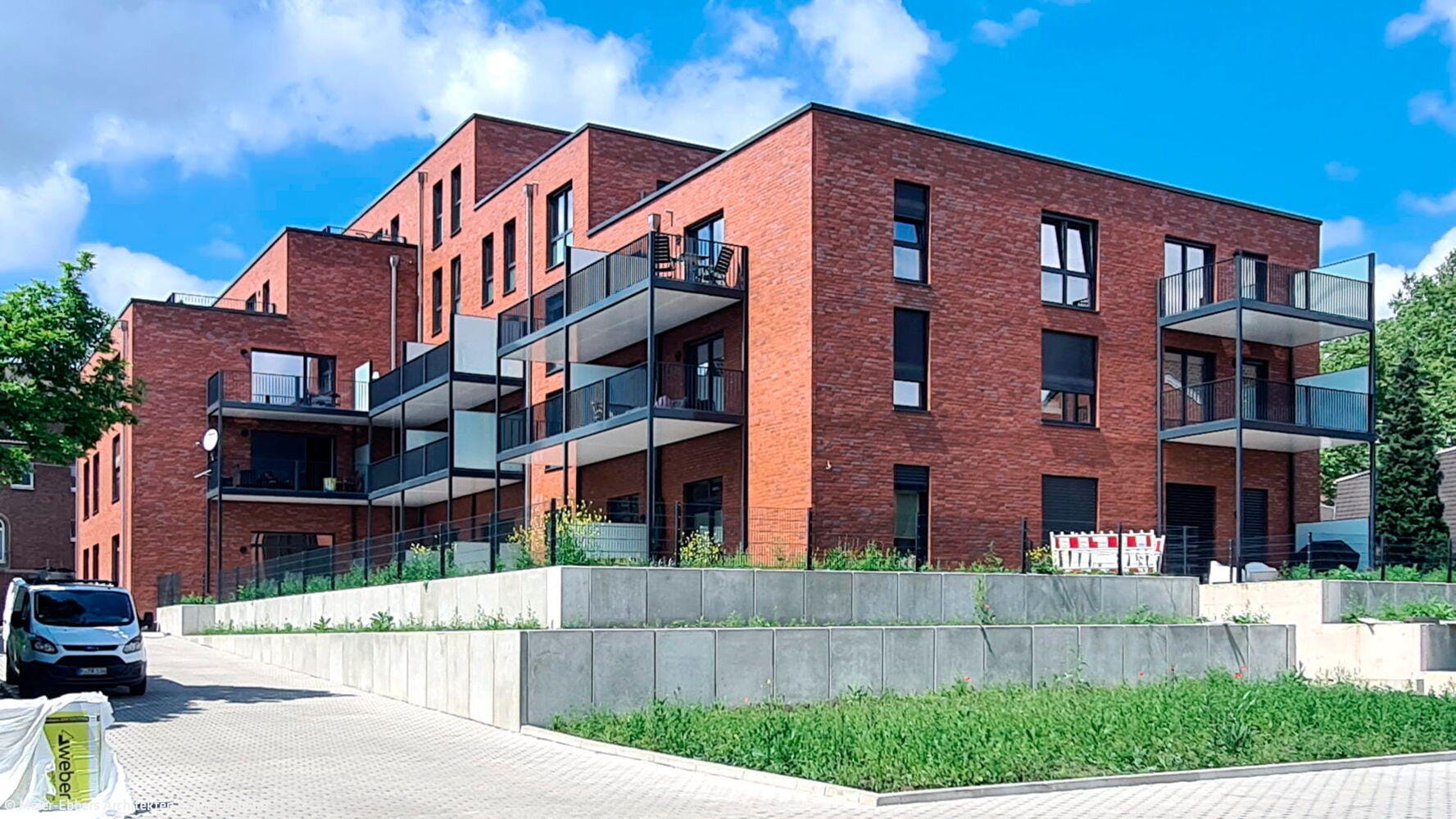
A striking red façade
In Oberhausen, a residential and commercial complex finds its perfect place in the urban fabric