


Schmalhans
A single-family home that rises to the challenge—turning extreme site conditions into architectural advantage.
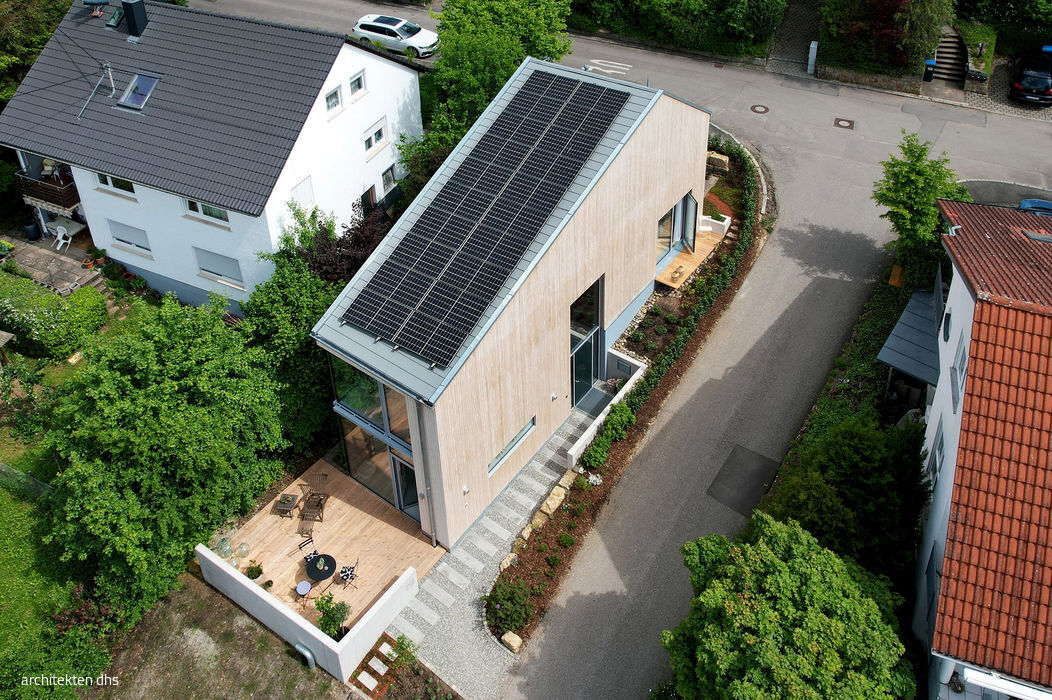
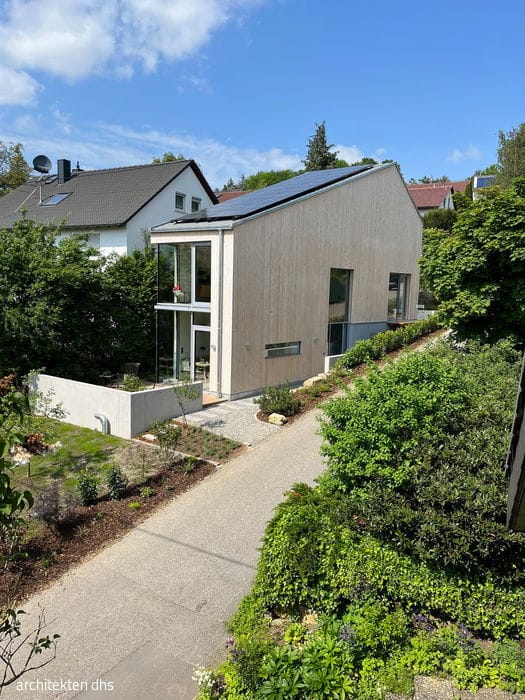

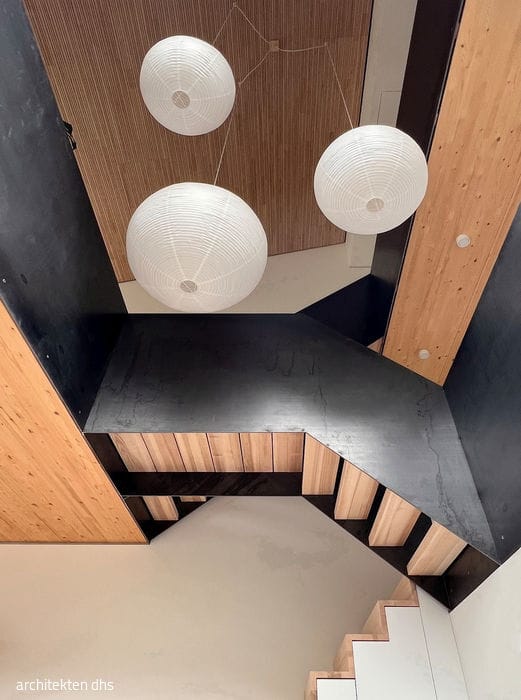


A very narrow plot on a southwestern slope—blessed with unobstructed views toward the Swabian Alb—made an owner-built dream possible. The property initially seemed unbuildable: strict development plan requirements and a sloping building line capped the structure at just 4.20 to 5.10 meters wide. This demanded a complete rethinking of conventional room layouts and proportions. The architects at dhs rose to the challenge, calibrating ceiling heights to work within these constraints and employing a split-level strategy to maximum effect.
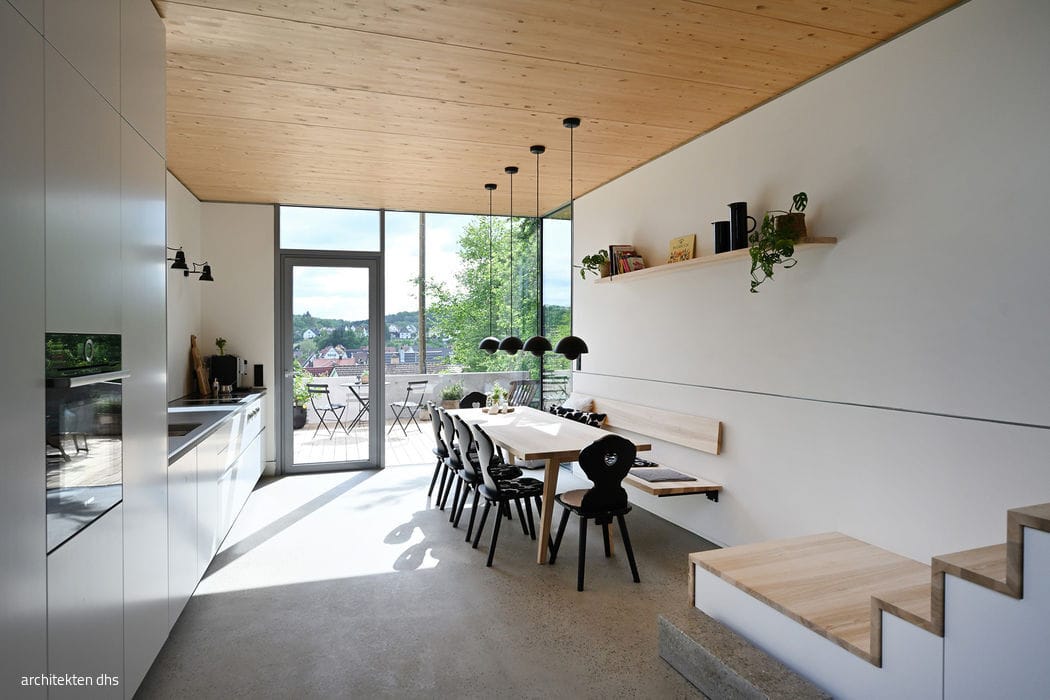
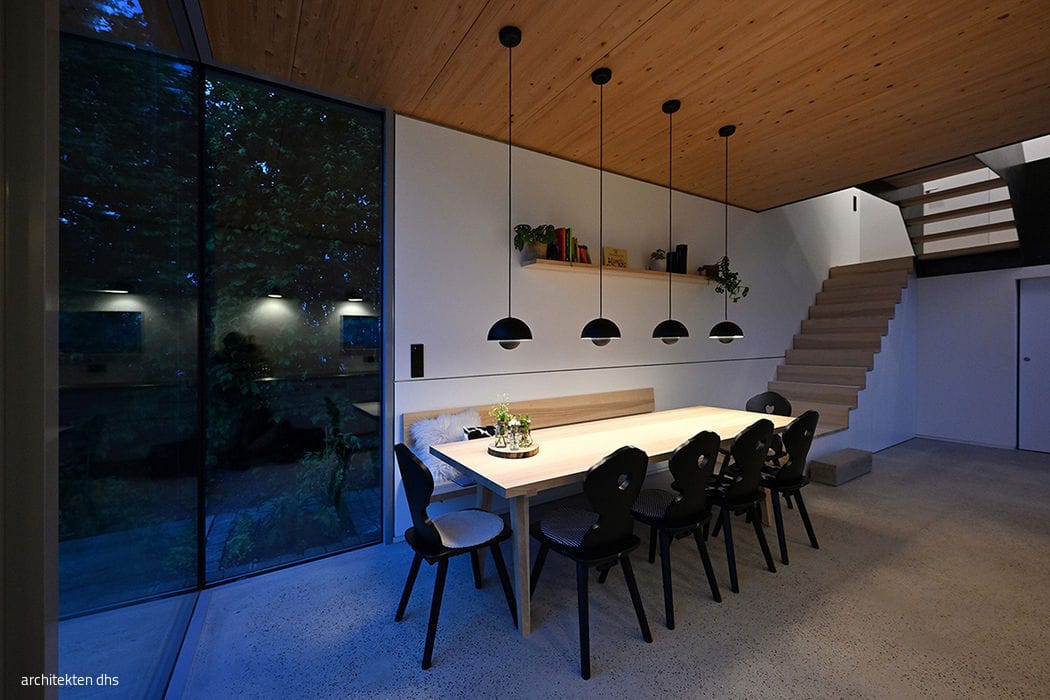
The partially basement house spans 117 m² (terrace included) and employs timber-frame construction with stacked plank decking, anchored to a reinforced concrete floor slab. The entry level reveals a studied interplay: utility spaces with minimal headroom on the slope side contrast with a generously proportioned kitchen and dining area that opens through expansive glazing toward the garden. At the center, a waxed raw steel staircase—paired with soaring void space—anchors the design and infuses the entire interior with a palpable sense of openness.
The entry level features a polished, soaped screed floor; throughout, sawn ash planks—equally understated with their soap finish—define the remaining spaces. Hillside bedrooms occupy the upper floors, their doors recessed nearly to invisibility as they frame views onto narrow gallery spaces. On the valley side, the living area stretches beneath a sloped ceiling, capturing panoramic vistas toward the Swabian Alb. Every opening has been thoughtfully calibrated to its context, revealing or concealing as needed. The slender exterior walls are energetically offset by the generous roof expanse, while expansive windows amplify the performance envelope. A heat pump—powered by the rooftop photovoltaic array—handles both heating and hot water. The rough-sawn fir façade will weather to grey, gradually harmonizing with the grey aluminum fenestration. The timber, treated and fortified through a silicon and potassium silification process, develops a dignified patina over time.
Photography Credits:
architekten dhs
(Published in CUBE Stuttgart 03|23)
Residential Modules in Green Spaces
Highly adaptable housing in solid timber-hybrid construction, efficiently insulated with wood-fiber panels
Thoughtfully Expanded
Integrative Architecture: Creating Present Dialogue with the Past
Flexible Workplace
One Roof: Omnichannel Retail Comes Together
On the Sundeck
A daycare centre that integrates naturally into the hillside landscape, creating nature-inspired play spaces with expansive views.