A Haven of Tranquility in the Alb
A new nature hotel for group events nestled on a historic farmstead, designed with sustainability at its core
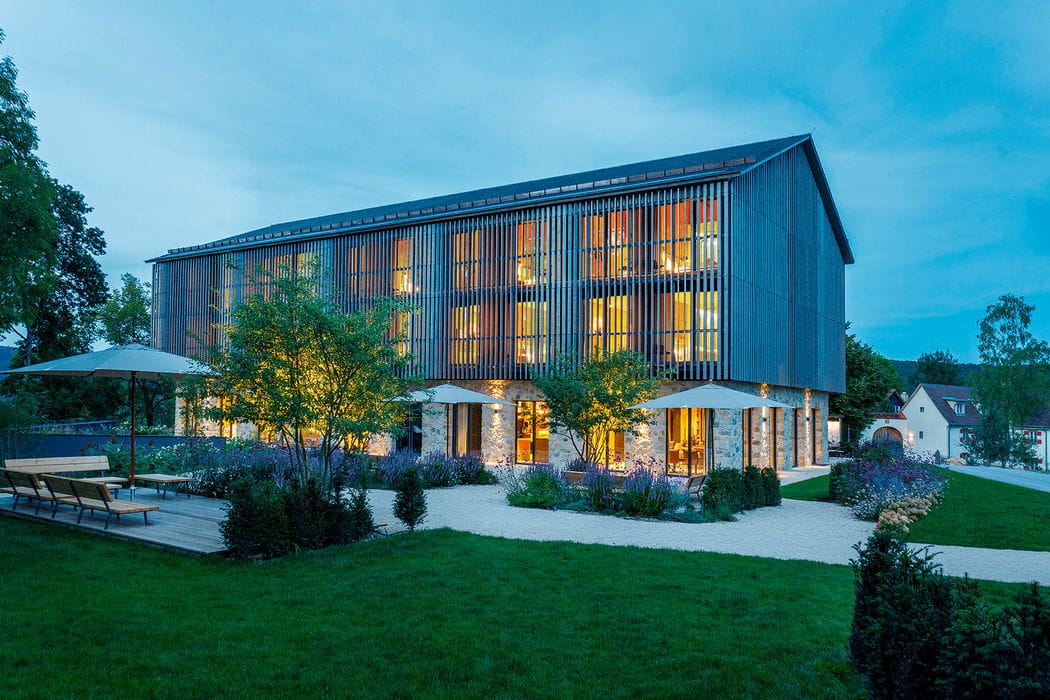
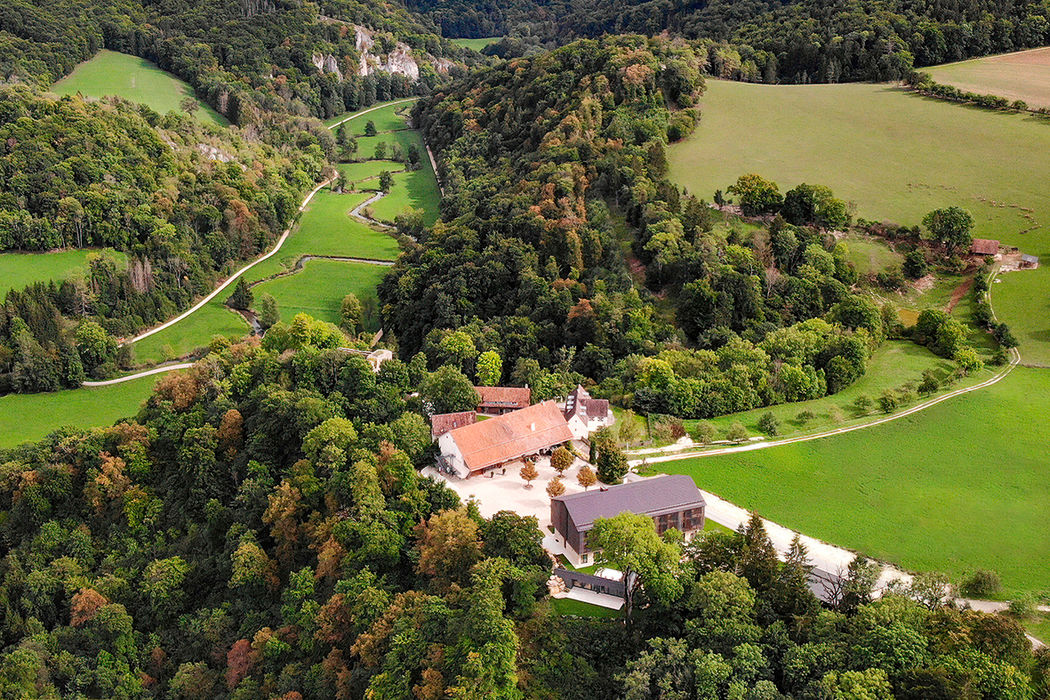
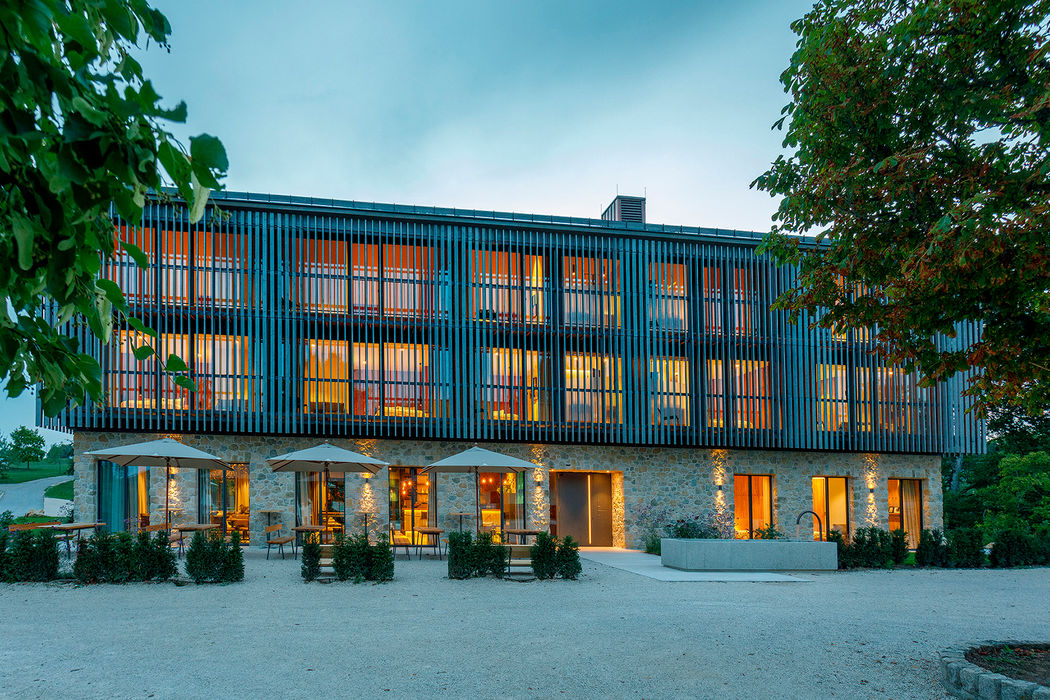
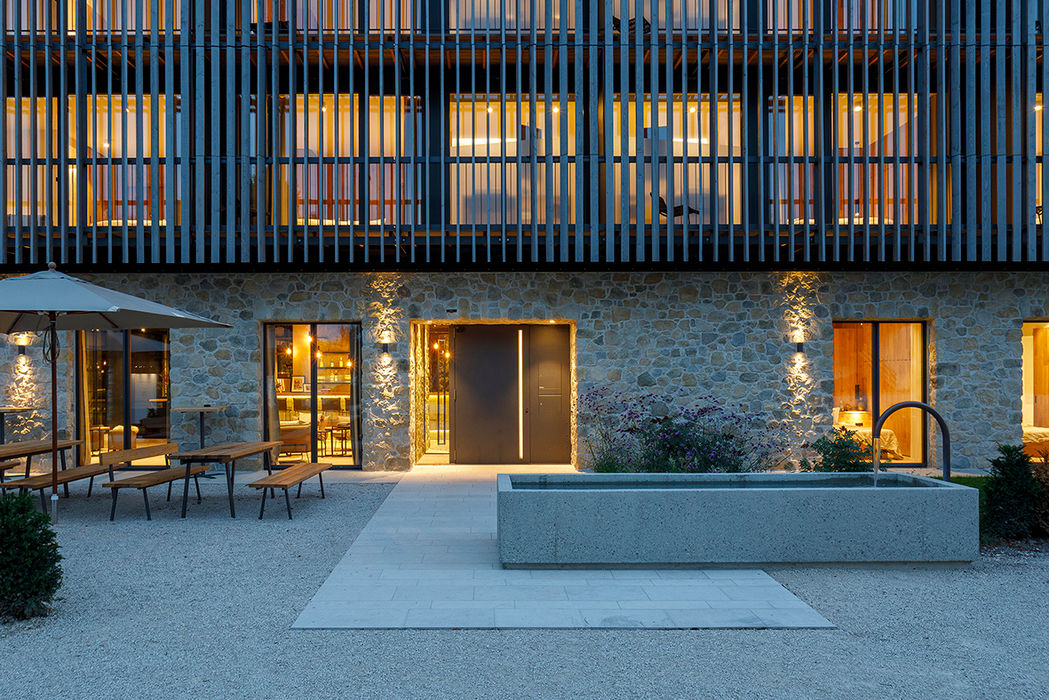
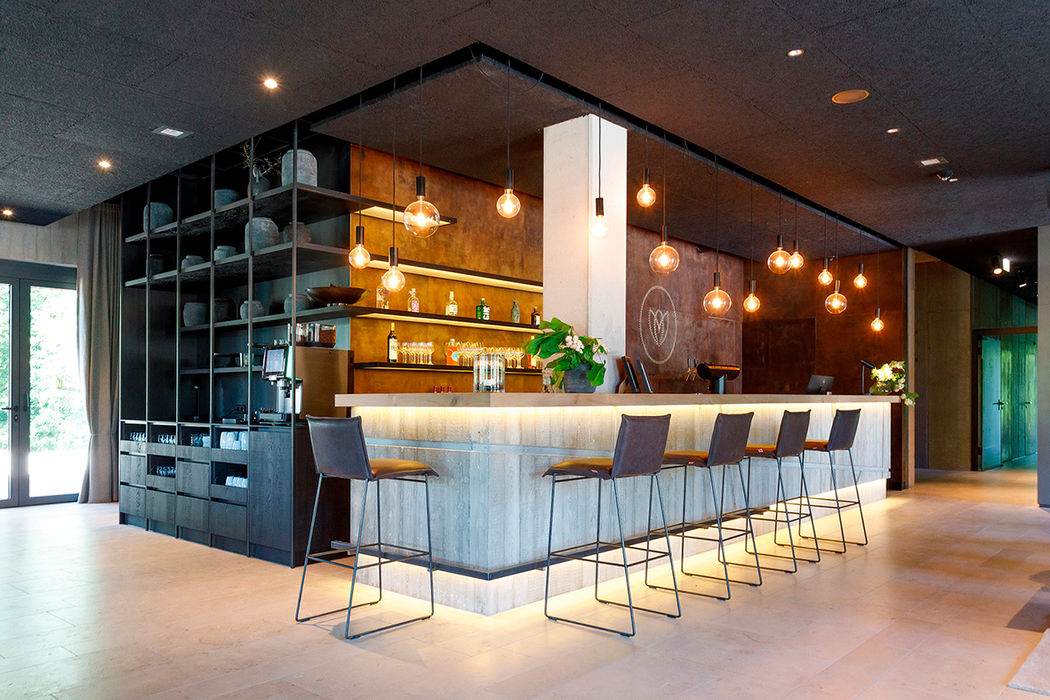
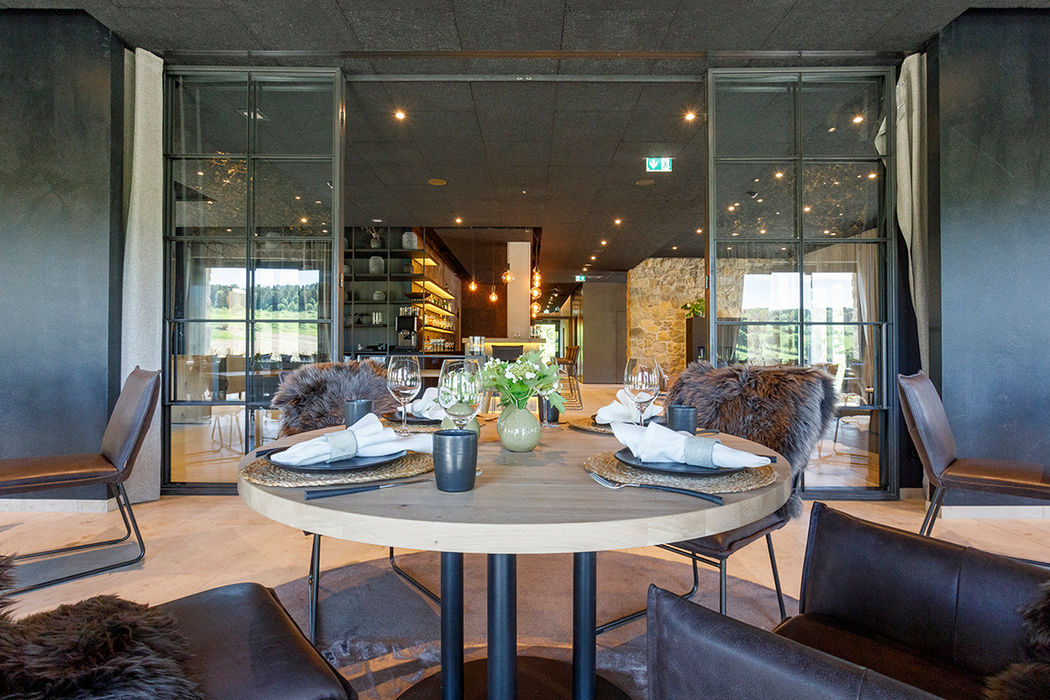
Nestled within the Swabian Alb biosphere reserve and far removed from the everyday, Hofgut Maisenburg sits surrounded by 120 hectares of meadows and forests—a sanctuary of peace within nature's timeless rhythm. Yet beneath its serene beauty, Maisenburg pulses with vitality. Since 2006, this meticulously restored ensemble of castle ruins and farmstead has thrived as a premier event venue for conferences and celebrations. Now, guests can also stay overnight—and what truly sets it apart is that the new building echoes the distinctive barn architecture characteristic of the Swabian Alb.
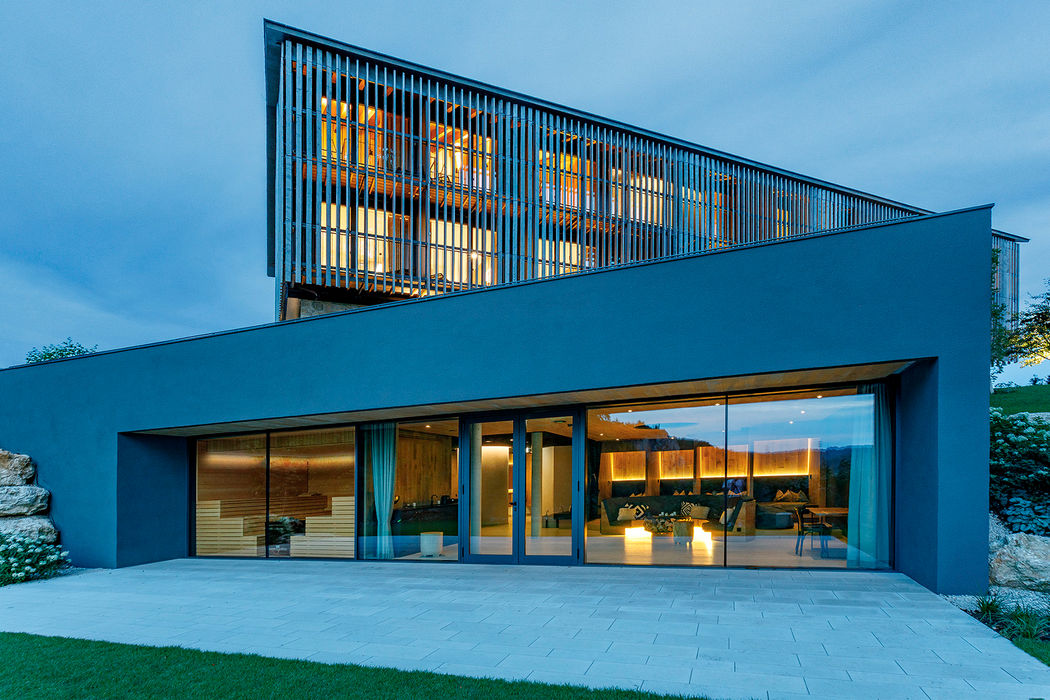
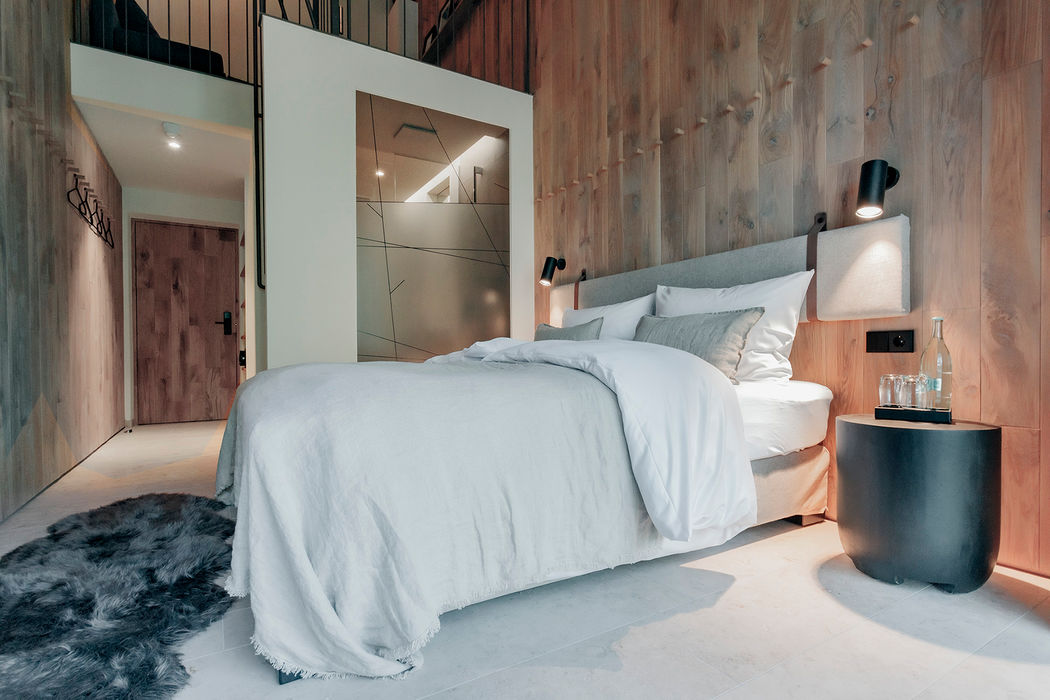
Designed by Reutlingen-based architect Axel Walk of walk architekten, the building's clean lines and staggered storeys marry modern design with regional tradition. Beyond the delicate task of complementing a protected historic property, the challenge was to craft a structure that feels native to its landscape and architectural context. "The ancient farmstead embodies simplicity and purpose, radiating a quiet authenticity that we've carried forward into the hotel," explain owners Markus and Anja Stoll. The façade features vertically arranged larch boards that shield the interior while orchestrating a dynamic interplay of light and shadow. This creates multiple sightlines from each room, framing views of the historic castle, the deer enclosure, and the untouched landscape beyond. A concrete and natural stone base anchors the timber structure. Inside, regional materials dominate: the 36 rooms and suites were crafted by local artisans using oak, Jura limestone, linen, and leather in warm, natural tones. Heated limestone floors, stone washbasins, and private balconies elevate each space to refined comfort and luxury.
Yet sustainability extends far beyond the hotel's materials. Die Maise and the entire estate operate on principles of environmental stewardship. The surrounding fields, orchards, and green spaces are largely Bioland-certified and managed organically. Across roughly 40 hectares, the estate maintains its own red deer herd and a flock of Albschnucken sheep—animals whose grazing helps preserve the rare juniper heathland habitat. The operators have already planted 2,500 trees on the property, with harvested timber powering the entire heating system.
www.walkarchitekten.de
www.die-maise.de
Photography Credits:
Matthias Just
www.matthias-just.com
(Published in CUBE Stuttgart 04|22)
Simplicity – in the Best Sense
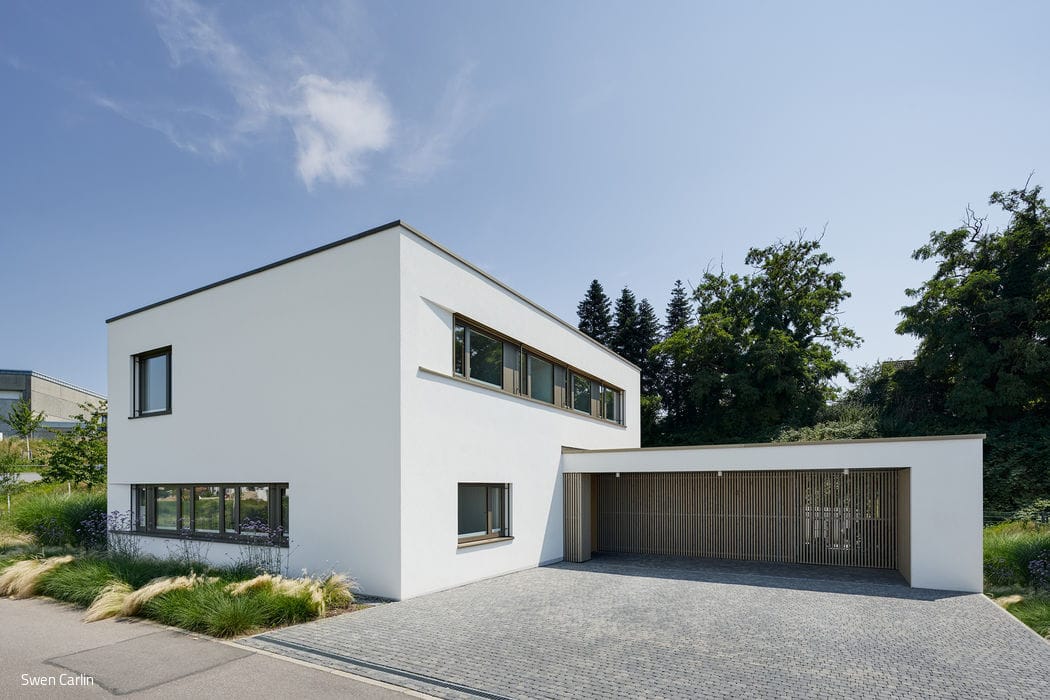
Budget-conscious family home with carport for three children
Curves into Angles
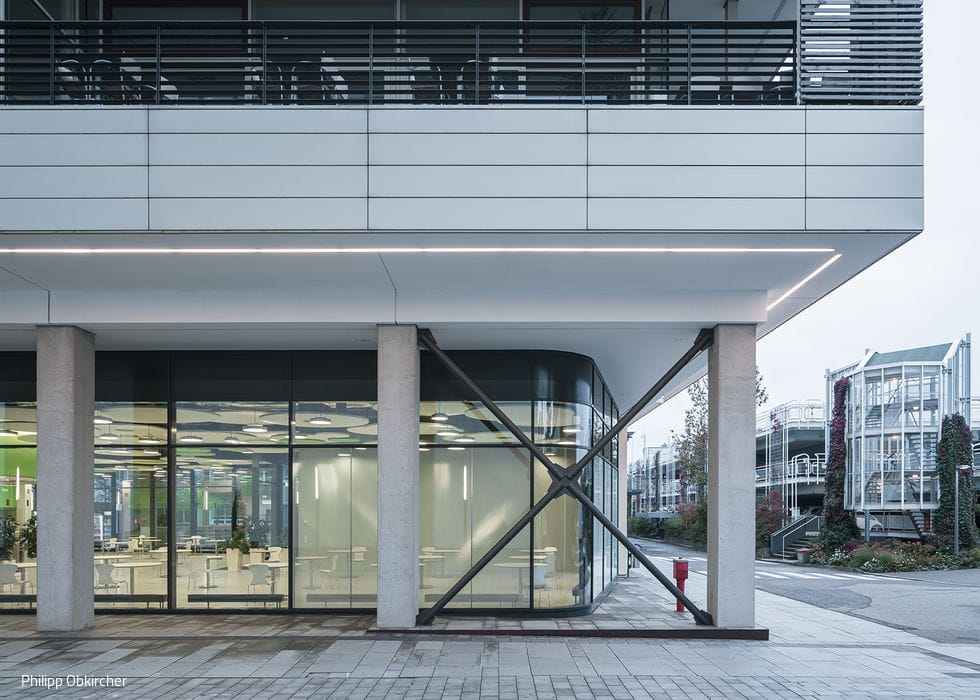
A Research Centre Cafeteria: Clarity and Space for Fresh Ideas

More Space for Living
A two-family home reimagined for a family of five.