


Inspired by the 1950s
An attic apartment in Maxvorstadt preserves its character through thoughtful renovation
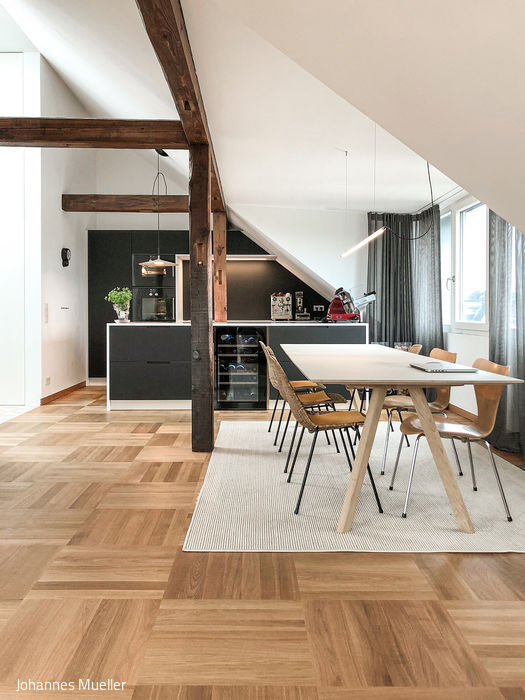
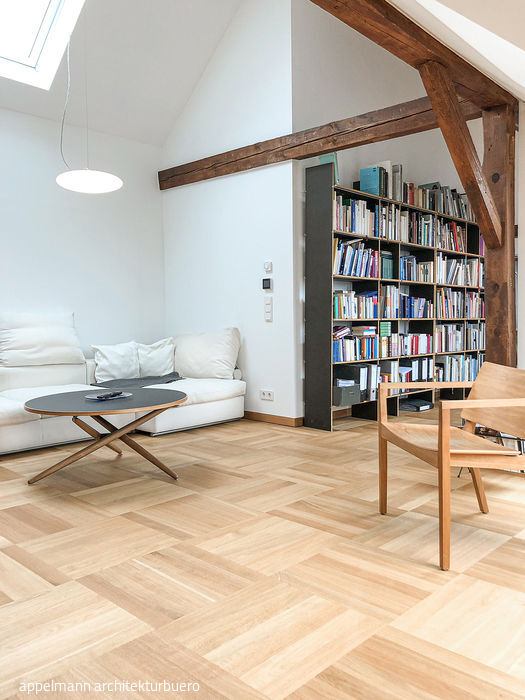
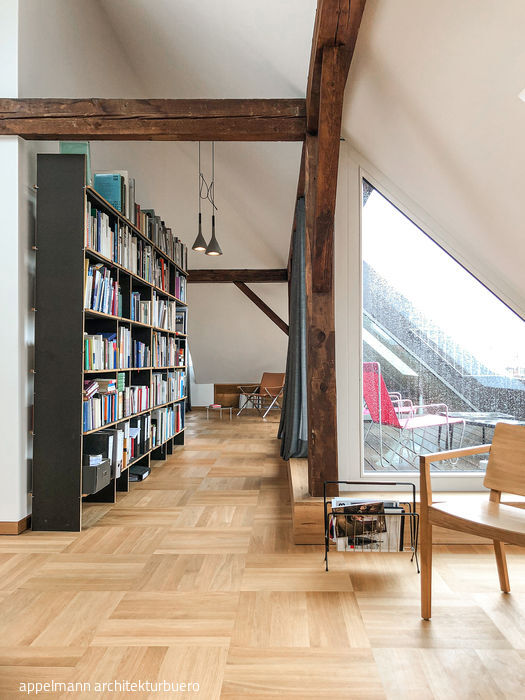
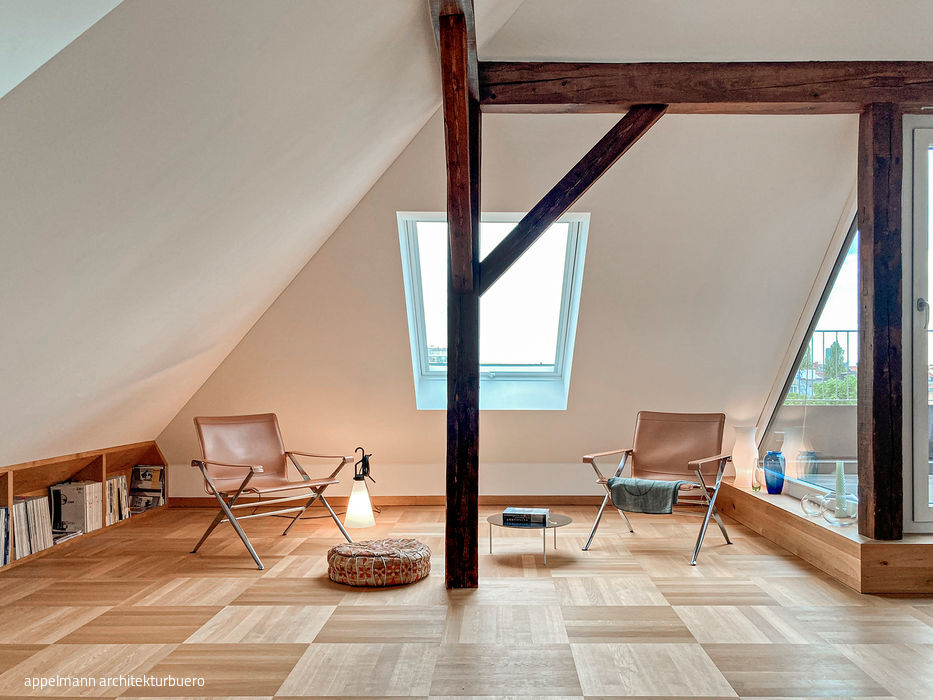
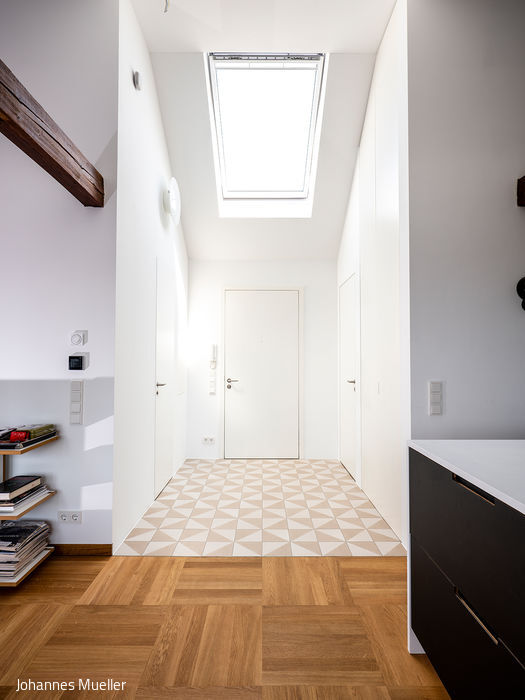
Munich architects Nicol Appelmann and Ulrich Binder transformed a disused grain storage facility in Maxvorstadt into their private sanctuary. Once abandoned and empty, this 1950s corner building—a quintessential post-war structure—has been reborn as a luminous attic apartment that celebrates rather than conceals its industrial heritage. At its apex, the space soars to an impressive 4 meters high. The architects were determined to preserve this dramatic verticality: rather than subdividing the space with a second floor or crawl space, they created a central entrance that immediately reveals the full architectural drama of the restored roofline.
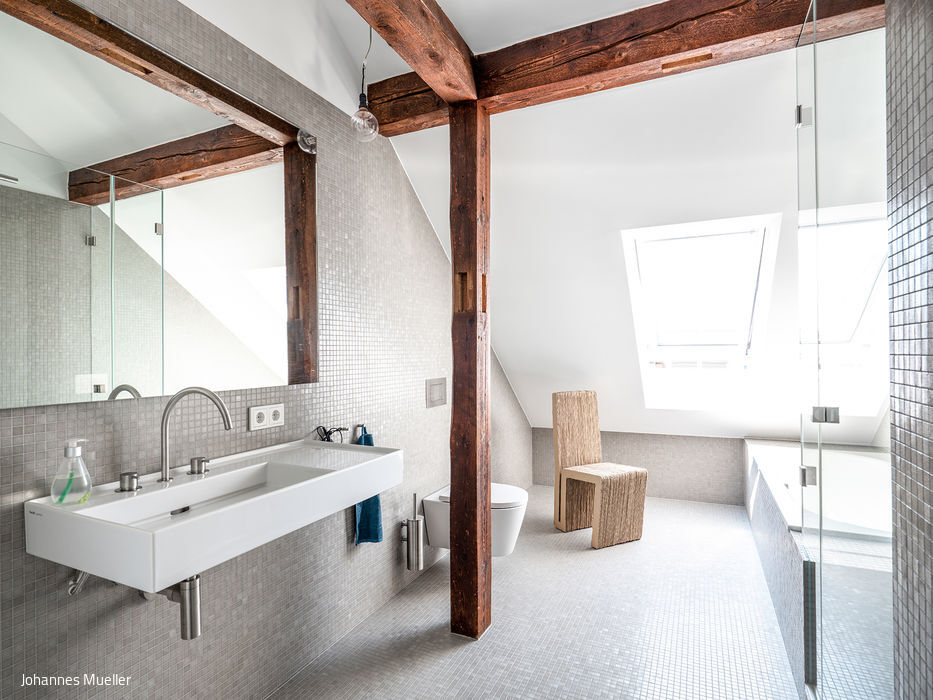
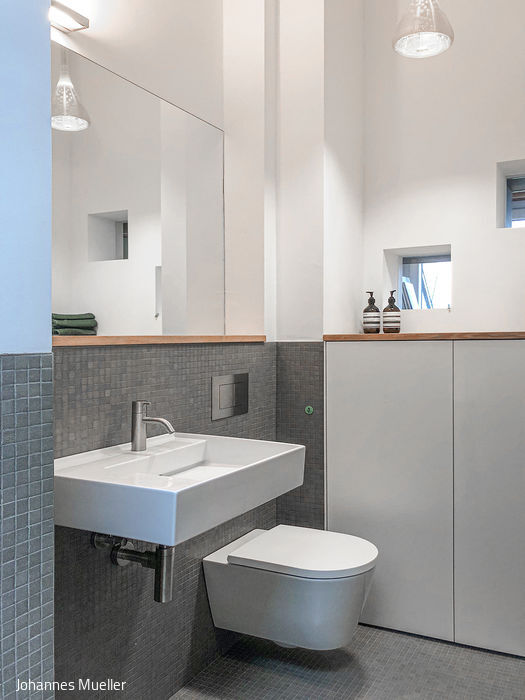
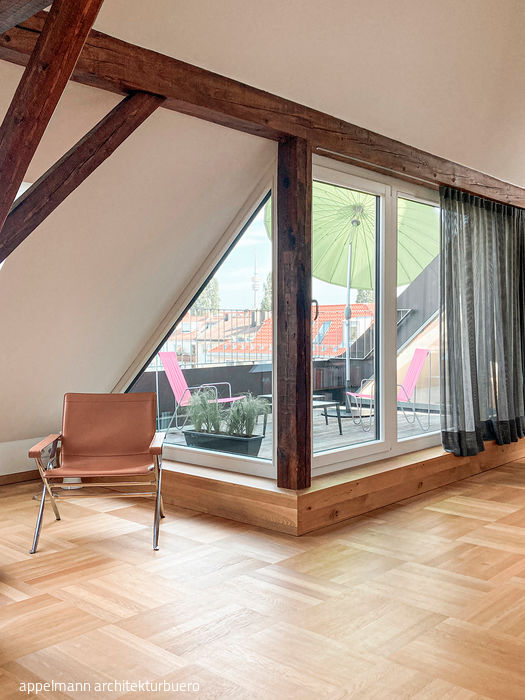
Clever design solutions elevate this rooftop retreat into something truly extraordinary. A custom bookshelf punctuated with light windows floods the otherwise windowless guest bath with daylight and views. During construction, the architects realized that the stunning vistas—north toward the Olympic Tower and, weather permitting, south to the Zugspitze—would be blocked by the guest WC near the entry. Their elegant solution: corresponding apertures in the bookshelf frame, which become small, glazed peepholes in the bathroom, preserving the sightlines throughout. The outdoor terrace anchors the entire home, visible from every living area—from the reading nook with its inviting leather armchairs, the living room, and the bespoke kitchen crafted by master carpenter Christoph Bergner. With black linoleum fronts and a slim Corian edge, the kitchen reads as sculptural furniture rather than cabinetry. The design language draws freely from the 1950s: expansive oak parquet laid in oversized checkerboard patterns, retro tilework in the entrance, and a coffee table that reissues the iconic ess.tee.tisch by Swiss manufacturer horgenglarus. The bright, open-plan layout contains just three doors—to the bedroom, master bath, and guest WC. "The floor plan breathes," explains Nicol Appelmann, "yet every zone is clearly defined." She's added a final personal touch: a cardboard chair she designed during her student days now stands like sculpture in the master bath.
Photography Credits:
Johannes Müller
Appelmann Architectural Office
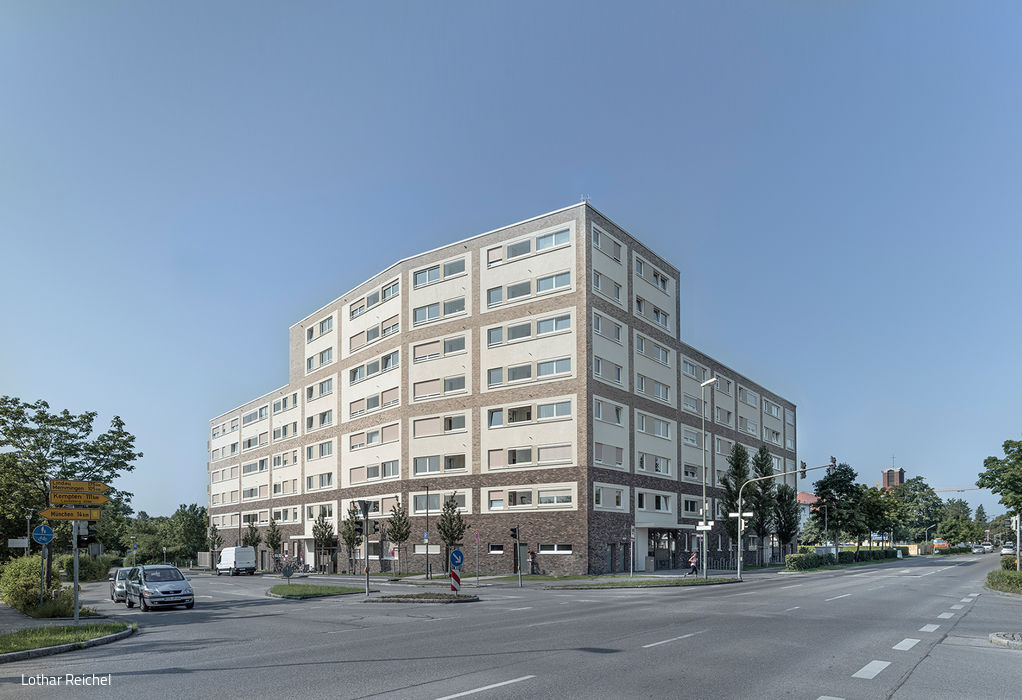
Germering's New Chapter
New residential complex with 126 apartments and integrated kindergarten
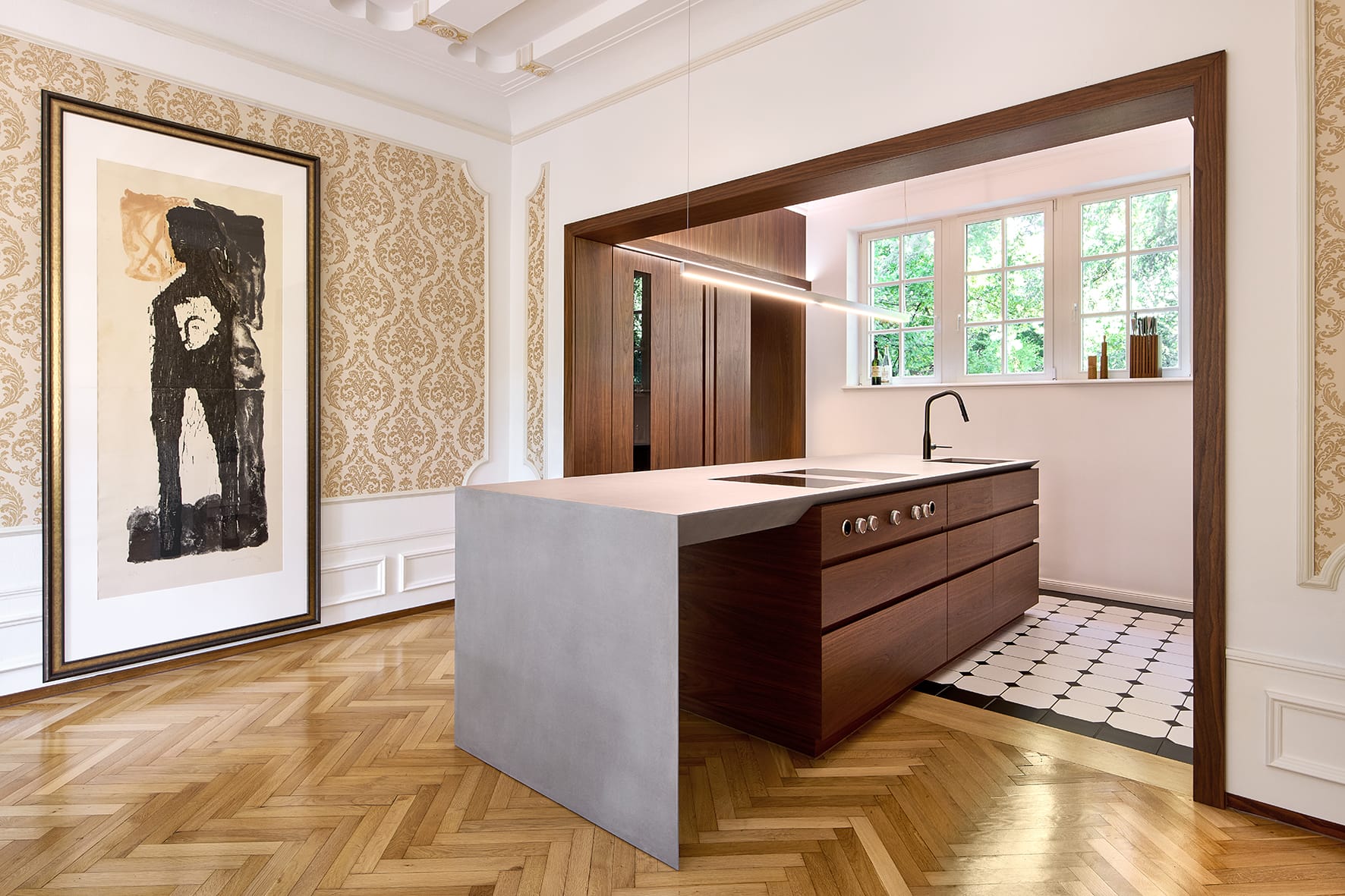
Details That Matter
A bespoke kitchen by VOIT Schreinerei+Planung becomes the focal point of an Art Nouveau villa.
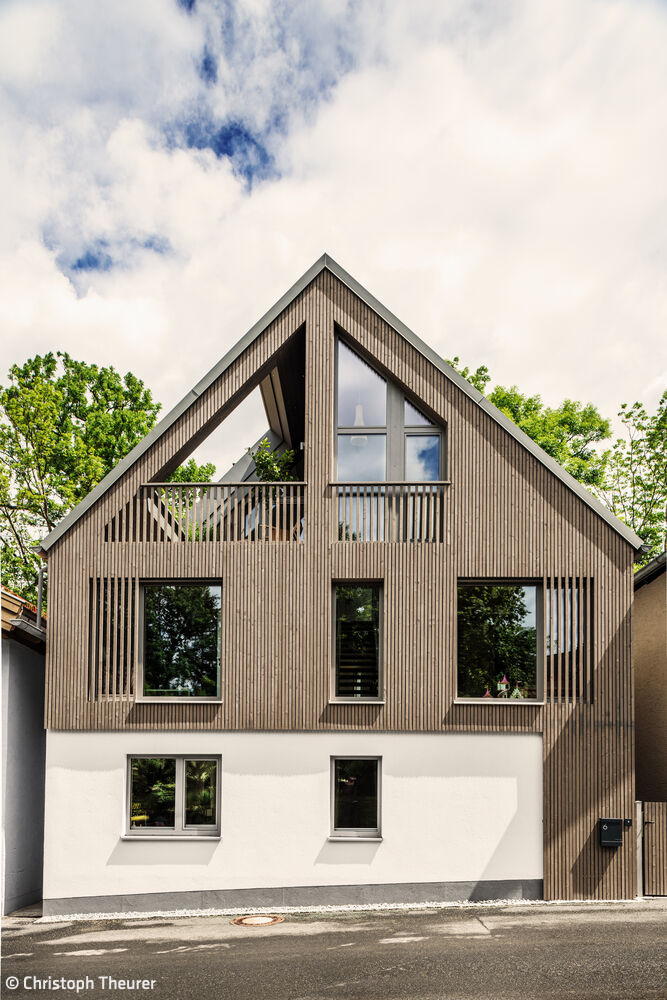
A Harmonious Interplay
Solid wood family home makes a contemporary statement within a historic setting
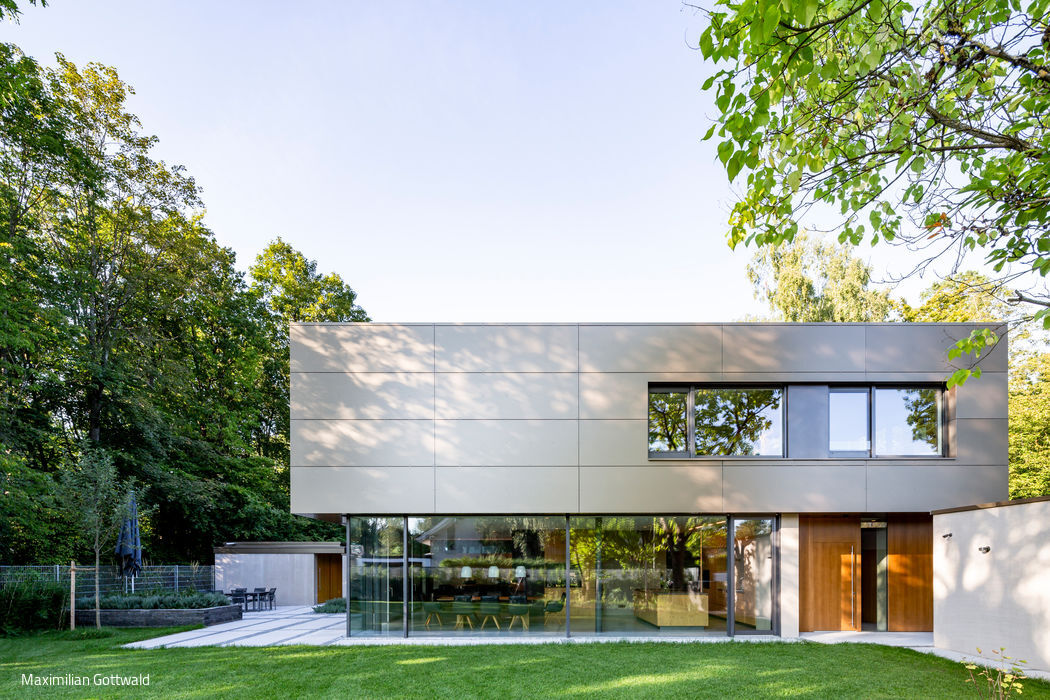
Optical Levitation
A Floating Villa of Glass, Concrete, and Steel