


Everything but ordinary
Sustainability that sets the standard in hospitality – economically, ecologically, and socially responsible
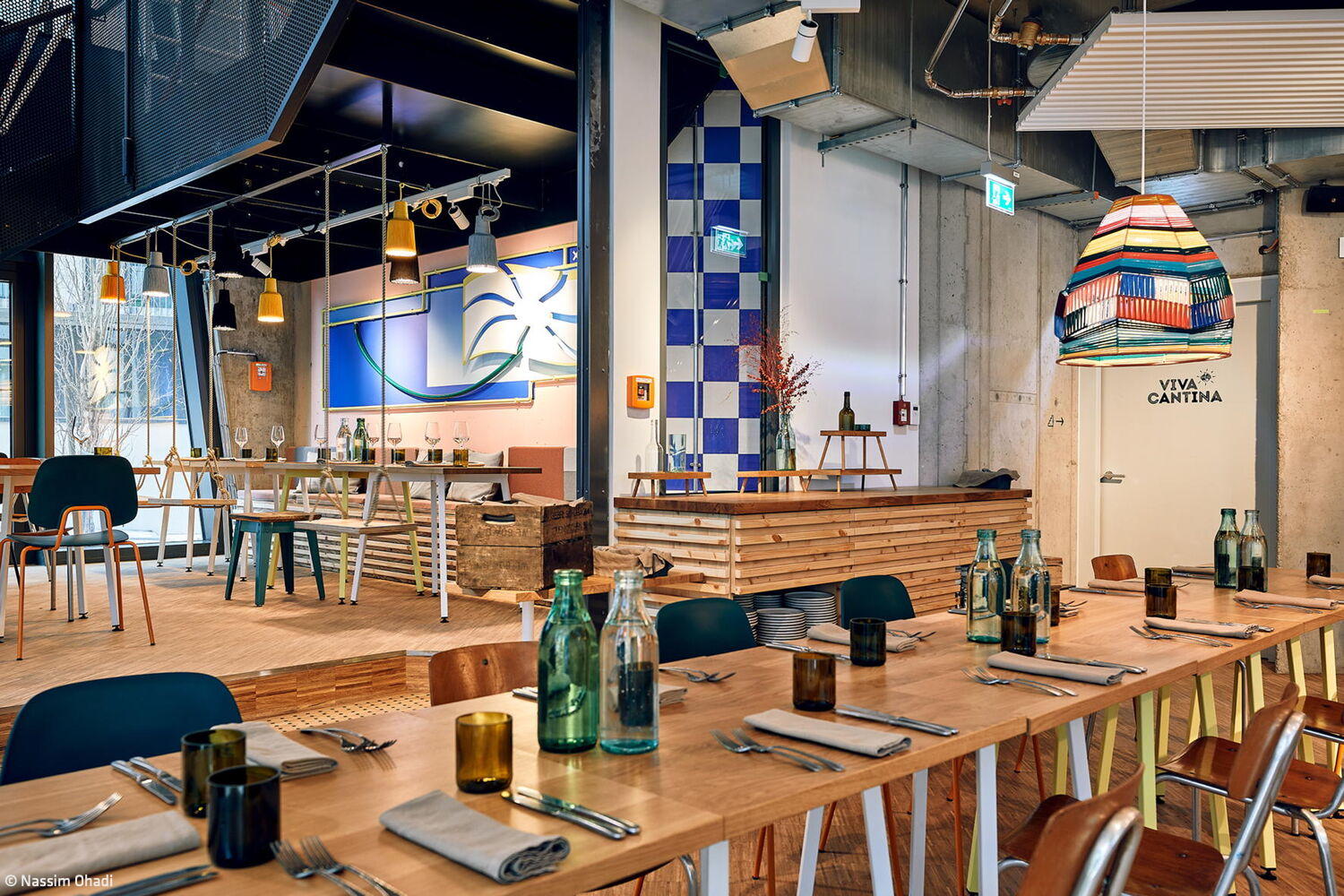
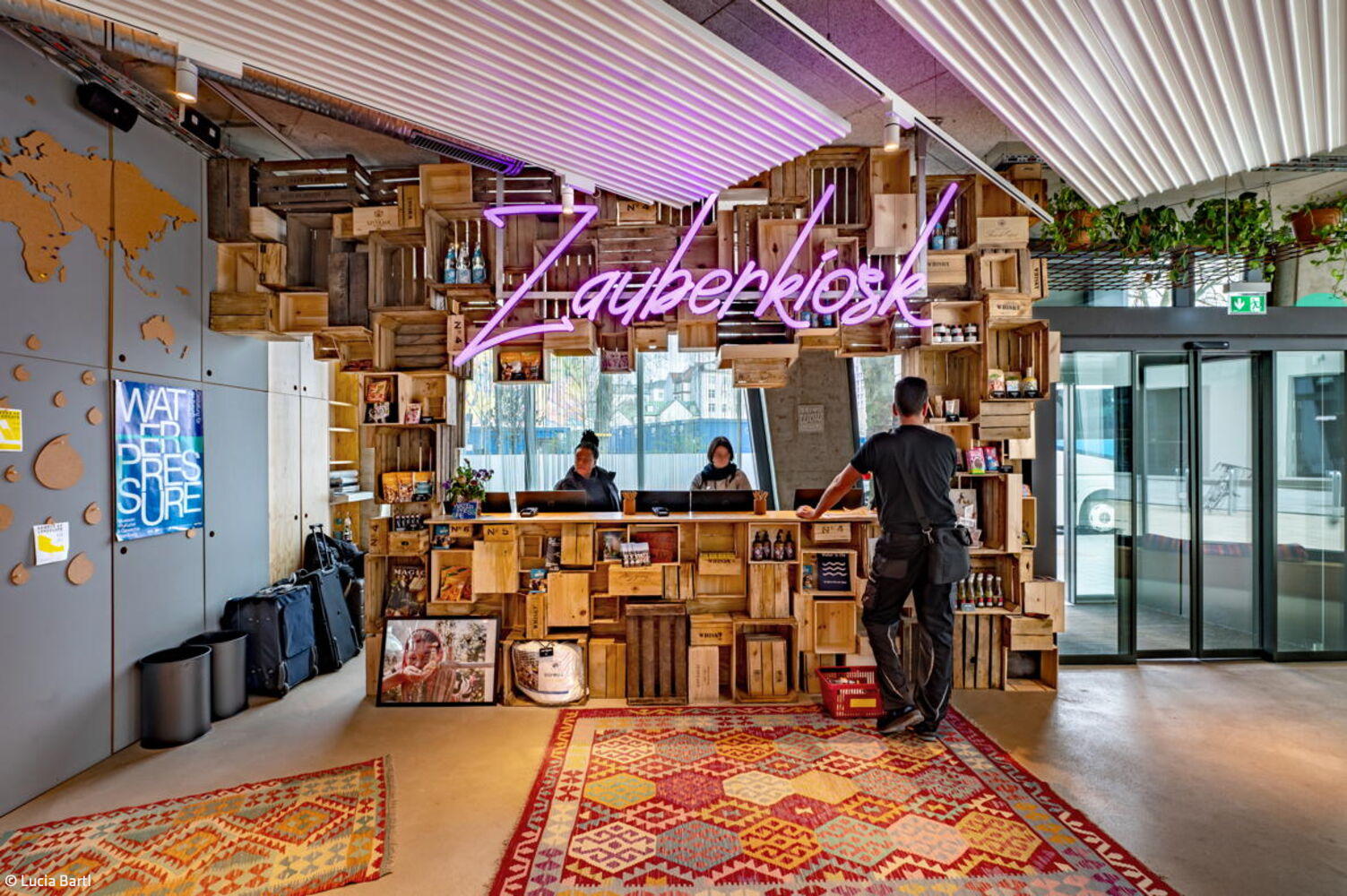
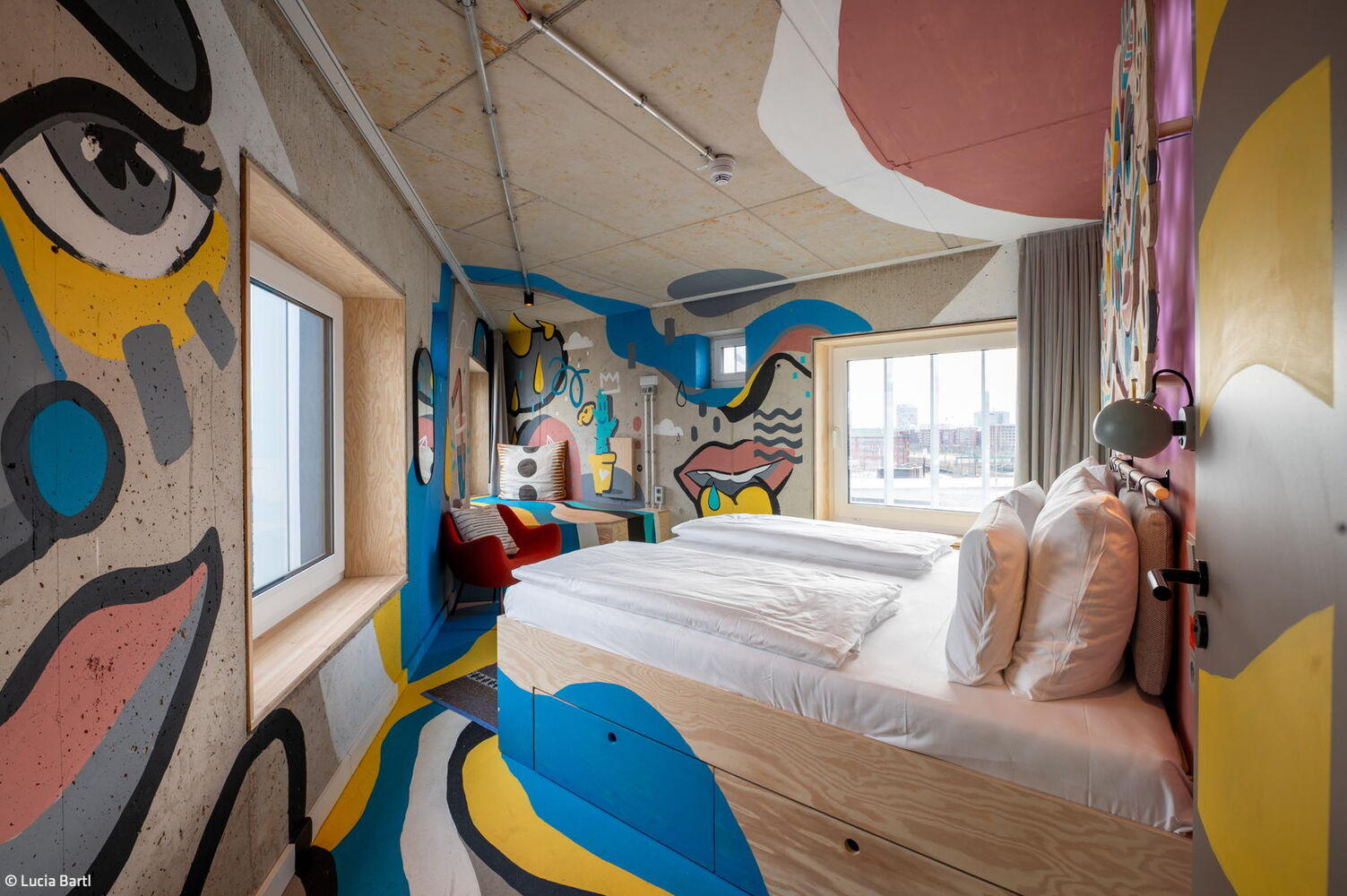
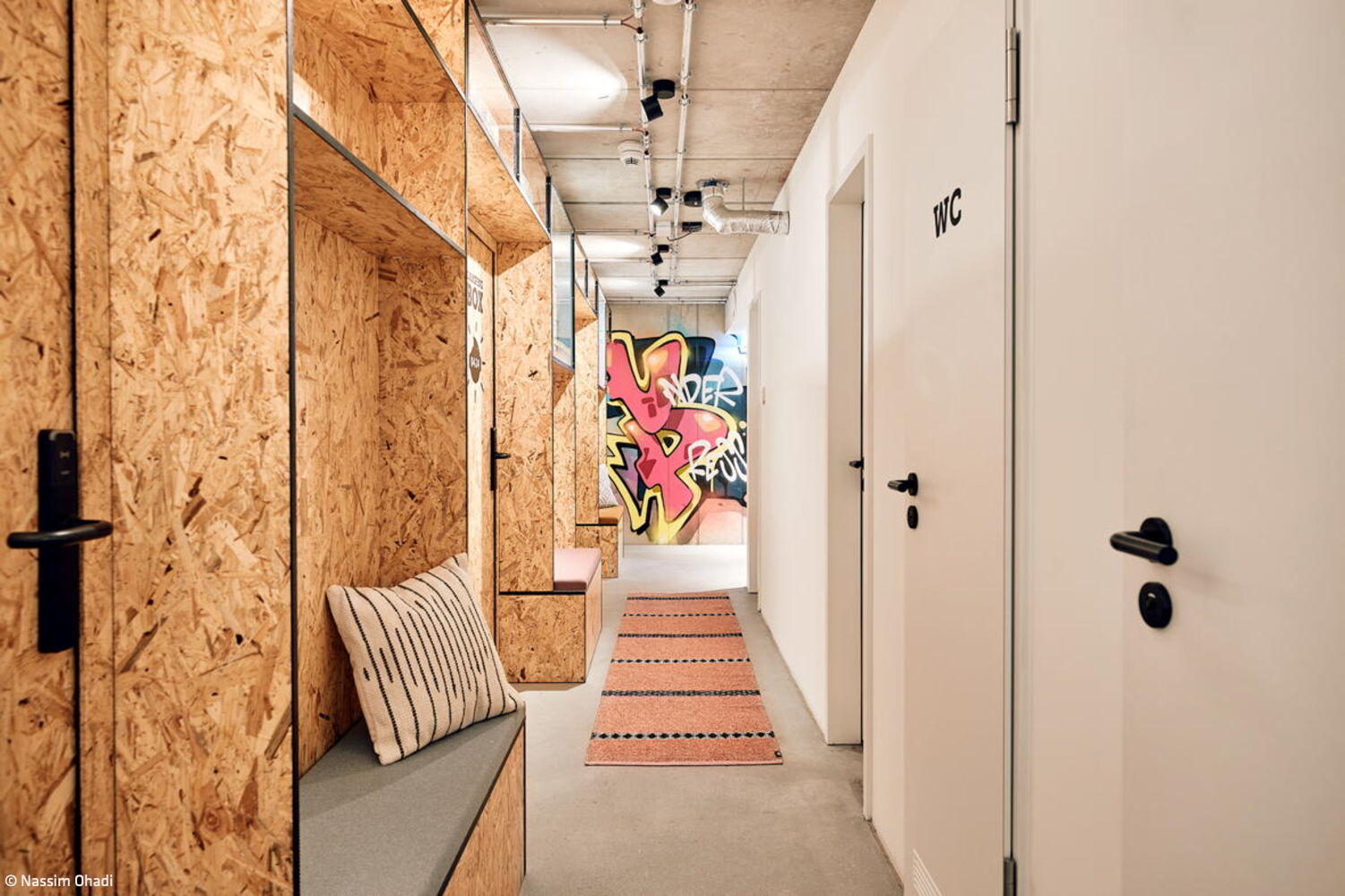
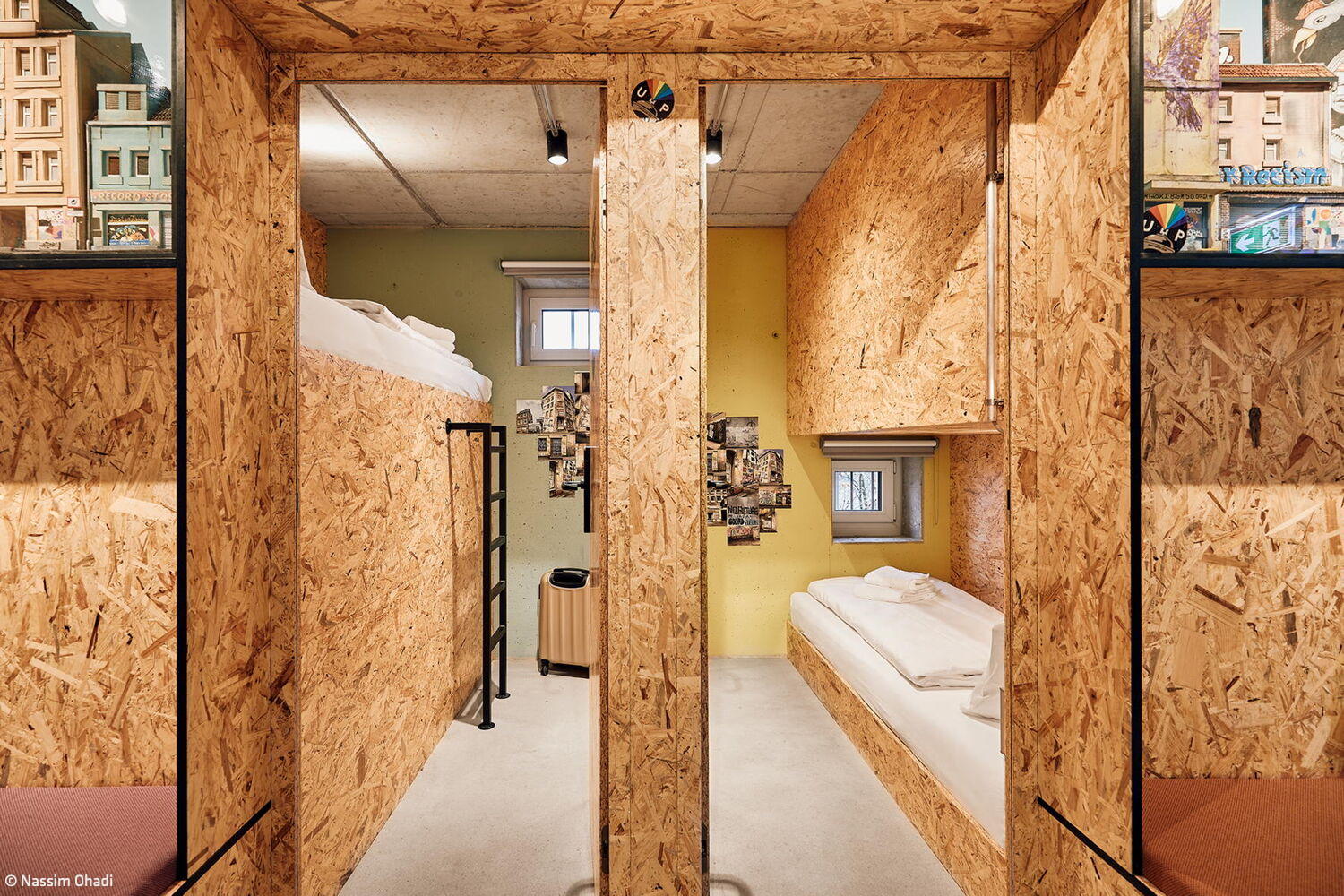
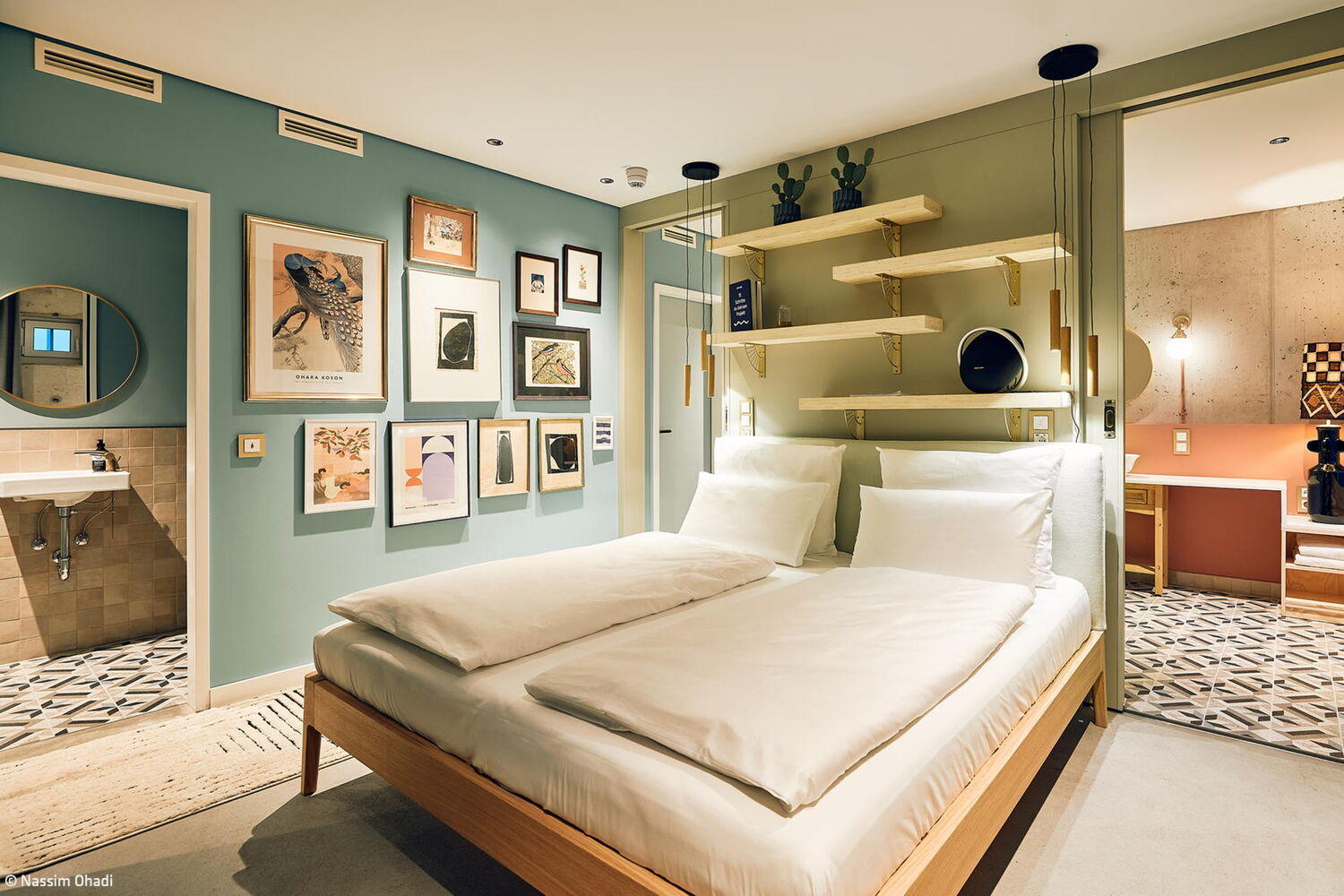
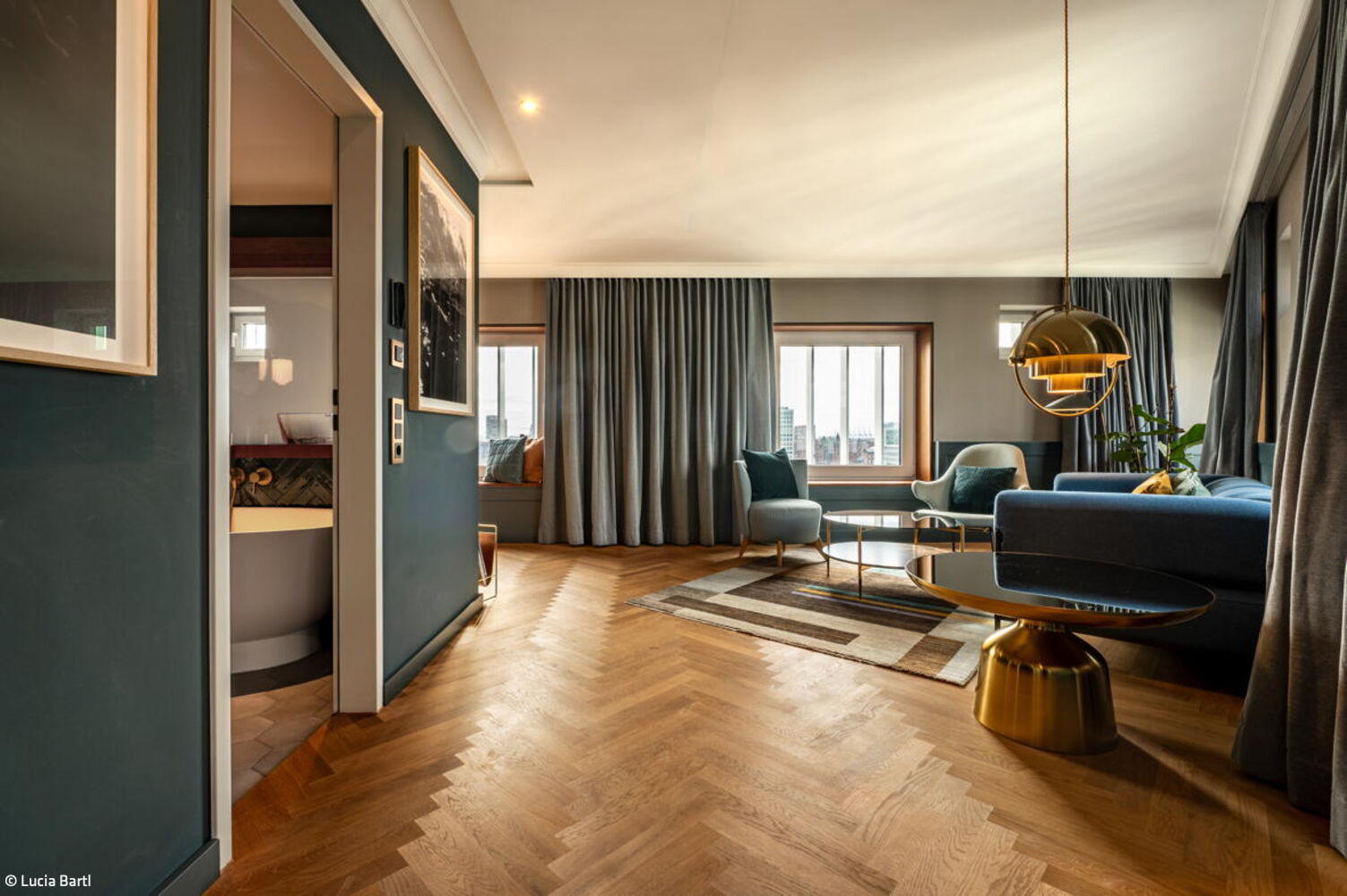
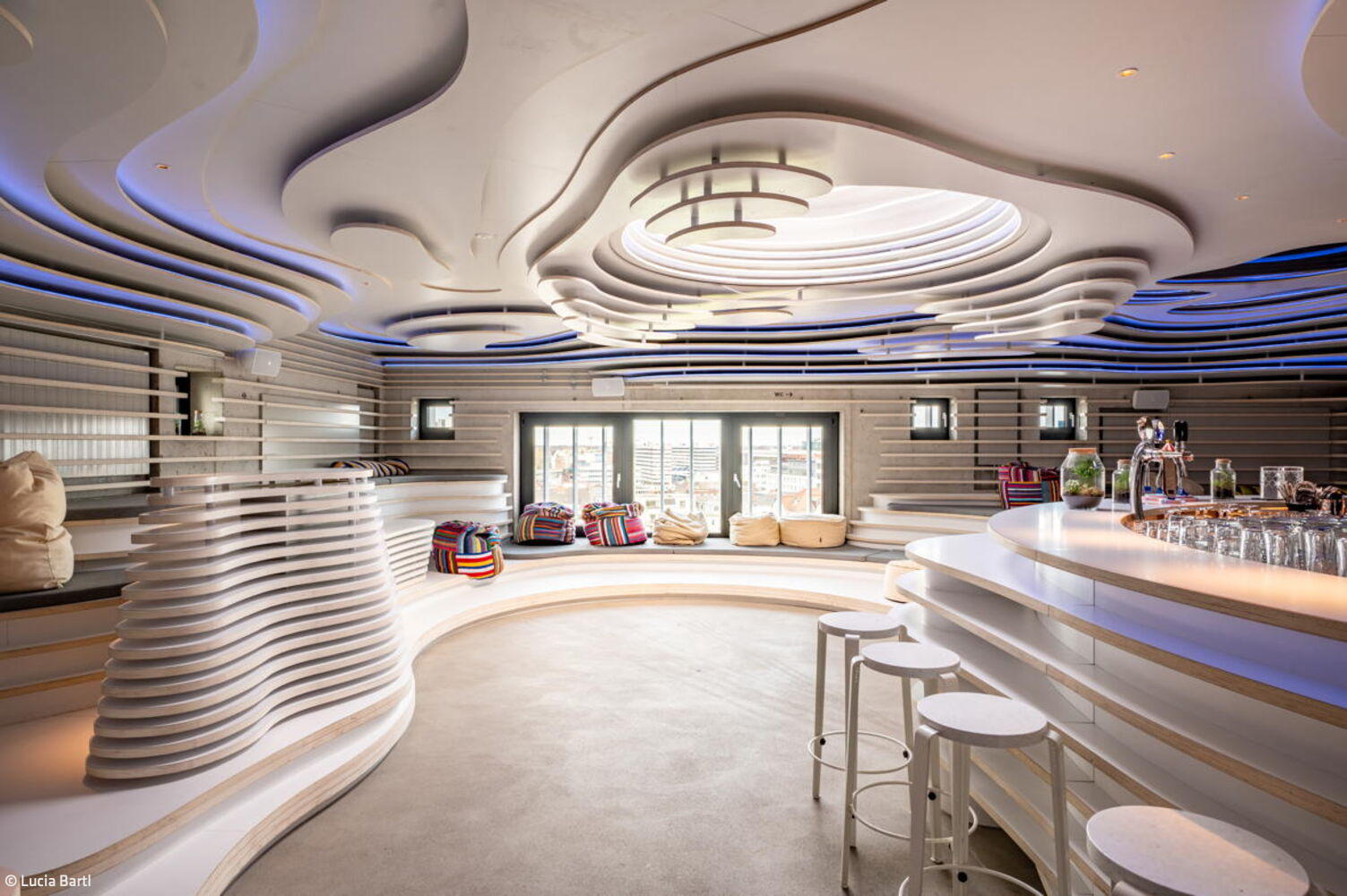
In Hamburg's Münzviertel district, nestled between the main railway station and HafenCity, an extraordinary hotel has emerged. Gasthaus Villa Viva is more than just a social business venture by the non-profit organization Viva con Agua in partnership with Heimathafen Hotels—it sets a comprehensive sustainability standard applied rigorously across construction, furnishings, and operations, far exceeding typical hotel industry benchmarks. Designed and built by Me di um Architekten in collaboration with Green Transformation Consulting, the result is a welcoming, vibrant, and unconventional 12.5-storey building with 138 rooms that merges overnight stays with social impact, directly supporting Viva con Agua's global drinking water initiatives.
The energy-efficient, resource-conscious building extends its mission into its interior architecture, embodying the clients' philosophy: a lively atmosphere infused with joie de vivre and genuine social purpose. The design opens up spaces, brings people together, and fosters platforms for art and dialogue. It achieves this through simple, durable, hard-wearing materials—industrial parquet and wood—that are both visually striking and built to withstand the rigorous demands of high hotel traffic. Certain pieces, from restaurant lighting to cushions, were specially commissioned from social enterprises for this project. Green Transformation Consulting's experts developed a bespoke sustainability strategy for the interior, prioritizing low-toxicity design and equitable, short supply chains. Every material was vetted against German Sustainable Building Council (DGNB) standards, ensuring fair and ecologically responsible production, with strict adherence to international labor and human rights norms. The team deliberately selected exclusively European-sourced materials to reduce transport emissions, emphasizing recycled, secondhand, and certified options alongside sufficiency and energy efficiency—notably by eliminating non-essentials like televisions. In partnership with Viva con Agua, a specialized supplier code of conduct was established, grounded in international human and labor rights, to guarantee accountability throughout the supply chain. Unlike conventional hotel projects, this venture has seamlessly woven social and ecological responsibility into every decision—matching functional demands and long-term viability with purpose. With each night's stay, guests contribute to meaningful change.
www.medium-architekten.de
www.greentransformation.consulting
Photography:
Nassim Ohadi
www.nassimohadi.com
Lucia Bartl
www.luciabartl.de
(Published in CUBE Hamburg 03|25)
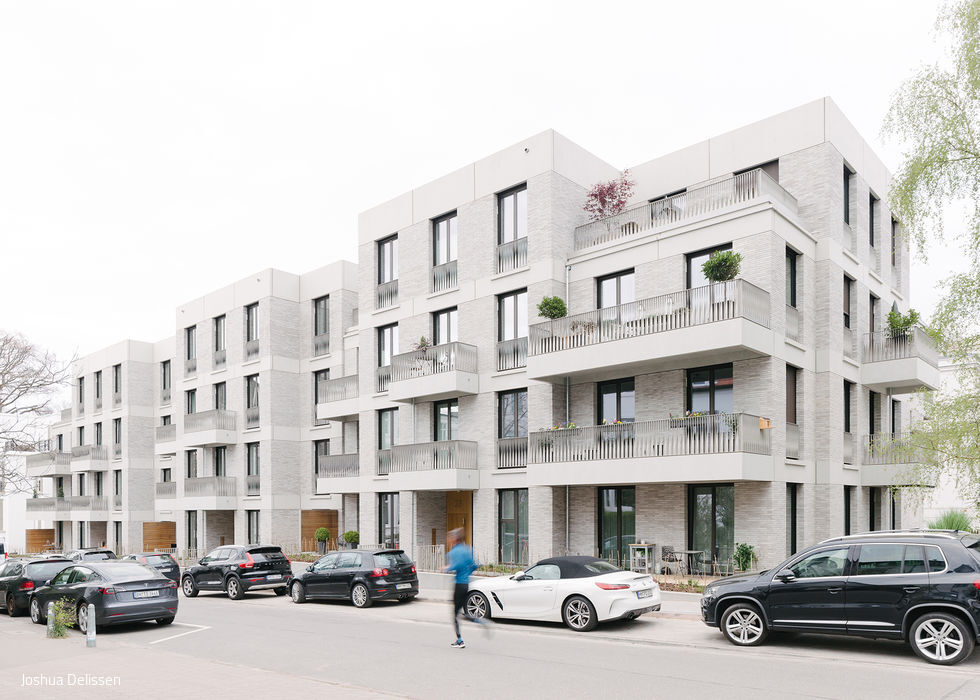
Urban Townhouses on the Alster
Historical Typology, Contemporarily Reimagined
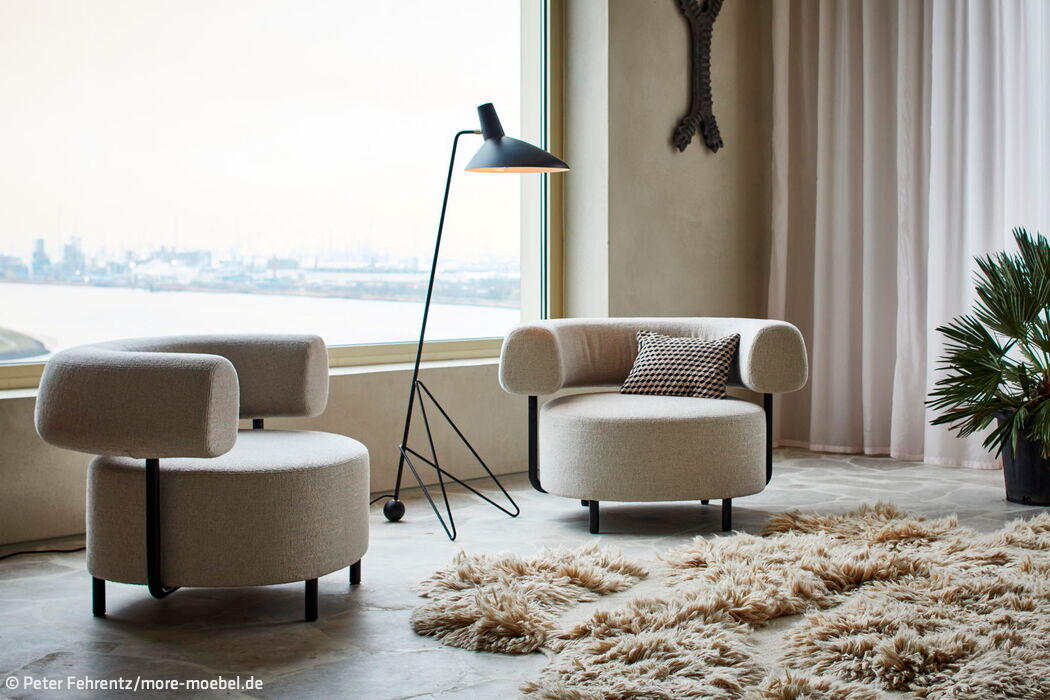
Refined Aesthetics
On Peter Fehrentz's Design Philosophy
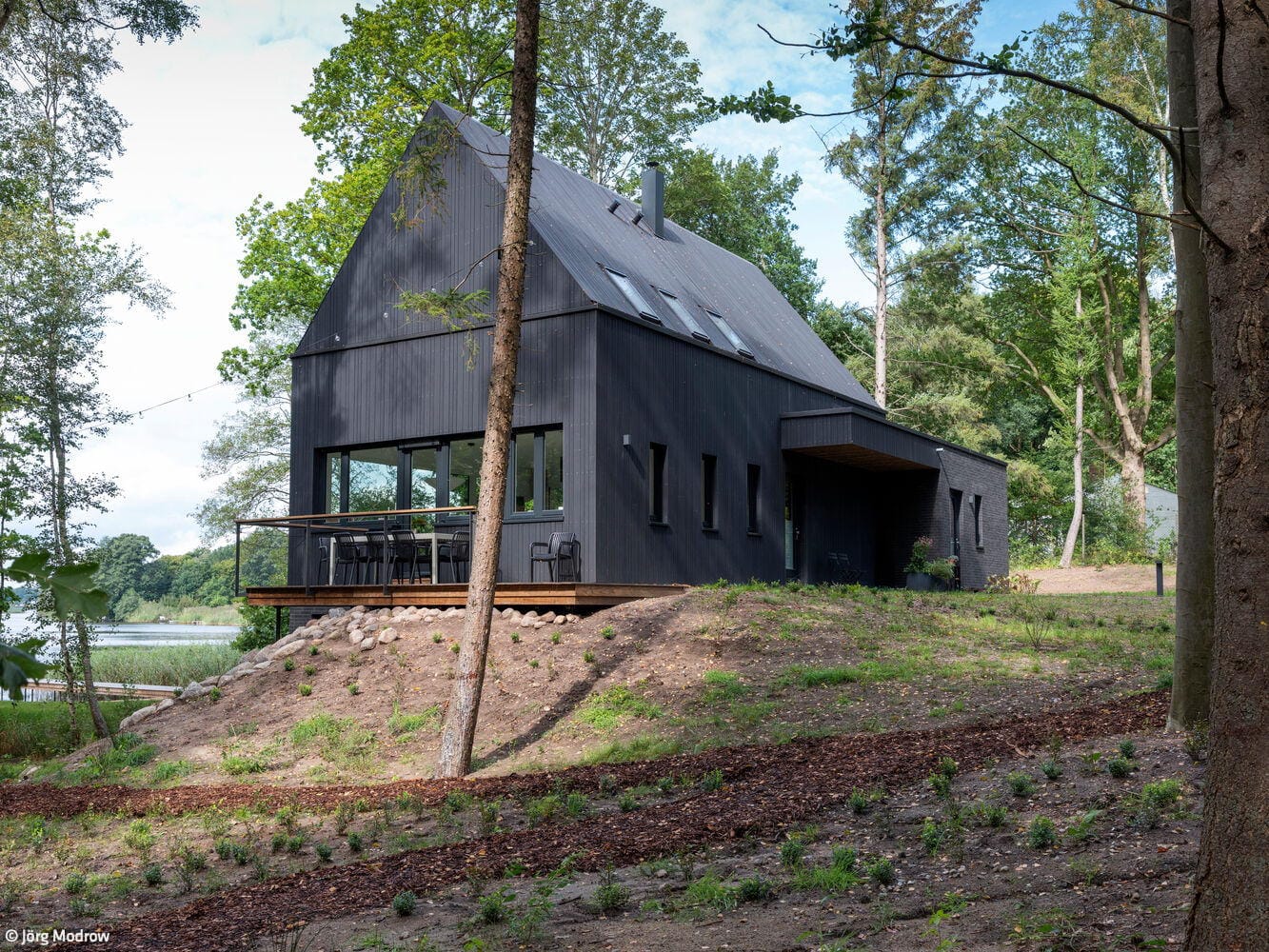
Black Diamond by the Lake
This house embodies a seamless fusion of nature and architecture.
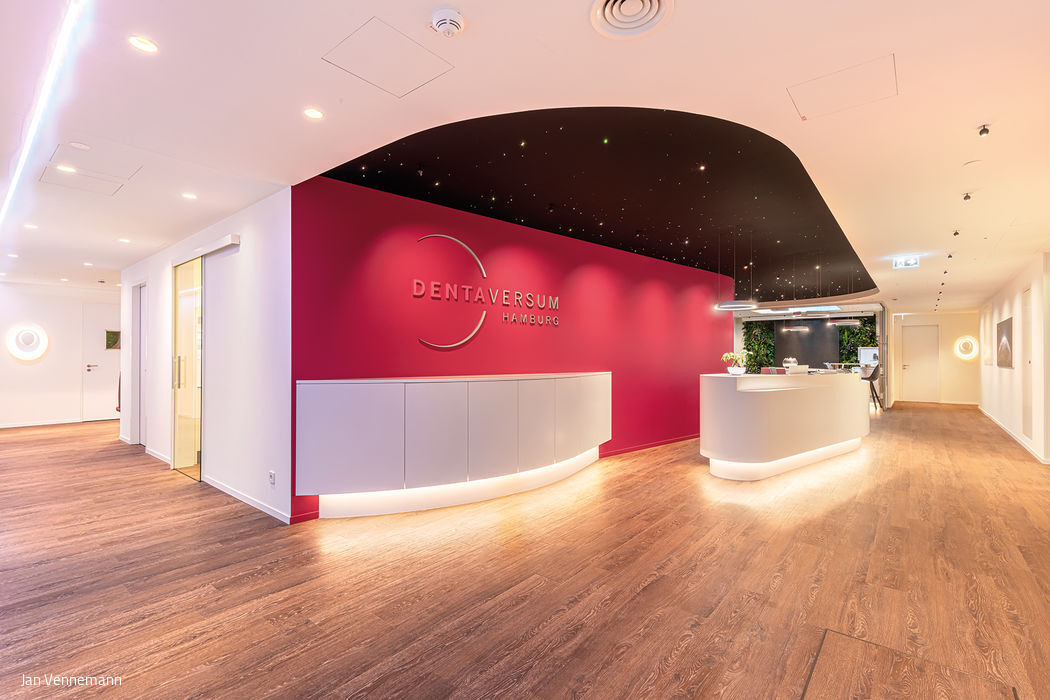
The entire universe
Comprehensive Lighting Design: Supporting Patients and Practice