


Concrete Pyramid on Three Legs
Expert Restoration of the Protected Fox Den
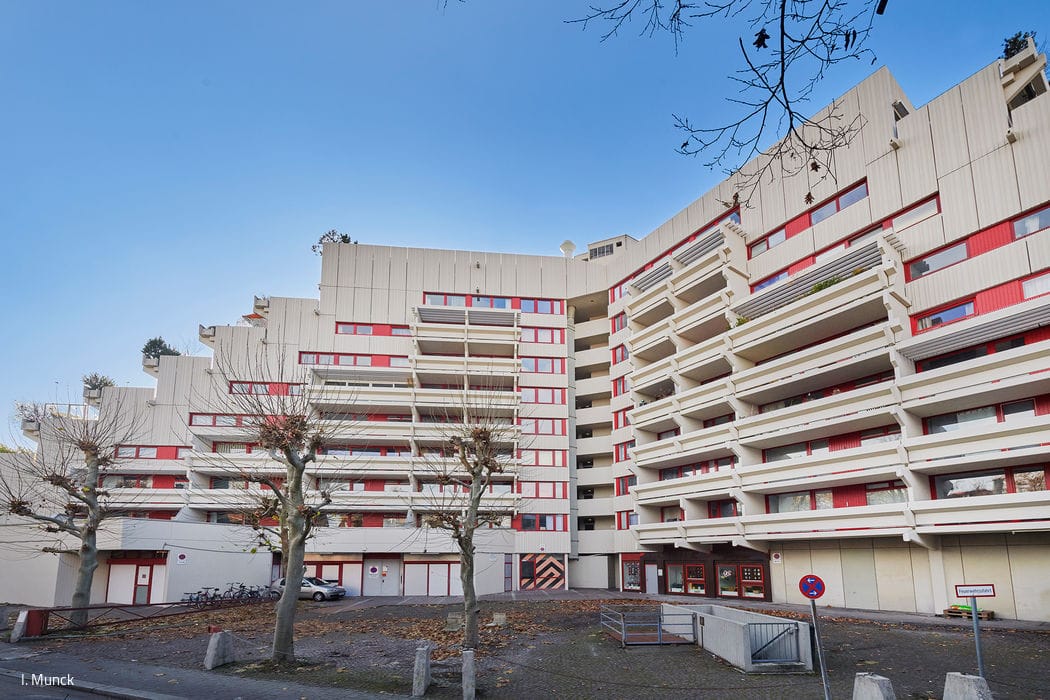
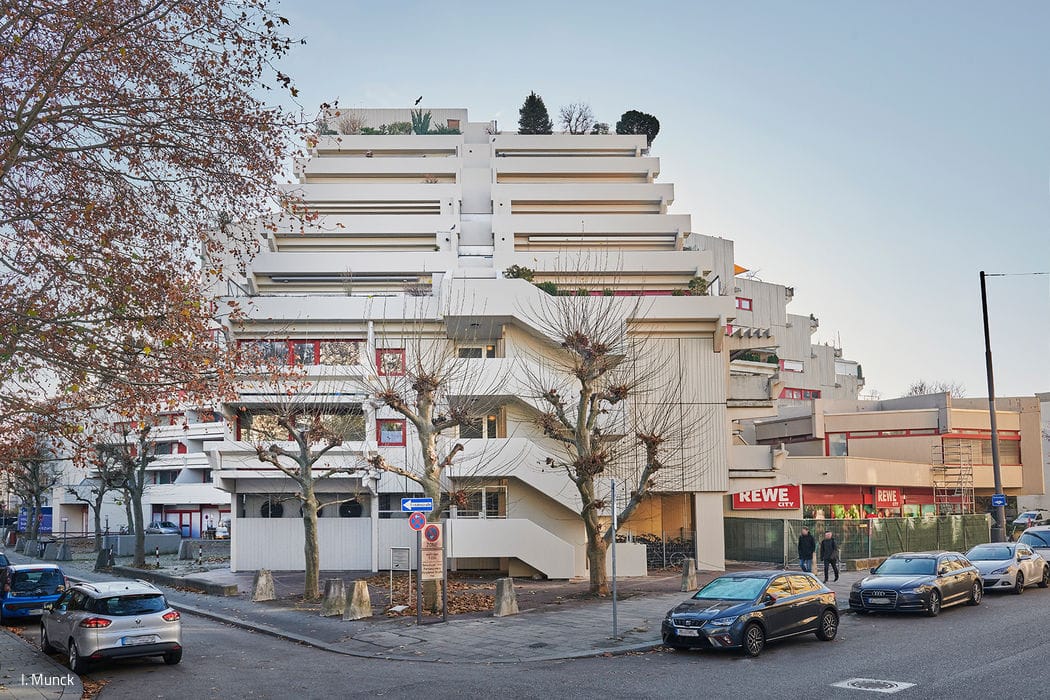
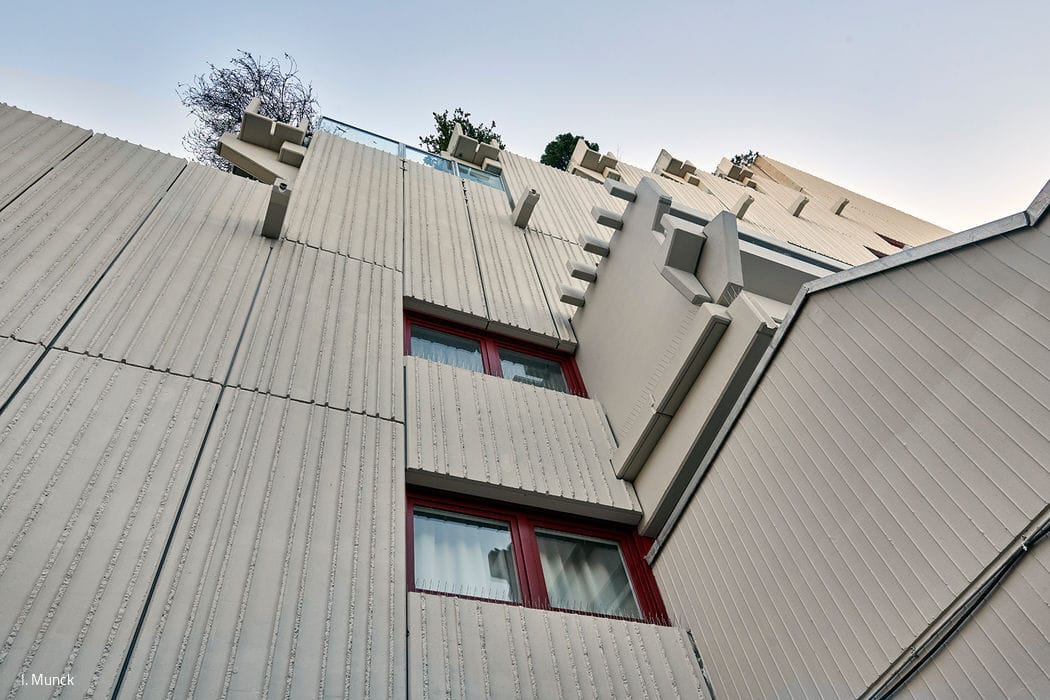
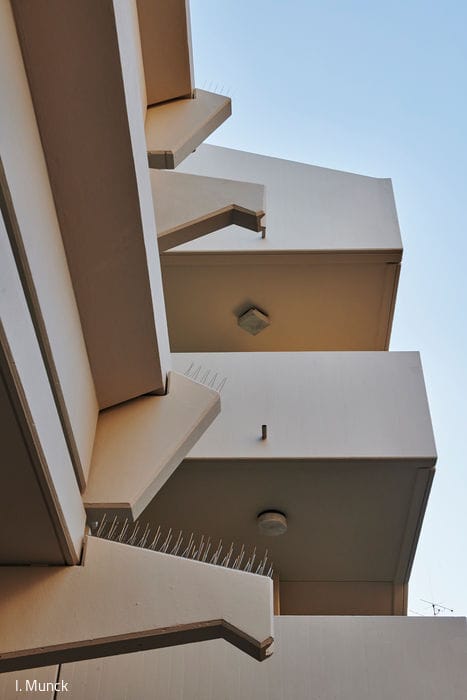
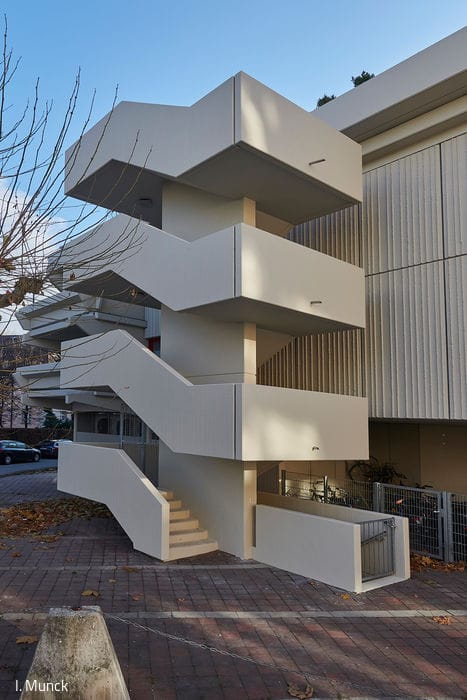
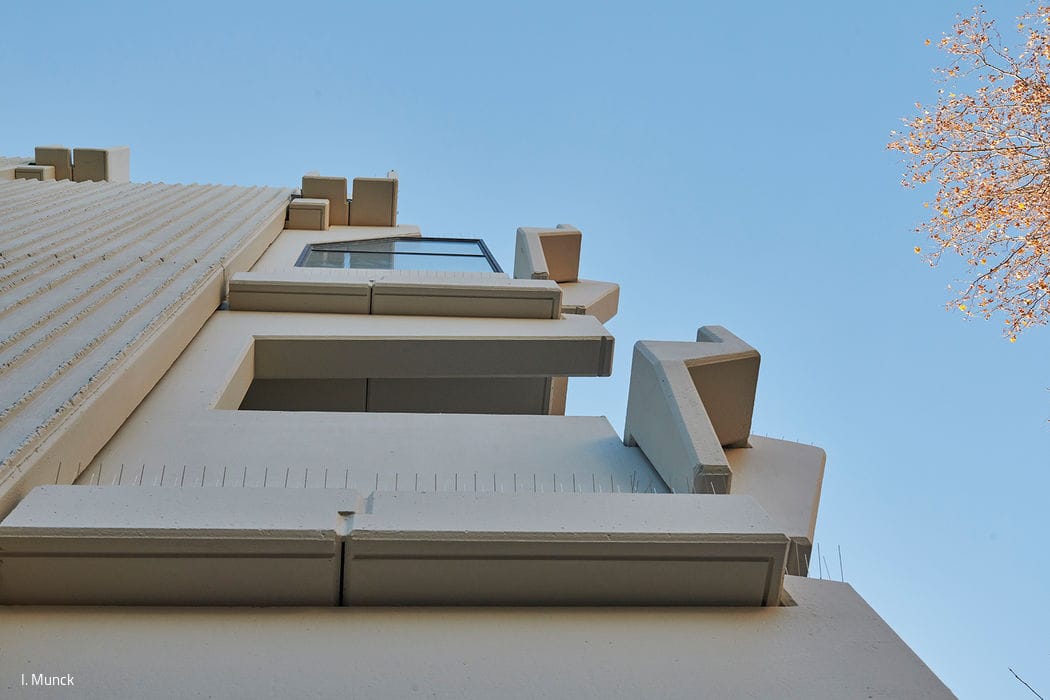
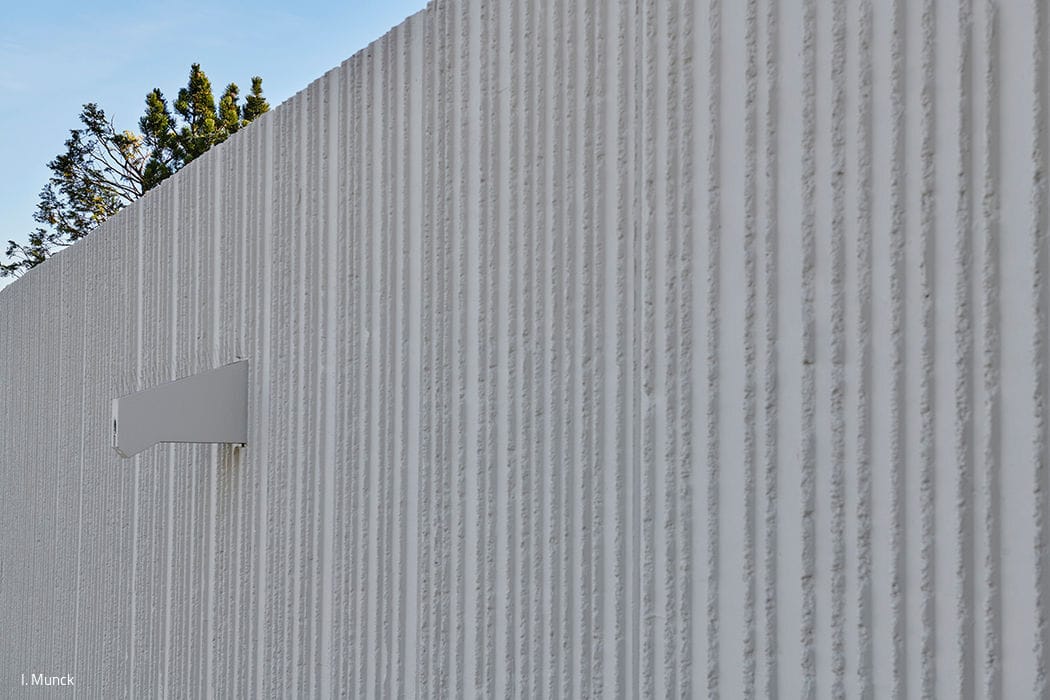
The era when legends clung to this district has itself become legend – the Schwabing of artists, of hippies, of small theatres and cabarets now reduced to scattered remnants. Tempi passati. Yet a handful of architectural monuments still evoke those more exuberant times, among them the "Fuchsbau" – recognised as a protected historical landmark since 2019 and hailed by architecture experts as one of Germany's finest examples of Béton Brut. When it was completed, many dismissed it as an ugly concrete monolith. But for the young, forward-thinking Schwabing of that era, it embodied something vital: proof that the district could stay contemporary and compete at the highest level. The year was 1973, Munich still intoxicated by the afterglow of the Olympics – that transformative event that had unleashed a genuine construction boom. Architect Wilhelm Steinel designed the structure on behalf of DEBA (Deutsche Wohnbau): a three-winged pyramidal form with nine stepped, progressively recessed storeys. This geometry ensures every apartment enjoys unobstructed sunlight, sheltered from the shadow of neighbours above. Located on Ungererstraße, adjacent to the Forum at Münchner Freiheit, it once marked the northern frontier of Schwabing proper. Today, the district extends further still, with Schwabinger Tor and Parkstadt Schwabing now nearby. Named after the adjoining Fuchsstraße, the "Fuchsbau" embodies a modernism we've largely abandoned – deliberately tapering towards the sky means sacrificing square metres. Yet within its form sit 239 residential units with remarkably diverse floor plans, ranging from 24 to 125 m². Resident satisfaction remains notably high, particularly in the spacious eastern and western apartments, where broad terraces and generous planting areas define the living experience. Commercial and office spaces occupy the lower levels, their polygonal form extending distinctly from the main structure. Access flows from the building's central hub – where all three wings converge – through a central stairwell and lift core. For three decades, from 1973 to 2005, the space also served as a cultural gathering place for film enthusiasts of the "Lupe 2" arthouse cinema. The concrete façade eventually showed its age and required sensitive intervention. Over three carefully coordinated phases, the specialists at StoCretec undertook a comprehensive restoration: the board-formed concrete surface, precast concrete balconies, and red-accented doors and windows were all renewed using advanced, fire- and weather-resistant concrete repair systems. The result is extraordinary – the building appears freshly completed, its original vision fully restored.
Photography Credits:
I. Munck
www.isabell-munck.de
(Published in CUBE Munich 04|20)
A Still Life in Green, Blue, and White
Making the Most of a Polygonal Site
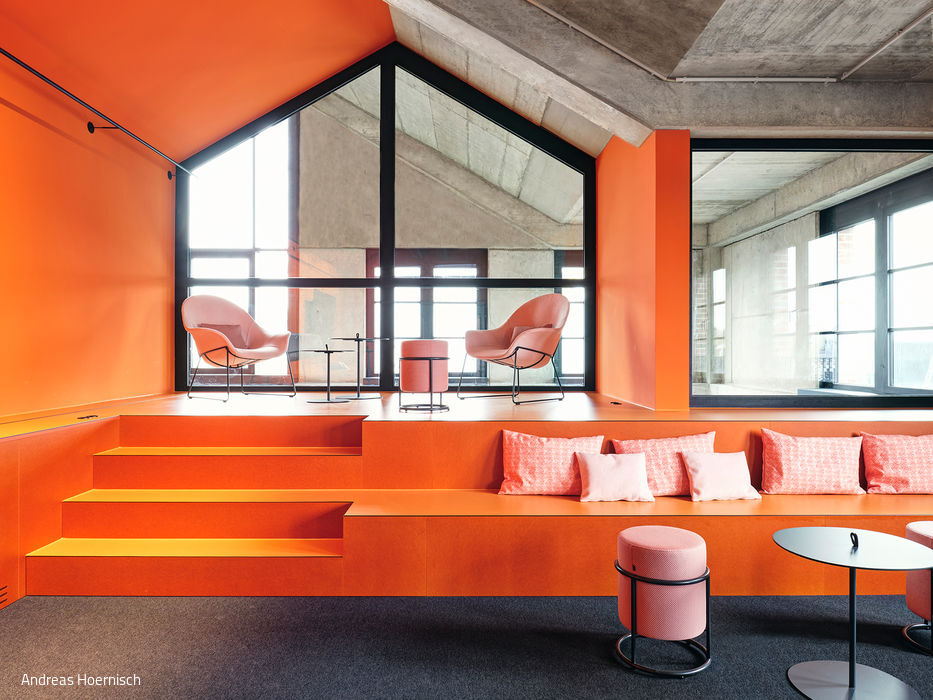
Home away from home
Remote work is now the norm—and offices are evolving into genuine extensions of home.
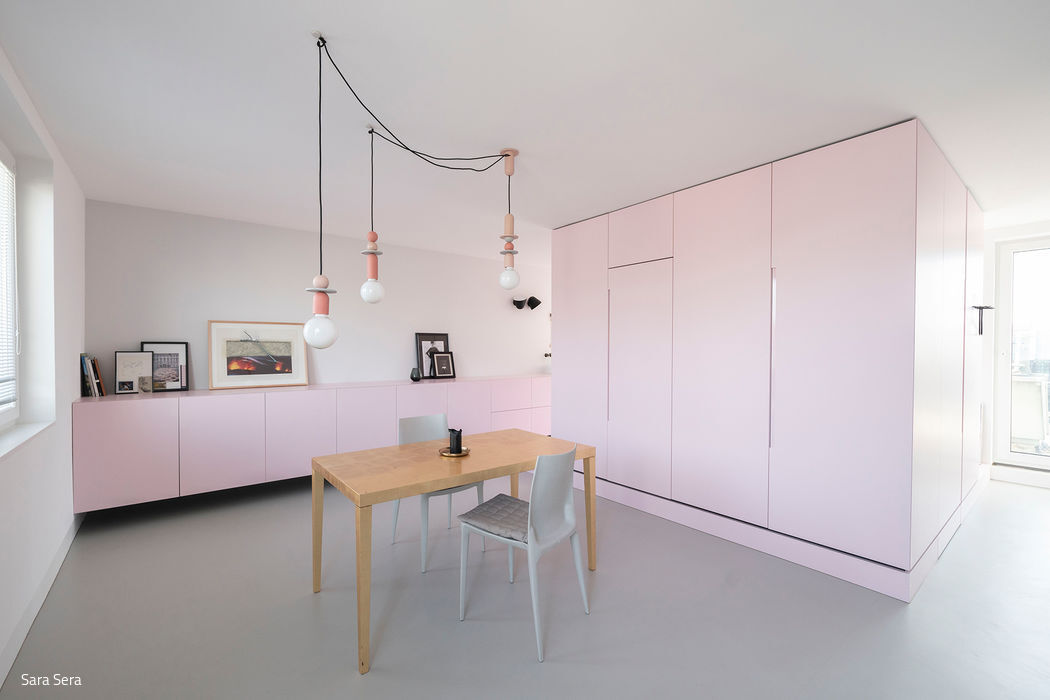
Living in the Moment
Where Space Reveals Itself Through Living
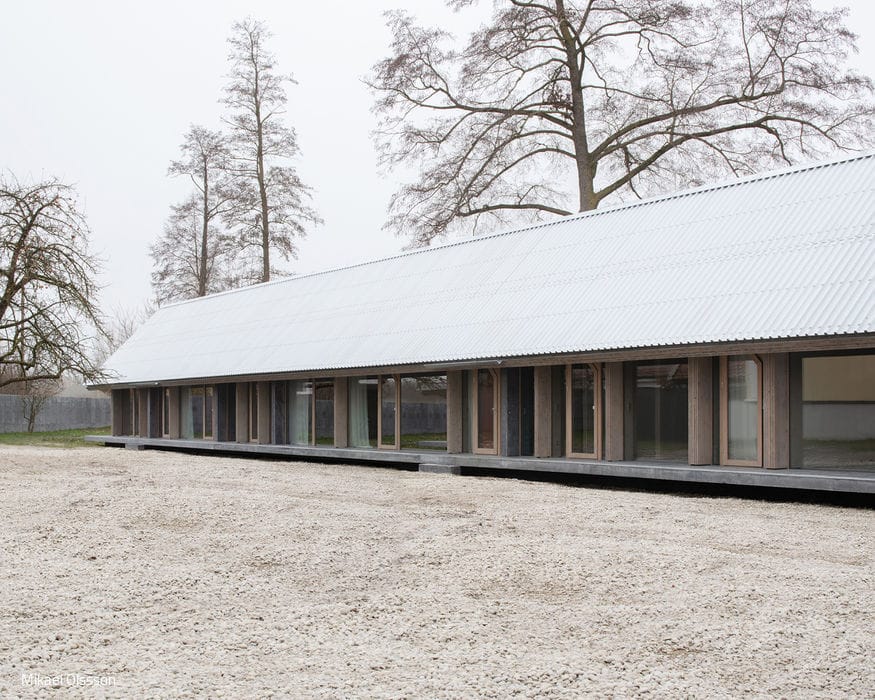
Refined Length and Proportion
The architects have christened their remarkable longhouse "6 x 60".