


Intelligent by Design
A new fire station built with circular economy principles in mind—serving as a materials bank for the future
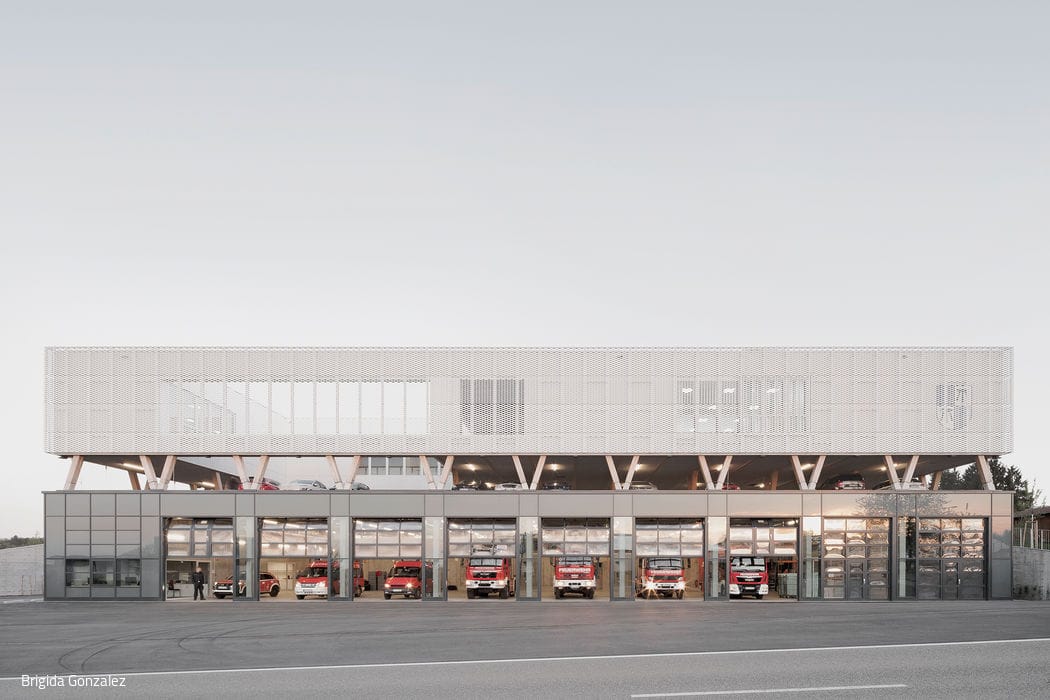
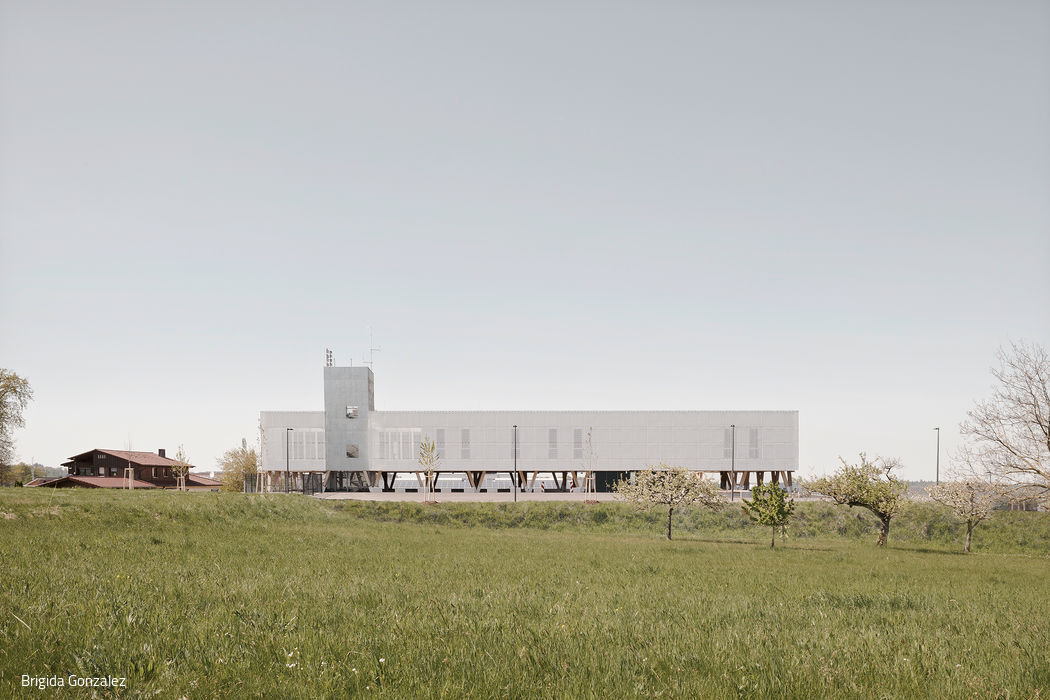
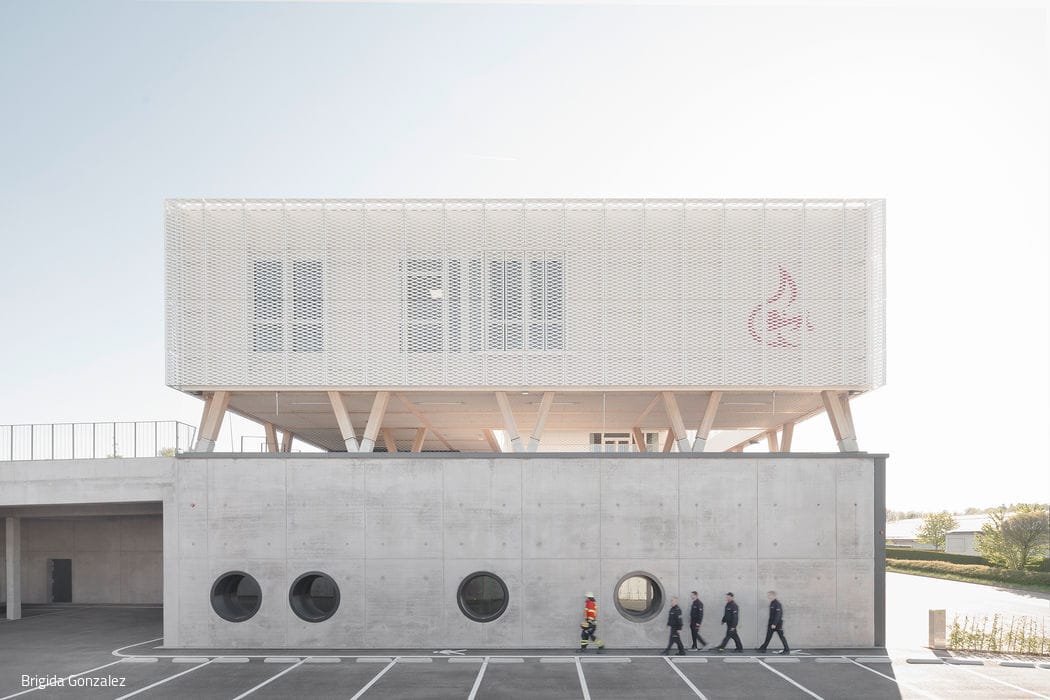
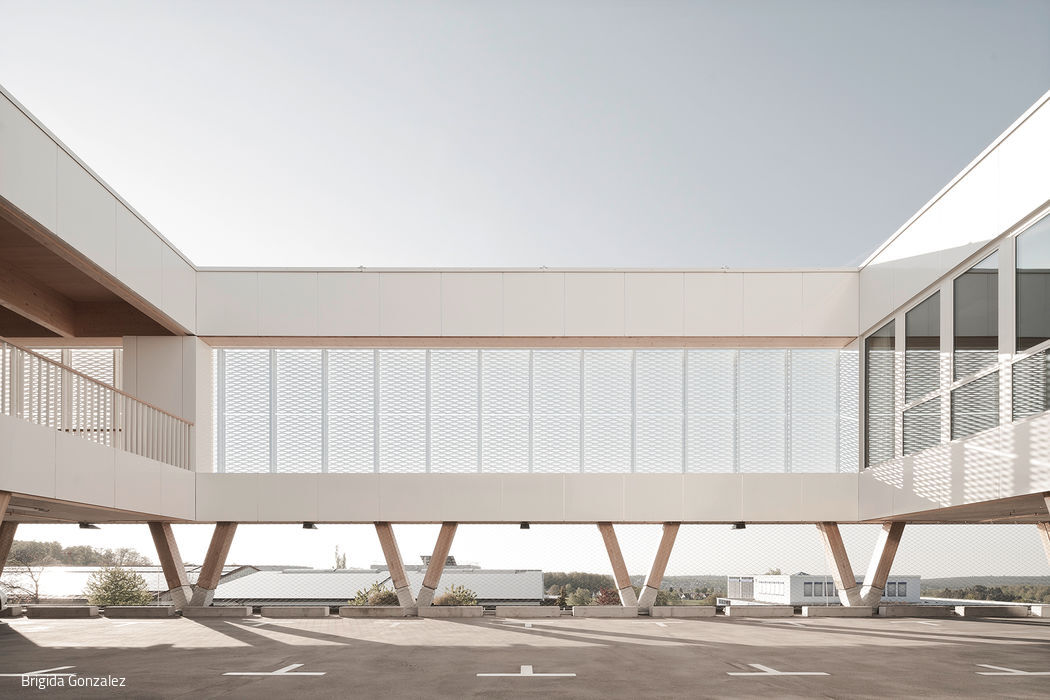
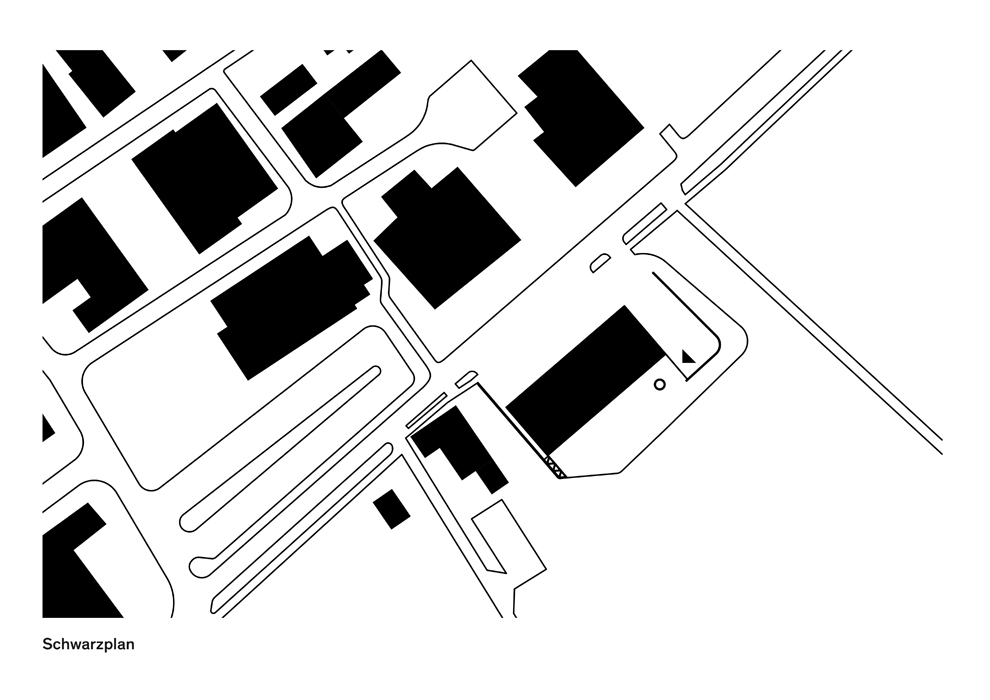
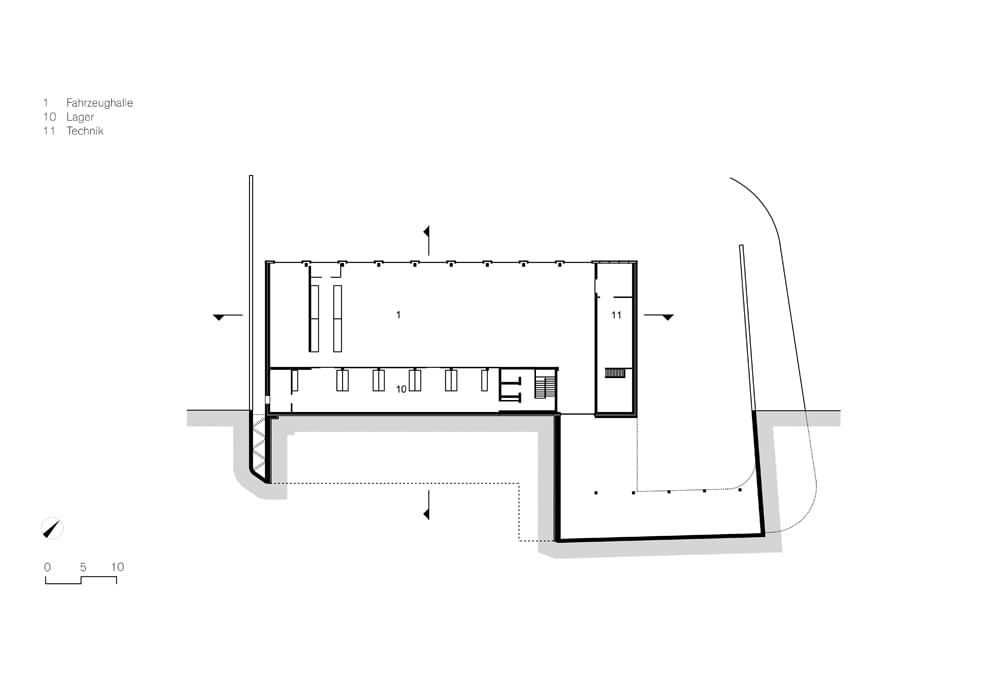
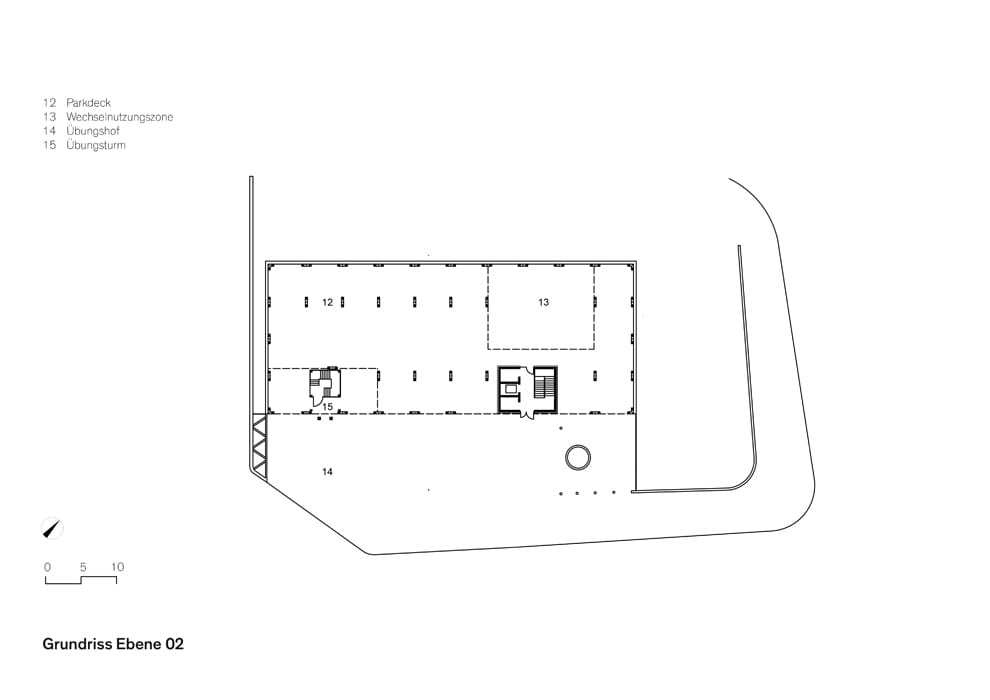
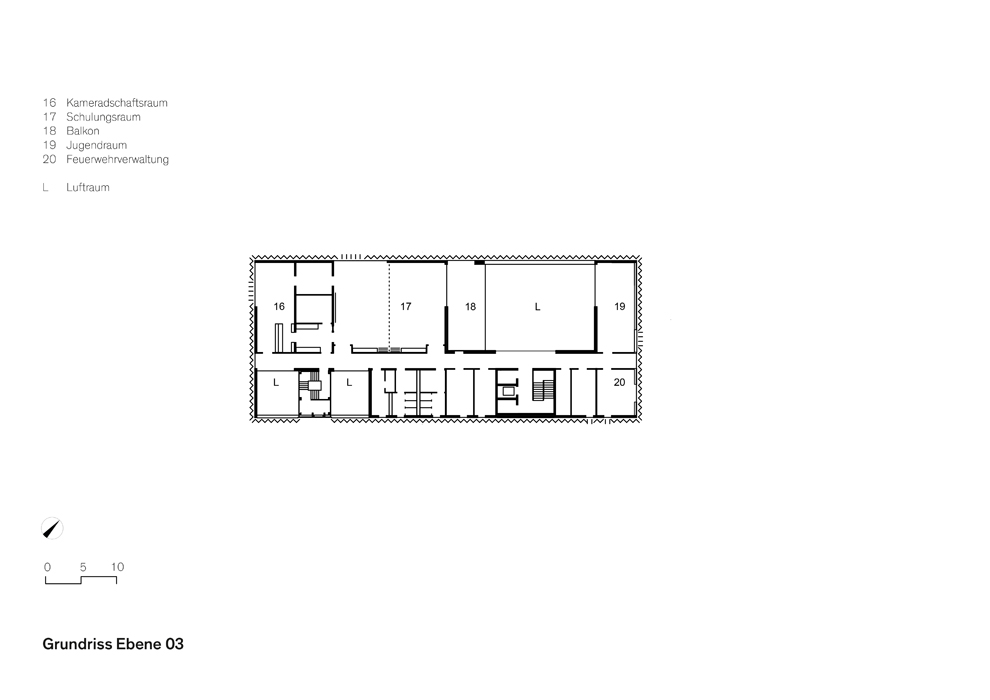
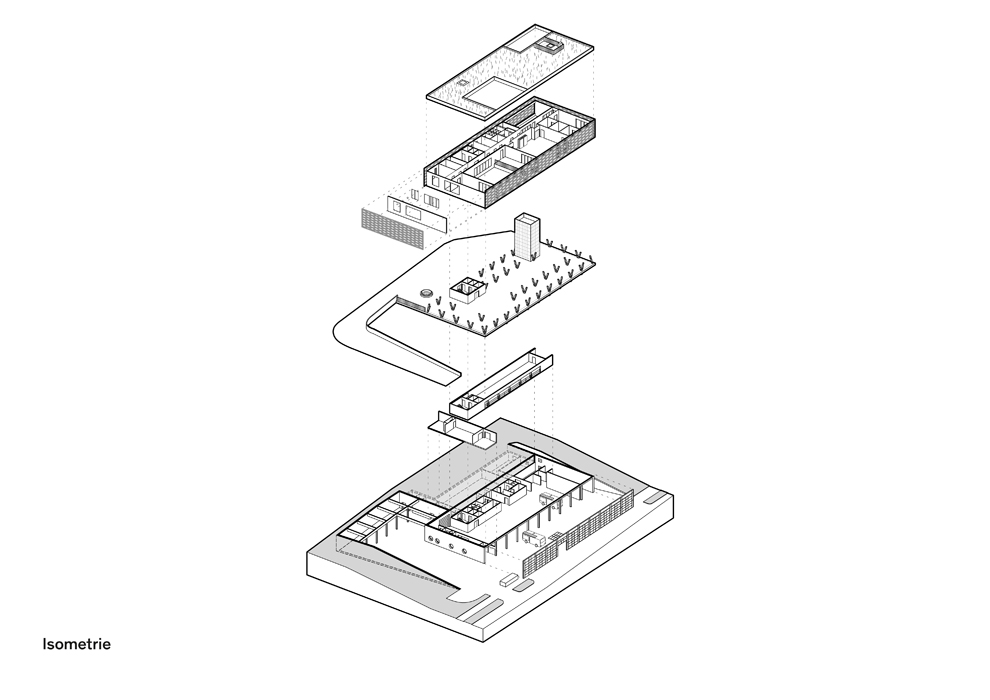
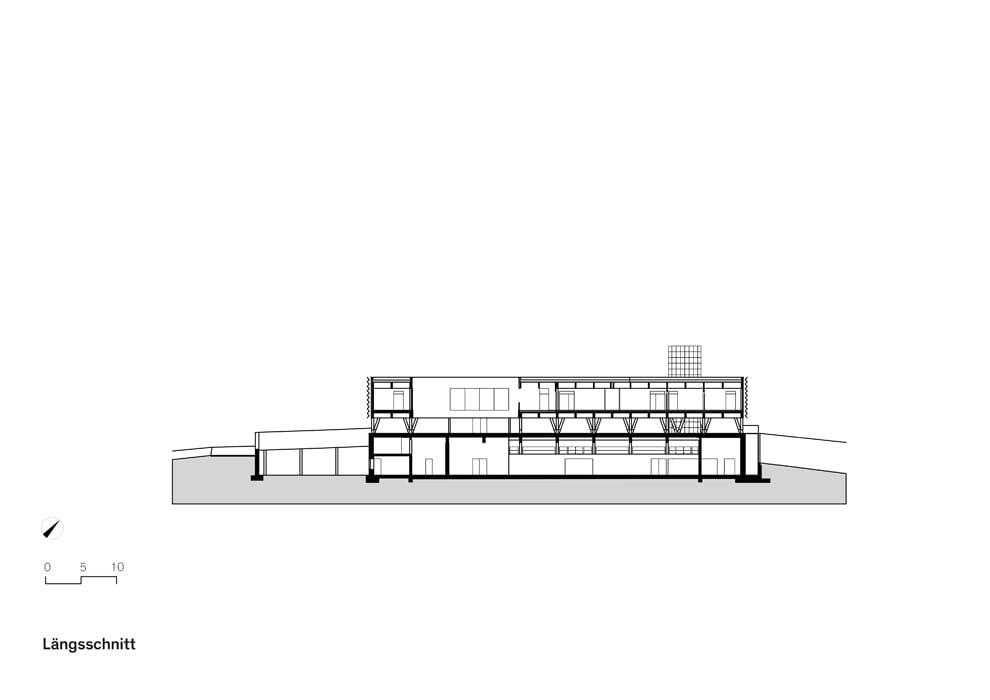
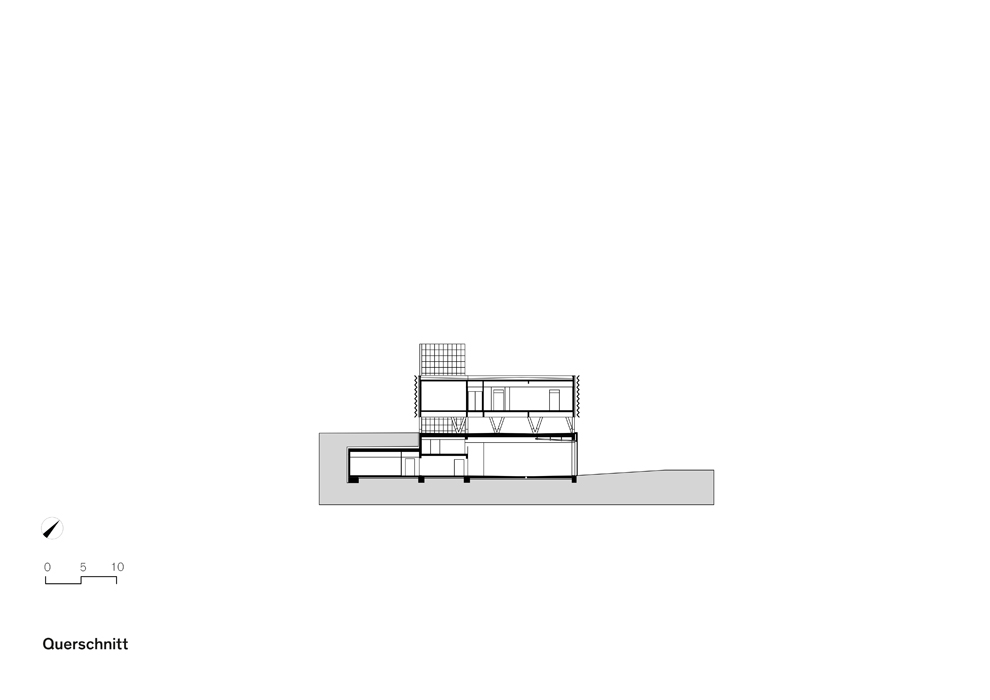
Designed by Wulf Architects, this new fire station consolidates six previously independent departments at a strategically optimal location. The design's defining move separates and stacks functional levels while leveraging the site's natural topography—minimizing sealed surfaces and allowing the building to nestle naturally into the landscape. From the outside, this vertical layering of different use zones creates the building's striking visual identity.
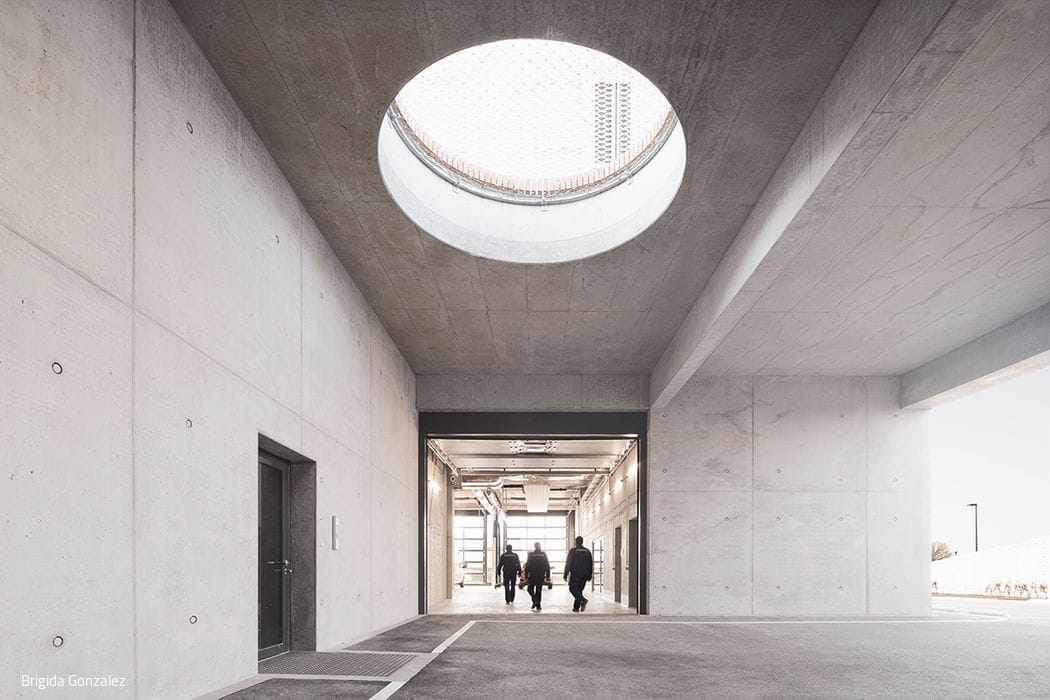
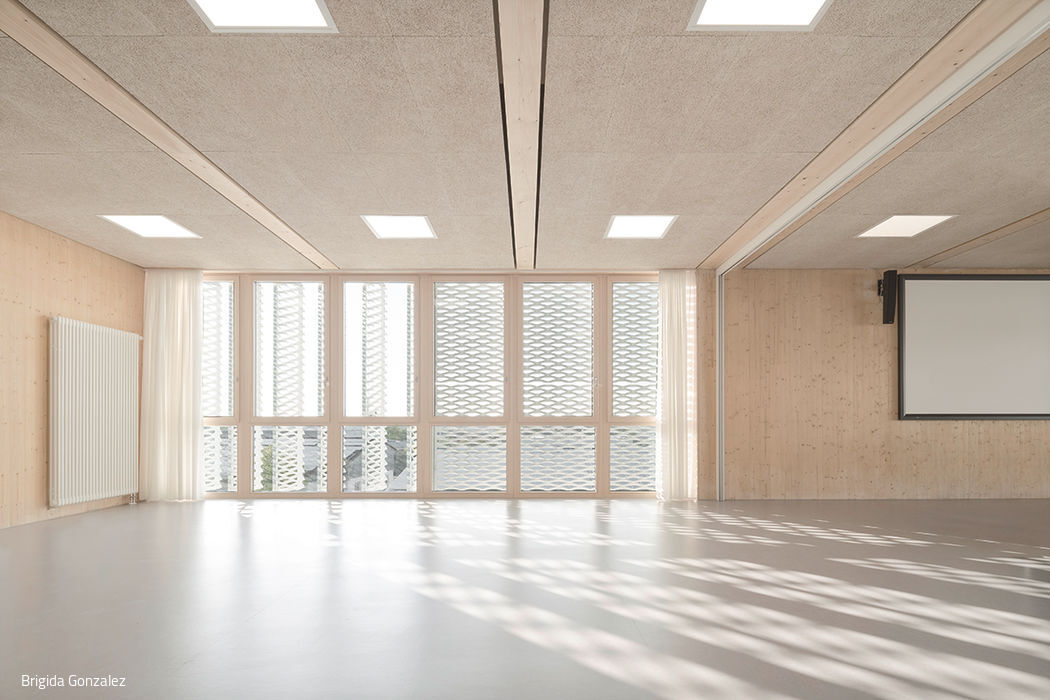
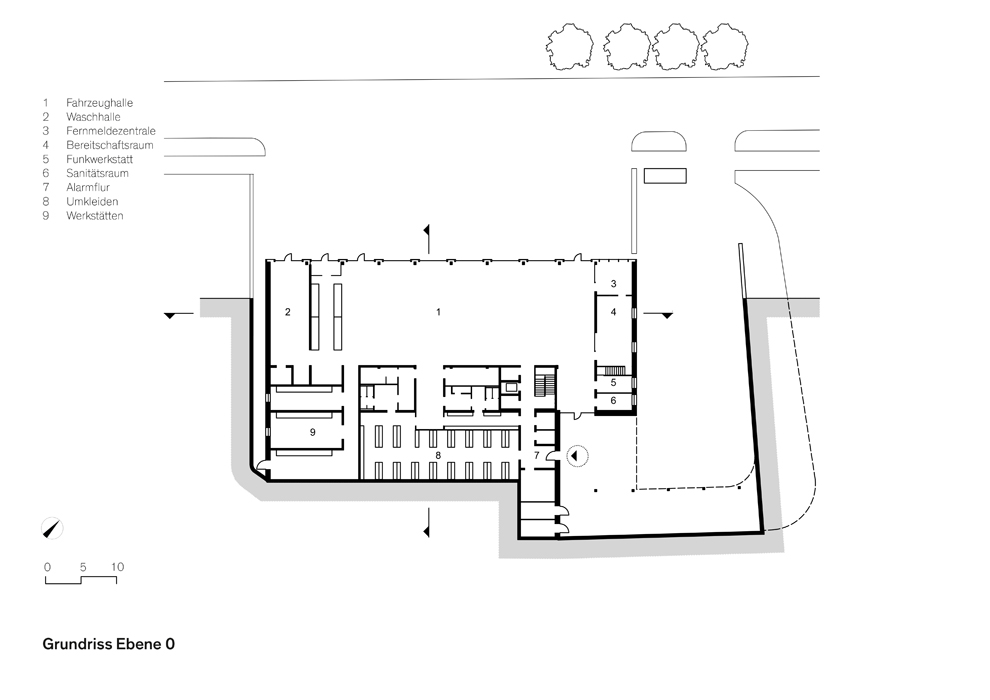
A robust concrete base, embedded into the hillside and opening toward the street to the north, houses the apparatus bay and all operational support functions, along with storage and technical spaces. An open intermediate level—punctuated by two light courts—brings the surrounding landscape indoors and functions as parking, gathering space, and event venue, accessed via an exterior ramp. Above sits a timber-framed structure containing a training facility, offices, and shared spaces for approximately 230 firefighters, wrapped entirely in a clean white expanded metal façade. A 700 m² practice yard sits behind the building. Notably, this fire station ranks among Germany's first buildings designed and constructed using "cradle to cradle" circular principles. Every level and detail reflects both intelligence and purpose. Only easily recyclable, non-toxic materials were specified—with tangible benefits to the indoor environment.
The environmental consulting firm EPEA evaluated 248 materials and 79 components for material health, recyclability, and embodied energy and carbon footprint. By eliminating adhesives, paints, and finishes, all materials remain part of a closed loop. Wooden elements are mechanically fastened rather than nailed or glued, enabling easy disassembly and reuse at end-of-life. A digital "building resource passport" tracks every material and its chemical makeup. In essence, the building functions as a materials library—and a powerful blueprint for sustainable construction practices to come.
Photography Credits:
Brigida González
www.brigidagonzalez.de
(Published in CUBE Stuttgart 01|24)


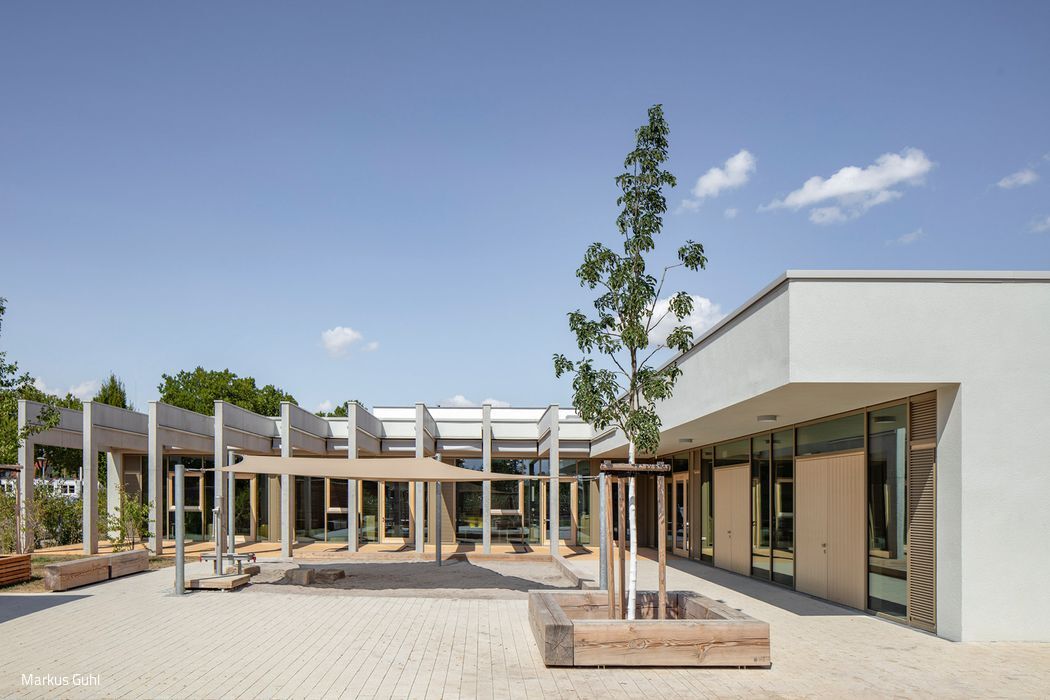
A Stage for Childhood
Filling the Gap in the "Kindergarten Mile"

Memorable rhythm
An extension for human genetic research, clinics, and laboratories—designed to welcome and inspire
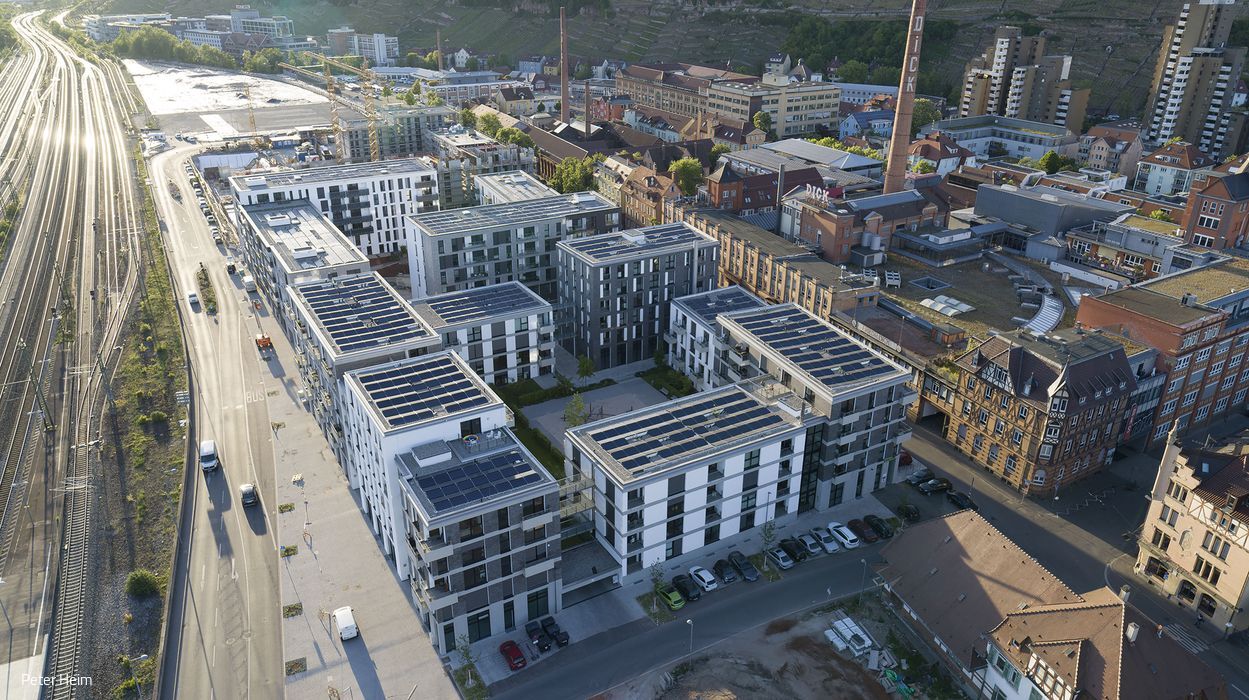
A Climate-Neutral District
Innovative residential complex completed in Esslingen's Neue Weststadt
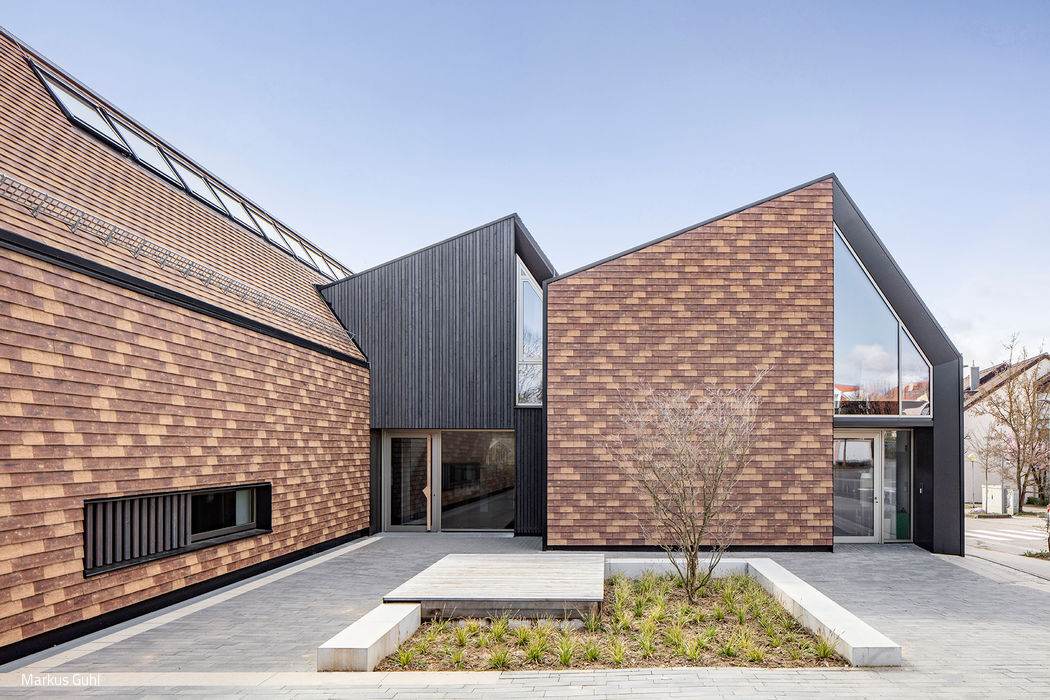
Two-House Principle
Sustainably Designed Kindergarten with Dynamic Outdoor Play Spaces