


Defining Solitary
The new State Audit Office building in Oberbilk impresses with its commitment to sustainability
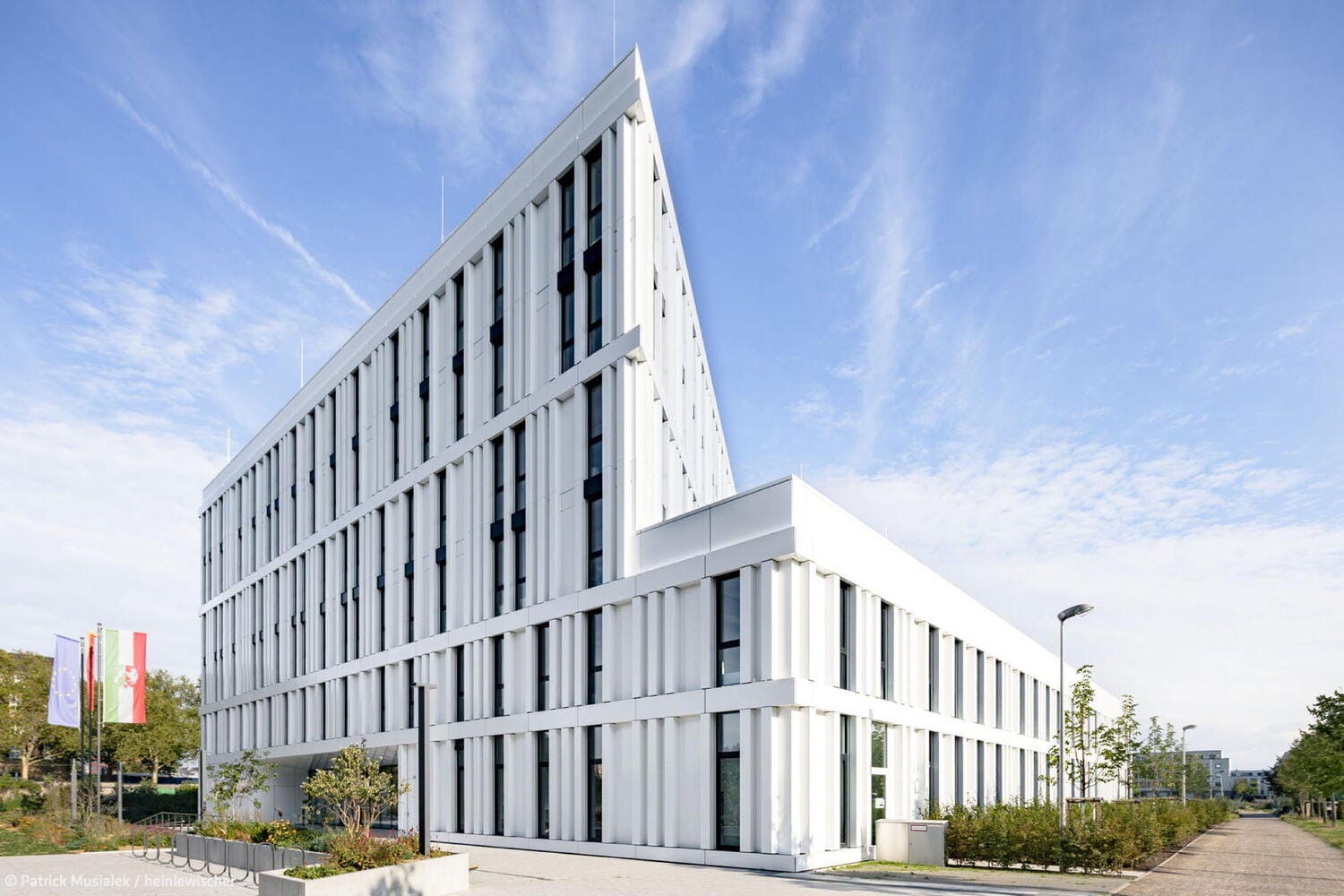
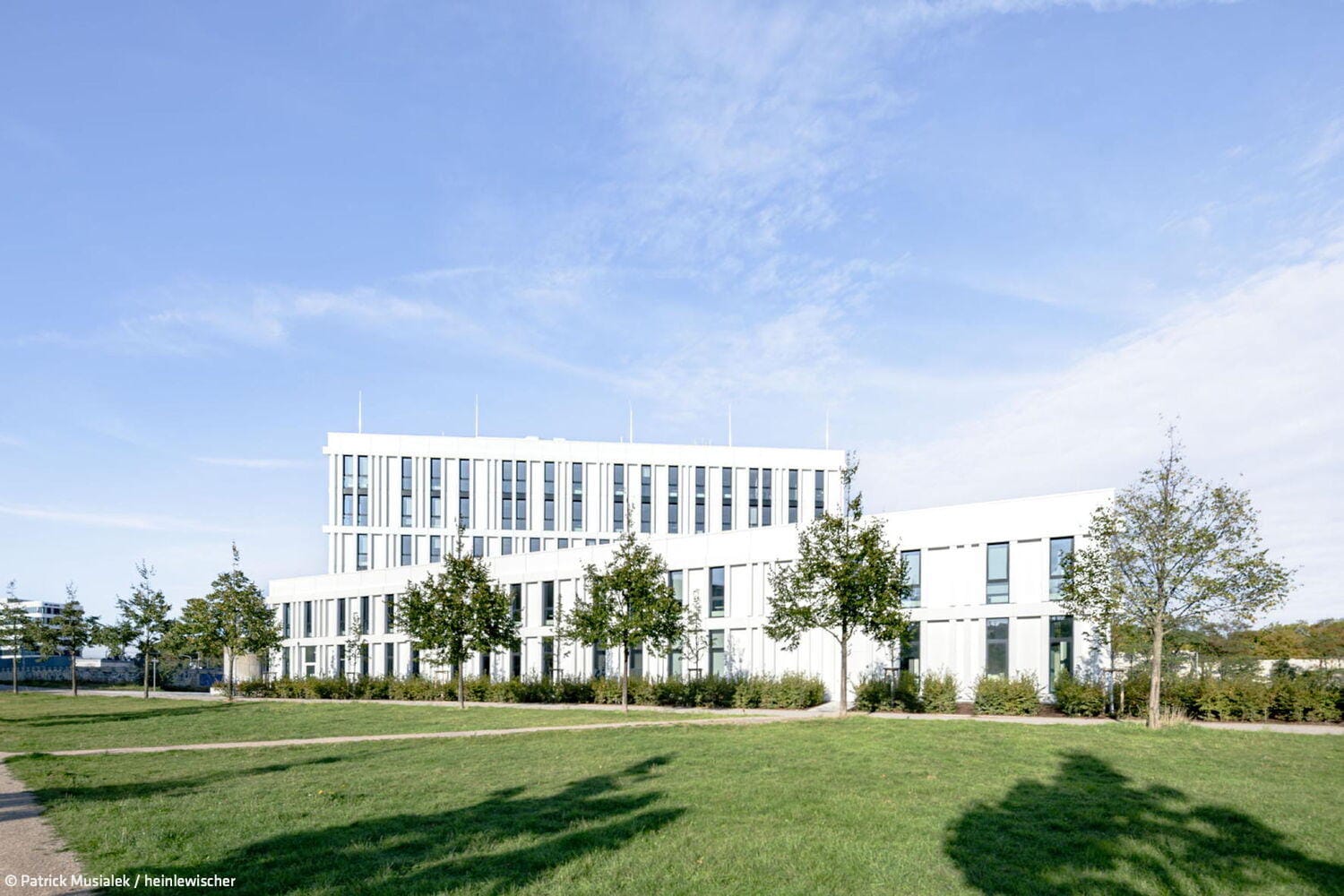
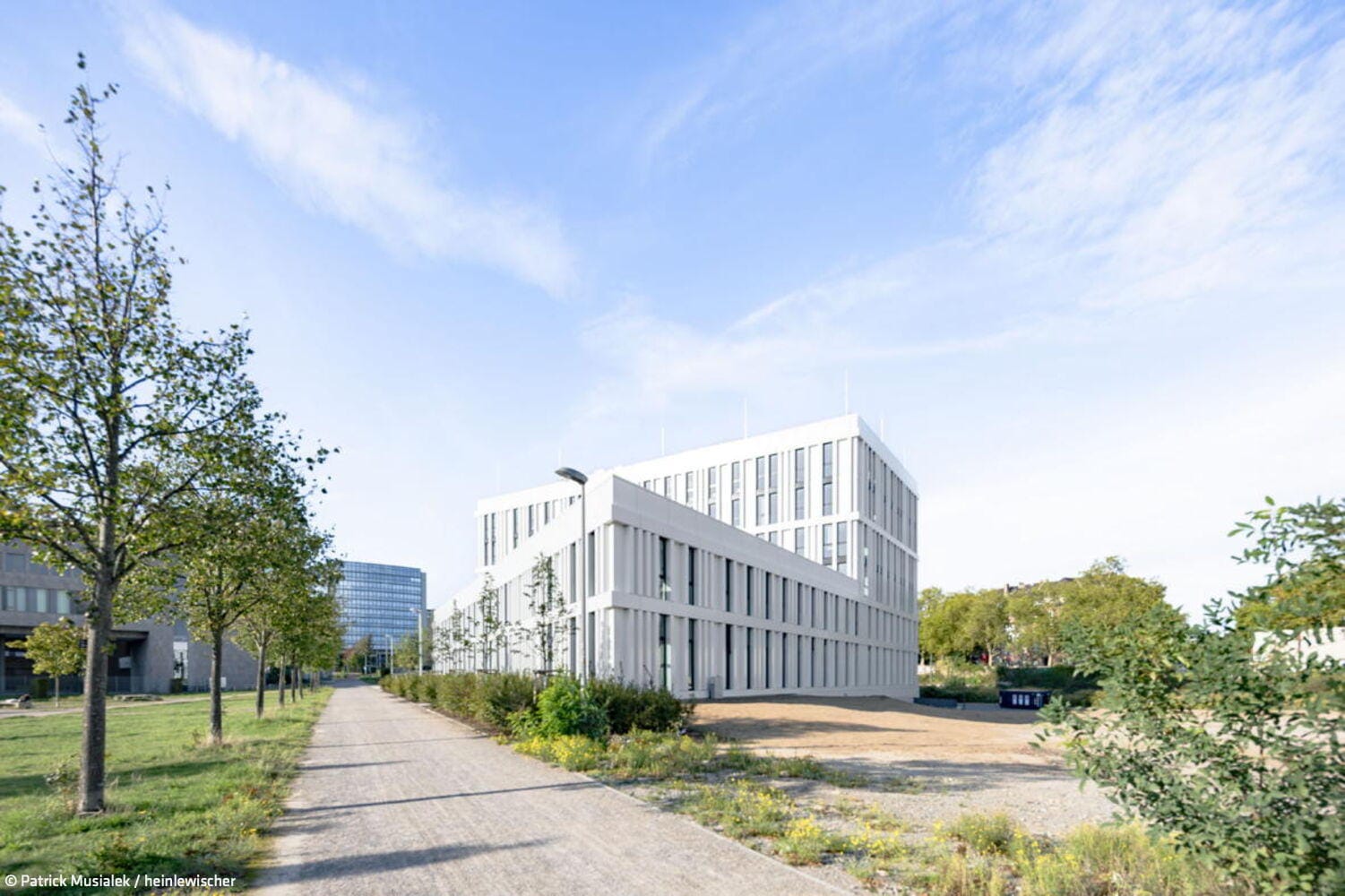
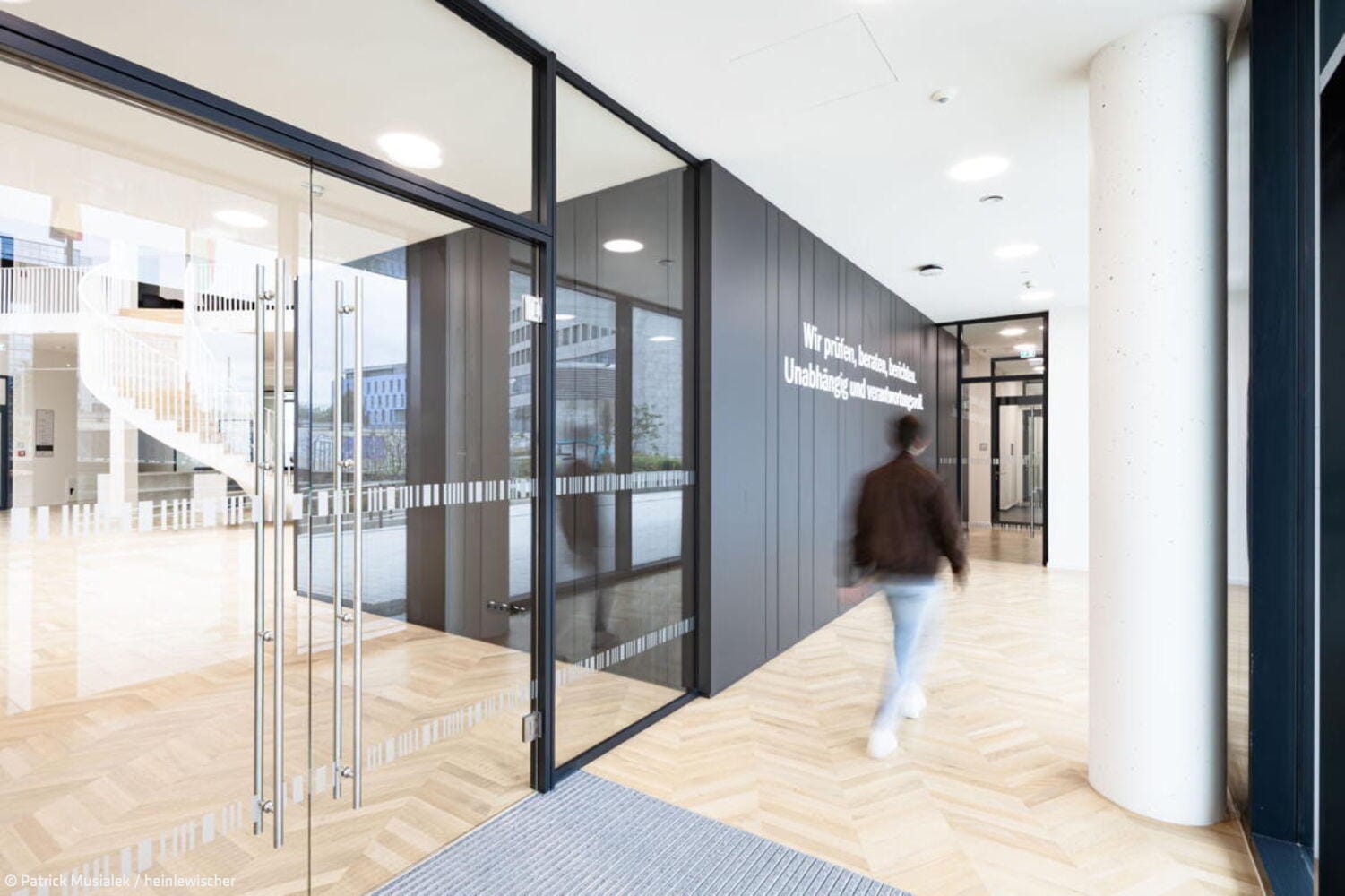
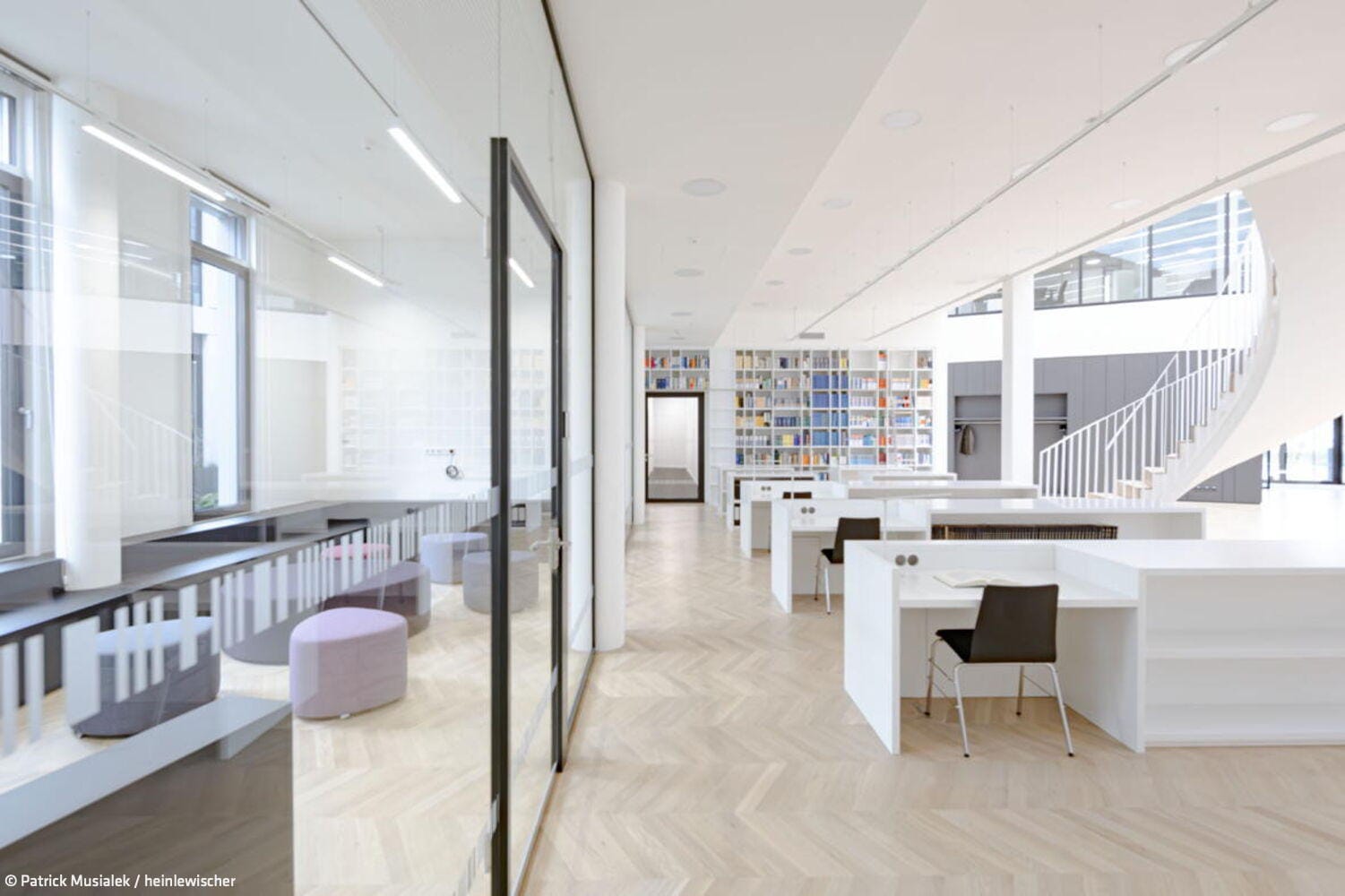
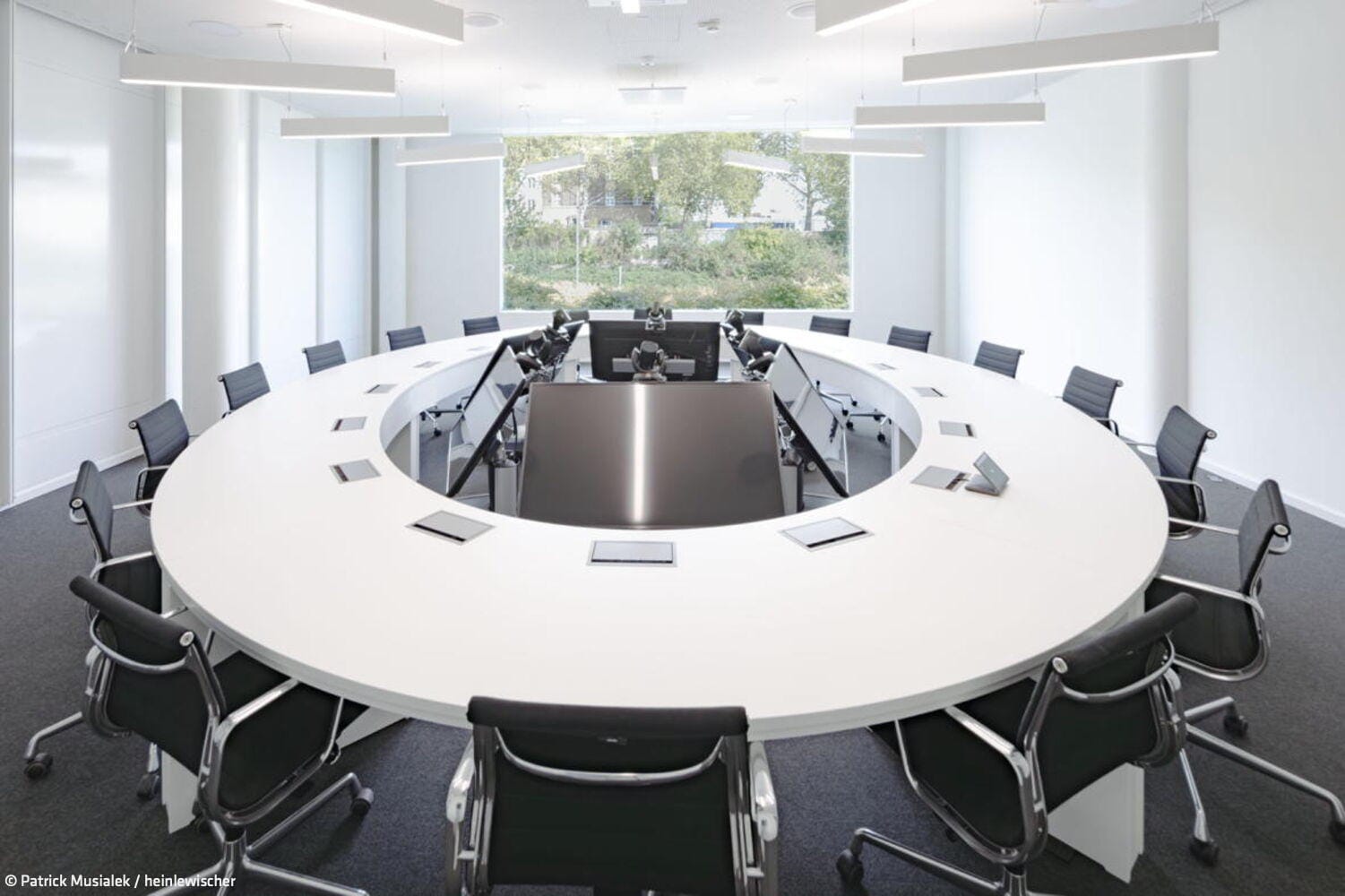
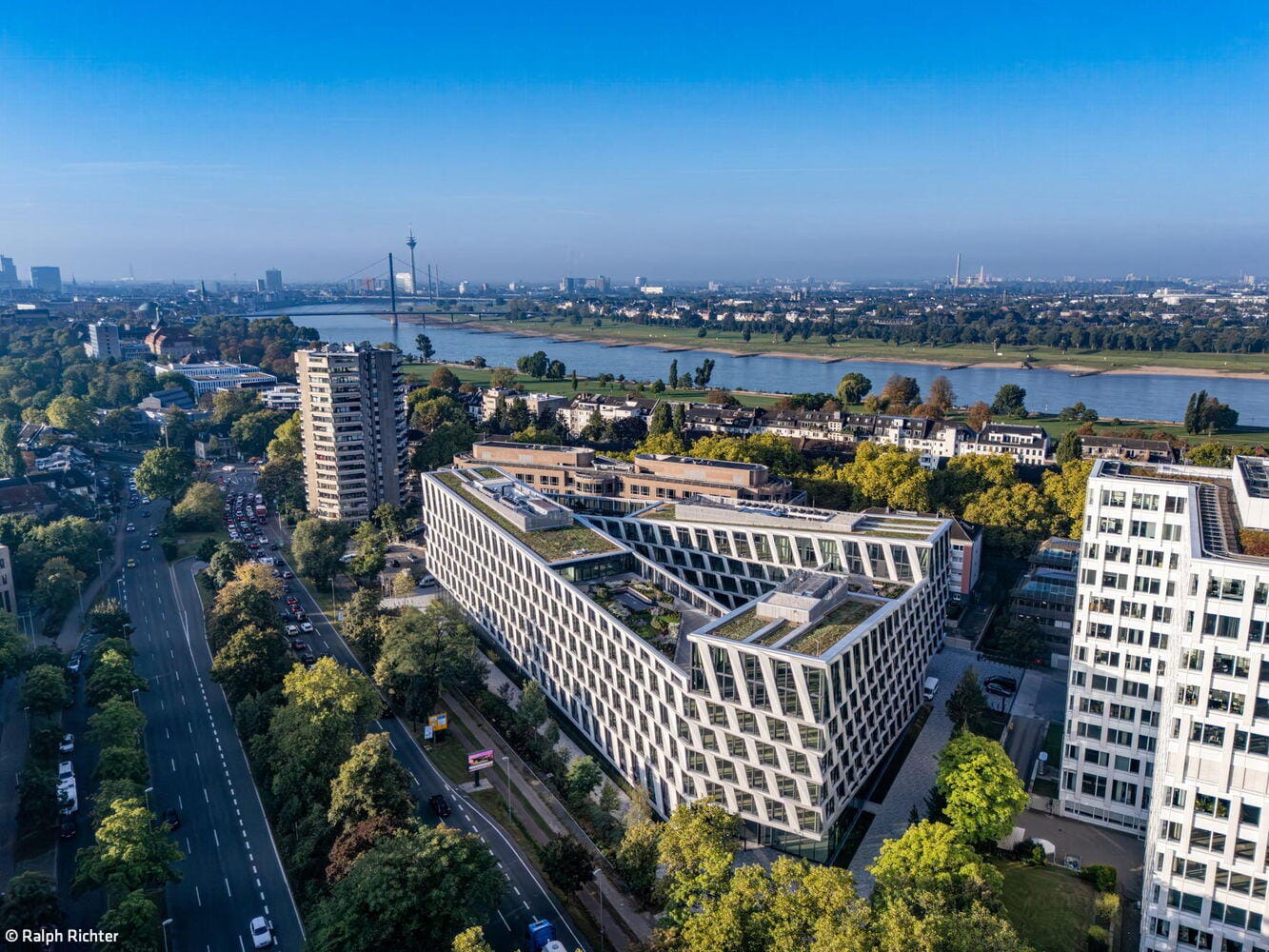
For decades, the State Audit Office of North Rhine-Westphalia operated from two locations in central Düsseldorf. Since last year, the state administration and the state audit office have been housed together in a new building on Werdener Strasse at a central site. On behalf of BLB NRW, the architecture firm heinlewischer designed a striking solitary structure that combines sustainable construction practices with a modern work environment.
Positioned directly adjacent to the District Court building, the new structure sets urban design standards for the area's continued development and revitalizes the evolving neighborhood. With its narrow, six-story gable end facing Werdener Strasse, the building creates an architectural landmark that radiates into the expansive urban context. On the southern side, the structure opens toward a newly created public park, where the modest two-story façade conveys human scale and civic accessibility. Access is provided through an open plaza that functions as a hinge connecting a newly built access road to the park. The building's vertical structure creates a powerful visual presence from a distance. Continuous vertical pilasters establish a rhythmic pattern around the entire structure. Horizontal floor bands at ground level and on the first, third, and fifth floors articulate the building's mass. This grouping visually links two upper stories at a time, creating an elongated appearance and reinforcing the structure's urban impact.
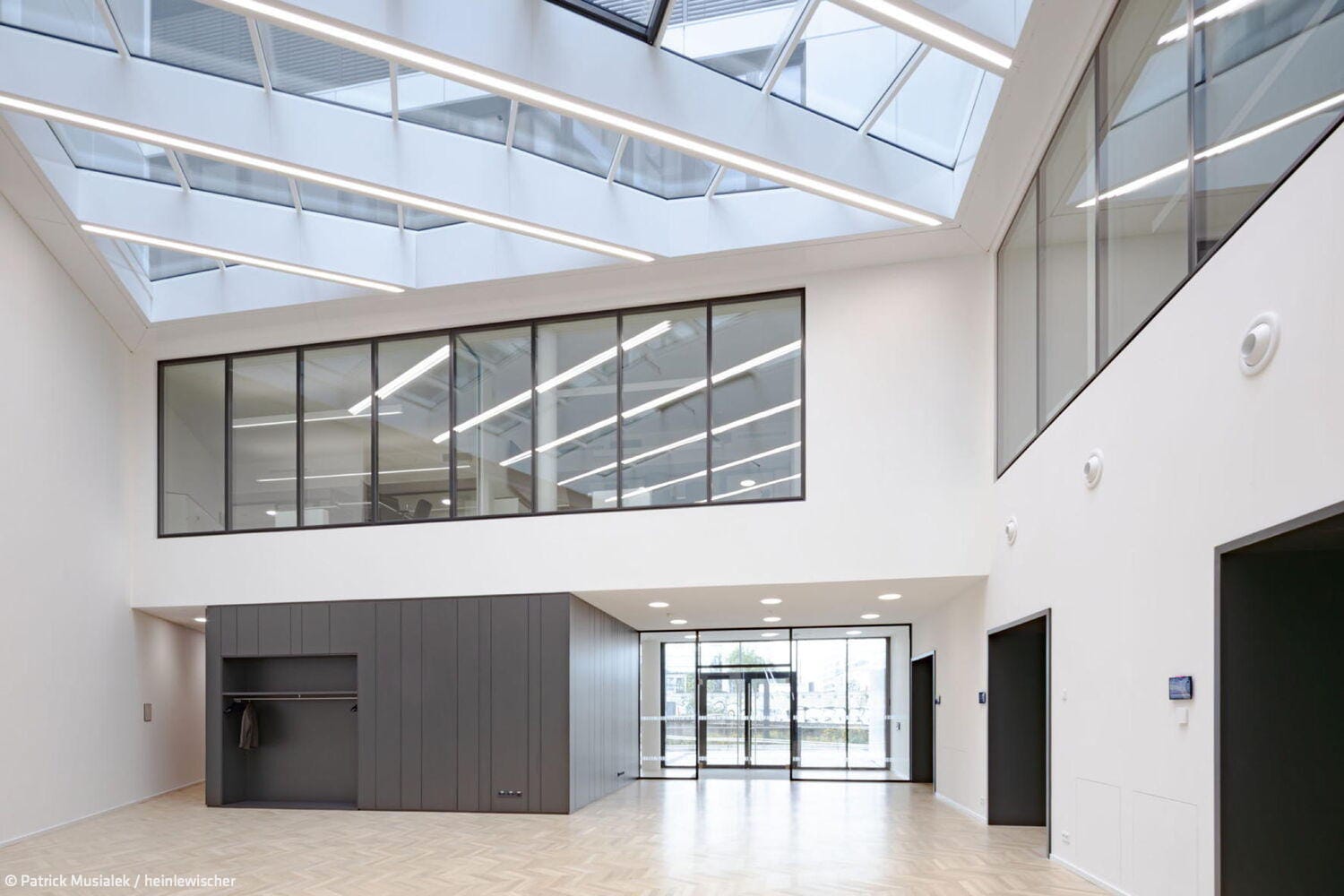
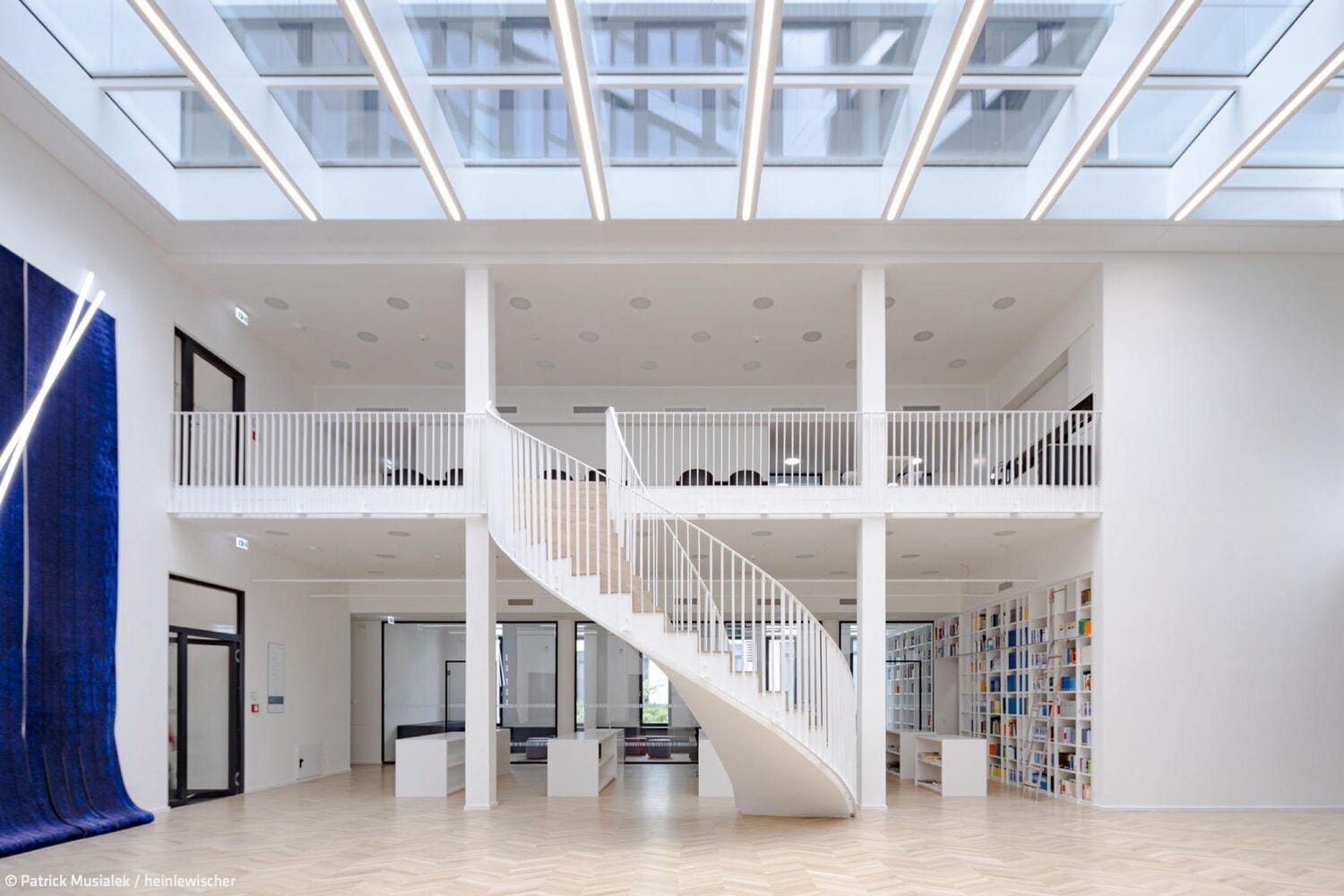
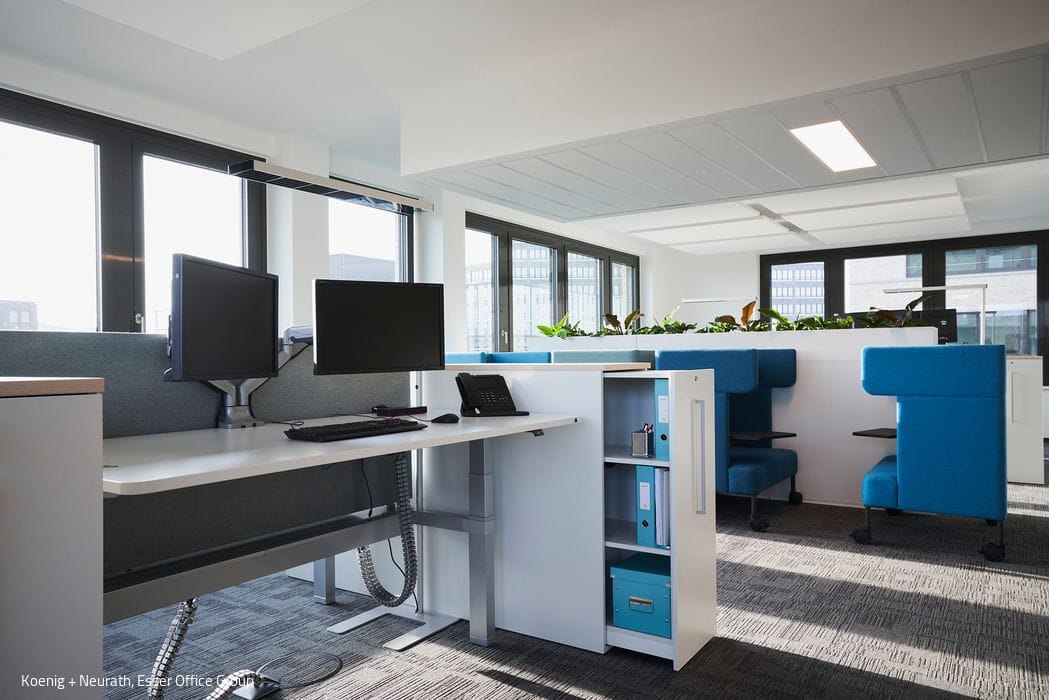
The centerpiece of the new building is a trapezoidal atrium that spatially connects the ground floor and first story, enabling sightlines through to the upper levels. Serving as a central communications hub, it provides access to the building's primary functions. A three-part printed wall tapestry by artist Astrid Klein makes a striking design statement—in deep blue, featuring quotations from Heinrich Heine and Rose Ausländer alongside sculptural integrated LED elements. The office floors are intentionally kept transparent and open, designed for flexibility and collaboration. All 289 workstations are distributed across individual and team offices, many configured as flexible desk-switching workplaces that employees can reserve as needed. Additionally, all four standard floors feature "homezones"—central hubs serving each audit department—alongside additional collaboration spaces. The new building achieves Silver certification under the Sustainable Building Assessment System (BNB). With CO₂-reduced concrete, resource-efficient hollow-core ceilings, and a green roof supporting an installed photovoltaic system, the structure embodies a clear commitment to climate-conscious design with a reduced carbon footprint.
Photos:
Patrick Musialek / heinlewischer
(Published in CUBE Düsseldorf 01|26)

Sensual Authenticity
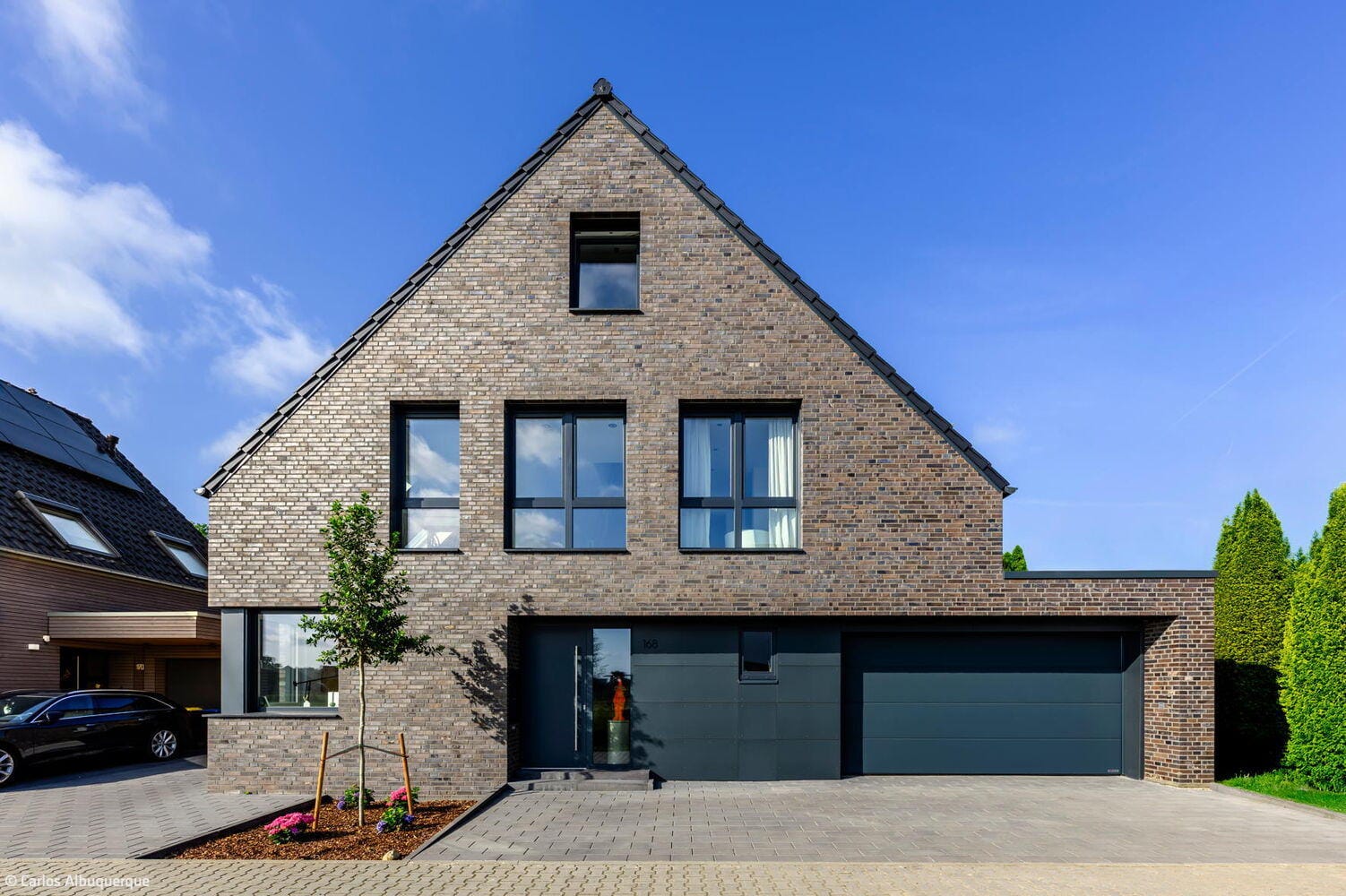
A family home in Mönchengladbach that unites adaptive design with uncompromising clarity.
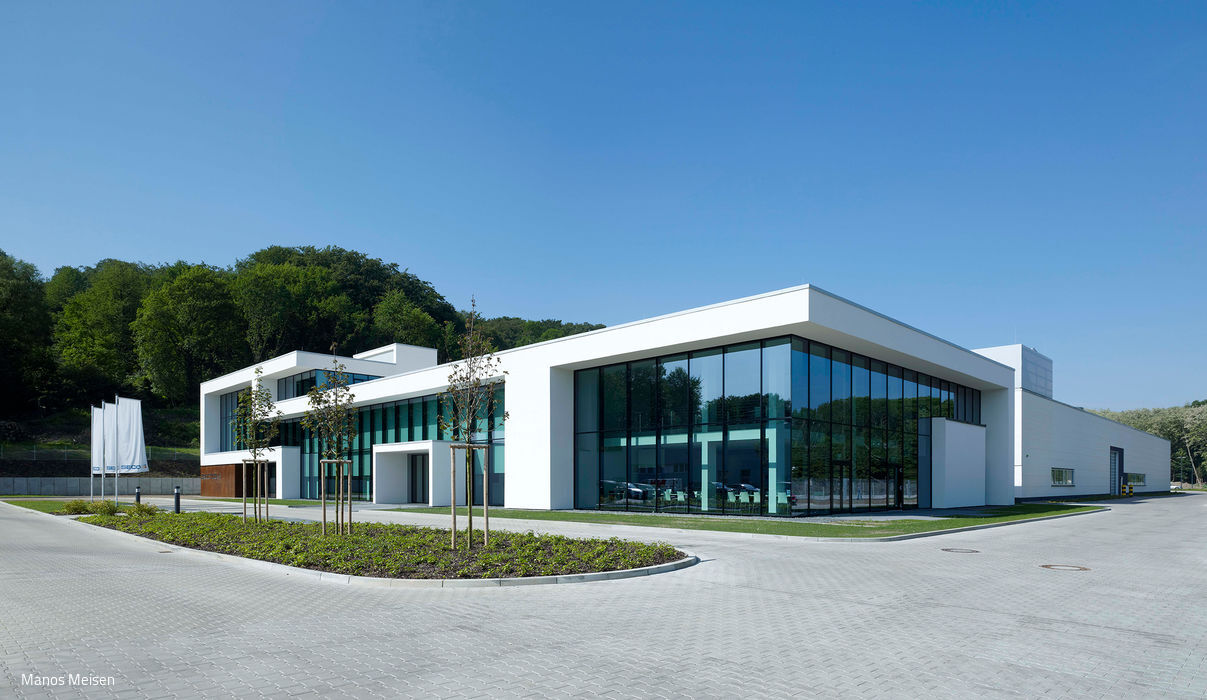
Transparent Composition
A specialized tool manufacturer unites production, administration, and training under one roof
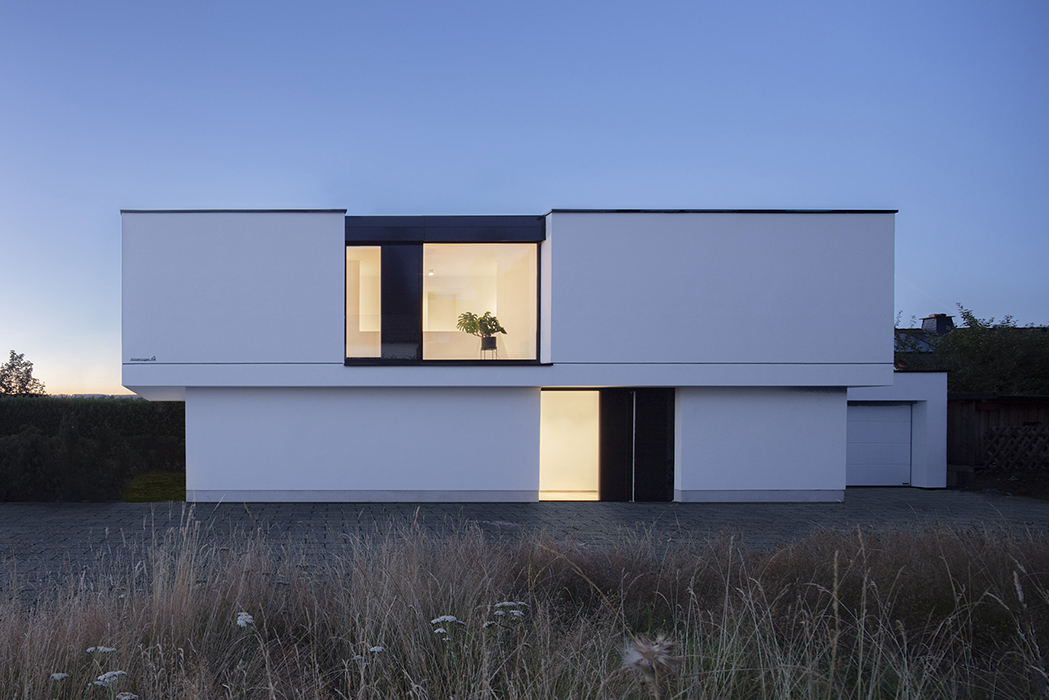
Confident Purism
Clean geometry and minimalist colour palette define a contemporary home
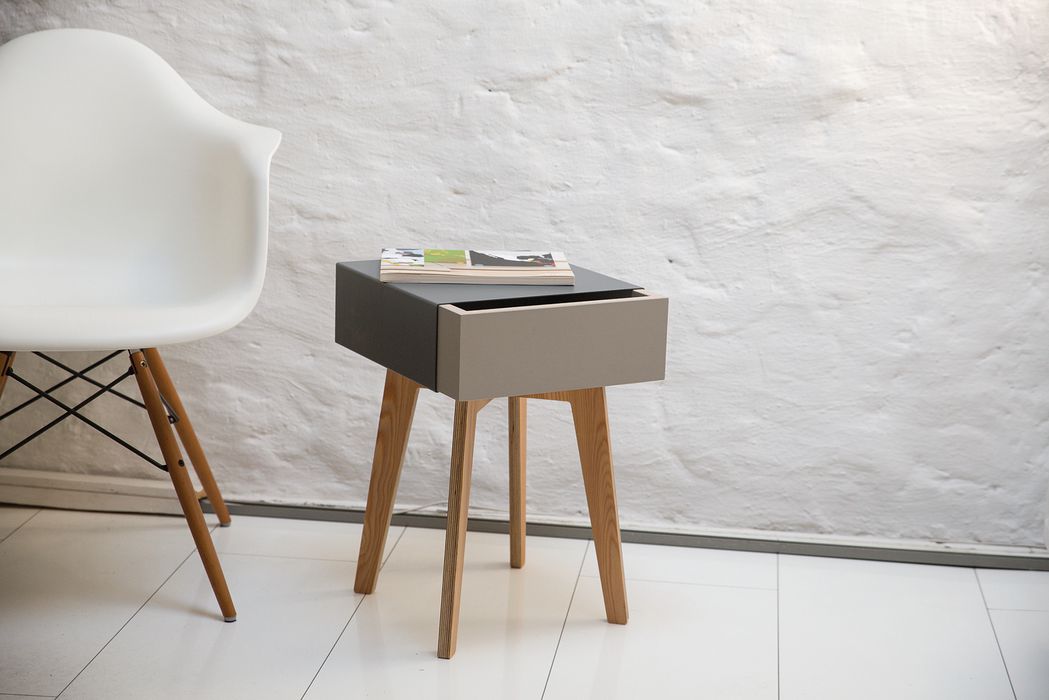
Design for Daily Living
Christian Lessing designs furniture and products—from concept to market-ready production.