


Präzise eingefügt
Ein Einfamilienhaus entwickelt sich mit besonderen Raumqualitäten zwischen zwei Betonwandscheiben hangaufwärts
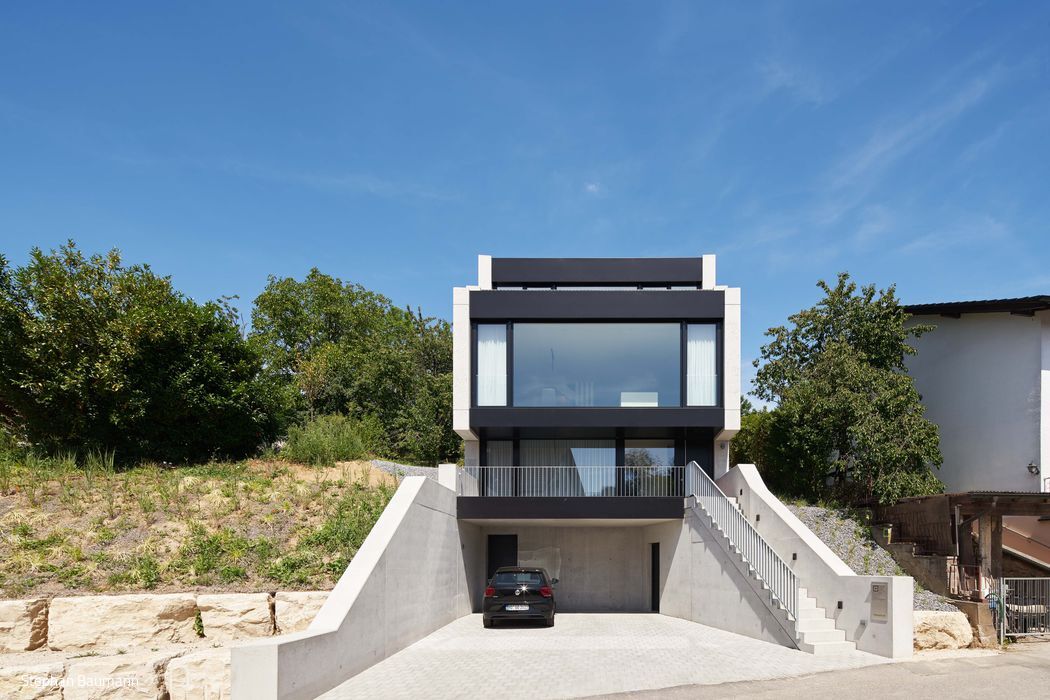
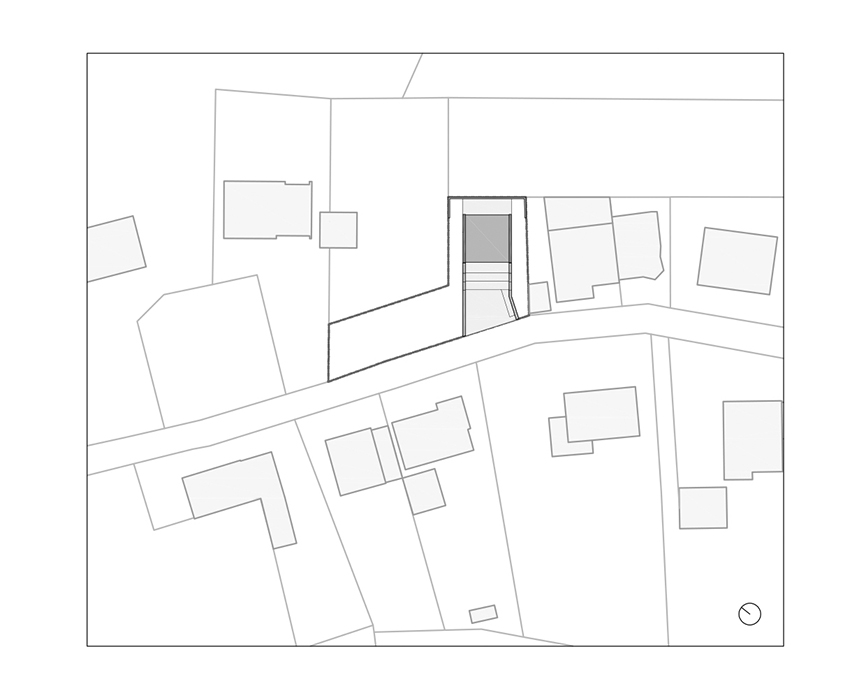
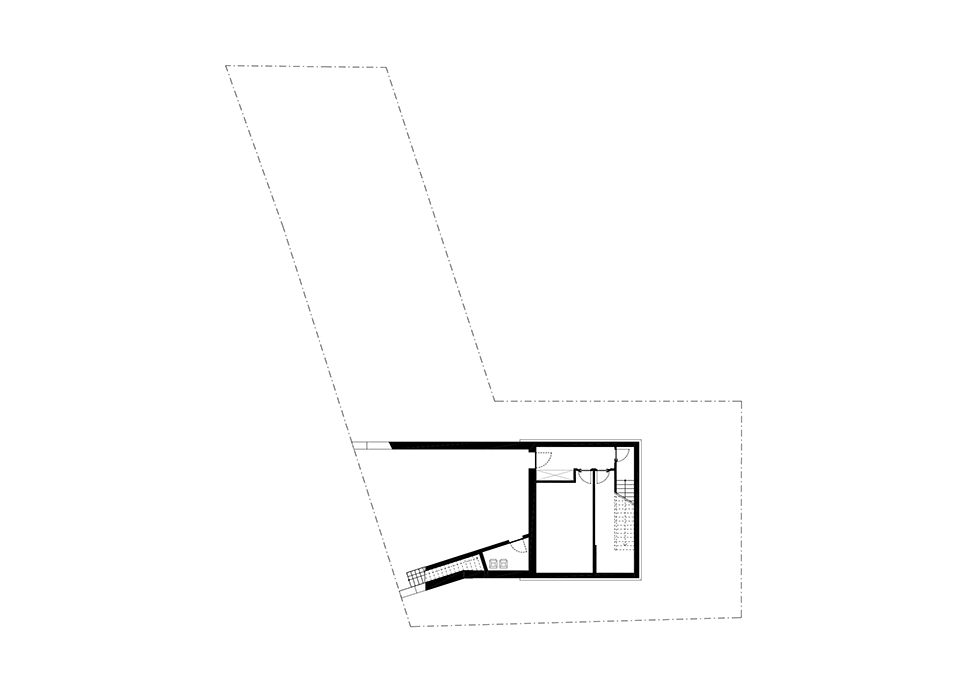
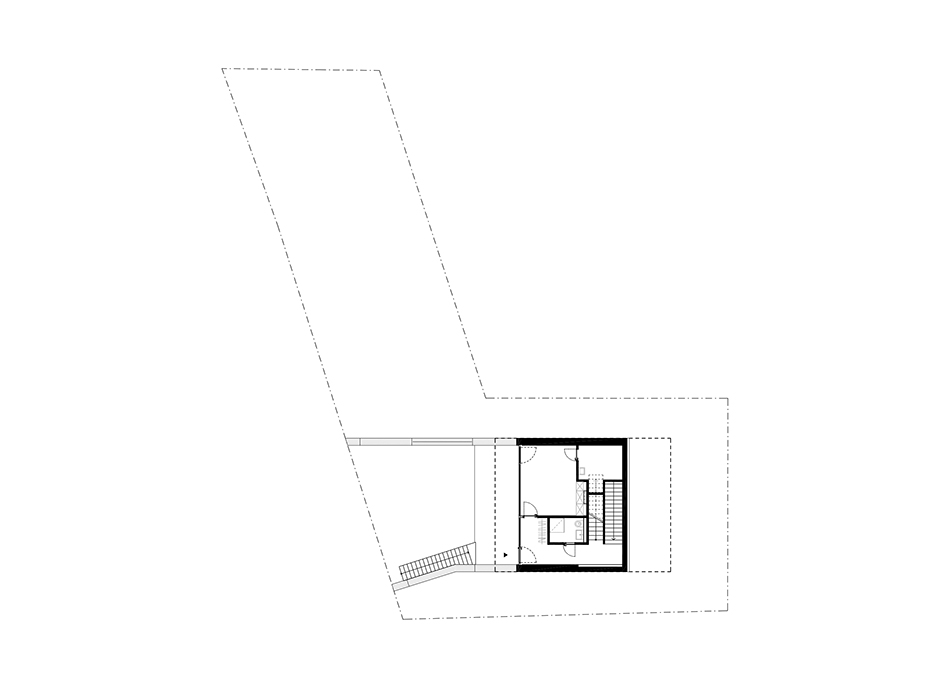
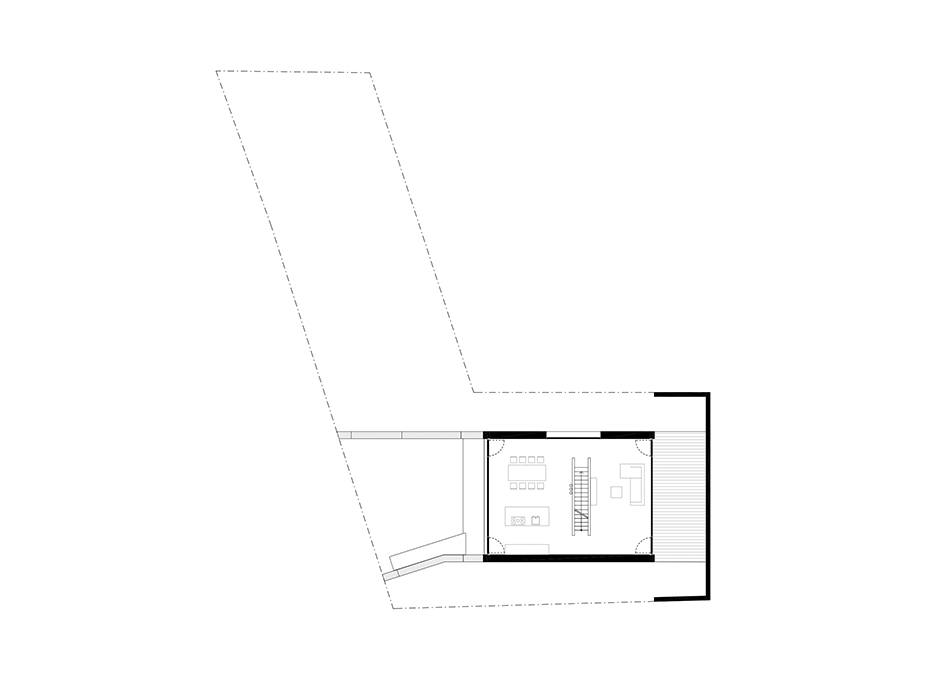
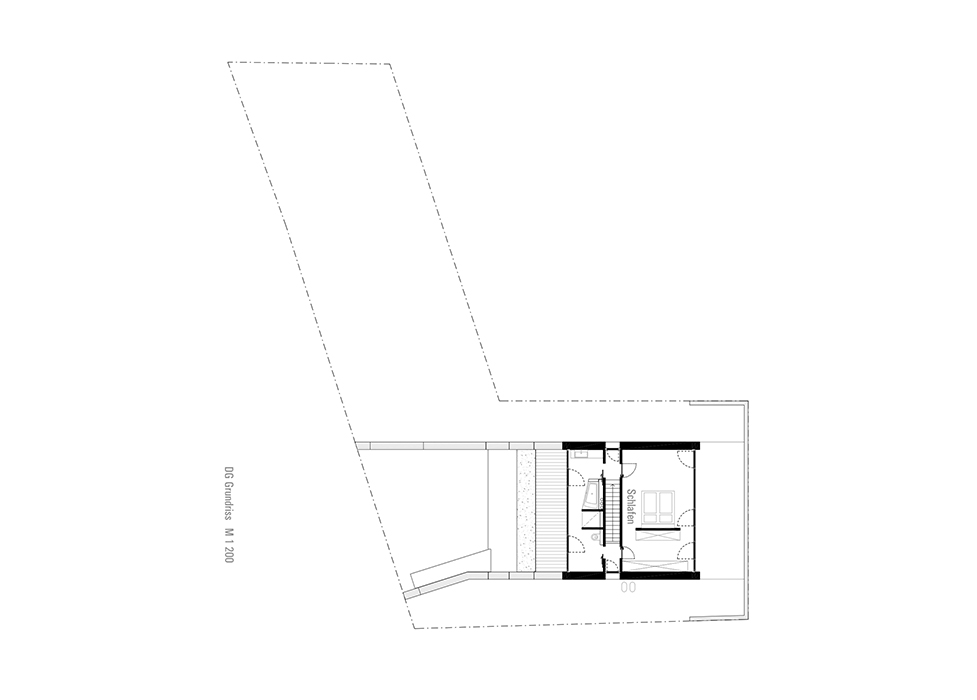
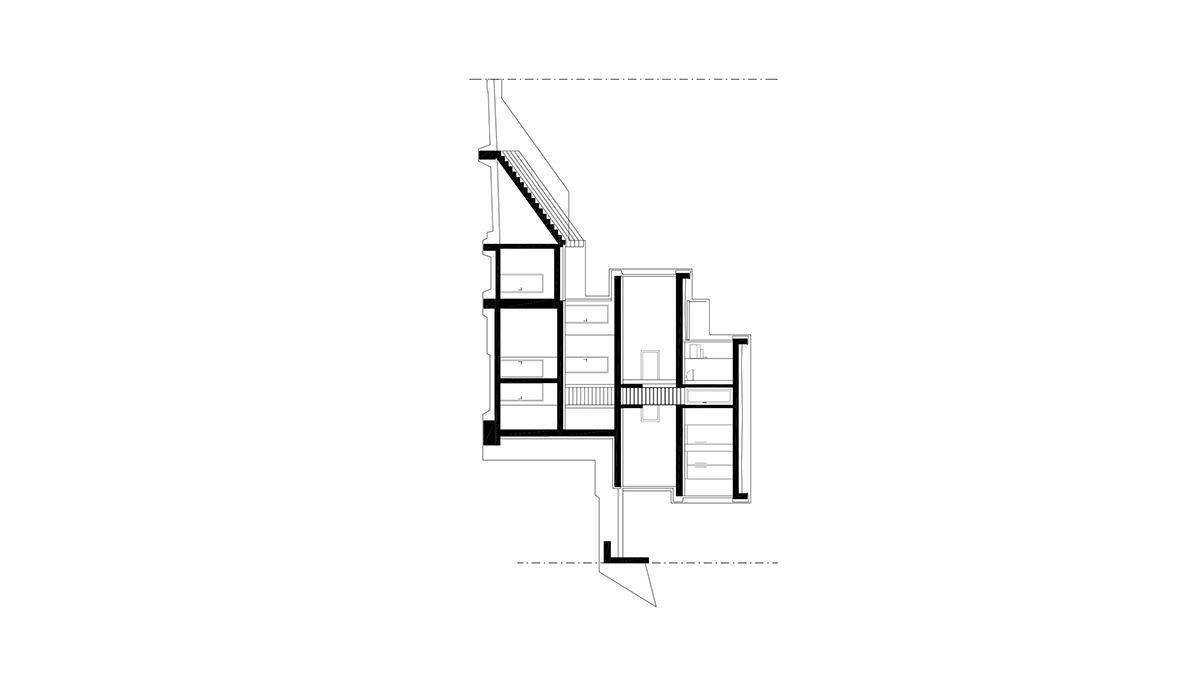
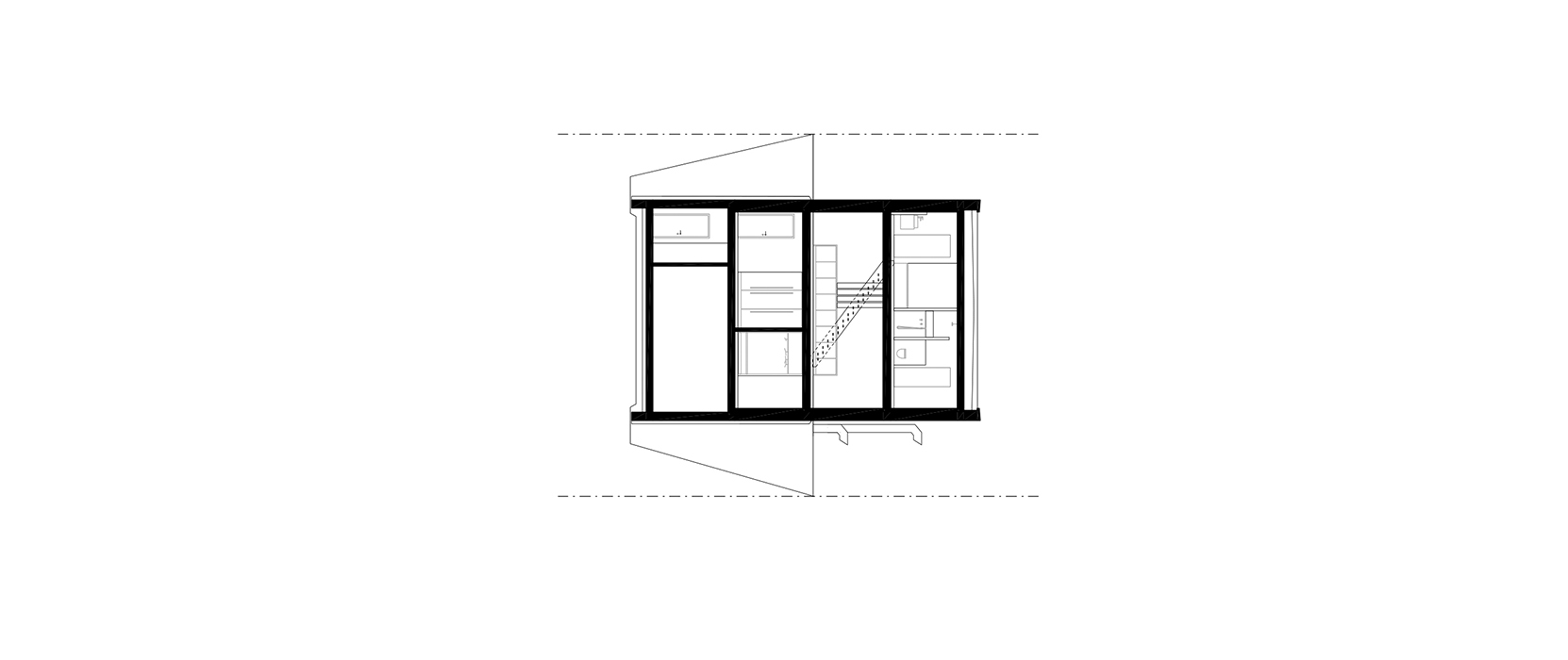
Mit einem für unsere Breiten so gut wie nicht bebaubaren Grundstück und dem Wunsch, darauf ein Einfamilienhaus zu planen, kamen die Bauherren auf den Architekten Thomas Fabrinsky zu. Der L-förmige Grundstückszuschnitt, die extreme Hanglage, die sehr beengte Bausituation sowie eine schmale, direkt am Grundstück vorbeiführende, öffentliche Erschließungsstraße waren alles andere als günstige Bauparameter. Dennoch nahmen die Planer die Herausforderung an und begegneten ihr mit einem überzeugenden Gebäudekonzept, das adäquat auf das 503 m² große Grundstück eingeht und es optimal nutzt.
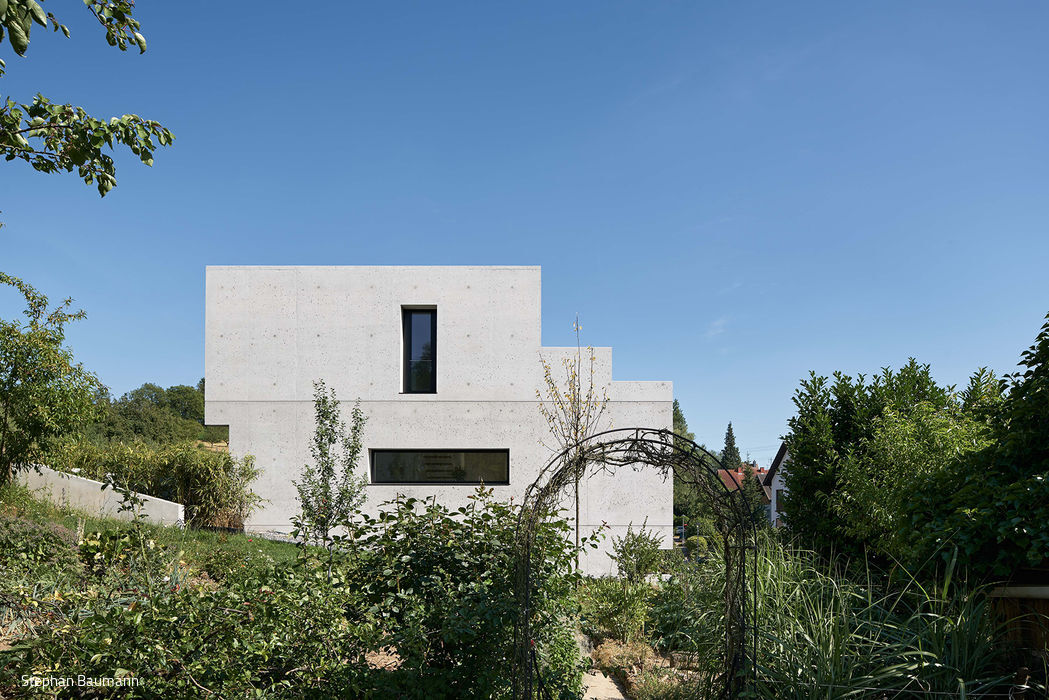
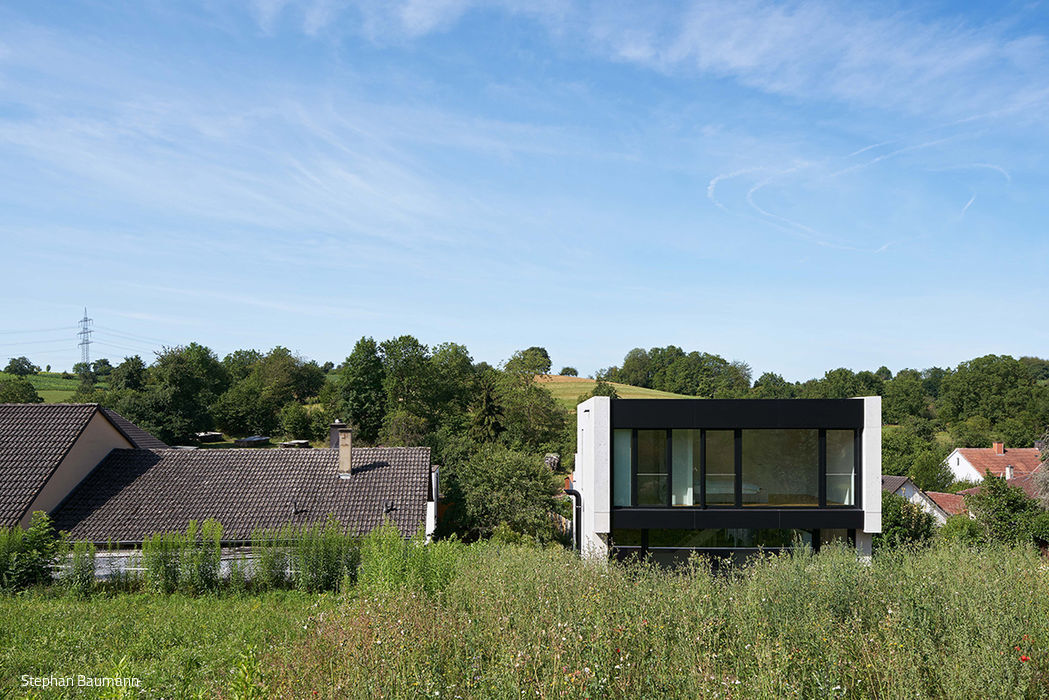
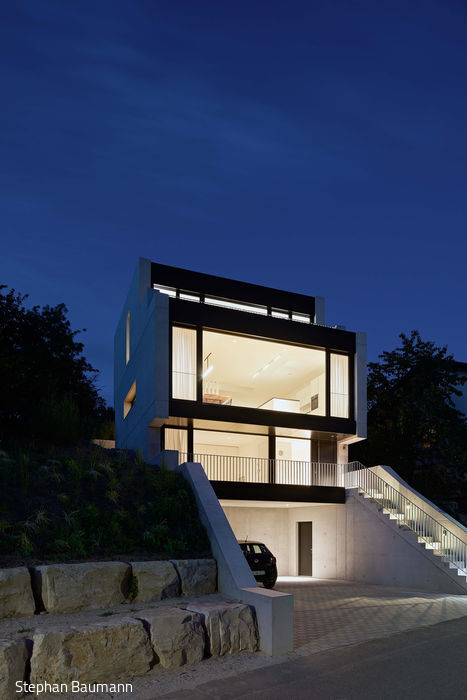
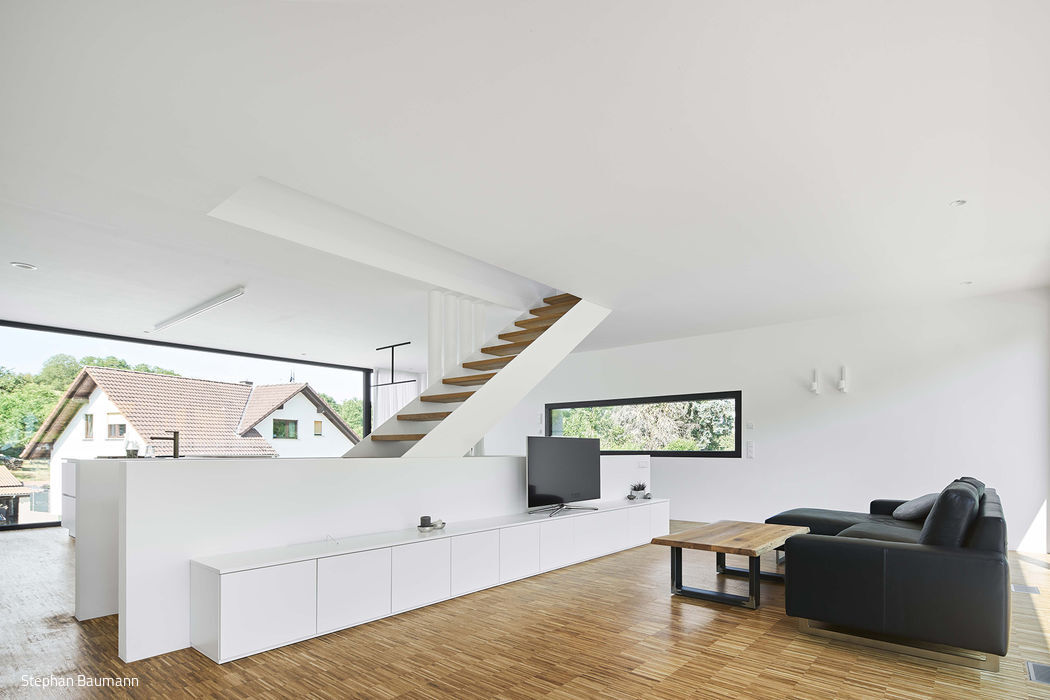
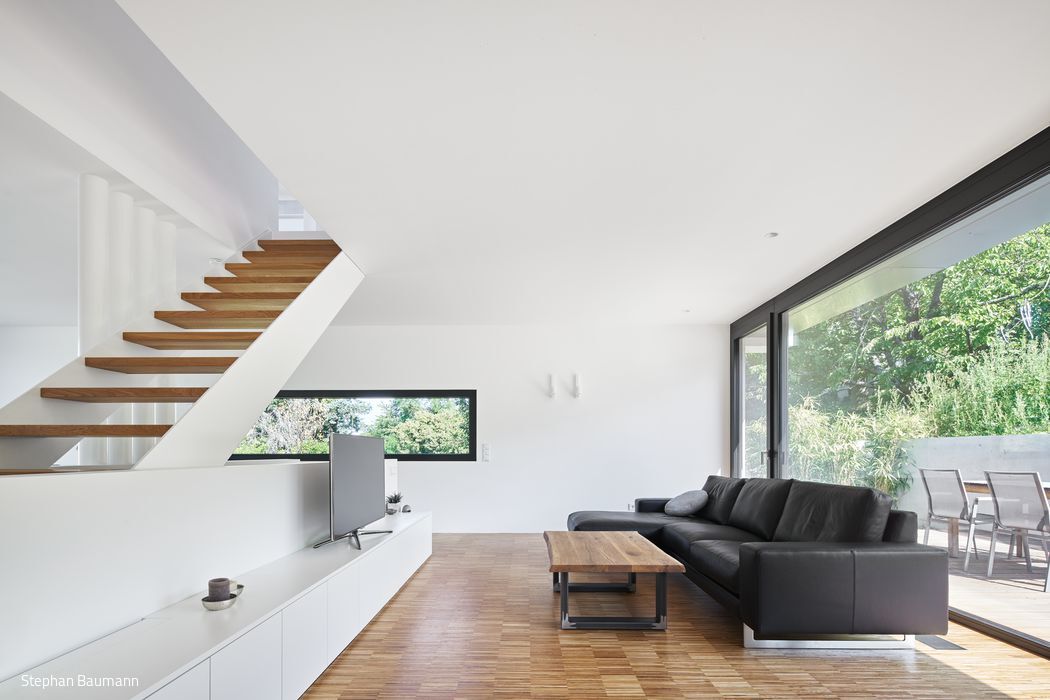
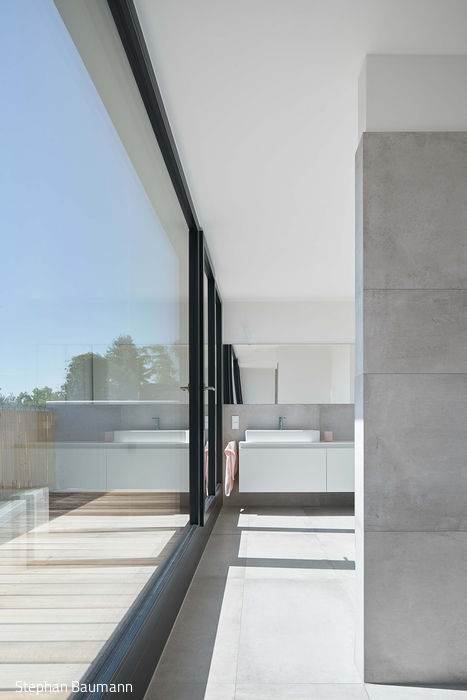
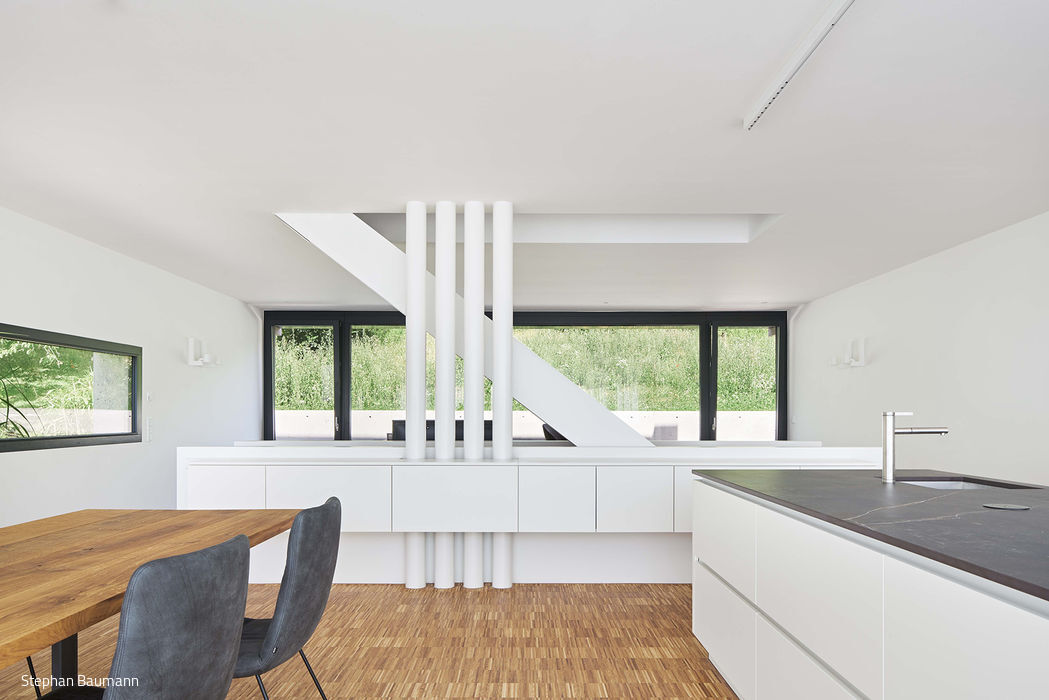
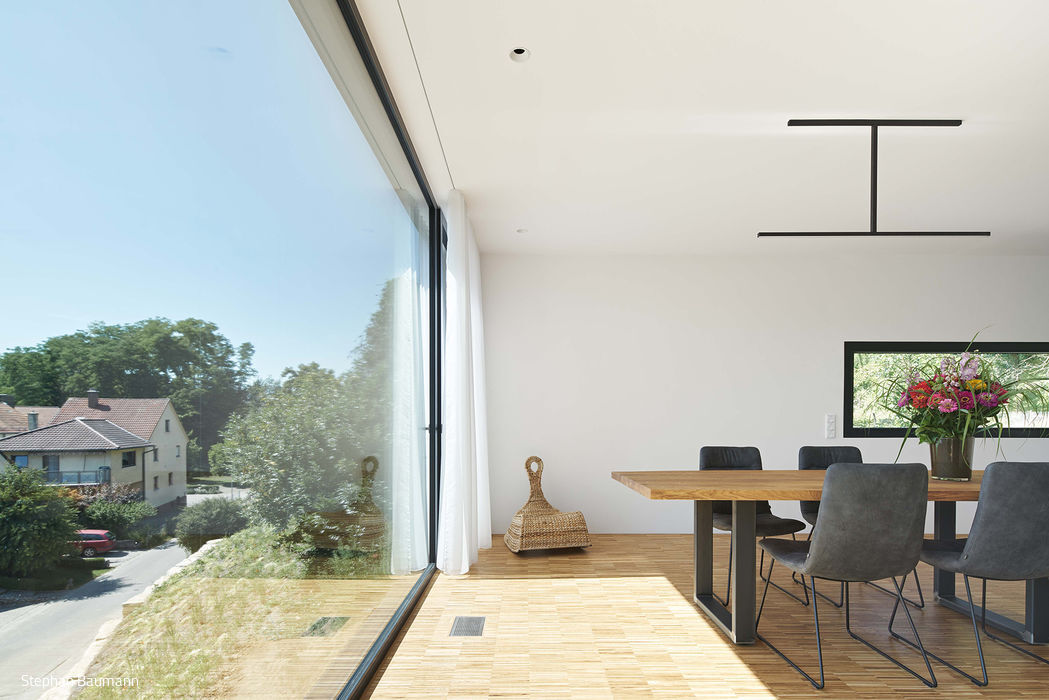
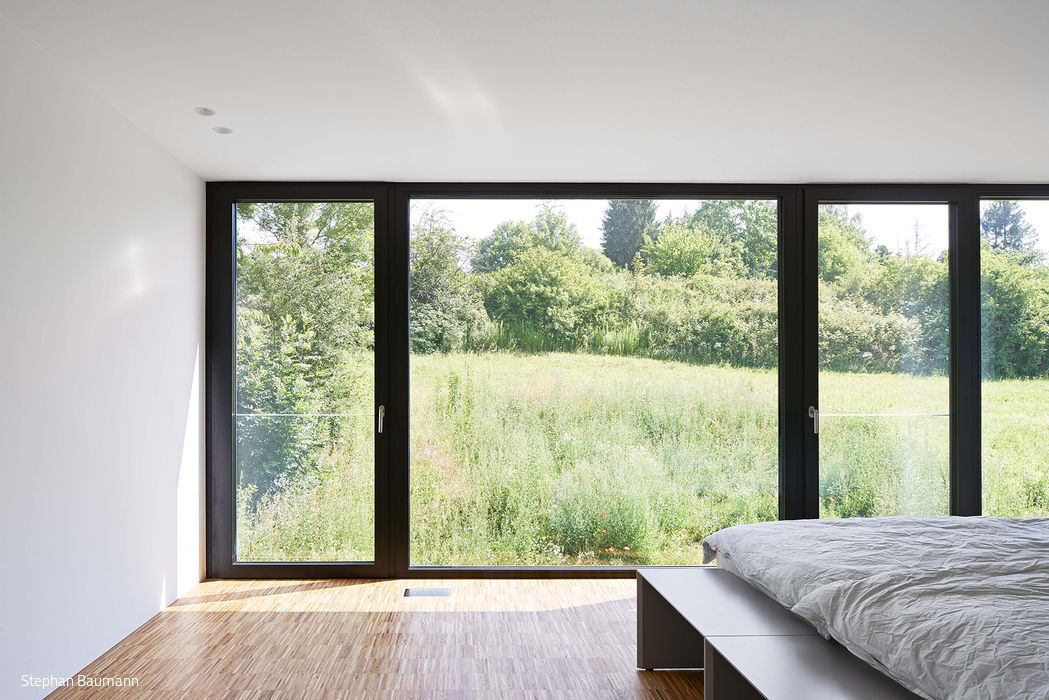
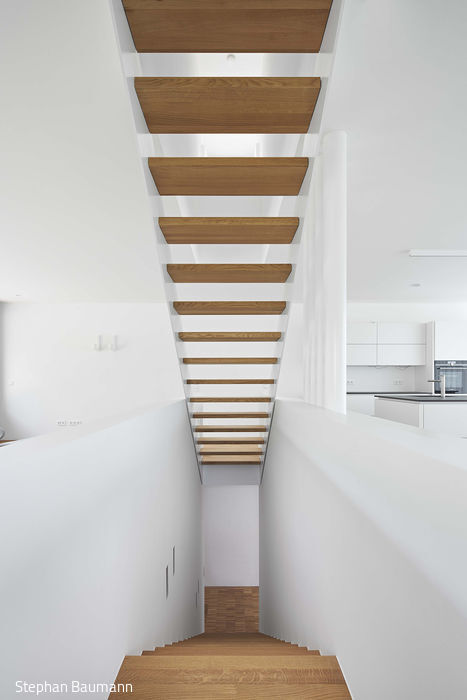
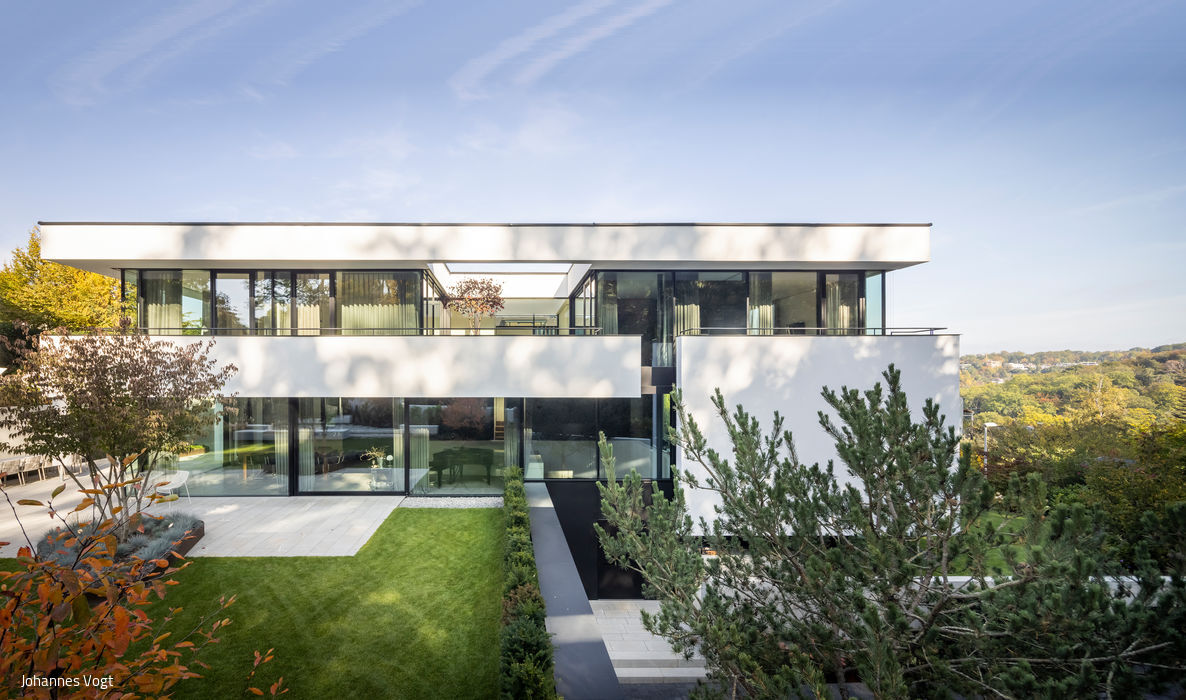
Leitidee des Entwurfs sind zwei Betonwandscheiben, die in den Hang schneiden und einen Raum zum Wohnen nach vorne und hinten eröffnen. Die robusten sichtbaren Betonwände lassen den Hang an sich heran und der Höhenverlauf wird ablesbar. Die unteren Geschosse treppen sich in den Hang hinein und folgen seinem Verlauf. Dadurch musste weniger ins Erdreich eingegriffen werden. Im Erd- und 1. Obergeschoss befinden sich bergseitig die dienenden Räume, talseitig finden sich die Räume für hochwertige Nutzungen. Ab dem 2. Obergeschoss mit Koch-, Ess-und Wohnbereich ist die Höhe erreicht, um oberhalb des Hangs zu bauen. Es lässt sich hier von einer Seite zur anderen und bergseitig ebenerdig ins Freie treten. Daher gibt es im 2. Obergeschoss keine Innenwände und der Leitgedanke vom Raum zwischen zwei Betonscheiben gelangt vollständig zum Ausdruck. Die Treppe steht als leichte, blick- und lichtdurchlässige Stahltreppe quer im Raum und gliedert ihn. An der Bergseite befindet sich eine kleine und intime Terrasse, talseitig genießt man den kompletten Ausblick durch die Panoramaverglasung. Im 3. Obergeschoss befindet sich der Schlafraum mit Bad und vorgelagerter Dachterrasse. Der weite Blick schweift über Felder und Streuobstwiesen. Die gesamte Wohnfläche umfasst auf den drei Geschossen 159 m².
Die Konstruktion der Außenwände aus Leichtbeton ermöglichte es erst, den Entwurfsgedanken umzusetzen. Das Material vereint die Qualitäten von Beton – robust, dauerhaft, wetterfest, haptisch und schön – mit den bauphysikalisch notwendigen Eigenschaften „wärmedämmend“ und „speicherfähig“ sowie den statischen Anforderungen „tragfähig“ und „belastbar“. Das anspruchsvolle Ergebnis war dabei die intensive Planungsarbeit und eine perfekte Ausführung mit speziell geschultem Personal auf der Baustelle.
Wohnfläche: 159 m²
Grundstücksgröße: 503 m²
Bauzeit: 2017–2019
Bauweise: Stahlbeton, Wände Leichtbeton
Energiekonzept: Blockheizkraftwerk, Luft-Wasser-Wärmepumpe
Architektur: Thomas Fabrinsky
Projektierung + Ausführung: bauwerk bauunternehmung gmbh
Statik: Ingenieurbüro Bruder und van den Bergh
Fotos:
Stephan Baumann
www.studiobaumann.com
(Erschienen in CUBE Stuttgart 03|21)

Hier ist Leben drin
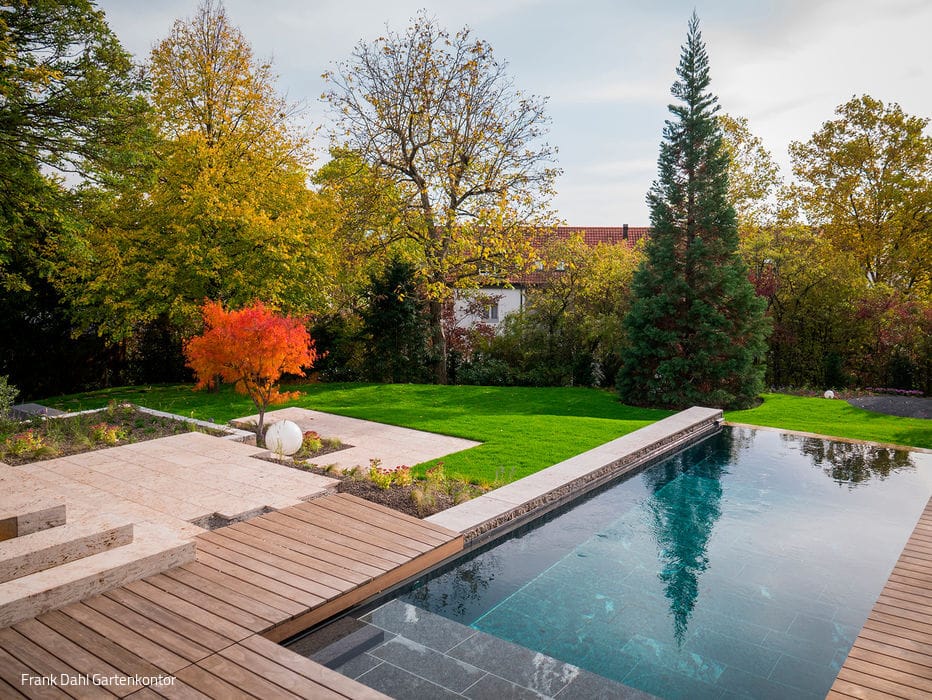
Aus einem verwilderten Garten wird ein Familienparadies am Hang mit Pool
Prägnant und selbstbewusst
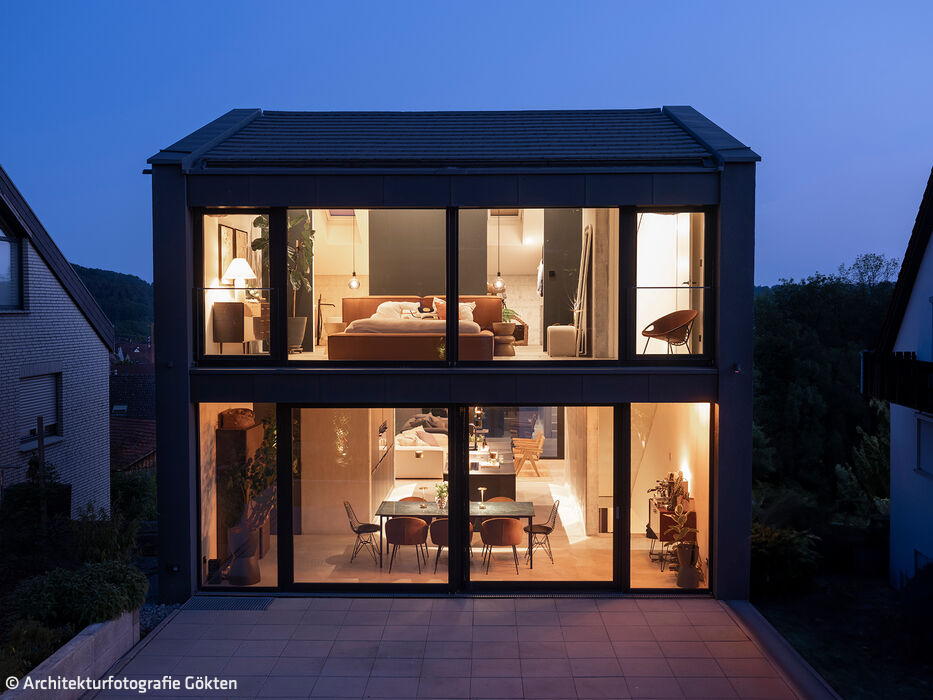
Clever geplantes Einfamilienhaus besetzt zukunftsfähig eine Baulücke
Selbstbewusster Monolith
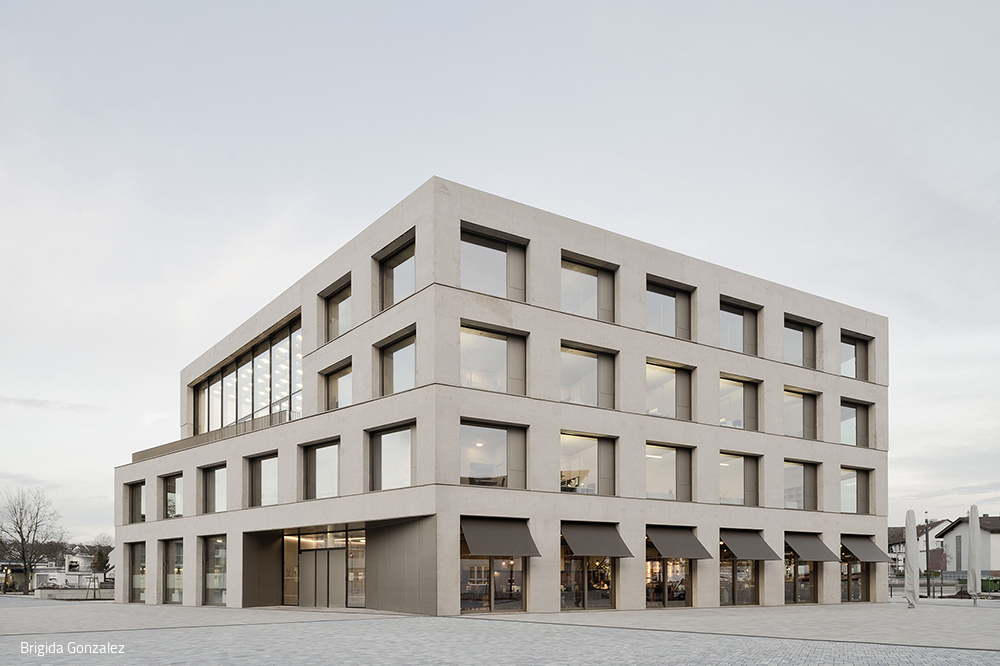
Das neue Rathaus Remchingen präsentiert sich als modernes Multifunktionsgebäude
Eins sein
Natur und Architektur verbinden sich bei diesem Haus am Hang wie selbstverständlich