


A Play of Subtle Facades
A striking new office and commercial building on Joachim-Erwin-Platz that masterfully balances transparency with sculptural form
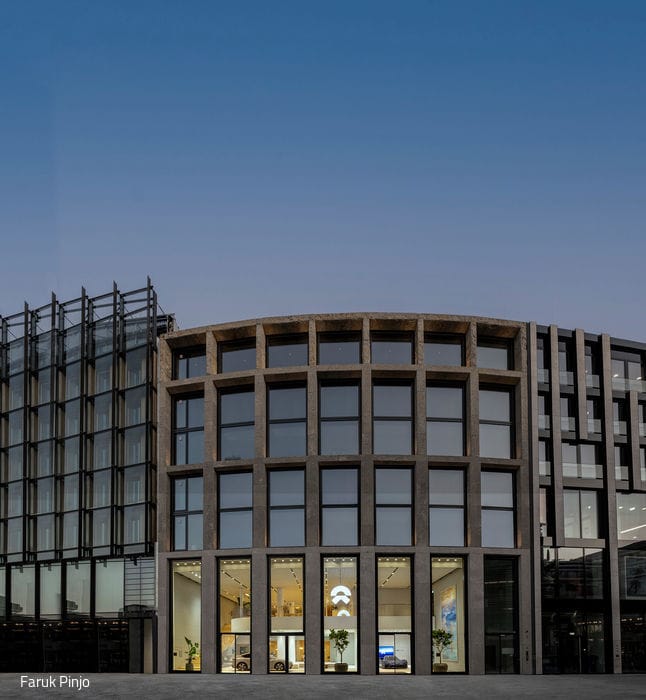
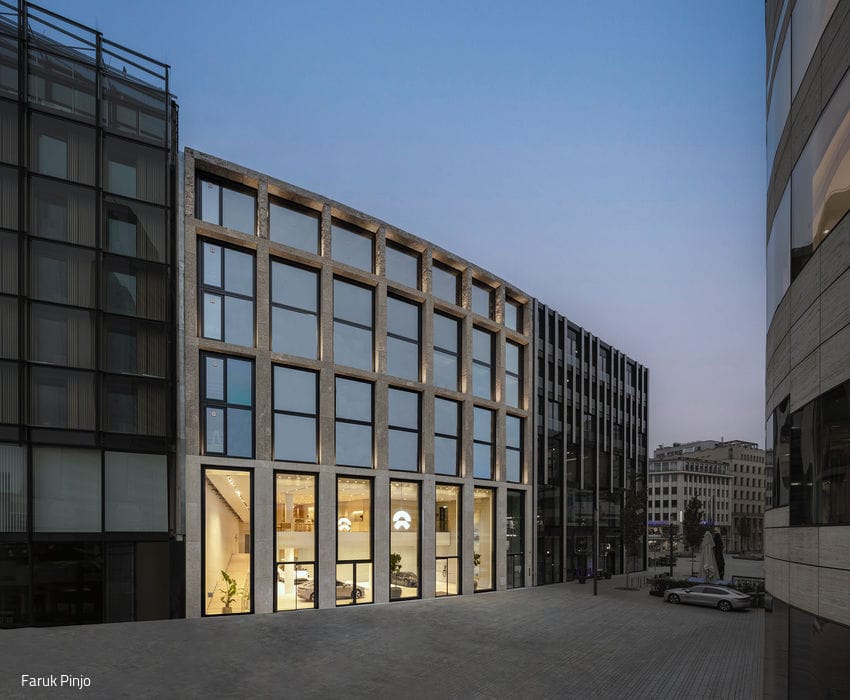
The transformative impact of the Kö-Bogen and Kö-Bogen II developments continues to reshape Düsseldorf's cityscape around the Schadowplatz and Schauspielhaus quarter. The 1960s office building that once housed the iconic Hennig stationery store had become obsolete—its inefficient floor plates and low ceiling heights no longer suited modern demands. RKW Architektur+, commissioned by Rhenus Grundvermögen GmbH and Entwicklungs-KG, has created a contemporary office and retail complex for this prime location. The building makes an immediate impression with its distinctive gently curved facade, composed of raw natural stone and transparent glass, which opens gracefully toward Joachim-Erwin-Platz.
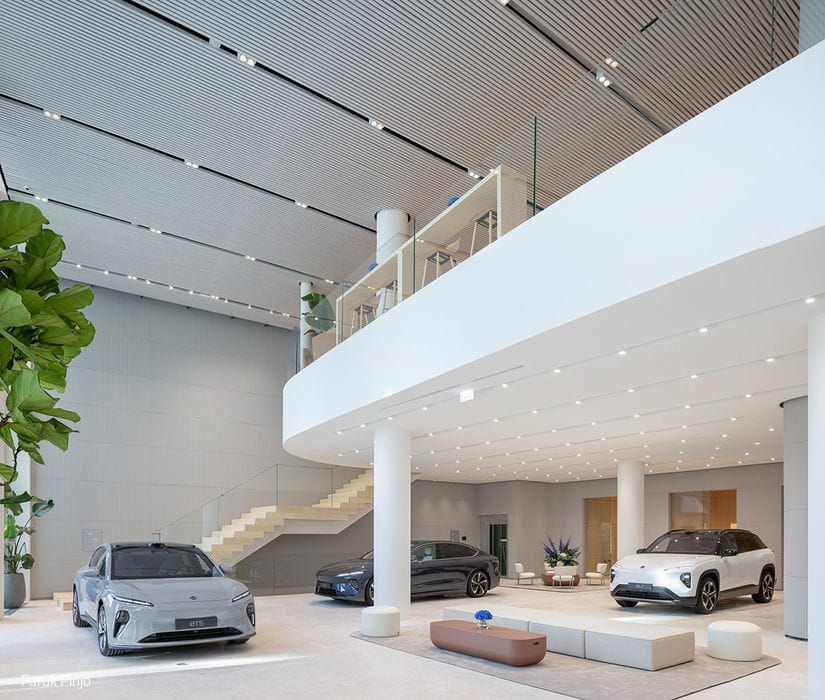
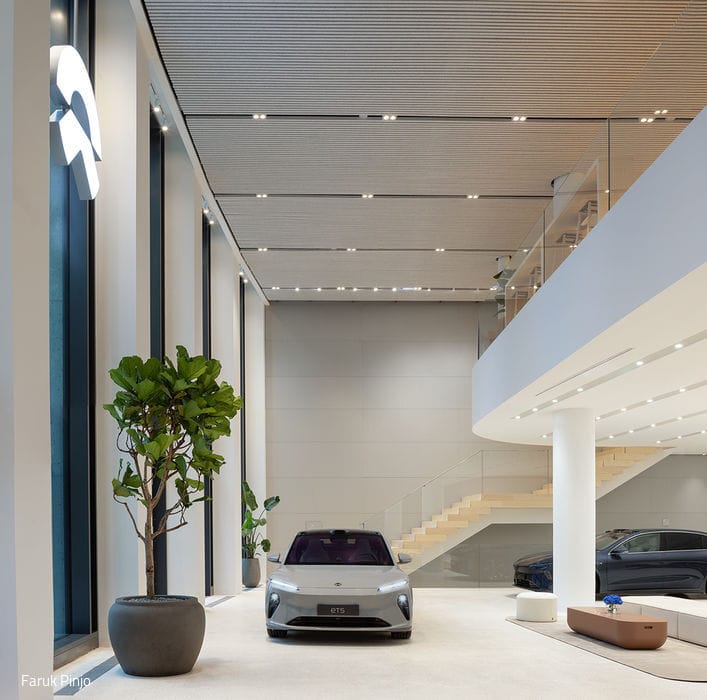
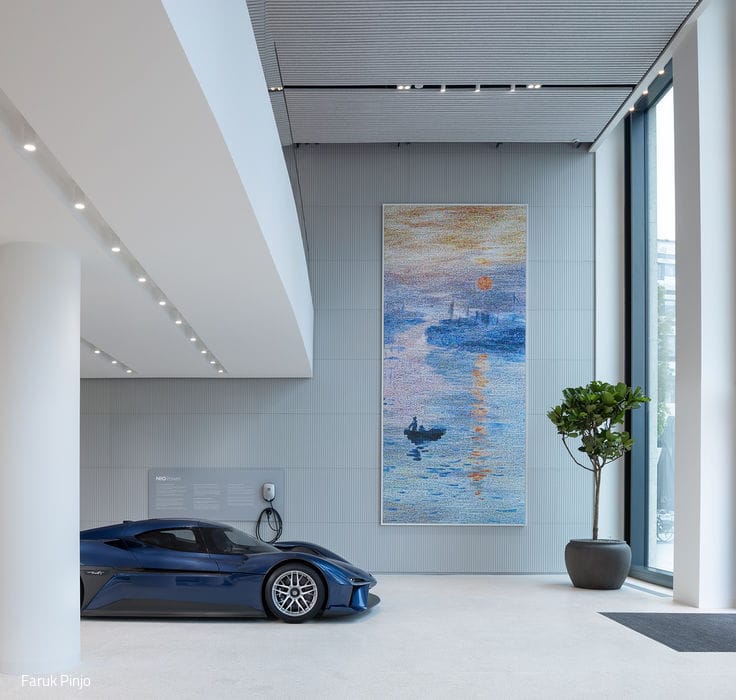
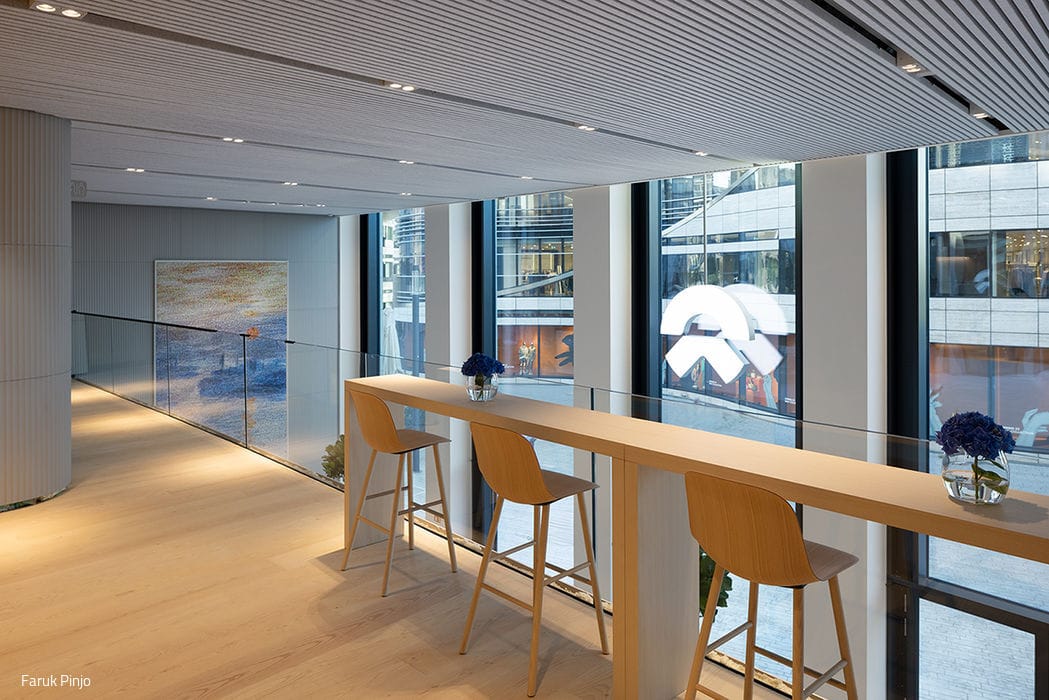
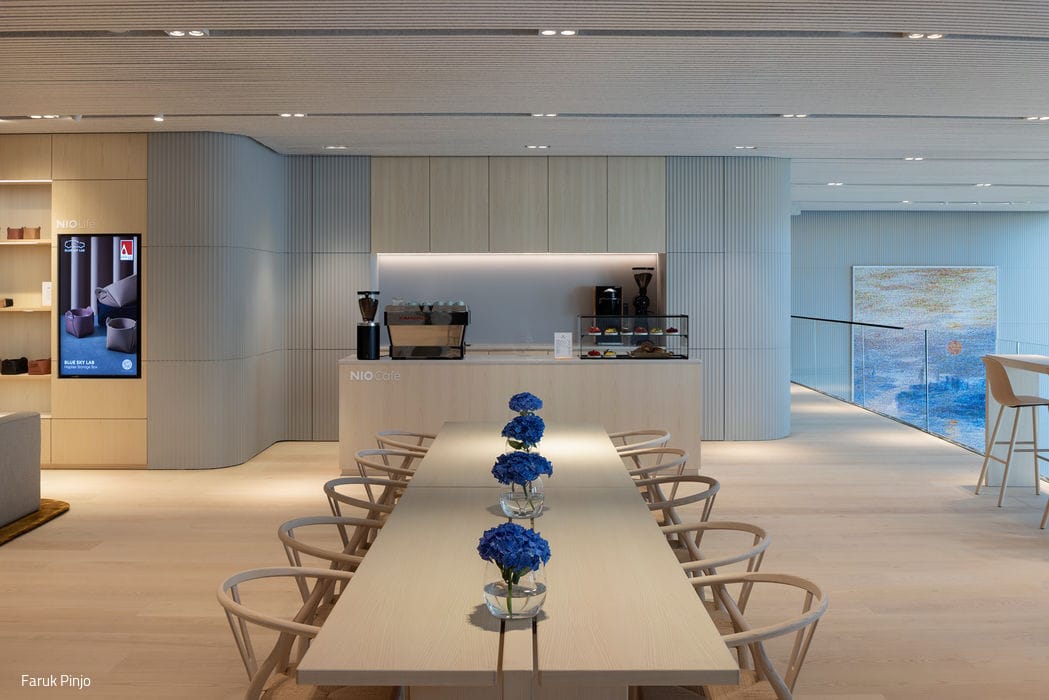
The seven-story structure combines multi-story retail space across the ground floor, first floor, and basement with five additional office floors and a panoramic rooftop terrace. While respecting the height and building lines of its surroundings, the facade asserts a striking visual presence. The double-height ground level showcases the drama of an eight-meter-tall glass wall—a transparency that continues inside as a soaring nine-meter void, designed and realized by Danish architects Schmidt Hammer Lassen for Chinese EV manufacturer nio. The office floors eschew standard 1.35-meter grid windows in favor of expansive floor-to-ceiling glazing that floods the spaces with natural light. Framing these panes are unusually large natural stone slabs, where the glass recesses inward by a hand's breadth with each ascending floor. The stone itself transforms as it rises: the Wachenzeller dolomite begins with a fine grain at street level, progressively rougher-finished toward the upper floors, until the topmost story appears almost freshly hewn from the block. This subtle vertical dialogue creates a lively sculptural presence—one that holds its own with quiet elegance against Daniel Libeskind's dynamically sculptured Kö-Bogen.
Photography Credits:
Faruk Pinjo
www.farukpinjo.com
(Featured in CUBE Düsseldorf 01|24)


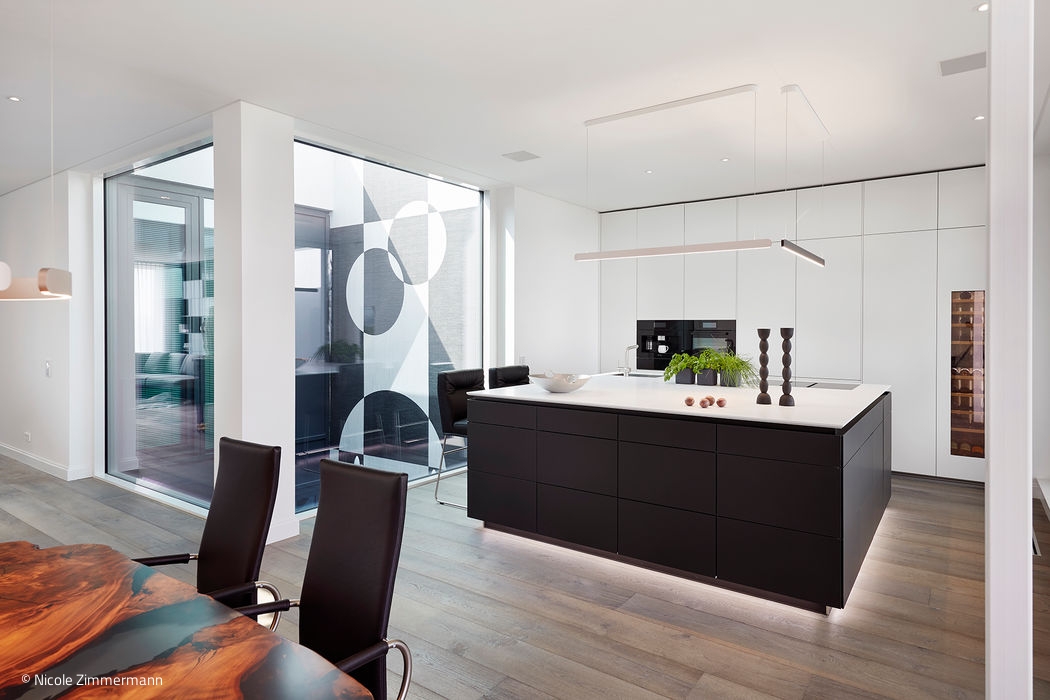
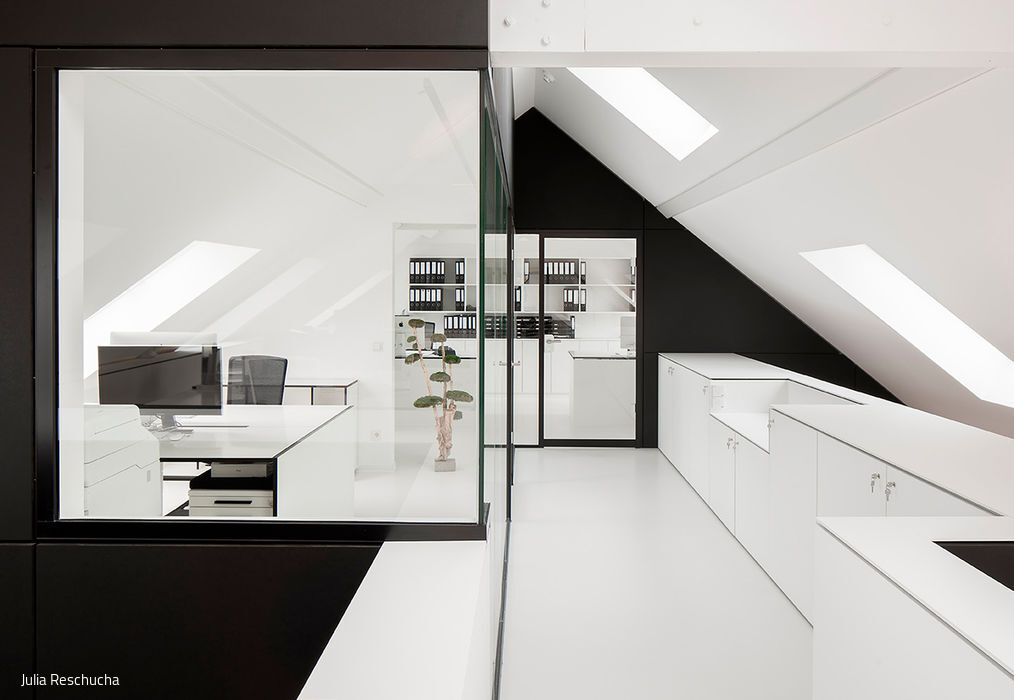
The Best Things Come in Threes
Architectural Firm Completes Third Office Expansion at Historic Courtyard Estate
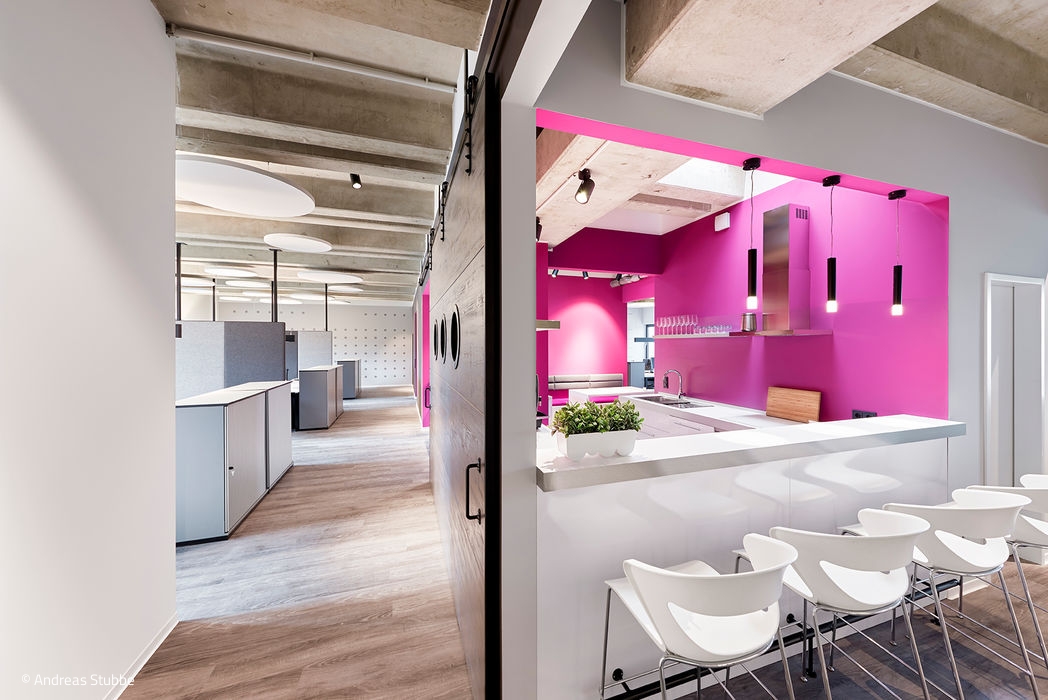
Interim Use in Your Own Style
Distinctive Spaces, Strong Identity: Corporate Design in Three Dimensions
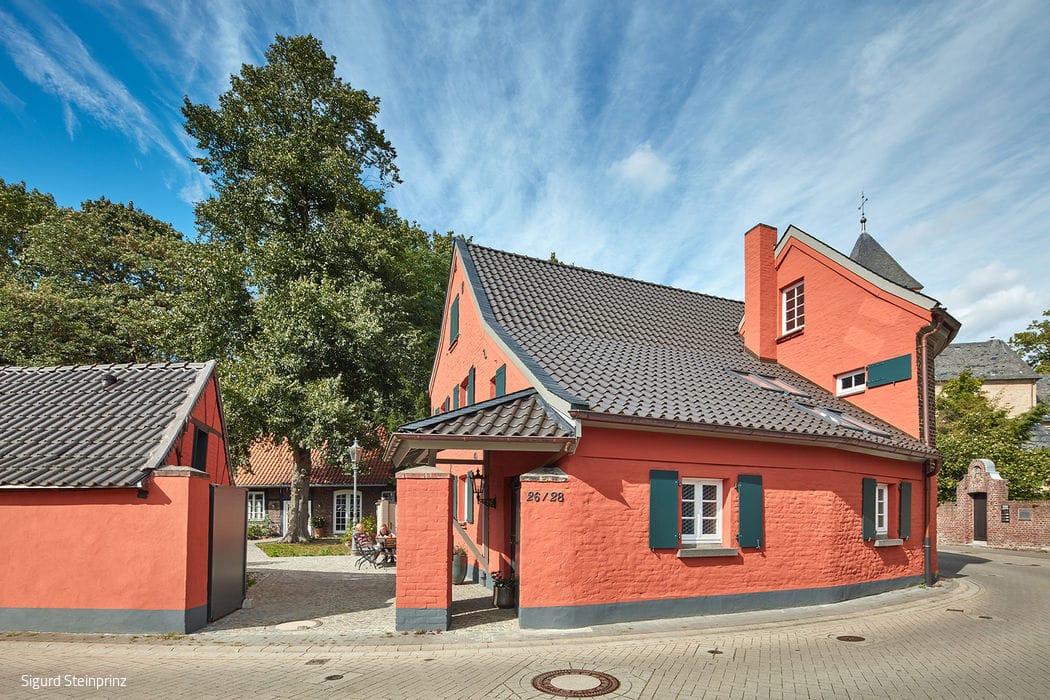
Respectful Metamorphosis
The Langersgut in Kalkum: a historic ensemble thoughtfully modernized and repurposed as a live-work studio.
Metamorphosis in Stages
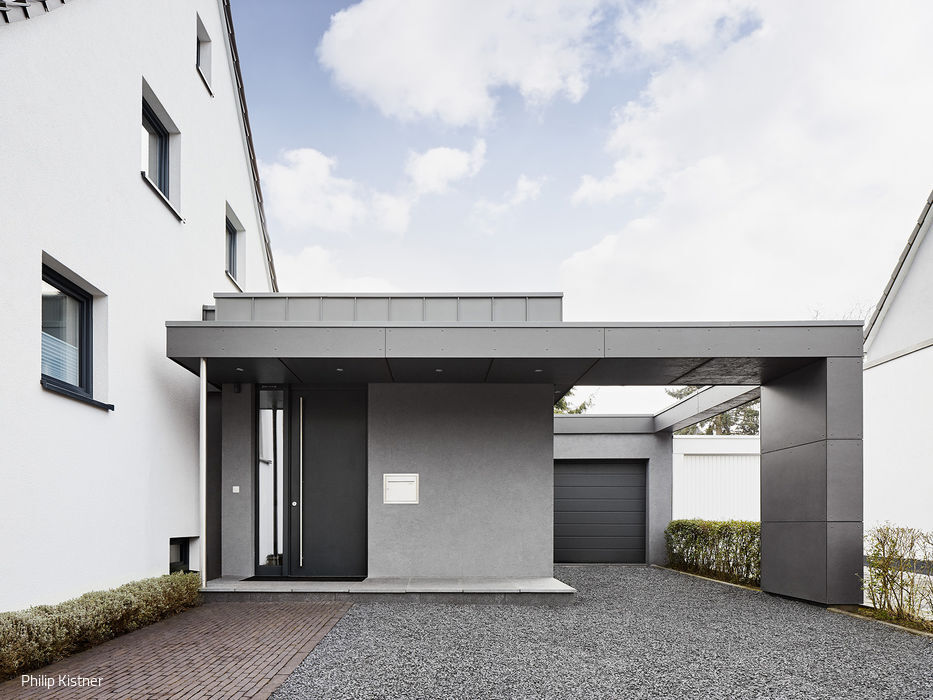
A post-war home grows thoughtfully across two phases—evolving without losing its soul