


Studying in Refined Surroundings
Expanding the Fresenius Campus: Two New Pavilions


Since Munich's former barracks were reimagined, entirely new districts have emerged, transforming entire neighbourhoods. This transformation is nowhere more evident than on the site between Schwere-Reiter-Straße and Infanteriestraße—where a compact design quarter and educational campus have flourished over the past decade. Anchored by Behnisch Architekten's primary school, the site features a collection of pavilions leased by the developer Südboden Grundbesitz Schwabing to Fresenius University.
Two modern pavilions have been thoughtfully integrated among the 19th-century listed barracks buildings that define the Infanteriestraße 11a campus. Together, they create an urban and architectural ensemble of exceptional quality. As the campus grew, so too did its spatial needs—requiring two additional pavilions. Like their predecessor, Pavilion IV, the new buildings V and VI were designed and constructed by Munich-based architectural firm Weickenmeier, Kunz + Partner. Nestled discreetly behind one of the campus's imposing heritage structures, the two new pavilions reveal themselves gradually. Both maintain the same design language as their predecessors: slender, two-storey structures clad in dark red clinker brick that creates a refined visual distinction from the lighter red masonry of the original barracks. The restrained colour palette, expansive glazing, and lean proportions give these "learning houses" an understated elegance—decidedly unlike conventional office buildings. Intensively planted rooftop gardens enhance the campus's microclimate, while landscape architect realgrün's thoughtful green spaces establish a sensitive dialogue with the adjacent listed riding hall and the future TUM building to the south. Above grade, the pavilions' two-storey profile respects the scale of the heritage structures, maintaining compositional harmony with the existing campus layout. Upon approach, the front pavilion reveals its below-grade level, enriched by a sunken courtyard that brings light and spatial complexity to the lower floors.
A generous open staircase, punctuated with seating, descends four metres to a central courtyard serving as the threshold to both the campus canteen and a public restaurant. The forecourt doubles as an outdoor extension during warmer months, creating a natural gathering point for the entire campus community. Beneath, the expanded basement—which bridges the two new pavilions—houses the student library. The design strategy carries through: clinker facades and expansive timber-framed glazing (mirroring the heritage buildings) harmonize with an interior palette of raw concrete, blackened steel, light stone, dark linoleum, and industrial flooring. The structure accommodates nine seminar rooms, each seating 30 to 55 participants.
Lifts, stairs, doors, and corridors reflect refined, understated detailing throughout. Rooms radiate an inviting character that naturally draws students to work and learn. Advanced technical systems—acoustic ceiling elements for heating and cooling, premium lighting, and integrated media infrastructure—maximize the building's functionality. Pavilion VI stands out for an unexpected program: its interior simulates a psychologist's office, complete from reception to consultation room. This "university clinic" provides psychology students with authentic clinical training. The pavilions opened for teaching in autumn 2023.
Photography:
Stefan Müller-Naumann
www.architektur-fotograf-muenchen.de
(Featured in CUBE Munich 02|24)
Beyond Monkey Rock
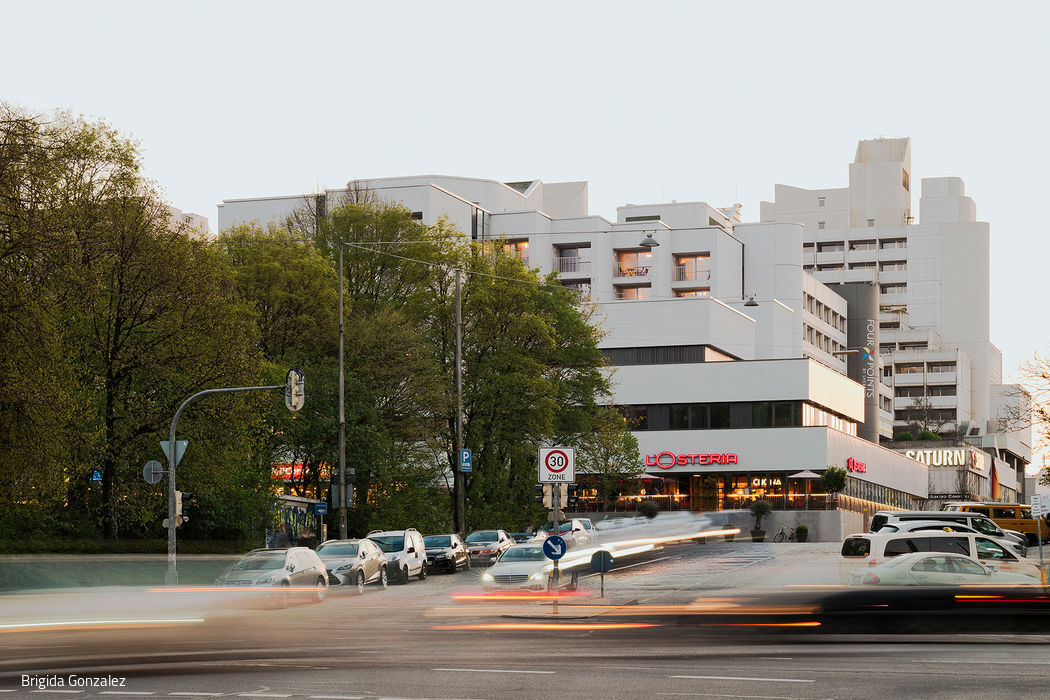
The complex features a series of stacked volumes that rise like a mountain range—gently ascending from the east and culminating in a striking residential tower to the west.
Building Community
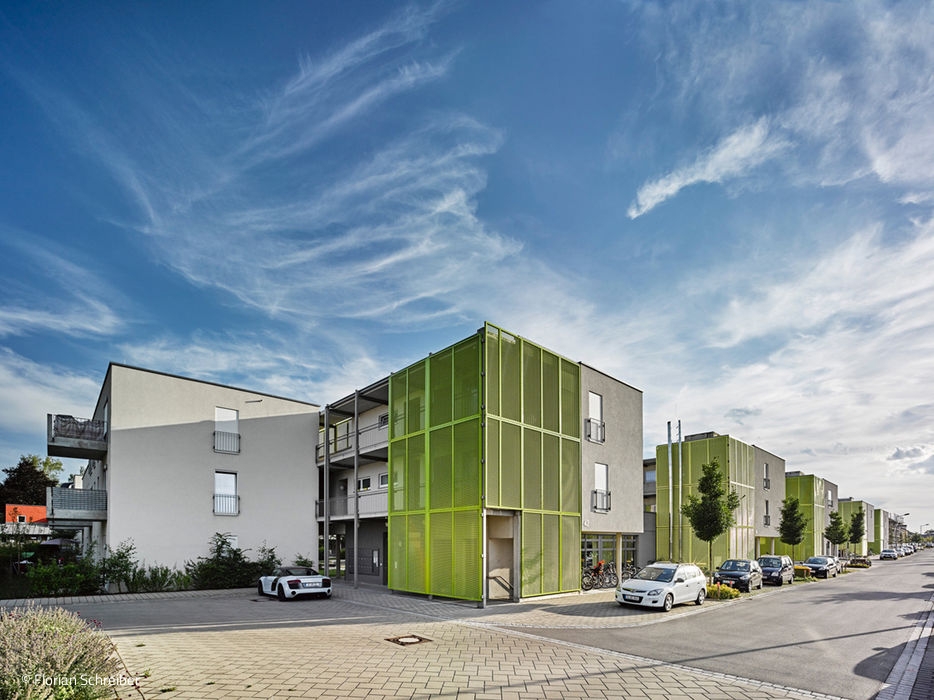
Each building features a distinct color palette, complemented by external corridors screened with perforated metal, which...
Komorebi
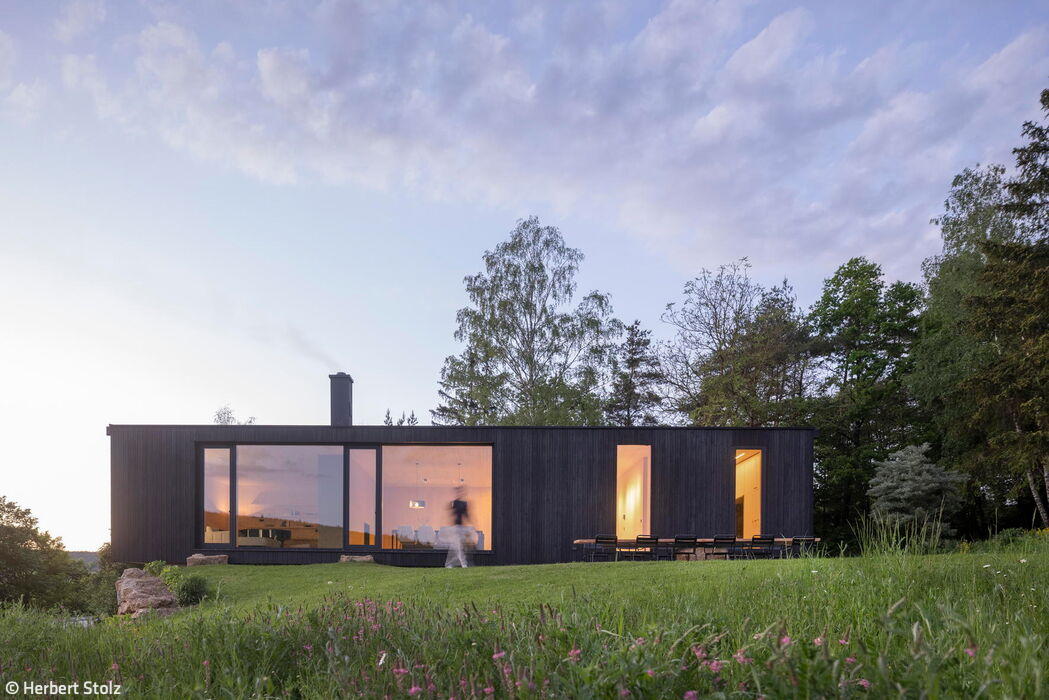
A home inspired by Japanese poetry—featuring a striking charred wood façade.

Live Extraordinarily
How a Danish design brand crafts personalized living spaces