


Modern work in historic halls
A leading automotive manufacturer's German headquarters embraces flexible workspaces
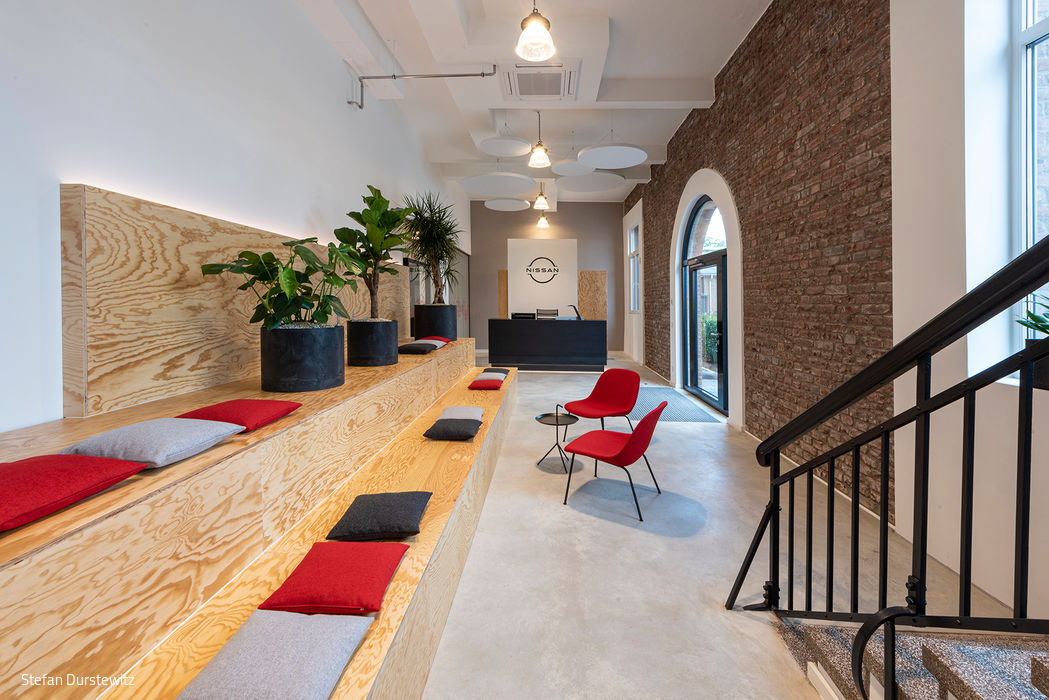
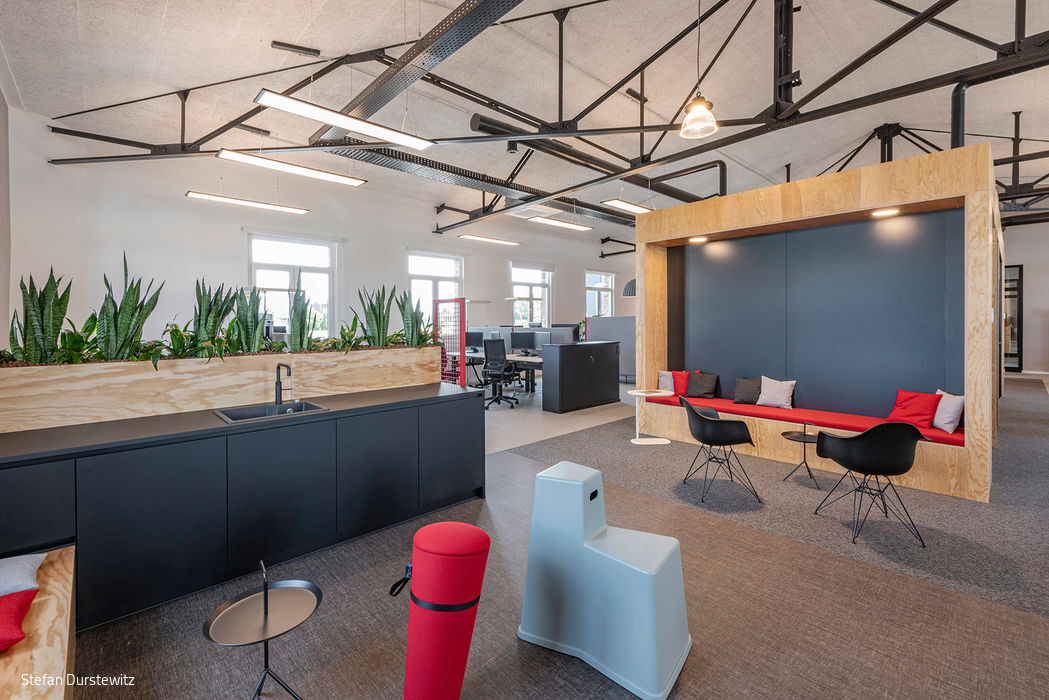
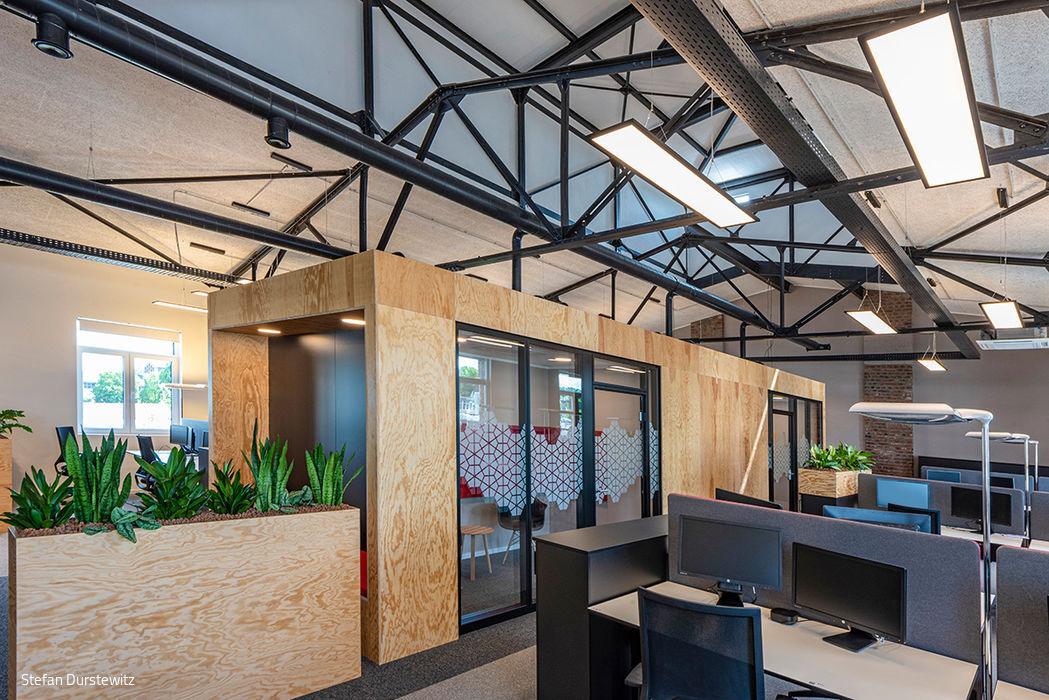
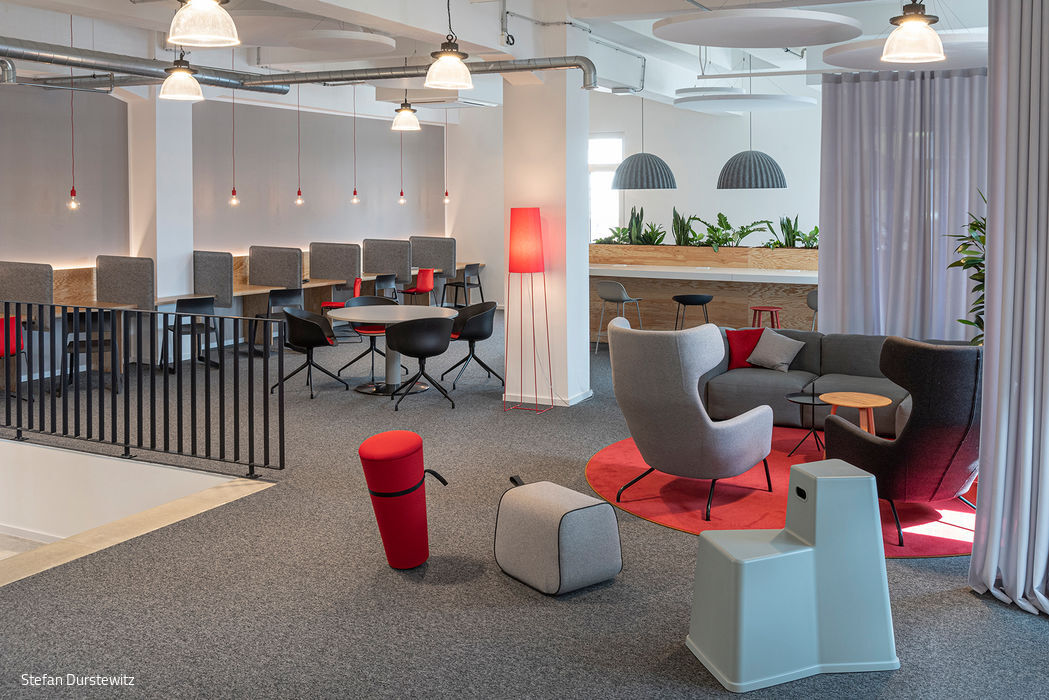
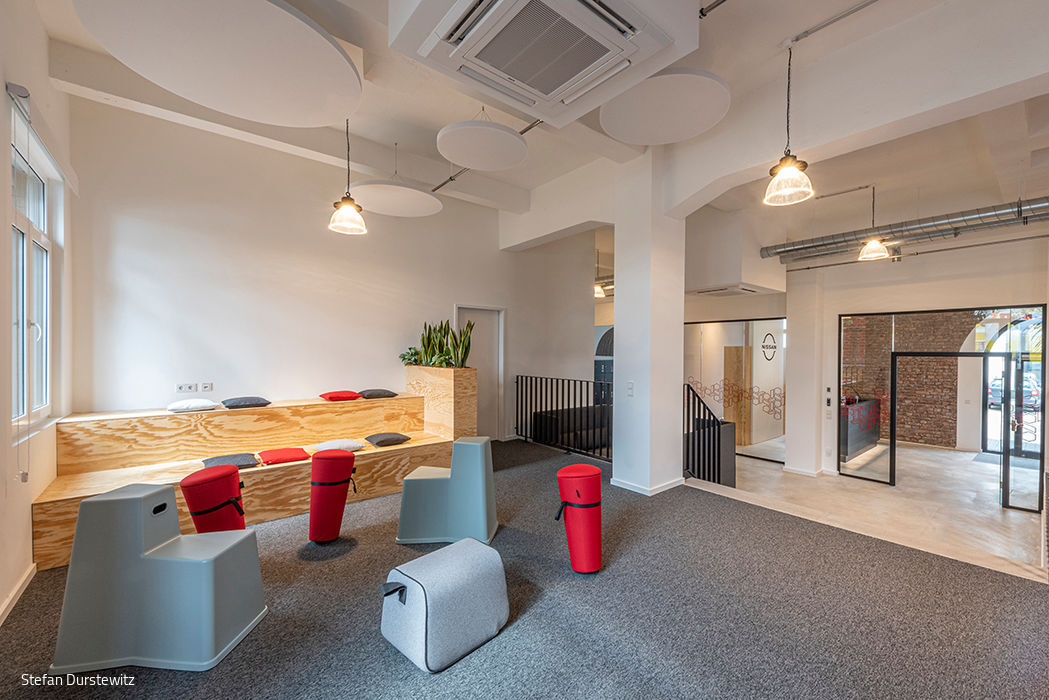
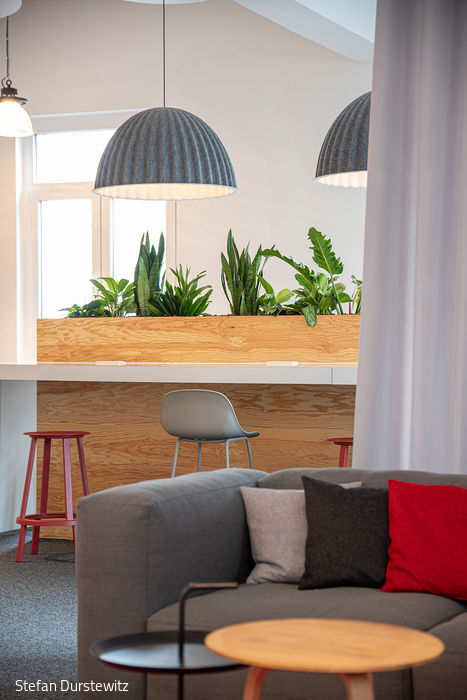
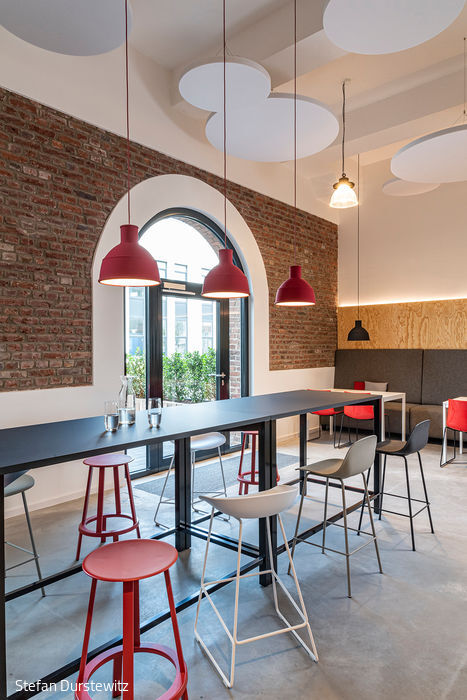
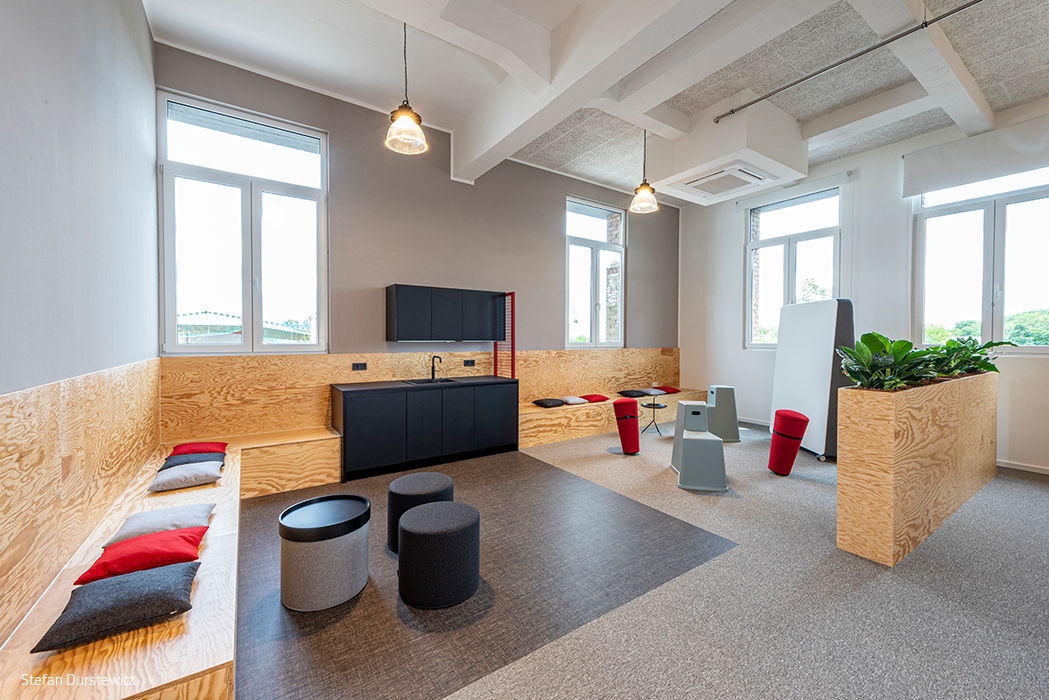
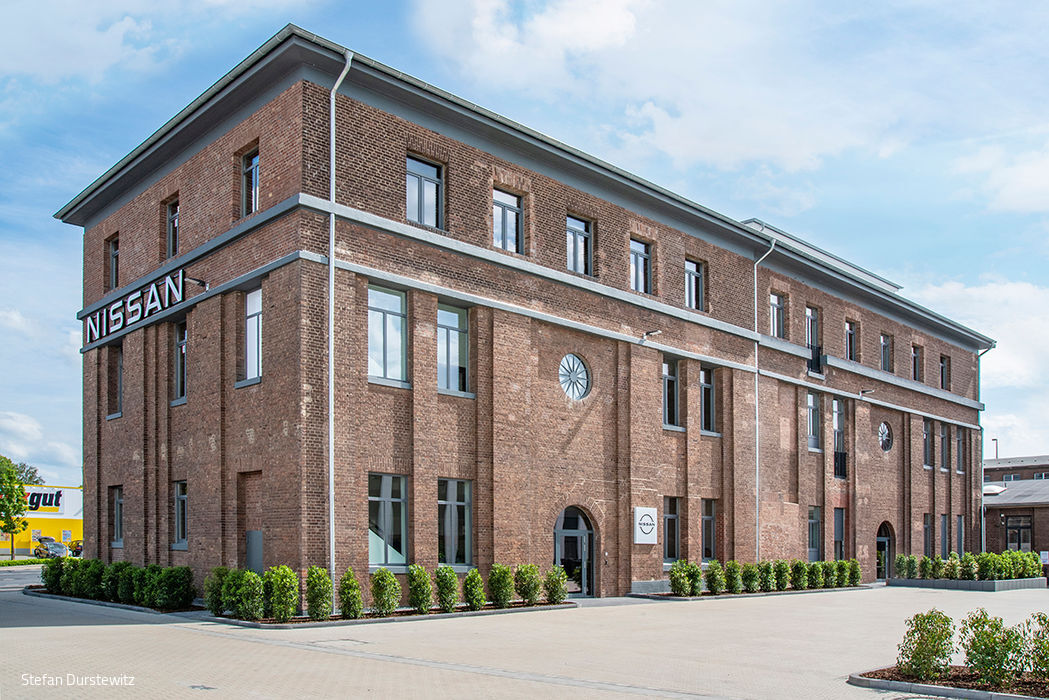
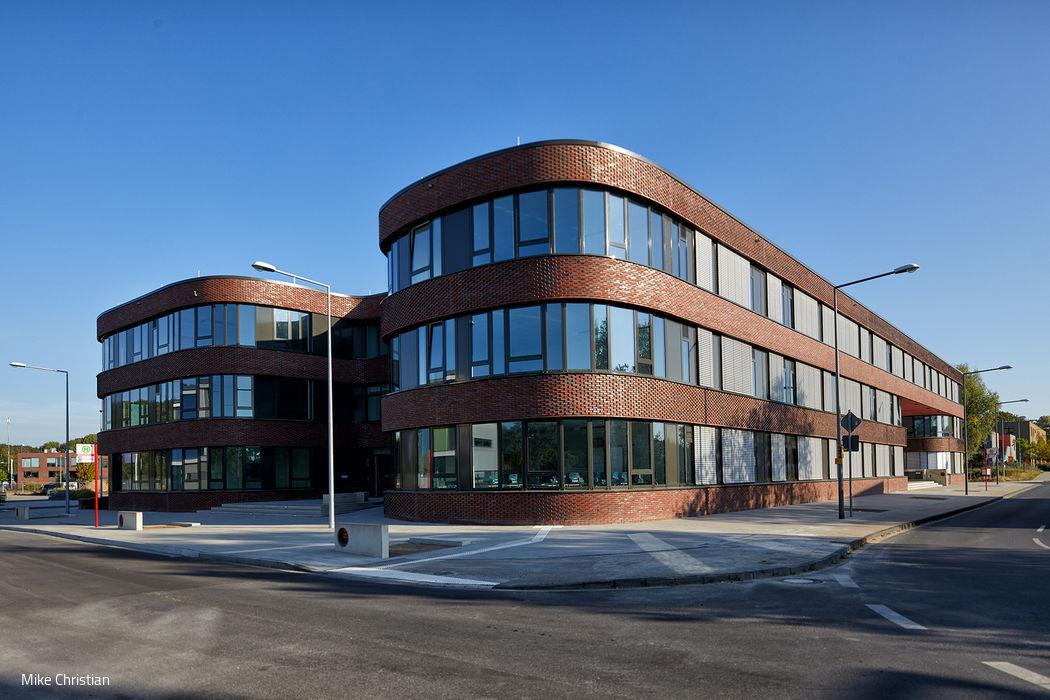
The brick façade is just the beginning. Much of the original industrial architecture from the 1920s has been thoughtfully preserved and creatively reimagined by interior design firm stanke interiordesign from Euskirchen. The result is a workplace designed for its roughly 190 employees—one that supports flexible, digital, and mobile work through diverse activity-based zones and an open-plan layout.
Set beneath the building's original metal ceiling structure, the interior architecture provides the backdrop for this new work model, developed in partnership with Cologne-based real estate consultancy Projekt Rheinland. Throughout, the design embodies the principles of "New Work": an open, communicative environment with minimal fixed seating. "Flex desks" can be reserved in advance, as can ten individually designed meeting rooms ranging from four to sixteen seats. "Hot desks" offer spontaneous, first-come-first-served workstations for employees and visitors alike, mostly positioned on a newly created mezzanine level accessible from the ground floor. Here, activity and energy are encouraged—multiple levels with standing tables and lounge seating ensure there's room to move. For those seeking quieter focus, the upper two floors feature newly created "silent areas" and additional retreat spaces. The spatial organization proves crucial: workstations and meeting rooms line the perimeter walls with windows for natural light, while shared amenities—lockers, phone booths, and casual meeting zones—occupy the heart of the building. Together, these central elements form a striking "spine" visually reinforced by a change in flooring color. Maritime pine wood, used consistently throughout, brings warmth and organic character to the spaces. Black, grey, and red form the dominant palette, harmonizing beautifully with the wood and the partially exposed brick walls.
www.projektrheinland.de
www.stanke-interiordesign.de
Photography Credits:
Stefan Durstewitz
www.durstewitz.de
(Published in CUBE Cologne Bonn 03|23)
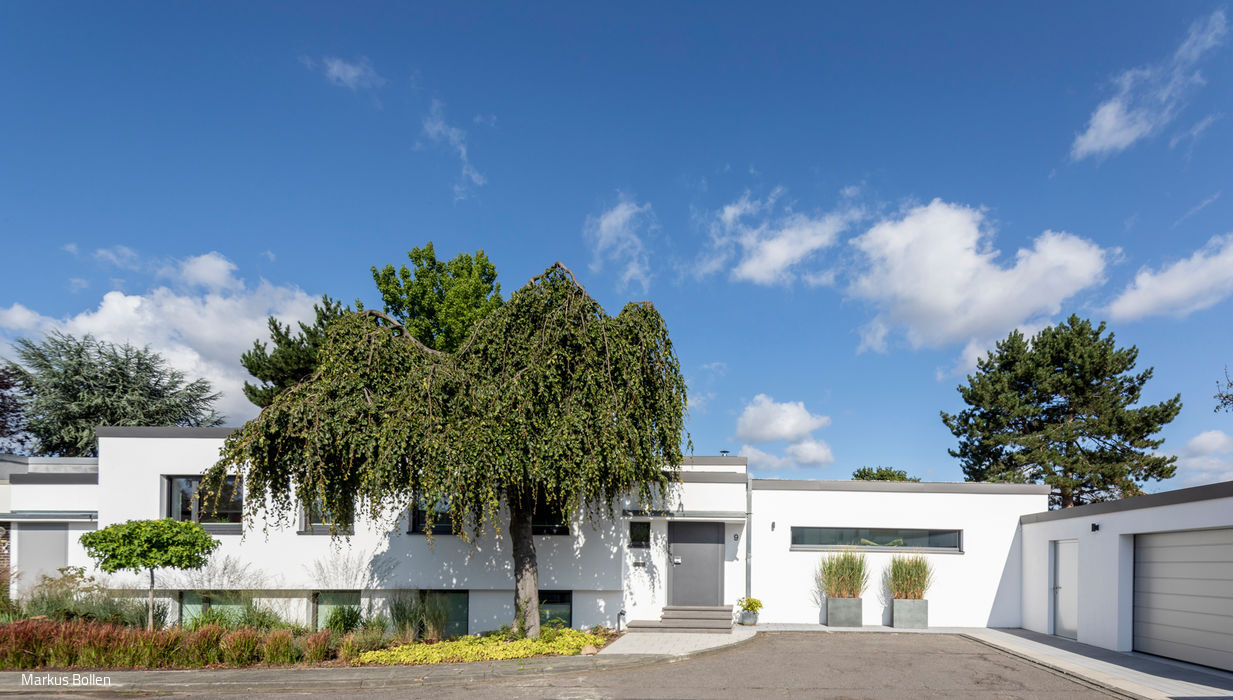
Thoughtful Restoration
A 1960s Riverside Bungalow Comprehensively Restored
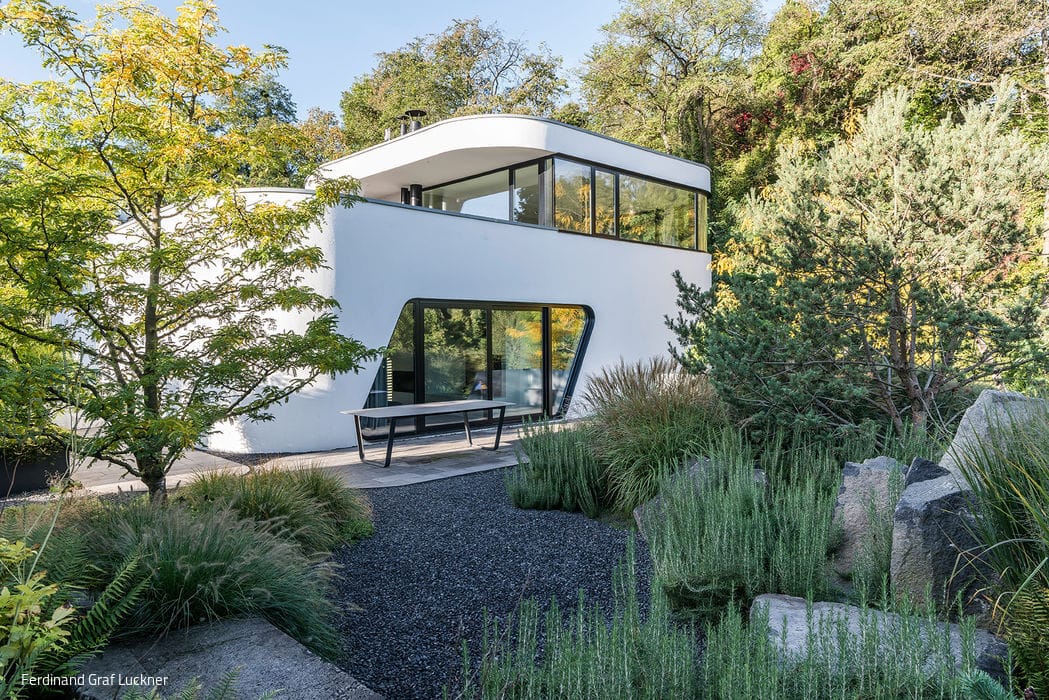
Sustainability Made Visible
Contrasts and proportions: the foundation of compelling garden design
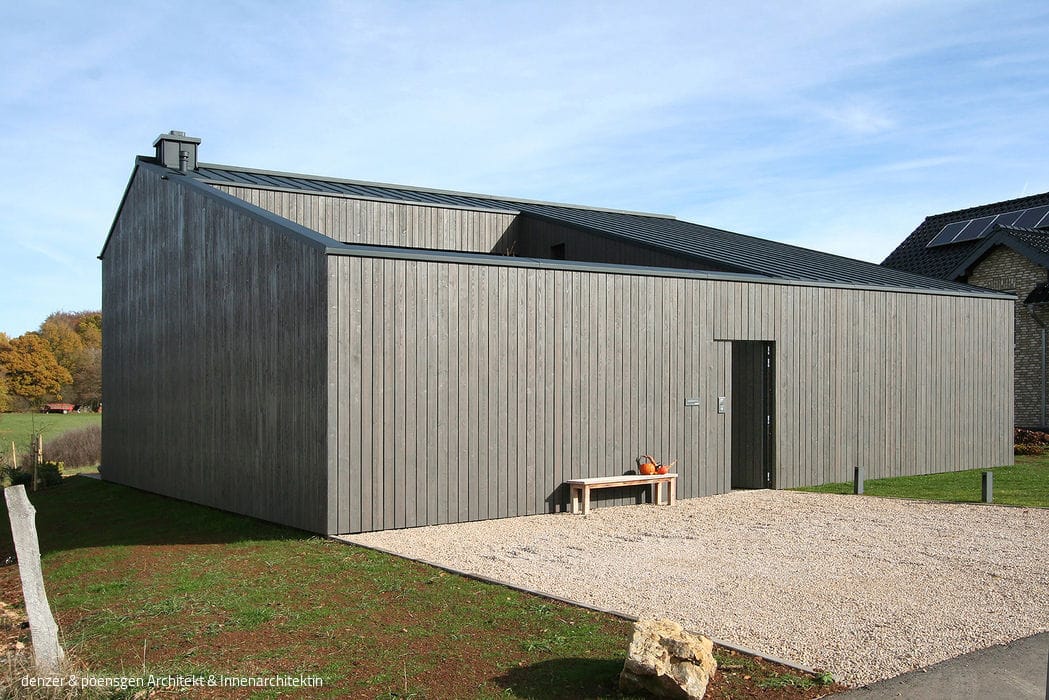
Integrated into the Landscape
A new building inspired by the vernacular barn
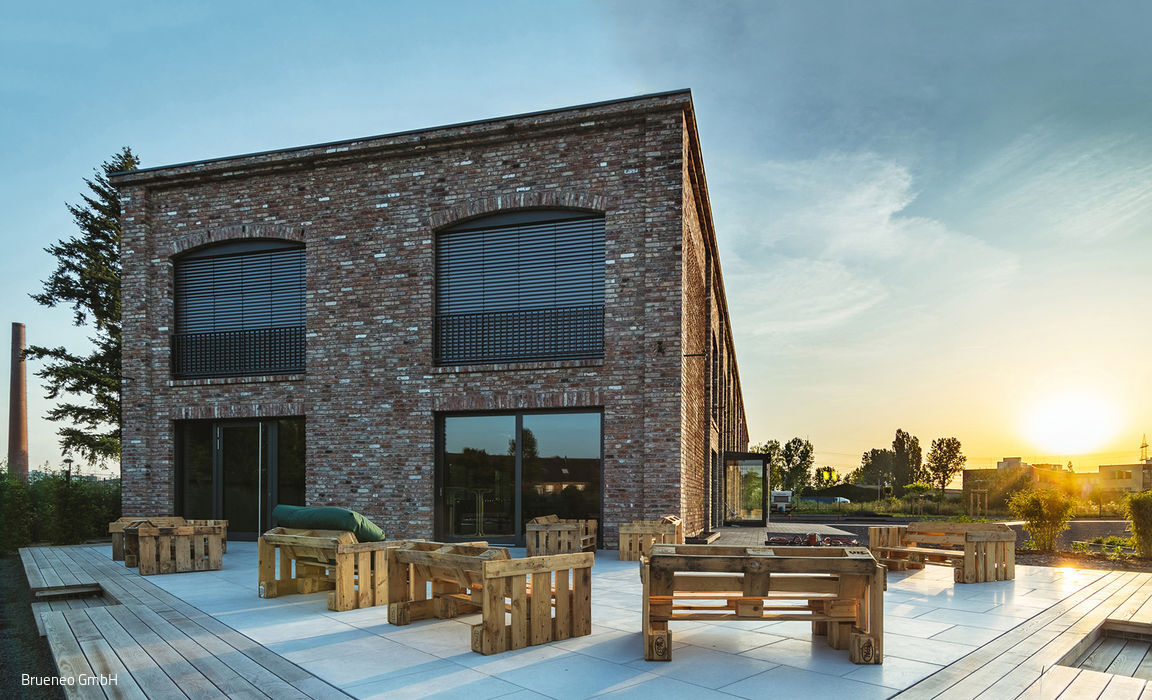
A Hall for Creative Freedom
Brüneo in Brühl: Co-working Space Built on Sustainability and Resourcefulness