


Black Brick by the Gasometer
A residential building that defies both typological and formal conventions
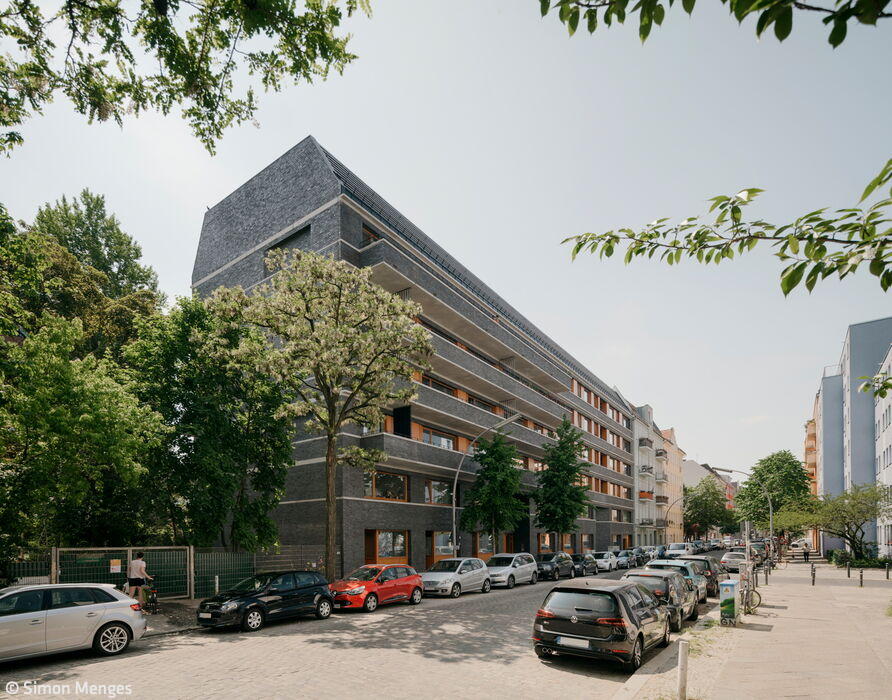
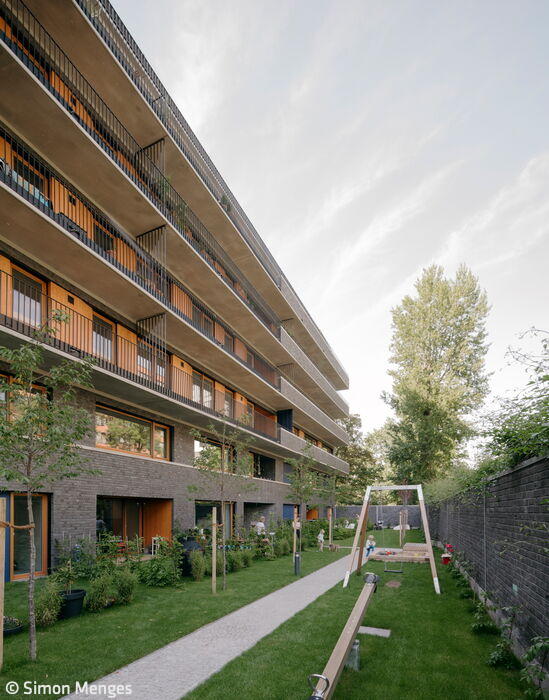
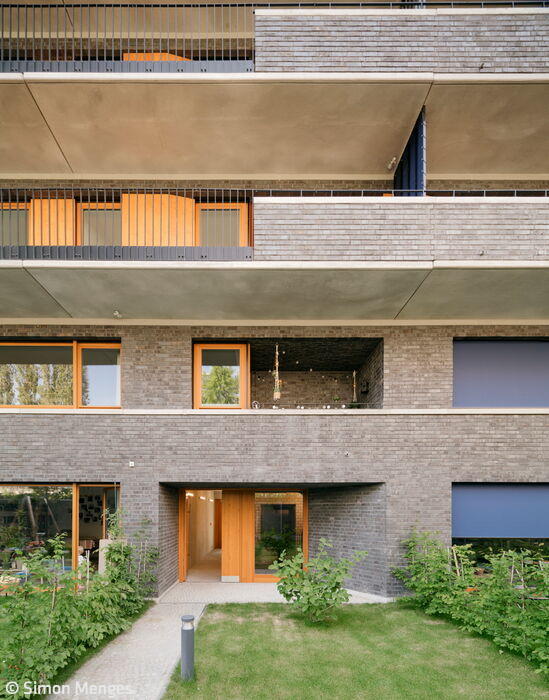
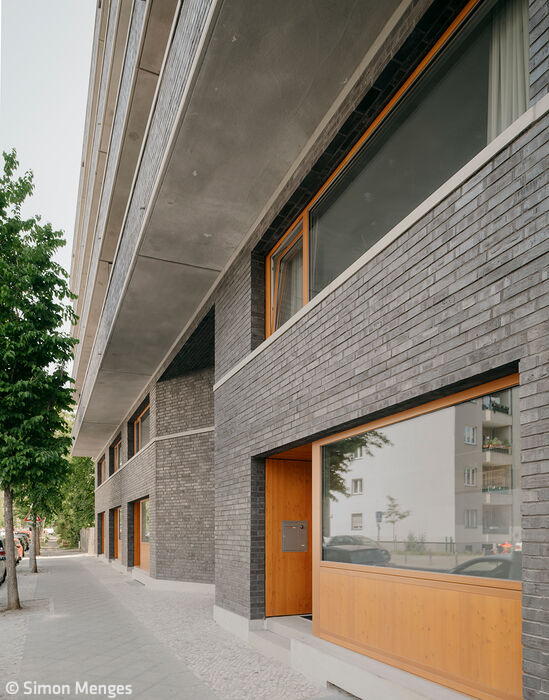
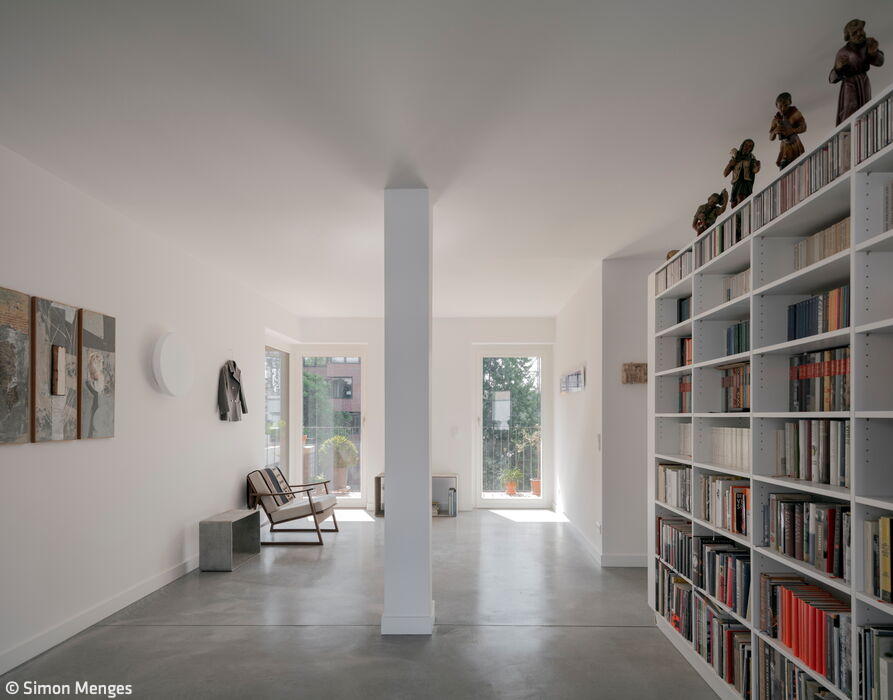


Standing near the landmark Schöneberg Gasometer of 1913, a vacant lot remained undeveloped for decades following World War II, persisting through all the years of reunification. On this narrow 22-metre-deep plot between Ebersstraße and the S-Bahn railway line, a striking long, slender residential building finally rose after more than half a century, completing its construction in 2021.
The architects kleyer.koblitz.letzel.freivogel (kklf) were commissioned directly by the developer with considerable creative freedom. The slender structure—13 metres deep and 55 metres long—completes the urban block edge, fronting Ebersstraße and aligning seamlessly with its southern neighbor at the same roofline height. Named "Schönebers" after its district, the building sits directly across from the so-called "Rote Insel," with the striking gasometer serving as a landmark visible across western Berlin.
Albertstraße leads directly toward the building from the busy Hauptstraße thoroughfare. The elongated form distinguishes itself through its emphatic horizontal articulation, creating a distinct contrast with the surrounding Wilhelminian-era structures. The Berlin roofline crowns the building's facade, providing a powerful sculptural finish.
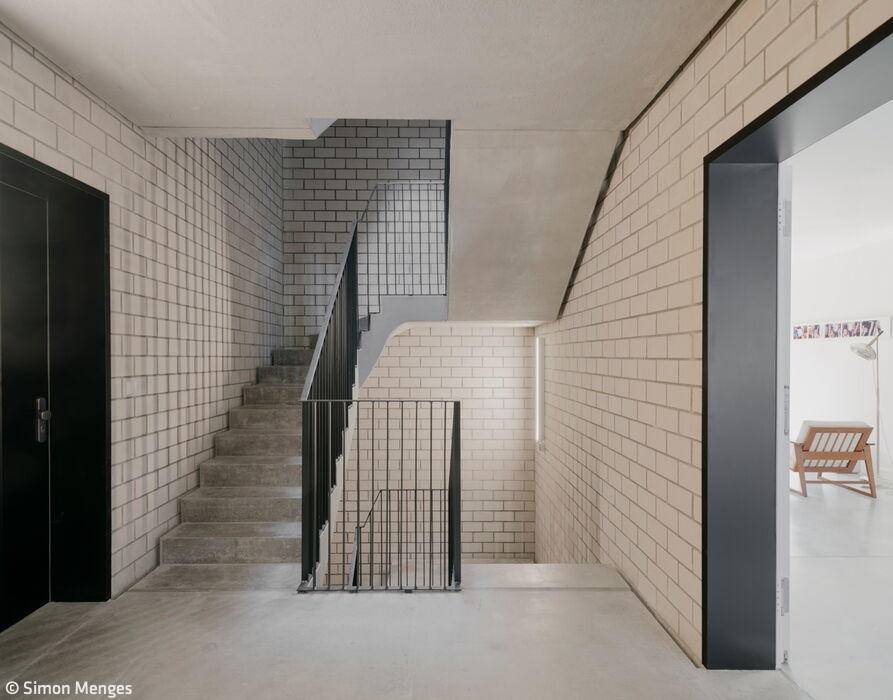
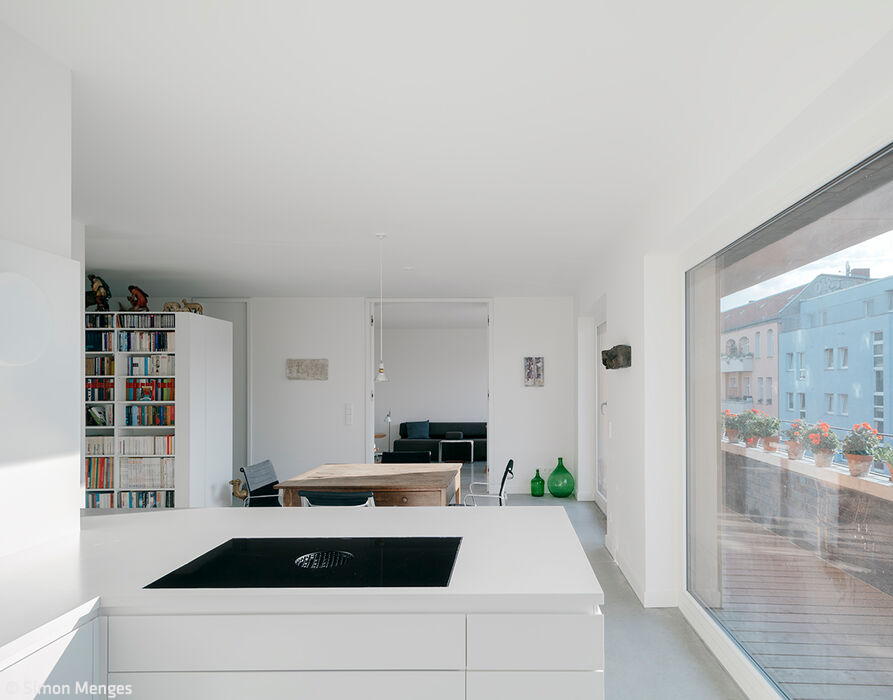
The clinker façade is equally unconventional for this location, yet integrates seamlessly with its surroundings. Facing the railway tracks at the rear, a narrow strip of grass provides outdoor space for ground-floor residents. The building ingeniously combines two residential typologies: the first two floors feature eight self-contained townhouses, each accessed from the street with its own garden plot behind. Above these rise four additional stories containing 20 apartments with generous balconies on both front and rear elevations, served by two stairwells. Apartment sizes and layouts vary—residents could tailor their spaces to suit their needs. The building encompasses 3,800 m² of usable floor area. Dark clinker masonry is articulated by delicate horizontal concrete cornices, while the fully clad gable façades enhance the structure's sculptural presence. These horizontal bands continue throughout, creating visual rhythm. The building's crowning balconies feature solid balustrades at the front, transitioning to open bar railings at the rear—carefully designed to frame views of the east façade, which alternates between clinker brick and wood-paneled surfaces.
Photos:
Simon Menges
www.divisare.com
(Published in CUBE Berlin 02|24)
Jona's House
An unassuming, purposeful timber-frame residence designed to house two groups of five children each
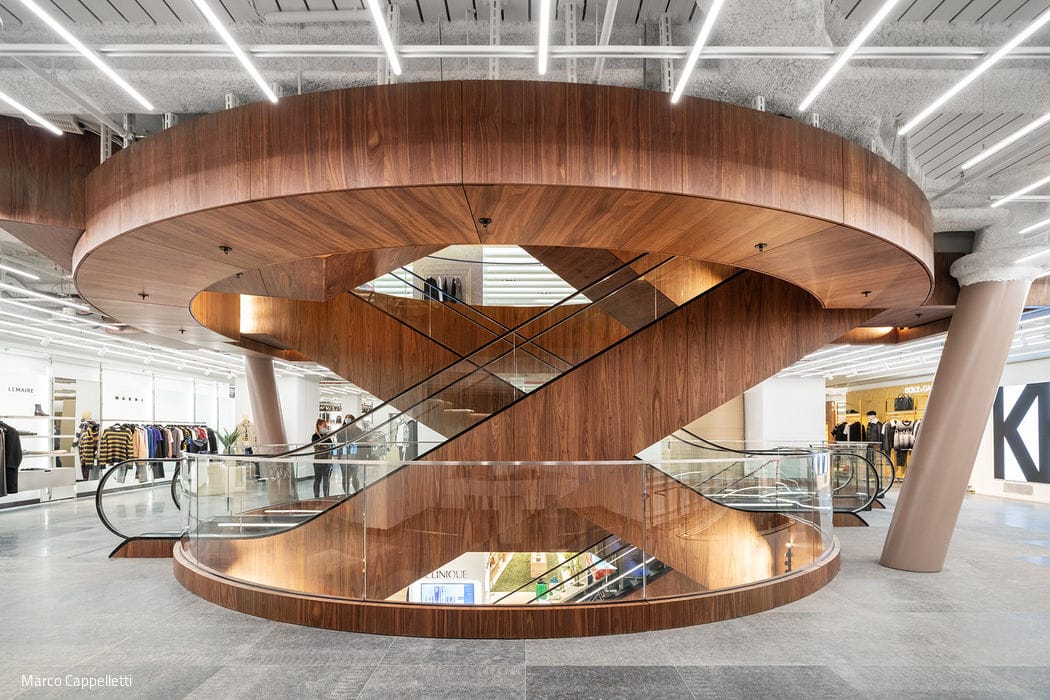
Vertigo
KaDeWe's Vertigo-Inducing Escalators Transform the Department Store
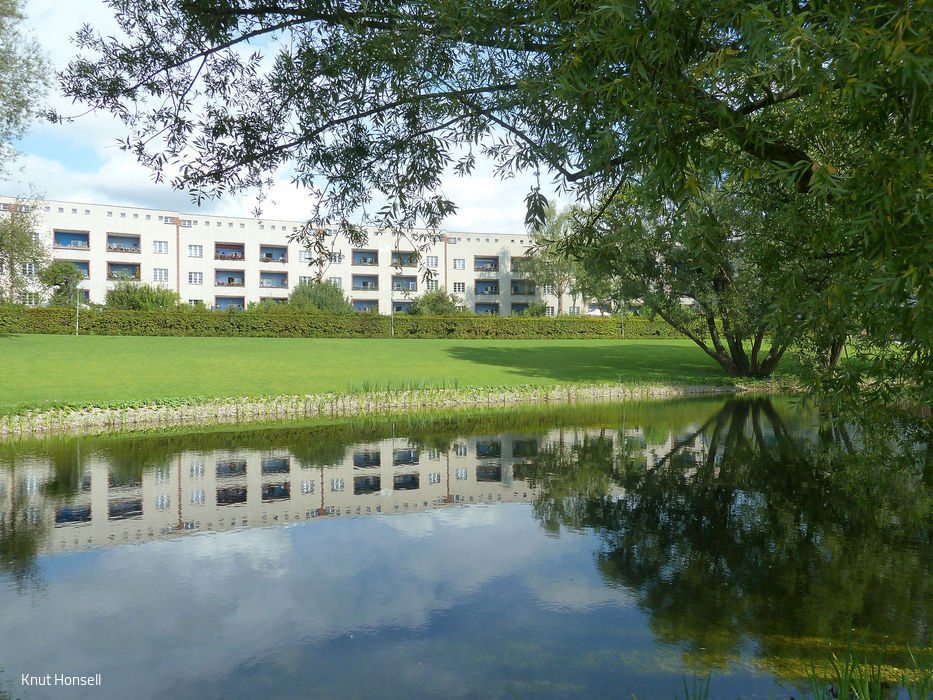
Hufeisensiedlung Garden Monument
Green spaces now protected as an ensemble

Reaching New Heights? That's the Question Here
Do Berlin and Munich Need High-Rises? Weighing the Arguments with Matthias Sauerbruch