


Building Blocks Coming Together
A Bonn daycare centre that impresses with thoughtful, context-responsive design—achieved through modular principles.
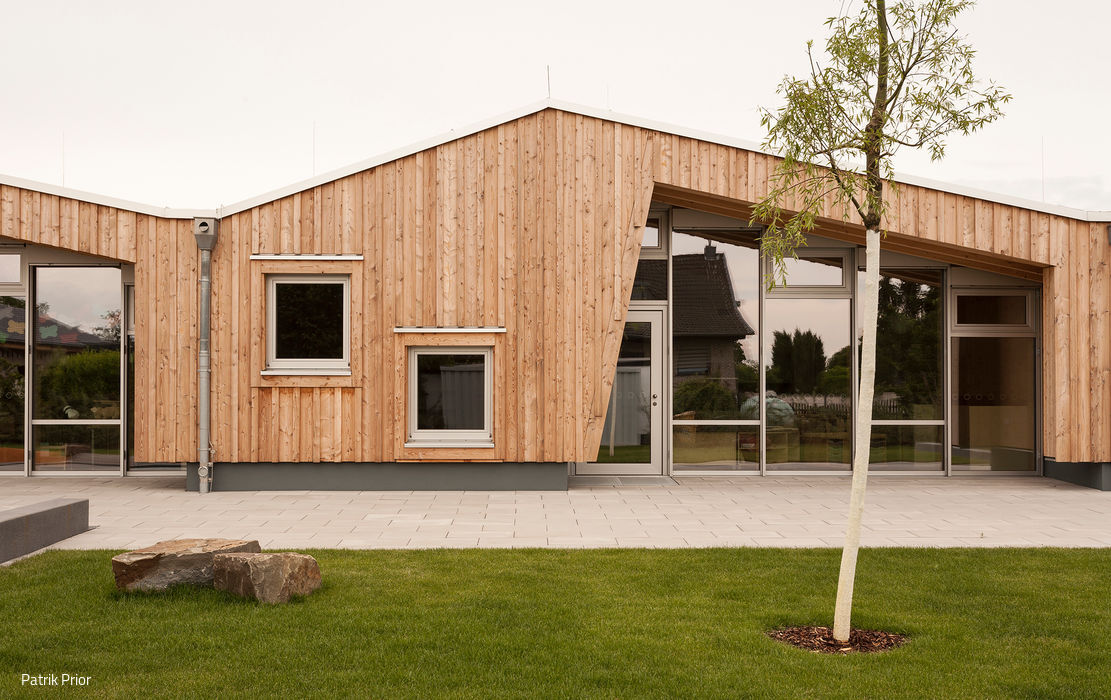


One of Germany's federal capital's largest new residential districts stretches across northern Bonn-Beuel. On the periphery of this development, architects designed a new four-group daycare centre, the Rheindampfer, on a previously undeveloped site. Developed by Cologne-based rheintreuearchitekten using prefabricated timber construction, the building impresses on multiple fronts—not least for its high degree of prefabrication, which significantly accelerated construction timelines. The building's structure mirrors its internal organization, with each group housed separately. The result harmonizes gracefully with the surrounding residential fabric and landscape.
The design strategy centred on a modular system with standardized spatial configurations—enabling the city to expand childcare capacity with flexibility and speed. This modularity became the architectural signature. Group spaces are arranged "back to back" within individual pavilions, their sawtooth roofs stacked like composite building blocks to form a unified composition. Rhythmically repeated gabled volumes, clad in untreated larch timber, echo the scale and grain of the surrounding single-family neighbourhoods—a thoughtful dialogue between institution and context.
At the heart lies a generous play corridor: it serves as a connecting spine linking the individual group and activity spaces while providing ample room for shared play across groups. The group rooms are bright and welcoming. Expansive glazed sections and strategically placed, staggered windows flood the spaces with natural light. Suspended ceilings were deliberately omitted in favor of a warm, open atmosphere created by the interplay of plaster, wood, and linoleum. Direct access from the group rooms leads to a partially covered outdoor terrace. Playable walls and modeled fall-protection surfaces bridge the grade changes down to the sand play areas below, which feature wooden play structures scaled for various age groups. Grassy areas dotted with shrubs and specimen trees provide additional play zones. Sustainability was paramount throughout—from energy systems to material selection. All materials are sorted by type and fully recyclable. The building forgoes fossil fuel heating in favor of a heat pump system paired with underfloor heating and a heat recovery ventilation system.
Photography Credits:
Patrik Prior
(Published in Frankfurt 01|22)

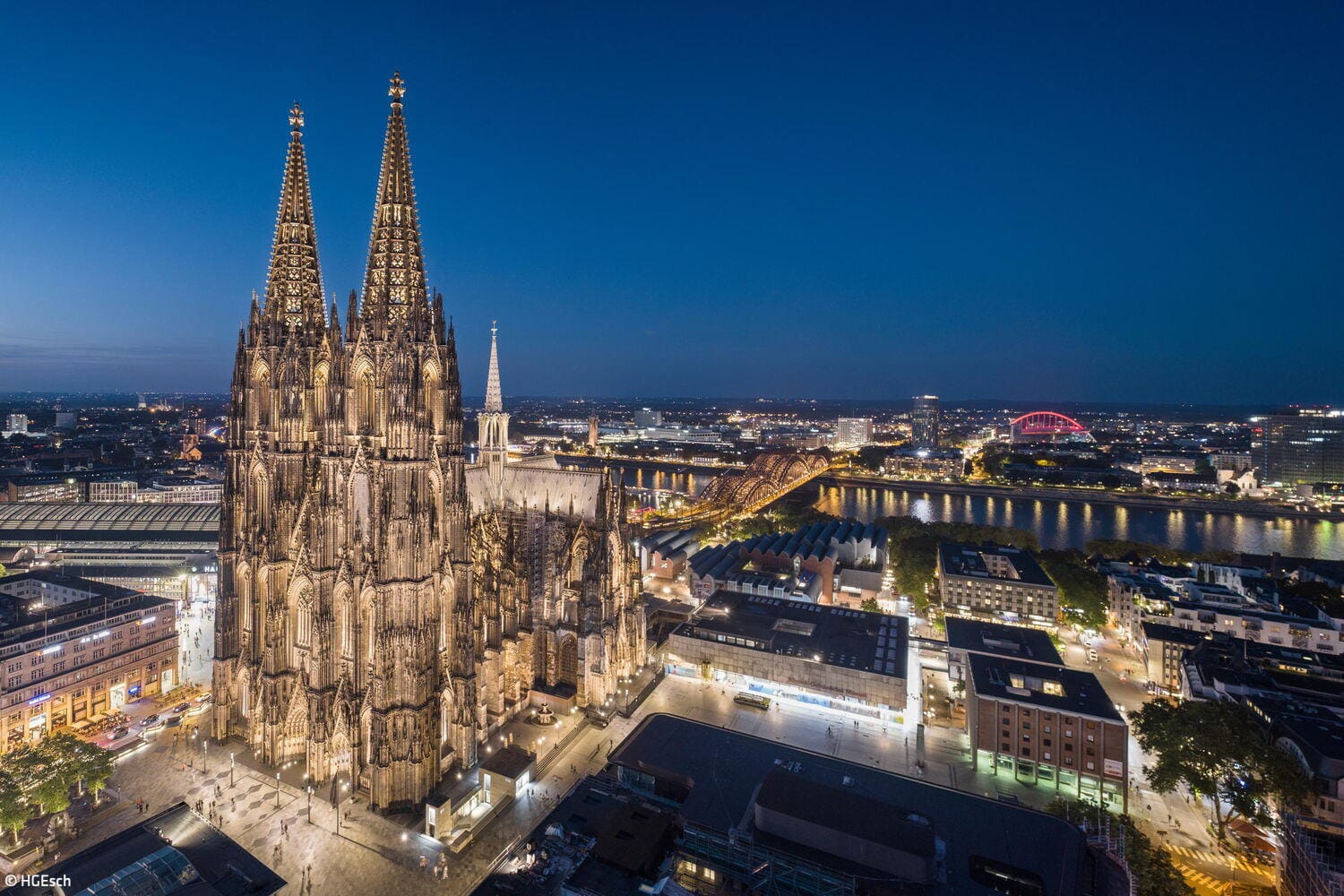
Sculptural and Striking
New lighting concept at Cologne Cathedral reduces energy consumption and light pollution
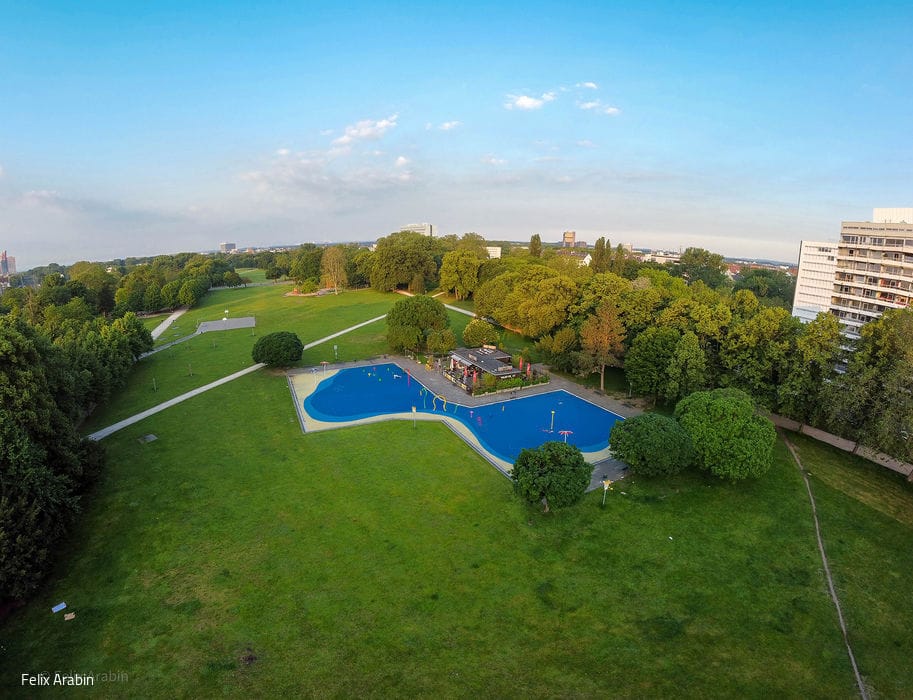
Water Fun at the TV Tower
The new water playground in the Inner Green Belt: sustainable design, multiple purposes.
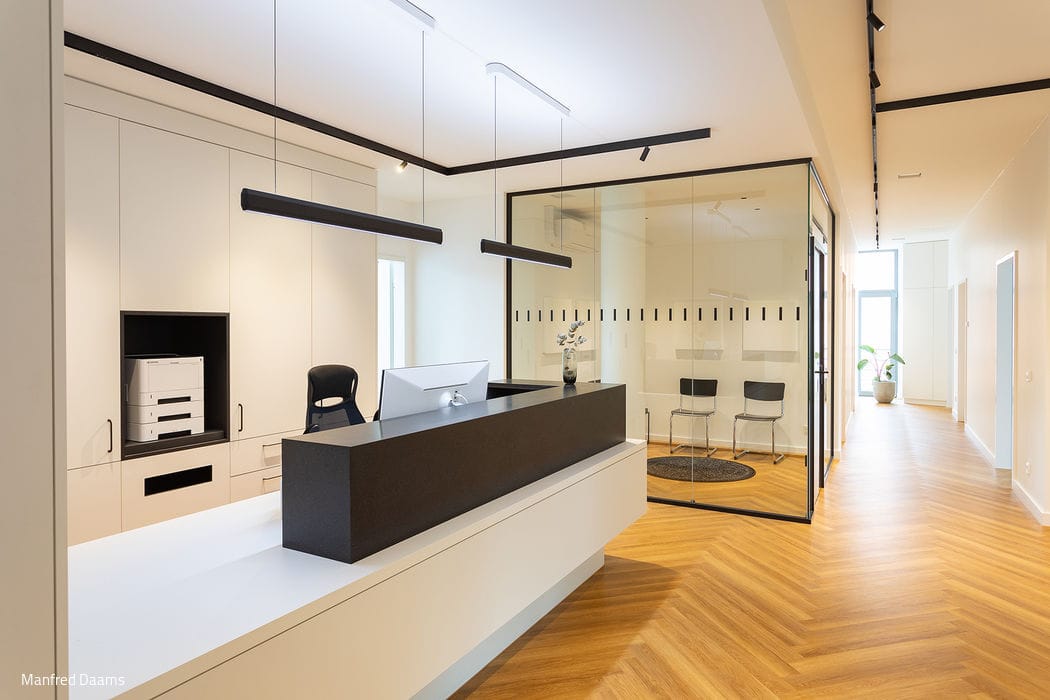
Comfortable and Clear
A urology and andrology practice in Hürth where aesthetic design and patient well-being go hand in hand
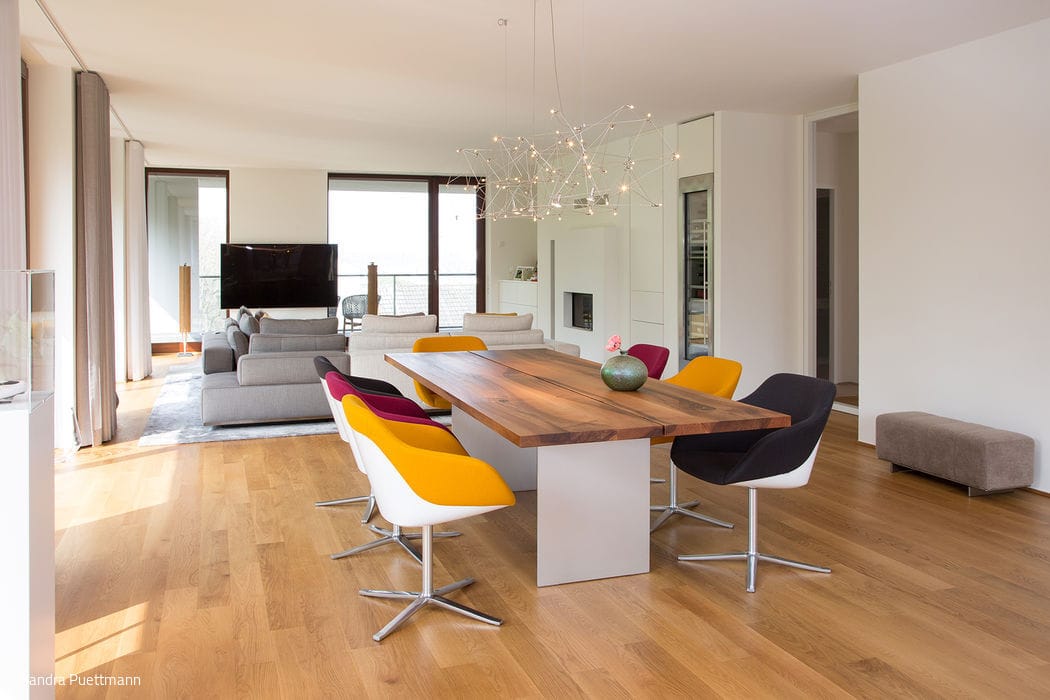
Creating Space for Personal Style
Thoughtfully Refreshed with Custom Built-Ins, Strategic Lighting, and Meticulous Attention to Detail