


The Kidney Table Gets a Modern Makeover
1950s Design Meets Contemporary Function
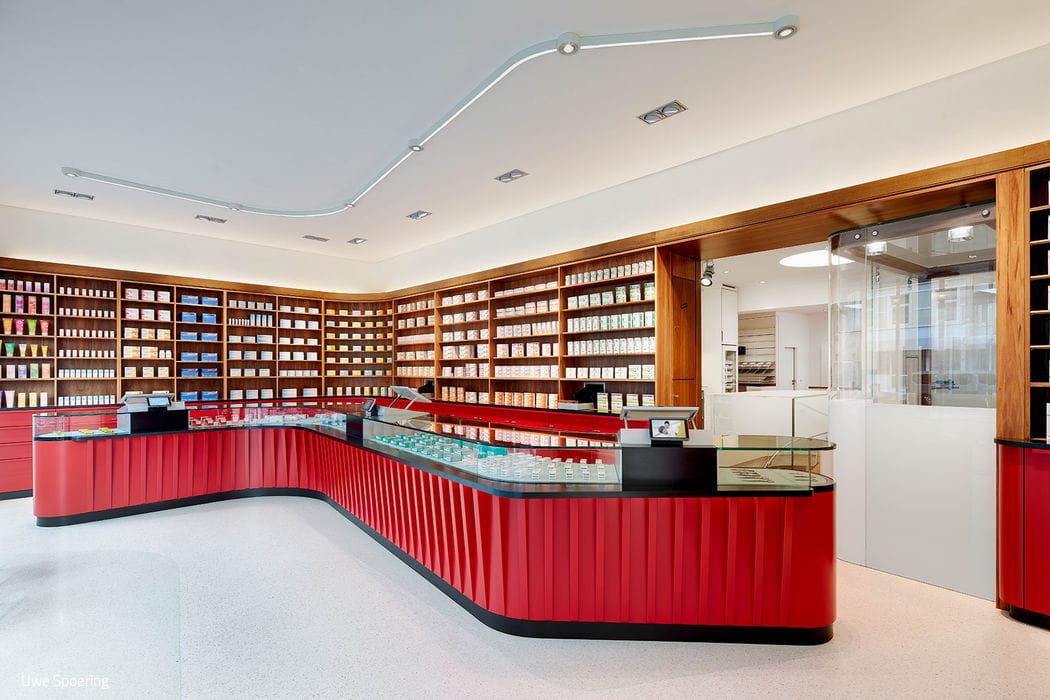
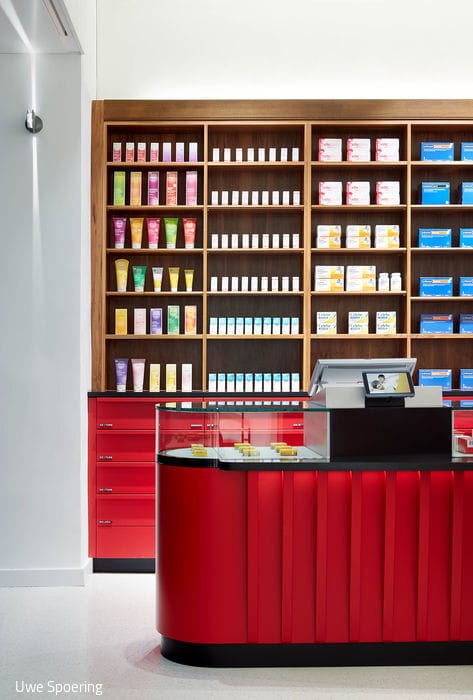
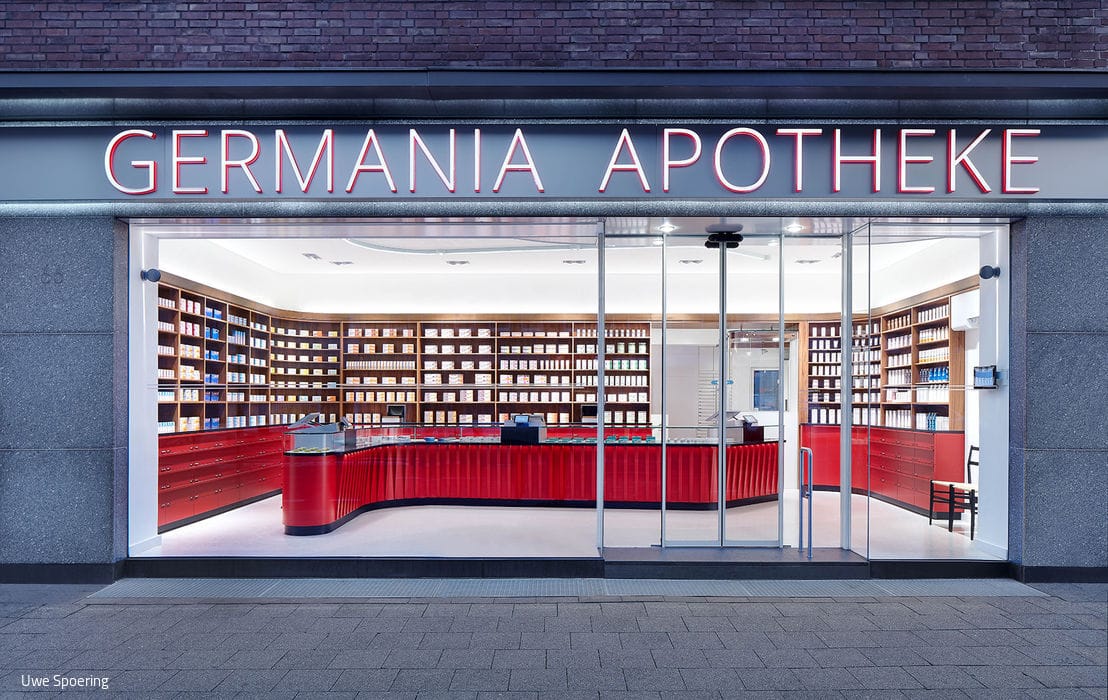
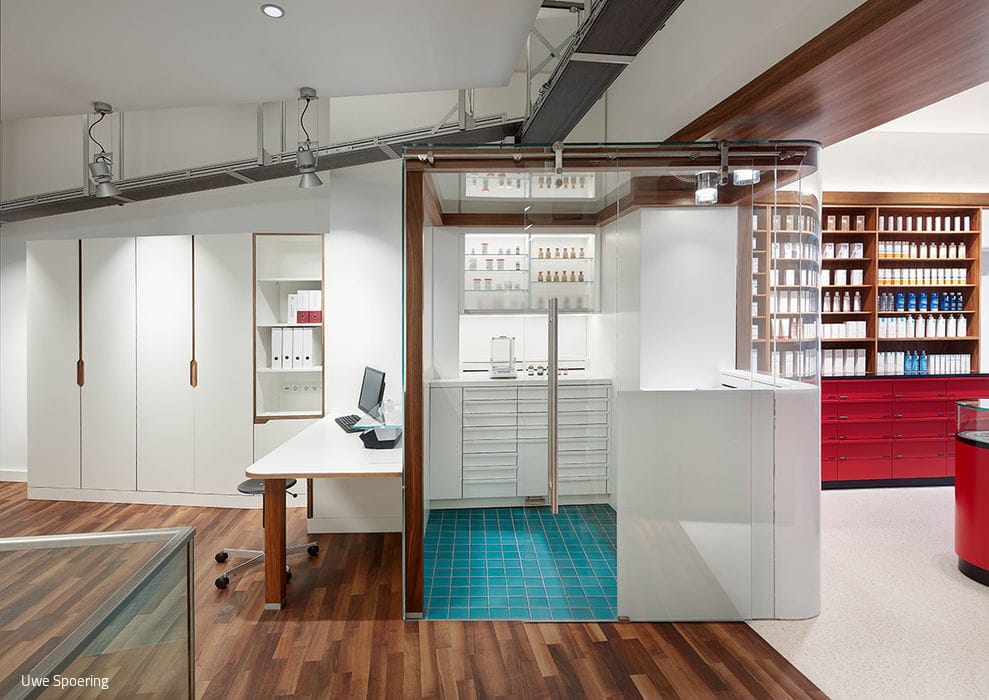
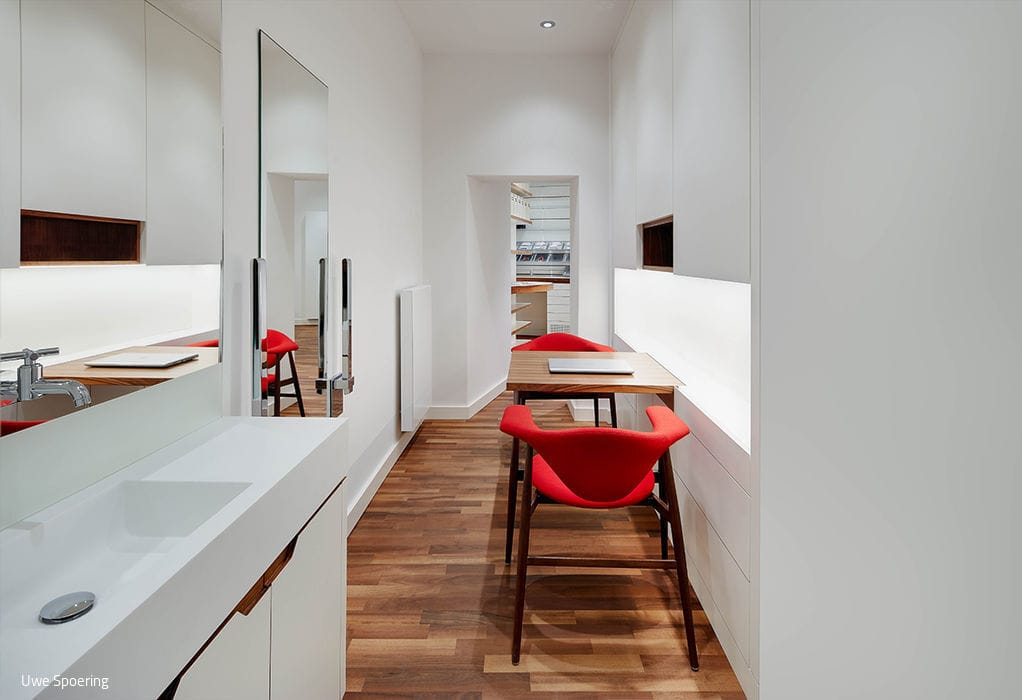
A local pharmacy needed a comprehensive renovation to meet modern standards while preserving its character. The sales area, furnished in warm walnut tones, exuded a neat 1950s aesthetic. Yet years of piecemeal upgrades to the sales counter—clumsy adaptations for new payment systems and hastily added halogen lighting—had disrupted that original charm. Situated on a busy street, the space needed visual presence. Klaus Bürger Architektur, leading the renovation, introduced a striking carmine red. Rather than abandon the vintage appeal, the design team reimagined the original counter's 1950s silhouette while increasing checkout stations from two to three.
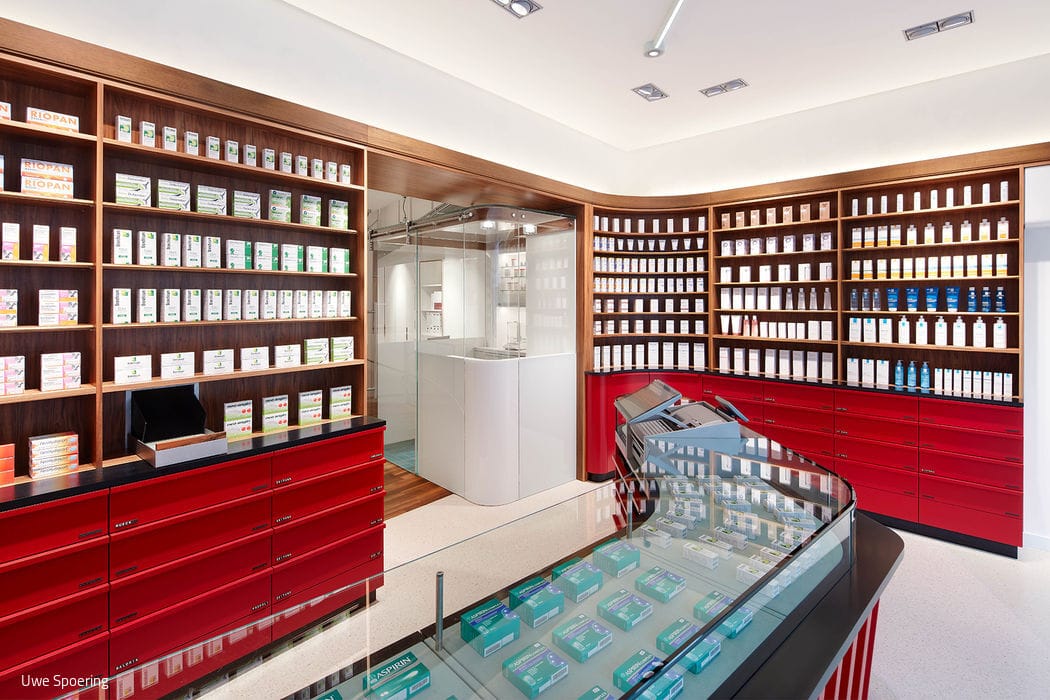
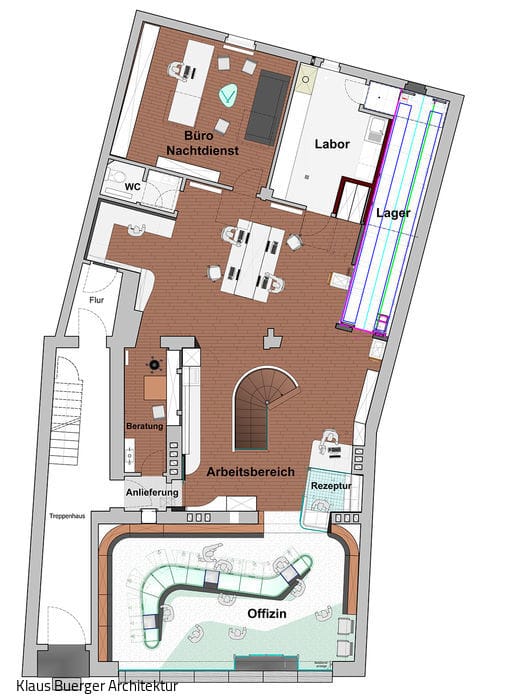
The public area spans just 41 m², but product displays and shelving consume nearly half that space, leaving only 25 m² for customers. With expansion impossible, the architects faced a puzzle: how to arrange three checkouts so queues wouldn't collide, block the entrance, or compromise privacy. Drawing inspiration from the iconic kidney-shaped tables and organic curves of the 1950s, they created a sculptural counter with elegant slatted surfaces that naturally guides customers away from the entrance as they enter. A custom LED line mounted on the ceiling traces the counter's flowing path, unifying the design.
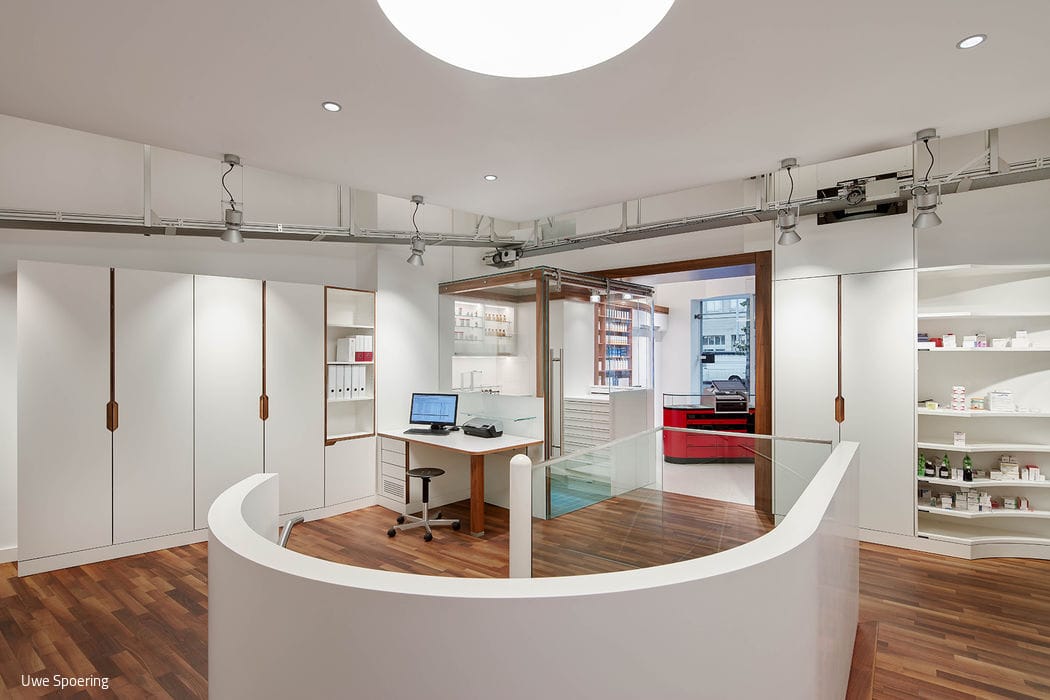
The architects also addressed years of makeshift modifications that no longer met standards. The prescription workstation was outdated and cramped; the display cabinet lacked functionality; worn beech flooring and scattered workstations created visual chaos. The upper walnut display was carefully preserved and restored, now complemented by two automated dispensing units below. Bold carmine red drawers reinforce the new aesthetic. A curved glass partition now separates the prescription area—allowing customers to observe traditional pharmacy craftsmanship as medications are carefully prepared. New walnut floorboards replaced the tired parquet, creating visual continuity throughout the space.
The storage area's centerpiece is an impressive 8-metre robotic system. Since ceiling-mounted installation wasn't feasible, the conveyor belts were left expressively visible—preserving the dramatic 3.4-metre ceiling height rather than compromising it with a drop ceiling. Strategically placed lighting emphasizes the industrial elements while ensuring even illumination throughout the space.
Photography Credits:
Uwe Spoering
www.uwespoering.de
(From CUBE Cologne Bonn, Issue 03|20)

Striking Complement
A 1934 residence in south Bonn receives a thoughtful renovation and expansion.
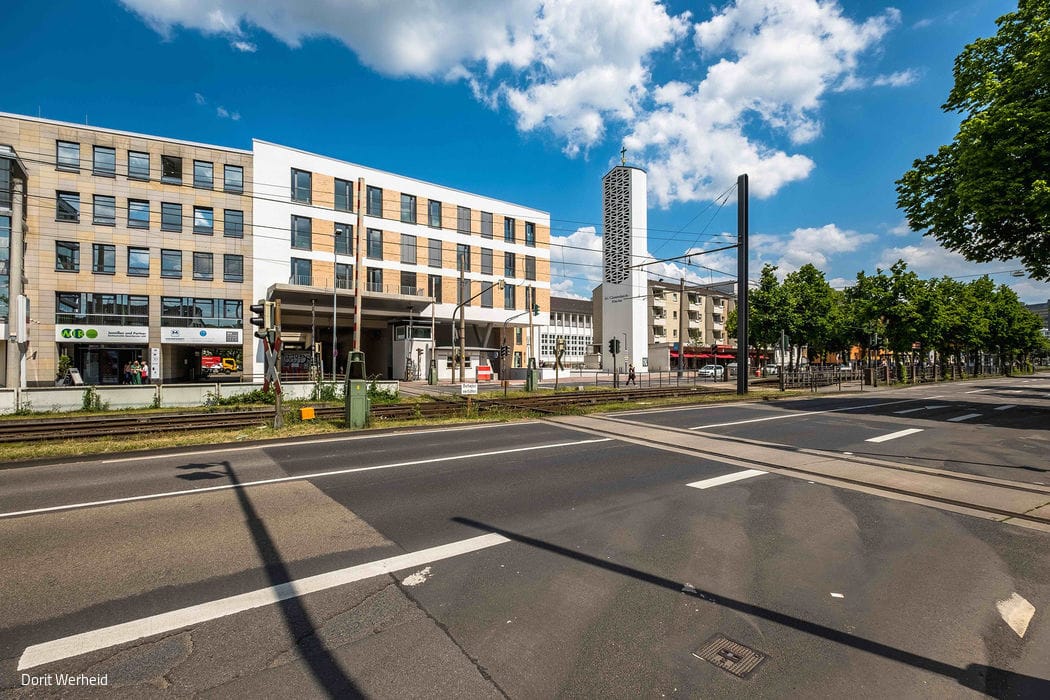
Between Track and Bell Tower
Building Over the Tracks Brings Life to Lindenthal
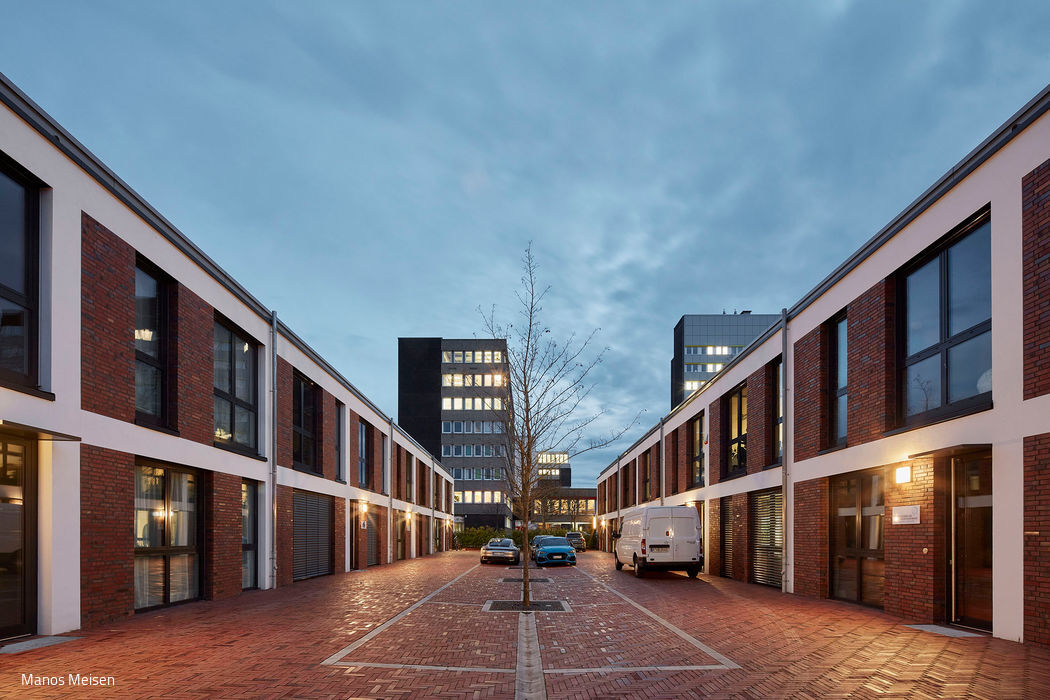
Office Lofts in Braunsfeld
Twin Buildings Create a Calm Haven for Creative Work
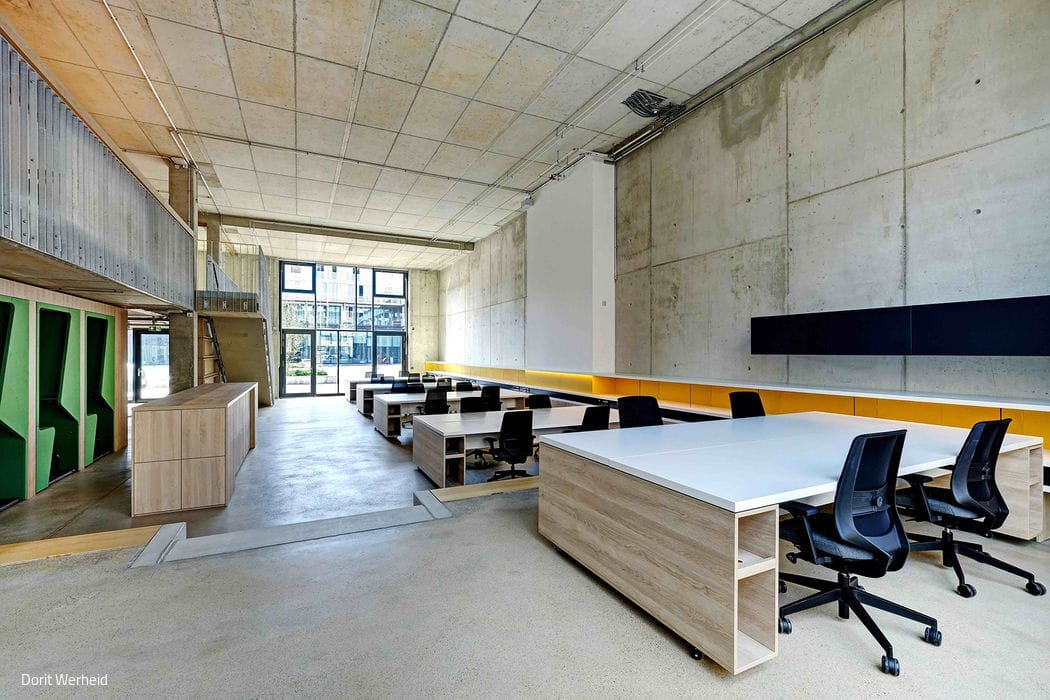
Agile Coworking
A coworking space accommodates diverse usage patterns