


Journeys into Art
A former barn in the countryside transformed into a cutting-edge gallery
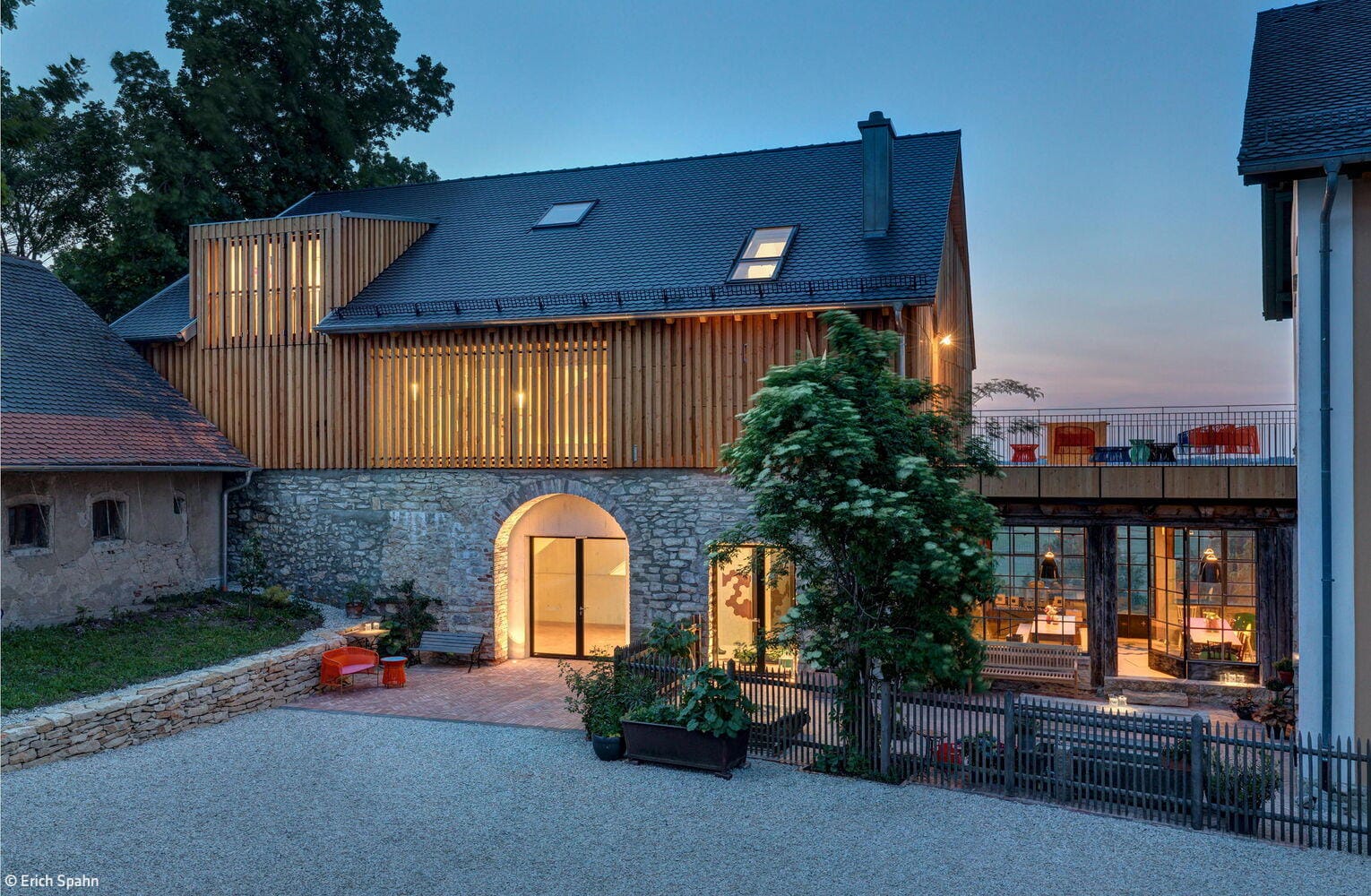
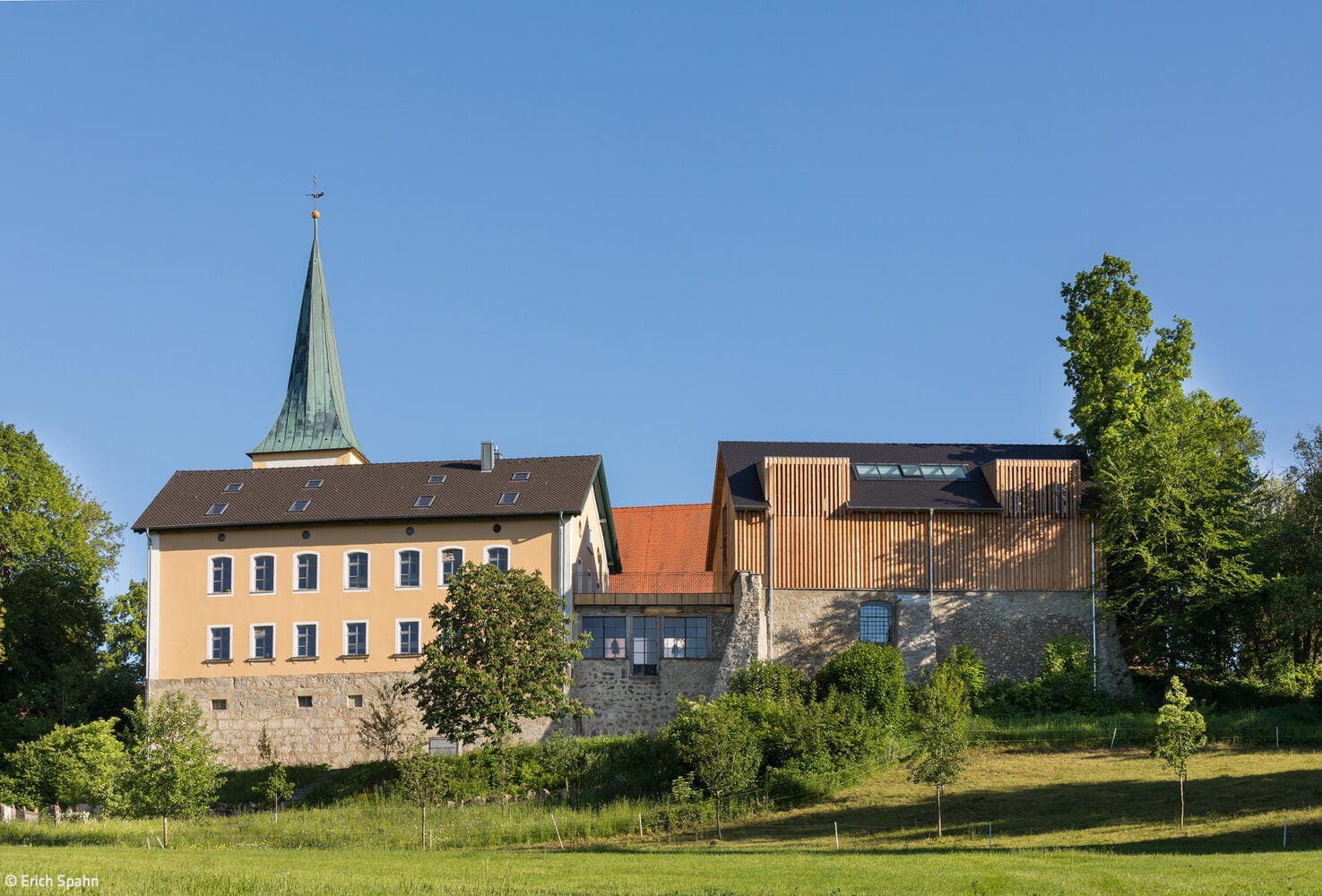

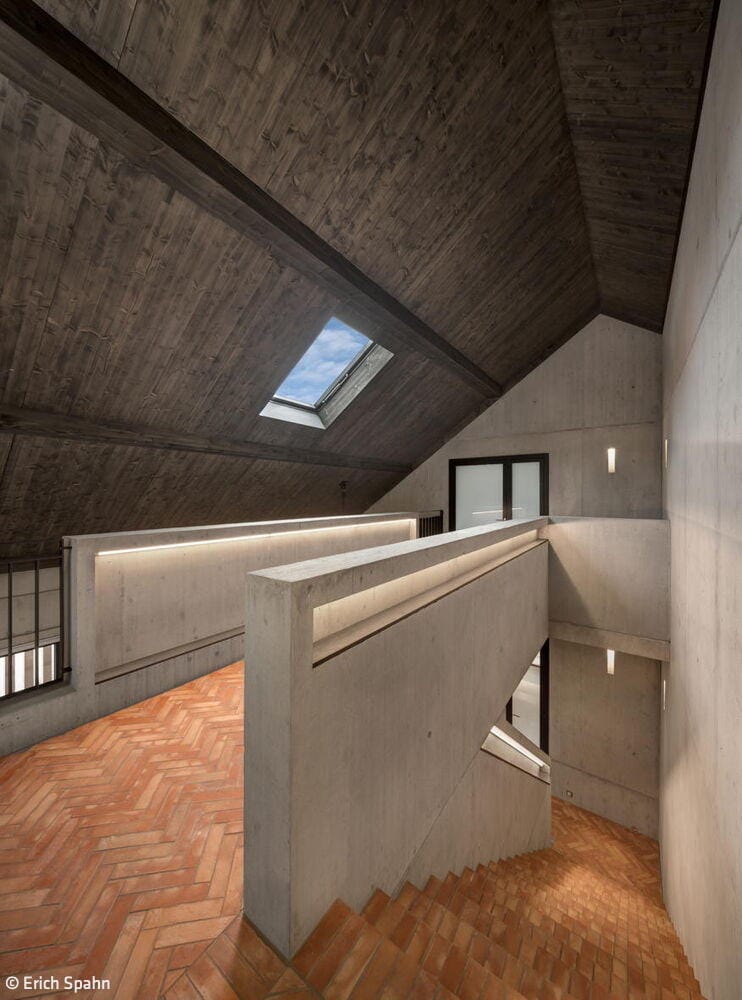

To those in the know within international art circles, it may have seemed like a step backward when renowned gallerist Michael Zink retreated to the countryside of the Upper Palatinate in 2019, after 25 years of success in Munich, New York, and Berlin. Yet his vision was precisely the opposite: he aimed to nurture emerging artists while encouraging collectors and art enthusiasts to seek out art firsthand—rather than having it handed to them on a silver platter at the world's established art capitals. For this, he needed space. He enlisted art-collecting architects Atelier Dimanche from Switzerland to reimagine a nearly derelict barn adjacent to his residence, transforming it into a state-of-the-art gallery.
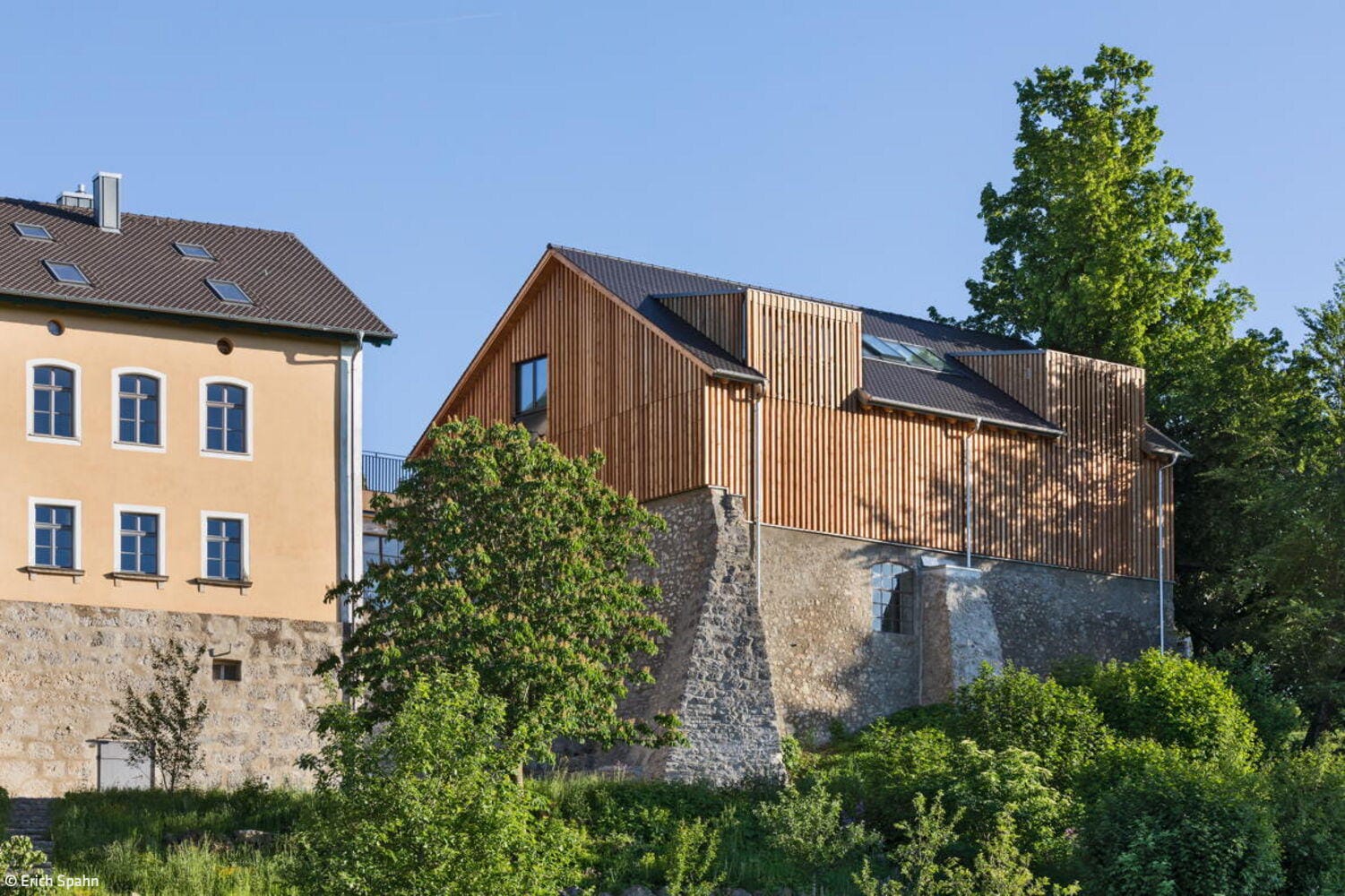
Zink's gamble paid off. His new gallery, nestled in the idyllic village of Waldkirchen, has become a destination for art devotees. Those unable to visit in person browse online—a shift that mirrors the broader transformation of the art market itself. Zink capitalized on a growing movement to establish art and culture beyond major urban centers, much like the success of concert venues in Blaibach and Neumarkt. Young architects Tamara Henry and Mathieu Robitaille of Atelier Dimanche achieved a masterwork that marked a defining moment for their practice. The barn had been substantially deteriorated; only its robust stone foundation walls from 1896 could be salvaged. Historic preservation requirements demanded that the original floor area of just under 270 m² be maintained. They conceived a house within a house, ingeniously accommodating storage, utility, and technical spaces alongside a foyer. Above sits the exhibition gallery, with a studio and artist residency tucked into the uppermost floor.
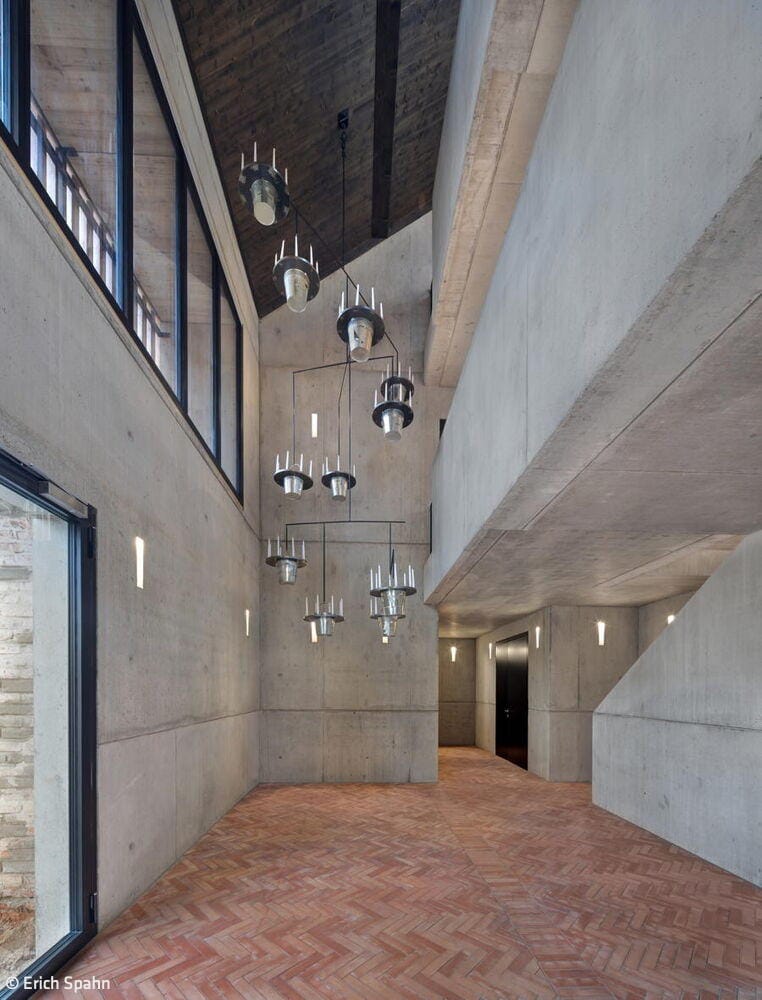
Atelier Dimanche addressed this complexity through exposed concrete construction and a two-meter roof extension. The entrance features a rounded arch built from reclaimed stones. Salvaged bricks were laid in herringbone pattern across both interior and exterior floors. Upon arrival, visitors enter a soaring ten-meter atrium with unobstructed sightlines to the pitched roof. Artist Dirk Zoete designed a bespoke suspended light installation titled "Chandelier" for this space. A central zigzag concrete staircase provides access to the upper levels. The exhibition hall itself features generous glazing that frames the surrounding pastoral landscape. The U-shaped gallery is subdivided into three zones: a seven-by-seven-meter central wall anchoring the space, with the two wings operating as flexible exhibition cabinets—together forming a 120 m² exhibition area. The studio and artist apartment sit at the roof ridge like dormers, offering artists a unique vantage point: a direct view down into the exhibition below, their work constantly in view. A pilgrimage to this arts destination is well worth the journey.
Photos:
Erich Spahn
www.erich-spahn.de
(Published in CUBE Munich 04|24)
Maison Miroir
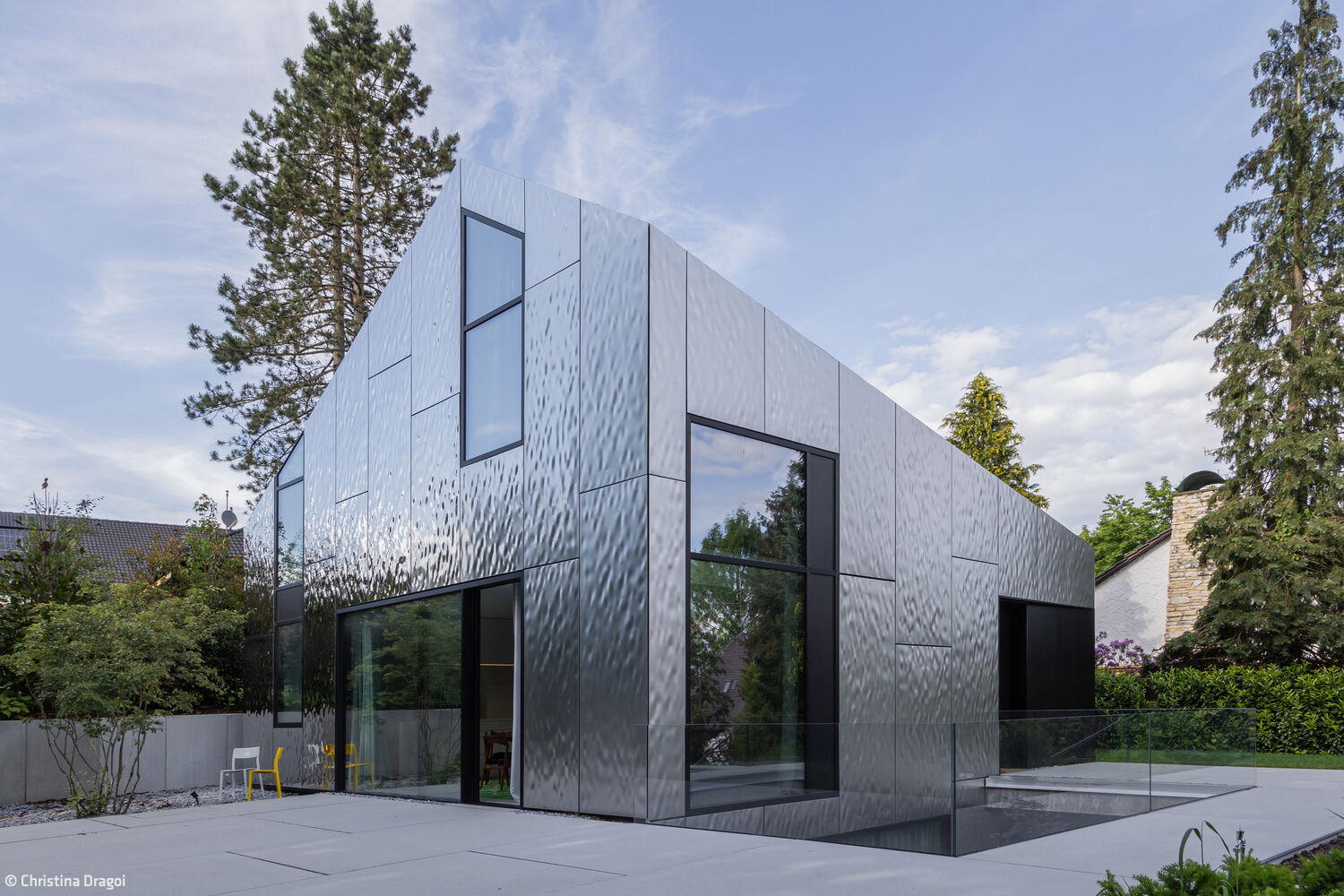
A house in metal: reflections of nature
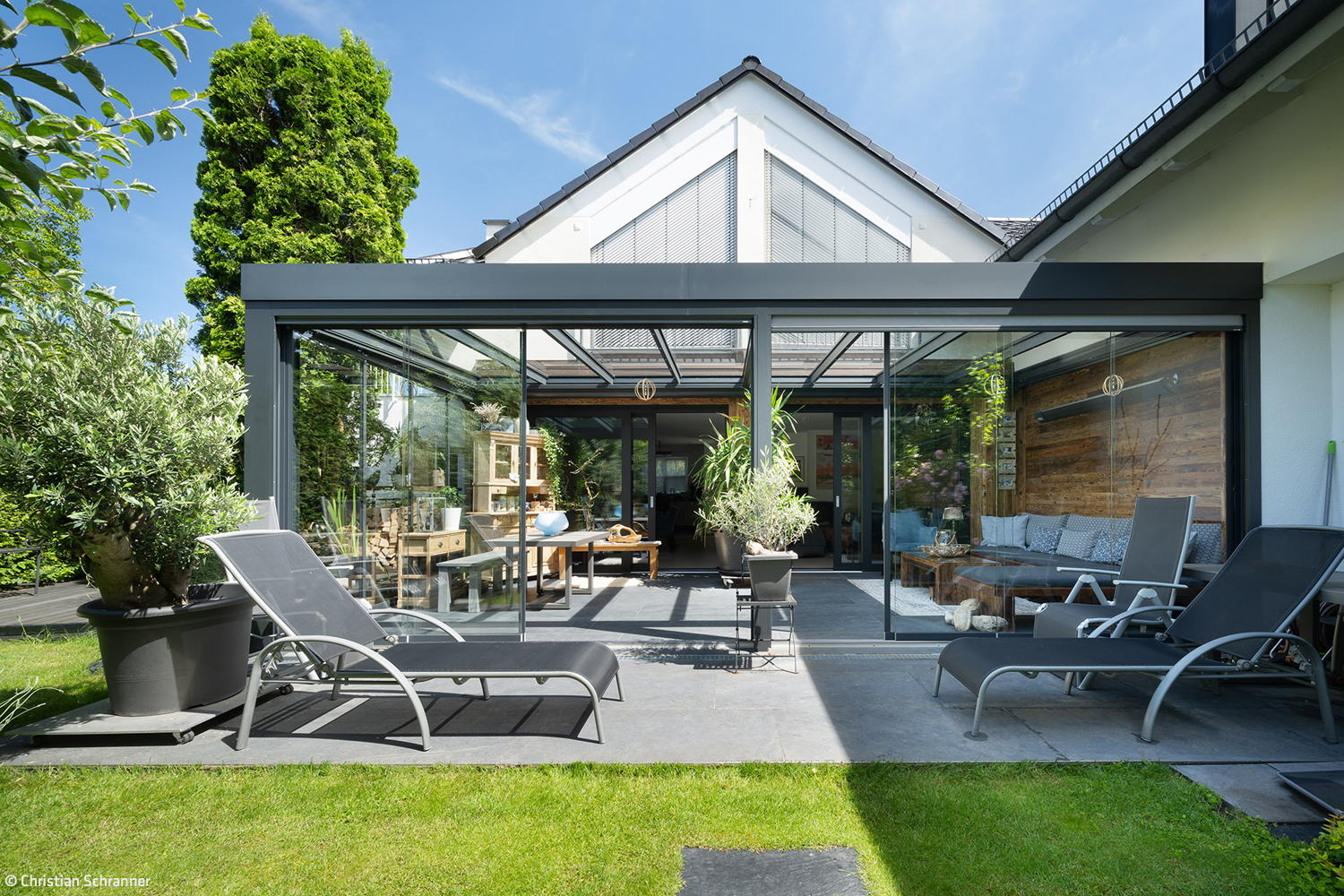
Light-Filled Oasis
A glass pavilion by Weiß & Weiß transforms your living space with elegant extension and openness
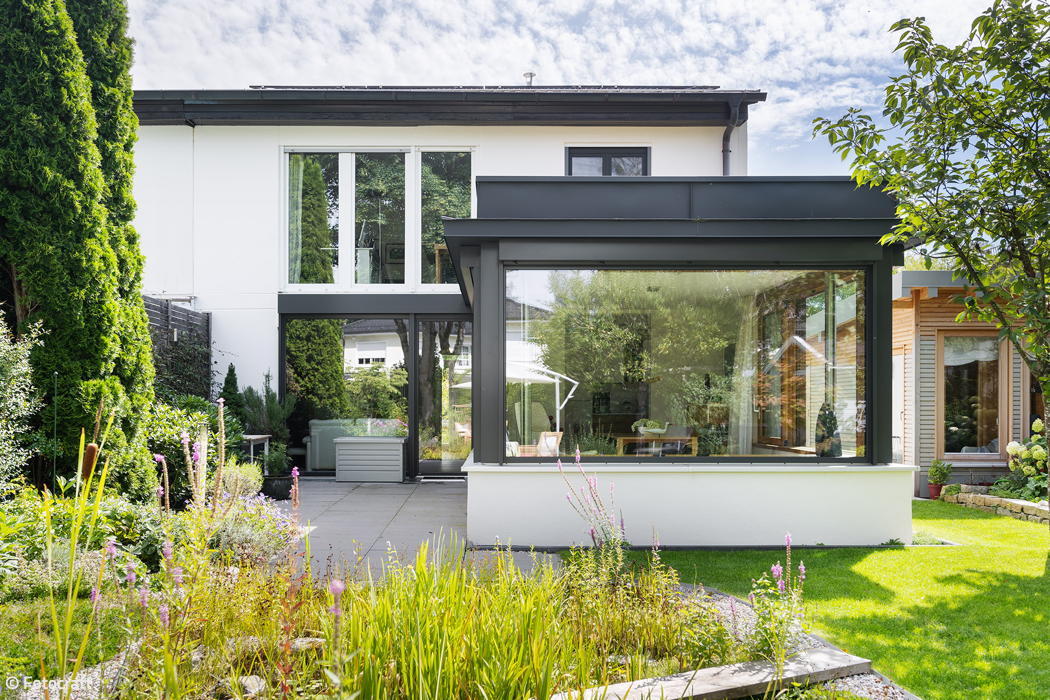
With Green Roof
A Flat-Roof Extension That Delivers on Every Detail
Caribbean Spirit
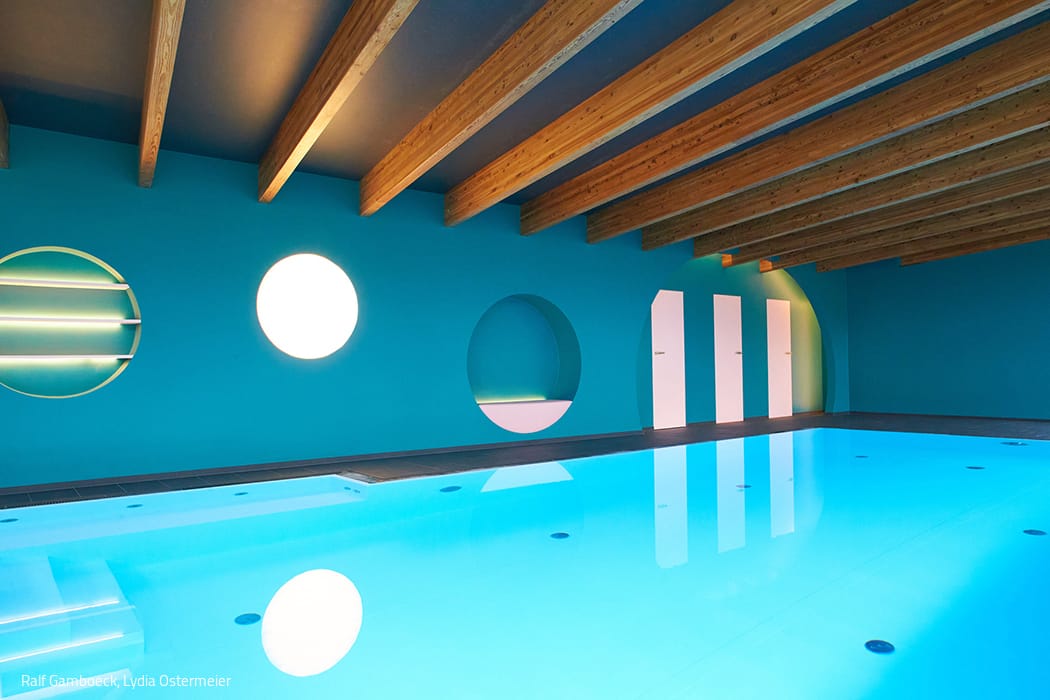
A swimming pool with spa—where exotic color and spirited elegance converge.