


Space for six
A residential home in Kalkum makes intelligent use of a narrow building envelope


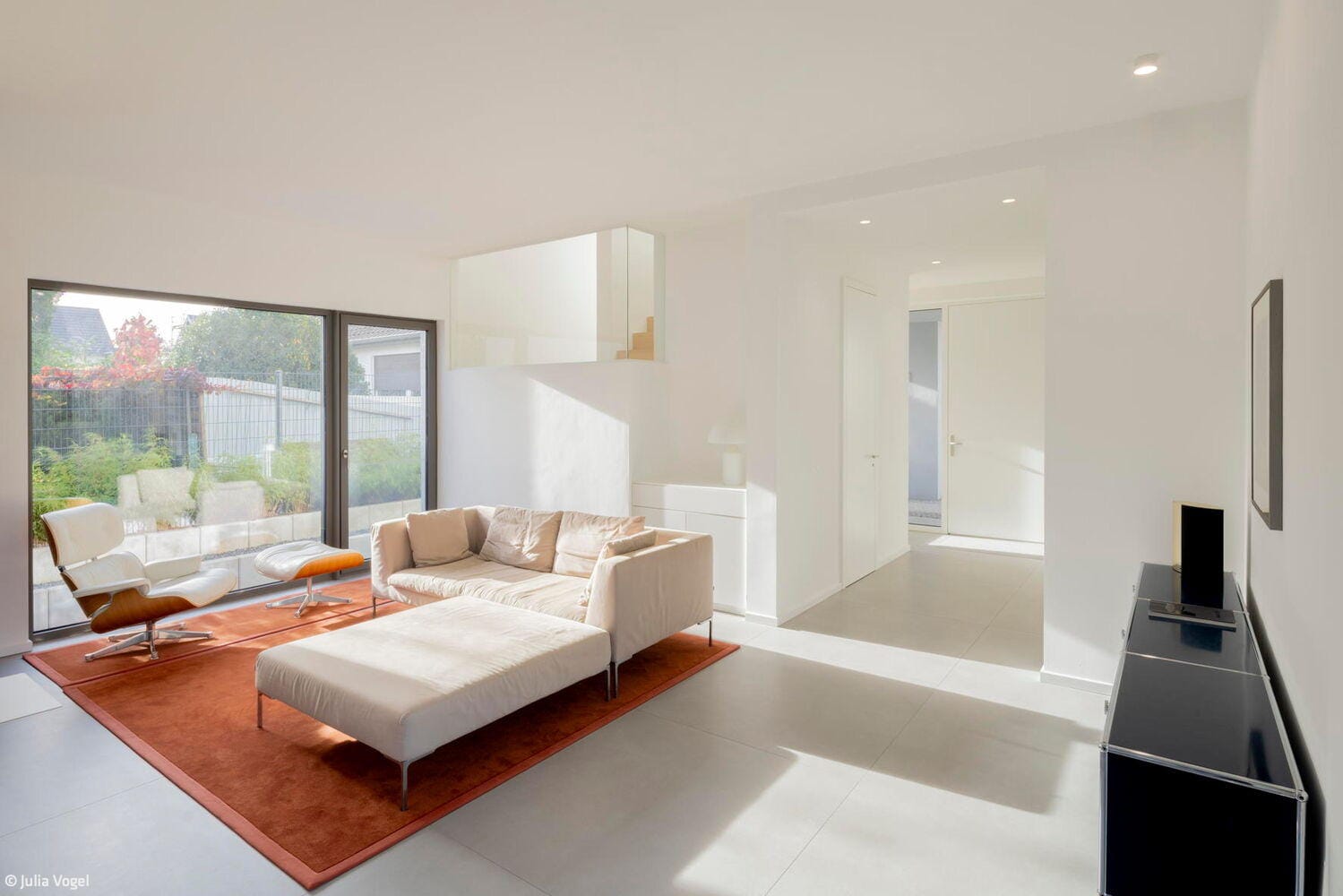


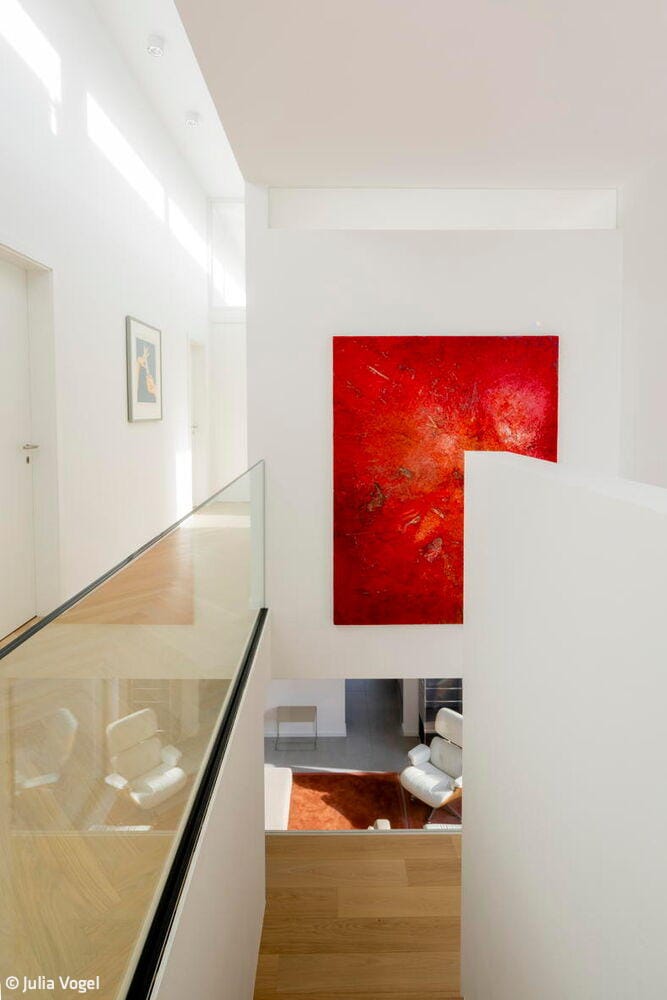


This project presented a dual challenge: the property, situated behind an idyllic gabled house in a secondary location on a village street in Kalkum, was difficult to access and comparatively narrow. Initially, Ricardo Ferreira | Architecture and Design Studio from Meerbusch was commissioned by the landowner to develop the site and clarify building rights. Subsequently, the follow-up commission came from the property buyers, who desired a residential home here—complete with no fewer than four children's bedrooms, a study, and a small guest apartment in the basement. To accommodate this comprehensive program on such constrained ground, an elongated building volume emerged that creates quality living space within tight spatial constraints.
The setback lines of the neighboring building and site access dictated a building envelope that was longer than it was wide—which was fully utilized. The upper story cantilevers expressively at the entry façade, creating an overhang that connects the building with the garage. The length is primarily determined by four identically-sized children's bedrooms, which line up along a central corridor and are separated from one another solely by floor-to-ceiling cabinetry due to space constraints. Adjoining this configuration on the southern gable end is a children's bathroom, while the master suite to the north features a compact program consisting of bedroom, master bath, and dressing room with floor-to-ceiling windows opening toward the garden. On the opposite side of the central corridor, which receives natural light through clerestory windows, sits a small study—and the staircase, arranged in a U-shape with a half-landing, descends to the ground floor. The living area flows fluidly through the depth of the building. Beginning from a small entry with coat closet and guest restroom, an open living area unfolds, oriented toward expansive floor-to-ceiling glazing on one side. Further toward the garden, the dining area and kitchen—partially separated by a freestanding dividing wall—open up through generous glass fronts. Both spaces access a perimeter terrace through sliding elements, which transitions into the small garden. The reduced interior aesthetic is defined by white plaster surfaces, doors, and built-ins, complemented by polished concrete flooring on the ground floor and herringbone parquet on the upper floor, depending on the story. In the basement, the fully-excavated building houses storage and mechanical rooms, a small sauna, and room for a guest apartment. A lateral cutaway provides daylight to this apartment, which is accessible via a separate staircase from the garden. What cannot be seen in the house today is the adventure of construction: the entire basement had to be built completely without a crane until backfilling could commence—and even the temporary power connection couldn't be arranged conventionally through the municipal utility company; all work had to be completed using a mobile power generator.
Photos:
Julia Vogel
www.juliavogelfotografie.de
(Published in CUBE Düsseldorf 01|26)

Historic Walls Reimagined
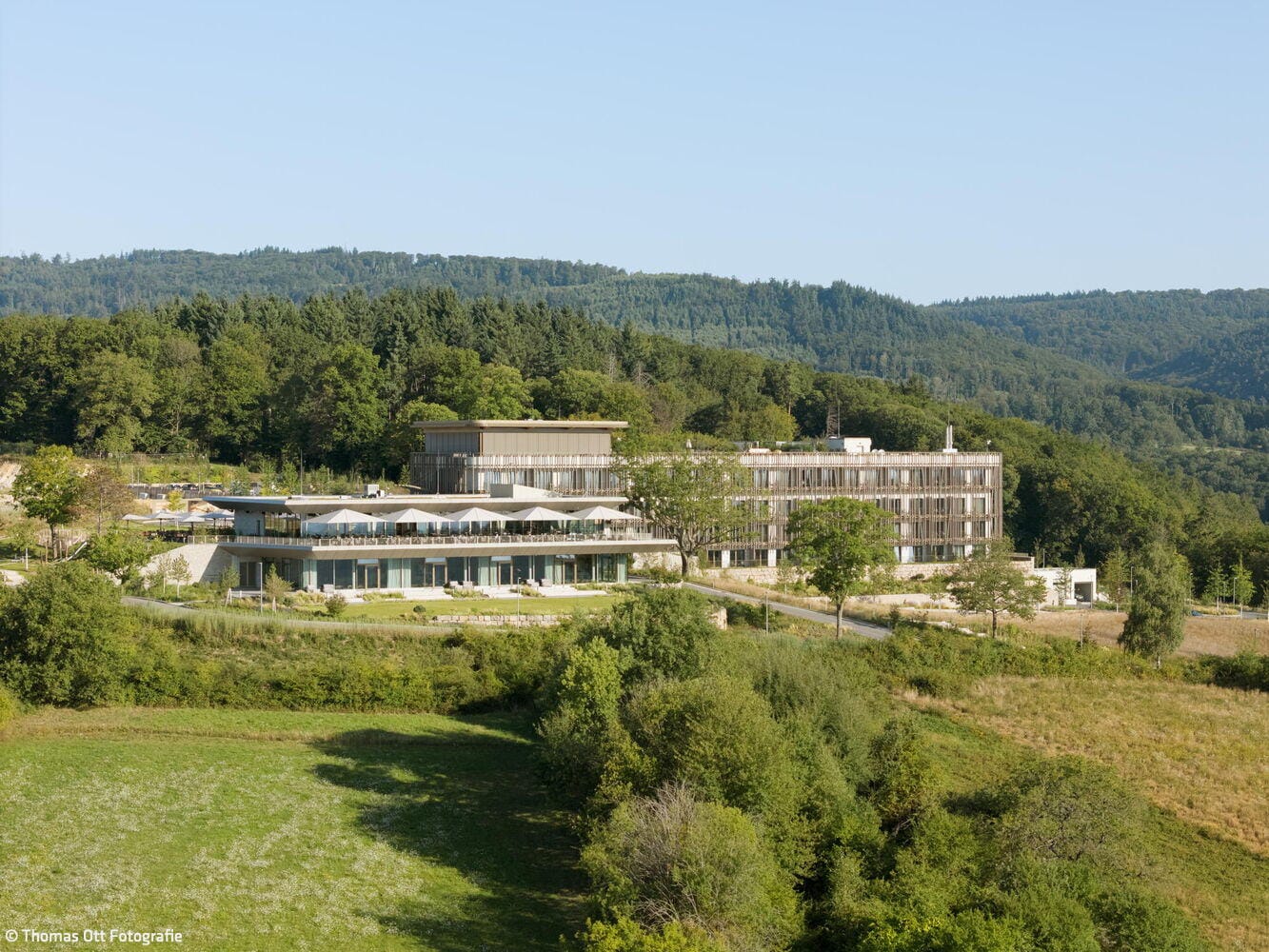
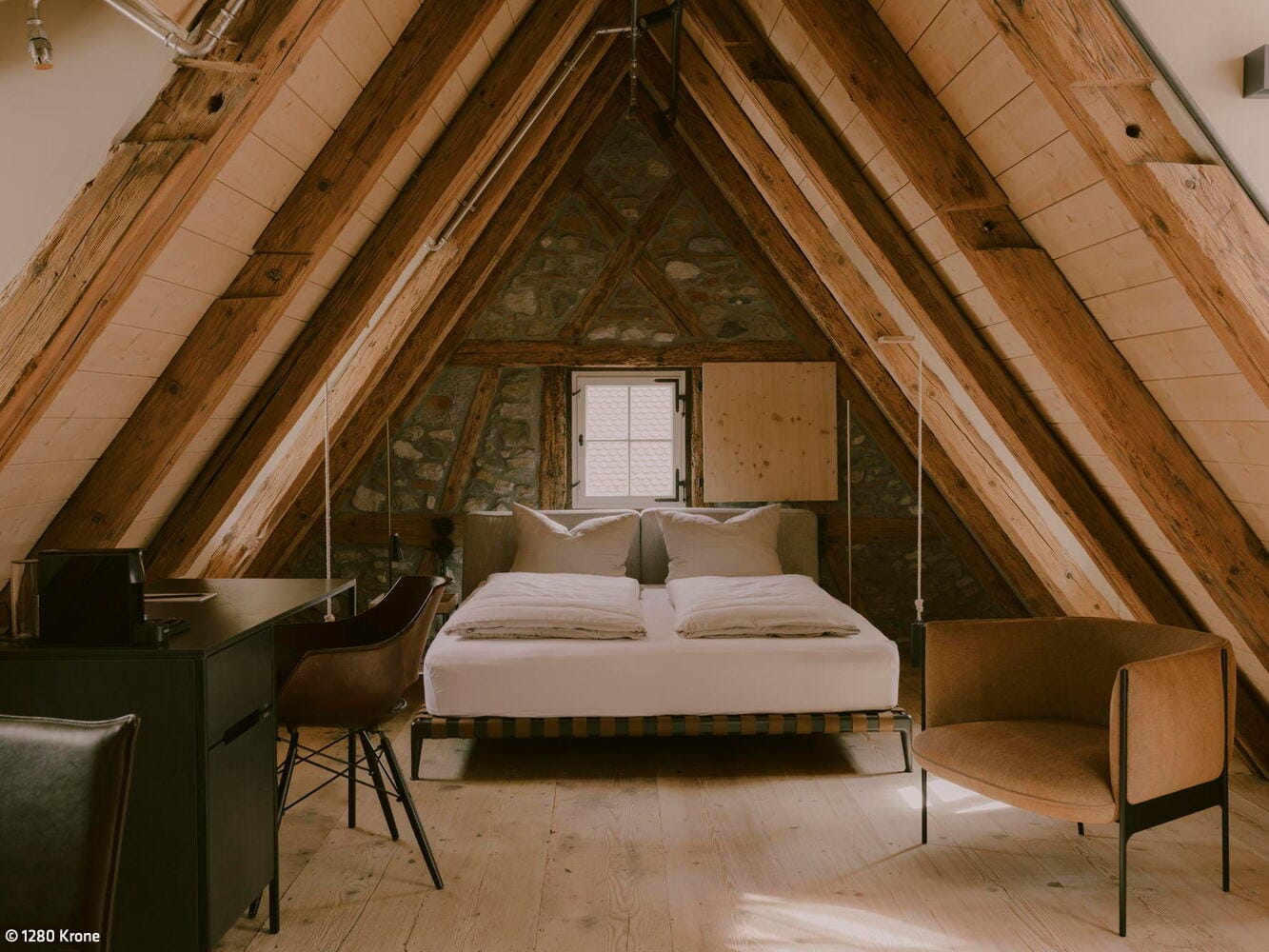
This striking new boutique hotel draws its heritage from 1280—a legacy reflected in its evocative name: 1280 Die Krone.
Urban bend
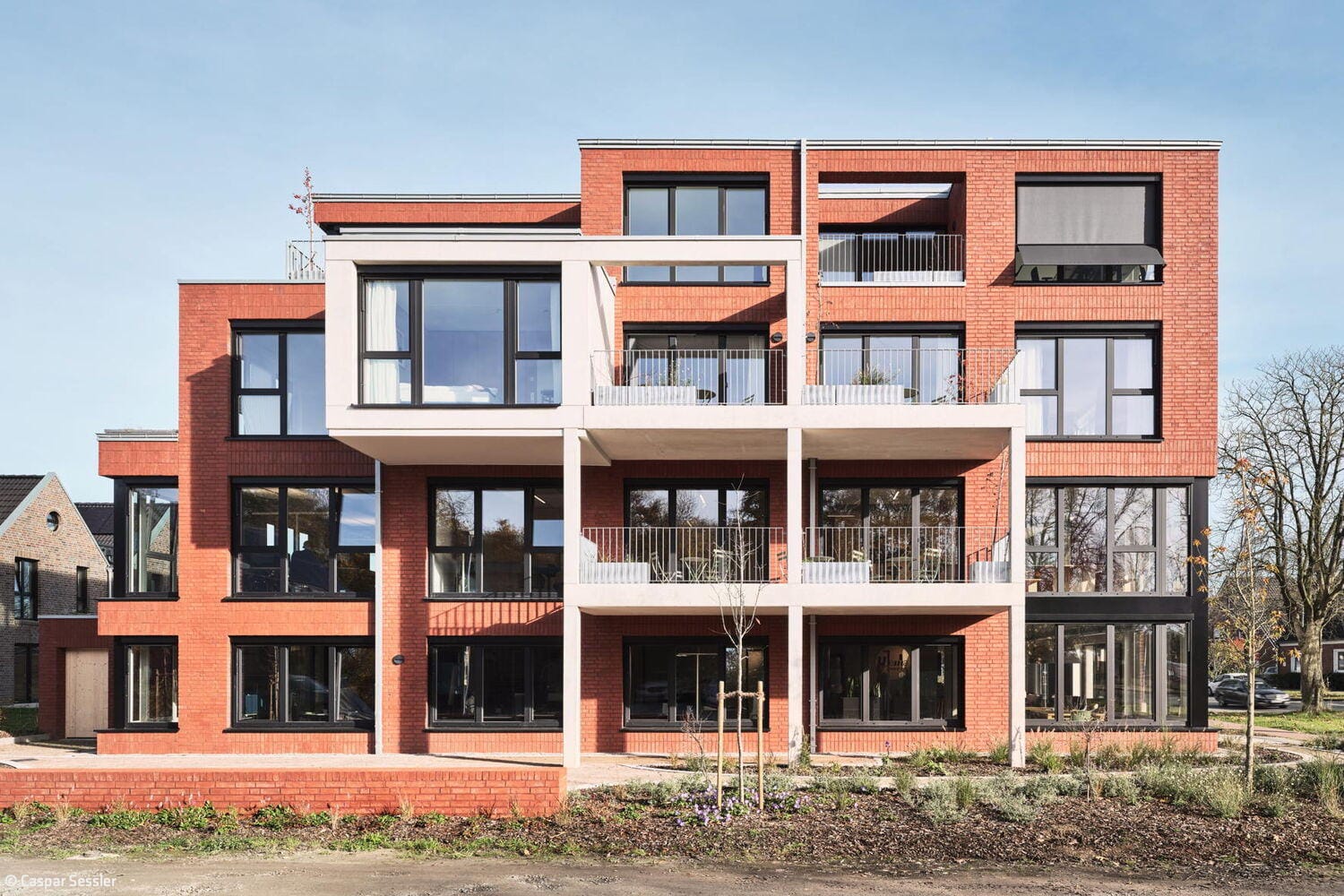
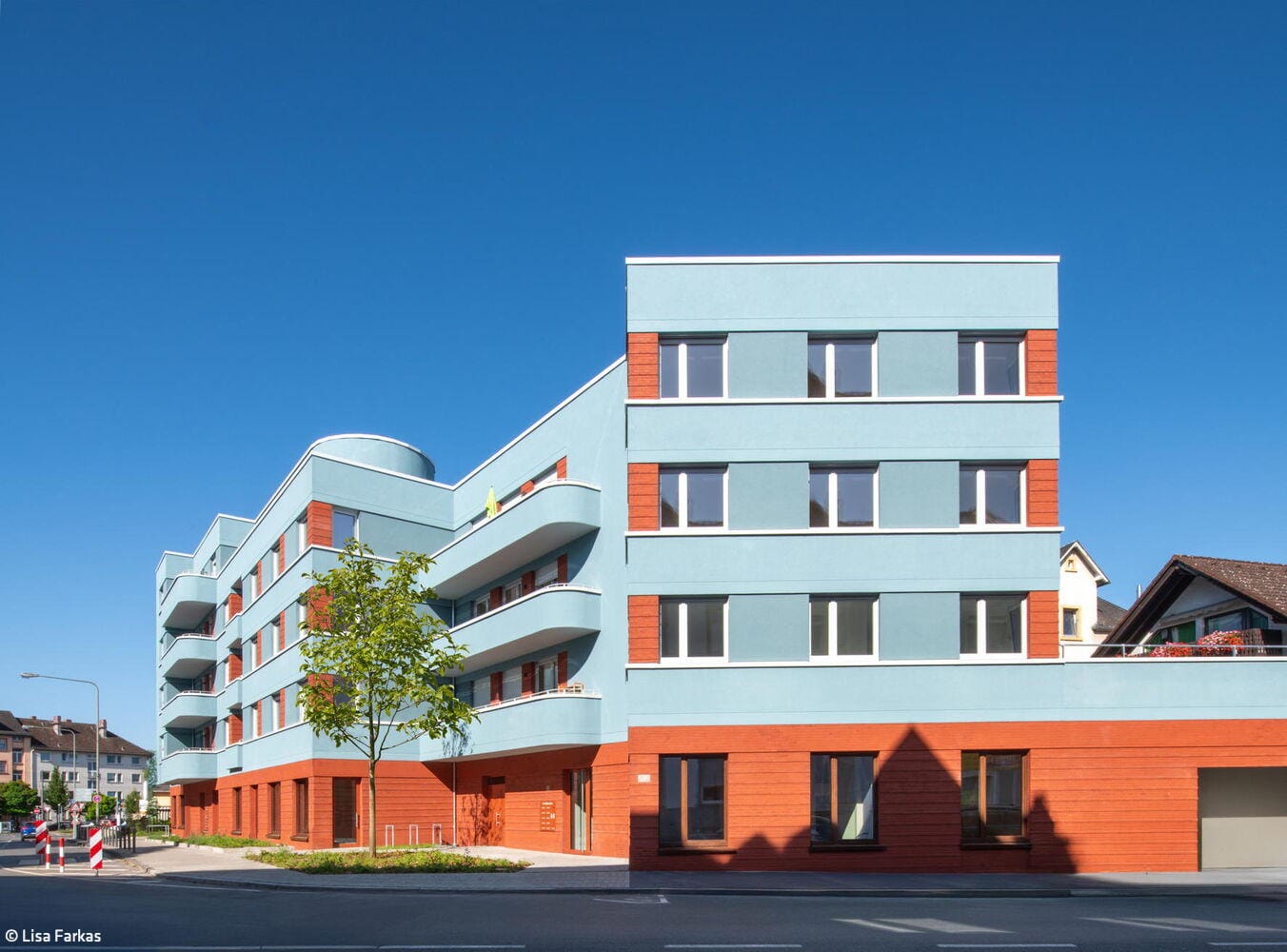
Multi-storey development in Eschersheim combines urban density with quality of life
Relaxingly Symmetrical
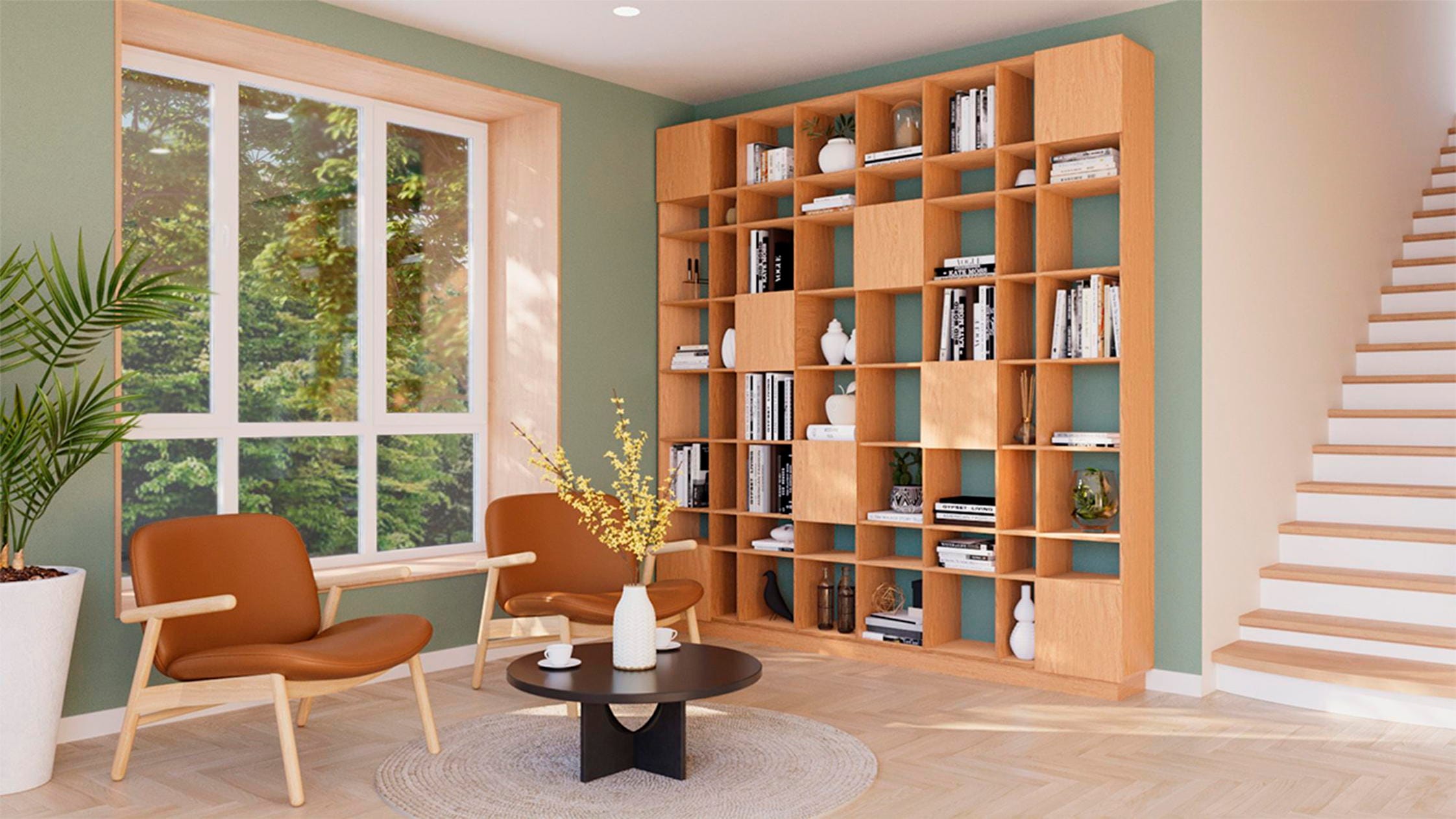
Sustainable shelving in multiple sizes
BDA Masters 2025
Five winners, two shared accolades