


A clearly defined unit
The extension builds on the existing school complex both spatially and functionally
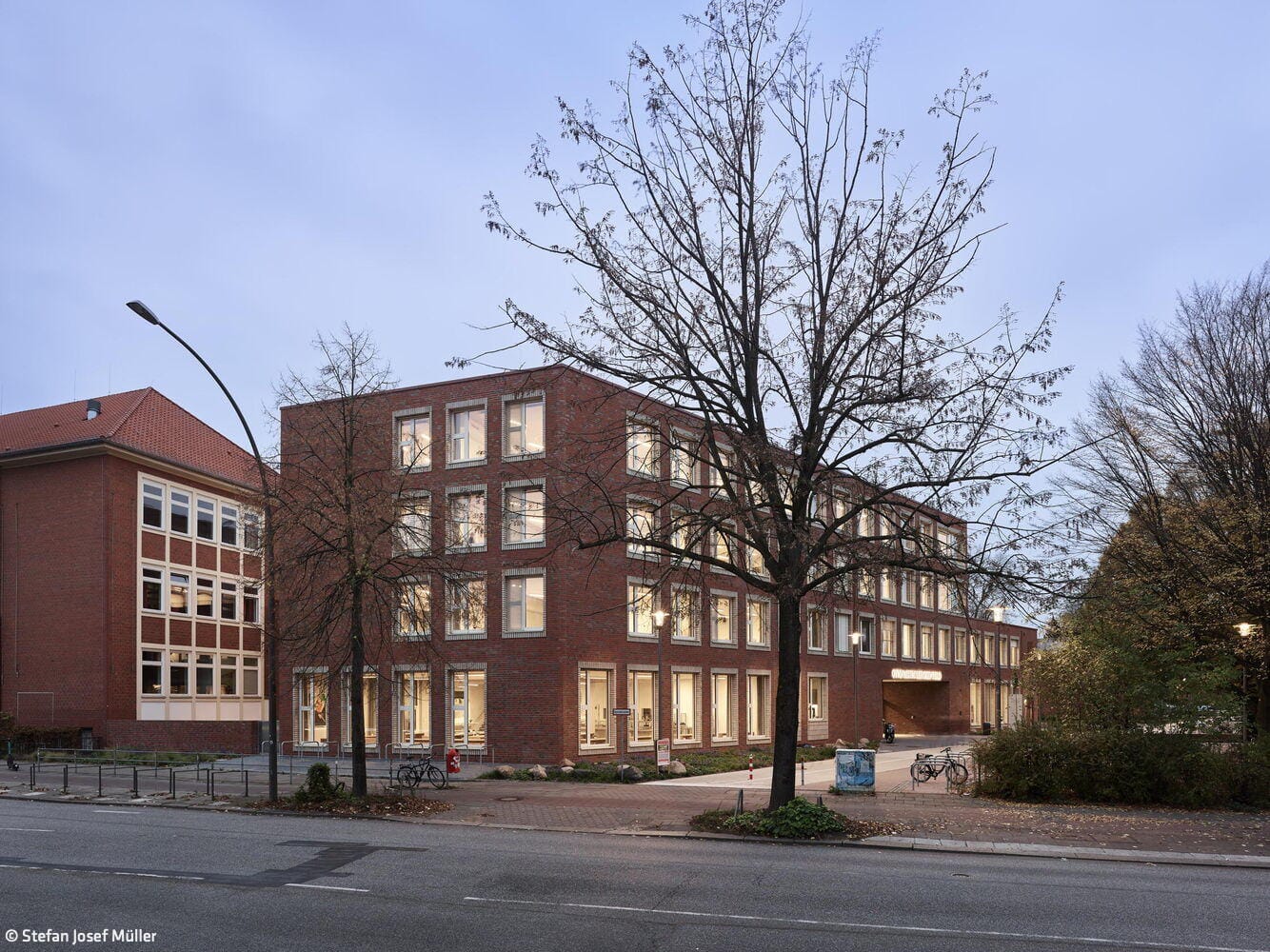
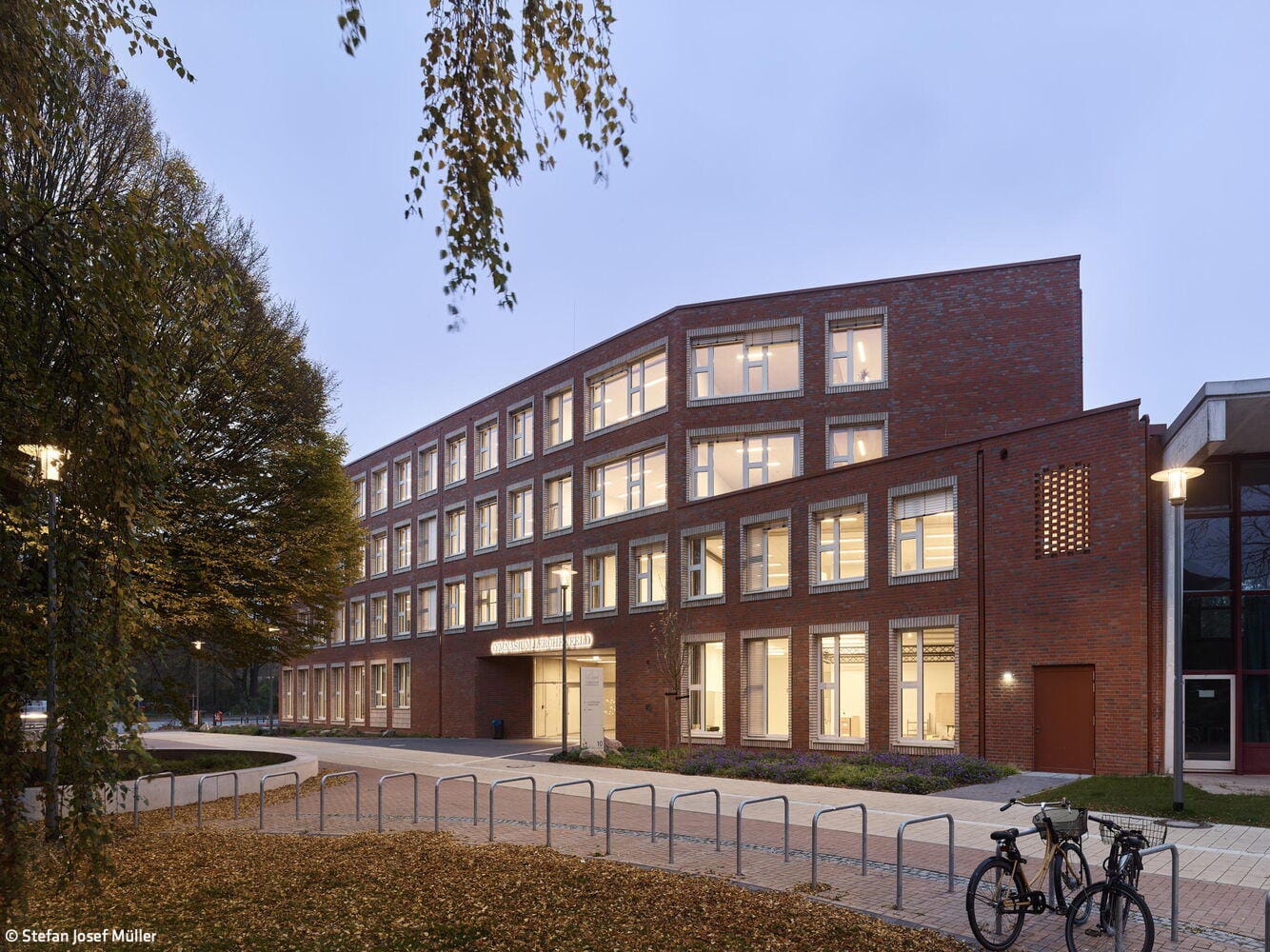
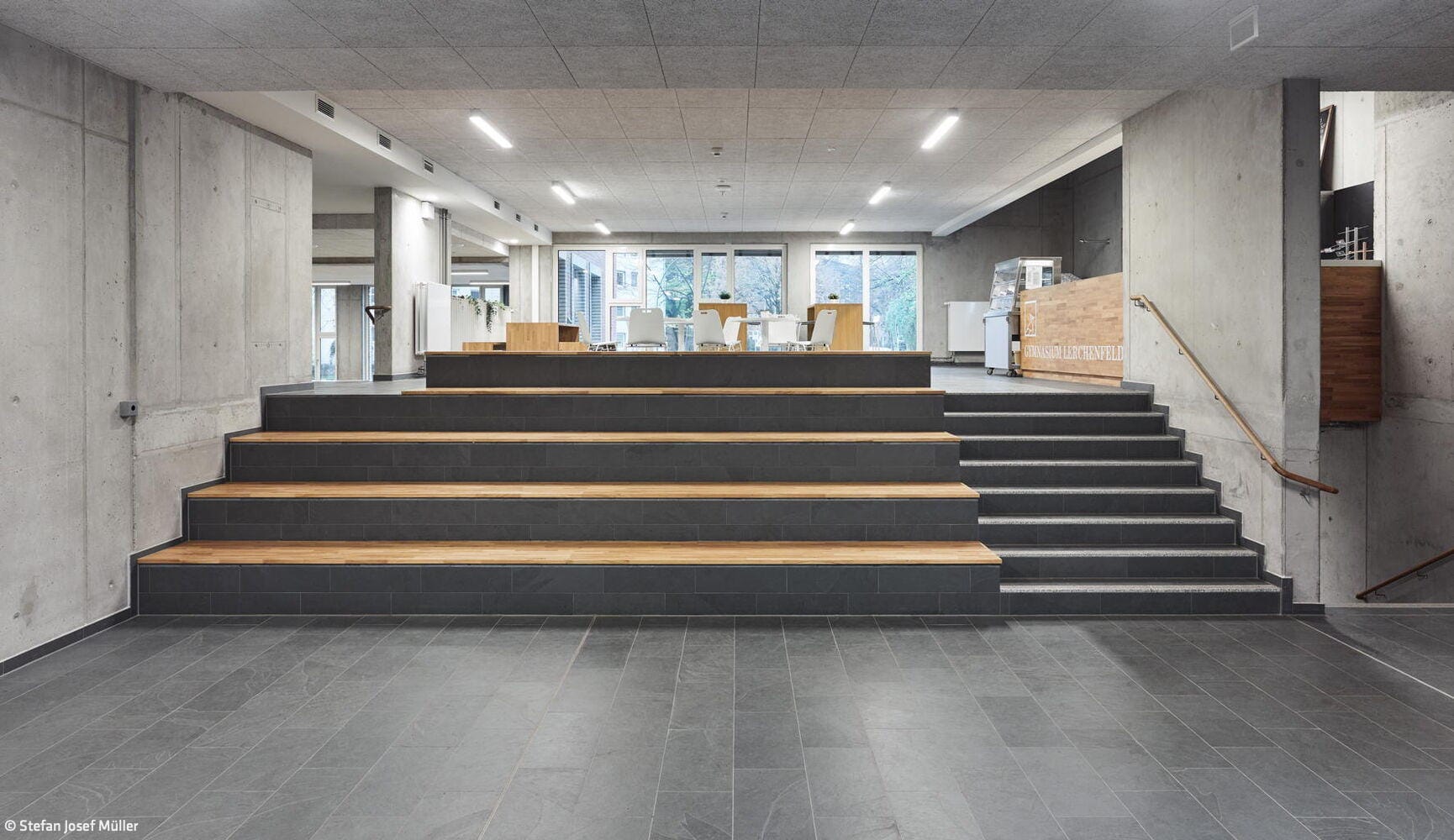
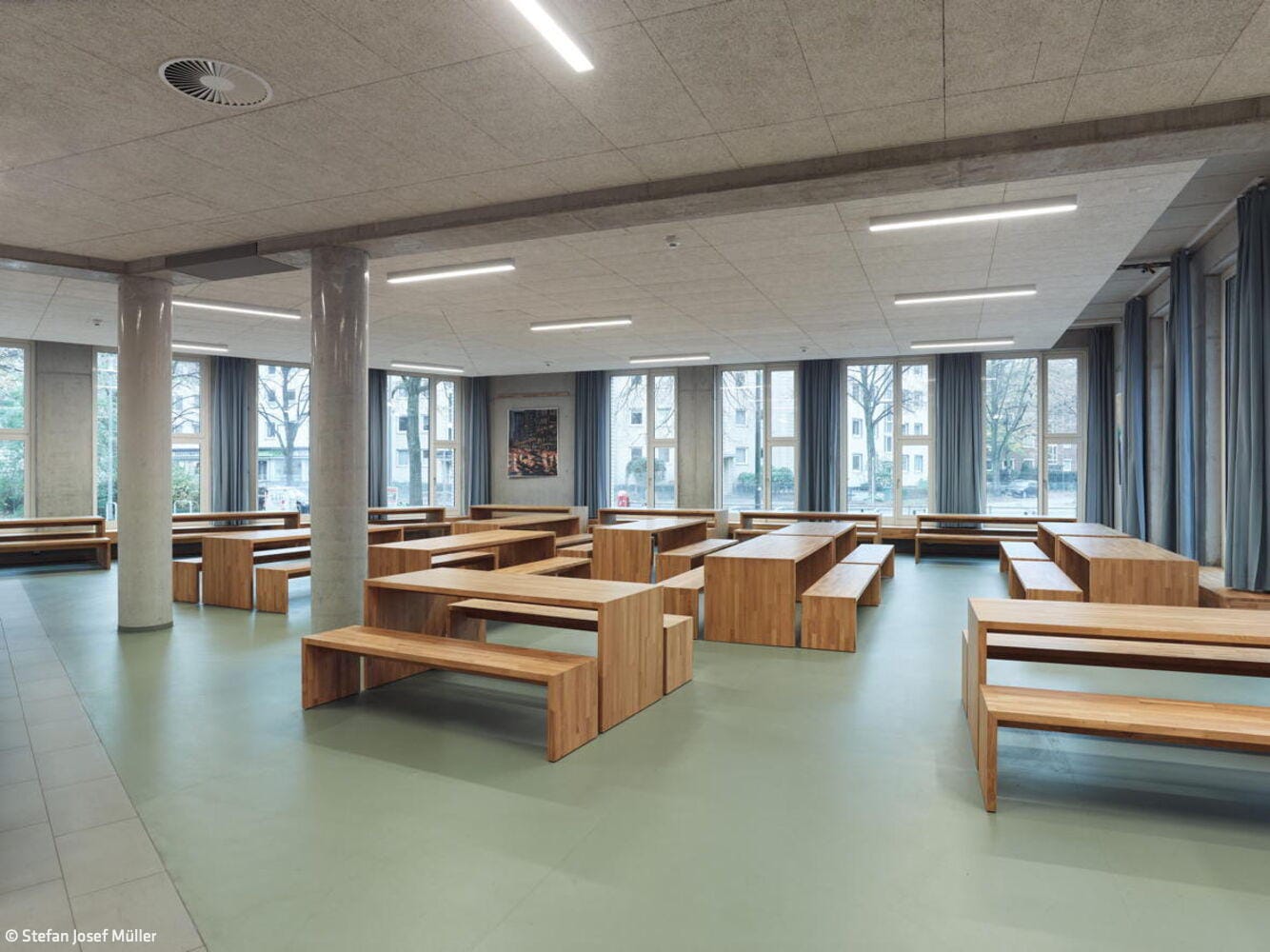
The current Lerchenfeld Grammar School in Uhlenhorst was founded in 1910 as one of the first state-run secondary schools for girls. In recent years, this popular school has seen a steady rise in enrolment figures, meaning that the existing premises were no longer sufficient to accommodate the more than 1,000 pupils. The extension designed by Winking Froh Architects meets the increased space requirements of the five-form-entry school within a separate building, complementing the existing school complex both spatially and functionally.
Its connection to a building designed by Albert Erbe in 1910, as well as its link to the sports halls to the north-east, creates a clearly defined urban unit. The reactivation of the historic route between Birkenau and Finkenau strengthens the site’s integration into the urban fabric and creates a spacious forecourt at the school’s new entrance. In terms of volume and height, the new building is aligned with the scale of the existing structure, drawing on the height of the historic building on Lerchenfeld. A stepped building massing bridges the gap to the lower sports halls. The basic cubic form is defined by a regular façade structure. With red brick and light-coloured window surrounds, the new building ties in with the materials and colour scheme of the existing structure and translates these into a contemporary architectural language. The old and new buildings thus enter into a dialogue that respects the respective periods in which they were built.
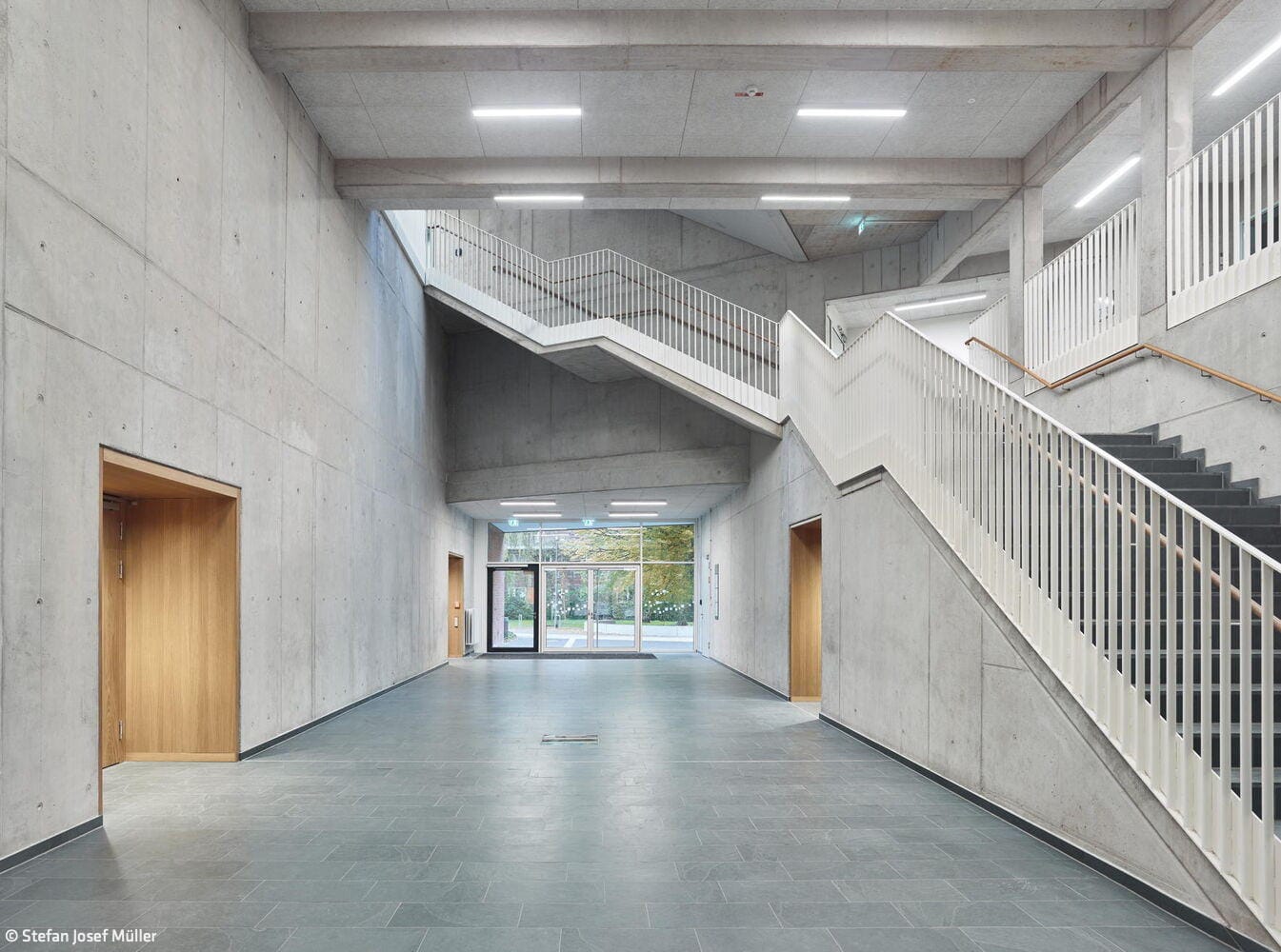
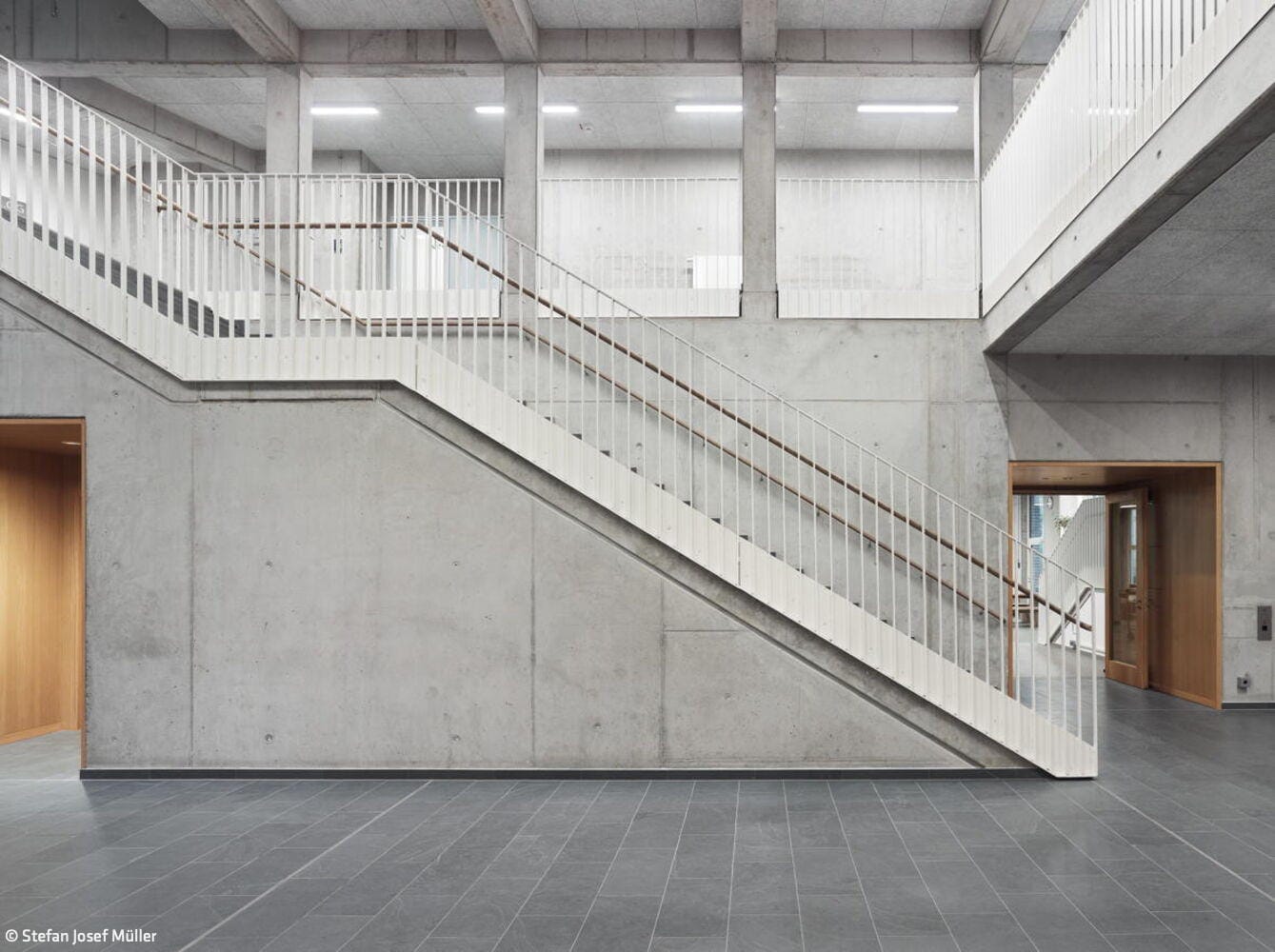
The new building meets the energy standards of an Efficiency House 40 and has been designed to be fully accessible. New connections also open up parts of the existing building and integrate them into the inclusive spatial layout. The internal layout follows a clearly structured circulation concept: aligned with the floor plan, the central staircase and the main circulation axis on the ground floor form the spatial backbone of the building. The communal facilities are arranged along this axis: to the south are the school canteen and cafeteria, and to the north the two-storey assembly hall with a stage.
On the upper floors, the stairwell divides the floor plan into two compact learning areas, each organised around a communal lounge with an adjoining group room and complemented by four classrooms. The layout facilitates both focused learning and informal interaction, thereby meeting current educational requirements for flexible learning environments. The extension was carried out whilst the school remained open.
Photos:
Stefan Josef Müller
www.stefanjosefmueller.de
(Published in CUBE Hamburg 01|26)

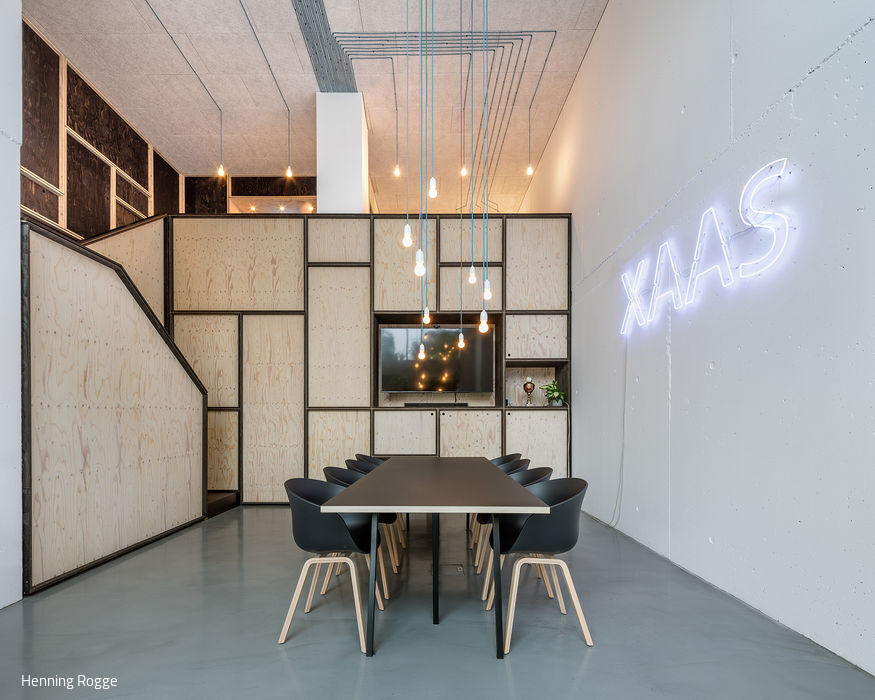

Measured and Confident
The new school building and its heritage counterpart create a harmonious architectural whole.
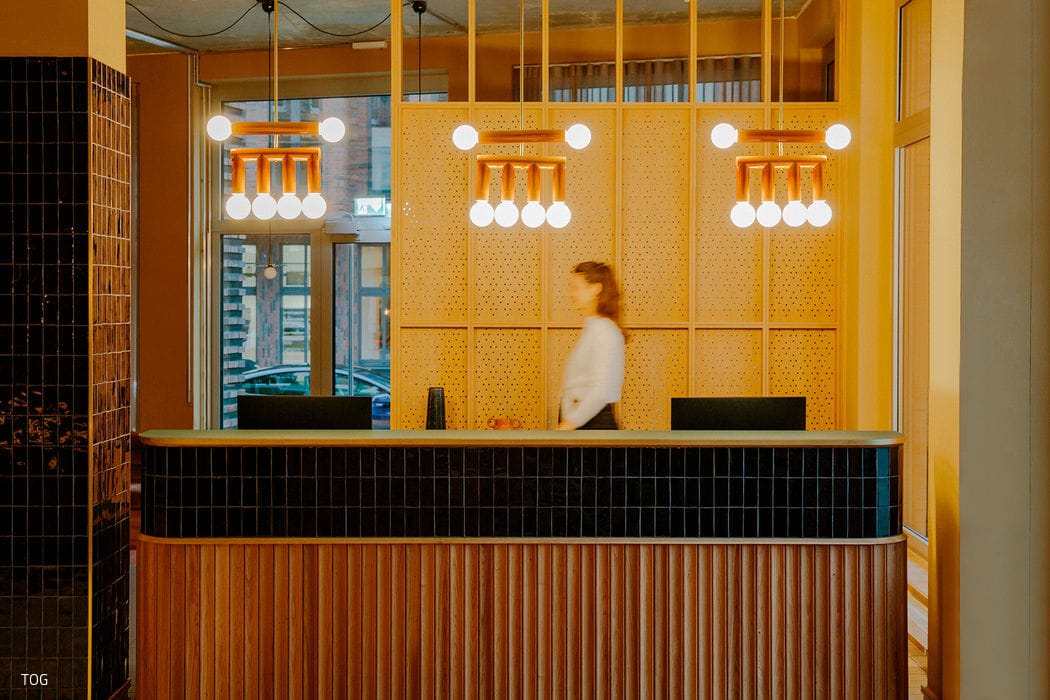
Urban Journey Through Interior Space
A flexible workspace shines through thoughtful interior design
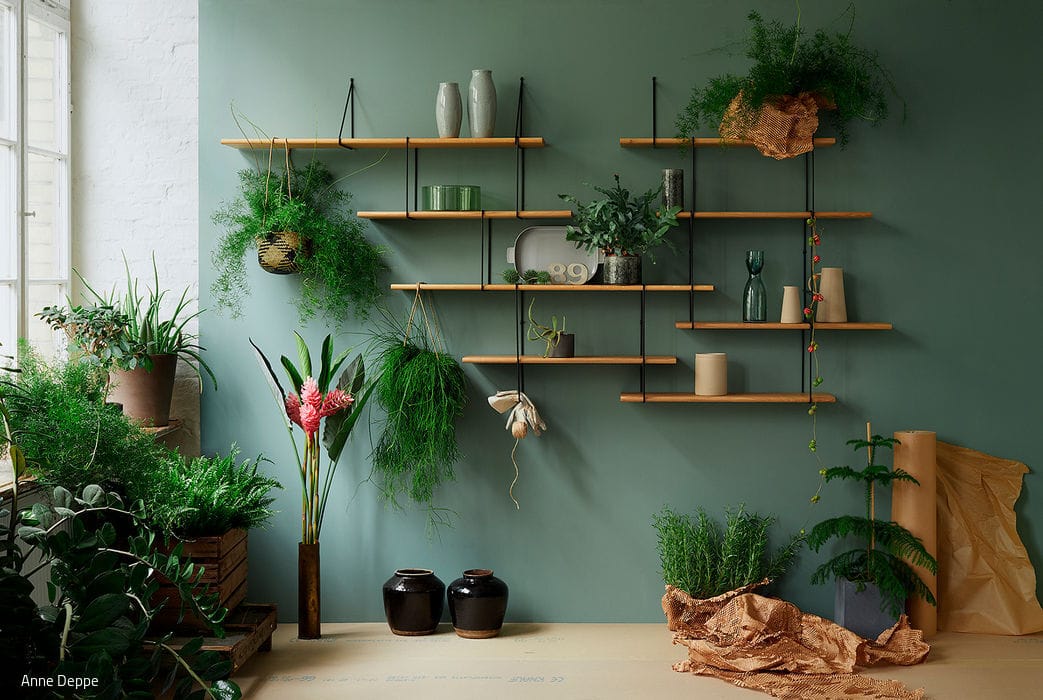
Simple and Functional
Studio Hausen's sustainable furnishings embody purposeful design—nothing more, nothing less
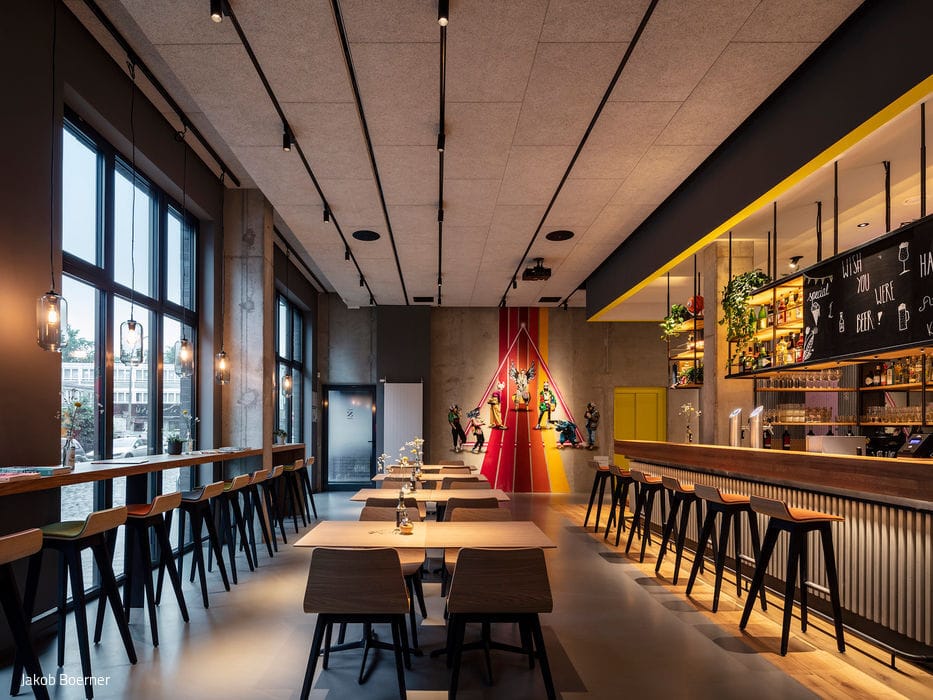
Less is More
A cabin hotel in St. Georg that delivers privacy and community spirit—without breaking the bank.