


Thermohouse with Climate Envelope
Three goals achieved at once: heritage preservation – doubled floor space – energy retrofit
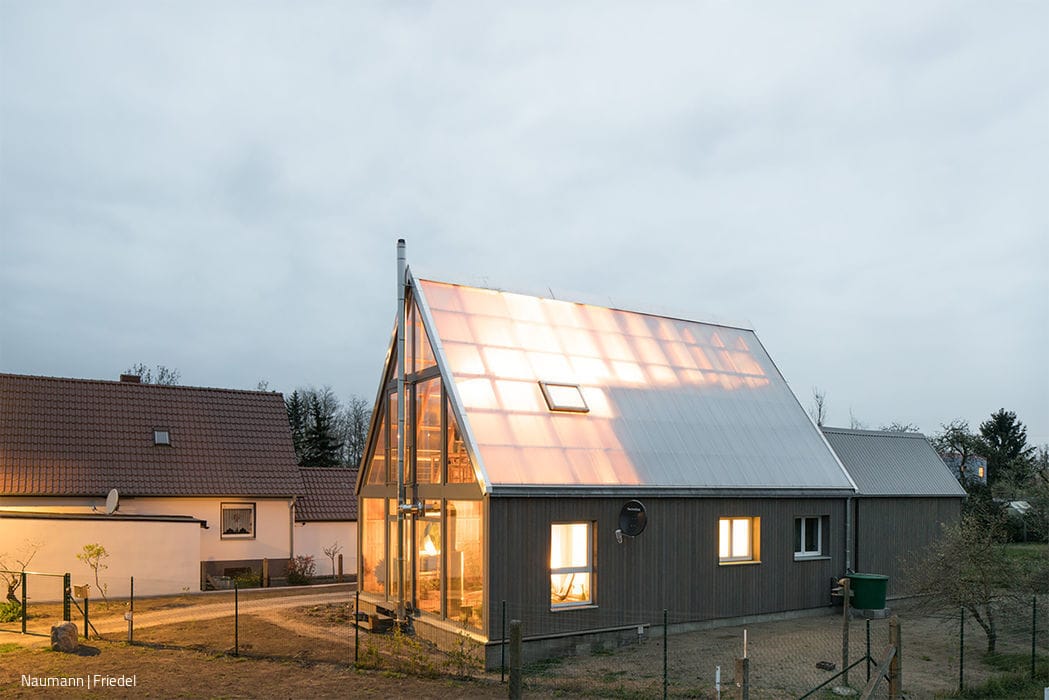





The homeowners in Guben, Lower Lusatia, struck gold when they embraced the vision of Berlin-based architects Praeger Richter Architekten. Their proposal was elegant in its simplicity: wrap a modest 1930s brick house in a second energetic layer, transforming it into a highly efficient building. The payoff was remarkable—the floor plan doubled while heating demand plummeted. Polycarbonate panels became the outer skin, marrying form and function.
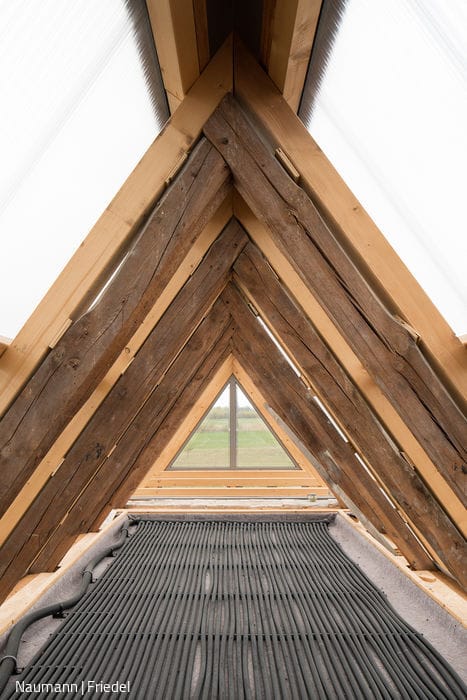
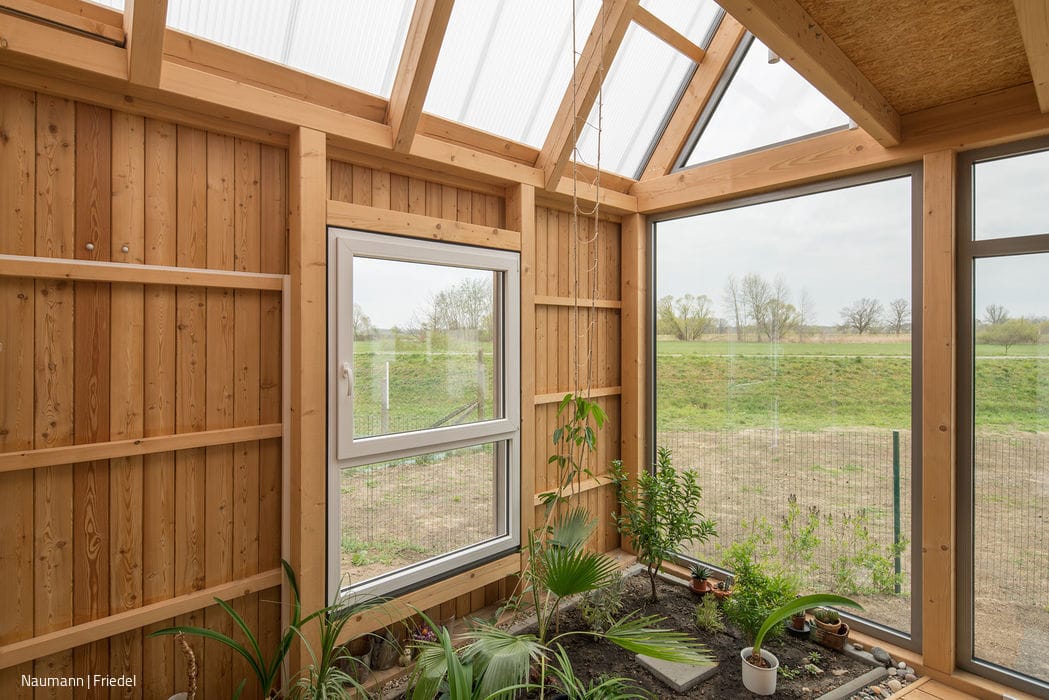
The original structure was retained intact, save for new roof tiles. The existing roof truss provides the structural backbone for the outer shell. The climate envelope extends the house by half its width on the gable side, introducing a winter garden on both ground and upper levels. The cavity between the original walls and the new envelope—connected from foundation to roof peak—functions as an energy chamber. Here, the envelope operates as an air collector: warm air circulates through the cavity, working with the thermal mass of the existing walls to passively harvest solar energy. Air naturally rises to the roof ridge where temperatures peak, then feeds a low-tech thermal collector for space heating and domestic hot water. The result: virtually no auxiliary heating needed year-round. Summer roof windows allow excess heat to escape, while a wood stove in the winter garden handles winter's coldest days. This low-tech retrofit achieved the stringent KfW 55 standard. The winter garden floor was intentionally left unpaved initially, allowing for future completion when additional expansions occur.
This climate envelope strategy reveals a practical path forward: climate-conscious, economical renovation for aging homes. The project earned recognition beyond its walls—nomination for the German Architecture Museum's "Houses of the Year 2020" award. The jury's assessment captured its essence: "By integrating the existing building fabric, this approach achieves optimal sustainability. It bridges tradition and innovation, offering an affordable residential solution especially valuable in economically challenged regions."
Photography Credits:
Naumann | Friedel
(Published in CUBE Berlin 01|22)
Award-winning
A residential neighbourhood in timber-hybrid construction – exemplary in every way
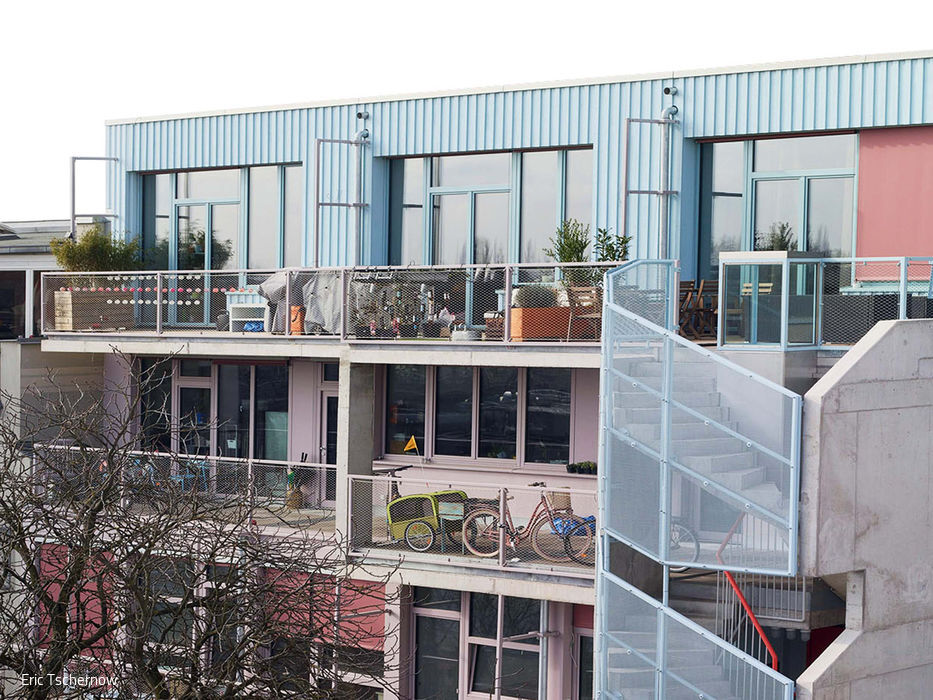
Lifestyle Through Community
A Queer Home: Reimagining Shared Living
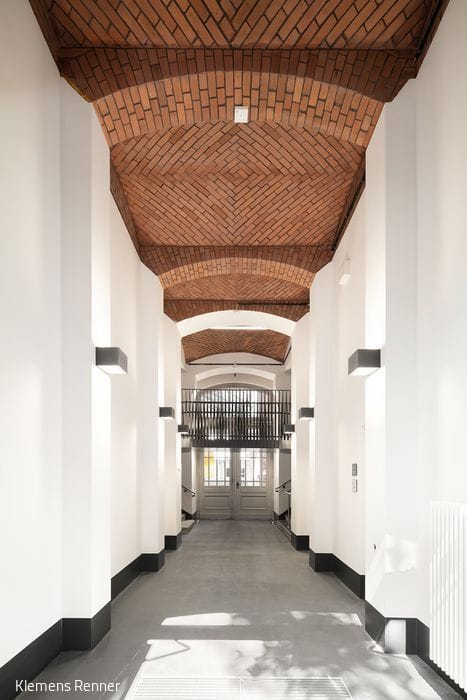
Future-Proofed for the 21st Century
Comprehensive modernisation, renovation and expansion of a secondary school
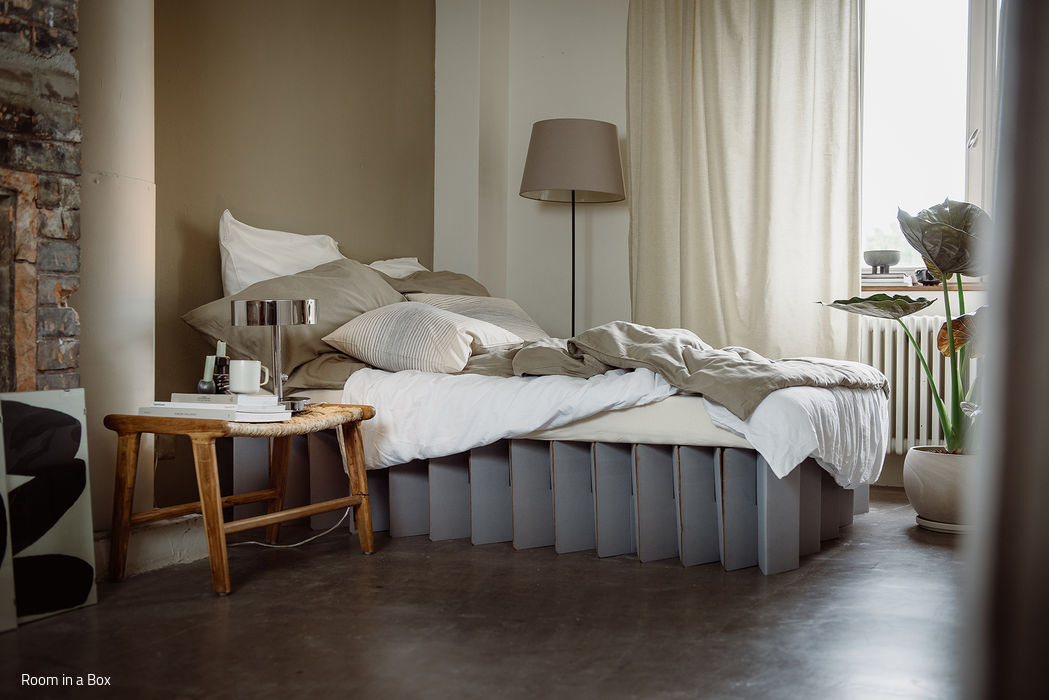
Sustainable by Design
Room in a Box creates modular furniture from corrugated cardboard