


Carved from a single block
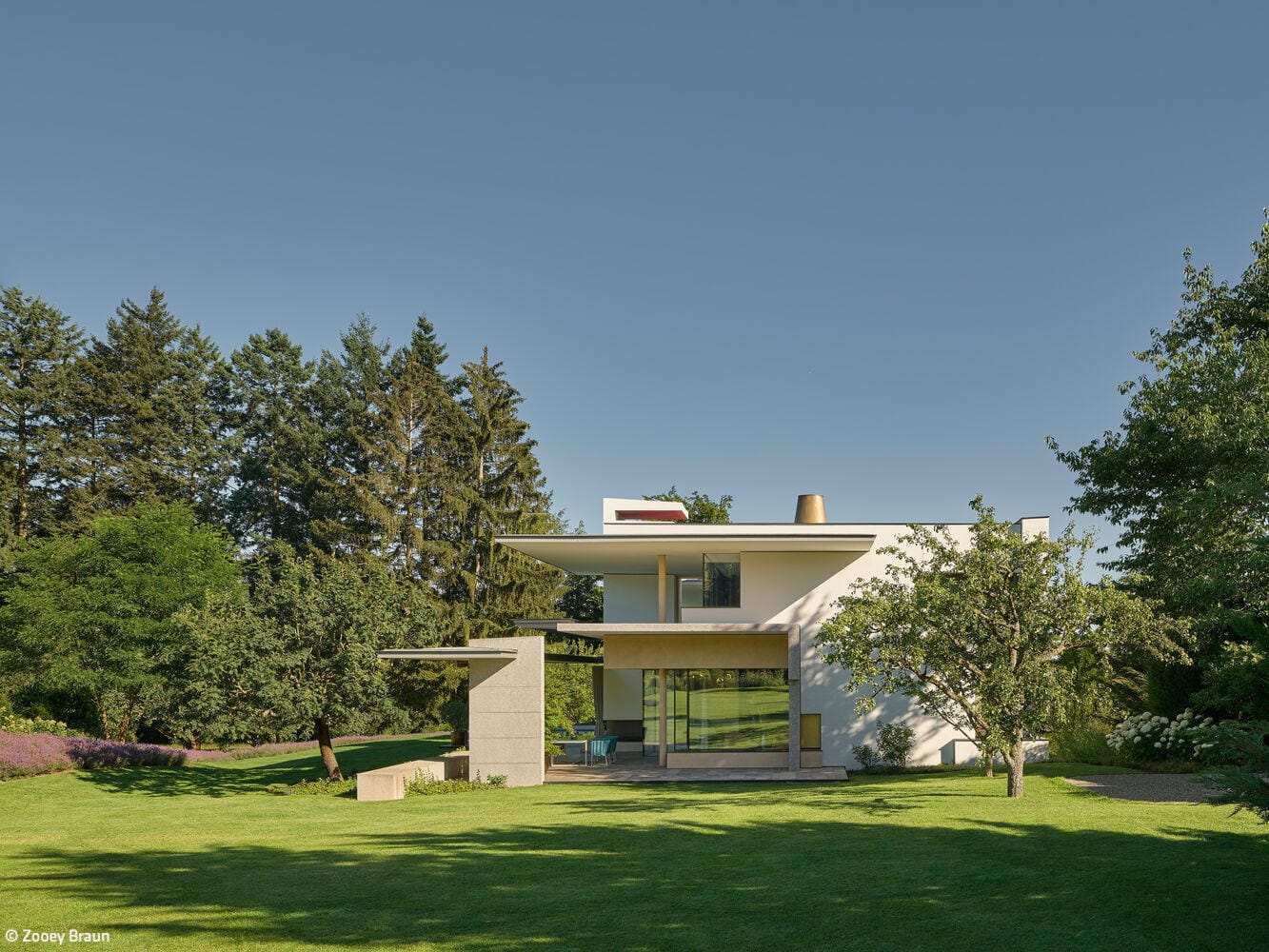
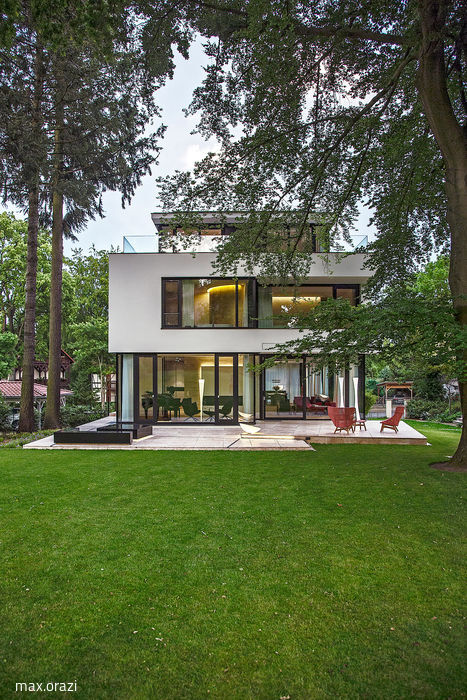
The Grunewald building exemplifies restraint and abstraction, employing a rigorous formal vocabulary that echoes Russian avant-garde architecture.
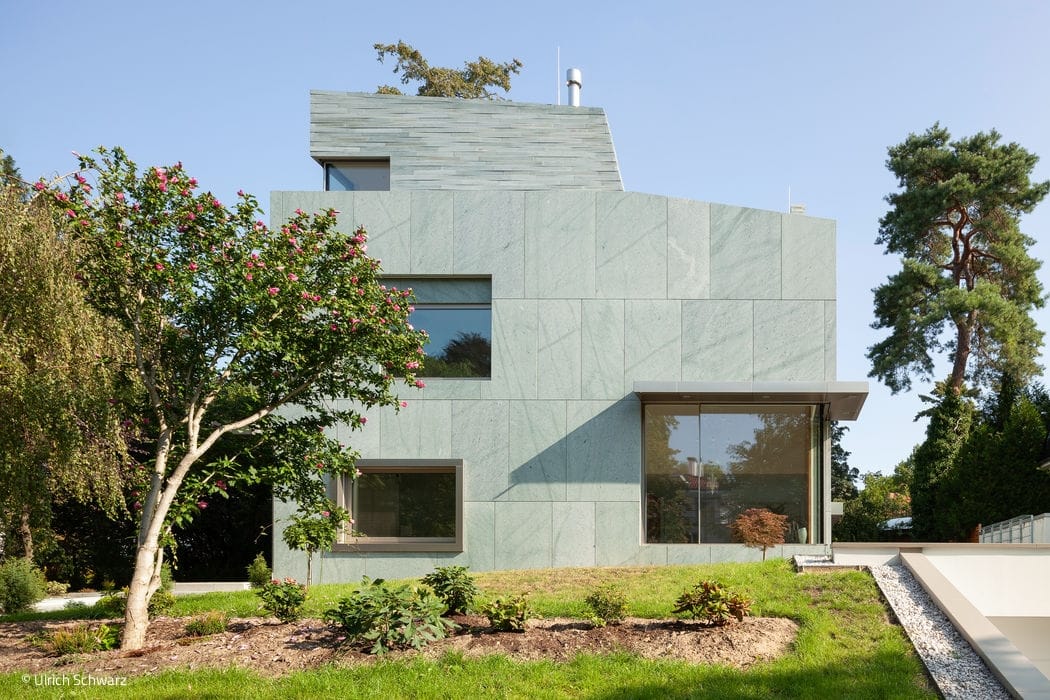
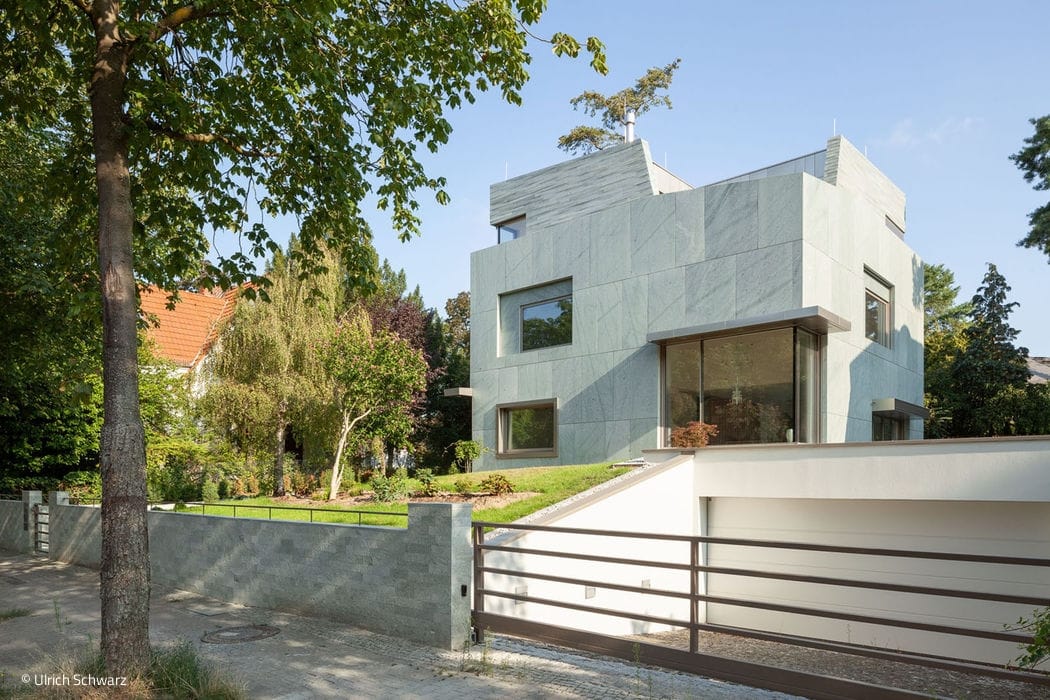
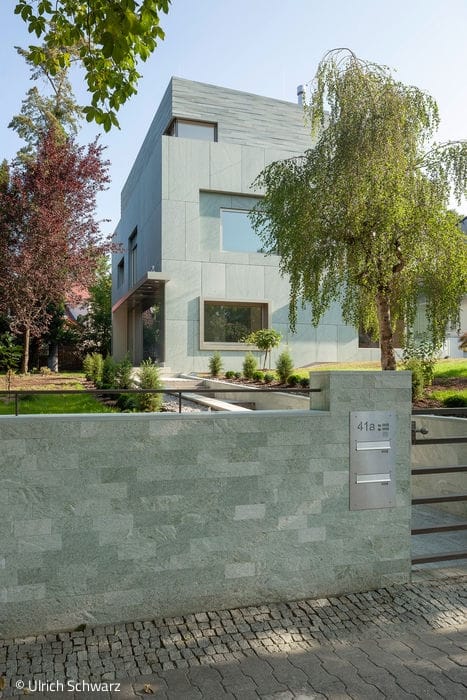
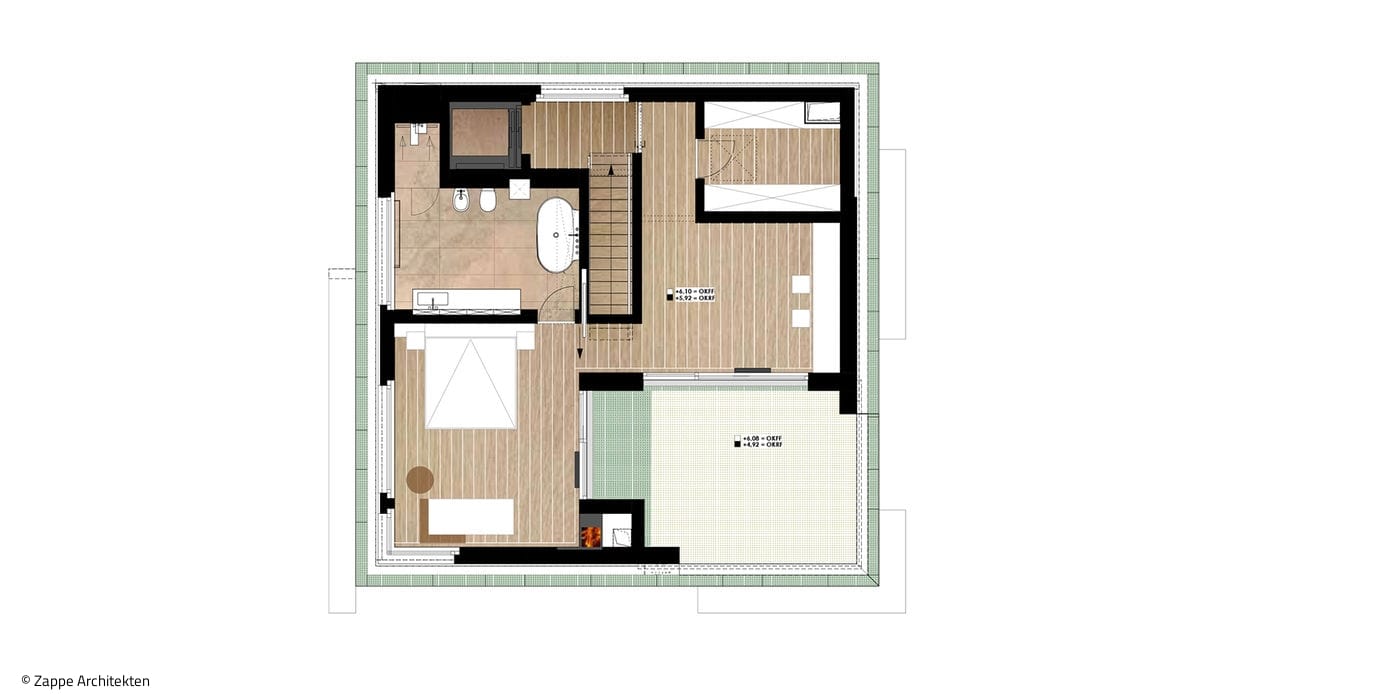
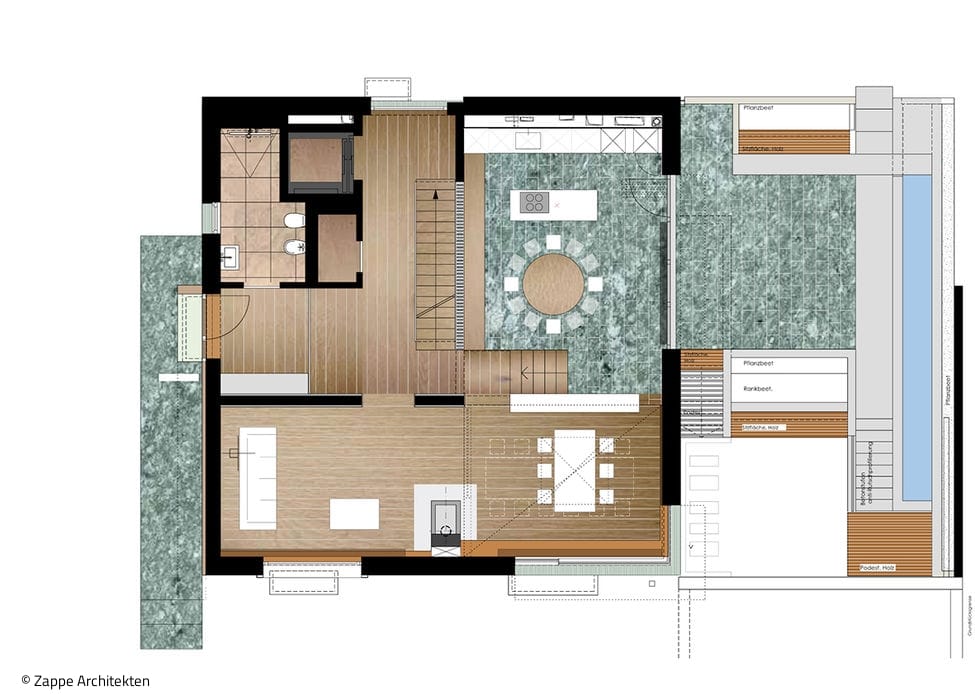
Die neugebaute Architektenvilla im Grunewald hat einen Bestandsbau ersetzt, dessen Umbau und Sanierung zu teuer ausgefallen wäre. Die Architekten hatten aufgrund der nur geringen Baufläche sowie der strengen Auflagen in der Gegend gestalterisch nur begrenzte Möglichkeiten. Sie platzierten deshalb das neue Gebäude nur ein wenig zurückversetzt auf der Grundfläche des Bestands. Den Baukörper entwarfen die Gestalter klassisch-modern als einen Kubus mit Staffelgeschoss.
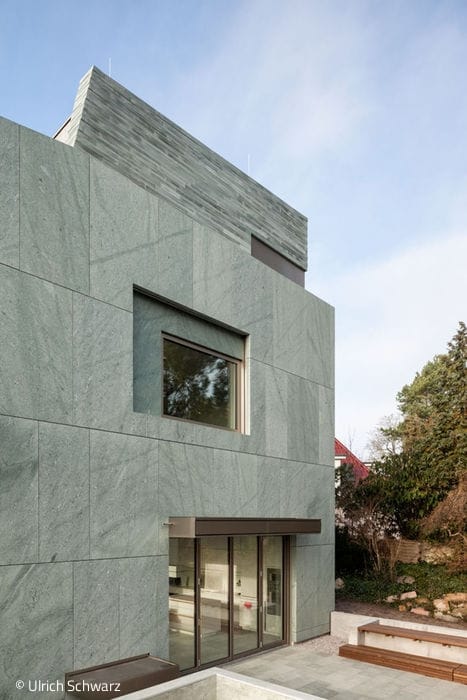
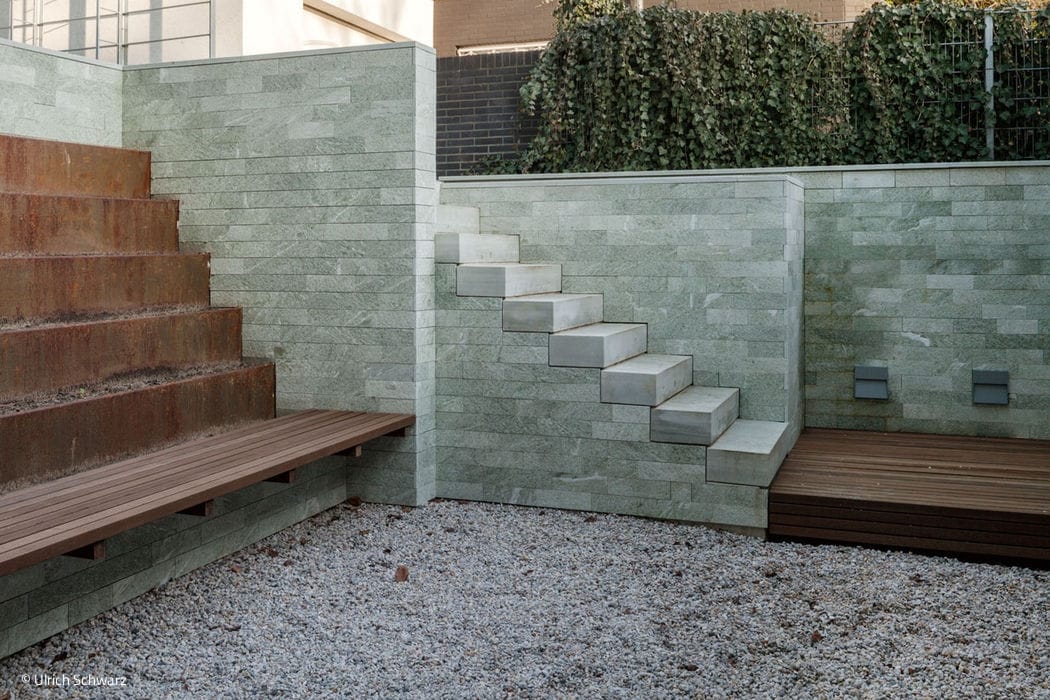
Der Charakter des von einer russischen Familie bewohnten Hauses ist formal reduziert, aber trotzdem ungewöhnlich. Architekt Stefan Zappe berichtet, die Bauherren hätten ihn und seine Partner nach Moskau eingeladen. Dort besichtigte die Gruppe nicht nur zahlreiche Sehenswürdigkeiten. Sie besuchten auch die Häuser der russischen Konstruktivisten und nahmen dabei viele Eindrücke für ihr Projekt in Berlin mit. Der Bau im Grunewald wirkt abstrakt, reduziert und bedient sich eines sachlichen Formenvokabulars, was an die russische Architekturavantgarde erinnert. Mit der individuellen, ausdrucksstarken Anordnung der Formen und Linien lösen die Architekten eine allzu starre Geometrie auf und verleihen dem Gebäude eine unverwechselbare Anmutung. Die Konstruktivisten konzentrierten sich stark auf die Arbeit mit Materialien und Texturen. Auch die Villa in Grunewald entfaltet ihre Wirkung durch eine spezifische Materialität. Die Fassade ist aus grünlich schimmernden Natursteinplatten in ungewöhnlicher Größe gestaltet. Der Stein ist ein Verde Andeer aus Graubünden in den Schweizer Alpen. Er wurde in der Nähe von Dessau zu nur 5–6 mm dicken Platten aus dem Steinblock geschnitten und in einer Sandwichtechnik auf Leichtbetonplatten geklebt. Die fugenlose Montage der übergroßen Platten war äußerst anspruchsvoll und konnte nur durch eine Spezialfirma aus Berlin geleistet werden. Um Eckfugen zu vermeiden ist der Stein auf den Kanten sogar dreidimensional ausgeschnitten. Im Zusammenspiel mit der sorgfältigen, ebenfalls fugenlosen Ausführung der Fensterlaibungen entwickelt das Gebäude eine starke monolithische Anmutung. Der Baukörper wirkt plastisch, wie von einem Bildhauer aus einem großen Steinblock gehauen.
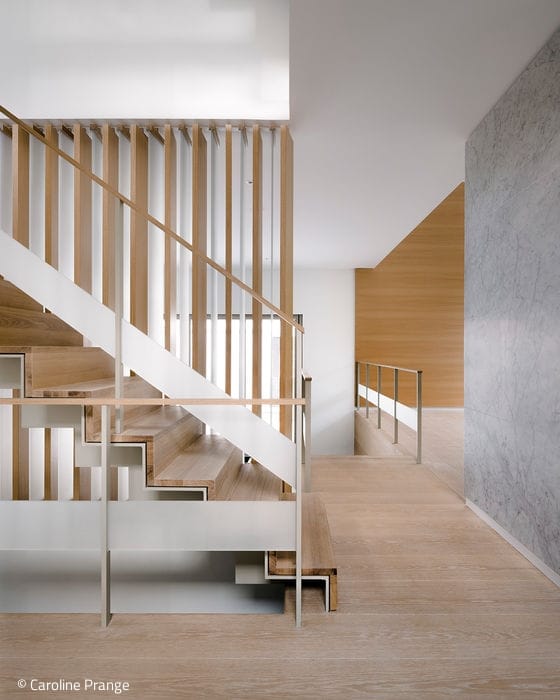
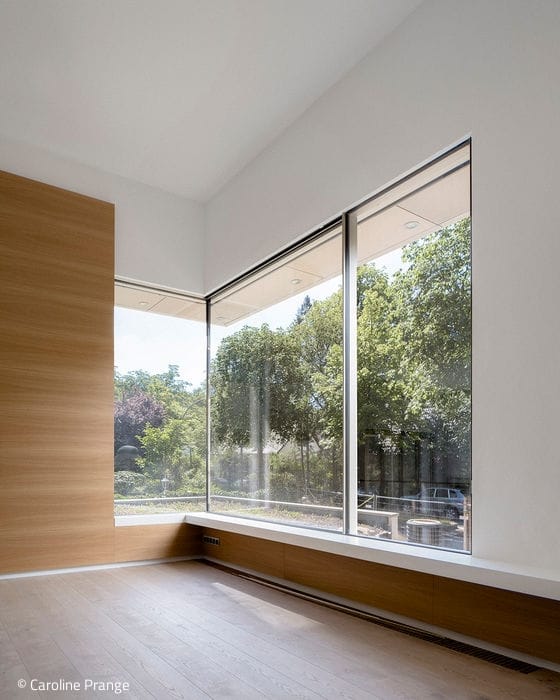
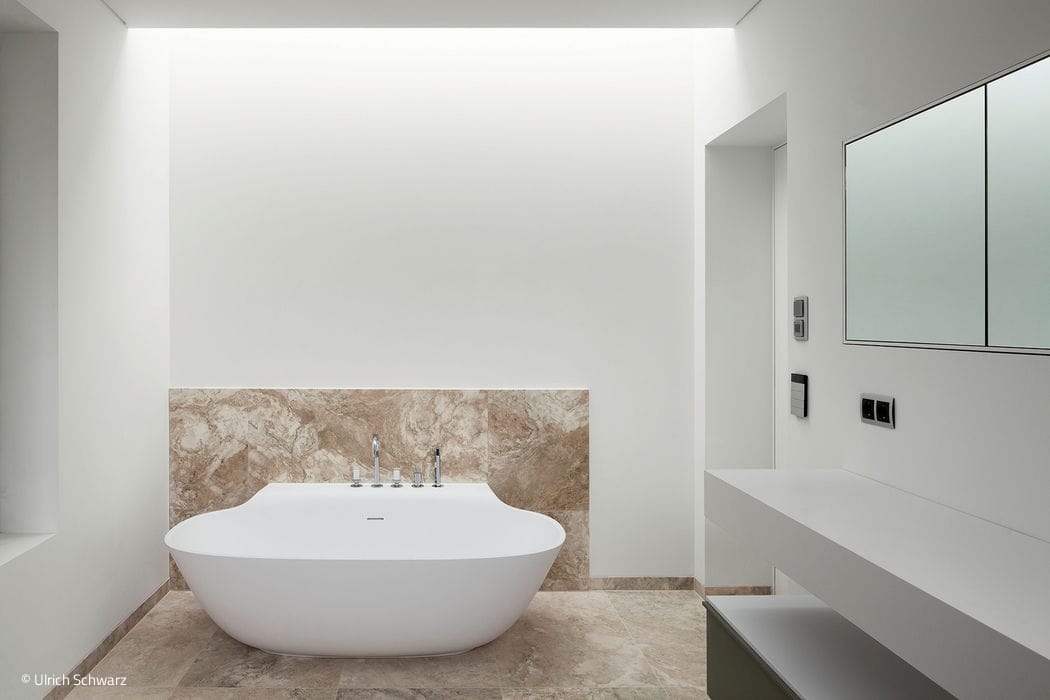
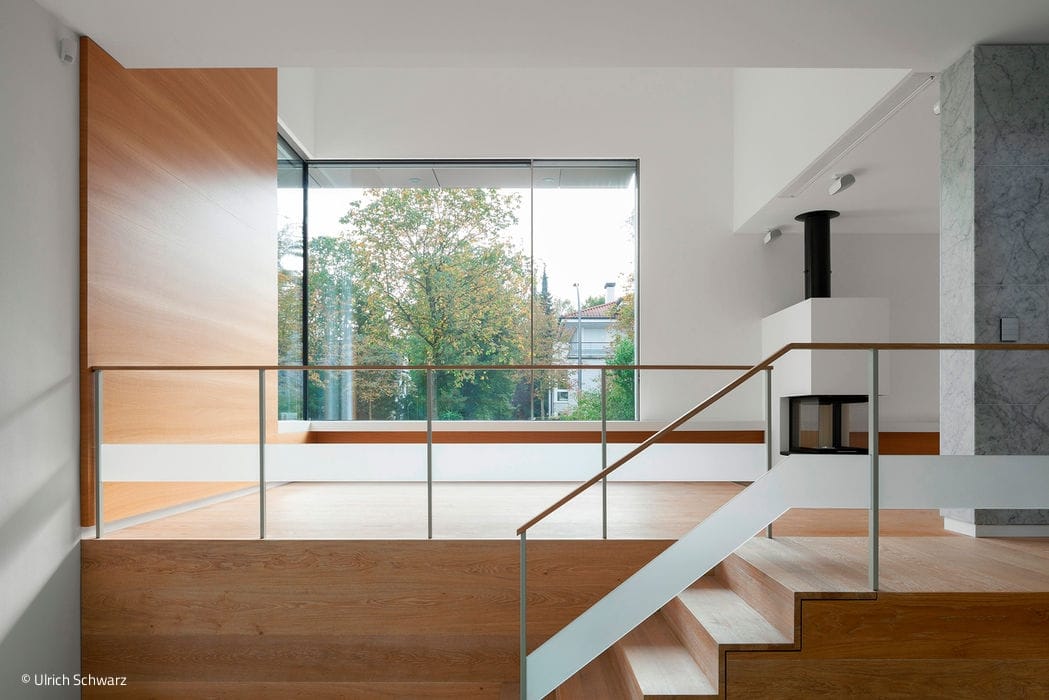
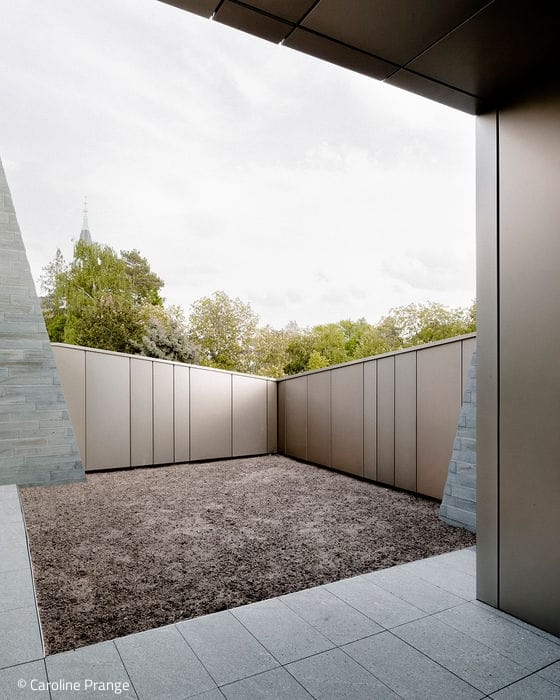
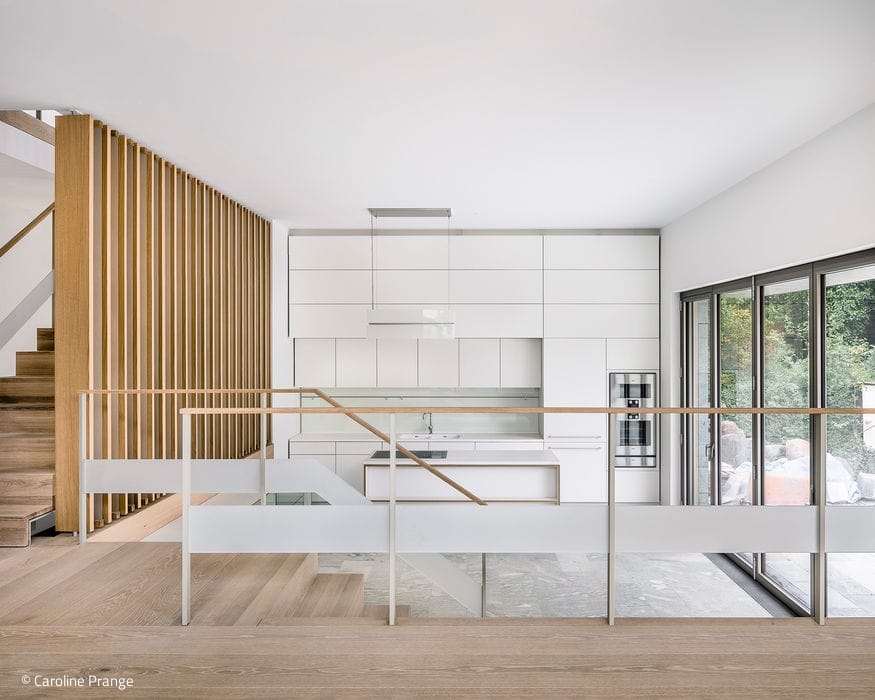
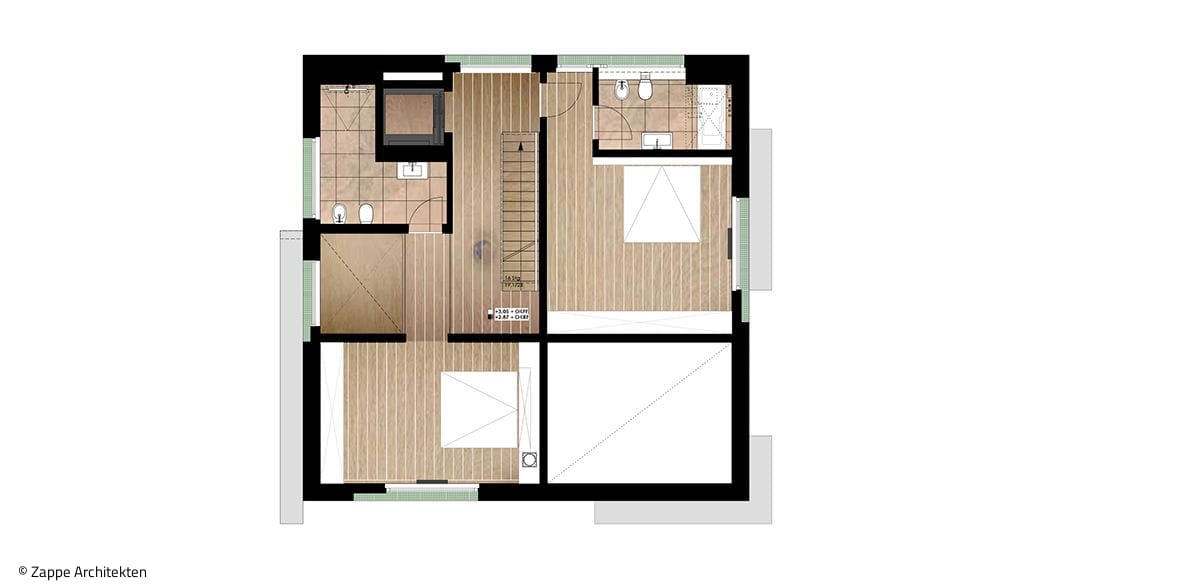
Das Wohnen spielt sich bei den Vollgeschossen auf einer Fläche von nur 11,5 x 11,5 m² ab. Das zum Teil bewohnbare Souterrain hat Bezug zur unteren Gartenebene, das Erdgeschoss bietet mit den großen Glasflächen ebenfalls eine direkte Verbindung nach draußen in die Natur. Die verschiedenen Levels, die großen Fensterflächen sowie das Ineinanderfließen der Bereiche Wohnen, Küche und Essen lassen die Räume insgesamt größer erscheinen. Die Küche haben die Architekten eigens entworfen und von einem Tischler maßfertigen lassen. Im ersten Geschoss befinden sich weitere Wohnräume. Wie im gesamten Haus sind auch hier am Boden Eichendielen verlegt. Im Staffelgeschoss sind das Schlafzimmer der Eltern mit Bad en suite sowie ein kleiner Arbeitsbereich untergebracht. Die Dachterrasse bietet einen schönen Blick zur nahen Kirche und ist mit einem Pflanzsubstrat in Dicke von einem Meter aufgefüllt. Dort können sogar Sträucher oder kleinere Bäume Wurzeln ausschlagen. Das Staffelgeschoss ist aus statischen Gründen aus Holz in Leichtbauweise errichtet und auch gestalterisch findet gegenüber der Fassade ein Wechsel statt. Für die Schalung werden keine Platten, sondern aufgemauerte, sechs Zentimeter lange Ziegel verwendet.
Wohnfläche: 271,65 m²
Grundstücksgröße: 759 m²
Bauzeit: 05/2014–10/2018
Bauweise: Massivbauweise Beton, Staffelgeschoss Vollholzkonstruktion
Energiekonzept: Gasheizung mit Wärmerückgewinnung
(Originally published in CUBE Berlin 01|20)
A Storied Past
The Federal Ministry of Labour and Social Affairs: New Final Extension
Transforming the Old into the New
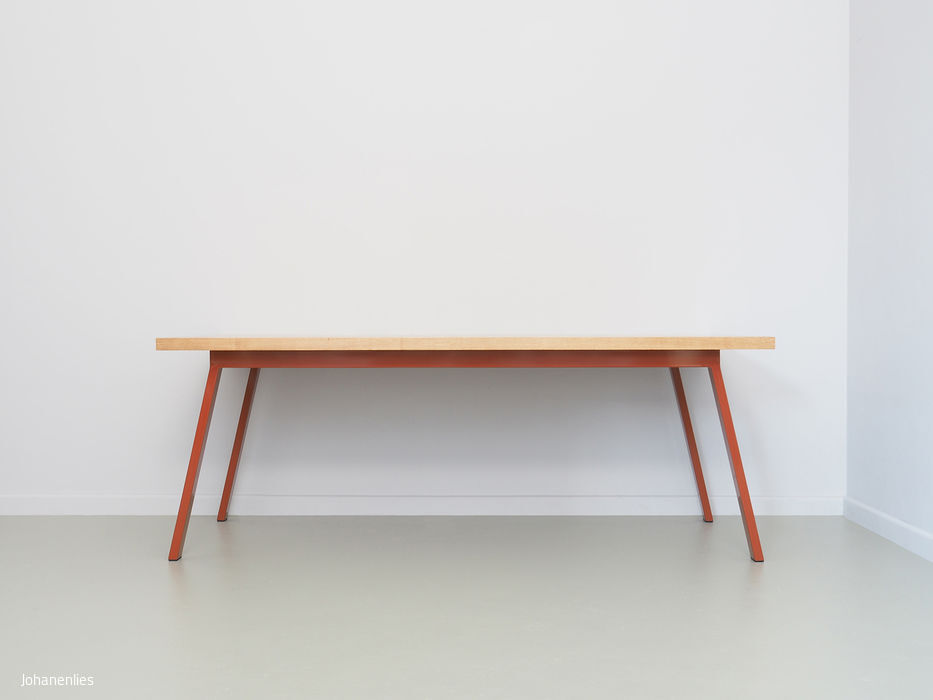
The Berlin-based upcycling label Johanenlies gives construction timber a new lease of life
A Clear Vision
Surrounded by historic architecture, this timeless villa stakes its claim as a distinctly modern presence.

House by the Lake
Refined geometry, striking presence