


Porz Cube
Densification using hybrid timber construction creates affordable housing in the south of Cologne
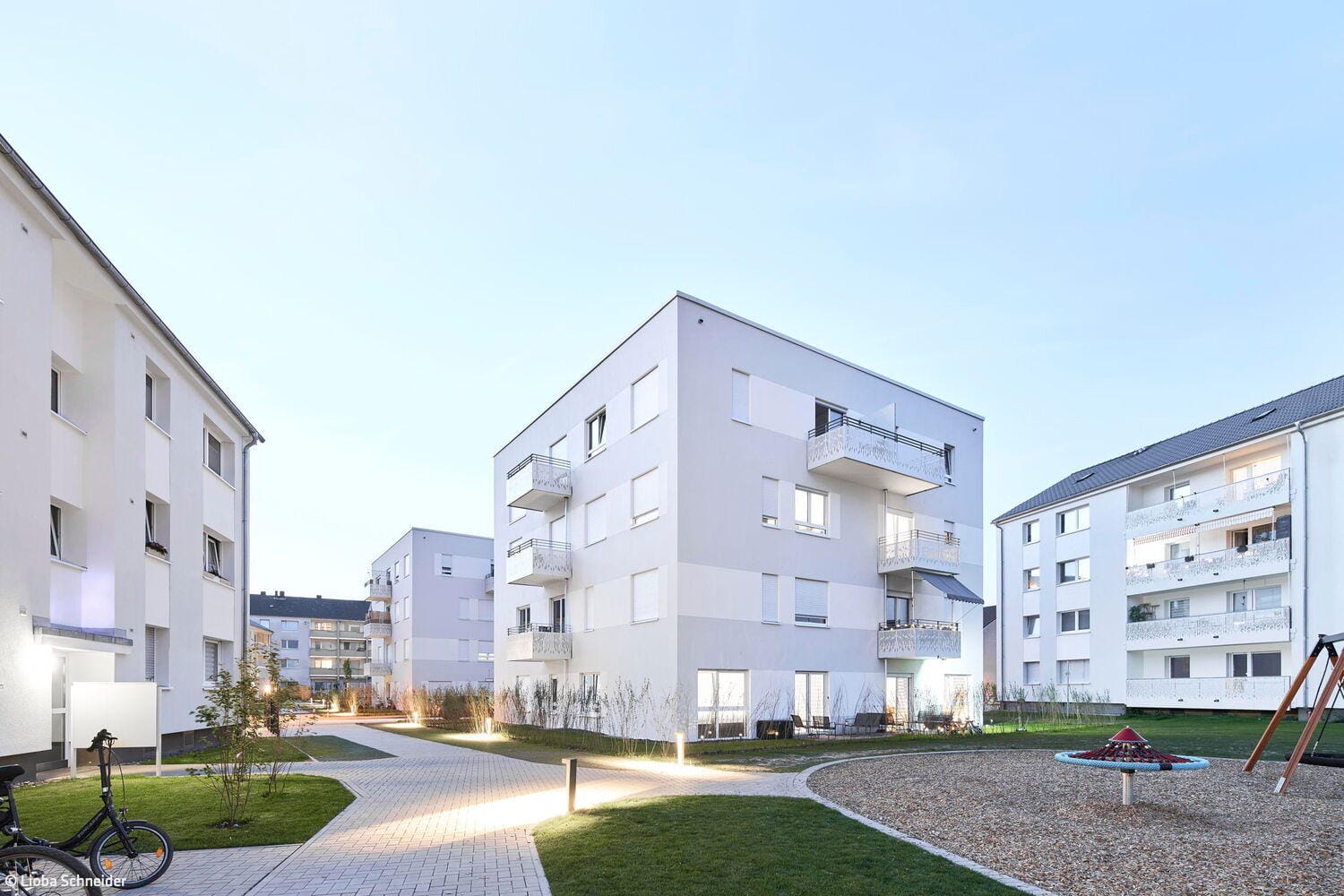
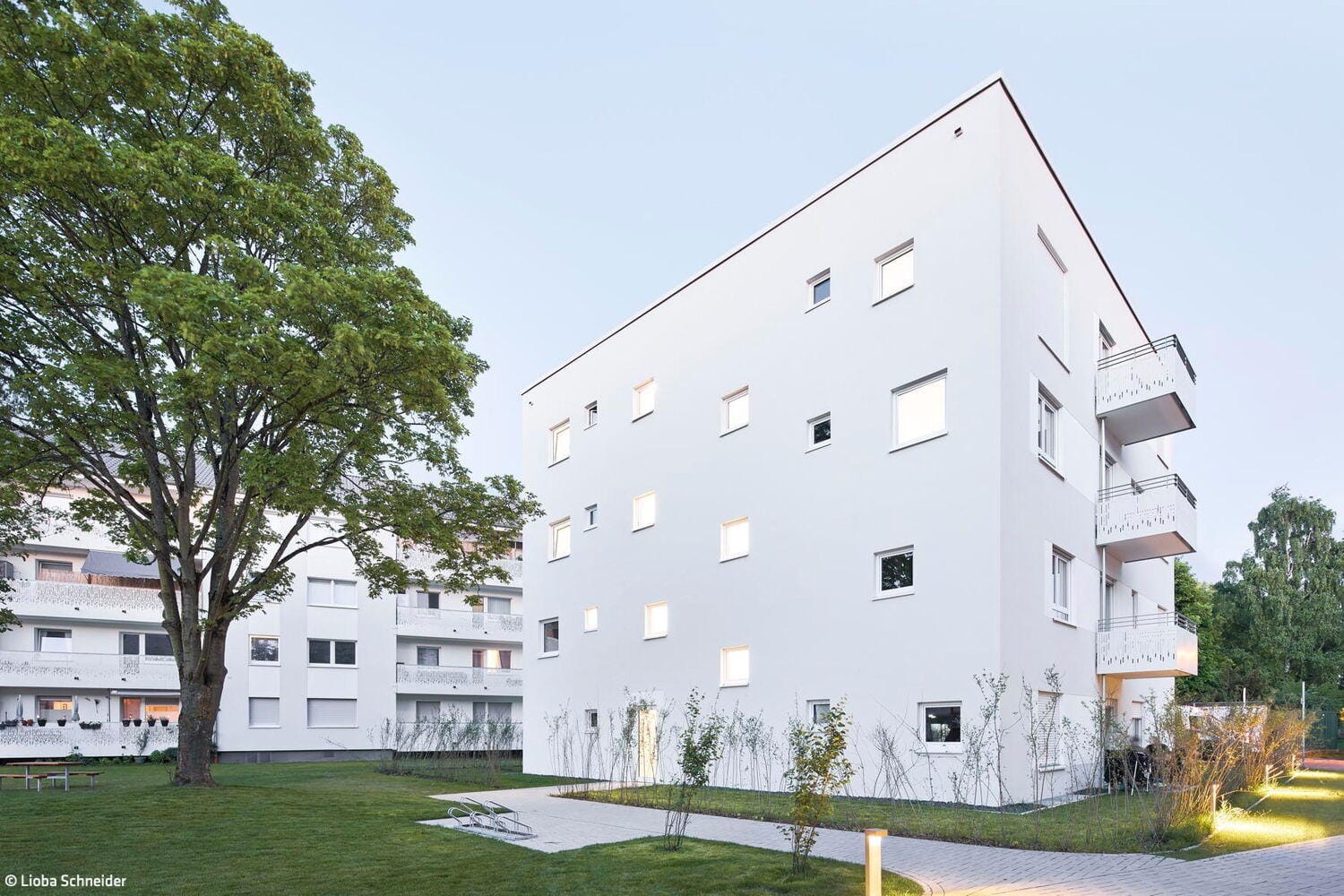
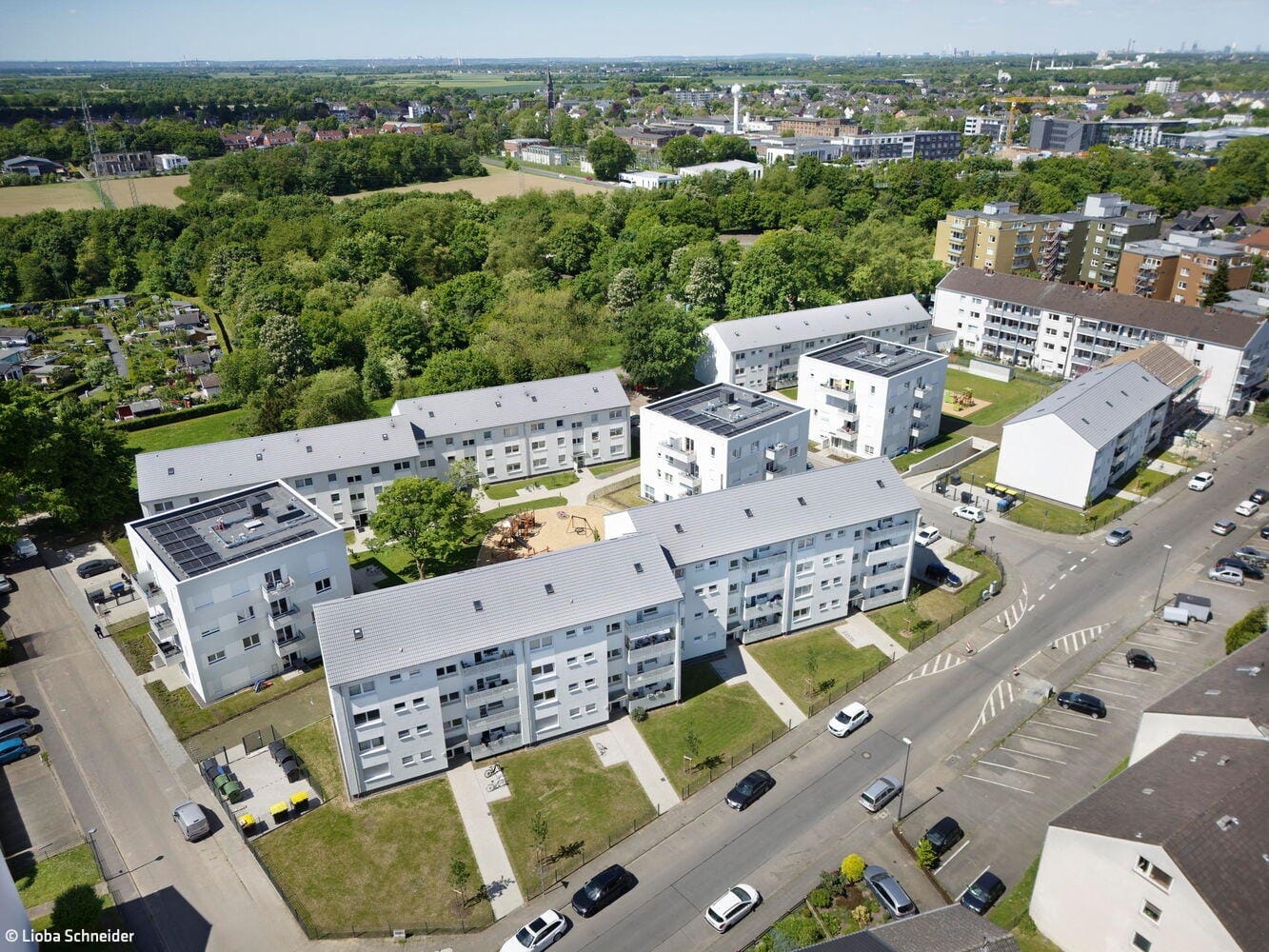
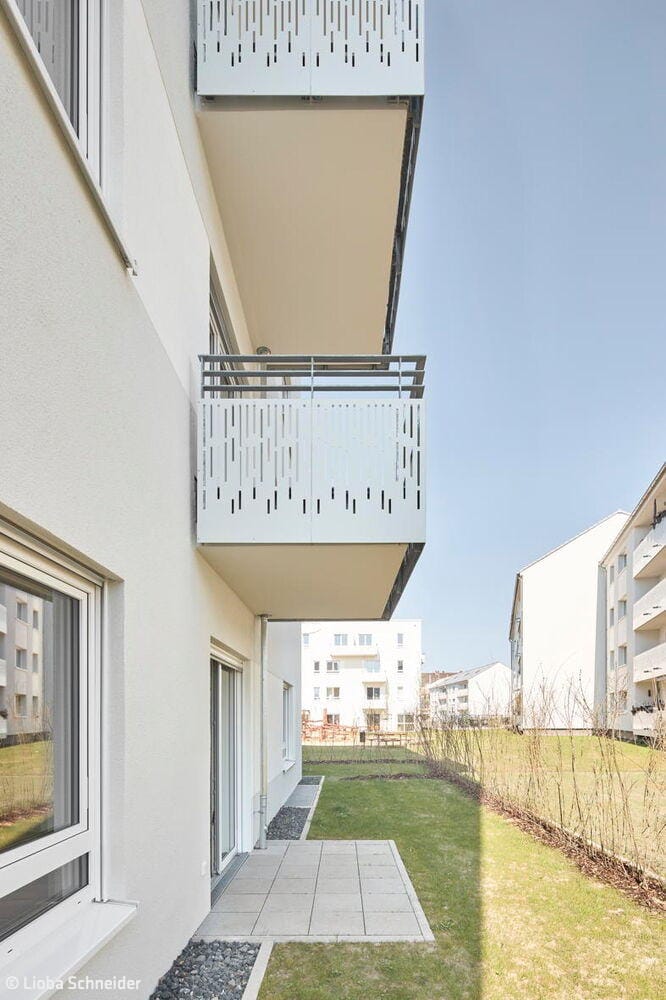
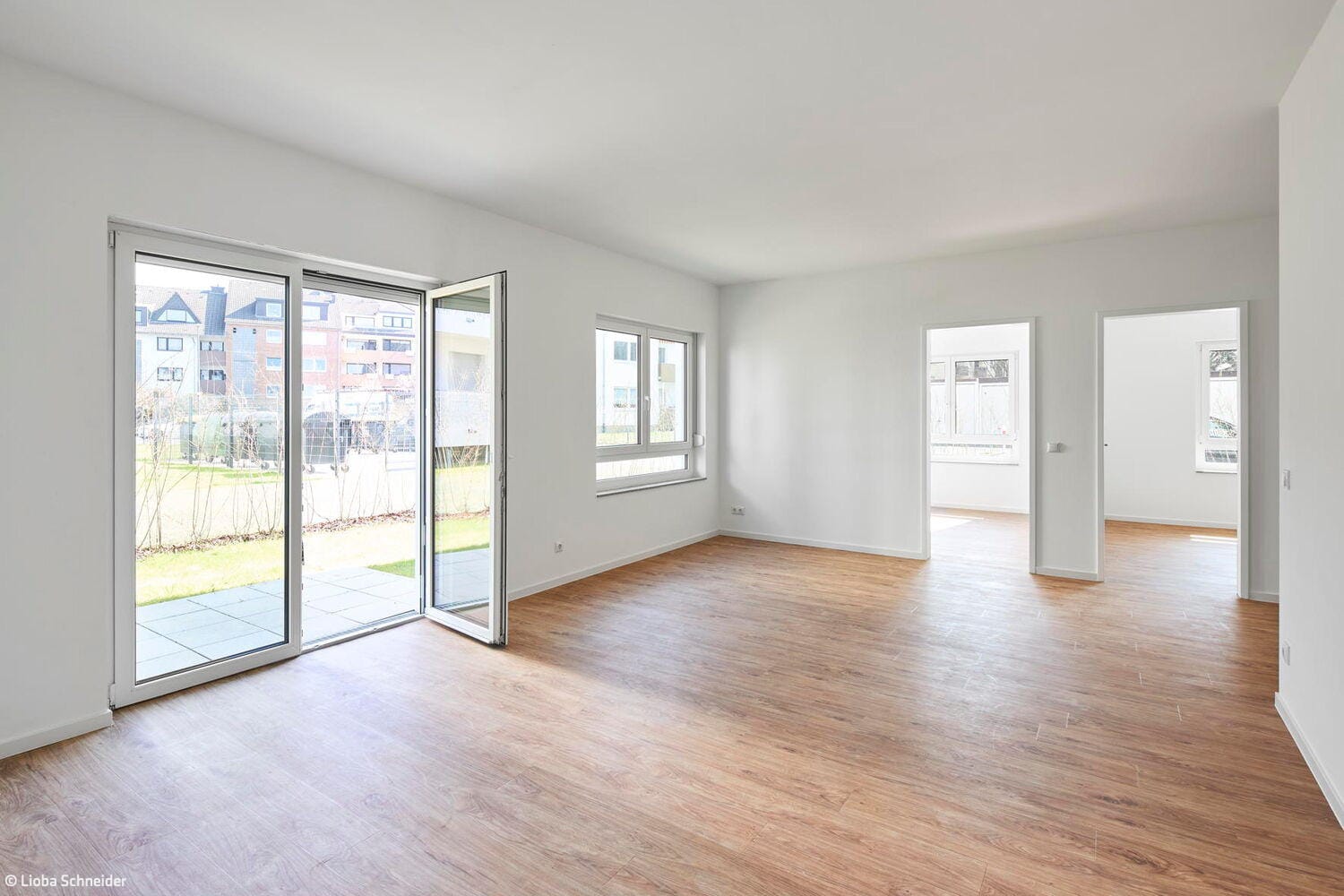
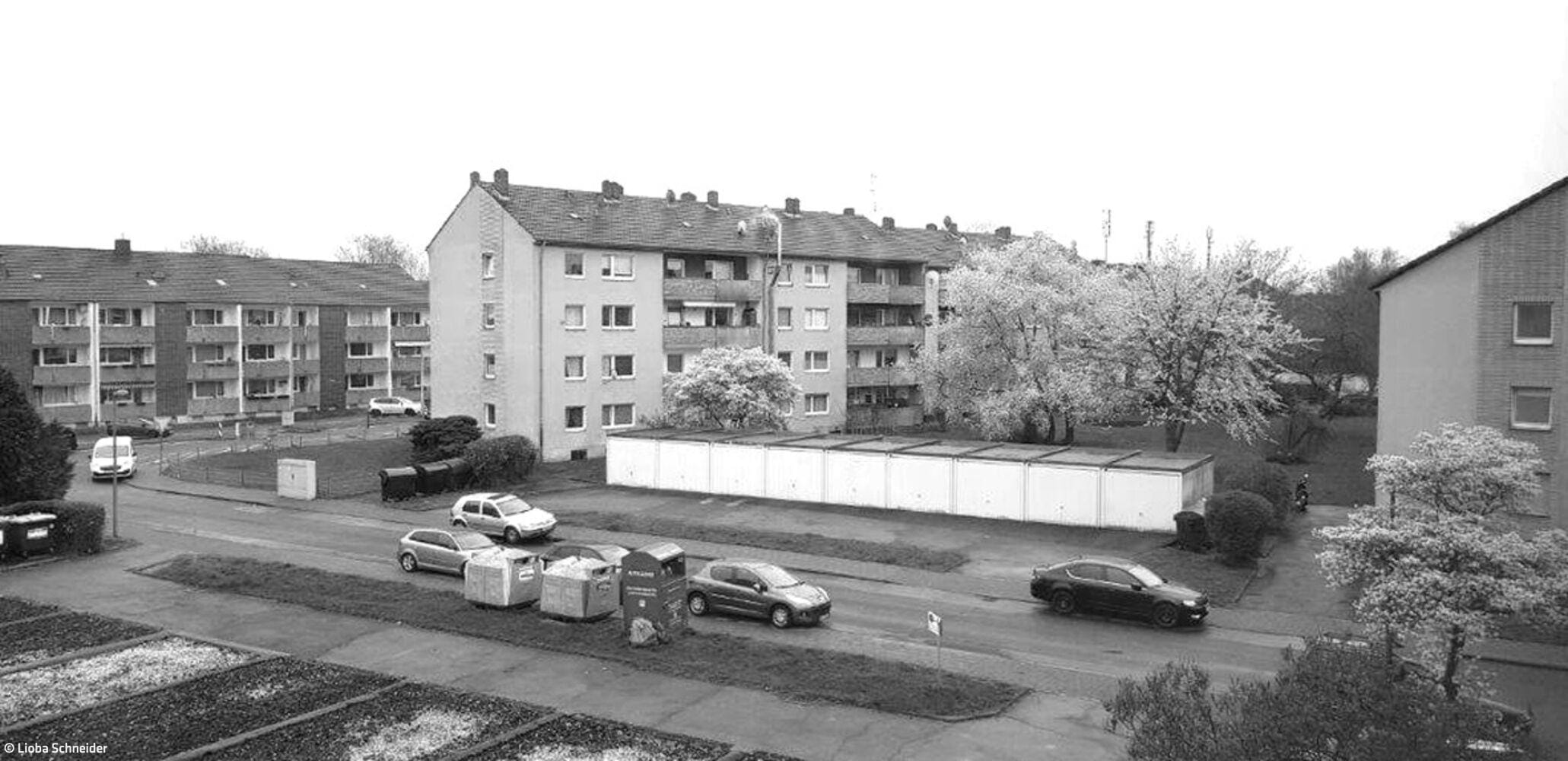
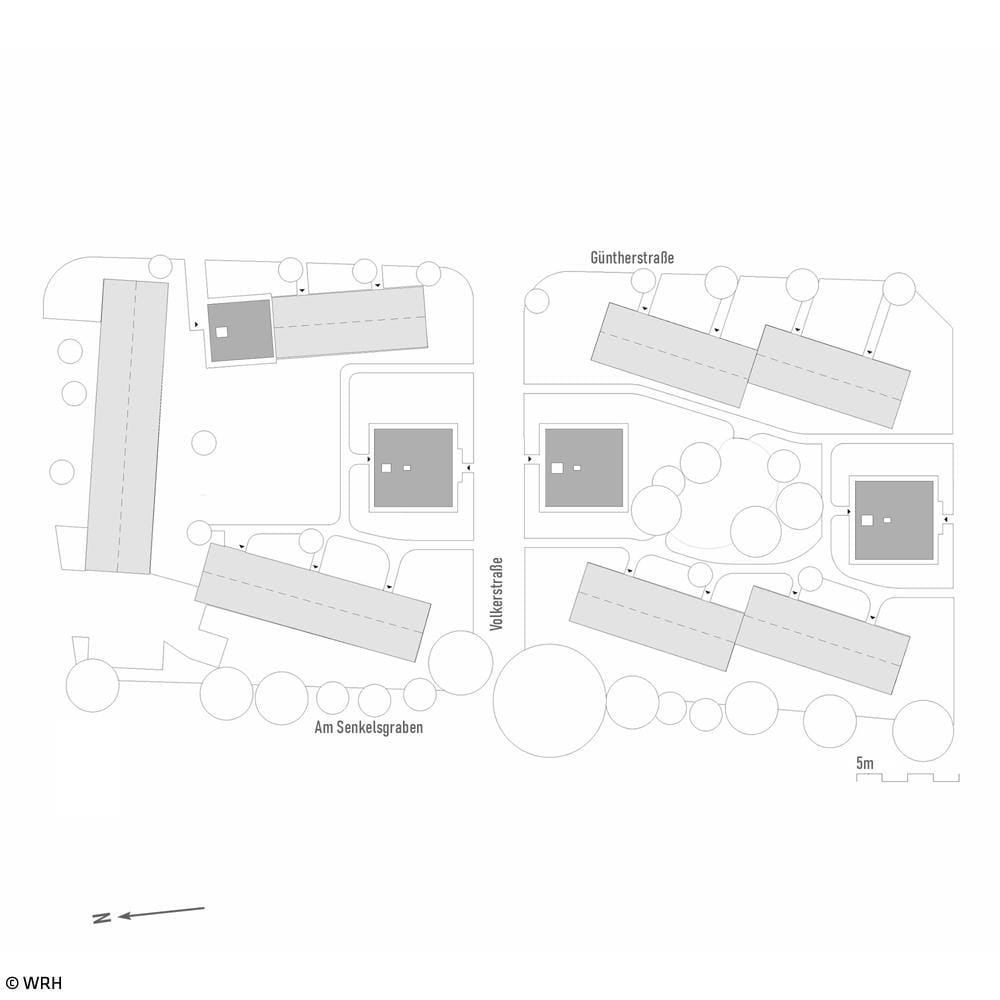
Modern residential communities offer considerable potential for new housing within their generous urban structures. A residential ensemble from the 1960s in Porz, situated directly adjacent to the Wahner Heide, was to be thoughtfully developed further for the housing company of the Rhineland Trades Association (Wohnungsgesellschaft des rheinischen Handwerks AG). The Bonn-based architecture and master planning firm 5BWS not only comprehensively upgraded the aging stock to current energy standards. By adding four new buildings with a combined total of 44 barrier-free apartments, the neighborhood was qualitatively densified and simultaneously strengthened from an urban design perspective.
Three cubic freestanding structures and one complementary replacement building were erected on previously sealed garage areas, containing 36 publicly subsidized and eight privately financed apartments. Their serial construction method using timber, concrete, and steel enabled high prefabrication, resulting in shortened construction timelines and flexible floor plans. Simultaneously, the new buildings close existing urban design gaps from the 1960s-era structure, reinforcing the quarter's clear organization. The courtyards remain car-free and are consistently designed as green spaces, playgrounds, and gathering areas. By reducing the parking ratio and minimizing the underground garage footprint, additional open space was gained: two playgrounds, communication zones, and recreational areas promote social interaction and community exchange. Tree plantings and expansive green spaces provide shading and natural ventilation, while light-colored façades and exterior solar shading minimize summer overheating and support climate adaptation. Energetically, the quarter relies on air-water heat pumps combined with photovoltaic systems.
The new buildings meet the BEG 55/EE standard, achieving energy efficiency class A+ with very low primary energy and final energy values as well as minimal greenhouse gas emissions. The hybrid timber construction method employed stores CO₂ long-term and utilizes timber as a renewable and recyclable raw material. Densification on already sealed surfaces further conserves soil resources and avoids additional infrastructure costs. Beyond ecological and economic considerations, however, an important social dimension is equally central: the publicly subsidized apartments are protected for 30 years and offered at an initial rent of €7/m². Allocation is conducted in close cooperation with social organizations, ensuring that wheelchair-accessible apartments can be allocated specifically to mobility-impaired residents according to actual need.
Photos:
Lioba Schneider
www.liobaschneider.de
(Published in CUBE Cologne 01|26)



Timeless Furniture Renewed
Hannah Mackenzie transforms vintage wooden furniture into captivating, one-of-a-kind pieces.
Protected Open Spaces
A new monastery café—where meaningful work and genuine hospitality flourish
Atmosphärischer Monolith mit Annex
Ein Wohnhaus verbindet sich über ein Terrassenplateau zu einem Ensemble
Urban Living Meets Nature
A Forward-Thinking Residential Community Shaping Contemporary Urban Development