


Space is the Place
Challenging circumstances became a catalyst for reimagining corporate culture and identity.
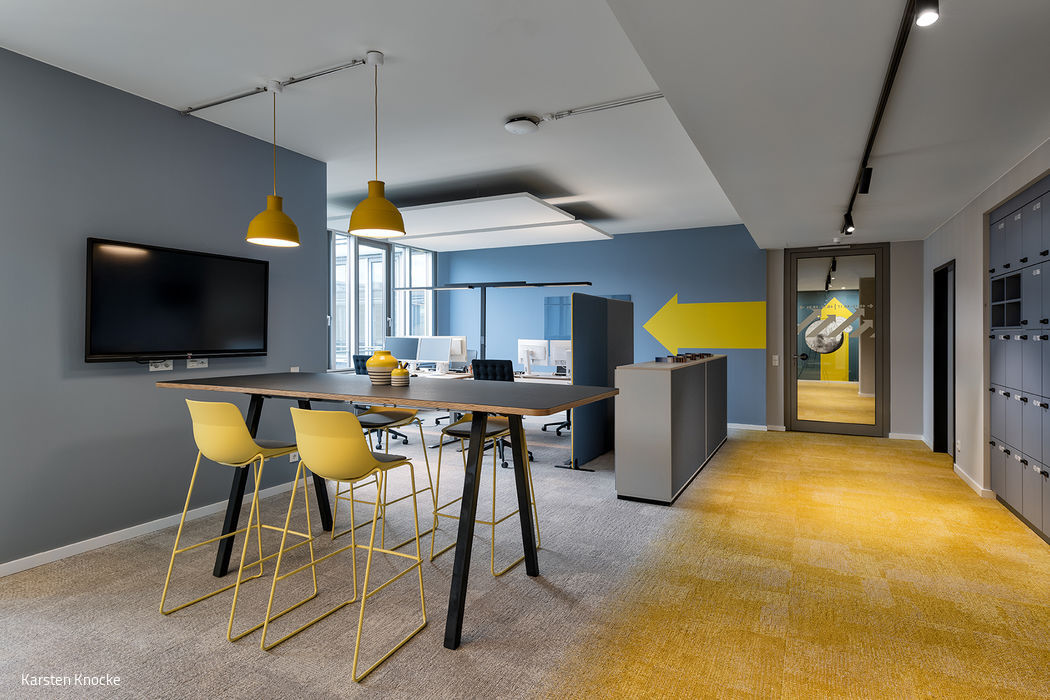
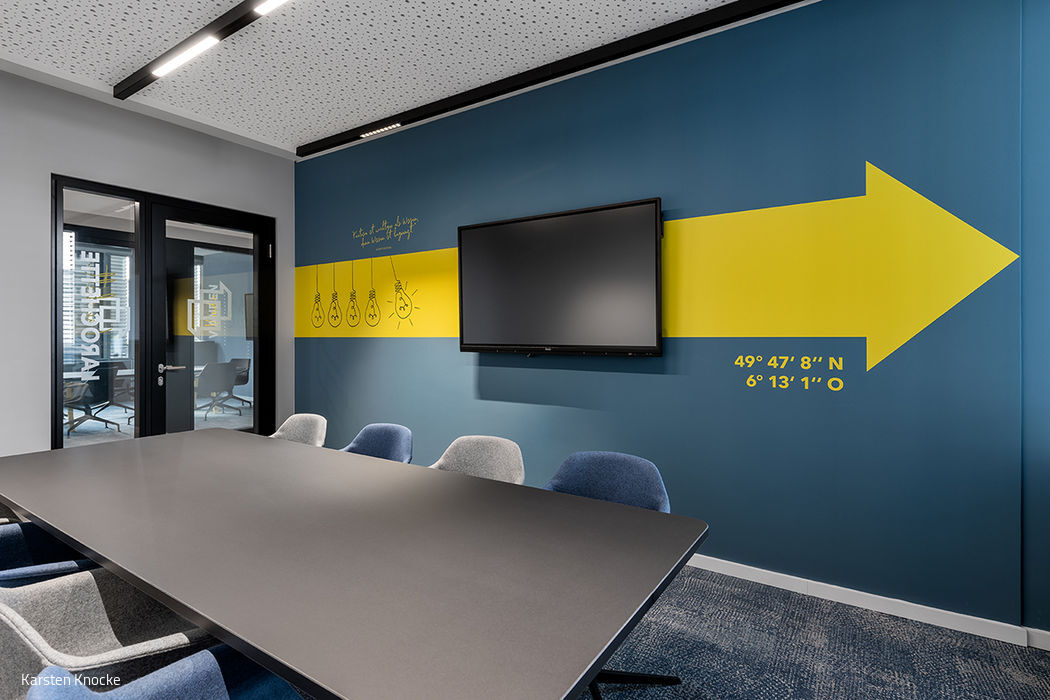
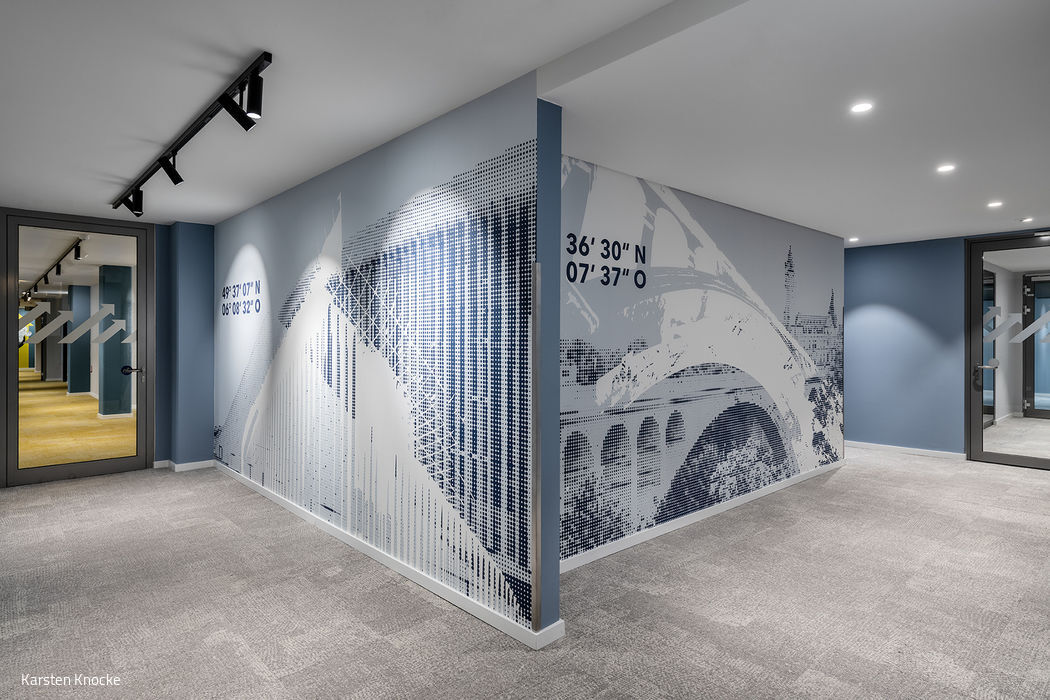
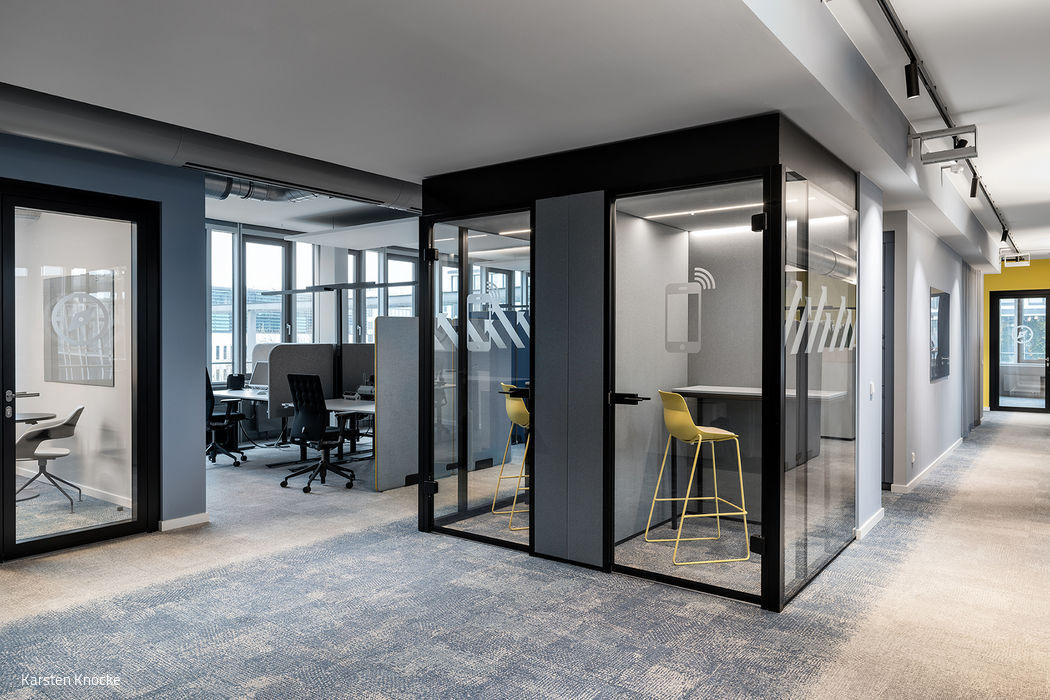
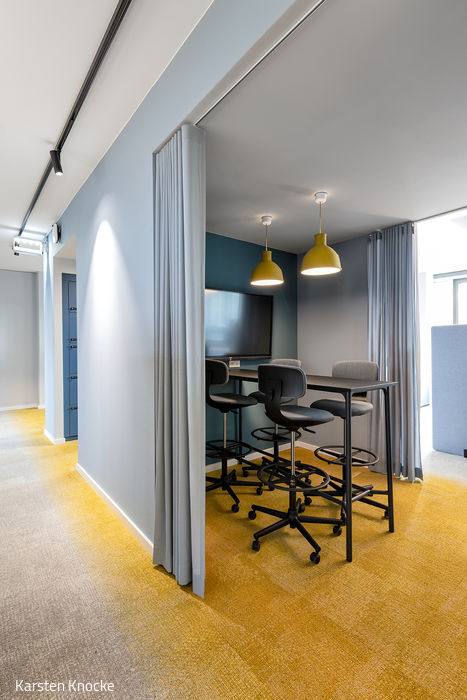
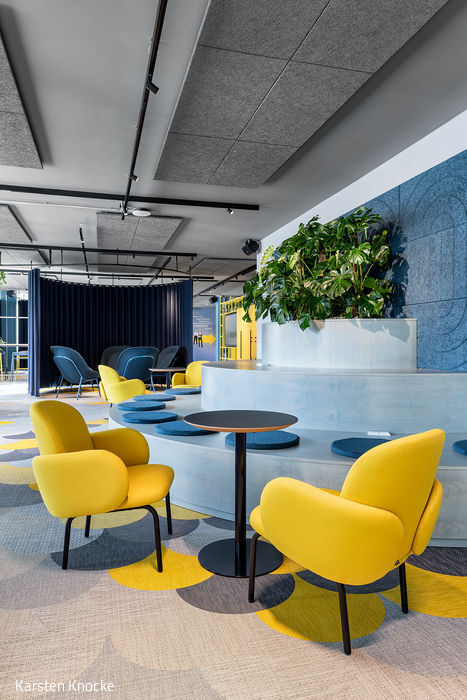
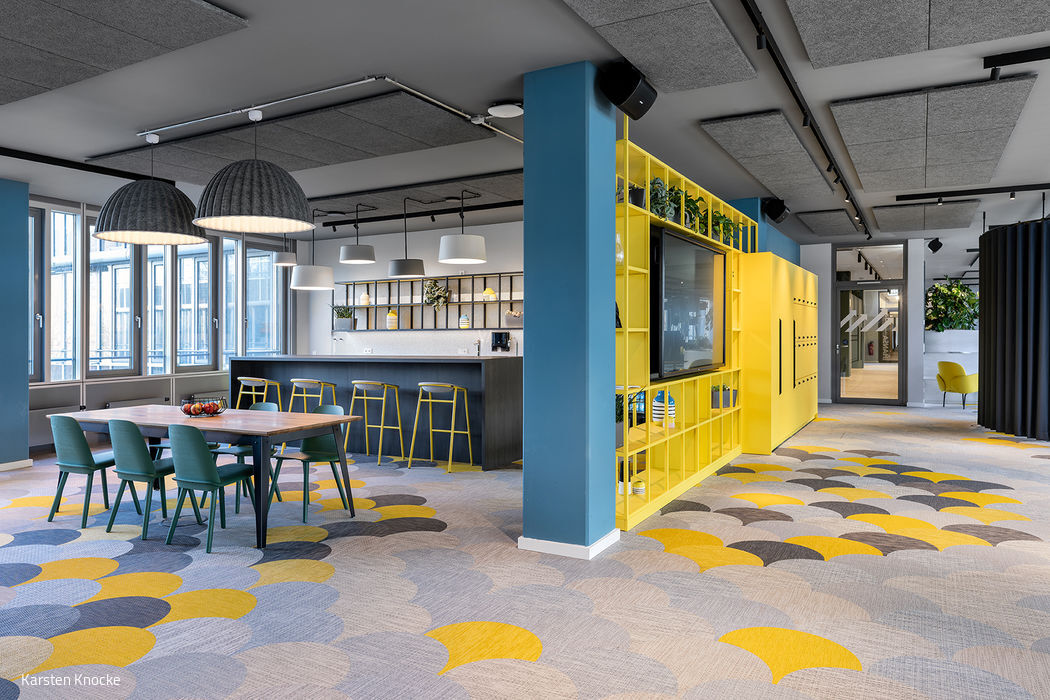
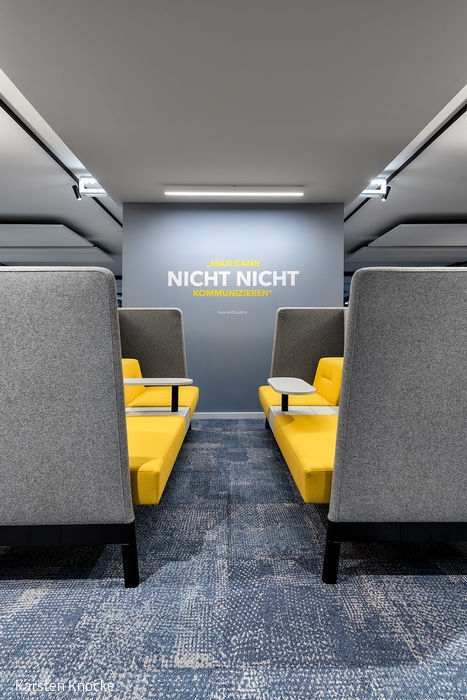
When financial services provider Hansainvest committed to a complete brand transformation, the decision came naturally to leave behind its traditional Hamburg headquarters—with their rigid, compartmentalised layouts—and relocate to a modern space designed for tomorrow's needs. The move presented an extraordinary opportunity: using the physical relocation as a catalyst to fundamentally rethink the company's culture and identity. Dubbed the "Mars Mission," this holistic transformation programme went far beyond office design. It challenged every aspect of how the organisation worked, its values, and how it presented itself to the world. The vision extended across two dimensions: internally, the new brand identity would unite the workforce, anchor company values, and set strategic direction; externally, it would articulate a compelling value proposition, create unmistakable market presence, and establish a competitive edge.
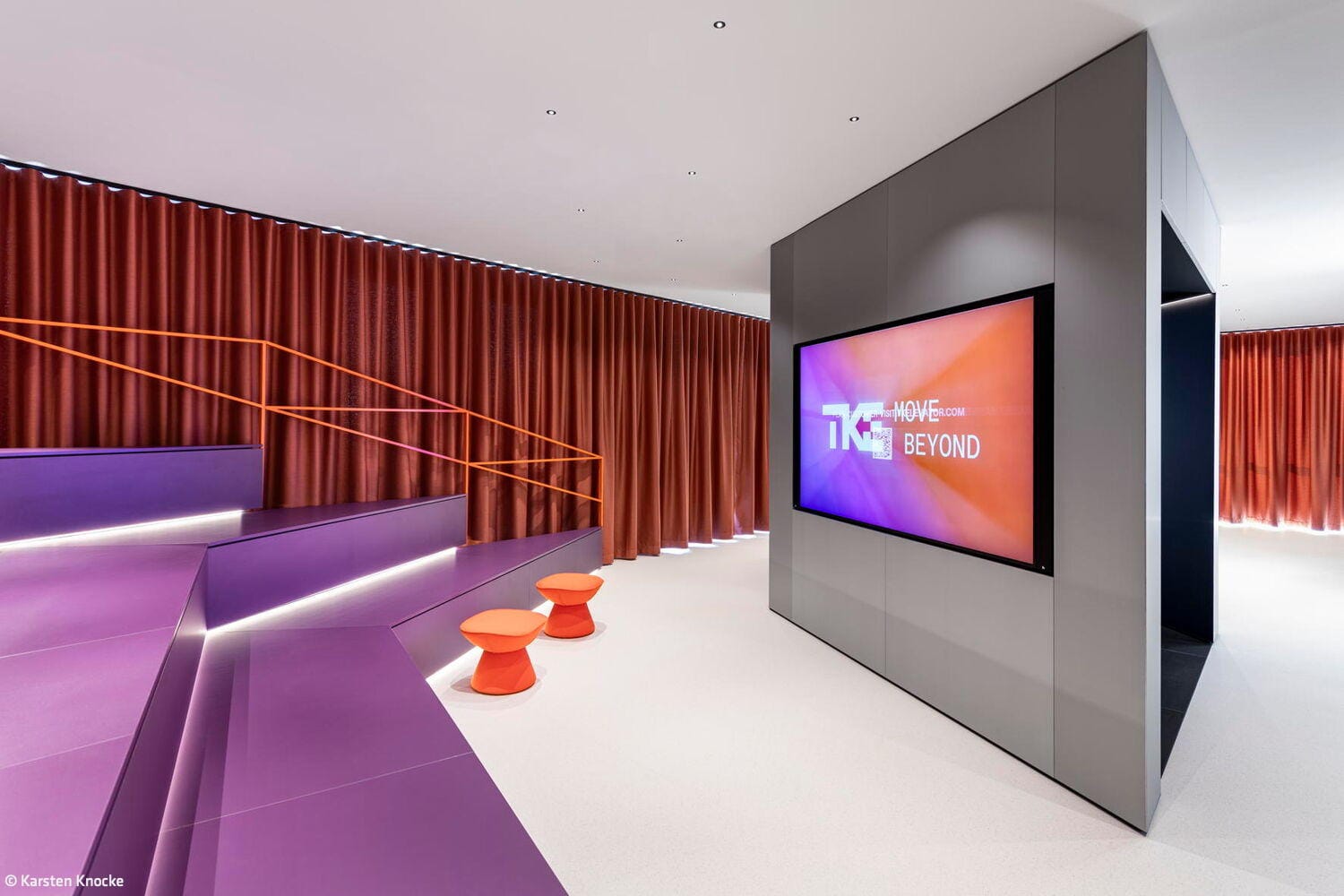
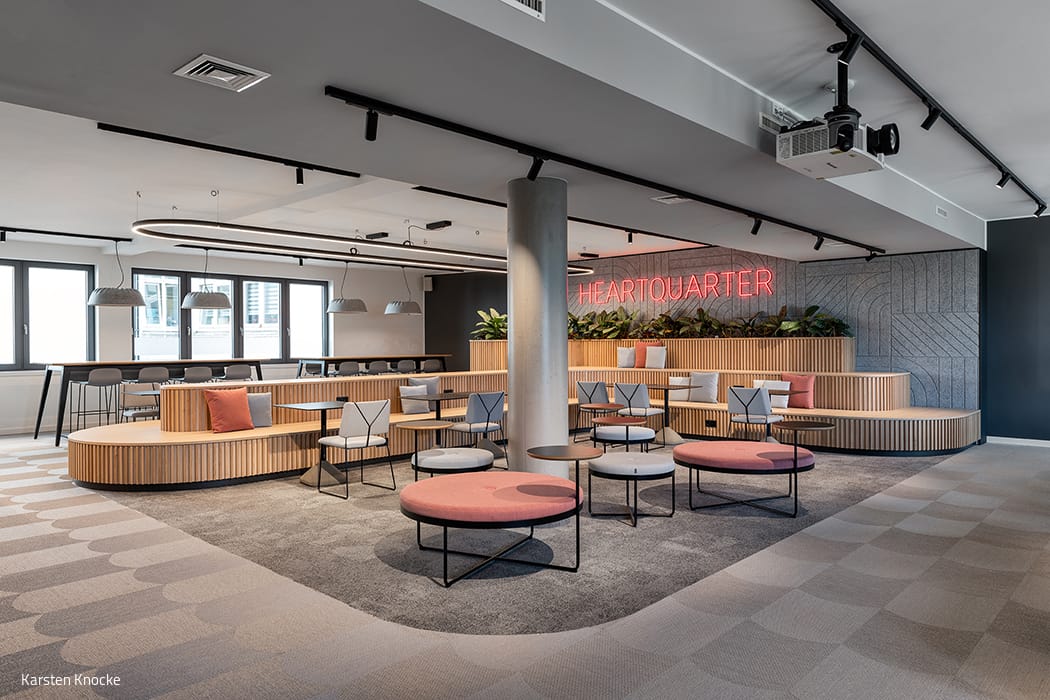
The planning office sbp created a comprehensive spatial design that translated the new brand identity into built form. Across three floors and 6,000 m² at Überseering, the office seamlessly blends dedicated workstations, quiet zones for focused work, and dynamic collaboration hubs, complemented by generous communal areas. The environment is defined by carefully curated materials, custom furnishings, a disciplined colour palette, and purposeful graphic language—each element working together to support both orientation and a strong sense of belonging.
The planning process prioritised adaptive flexibility above all else. When the Hansainvest team and sbp began their work in early 2020—as lockdowns forced a fundamental shift to remote work—what might have seemed a setback proved invaluable. The mandatory transition to home working and its ripple effects on IT infrastructure became a real-world laboratory. Teams across departments shared insights into how work was actually happening, creating a rich foundation of data and experience. This early feedback enabled the designers to build occupancy scenarios and space-utilisation strategies rooted in genuine user behaviour rather than assumptions—ensuring the final design responded to how people actually work today and tomorrow.
Photography Credits:
Karsten Knocke
www.knockedesign.de
(From CUBE Hamburg 03|22)

Allusion and Association
The Modernization of the Sumatra Office Foyers
A New Hub
Reimagined spaces for New Work culture: creating an inspiring workplace

Charming and Welcoming
Renovation honours tradition while delivering contemporary comfort
Wellness Ambiance
Form, color, function, and technology in perfect balance