


Cost-Effective Timber Modules
Sustainably Designed School Expansion Building a Primary and Community School
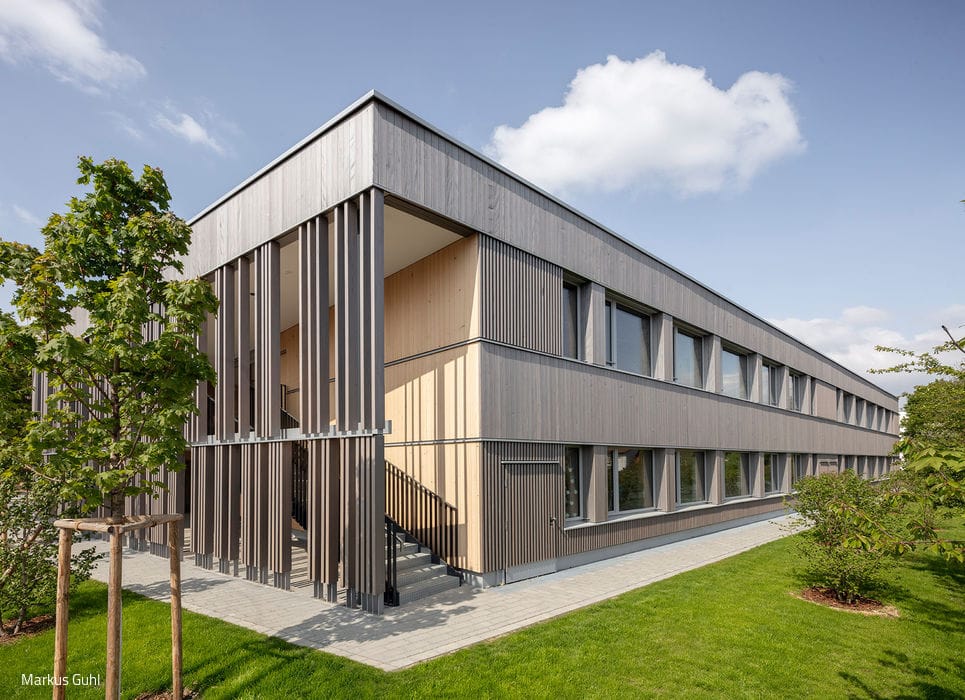
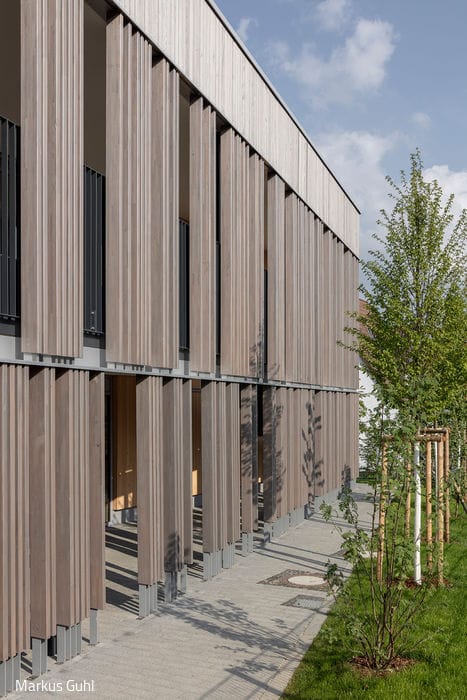
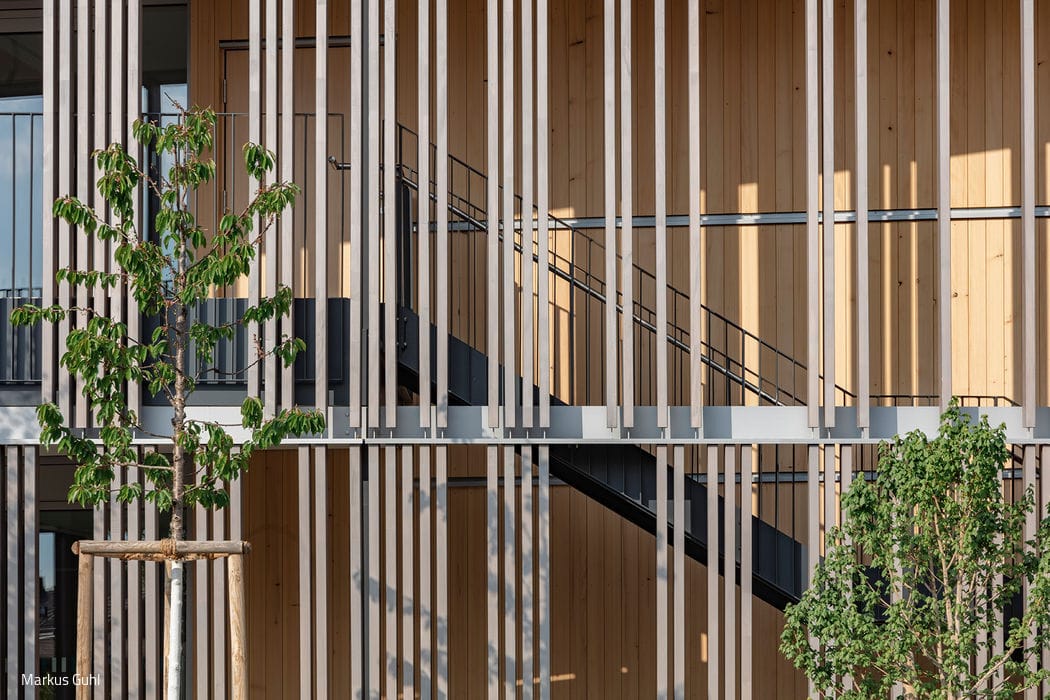
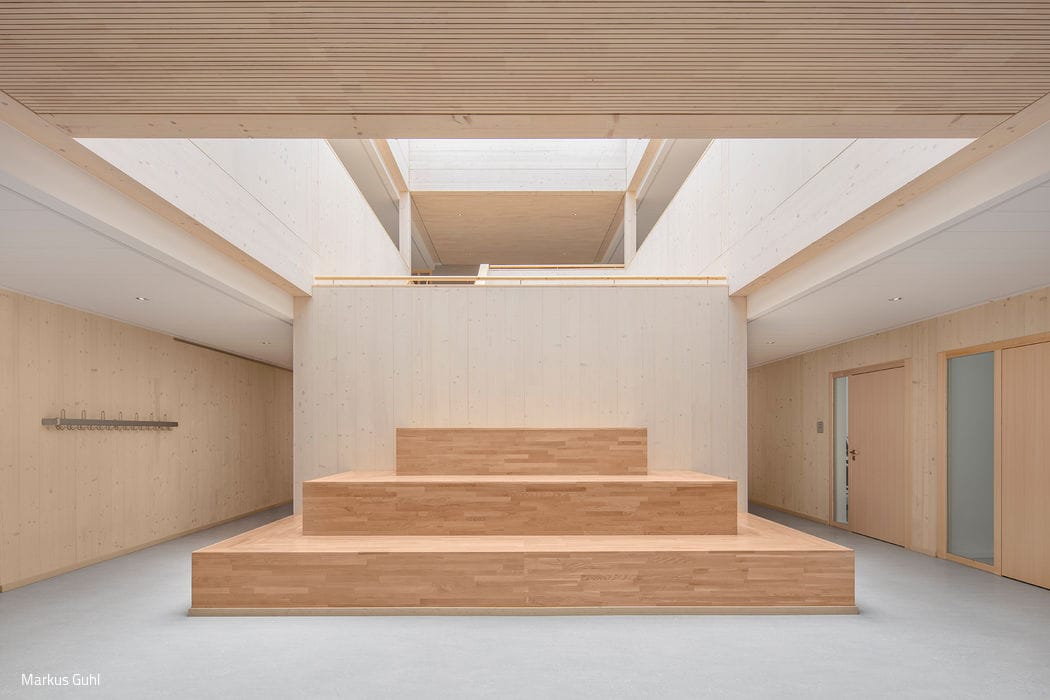
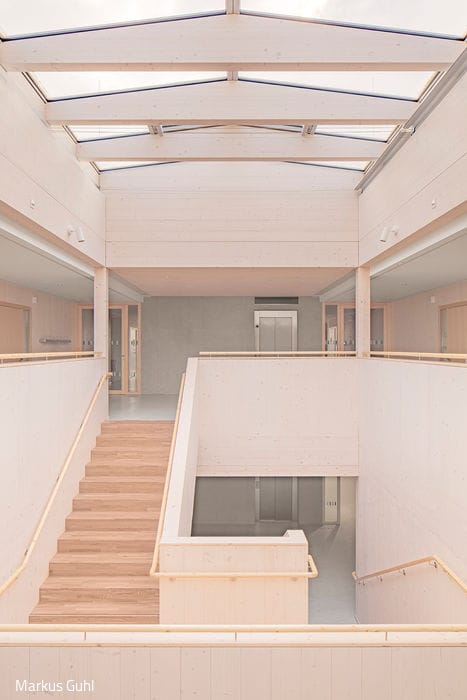
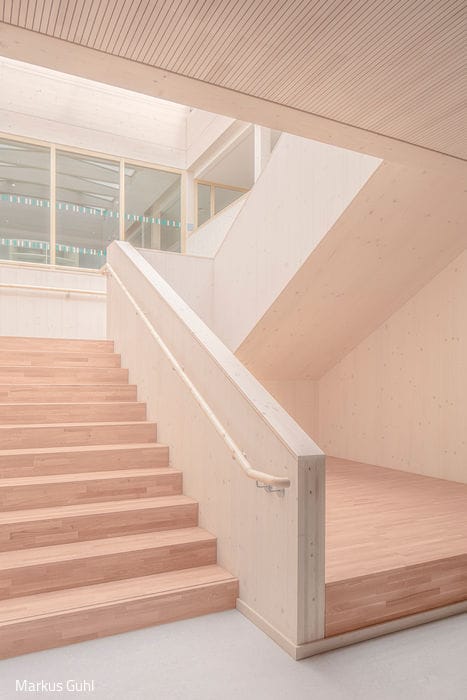
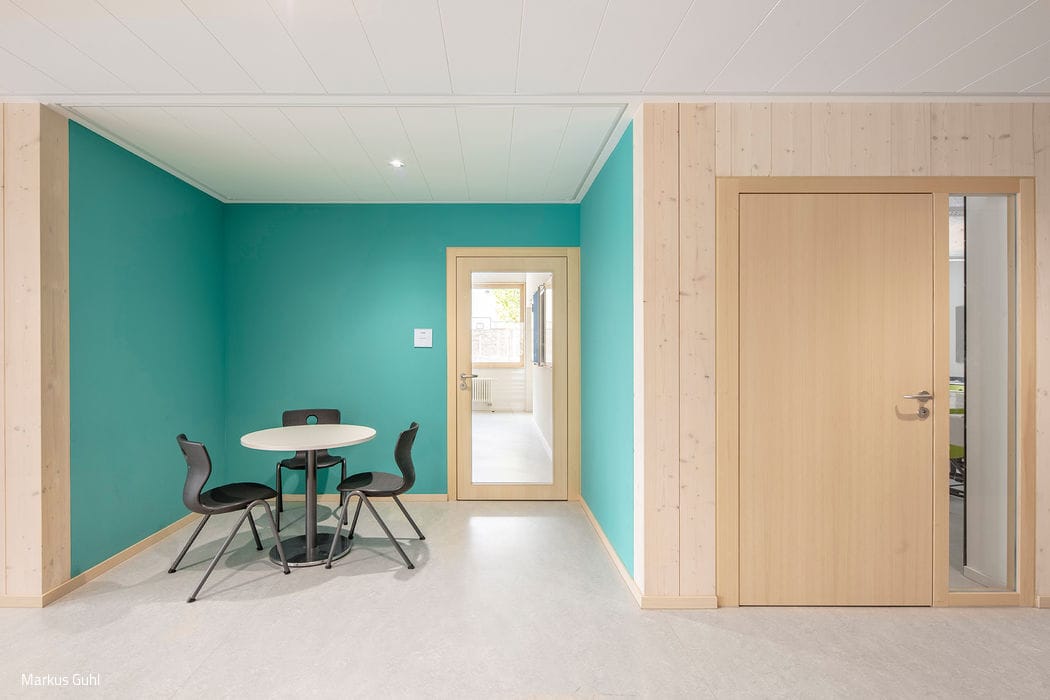
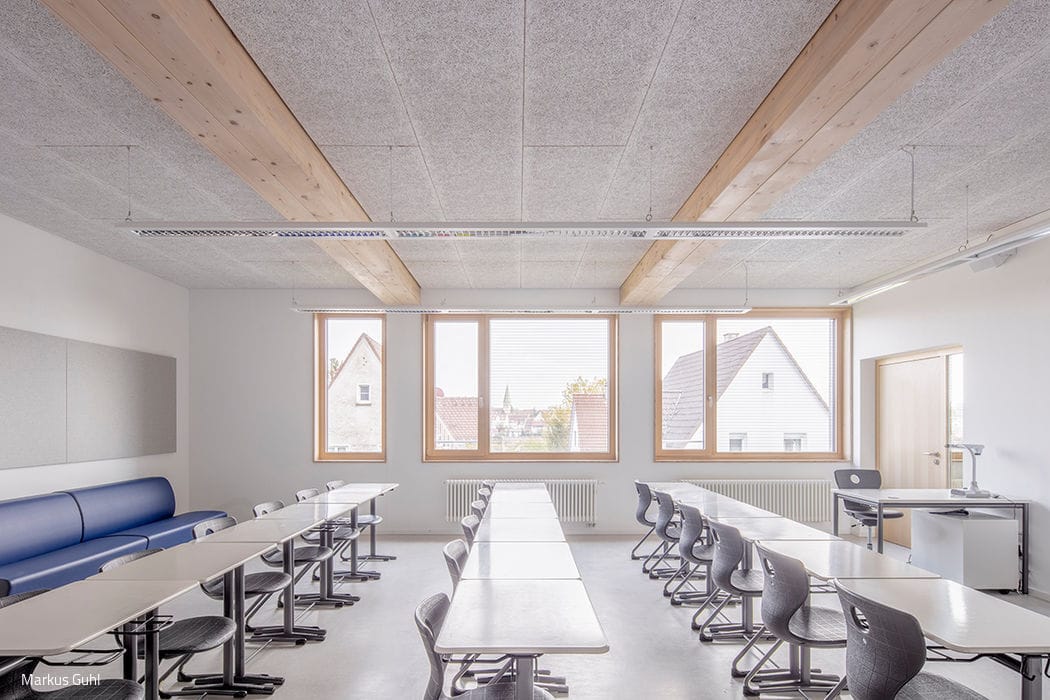
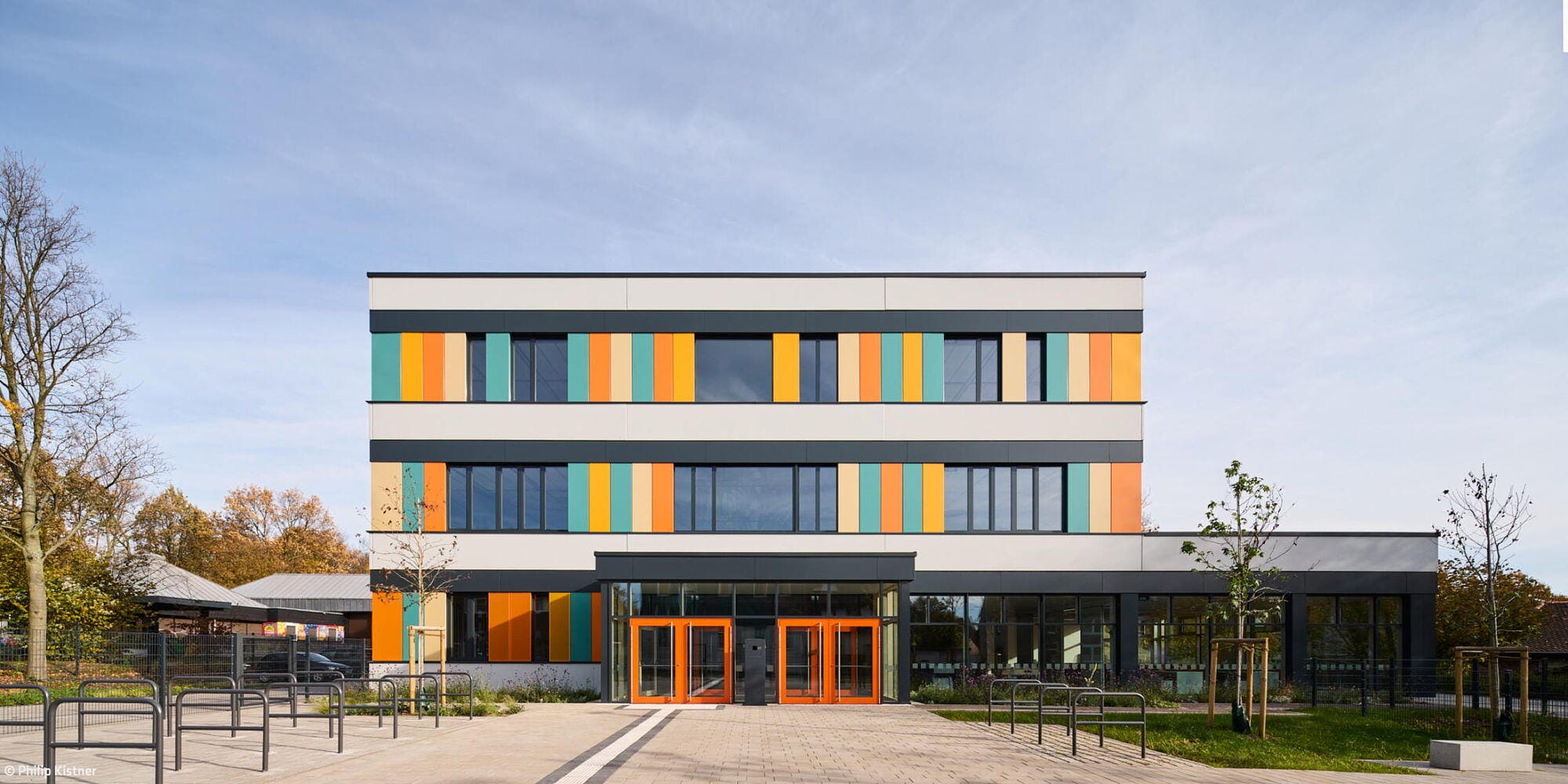
Over the past decade, Stuttgart's Körschtal School experienced rapid growth, eventually serving nearly 600 students—some participating in part-time primary-level education and all secondary students enrolled in full-day programs. The existing facility could no longer support the demands of modern, conducive learning environments. To address this need, Stuttgart's city administration commissioned Plan Forward, an architecture firm under the Stuttgart-based Wolff Group, to design the expansion. Constructed using modular timber building methods—a choice that dramatically compressed the building timeline compared to conventional concrete construction—the architecturally refined addition opened its doors right on schedule for the autumn 2021 school year.
The two-story structure stands as an independent volume, unattached to existing buildings and accessible via a fully barrier-free entrance. Spanning approximately 1,200 m², the new building houses all necessary spaces for both the all-day primary program and the community school. Körschtal School now offers twelve additional classrooms in total, complemented by dedicated rooms for differentiation and inclusion initiatives, plus a dedicated faculty area. The central zones of the expansive corridors serve as flexible activity spaces for the all-day program. The efficiency of timber module construction proved particularly striking during this active-school implementation: in just four weeks, the prefabricated modules were assembled after shell completion. Here's how each classroom module came together: divided into three transportable units, each received a thin cross-laminated timber floor slab, central room joists, and partition walls toward adjoining spaces. The ceilings functioned as horizontal load-bearing panels, rigidly connected to the walls to transfer loads to the foundation. While individual modules received temporary bracing during assembly, continuous reinforced concrete and cross-laminated timber walls provide overall structural bracing. Sustainability was a cornerstone of this school design. The flat roof features extensive green coverage and is equipped with photovoltaic panels. The energy strategy incorporates ventilation with heat recovery via high-performance cross-flow heat exchangers—a system that, paired with superior building envelope insulation, delivers substantially lower energy consumption than conventionally constructed schools.
Photography Credits:
Markus Guhl
www.architekturfotograf-markus-guhl.com
(Featured in CUBE Stuttgart 03|22)

No Off-the-Shelf Pools
Pool concept for a property with multiple levels and depths
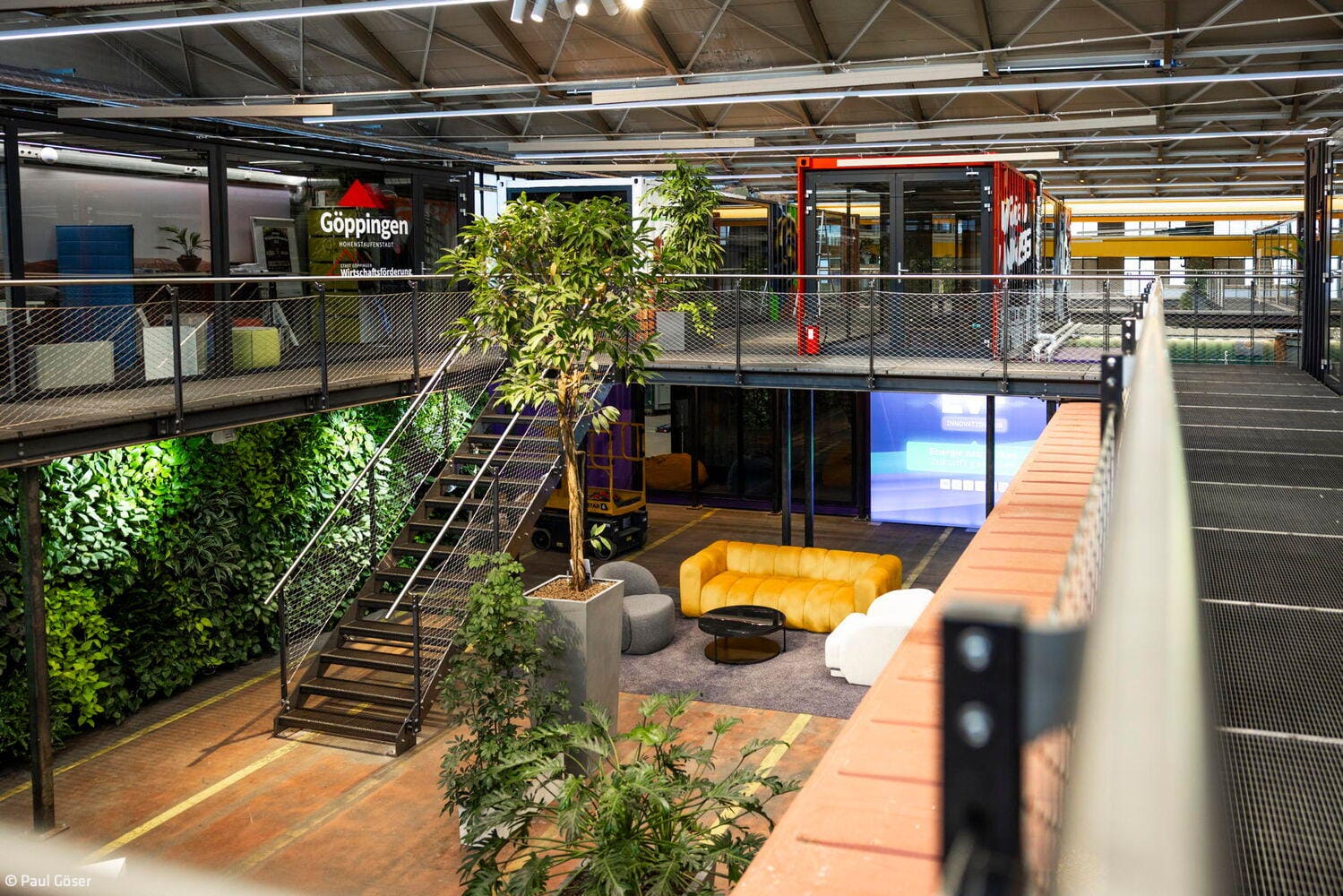
Architecture as Active Framework
Industrial Building Transformed Modularly and Sustainably with Flexible Mixed-Use Program

By the Flowing Stream
A contemporary garden with pool surrounds a restored mill, thoughtfully echoing its historic character.
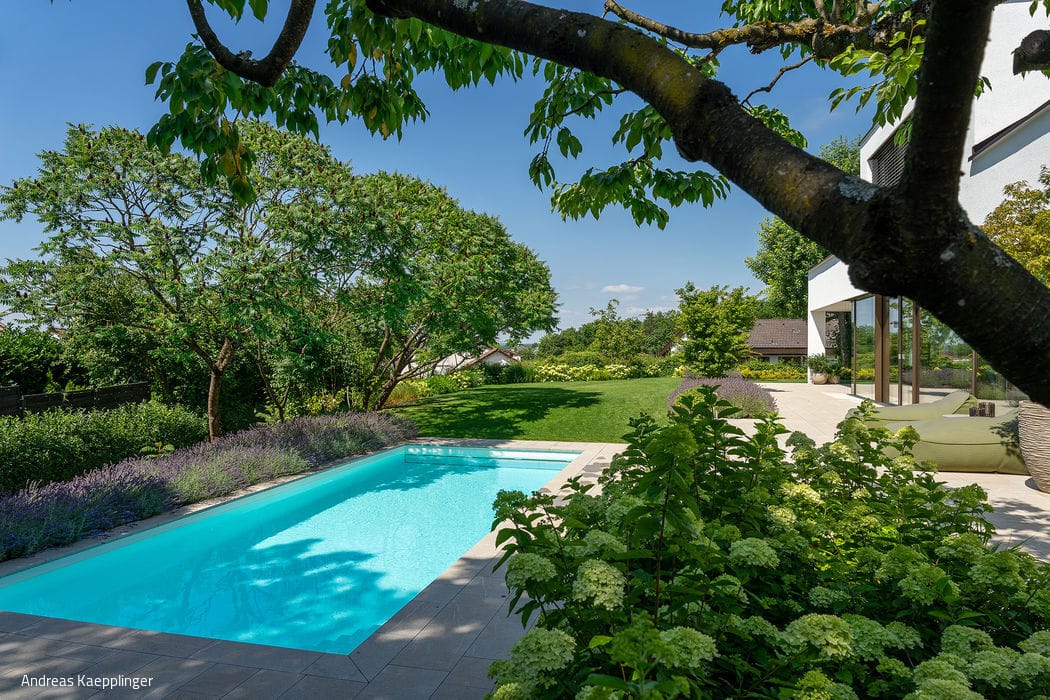
Swimming Beneath Ancient Trees
A Family Garden for Modern Living: Productive Planting, Play Spaces, and a Swimming Pool