


Unconventional thinker, heritage rescuer
Munich architect Peter Haimerl: bridging past and future
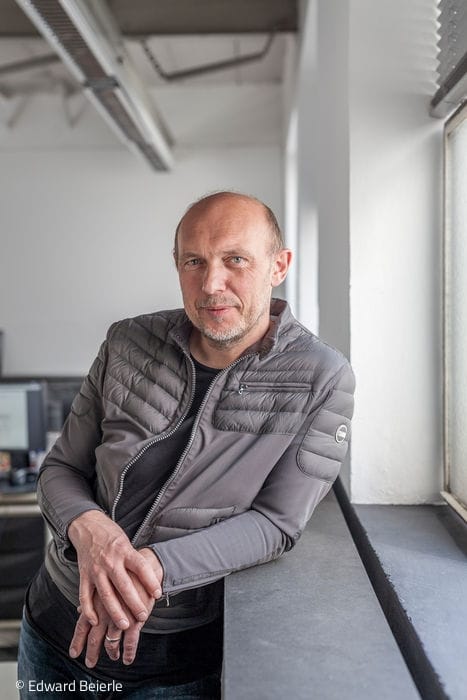


CUBE: You're known as one of the region's most unconventional architects. What drives you to challenge conventional building practices?
Peter Haimerl: That's a difficult question to answer. I think it stems from an unconventional entry point into architecture—one that doesn't begin with construction logistics. I've always been drawn to how spaces are composed, how reality itself is structured and emerges. What does reality actually mean, and how can thought reshape the physical world? My work isn't about deliberately breaking the mold. Even as a student, I was integrating philosophical concepts into my designs, allowing the design methodology itself to become part of the building. That approach has simply continued throughout my practice.
Were there key influences that shaped your path?
Peter Eisenman was undoubtedly the most important figure for me. He was the first to work as a philosopher-architect, actually translating philosophical concepts into buildings—and in doing so, fundamentally transformed how we understand architecture itself. He expanded our vision of what architecture could be.
Your concert hall in Blaibach certainly made waves. What inspired the idea of sinking a concert hall into the earth?
The concept wasn't originally about building a concert hall at all. We started with a different mission: bringing culture to a small town in the Bavarian Forest. We were looking for collaborators who could develop bold ideas and see them through—and we found Thomas Bauer, a local with the same vision of filling the cultural void in the region through innovative means. The concert hall was his idea. Our first thought was renovating an existing barn, but we quickly realized that if we truly wanted to create something meaningful and reshape the place, we couldn't start from what was already there. We needed the best possible acoustic environment. The challenge was integrating a world-class concert hall into a small village without overwhelming it—letting this grand vision belong to the community, not dominate it.
So the earth berming was primarily an acoustic choice?
Acoustics were part of it, but the topography offered something crucial: a natural slope. We tilted the concert hall into the hillside. The granite exterior wasn't arbitrary—it connects to local building traditions. Granite walls have always been the structural language of the Bavarian Forest. There's also something about the character of the people here: they have a distinctive, unapologetic individuality. They don't hide their strength; they place it confidently alongside other structures. That's what creates compelling places—these bold, self-assured gestures in conversation with one another. We wanted to honor that spirit.
The experiment clearly succeeded. But has the concert hall transformed the village itself? There was significant vacancy before. Has it revitalized the community?
The village hasn't dramatically revitalized, though that wasn't the primary goal. What we did achieve was reclaiming the vacant core. The surrounding neighborhoods have their typical thriving single-family homes—that wasn't what needed changing.
What you do sometimes transcends typical "adaptive reuse." It's more like architectural healing or intervention. How do you approach this work?
I'm convinced that when you rebuild and renovate historic houses, you must do so thoughtfully—never diminishing their inherent value. It's not about recreating the past or undoing time. The people who built these houses wanted to live in their present and imagine a future. When we renovate these structures, we try to continue the conversation as they would have, if they'd had modern tools and possibilities at their disposal. We honor the craftsmanship and care that went into them, but we use contemporary means to bring them forward.
You founded an initiative called Haus.Paten. How does it function?
Unfortunately, it doesn't work as envisioned. We originally wanted to mobilize fellow architects to search out and rescue old houses while introducing modern architecture to the Bavarian Forest. It turned out that few colleagues were willing to invest substantial unpaid time in this mission, or to engage in extended conversations with residents and local councils about their communities' futures. The company structure remained, but the collaborative vision didn't survive. The original dream of launching a large-scale architectural initiative with partners simply fell away. I continue the work alone now.
How would you articulate your architectural philosophy—your credo?
Build what you can think. That's the fundamental credo. Architecture isn't merely about creating functional structures within context. It's far more generative. It can have a creative impact on its surroundings, solve real problems, create new connections, and establish the kinds of worlds and brands that others can build upon. Architecture, alongside the digital realm, is our most creative and inspiring discipline.
You've just completed another rescue project—the severely deteriorated Schedlberg house. What led you to work with concrete blocks here?
Many reasons converge. First, rural construction has always relied on a simple fundamental geometry: the log or beam. In the Bavarian Forest specifically, granite logs became door frames, troughs, and pavers. Tree trunks became timber beams assembled into houses. The log was the bridge—from raw nature to cultural form. We wanted to translate that logic into today. We treat concrete blocks as pixels: a flexible structure that can surround, complement, or rebuild houses. Like pixels in the digital world, they're unlimited in possibility. They can do anything—including save a house.
Before Schedlberg came the Schuster farmhouse in Riem, and now the Derzbachhof. Are you interested in preserving tradition, transforming it—or something else entirely? Where do these unconventional ideas originate?
I want to preserve as much as possible. My approach is defined by conservation—no method preserves more of the original building fabric than our interventions. Then comes invention layered thoughtfully on top. It's about honoring the historical and human dimensions of a place while finding where new elements can nestle naturally into existing structures. Through careful observation and inspiration, we think the building forward in conversation with what's already there.
Yet you see yourself less as a heritage conservationist...
Actually, I see myself first and foremost as a heritage conservationist. According to the Venice Charter, there are two essential principles: one is the preservation of substance – and there's no better method than the one we regularly employ to achieve maximum substance preservation – and the second is for heritage to remain alive and relevant through contemporary use. I believe we fulfill both of these principles to the highest degree.
How do you and your family live?
I live in an older building – and I love them.
Can you still imagine taking on a 'standard' building project – or would you find it utterly tedious?
I consider all my work fundamentally grounded in reality. The thinking behind my houses is always practical and straightforward – though I suspect that surprises many people. There's nothing overly complicated about it. When we call houses 'normal' today by smothering them in expanded petroleum foam, installing plastic windows, and giving them the aesthetic of toy model homes – I simply cannot regard such a house as normal.
Mr. Haimerl, thank you for your time and insights.
Interview by Christina Haberlik
Peter Haimerl
Born 1961 in Eben, Bavarian Forest
1981–1988 Architecture studies at Munich University of Applied Sciences
1988–1990 Worked with Raimund Abraham, Günther Domenig, and Klaus Kada
1991 Established his own practice
Peter Haimerl's practice focuses on projects that challenge conventional architectural boundaries. His goal is to develop unconventional solutions and drive innovation with every commission. His studio creates concepts that merge architecture with computer programming, sociology, economics, politics, and art. Through the "Haus.Paten" initiative, Haimerl is committed to advancing building culture in the Bavarian Forest. His work has earned numerous accolades, including the "Große Nike," the "Bavarian State Prize for Architecture," and the "Bavarian Culture Prize."
(Published in CUBE Munich 03|19)

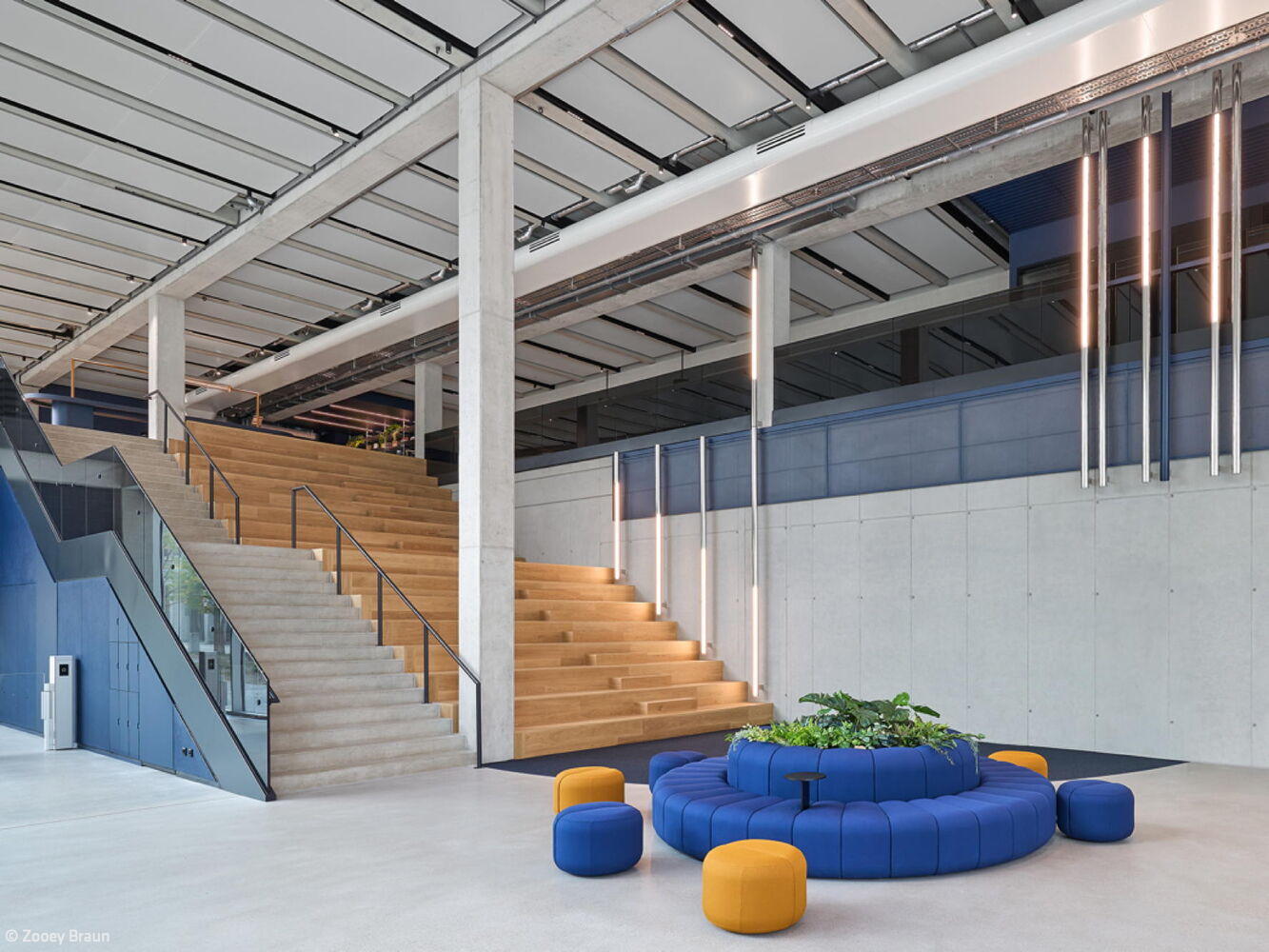
Working in Comfort
A Unified Vision for Collaboration and Creative Work
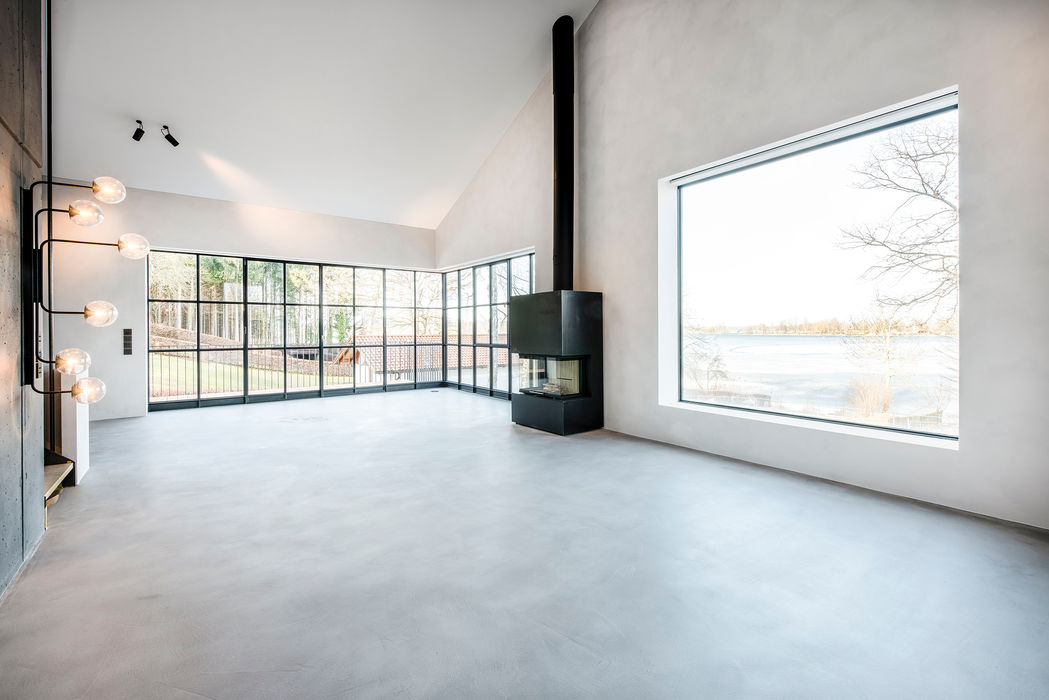
Retro elegance
Edwin Roth Metallbau + Systeme of Grafrath brings extraordinary window solutions to life
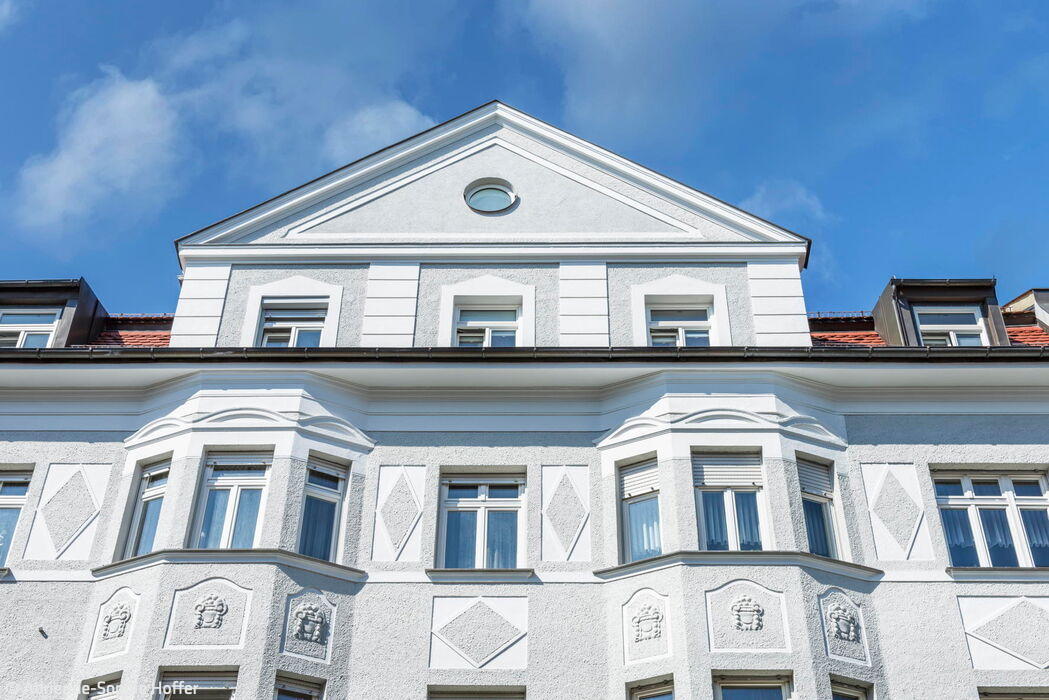
Revitalized and Brand New
A heritage landmark with a splendid façade emerges renewed—preserving history while embracing modern vitality.
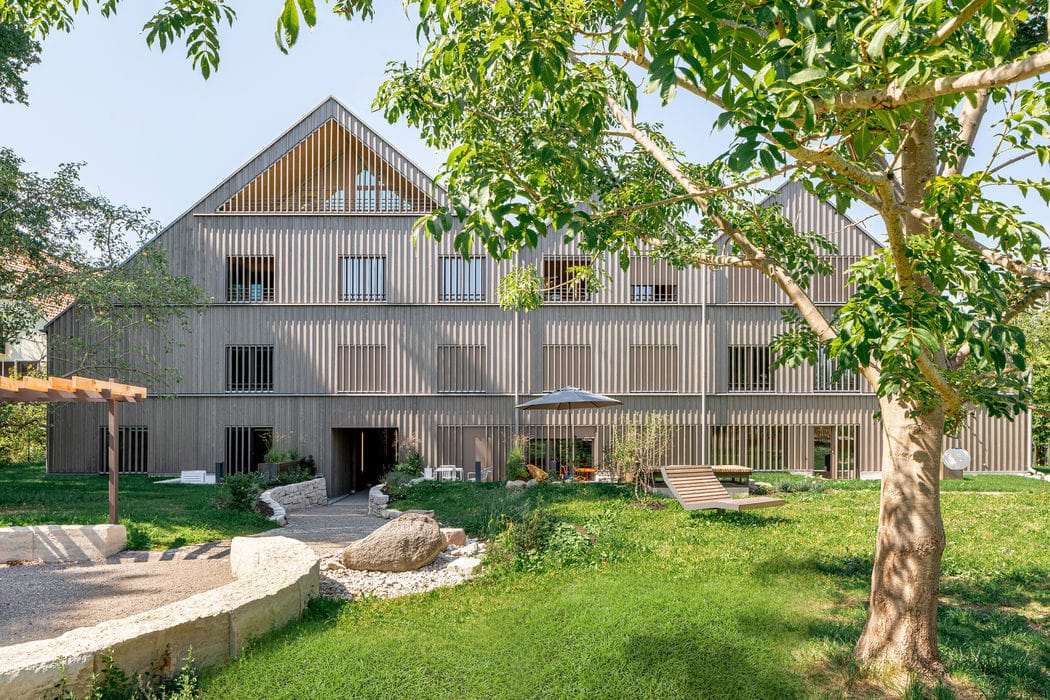
Where Village Meets City
A 270-year-old farmstead renewed for generations—and thoughtfully expanded.