Lichtenberg's Acoustic Marvel
An Underground Concert Hall in Upper Franconia
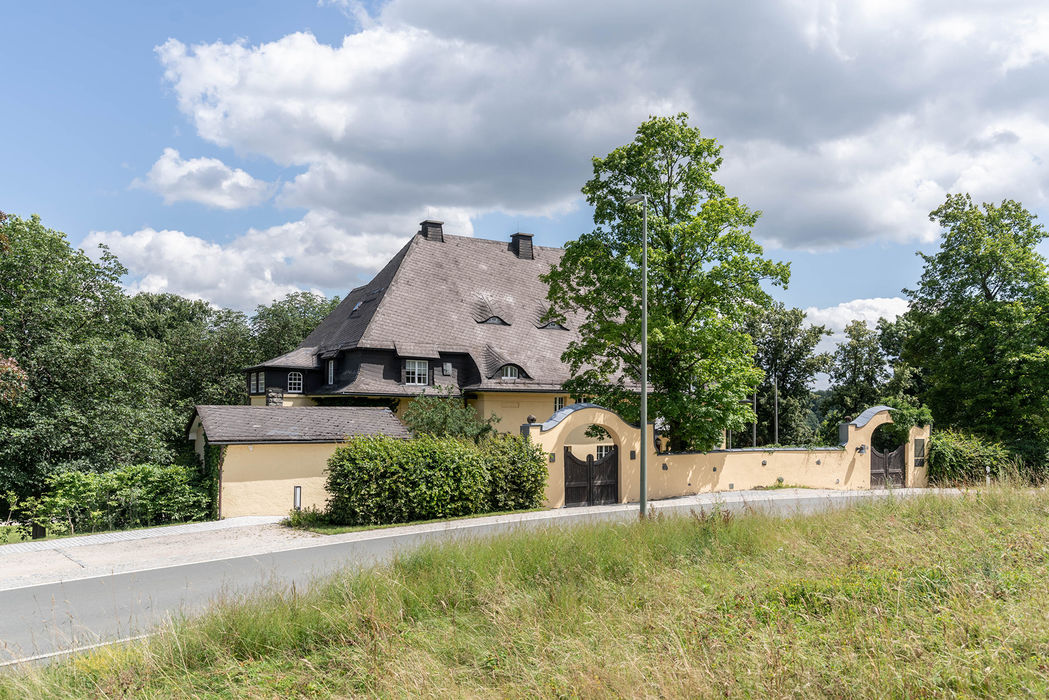
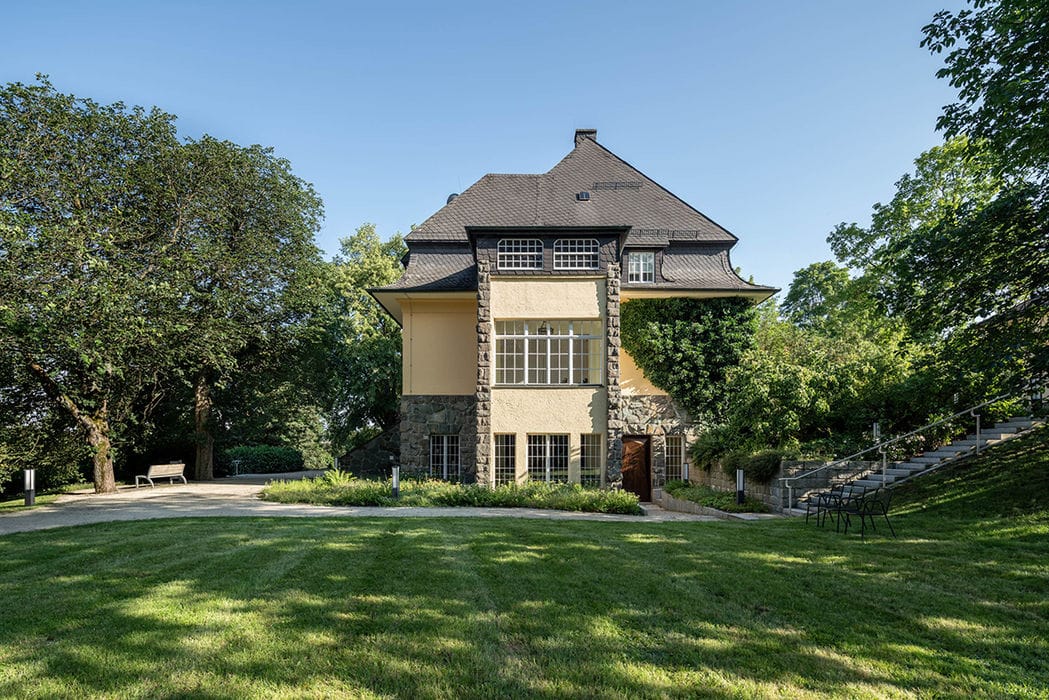
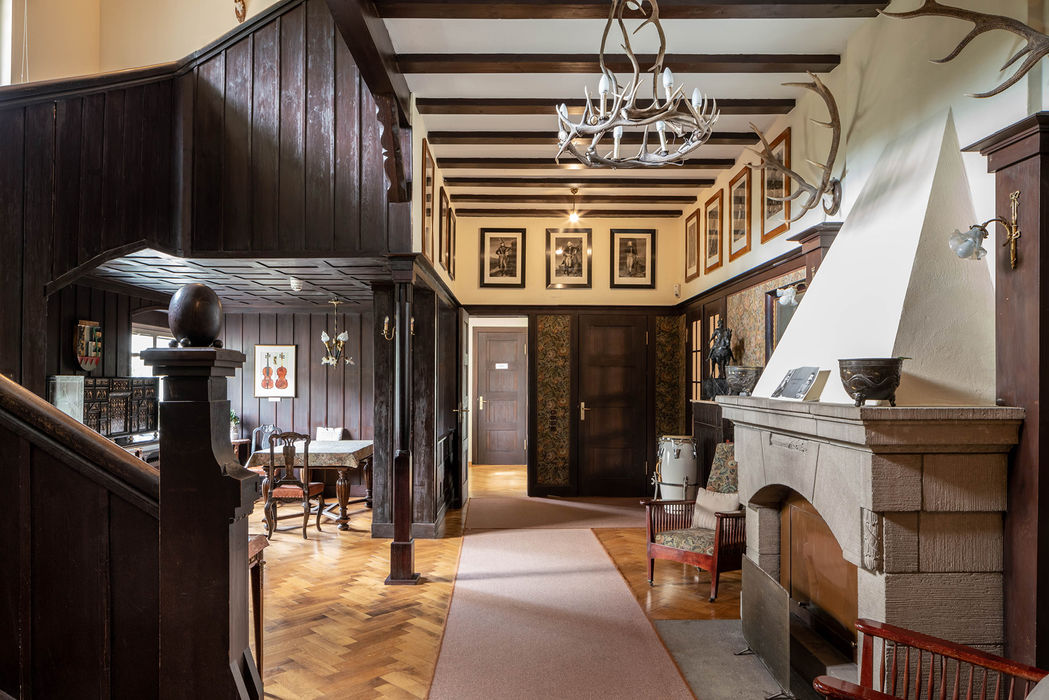
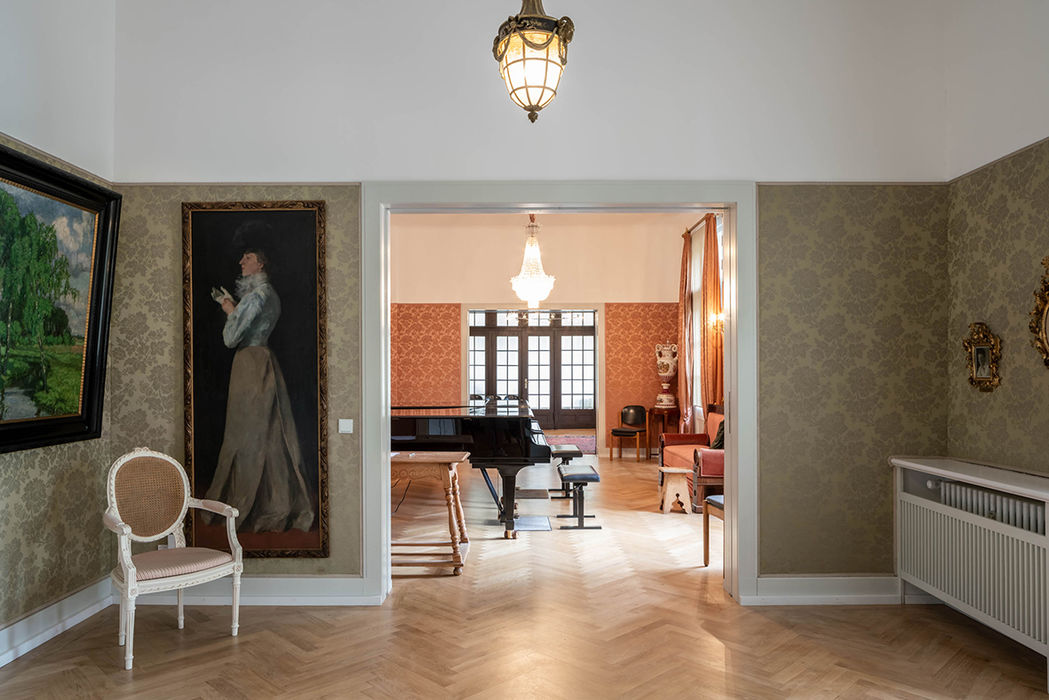
Nahe dem oberfränkischen Städtchen Lichtenberg liegt die Villa Marteau, bekannt als internationale Musikbegegnungsstätte für Nachwuchstalente. Ursprünglich hatte sich der Ausnahmegeiger und Komponist Henri Marteau Anfang des 20. Jahrhunderts diese Villa von dem Schweizer Architekten Hans Schwab bauen lassen. Der Bezirk Oberfranken erwarb 1980 das Anwesen und etablierte dort eine Musikschule für junge Musikerinnen und Musiker.
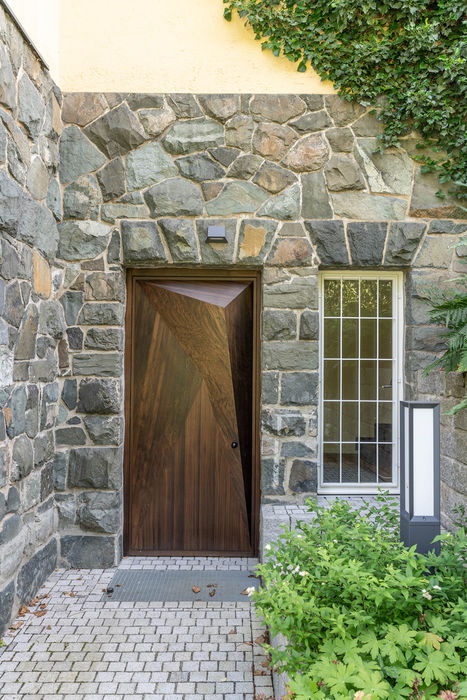
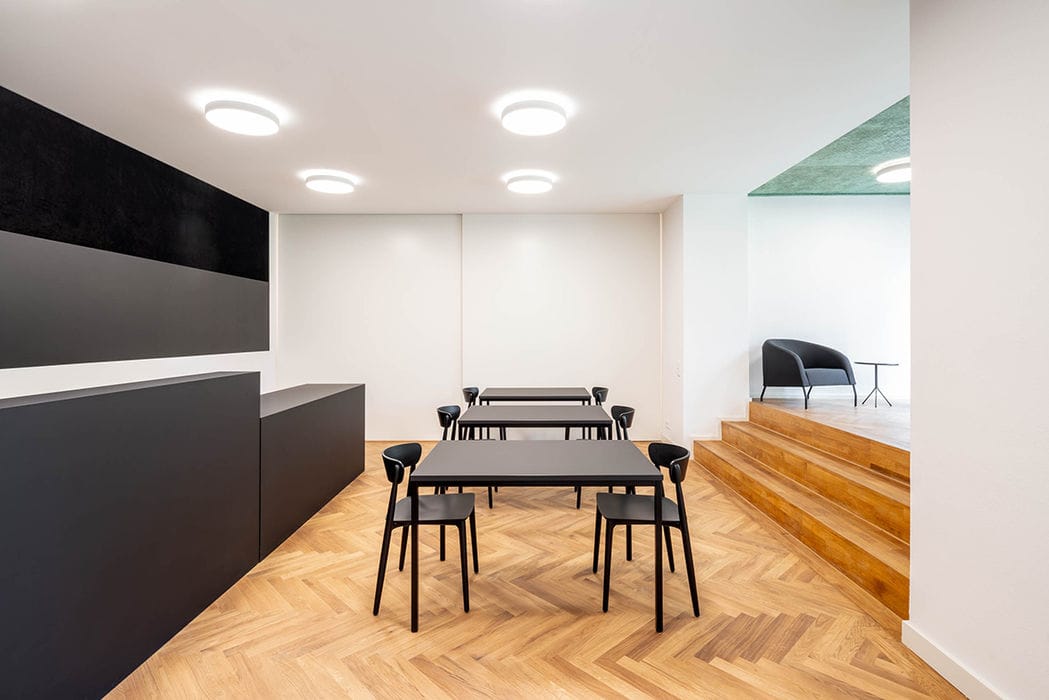
Die in die Jahre gekommene, denkmalgeschützte Villa sollte saniert und ein Konzertsaal hinzugefügt werden. Der Auftrag ging an den für seine inspirierten Bauten bekannten Münchner Architekten Peter Haimerl. Die dreigeschossige Villa liegt in einem großen Park und fügt sich gut in die hügelige Umgebung ein. Das Bestandsgebäude wurde weitgehend im Originalzustand belassen. Lediglich das Erdgeschoss und das neue Gartengeschoss wurden umstrukturiert. Der Keller wurde um 60 cm tiefer gelegt, um größere Raumhöhen zu erreichen und so ein vollwertiges zusätzliches Stockwerk hinzuzugewinnen. Hier konnten drei neue Übungsräume, eine Lounge, eine Kantine und ein Foyer untergebracht werden. Die eigentliche Sensation aber ist der neue Konzertsaal, den Peter Haimerl und sein Team unter einer Erddecke versteckt haben. Von außen ist alles wie bisher, man kann aus keiner Himmelsrichtung erkennen, welche Volumen hier unter der Erdoberfläche schlummern.
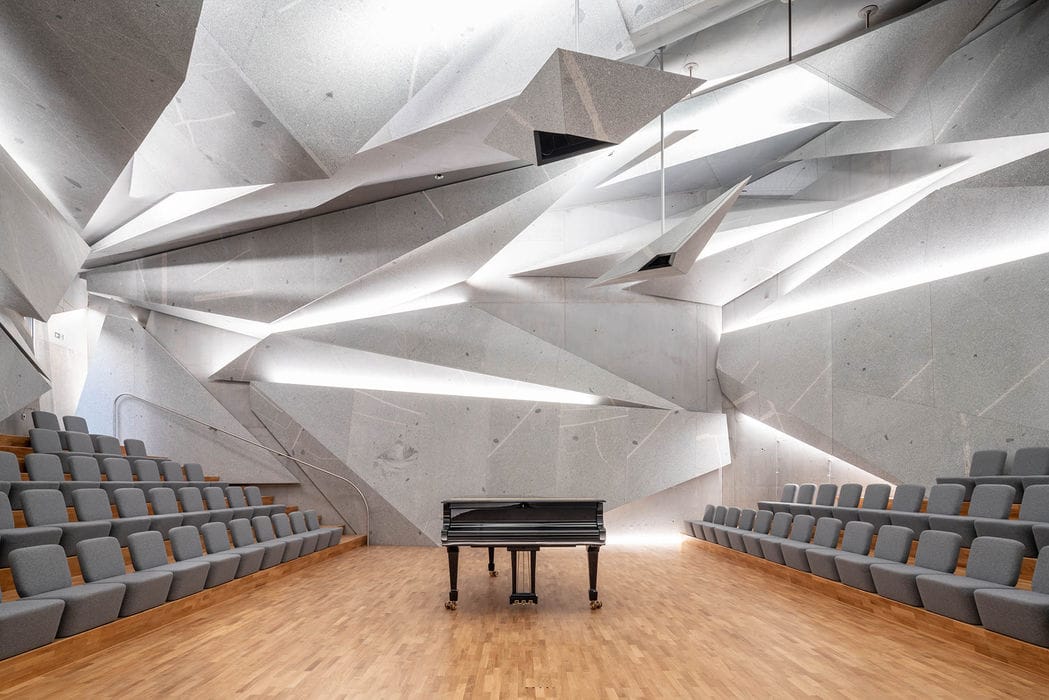
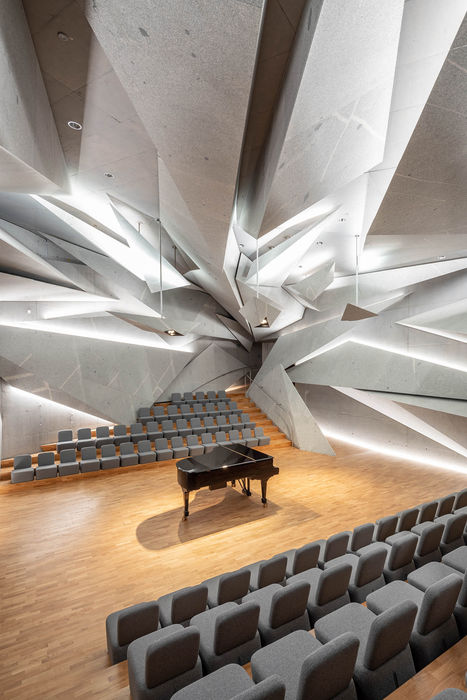
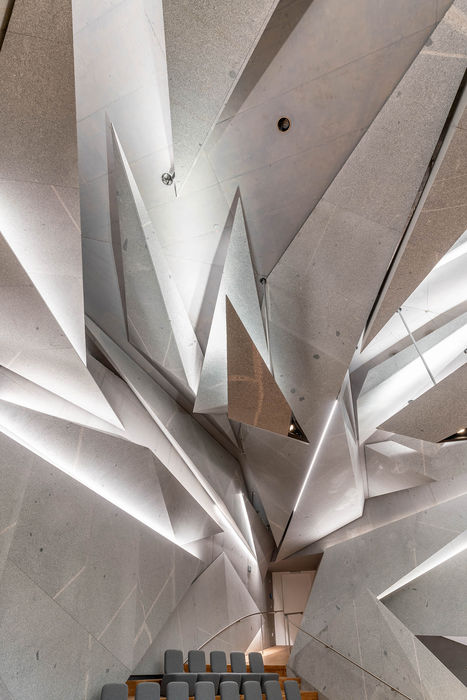
Wie Jahre zuvor, als der Architekt bereits großes Aufsehen mit seinem unterirdischen Konzertsaal in Blaibach erregt hatte, der ob seiner phantastischen Akustik international gelobt wird, wiederholt Haimerl sein Können. Der leicht ansteigende Hügel im Park birgt das neue Akustikwunder. Der Saal hat die Form eines 13 x 13 m großen Parallelogramms. Zwei Tribünen an den Seiten bieten Platz für 88 Besucher, in der Mitte liegt die 60 m² große Bühne. Von den gegenüberliegenden Wänden scheinen an der Decke des Raums Granitpfeile zur Mitte zu schießen. Sie bilden den Klangkörper. Kommt man von dem leicht abfallenden Stollengang, der vom Gartengeschoss in den Konzertsaal führt, ist es ein überwältigendes Raumerlebnis, als betrete man eine „gefrorene Explosion“, wie die Akustikdecke häufig genannt wurde. Die einzelnen, bis zu 13 m langen Granitsplitter sind minutiös berechnet und mussten mit größter Vorsicht transportiert und verbaut werden. Die 33 tonnenschweren „Splitter“ hier einzubauen, war die wohl schwierigste Operation an diesem Konzertsaal. Der Entwurfsgedanke ist, wie auch der Stollengang, eine Reminiszenz an den früheren Bergbau in dieser Region.
Photography Credits:
Edward Beierle
www.beierlegoerlich.com
(Published in CUBE Munich 04|22)

Callwey Best of Architecture Summit 2025
An inspiring celebration of excellence in architecture and design
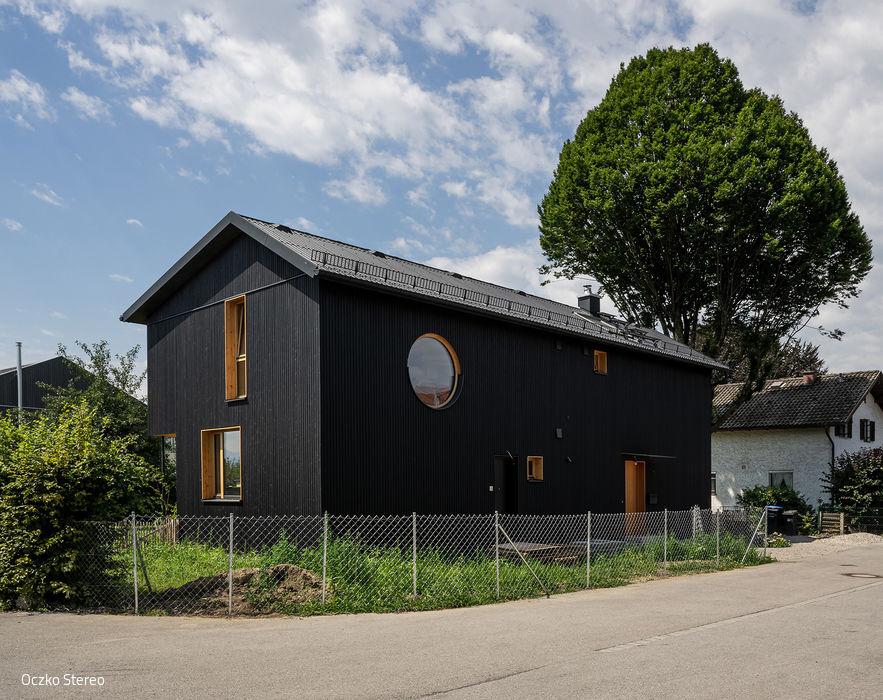
Living and Working at Home
Timber-Frame Detached Home with Integrated Recording Studio and Design Office

Multifunctional + Majestic
A surprisingly versatile public multi-purpose hall in Erding