


Layered Monolith
A cemetery chapel in Monheim creates an expressive space for mourning
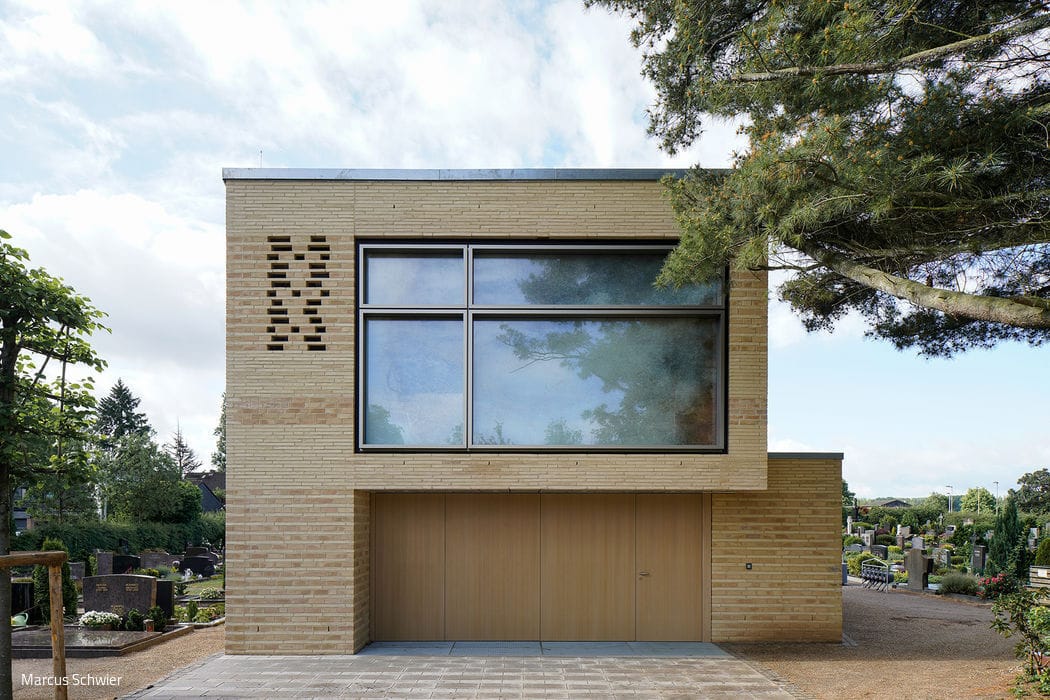


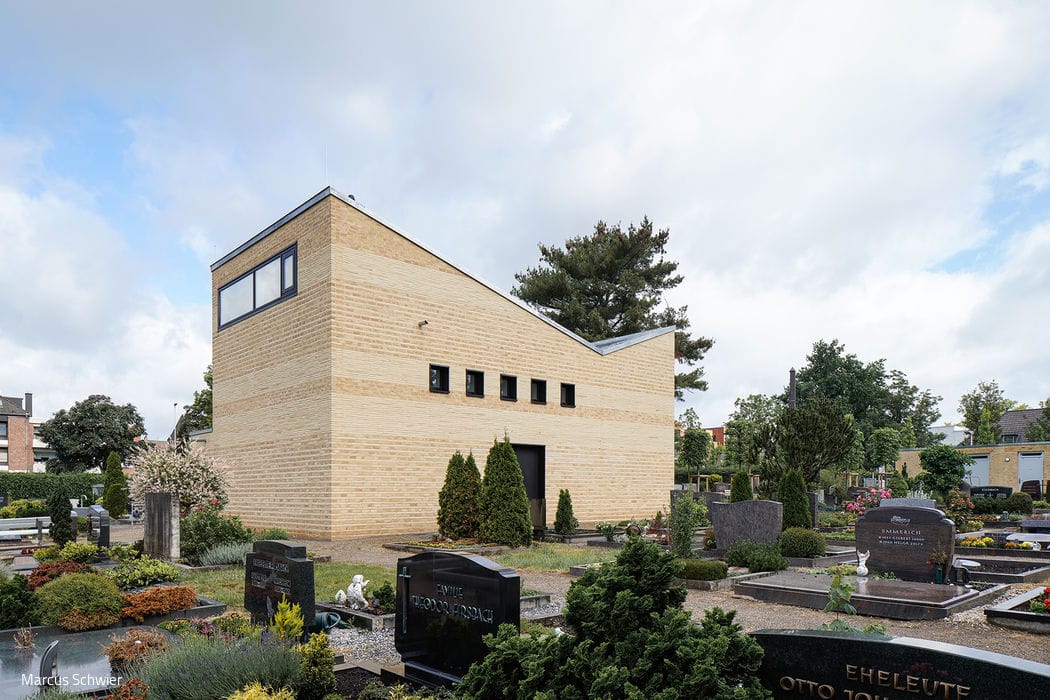


Cemetery chapels frequently find themselves in a state of disrepair. Such was the case with the chapel at the municipal cemetery in Monheim-Baumberg: pbundl architekten from Cologne were commissioned to develop a concept study for a replacement building for the inadequately sized structure, which was to be accompanied by a reorganization of its functions. The design impressed both the municipal administration and a local patron—an engaged citizen of Monheim whose generous donation made the new construction possible. The completed building commands presence as a monolithic structure, heightened by its spatial dramaturgy. Through the integral integration of art in architecture, expressive transitions to the exterior have emerged.
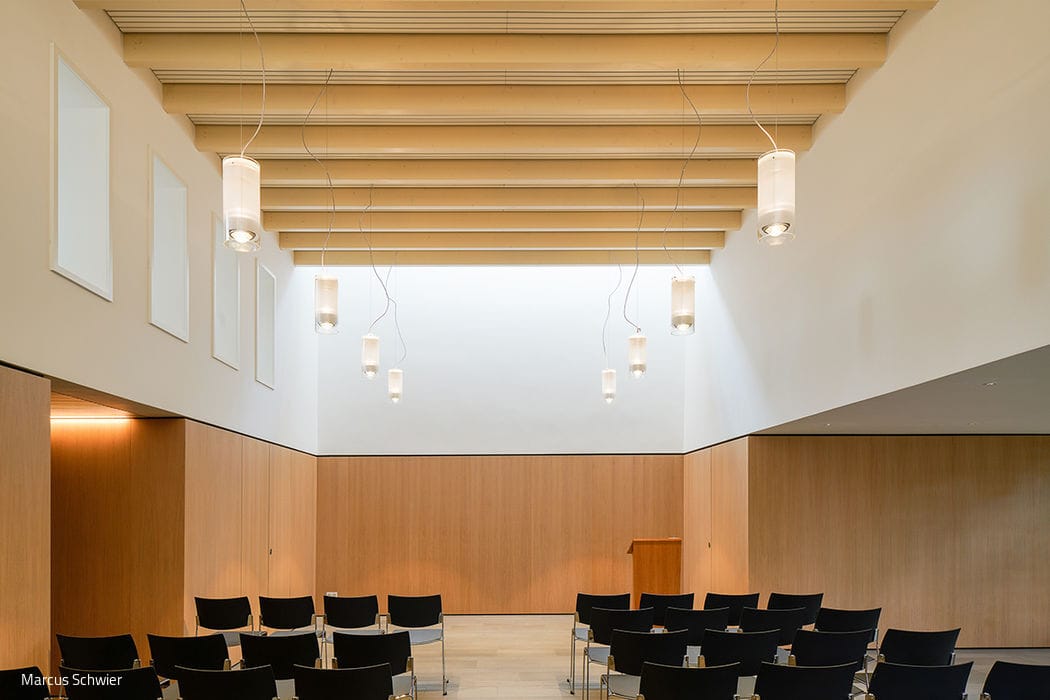
To create more space for the chapel itself, storage areas and restrooms were relocated to a separate functional building, which simultaneously serves as a three-dimensional boundary wall to the surrounding streetscape. A new access route leads to the chapel, erected as a solitary structure—both buildings share the same material language yet differ in their craftsmanship approach. The chapel's facade was conceived to reveal a layered composition of various stone types and bonds rather than a uniform surface—primarily to achieve a fragmented, narrative quality. The chapel begins with a low, sheltered entry area overhung by a gallery. The pin-supported timber doors can open completely to ninety degrees, creating—emphasized by the continuous natural stone paving—a continuum between interior and exterior. From here, one enters the soaring space of the main hall, illuminated by a series of side clerestory windows and spanned by a timber beam structure with acoustically effective wooden slats. The rear chapel area, designated for casket and urn repose, receives particular emphasis through a ceiling opening and indirect light from a concealed window. To the west, the chapel opens into an adjoining side aisle, through whose perforated masonry soft light filters. The chapel's interior gains clear, restrained articulation through homogeneous oak wood wall cladding—integrating door elements—and plaster surfaces above. This is reinforced by artificial lighting with pendant and recessed fixtures. On the east side, a wall conceals the staircase leading to the gallery above the entry area, which provides access to additional storage spaces. Most notably, the gallery impresses with its expressive window front, designed by Düsseldorf artist Frank Weidenbach as an atmospheric cloud.
Photography:
Marcus Schwier
marcusschwier.net
(Featured in CUBE Düsseldorf 02|23)

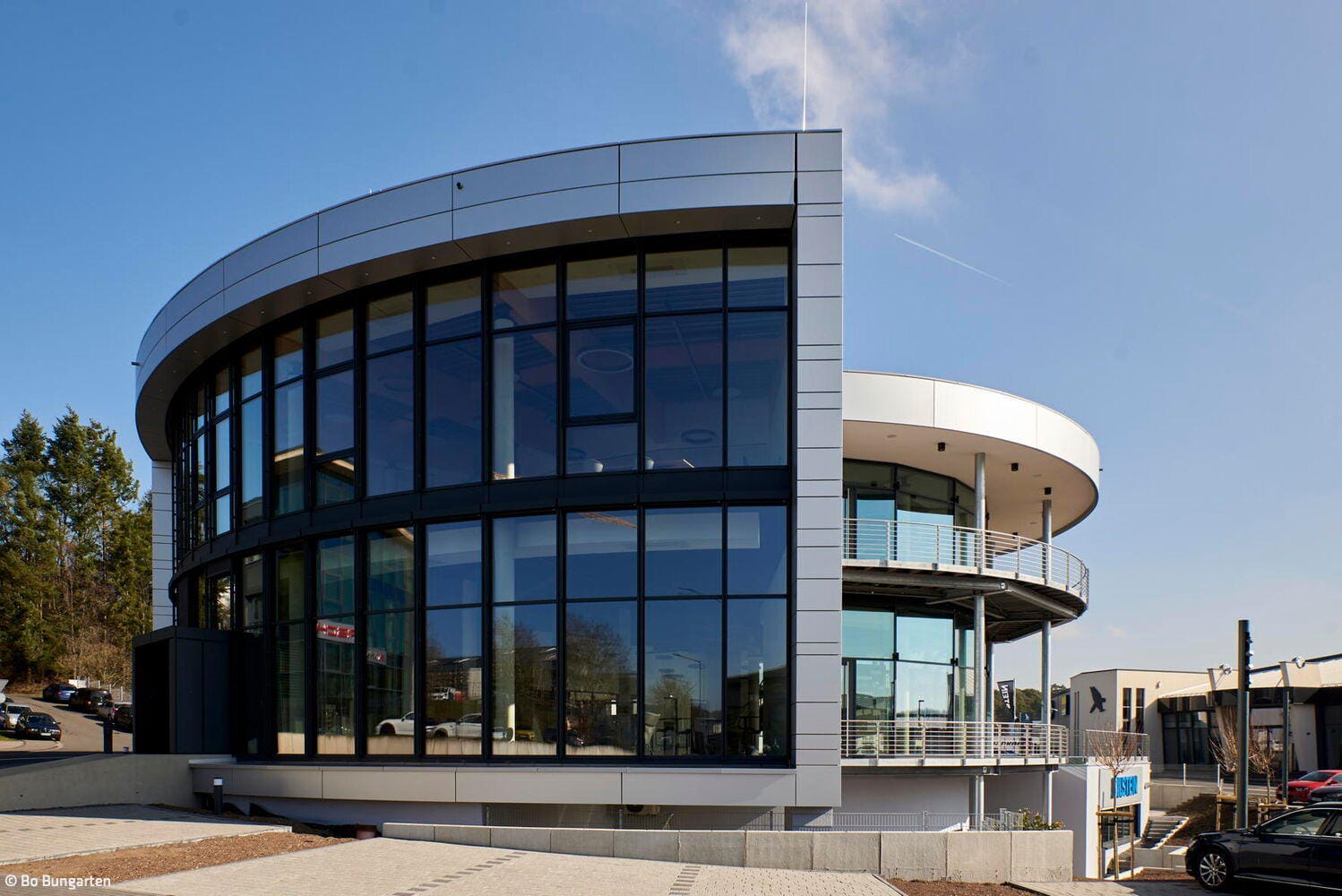
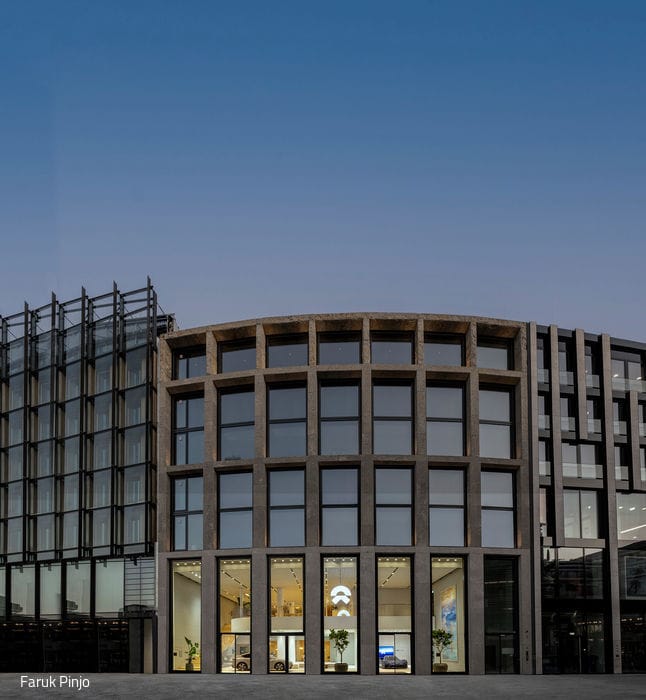
A Subtle Dialogue of Façades
A new office and retail building at Joachim-Erwin-Platz—where transparency meets sculptural presence.
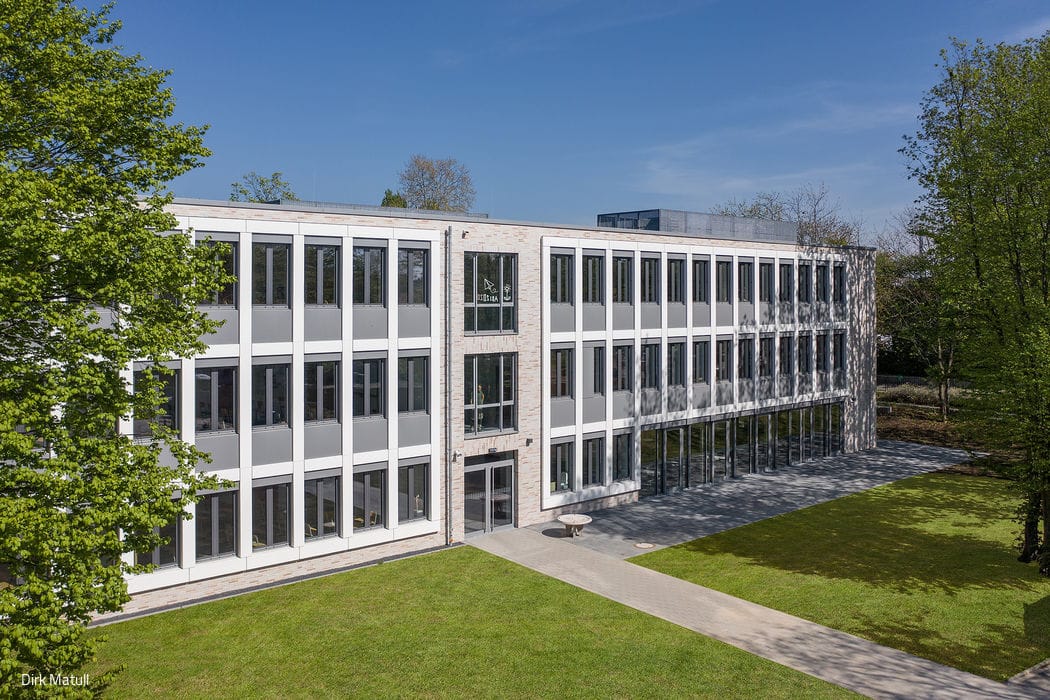
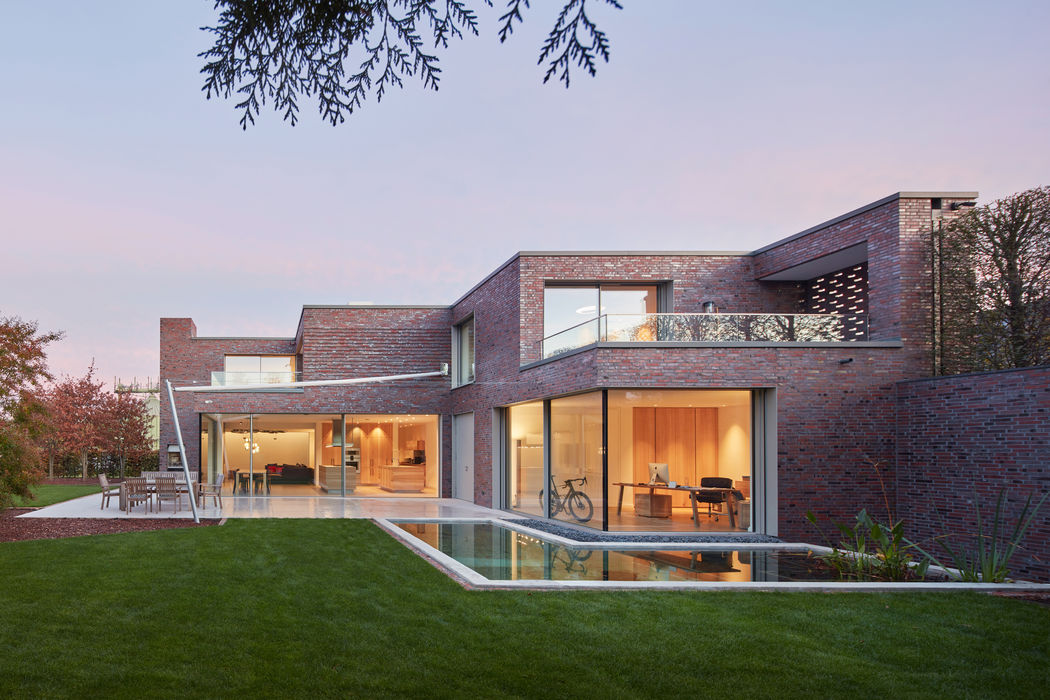
Thoughtful Harmony
The Cecilien-Gymnasium expansion in Niederkassel demonstrates remarkable sensitivity to context.
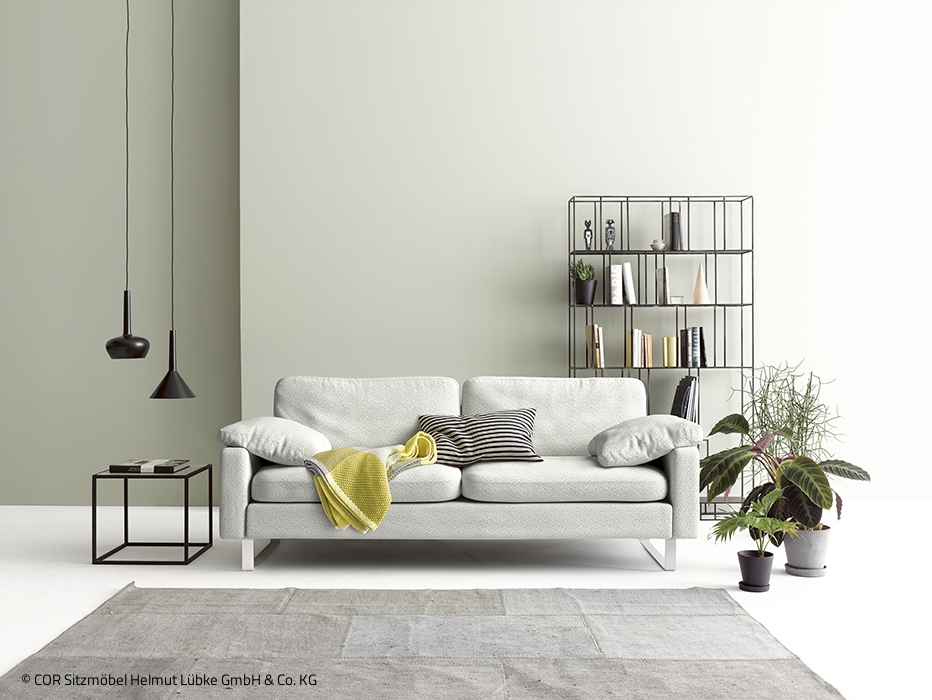
Happy Birthday
The COR Conseta sofa celebrates 55 years of design excellence
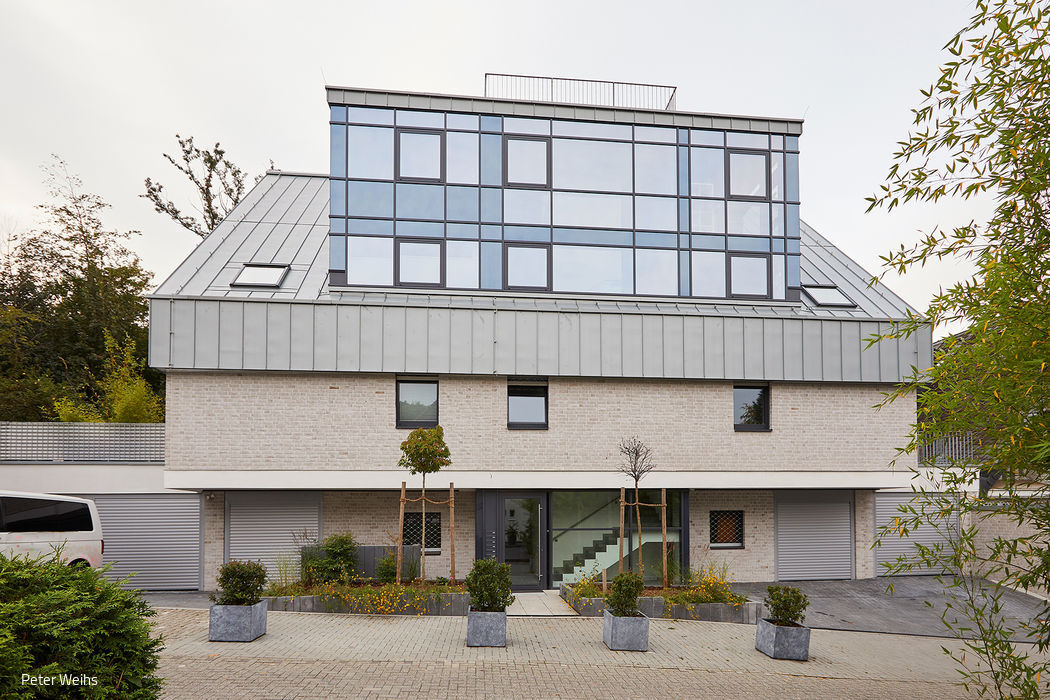
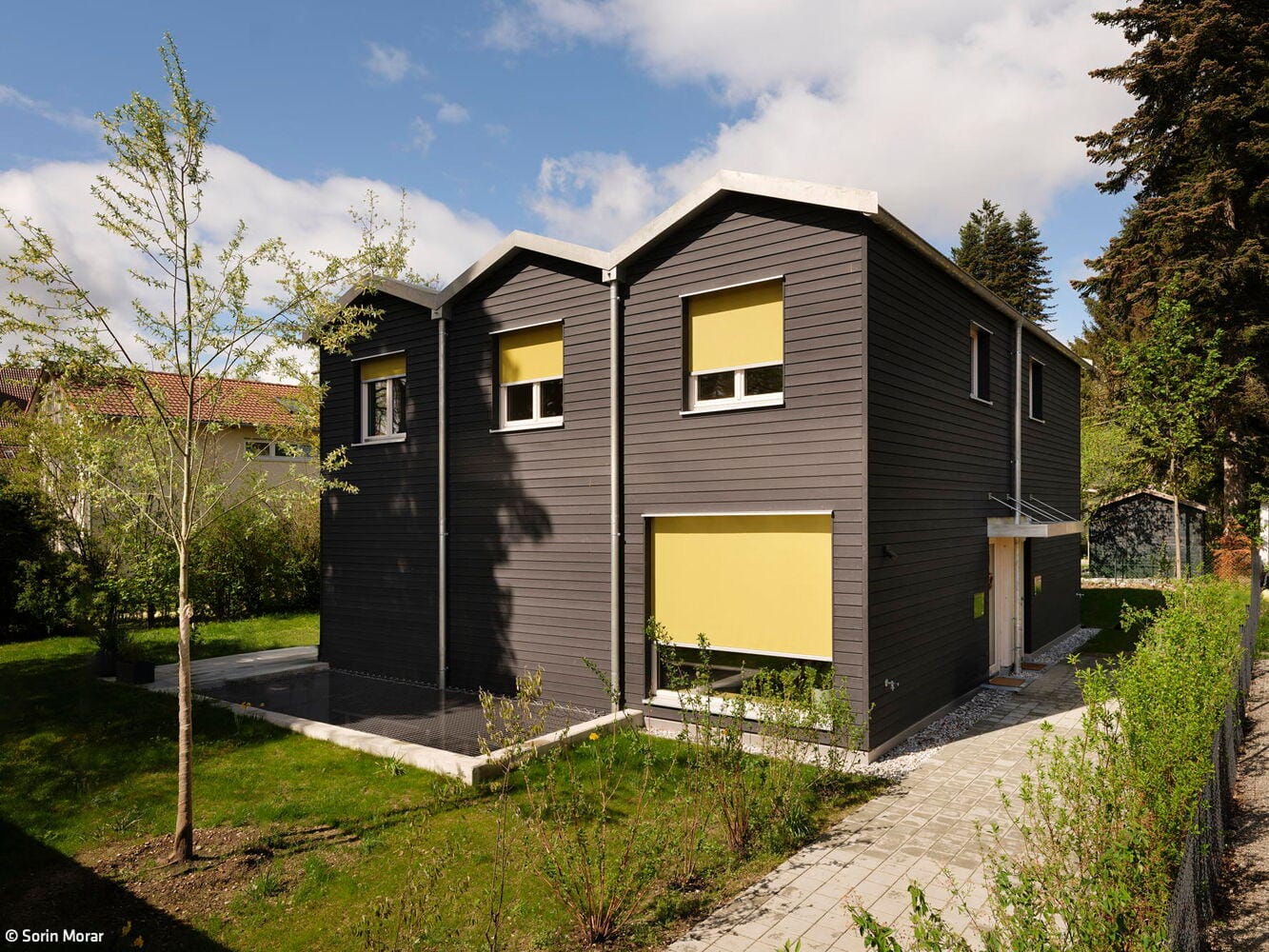
Reimagining Traditional Housing
From Two-Family Villa to Multi-Generational Home