


Passagierschiff in Pankow
Architekturbüro generiert ein Grundstück und schafft Mitarbeiterwohnungen für die Charité
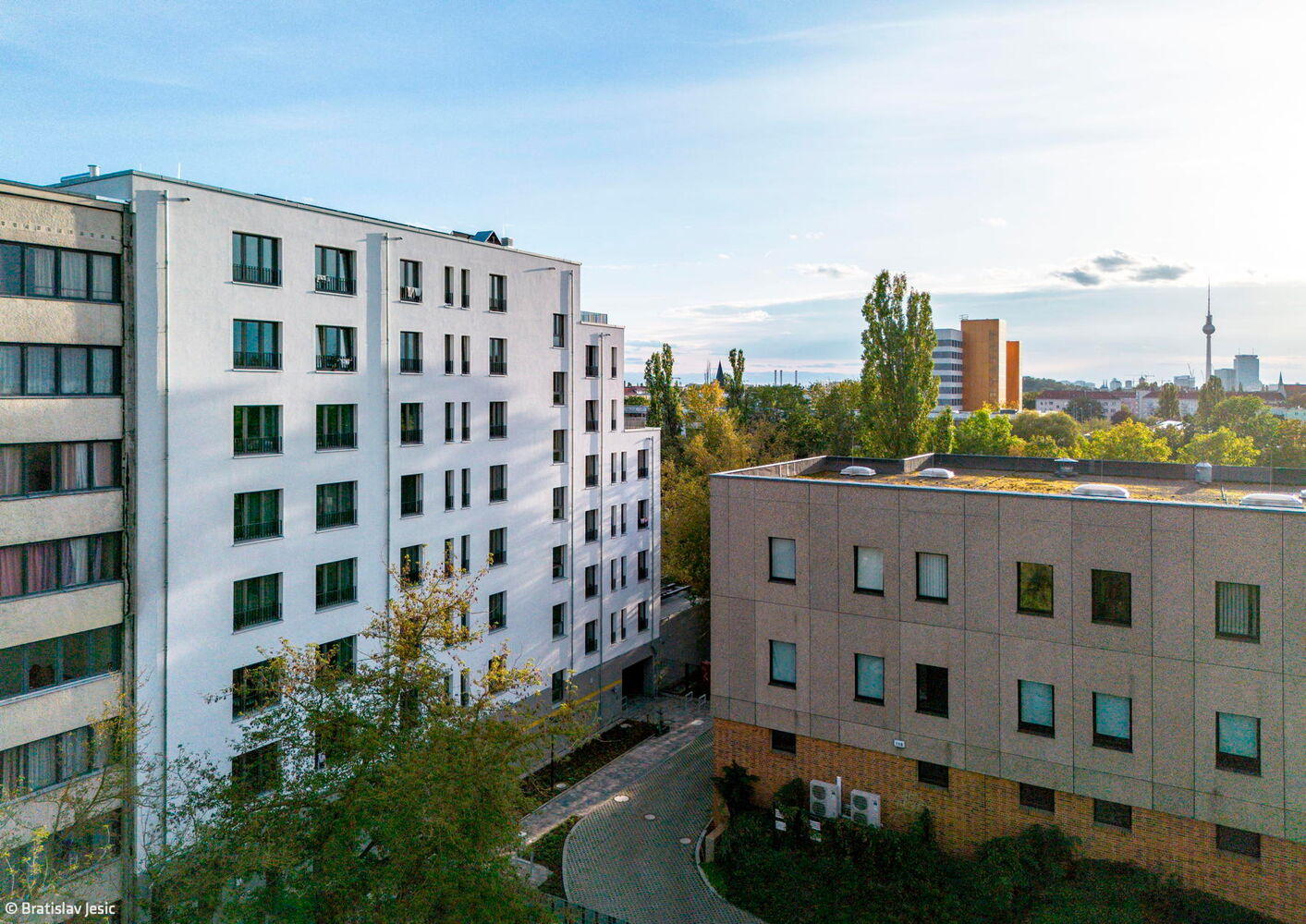
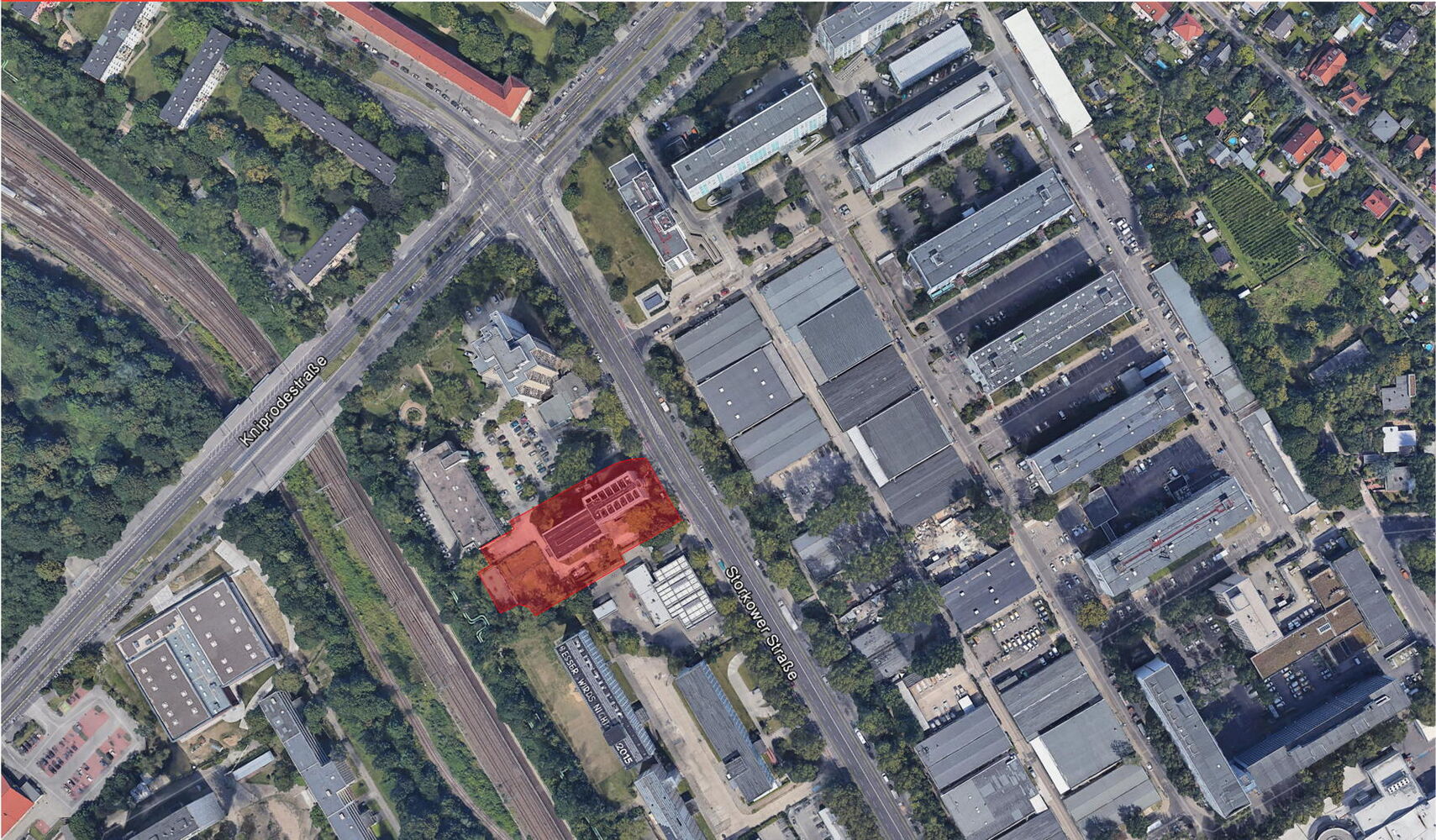
Früher war es ganz einfach, sich in Berlin zurechtzufinden – es gab Westberlin und Ostberlin. Nach der Wende wurde der Prenzlauer Berg zum beliebtesten Stadtteil. Und seit der Gebietsreform 2001 verlor der nach wie vor schicke Prenzelberg seine Eigenständigkeit und wurde dem Bezirk Pankow zugeschlagen. Obwohl ein Teil der Storkower Straße durch den Prenzlauer Berg verläuft, liegt diese jetzt auch im Bezirk Pankow. Bei einer Erkundung des neuen Bezirks fiel den Berliner Architekten deluse hernandez architects ein alter DDR-Pattenbau auf, der mit nur einem Treppenhaus erschlossen war. Daher war eine enorm breite Feuerwehrumfahrung für das Gebäude notwendig. Nach dem Mauerfall wurden aus Sicherheitsgründen zwei weitere Treppenhäuser eingebaut, sodass – und darin bestand die pfiffige Idee der Architekten – die Feuerwehrumfahrung obsolet geworden war, sodass im hinteren Bereich des Grundstücks eine große bebaubare Fläche entstand.
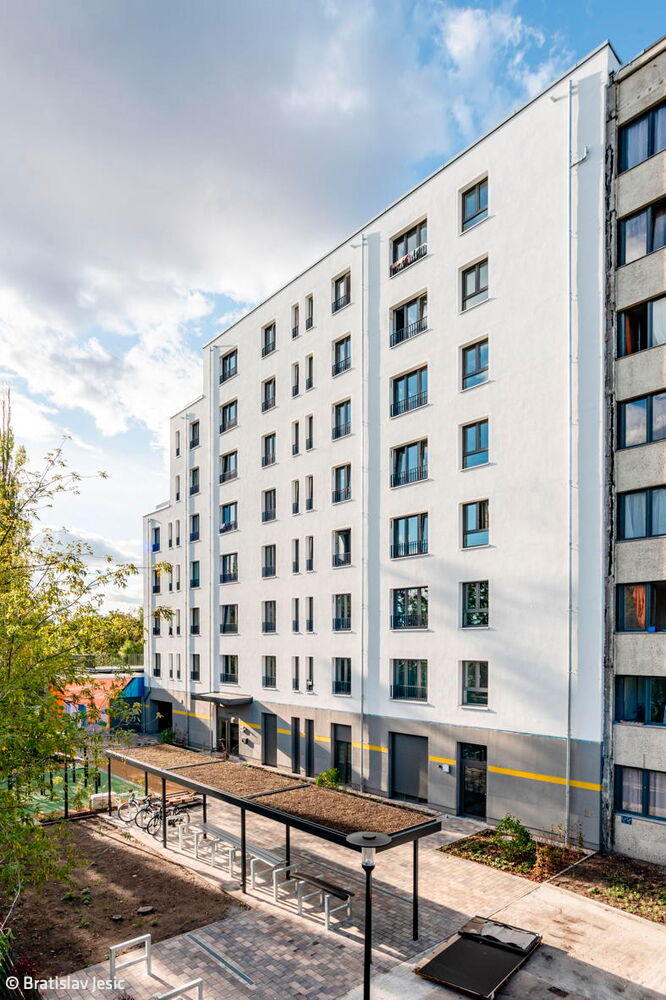
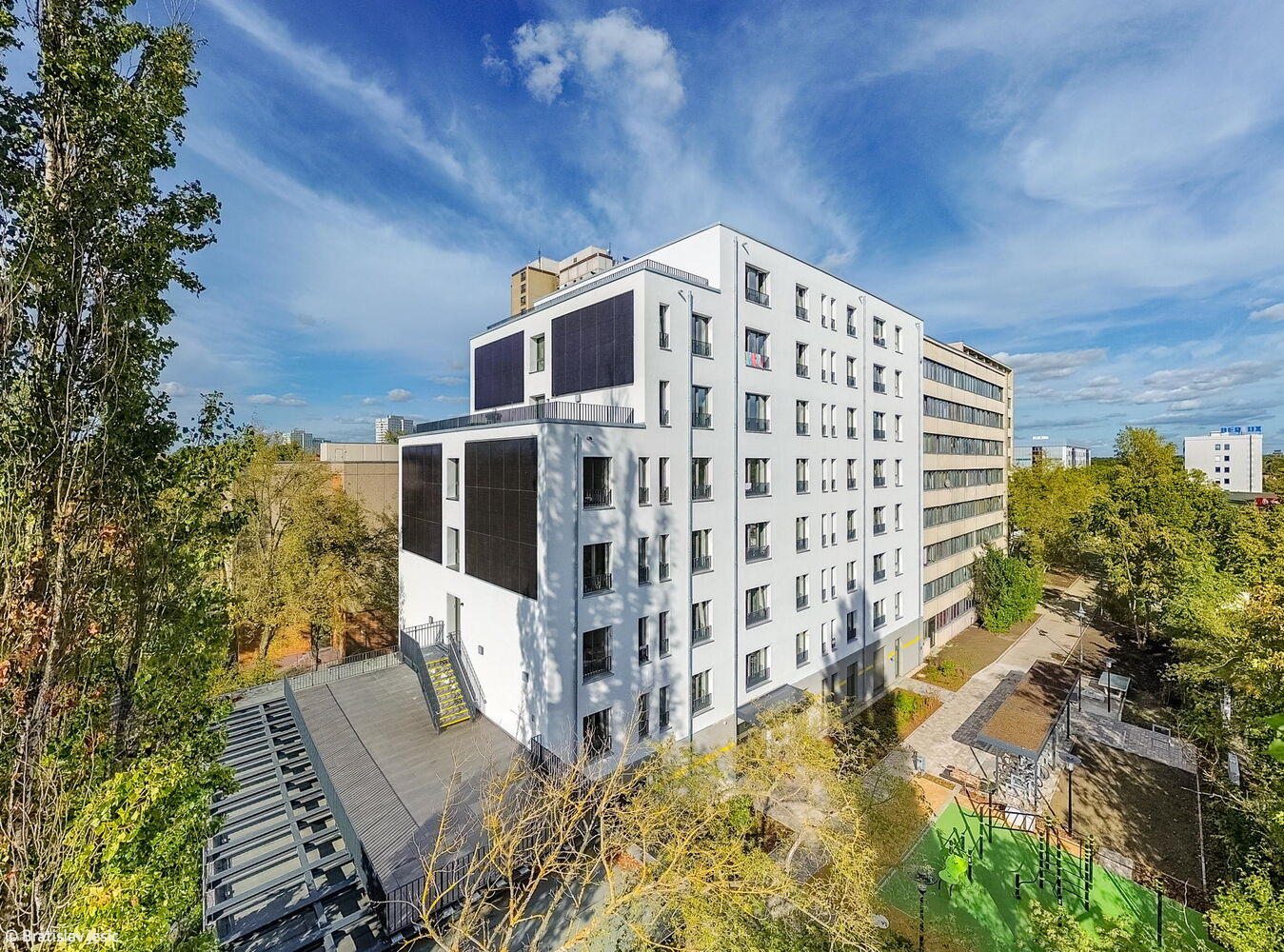
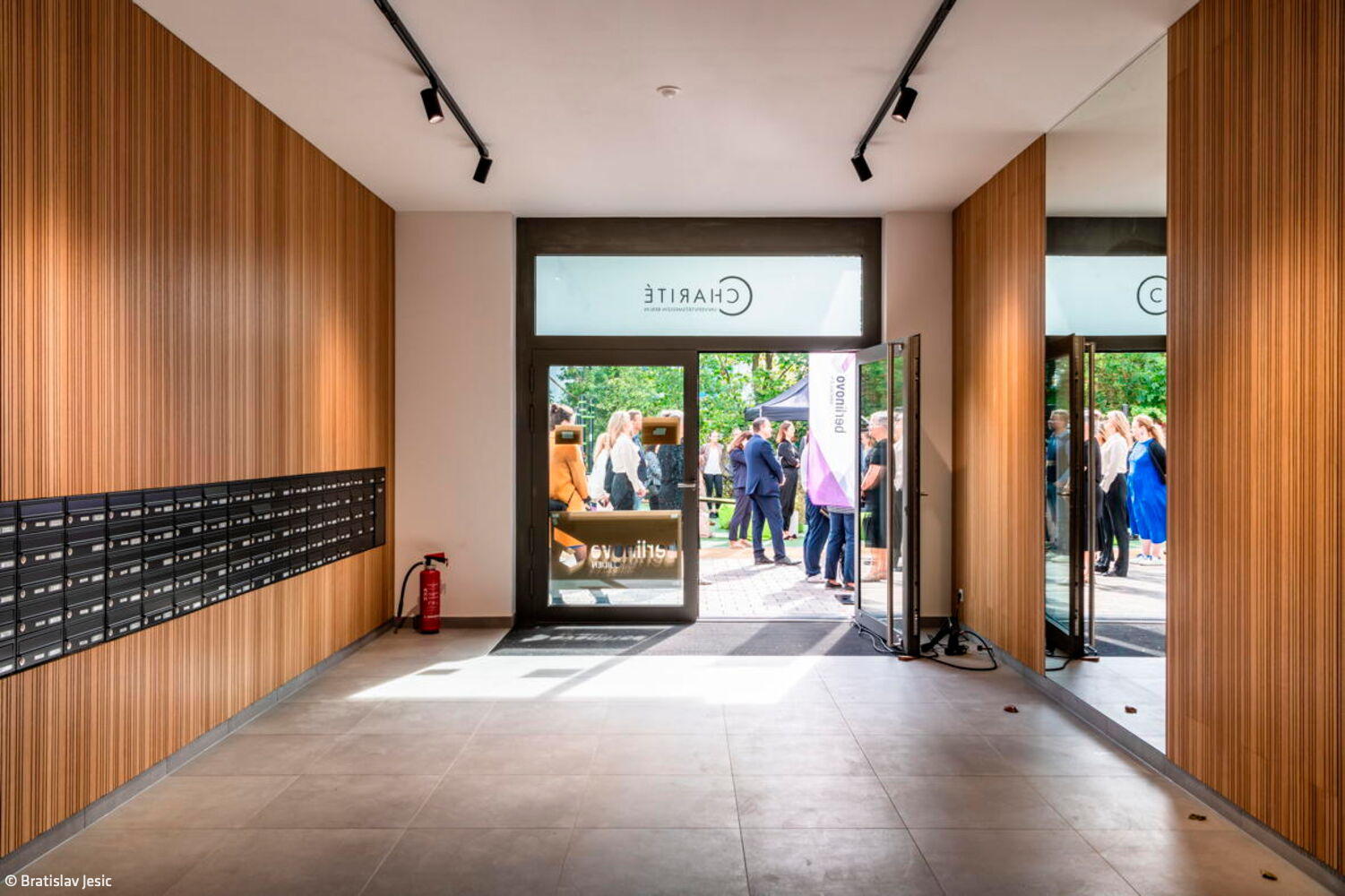
Die Idee der Architekten, hier Baugrund zu schaffen, wurde tatsächlich Realität. Als die landeseigene Berlinovo Immobiliengesellschaft beschloss, den neu entstandenen Grund zu bebauen, erteilte sie den Ideengebern verdientermaßen den Auftrag, die Planung für das dort vorgesehene Gebäude zu übernehmen. Heute steht hier ein siebengeschossiges Wohngebäude mit 76 Ein- bis Zweizimmerwohnungen. Der Auftrag an die Architekten lautete, möglichst viele Apartements auf der Grundfläche von 465 m² zu planen und dringend benötigte Pflegekräften der Charité unterzubringen. Im Herbst 2023 konnte es an seine neue Bewohner:innen übergeben werden. Die Kubatur des Siebengeschossers ist ungewöhnlich: Dieser verläuft im rechten Winkel zur Storkower Straße mit seiner Höhe von 22 Metern und treppt sich in drei Stufen zu den Gleisen der Ringbahn hin ab, sodass der Baukörper an ein Schiff mit gestaffelten Decks erinnert. Der Entwurf sah von vornherein großzügige Gemeinschafts-Dachterrassen für die Bewohner:innen vor. Das Haus ist in Massivbauweise mit weißer Putzfassade errichtet. Die Architekten generierten eine Gesamtwohnfläche von 1.944 m². Das Gebäude ist somit mit seinen über 70 Wohnungen extrem effizient. Nach dem Kriterienkatalog für Gebäude gilt es als Sonderbau der Gebäudeklasse 5, zu der Mitarbeiterwohnen zählt.
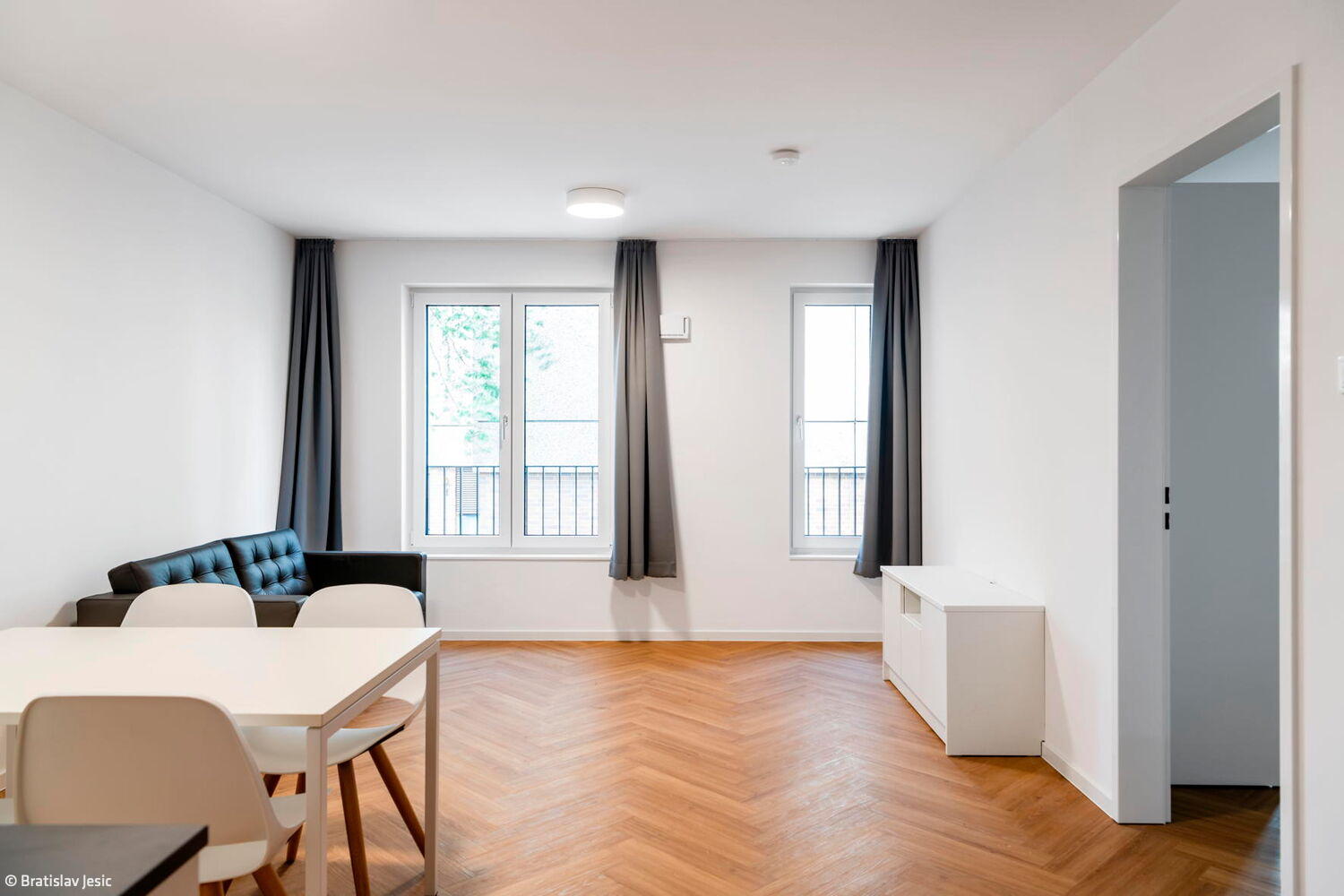
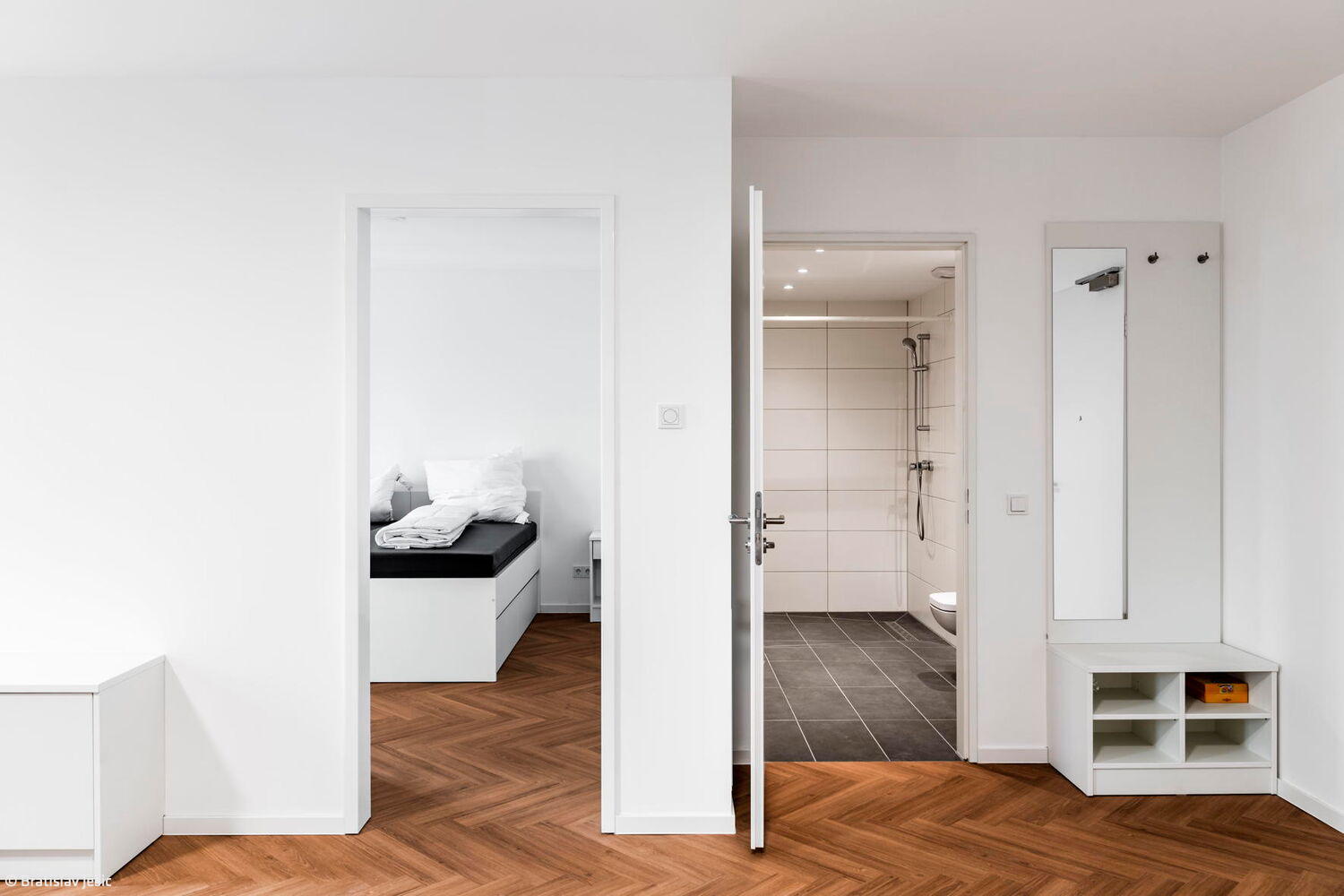
Der Innenausbau ist einfach und kostensparend ausgeführt, um günstige Mieten zu ermöglichen. Für eine optimale Energieversorgung per vertikaler Photovoltaik- und einer solarthermischen Anlage auf dem Dach wurde die Effizienzhausstufe 40 erreicht. Das Wohngebäude passt sich zwischen zwei Bestandsbauten ein, wobei der nordöstliche Nachbar direkt an der Straße liegt und einen Eingang in zweiter Reihe erforderlich machte. Die vorhandene Bebauung der Umgebung, ein Wohnhochhaus, ein paar Geschäfte und Büros sowie eine Tankstelle, ist sehr heterogen, fügt sich jedoch durch den neuen Stadtbaustein zu einer Einheit zusammen. Die generelle Orientierung des Quartiers ist zu den S-Bahn-Gleisen hin ausgerichtet – sozusagen zu der Lebensader des Viertels. Südlich sind ganz in der Nähe die berühmten Sportstätten wie das Velodrom des französischen Architekten Dominique Perrault und die Schwimmhalle des Europasportparks verortet.
Fotos:
Bratislav Jesic
(Erschienen in CUBE Berlin 02|25)


Funktional & inspirierend
Marketingsuite empfängt die Besucher mit zeitgemäßem Designkonzept

Der Zweck bestimmt die Mittel
Beim Innenausbau des achtgeschossigen Bürobaus stand der Netzwerkgedanke im Vordergrund.

Eine Welt für kleine Menschen
Neue Montessori-Kindertagesstätte im Wedding

Fürs 21. Jahrhundert ertüchtigt
Umfassende Modernisierung, Instandsetzung und Erweiterung einer „Oberschule“