


Where Urban Living Meets Community
The Parc Dunant neighbourhood in Essen transforms a former brownfield into vibrant urban fabric
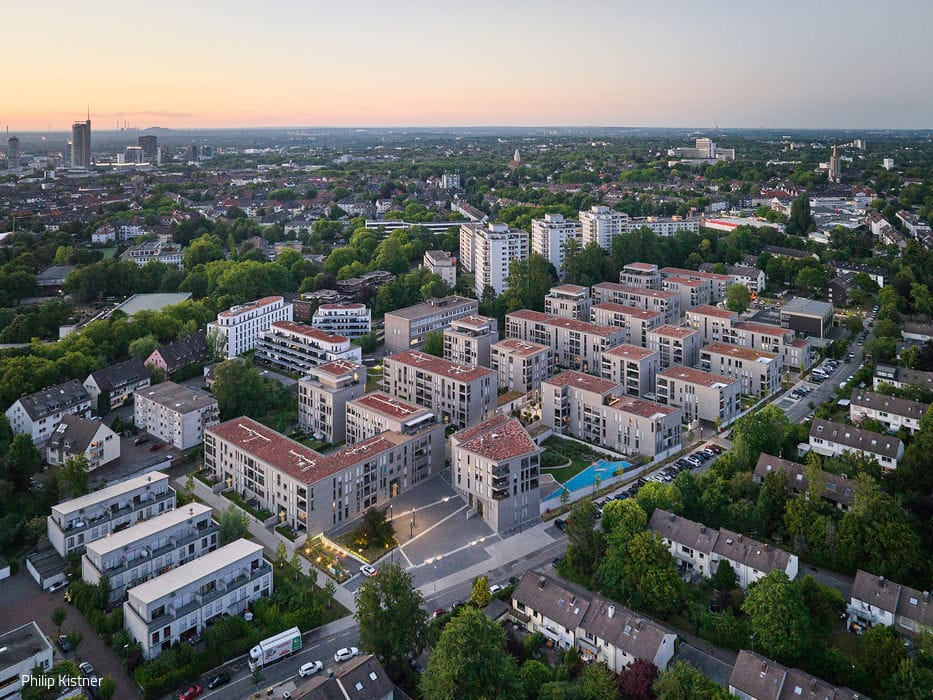
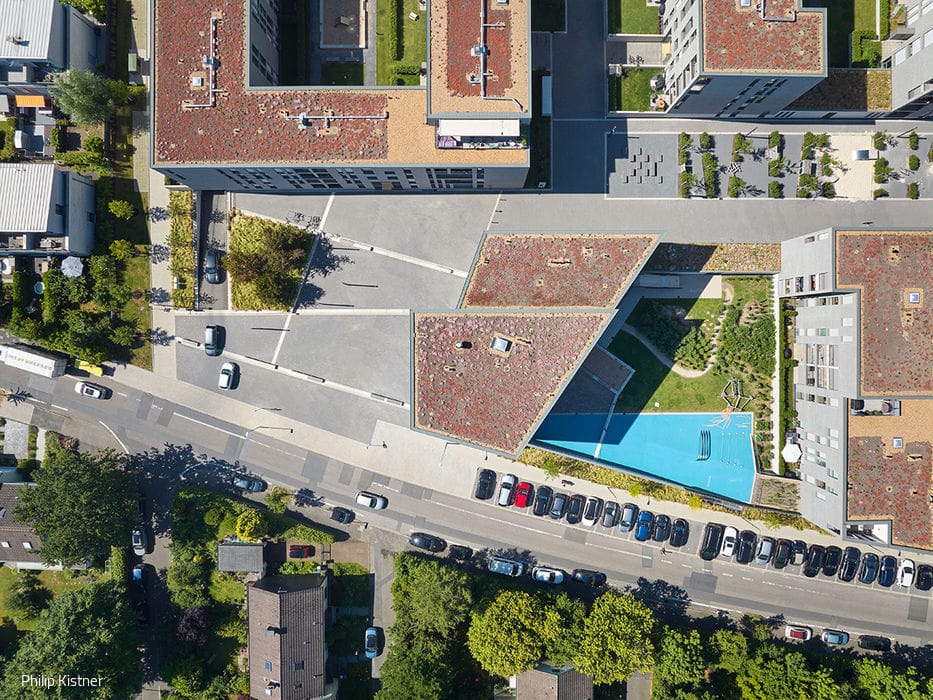
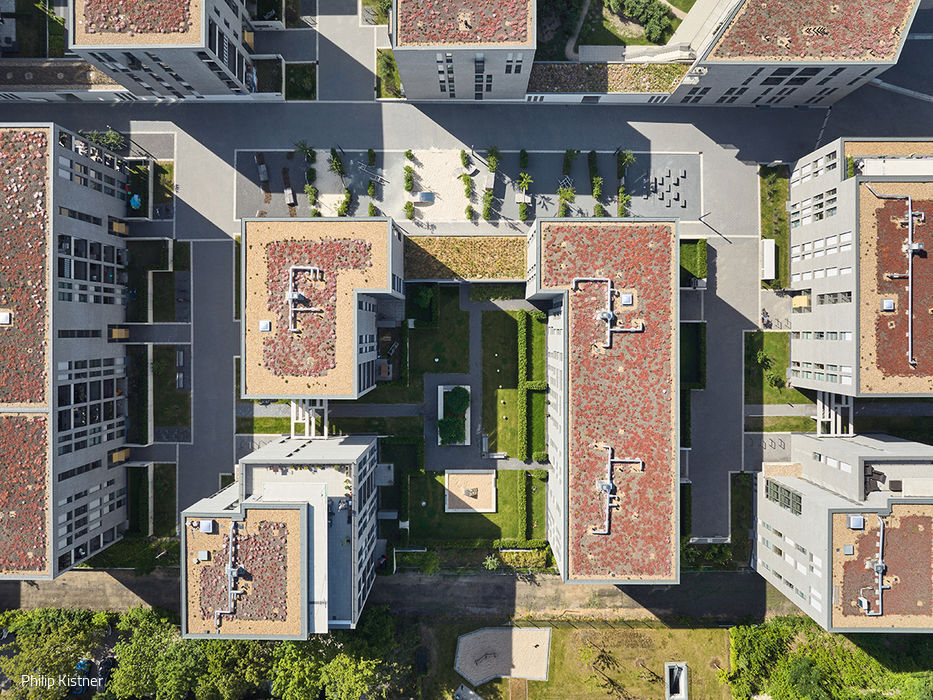
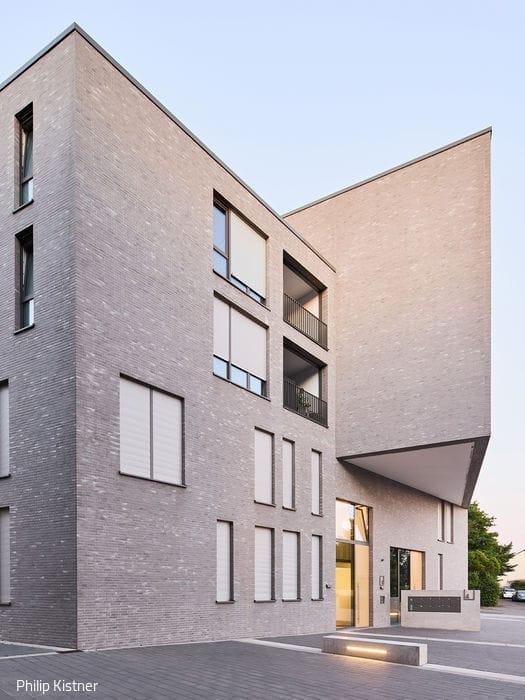
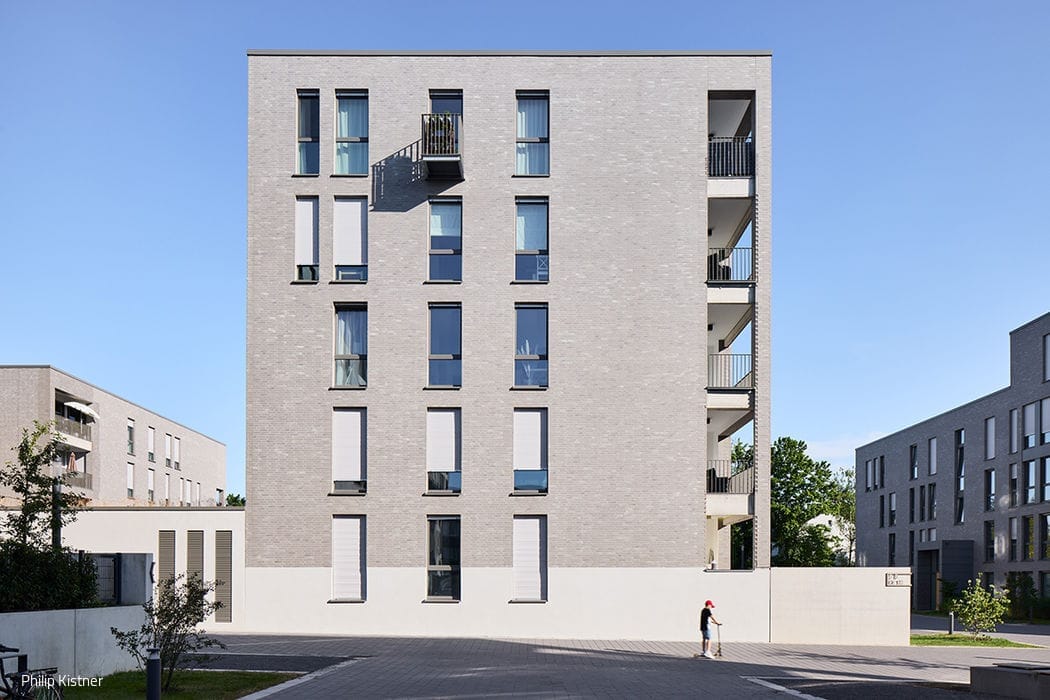
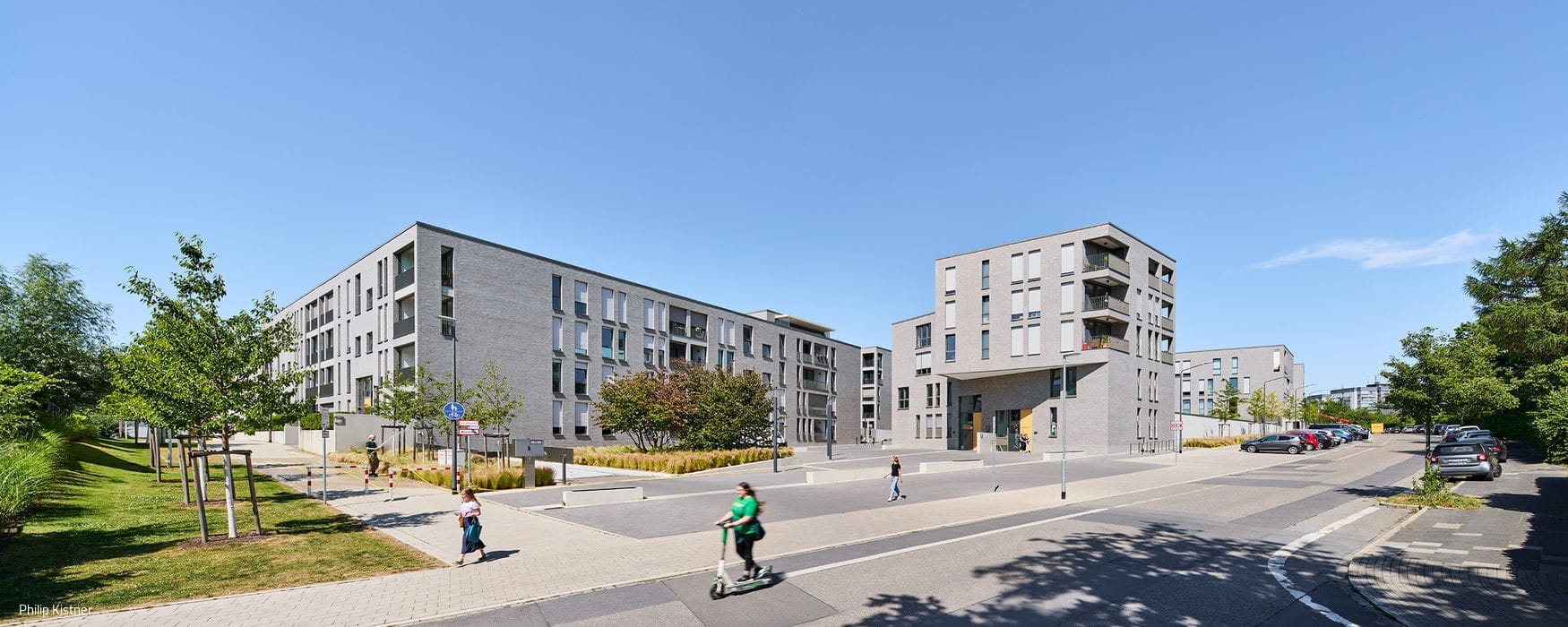
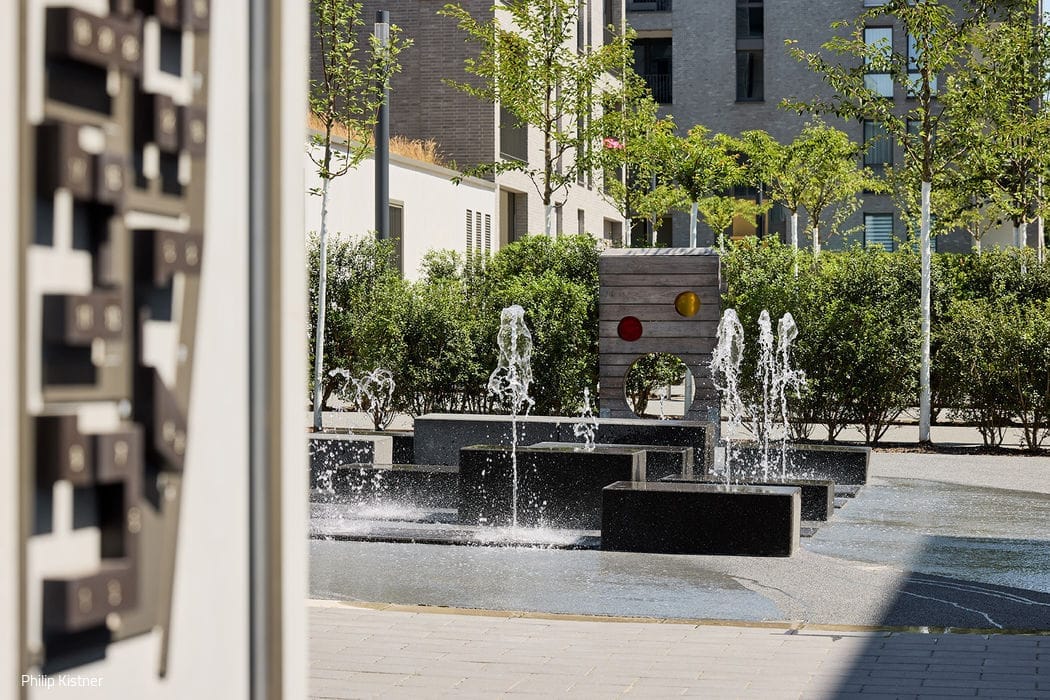
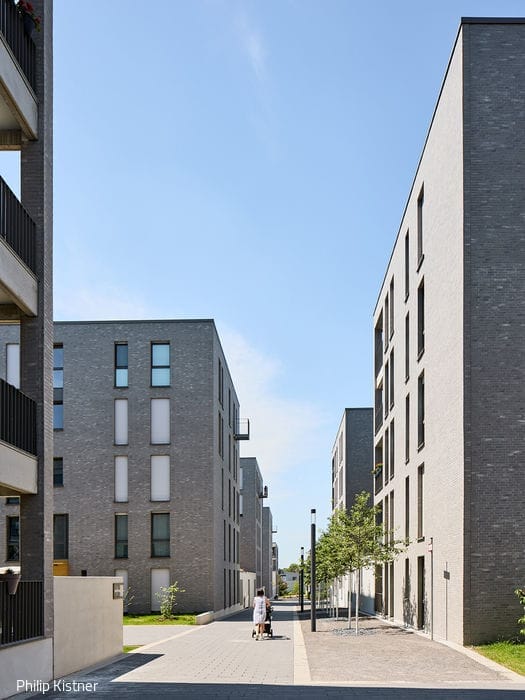
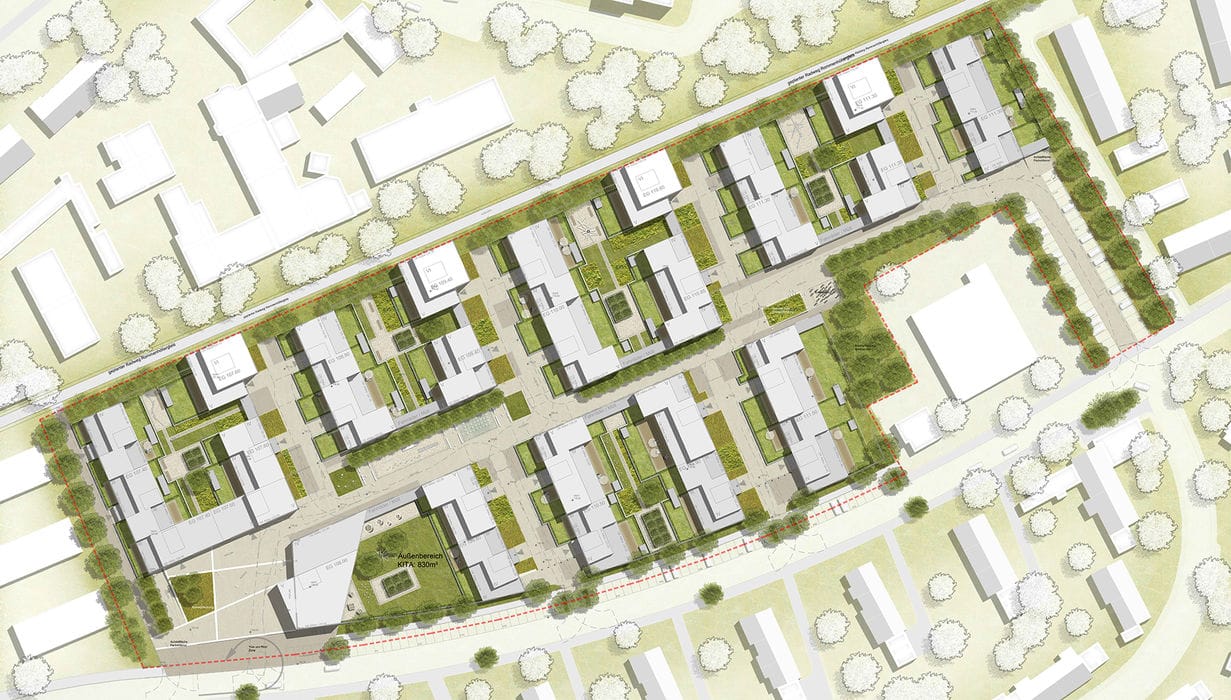
Parc Dunant has breathed new life into approximately three hectares of formerly unused land—a disused teacher training college in Essen-Rüttenscheid. The vision was adopted as a development plan in 2017, with groundbreaking in 2019 and completion in 2021. The result is a vibrant neighbourhood that balances urban vibrancy with family-friendly appeal, comprising 28 residential buildings and 304 thoughtfully designed barrier-free apartments. Of these, 102 received public funding. Apartments range from 45 to 159 m², with one-and-a-half to four-and-a-half-room configurations, each offering a clear and intuitive floor plan.
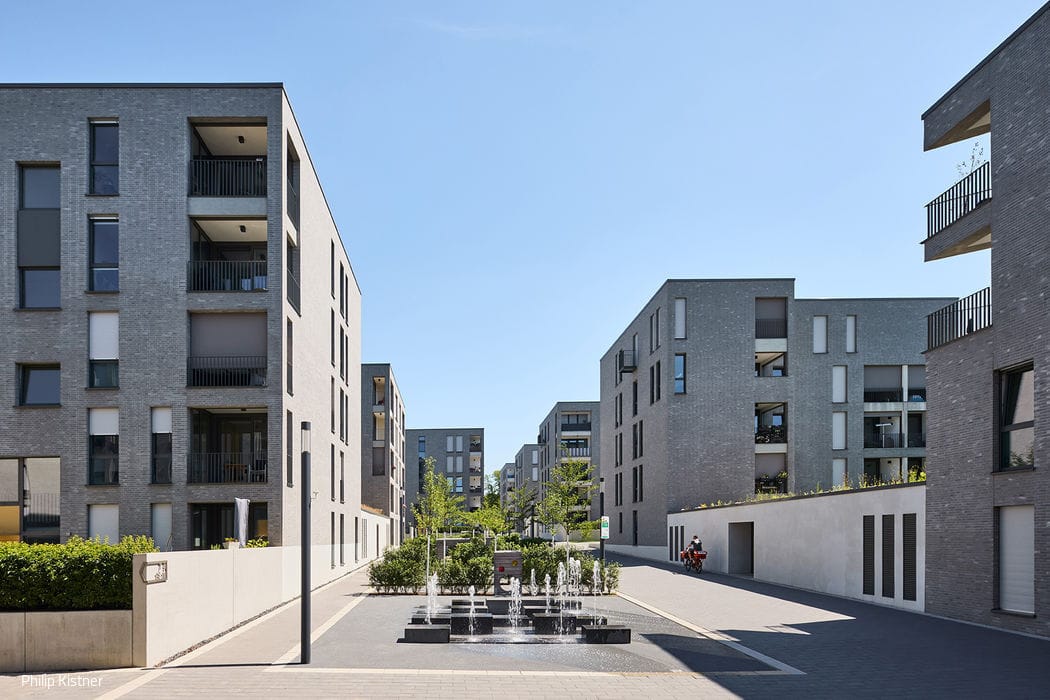
Weaving a fractured urban landscape back together presented the central design challenge. The gentes group from Düsseldorf, as project developer and investor, envisioned Parc Dunant as a catalyst for revitalizing Essen-Rüttenscheid—reconnecting neighbourhoods that had long been isolated from one another. In collaboration with the city of Essen, a design competition was held to explore diverse urban planning and architectural approaches. The winning vision articulates a sophisticated architectural language that thoughtfully integrates public plazas, semi-public zones, and private courtyards and loggias. This layered hierarchy of spaces nurtures community while preserving individual privacy. The development plan ensures full compliance with the competition's vision. Through extensive public engagement, specialist input, and municipal partnership, a richly textured neighbourhood emerged—anchored by a boulevard, neighbourhood square, and internal courtyards. A welcoming plaza opens to the west, initiating a sequence of public squares that become the neighbourhood's identity-defining spine. Public and private realms are subtly mediated by a gently sloped surface. The neighbourhood's interior squares are conceived as true urban plazas, with row structures reinforced through expanded row terminals and adjoining single-storey bases.
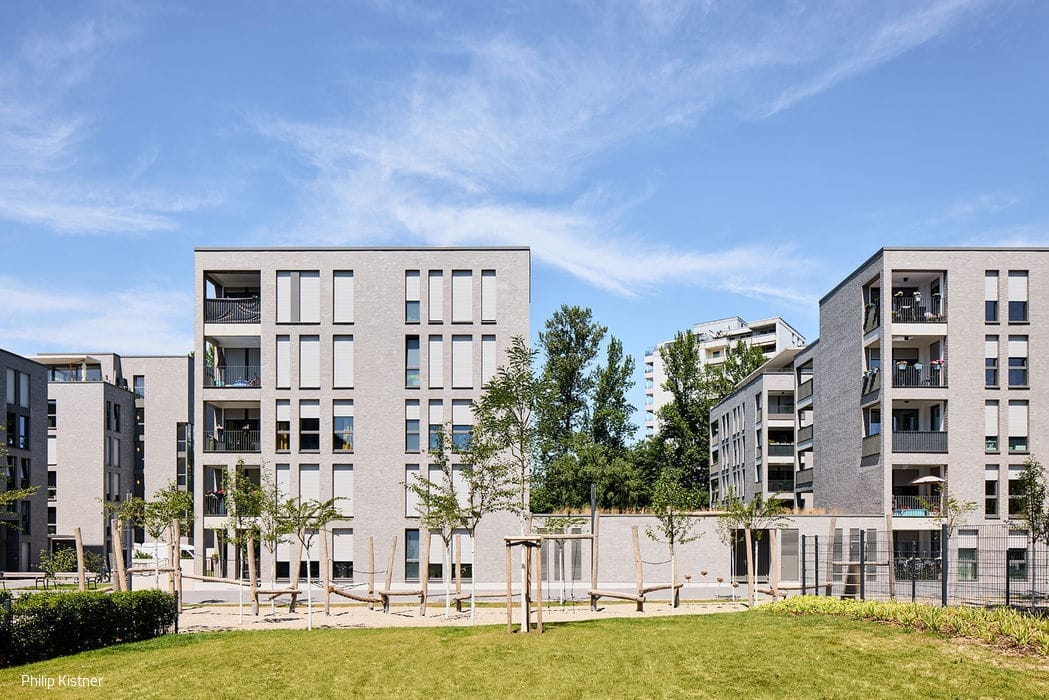
The urban character informing Parc Dunant demanded a rigorously contemporary architectural language. Linear forms and clean geometries create something both timeless and distinctly modern. Differentiated façade treatments offer residents varied spatial experiences—for both private retreat and shared community life. Loggias extend privacy to each residence. The façades draw on the vernacular material of clinker brick, reinterpreted for contemporary aesthetics in both colour and texture. Split clinker's subtle grain conveys calm energy. Particular care was lavished on building entrances to strengthen wayfinding and arrival experiences.
Parc Dunant pioneered a first for Essen—a neighbourhood-wide mobility concept that sets a new standard for sustainable development. Its strategy prioritizes non-motorized transport through an interconnected network of paths extending well beyond the site's boundaries. The planned cycle corridor along the Rommenhöller railway line enables efficient commuting without a car. Shared cargo pedelecs serve residents and the broader public alike, supporting car-free living. For those who require vehicles, car-sharing stations and electric charging points occupy the 300-space underground car park. Ground-floor apartments include private terraces with gardens. Upper-floor units feature loggias, while penthouse apartments offer expansive roof terraces. Lifts ensure barrier-free access throughout to all flats, storage, and laundry facilities. District heating provides efficient climate control across all buildings.
Photography Credits:
Philip Kistner
www.philipkistner.com
(Published in CUBE Ruhrgebiet 01|23)


Home on Your Wrist
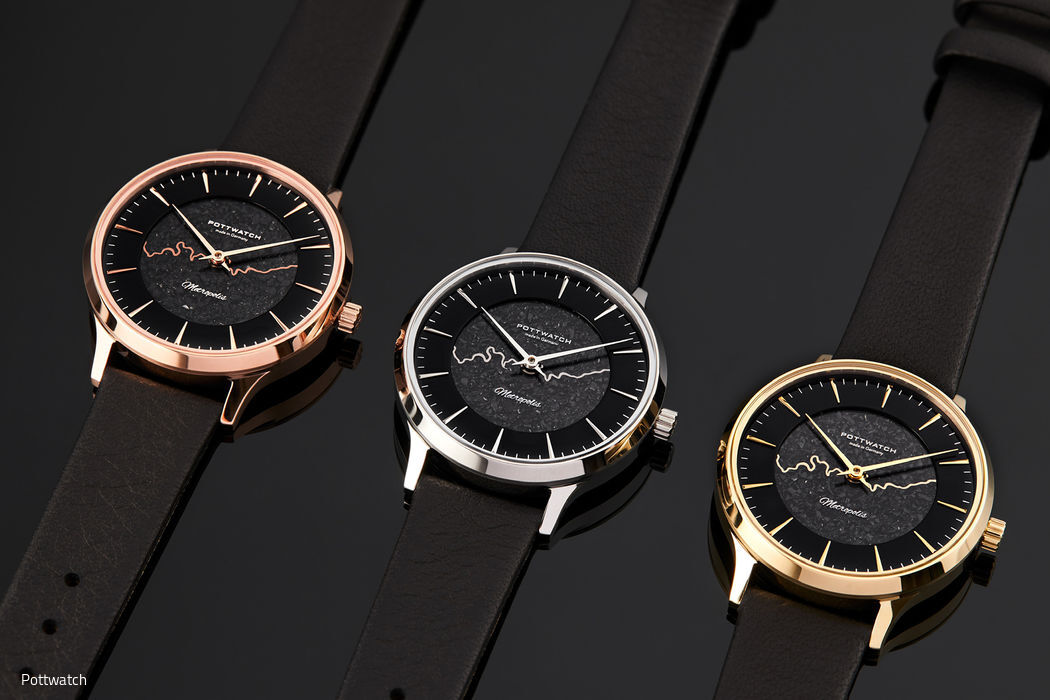
Pottwatch Creates Watches with Authentic Ruhr Coal
A Striking Sacred Space
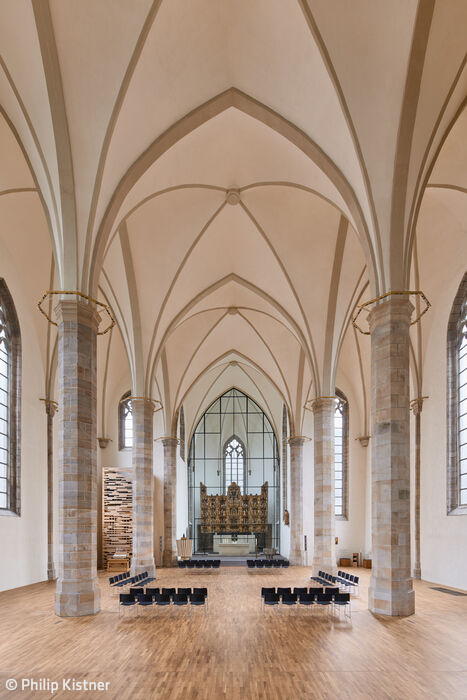
St. Petri Church in Dortmund: Preserving Heritage Through Comprehensive Restoration
A Haven for Young Learners
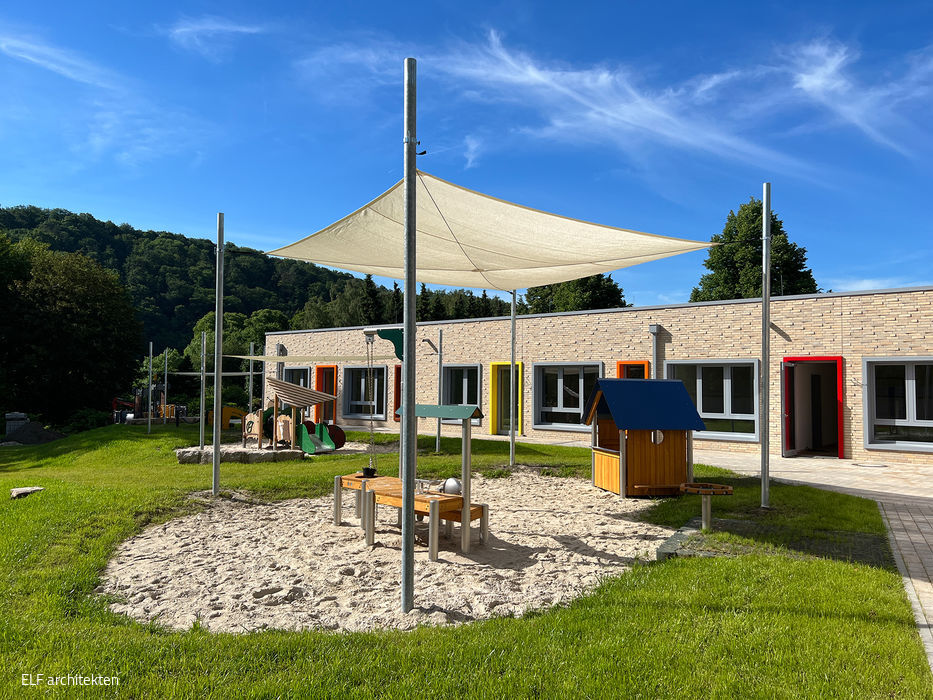
A daycare centre in Essen where children feel at home
Composition in Cubes
A Family Home That Expresses Individuality in Every Detail