


Coronavirus pandemic: Short-time working allowance as a crisis tool
The coronavirus and the measures taken to contain it are having a huge negative economic impact on numerous industries.

The coronavirus and the measures taken to contain it are having a huge negative economic impact on many industries. The construction and real estate sectors have also been hit hard by business closures, construction freezes and declining transactions. The government is trying to
mitigate the consequences for companies by continuously easing the eligibility requirements for short-time work benefits and improving the benefits themselves. Particularly in labour-intensive areas, agreeing on short-time working and receiving short-time working allowance is an indispensable component of crisis management.
Attorney Dr. André Bienek, partner at the law firm Rotthege I Wassermann, outlines the key changes in short-time work allowance procedures and provides guidance for legally compliant application submissions:
1. On the basis of the "Act on Temporary Crisis-Related Improvements to the Regulations Governing Short-Time Working Allowances", the Federal Government has made it easier to access short-time working allowances by means of a statutory order.
Companies that agree on short-time working with their employees can apply for short-time working allowance from the relevant employment agencies in accordance with Sections 95 ff. of SGB III.
The following improved conditions apply retroactively from 1 March 2020:
a) Lowering the threshold for a significant loss of work
To receive short-time work allowance, it is sufficient if at least 10 per cent of employees are affected by short-time work due to a loss of work caused by economic reasons or unavoidable events. Previously, the threshold was 30 per cent of employees.
b) Relaxation of the inevitability of work stoppages
In order to receive short-time work allowance, it must be proven, among other things, that the loss of work could not have been avoided by other means. The employer must therefore check, for example, whether they can assign their employees other tasks, grant them leave or allow them to reduce their overtime.
It is not currently necessary to accumulate negative working time balances in agreements to compensate for fluctuations in working hours. This can be waived in whole or in part.
c) Extension of short-time working allowance to temporary agency workers
Unlike under the previous legal situation, short-time work compensation can also be applied for on behalf of temporary workers.
d) Amount of short-time working allowance, assumption of social security contributions
The short-time work allowance generally amounts to 60 per cent or 67 per cent of the so-called net pay difference. The higher benefit rate of 67 per cent is paid to employees who have at least one child and whose spouse or partner also has at least one child in this sense, provided that both spouses or partners are subject to unlimited income tax liability and do not live permanently separated.
The short-time working allowance also reimburses the social security contributions that the employer would normally have to pay for the employees. Until now, these had to be paid by the employer.
2. As part of the "Social Protection Package I," regulations governing additional income during short-time work were relaxed. Effective from April 1 through October 31, 2020, earnings from secondary employment taken on during short-time work in systemically relevant sectors are not credited against short-time work allowance up to the limit of wages earned before the short-time work period. You can find the list of systemically relevant sectors here:
www.bmas.de
According to the draft bill for the "Social Protection Package Act II", the improved opportunities for employees to earn additional income are to be made available to all professions from 1 May 2020 for a limited period until 31 December 2020.
Similarly, the "Social Protection Package II" provides for a gradual increase in short-time working allowance from 60 to up to 80 per cent, or from 67 to up to 87 per cent for employees with children. The prerequisite is that at least 50 per cent of regular working hours are lost. Then, from the fourth month of short-time work, 70 or 77 per cent of the lost wages will be paid, and from the seventh month of short-time work, 80 or 87 per cent.
3. The eligibility requirements for short-time work benefits have been significantly relaxed by the above measures, and the benefits have been significantly improved. Nevertheless, it should be noted that all other requirements for receiving short-time work benefits must be taken into account. In particular, the following steps should be followed:
First step: The introduction of short-time
working must have been agreed with the employees in a manner that is effective under labour law.
Second step: After checking the
requirements of Section 95 ff. SGB III, a notification of the loss of working hours must be submitted to the responsible employment agency. The notification must be submitted in the month in which the short-time working allowance is to begin.
In advance, consideration should be given to explaining the loss of work and the measures to be taken to avoid it (granting leave, reducing overtime, assigning other tasks, etc.). The agencies require in particular that leave from previous years be used up or forfeited. For the current year, however, the submission of a leave plan is sufficient.
Third step: Once the loss of working
hours has been reported, the application for short-time working allowance must be submitted to the responsible Employment Agency on a monthly basis. The application must be received by the Employment Agency within a preclusive period of three months. The period begins at the end of the month for which the short-time working allowance is to be paid.
In order to be able to demonstrate the extent of short-time working allowance payments, it is important to document the reduced working hours accurately.





Bright Spot at the Forest's Edge
A family home embraced by nature
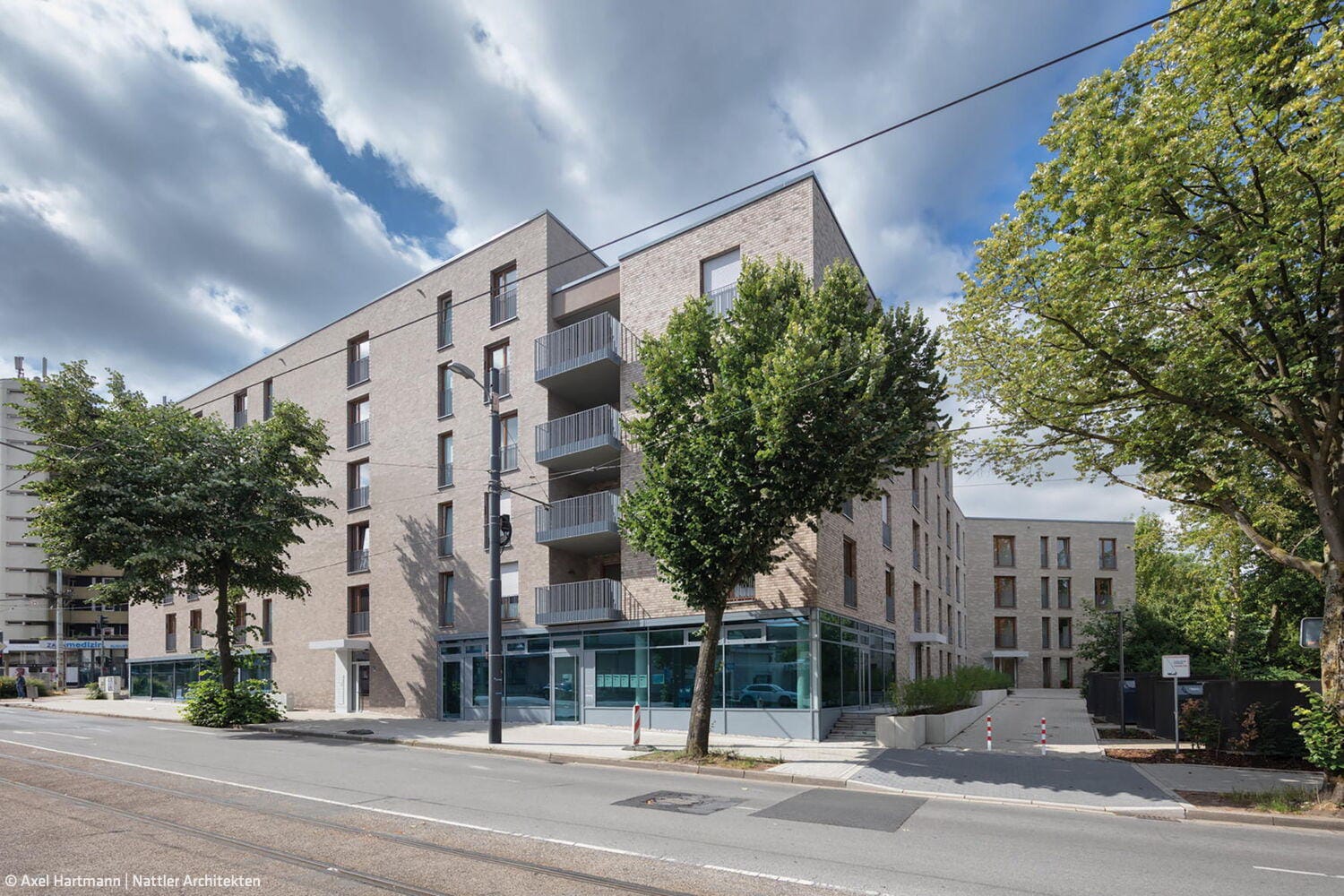
Thoughtfully Planned Residential Park
In this Bochum development, modern architecture and urban planning work in perfect concert.
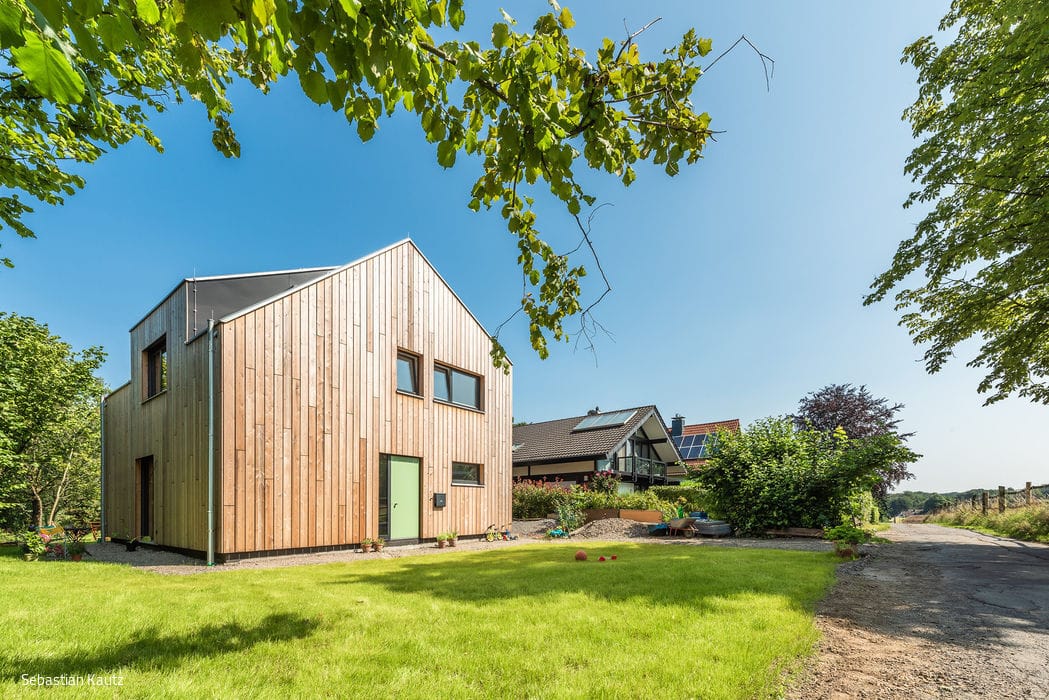
Do Not Disturb
A meticulously crafted timber house, engineered for energy efficiency and designed around the lives of those who inhabit it.

Office Landscape Completed
A Campus-Style Office Complex in Bochum's Innovation District