


The wait proved worthwhile.
Meticulously renovated city apartment in a heritage-protected building from 1912–13
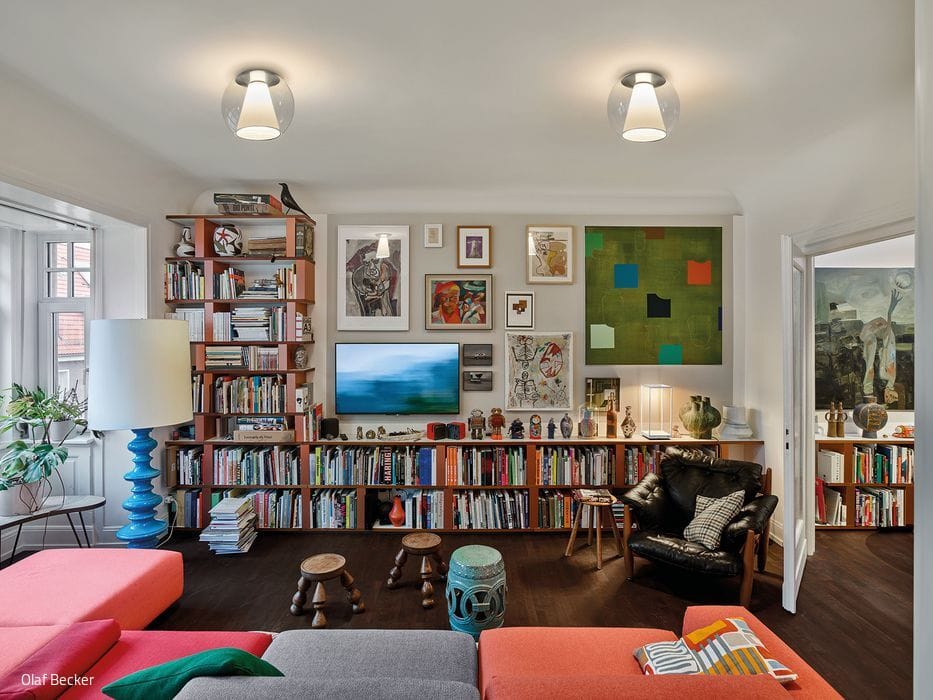
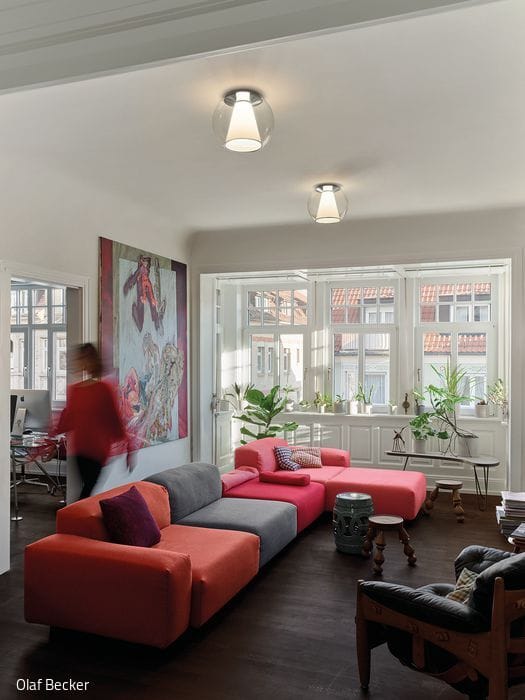
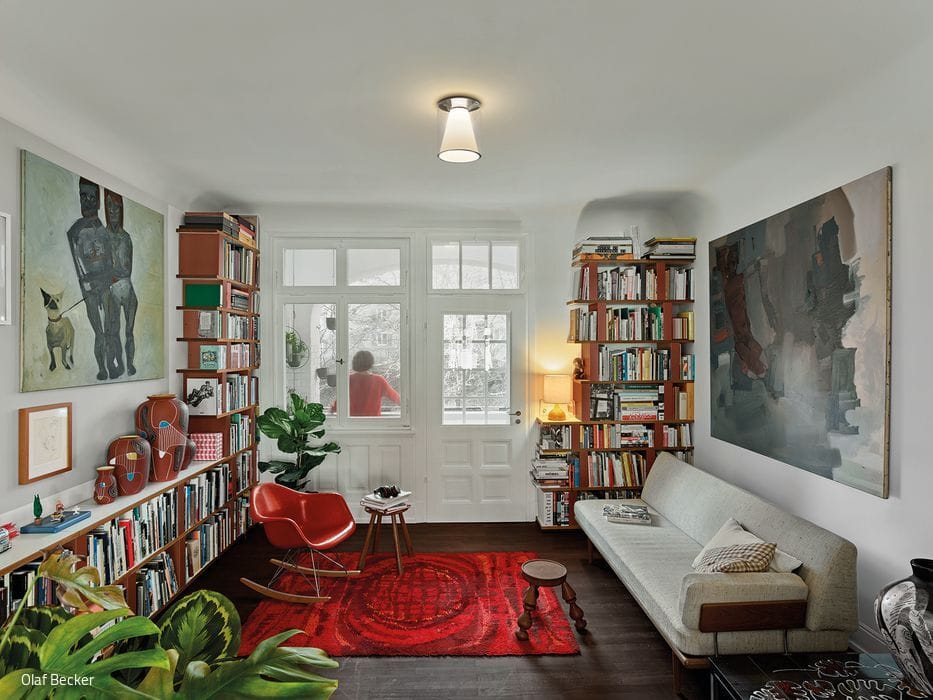
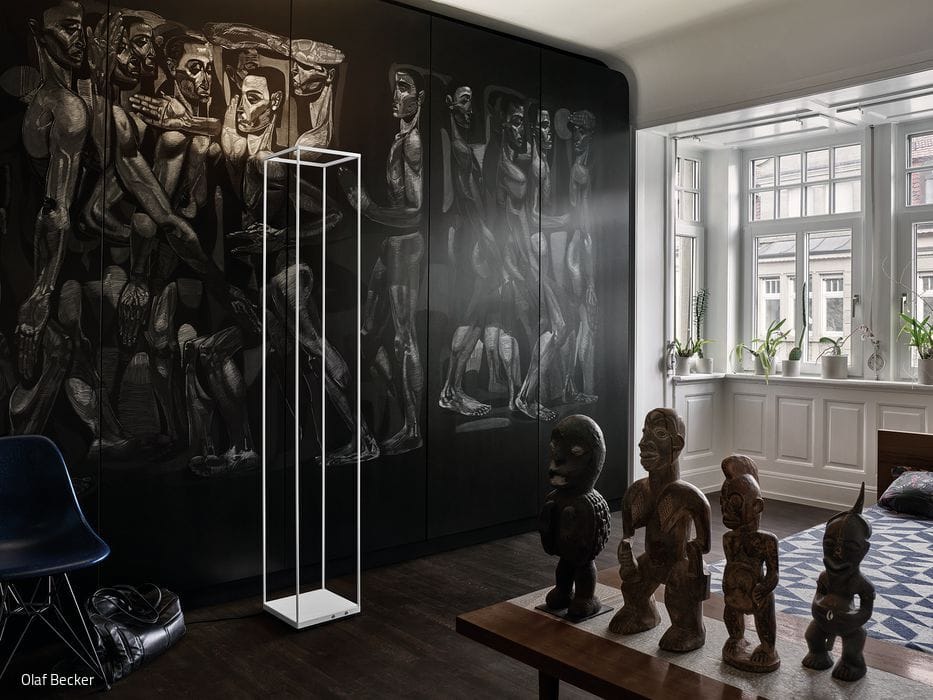

For years, the homeowners searched for their perfect home. When they finally found it, there was one catch: the apartment wouldn't be available for occupancy until a year after purchase. What initially felt like an obstacle became a distinct advantage: no w here architects and designers seized the opportunity for intensive planning with the future residents, enabling the entire renovation to be completed in just six weeks with a seasoned team of craftspeople.
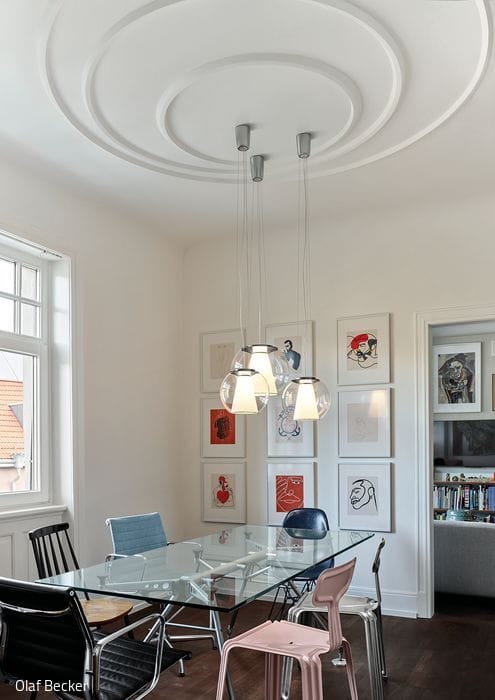
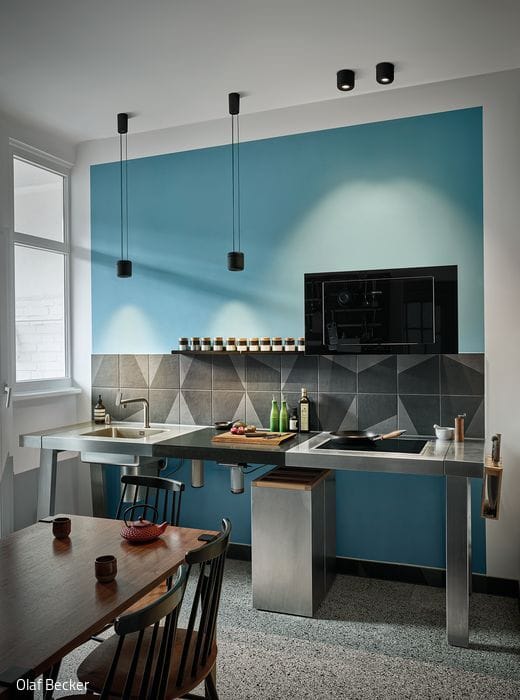
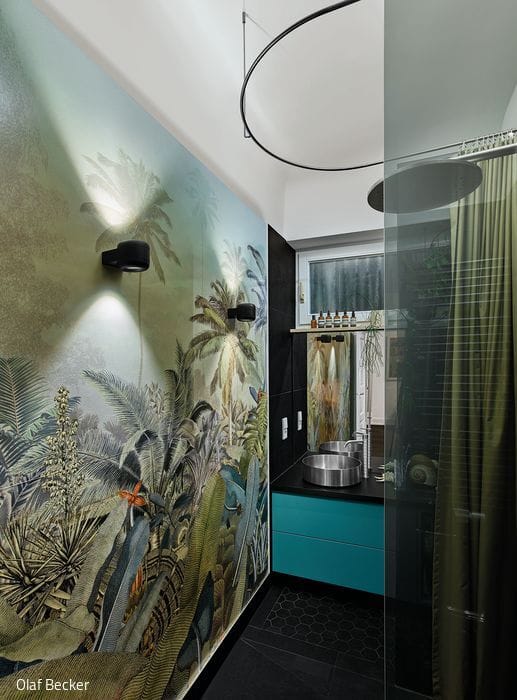
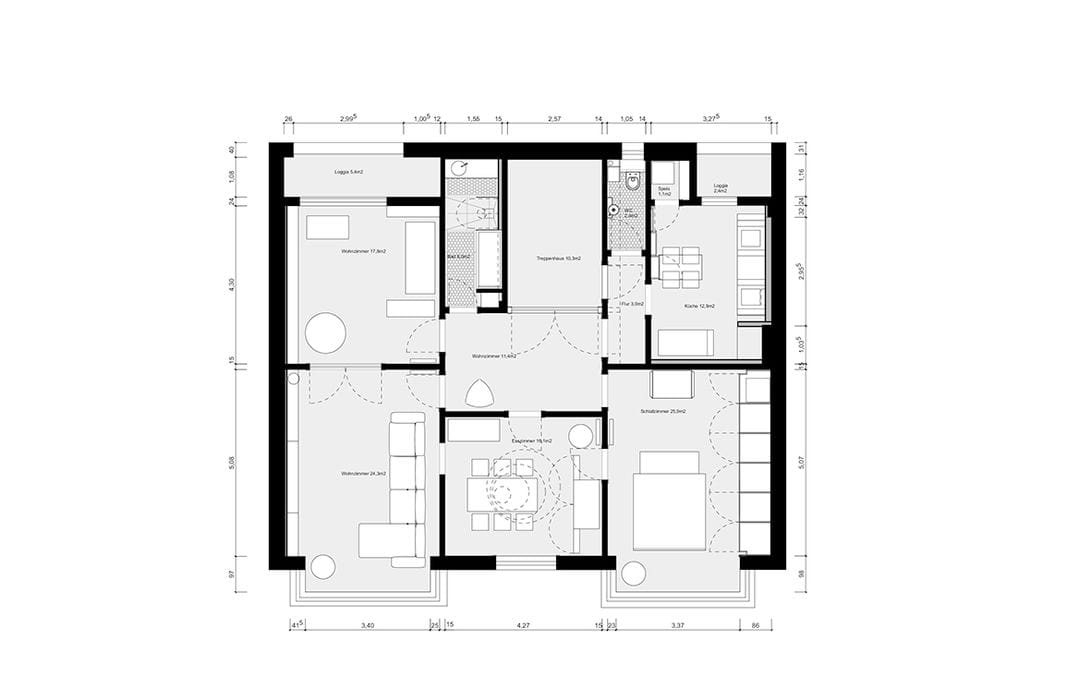
The floor plan of this third-floor apartment in a 1912–13 heritage-protected townhouse revolves around a central hallway. The small, separately-accessed kitchenette once provided the household staff with independent entry. Three-sided bay windows punctuate the street-facing façade, framing the two outer rooms. Two covered loggias overlook the garden, offering outdoor living space regardless of the weather. The building's technical systems were completely replaced and the bathrooms reconfigured. Historic architectural features—wall panelling, coffered doors, cornicing, and terrazzo floors—have been carefully restored. The original solid beech flooring, which showed signs of patching and wear, was sanded and finished with a pigmented oil in smoked oak tones. Where previous owners had removed the ornamental ceiling plasterwork, a contemporary design now takes its place: several "stucco rings" that encircle the off-center dining table. These diamond-profiled elements, each angled differently, were digitally milled from MDF and mounted to the ceiling, then finished and painted. The apartment's interior design is deeply personal and biographical—each furnishing, object, and artwork connects to specific places, events, or relationships in the residents' lives. Many pieces are creations of the residents' artist friends, including the bedroom cabinetry, a bespoke commission by Ethiopian artist Tesfaye Urgessa (based in Nürtingen). The living room shelving is a custom design by the architects and designers themselves, with acacia-edged shelves stacked atop folded, copper-toned Alucobond supports.
Photography Credits:
Olaf Becker
www.beckerlacour.com
(Featured in CUBE Stuttgart 03|22)
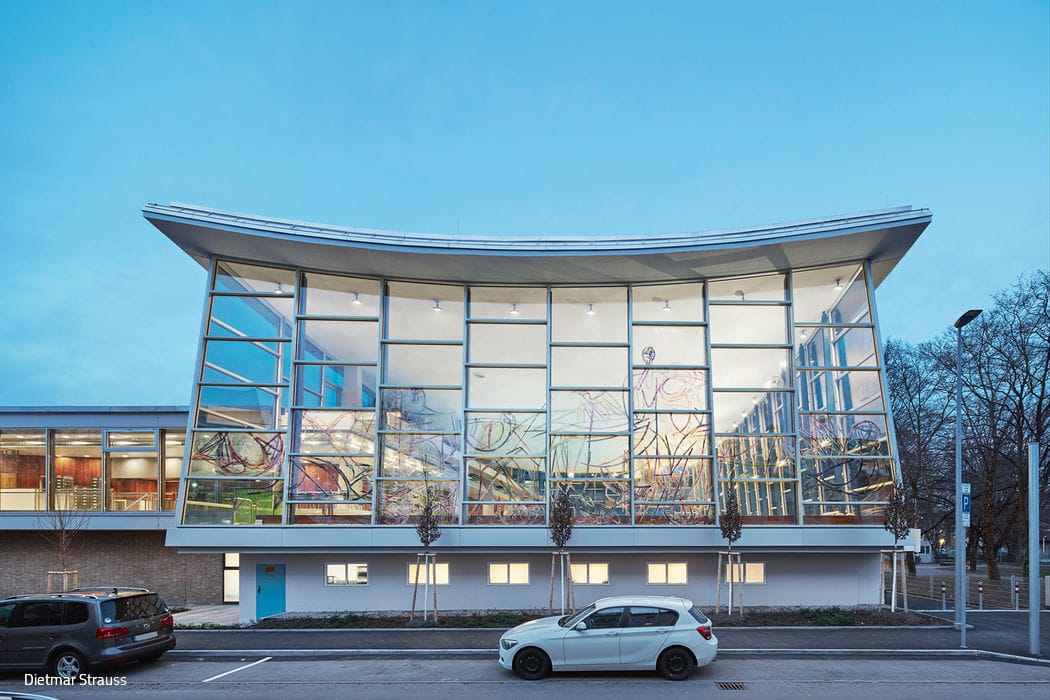
Swimming in a Historic Monument: Feuerbach
The planning consortium of pbr (architects and engineers) and HSP Hoppe Sommer Planung set out to preserve the architectural heritage while…

Staying in the Family
A period home renewed: how modern design elements honour a family residence's original character
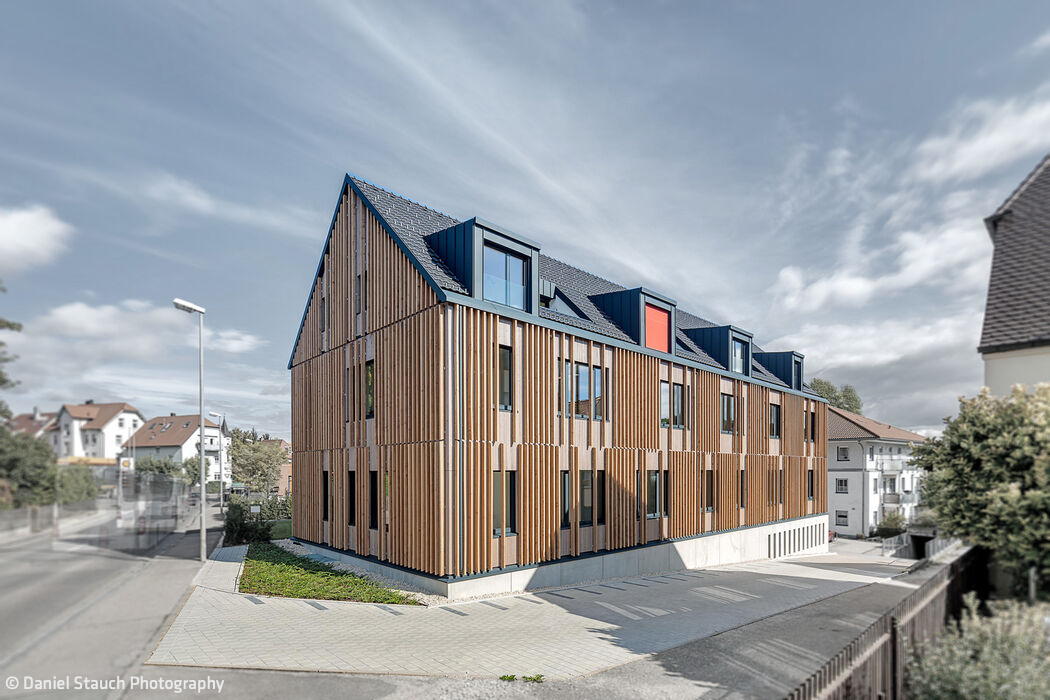
Sustainable Extension
A wood-concrete hybrid extension complements a historic structure, its original construction period clearly expressed
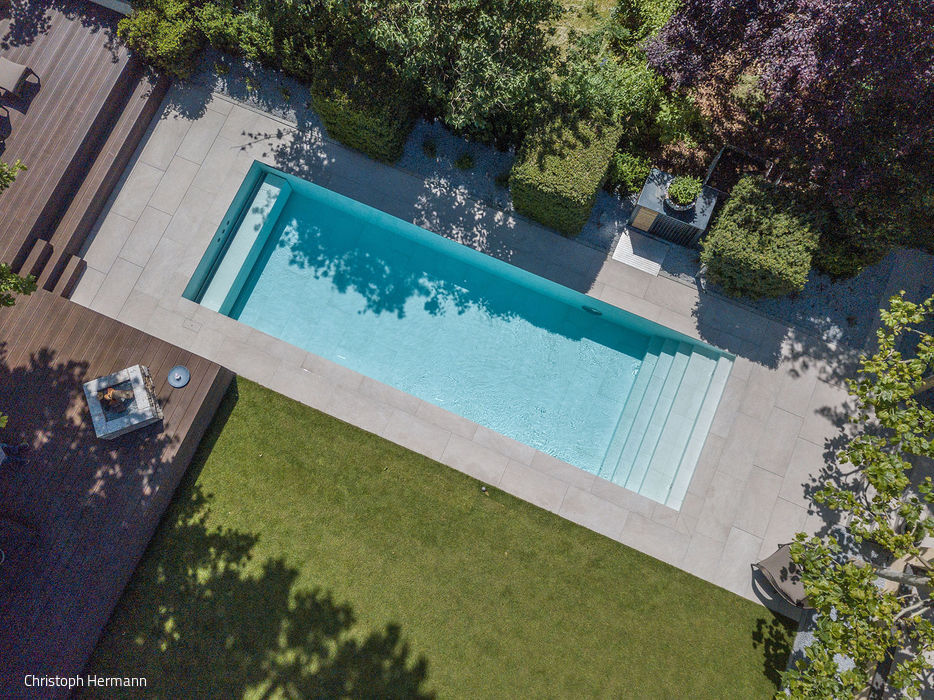
Dreams Realized
A Backyard Oasis – Where Everyday Life Becomes Vacation