


Architectural vision
Spanning seven floors and covering a usable area of 12,000 m², the Nething architectural firm designed the Zeiss Innovation Hub @KIT, which consists of modern offices, laboratories and manufacturing workstations – and, above all, a space for innovation and collaboration.
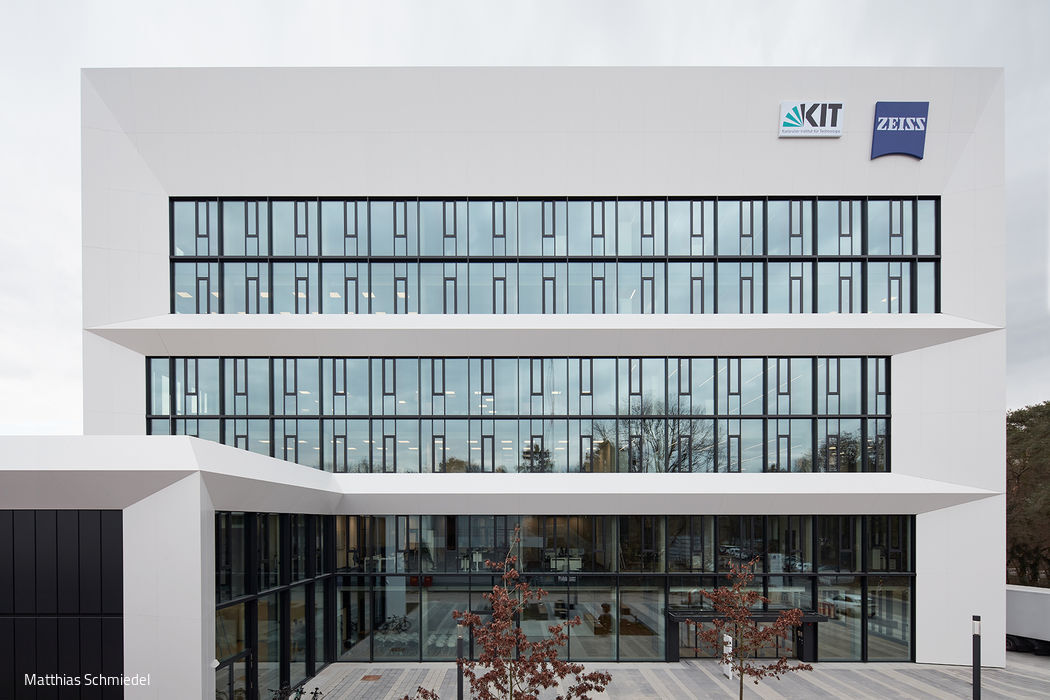
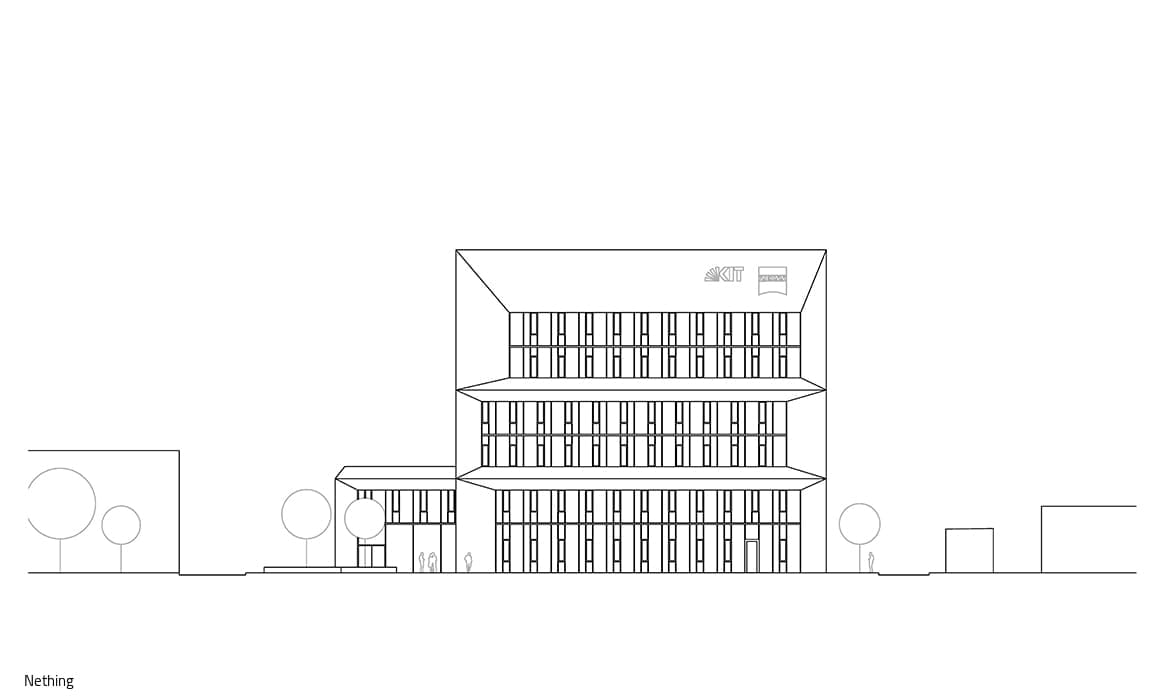


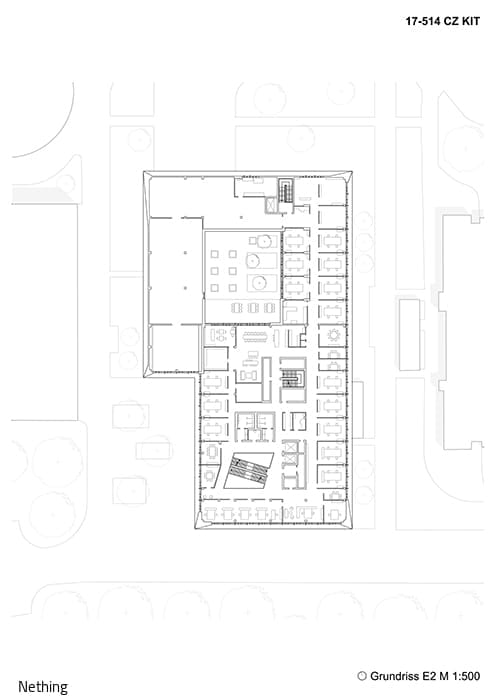
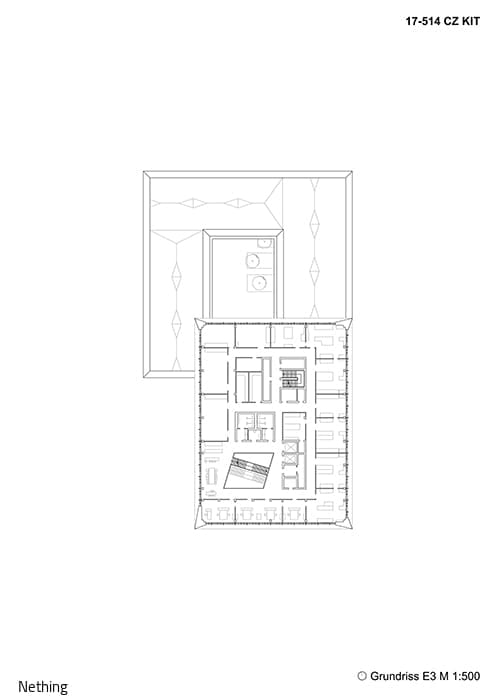
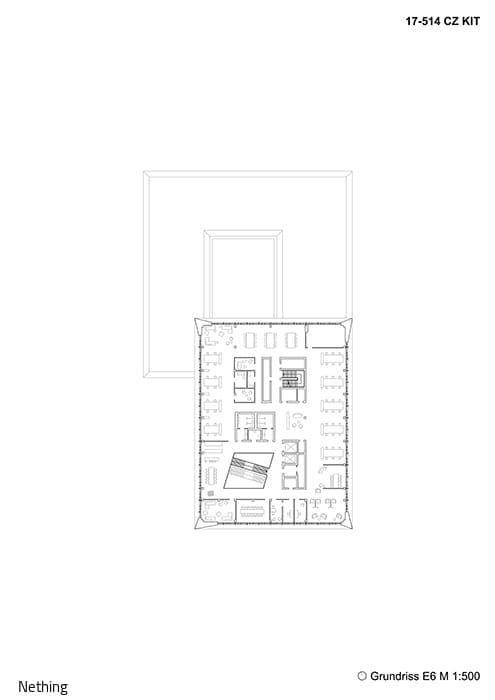
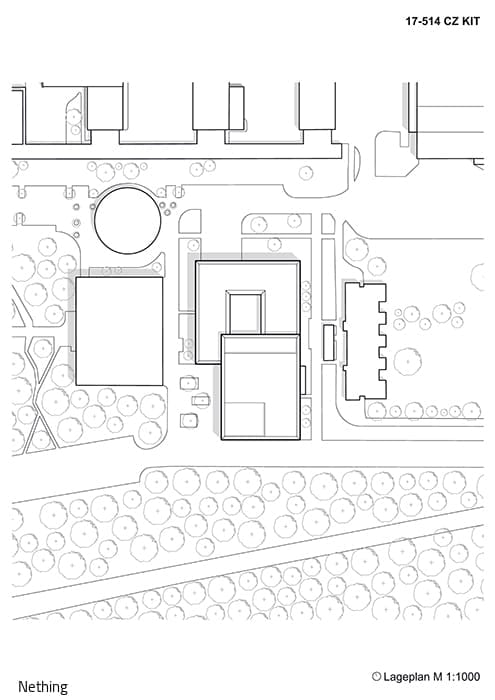
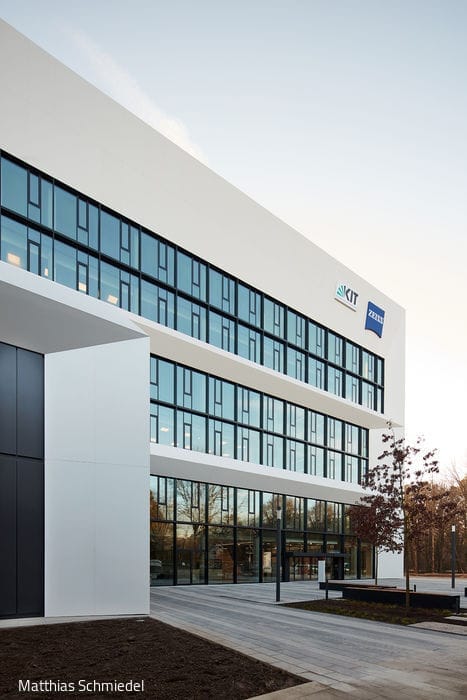


"Seeing beyond" – transcending boundaries and blurring conventional structures. This is how Zeiss, the initiator of the project, formulated the objective of the new innovation building on the North Campus of the Karlsruhe Institute of Technology (KIT). Spanning seven floors and covering a usable area of 12,000 m², the architectural firm Nething designed the "Zeiss Innovation Hub @KIT" to consist of modern offices, laboratories and manufacturing workstations – and, above all, a space for innovation and collaboration. High-tech and digital start-ups are to be promoted, as are Zeiss's innovation activities and research at KIT. This opens up new opportunities on all sides to shape the future together. A vision that has also been implemented architecturally.
In order to break with traditional ideas right from the exterior, the architectural firm changed the classic layout of a building and grouped the seven levels of the building into three cubes, each with two and one with three floors. This gives the building a sculptural, clear and surprising appearance. The façade design also follows the guidelines of Zeiss' brand identity: precision and purism are reflected in the large-volume building and the sharp-edged metal façade, which meets open, transparent glass surfaces. Inspired by Japanese architecture, openness derives its value from closure. Therefore, the expansive openings complement correspondingly large closed surfaces, which are arranged in different directions. In addition to the aesthetic perception, the design also supports a functional aspect: where high-tech will be conceived and planned in the future, the building technology requires appropriate space. To prevent this from looking like a foreign body on the roof, the entire seventh floor is reserved for technology alone. Thanks to the building's structure and the partially closed metal façade, the technical floor blends carefully into the overall concept. In line with the principle of "economy through space efficiency", the office floors can be flexibly designed for start-ups of different sizes, depending on their use. The physical and chemical laboratory areas can also be adapted to the respective requirements.
The technical focus was on planning the production area. Here, Nanoscribe, a spin-off of KIT and Zeiss, manufactures 3D printers with the world's highest resolution for nano and microfabrication. This places high demands on the production environment. For example, vibrations must be avoided at all costs in order to deliver precision. Even a passing bus can be a problem. The solution here is a 1.80 m thick floor slab on which the entire production area stands. It absorbs vibrations and creates a quiet working environment.
Photography Credits:
Matthias Schmiedel
www.matthiasschmiedel.de
(Published in CUBE Stuttgart 02|20)



Elegantly Curved
A multi-story residence shaped by the landscape, opening gracefully to its surroundings
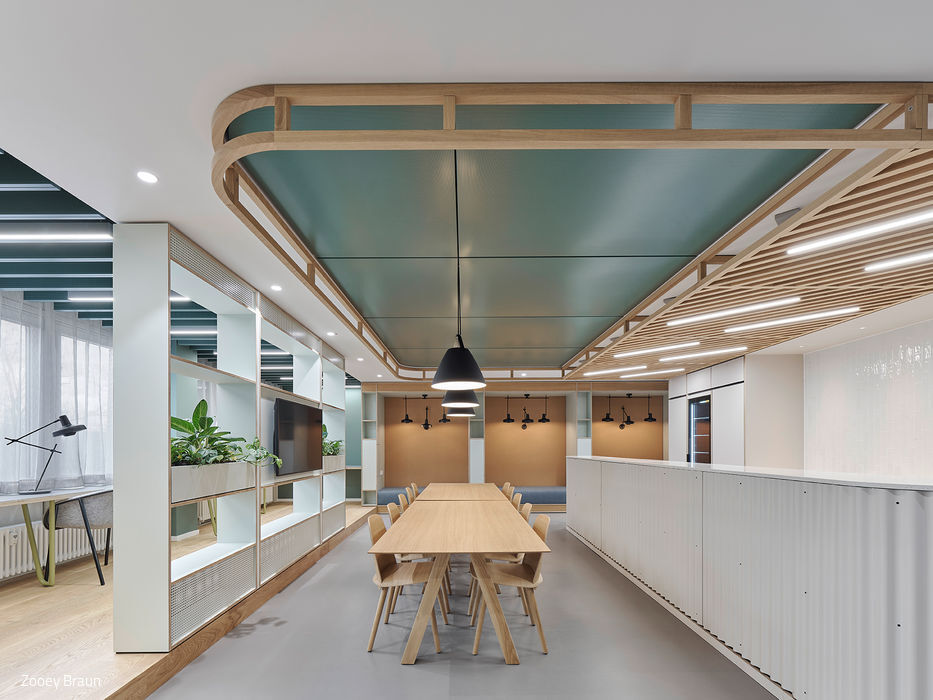
Reimagined for the New World of Work
A vibrant new home—where inspiring work and collaboration spaces unite
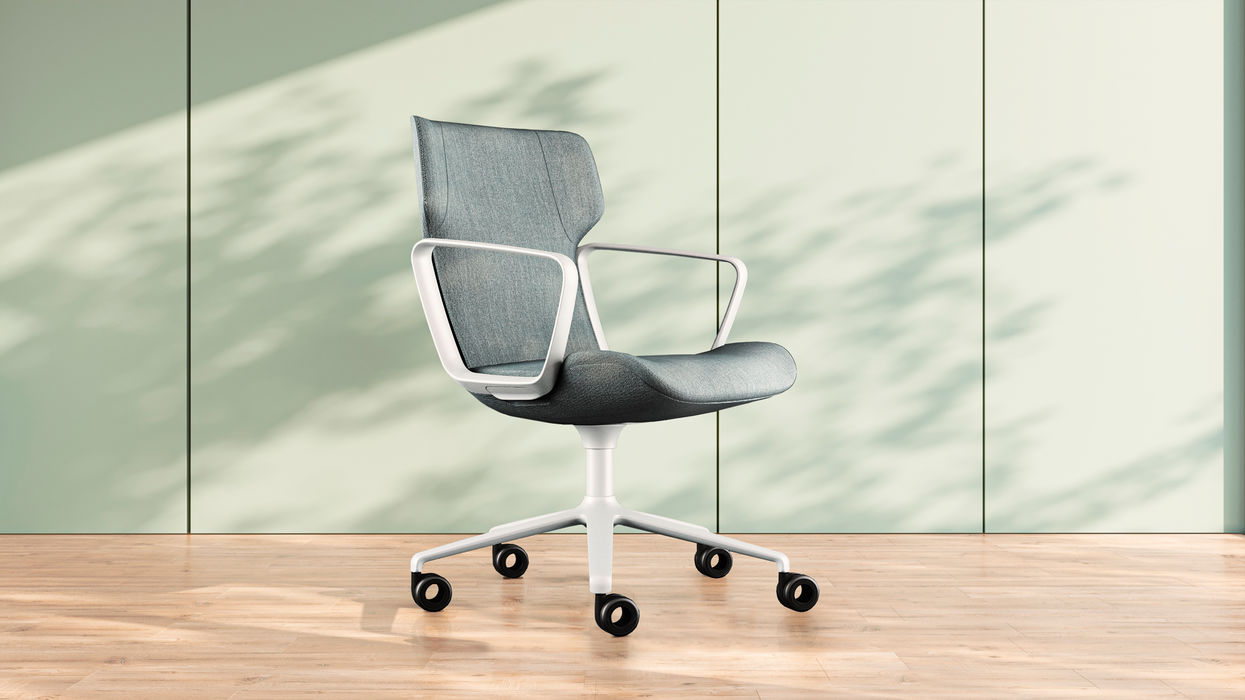
With Logic, Morality, and Magic
Phoenix: Where intelligent design meets innovation
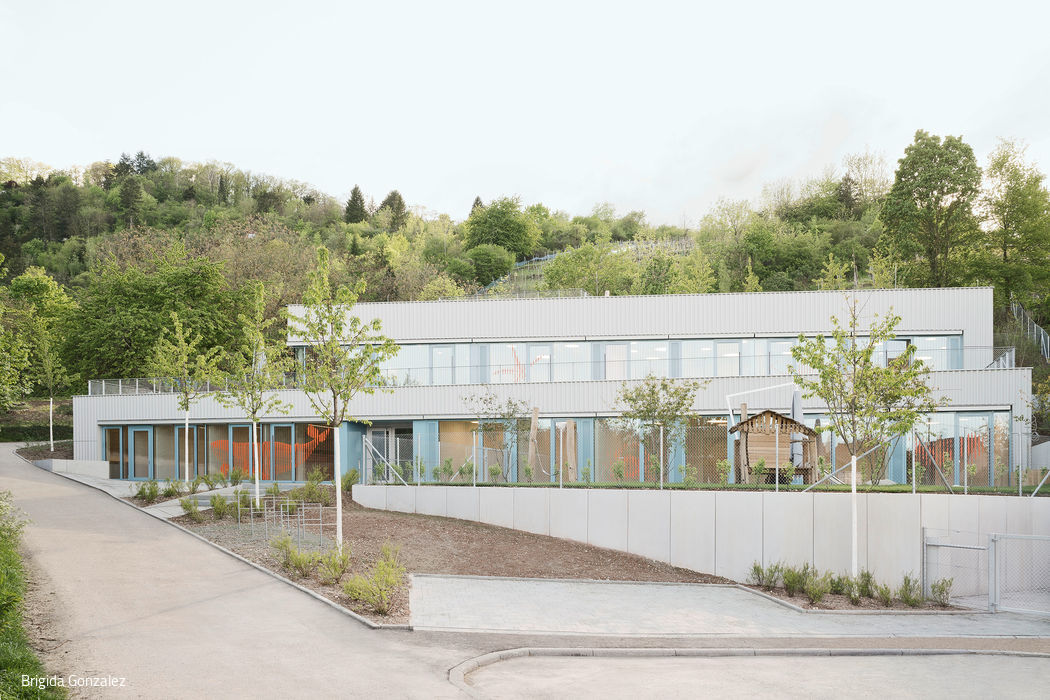
On the Sun Deck
A daycare centre that integrates naturally into the hillside landscape, creating nature-inspired play spaces with expansive views.