


After the Flood, Before the Next
A historic house in Mechernich—meticulously restored while honoring its heritage status
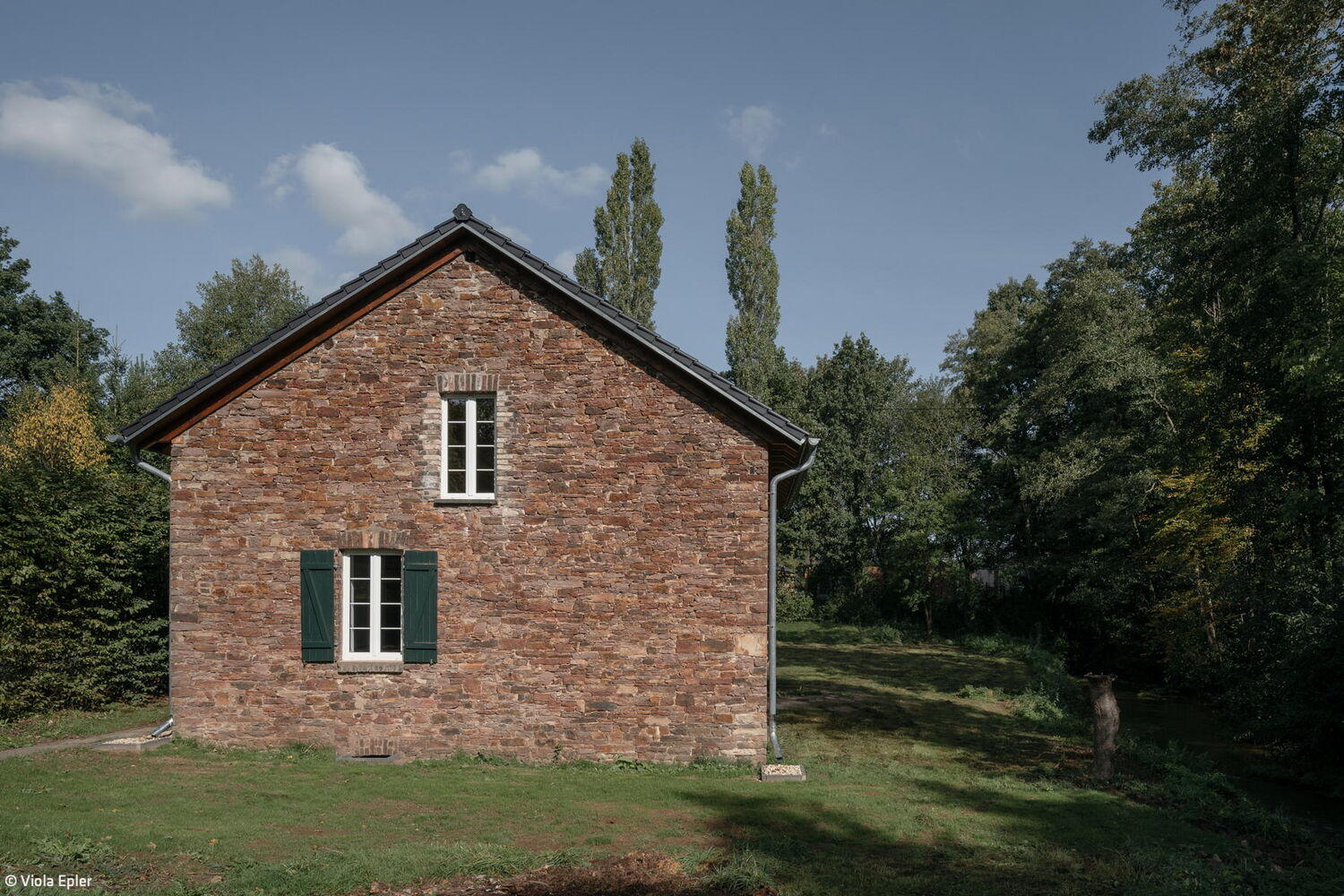


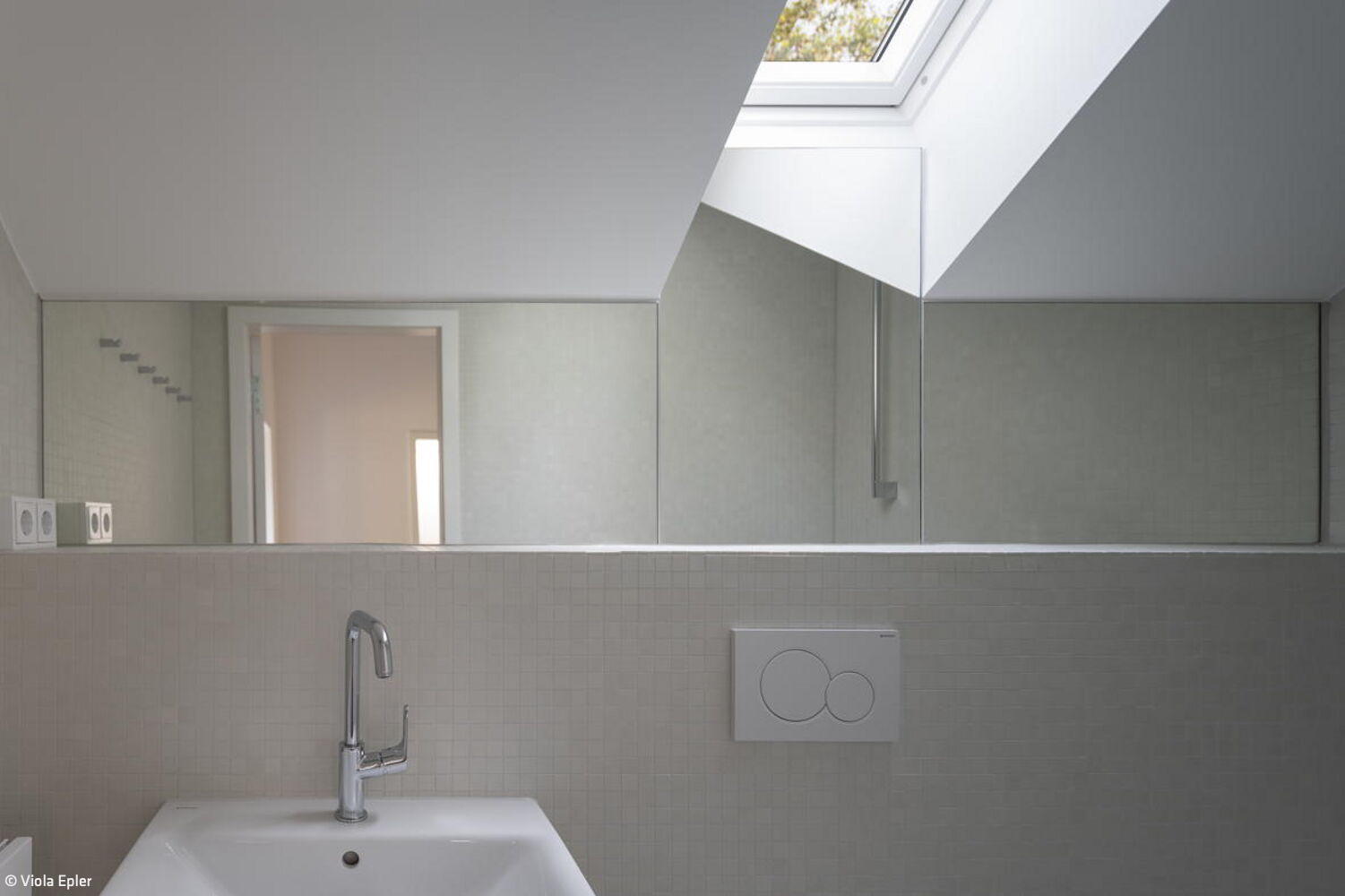
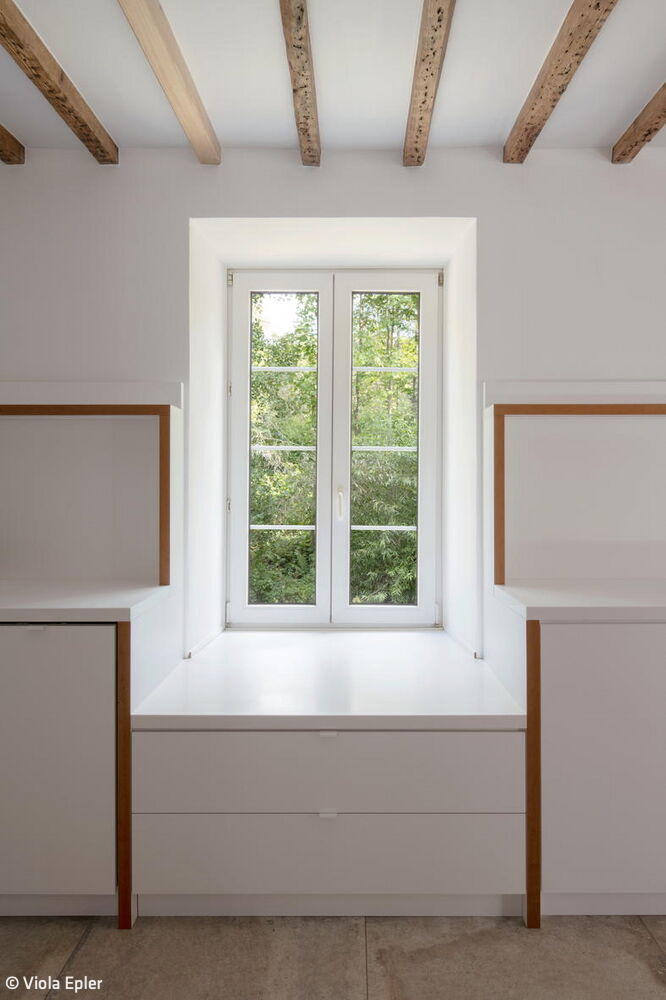
The "Red House" at the edge of Mechernich was among countless buildings in the northern Eifel devastated by the catastrophic flood of July 14, 2021. This protected heritage structure, originally built in 1854 as part of the Burgfey mining complex, was submerged up to its first floor by the rapidly surging waters of the adjacent Veybach stream. Though the residents escaped unharmed, the house became uninhabitable within hours. Lüderwaldt Architects of Cologne approached the restoration with a deliberate strategy: integrating flood resilience into every aspect of the design to prepare for future risks.
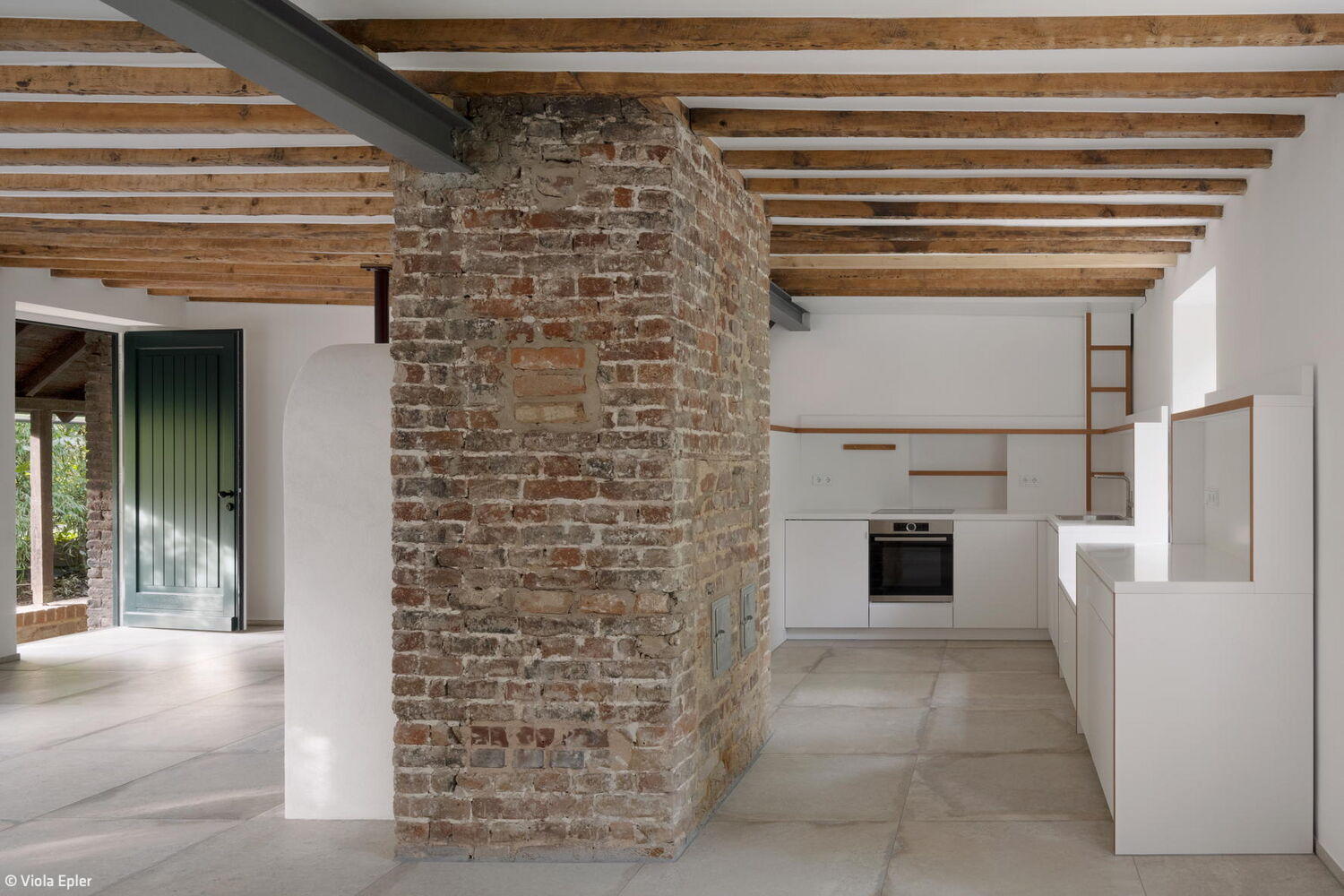
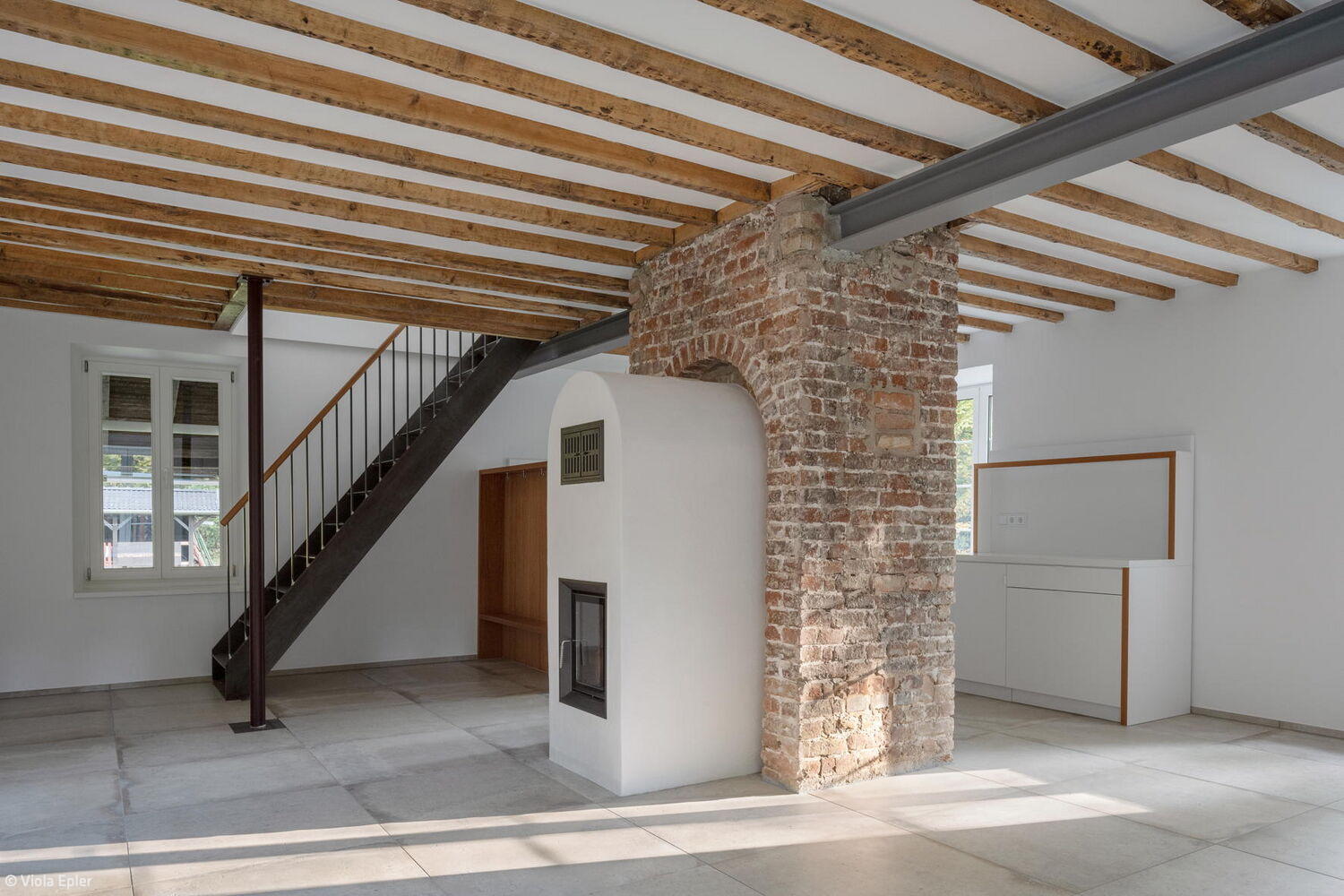
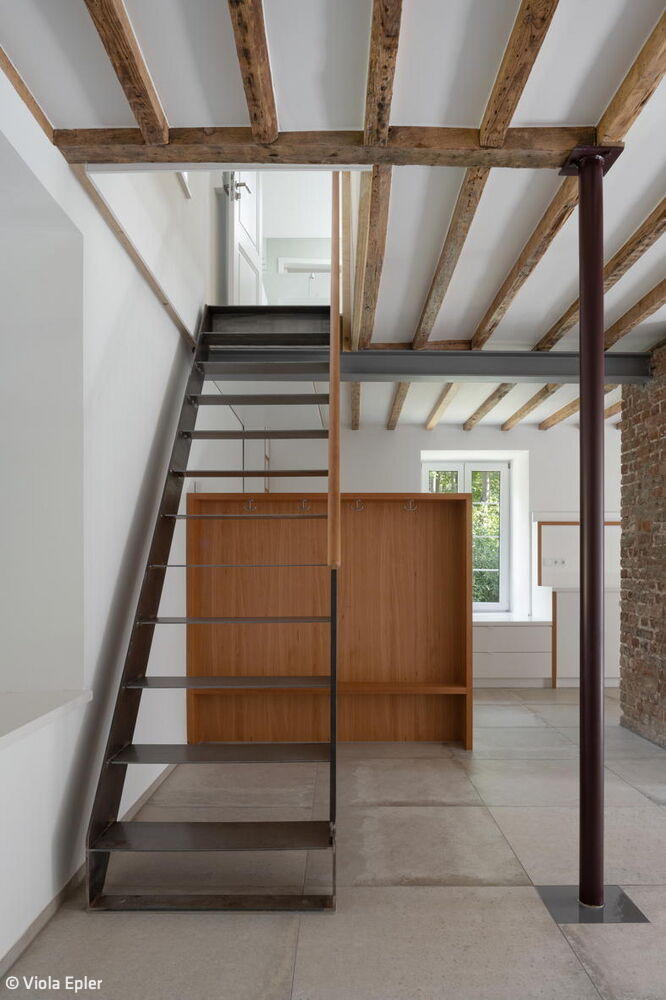
The cleanup revealed that while the substantial red sandstone walls and cellar vault were thoroughly saturated, they remained structurally sound. The recently replaced windows survived with only minor damage. Everything else—the interior staircase, secondary structures, and all mechanical systems—was either irreparably damaged or destroyed. Working with specialist engineers, the architects developed a two-pronged restoration strategy: prevent water from entering above ground floor window level and rising through the former open cellar stairs, while simultaneously specifying moisture-resistant materials and exposed installations to ensure any future damage could be repaired quickly. The ground floor's expansive open space is now articulated by a refined, raw steel staircase, a red steel column marking the former timber-frame area, and the salvaged central chimney stack. These elements create flexible zones—entry, living, dining, kitchen, and workspace—easily reconfigured through movable furnishings. The mineral interior insulation, stone floors, steel elements, and open electrical systems are designed to withstand flooding without requiring complete overhaul. Removing the damaged ceiling opened the upper floor to the attic, exposing and integrating the restored roof structure as a design feature. A bathroom was skillfully carved into the roof geometry, with a dedicated storage area for flood-protected building systems. Wooden roof and wall structures received cellulose insulation; interior wooden studs were clad in gypsum fiberboard. Existing floorboards were restored, patched, and finished with oil. The regularly flooded cellar vault was sealed from ground floor rooms by a concrete ceiling embedded in the sandstone walls. The red sandstone façade received selective repairs, and the roof was completely re-tiled, with refined roof edges that reinforce the building's original profile.
www.luederwaldt-architekten.de
Photography:
Viola Epler
www.violaepler.de
(Published in CUBE Cologne Bonn 04|24)


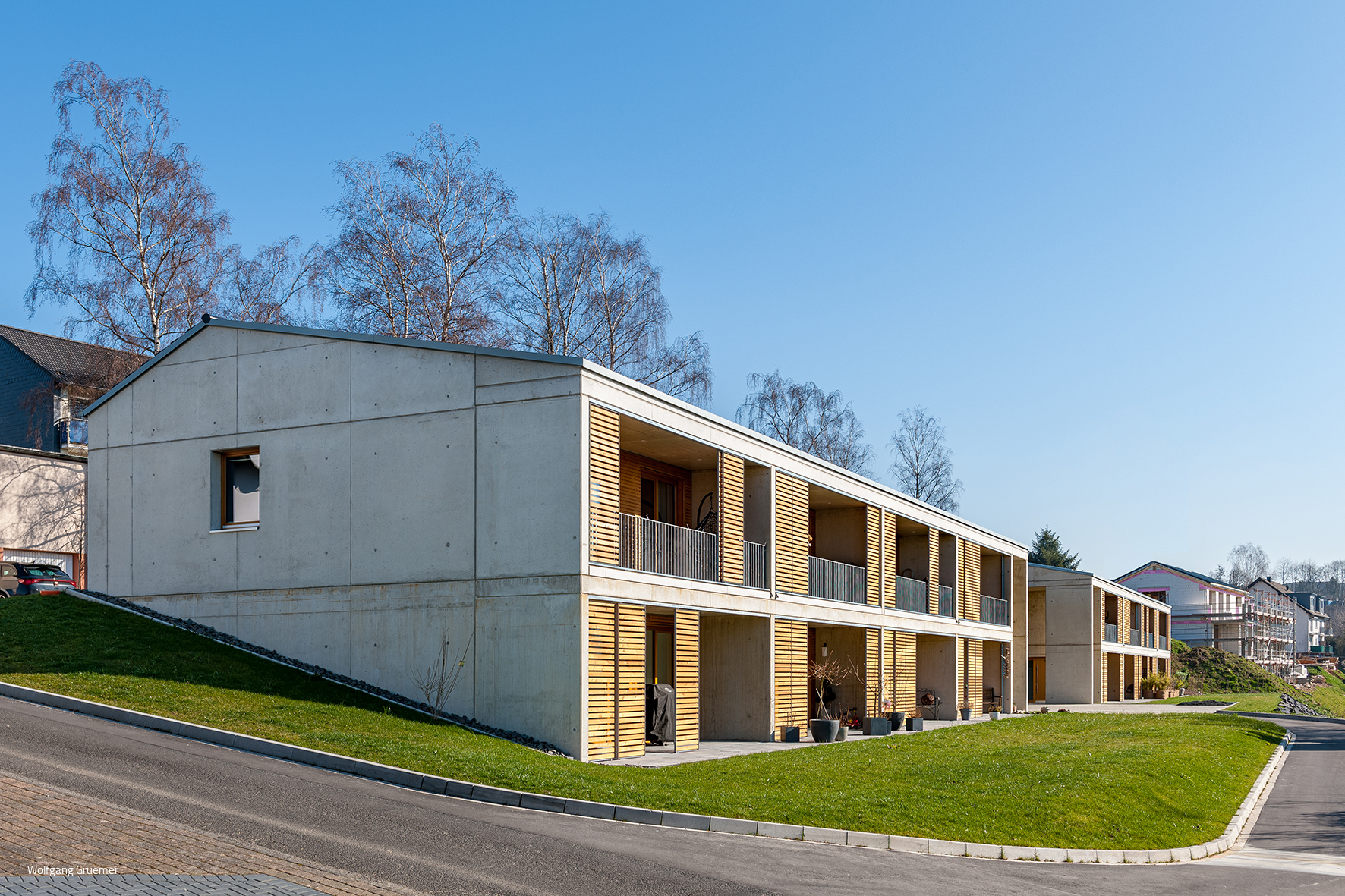
High-Performance Design on Slopes
Two residential buildings fill a gap—both contextually and architecturally
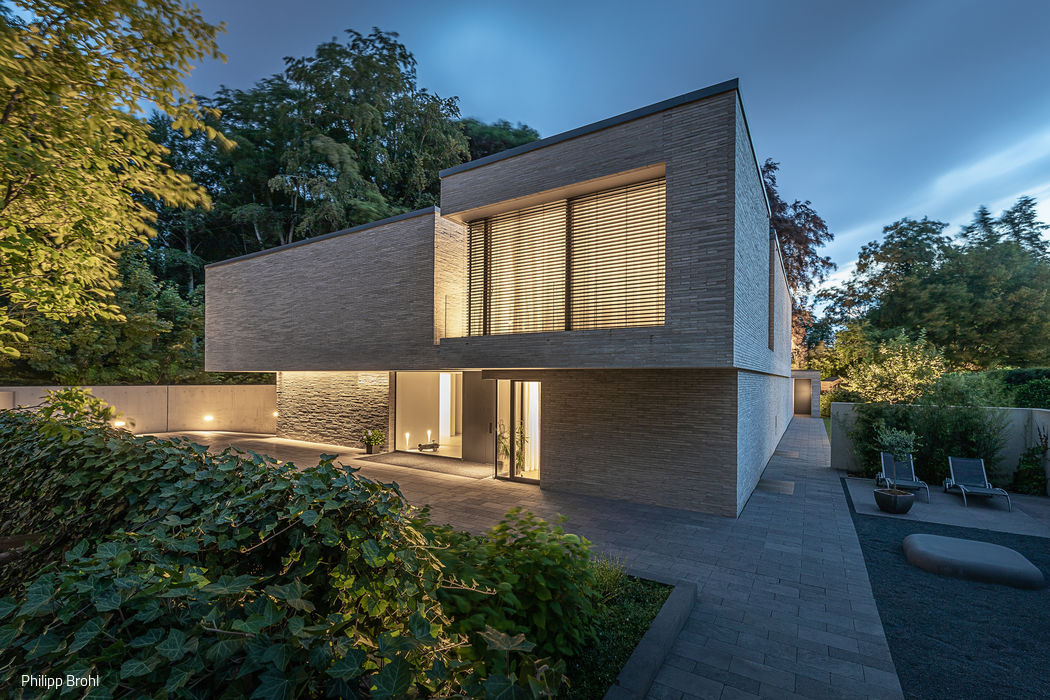
Conversing with Nature
A Braunsfeld residence that impresses through its sculptural presence—both inside and out.
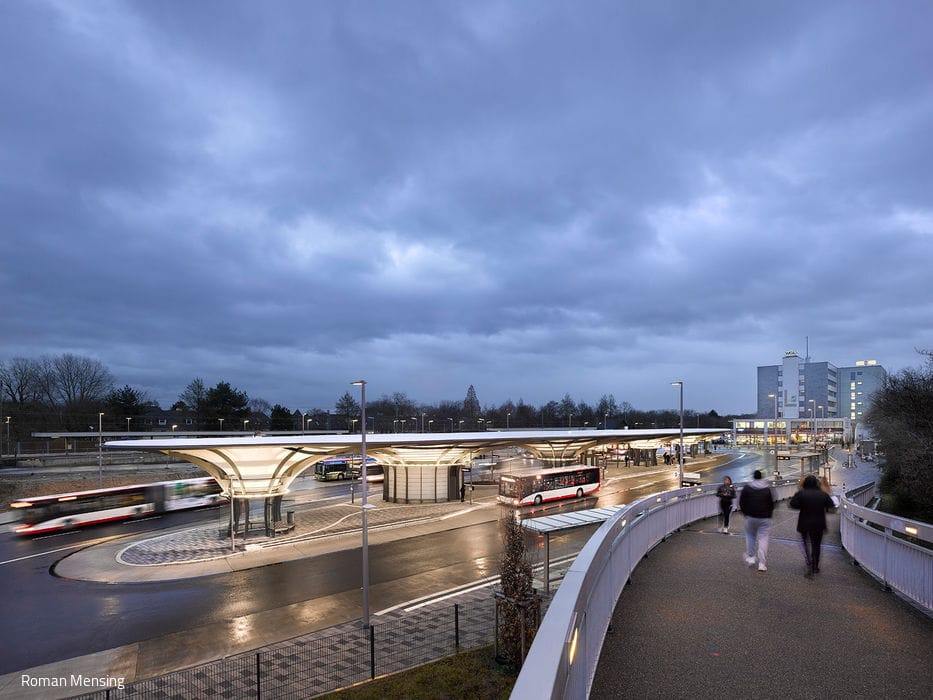
A place you look forward to entering
Leverkusen's New Bus Station: Transparency That Works in Every Direction
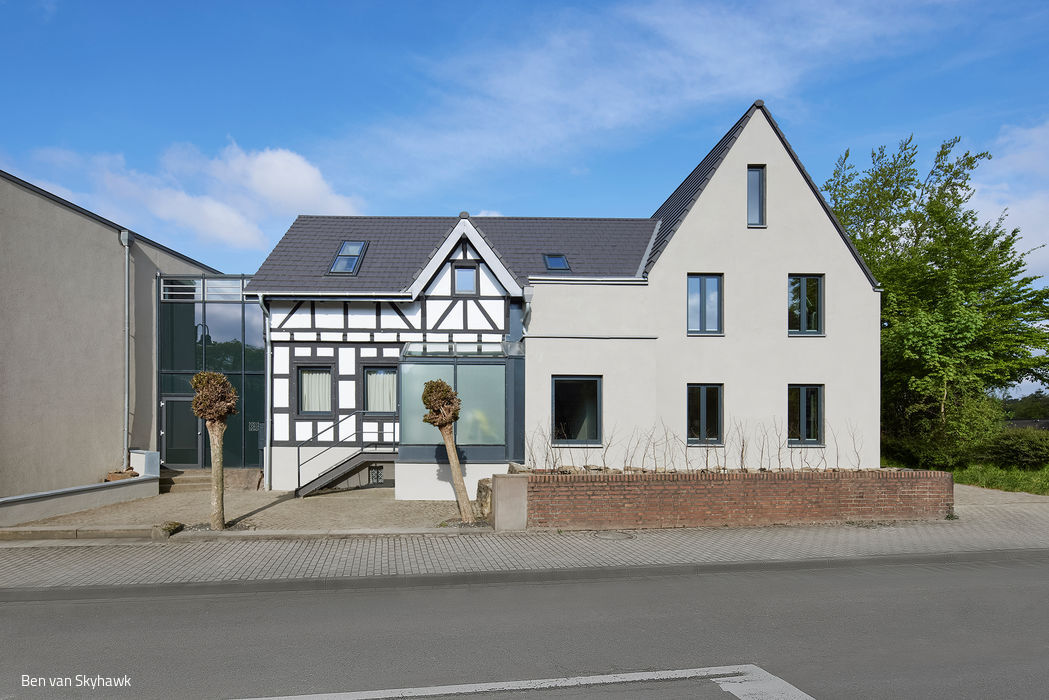
A Thoughtful Balance
A Half-Timbered House Gains a New Companion