


Modular in the Backyard
A timber modular building closes the gap in Cologne's Südstadt, creating new residential space
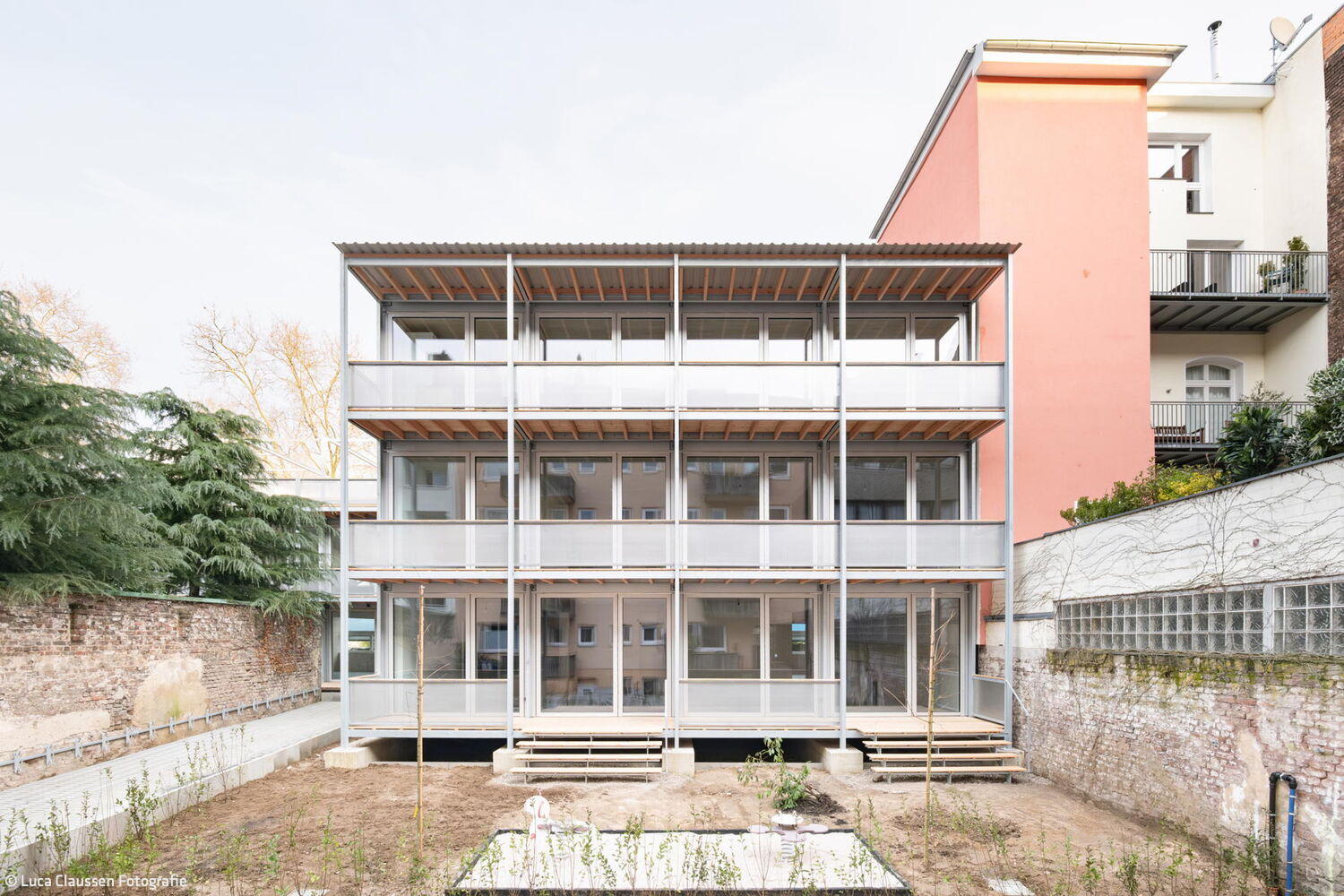
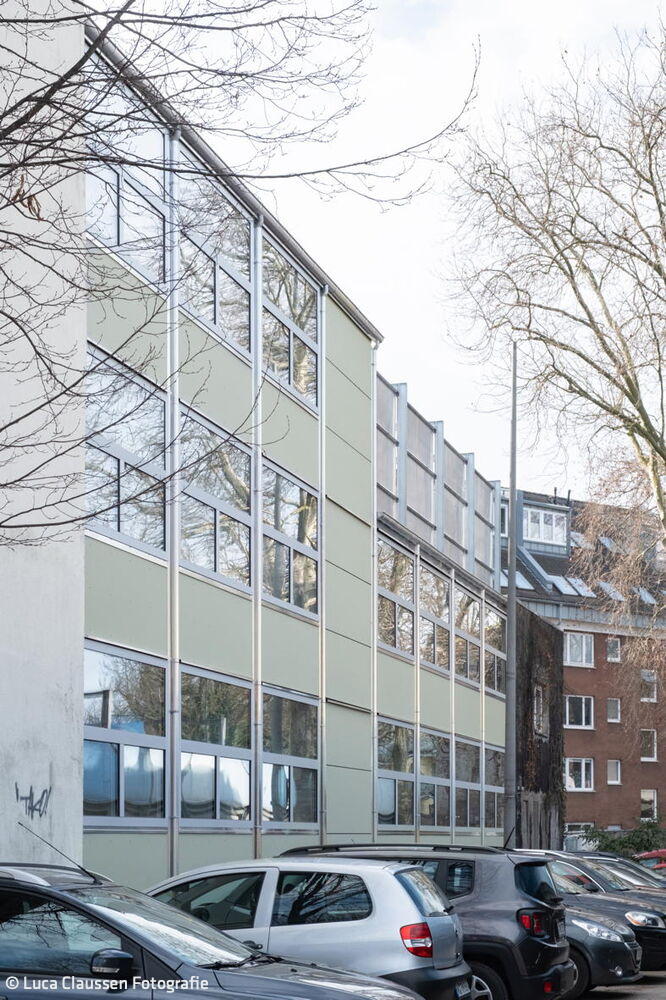
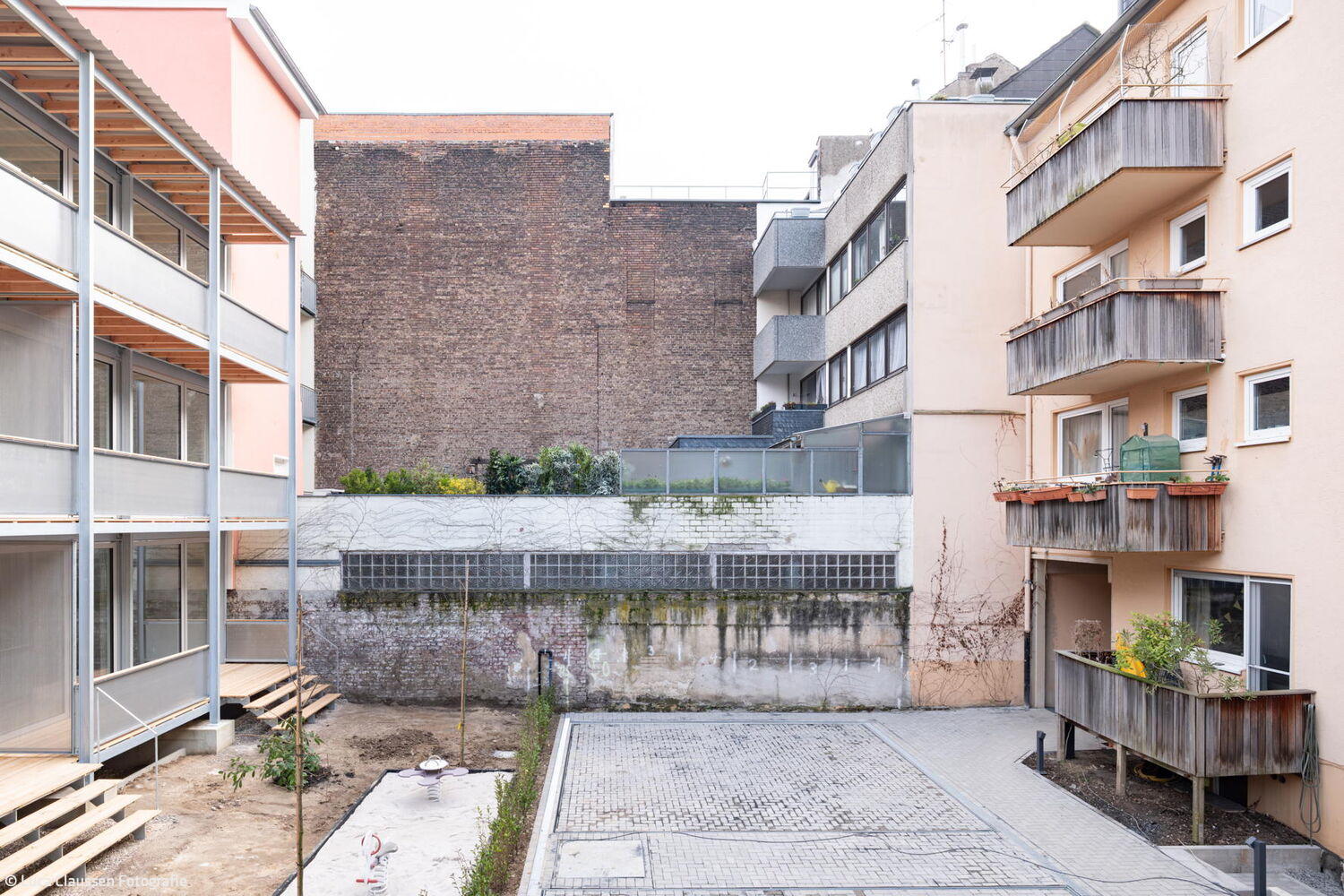
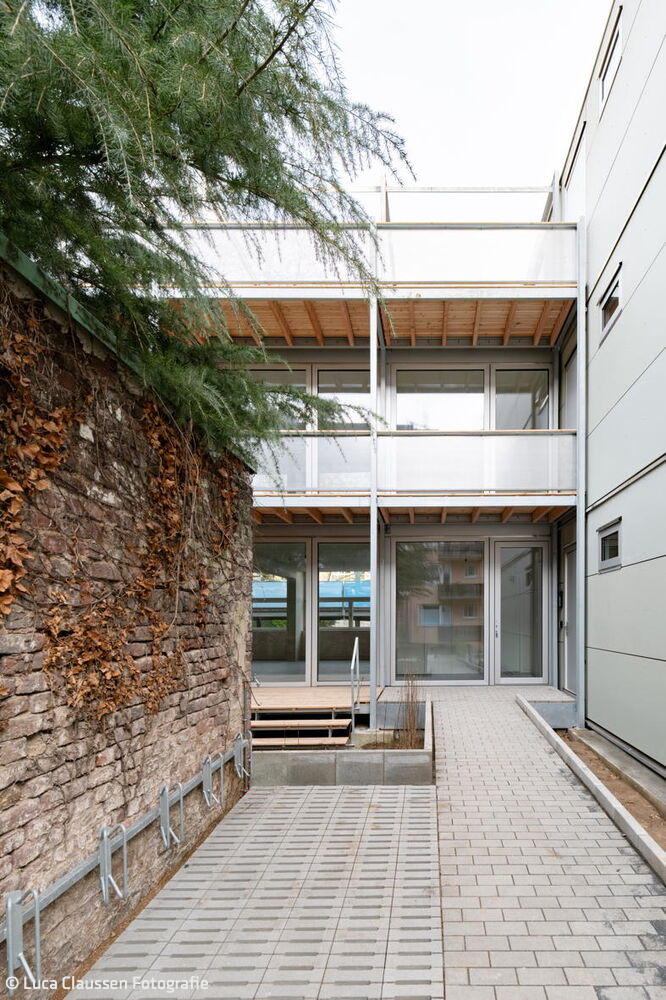
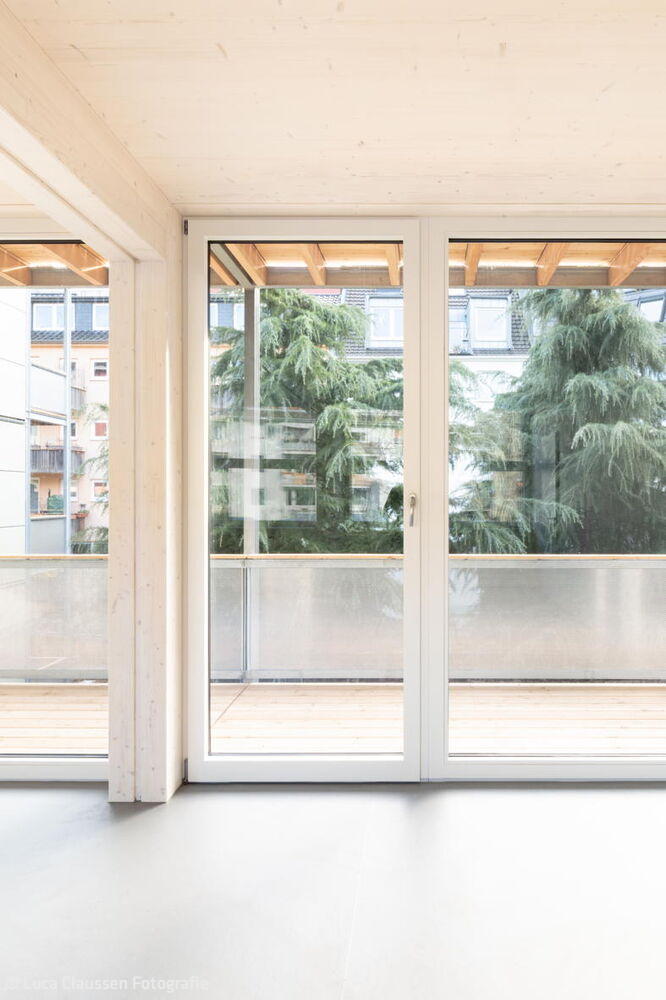
The opportunity is unmistakable: vacant land exists on streets, above parking areas, on rooftops, between buildings, and in backyards. But how can urban areas be densified thoughtfully, efficiently, and to high architectural standards? Aretz Dürr Architects from Cologne demonstrate a pragmatic solution with their residential project, designed for a gap site within the heterogeneous context of Cologne's Südstadt—where broken building lines and dense urban fabric define the character.
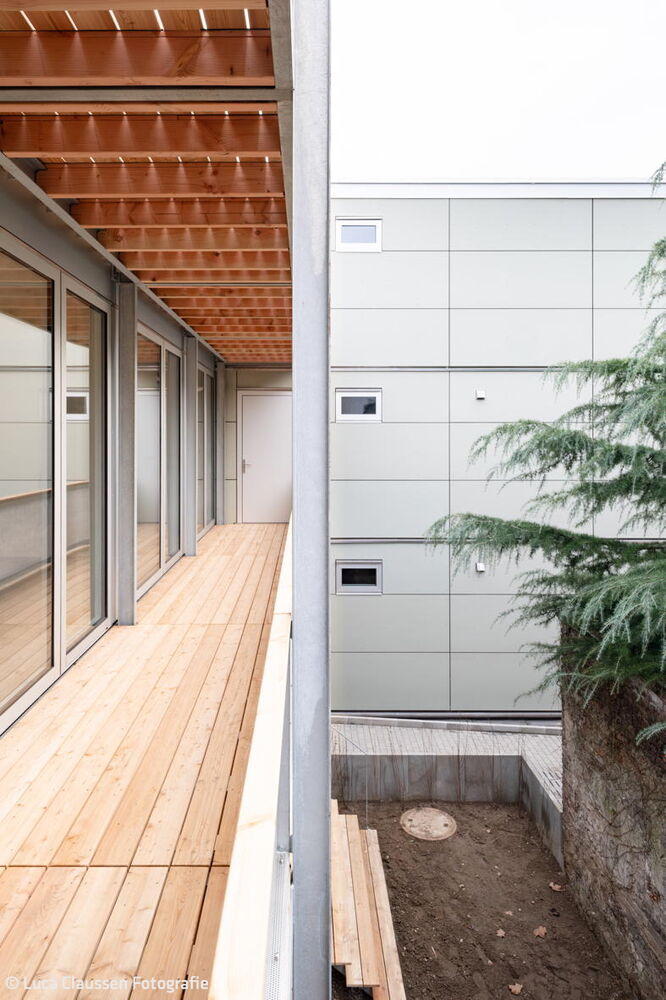
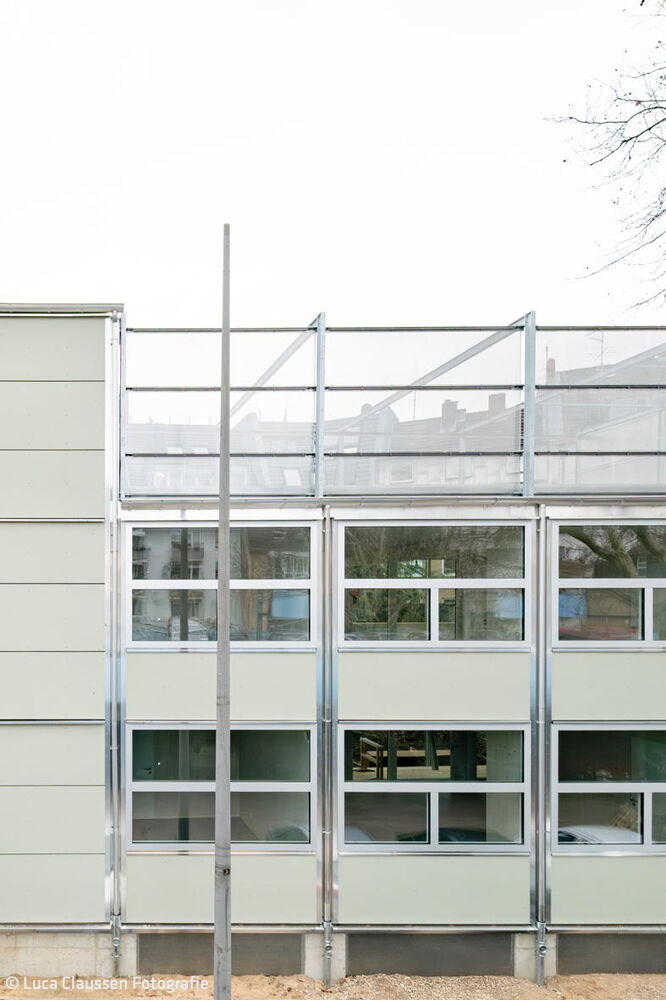
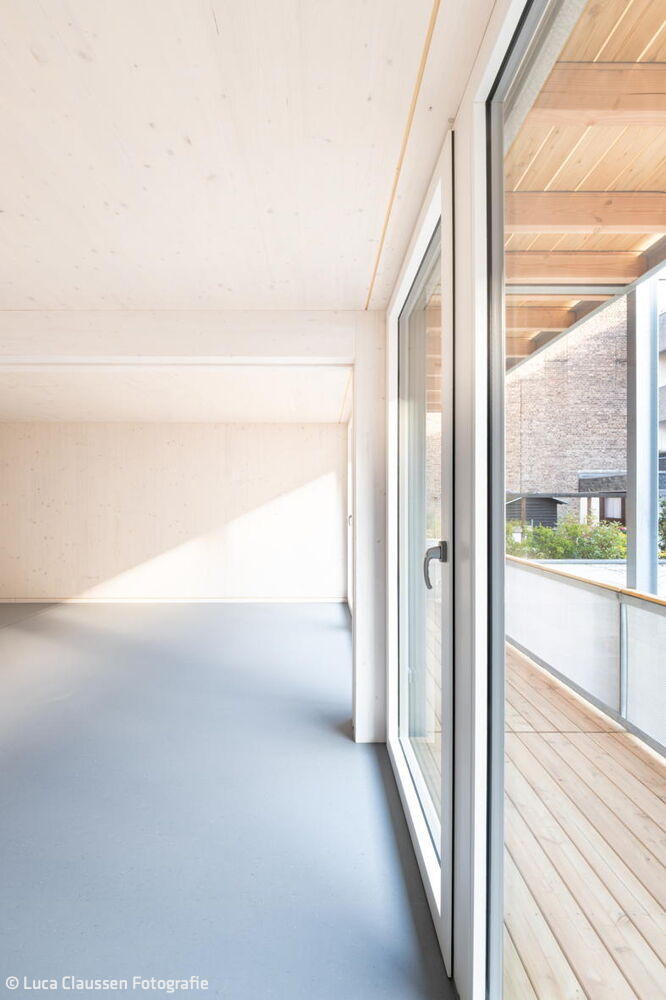
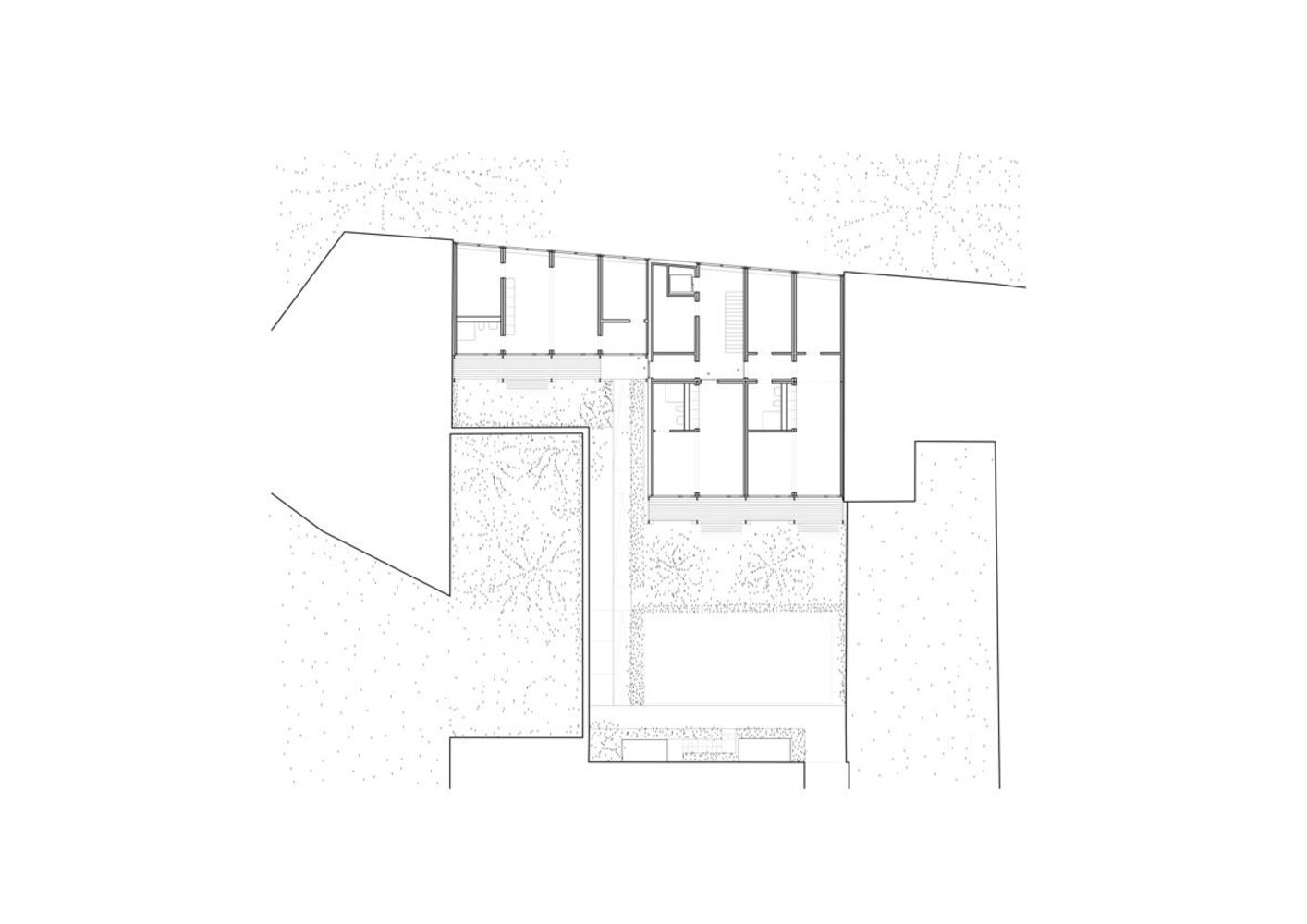
The roughly 25-metre-wide gap was filled in just ten days using 32 prefabricated timber modules, each three metres wide. Raised on pile-founded strip foundations—a deliberate choice to forgo an elaborate reinforced concrete floor slab—the building mediates between the varying heights of neighbouring structures, completes the urban block, and creates distinctive living spaces within the characteristic mix of old and new. Bedrooms face north toward the parking area, while living spaces open onto the courtyard to the south. Each residential unit pairs two adjacent bays, one of which accommodates the plumbing infrastructure. This floor plan, shaped by site conditions, yields four distinct apartment sizes while maintaining strict modularity. The system itself embraces variety: seven apartments range from approximately 45 to 85 m². Constructed from cross-laminated timber with ventilated rear-mounted façades and high-quality wood-aluminium windows, the exposed wooden walls and ceilings work in concert with continuous linoleum flooring to create warmth and a healthy indoor environment.
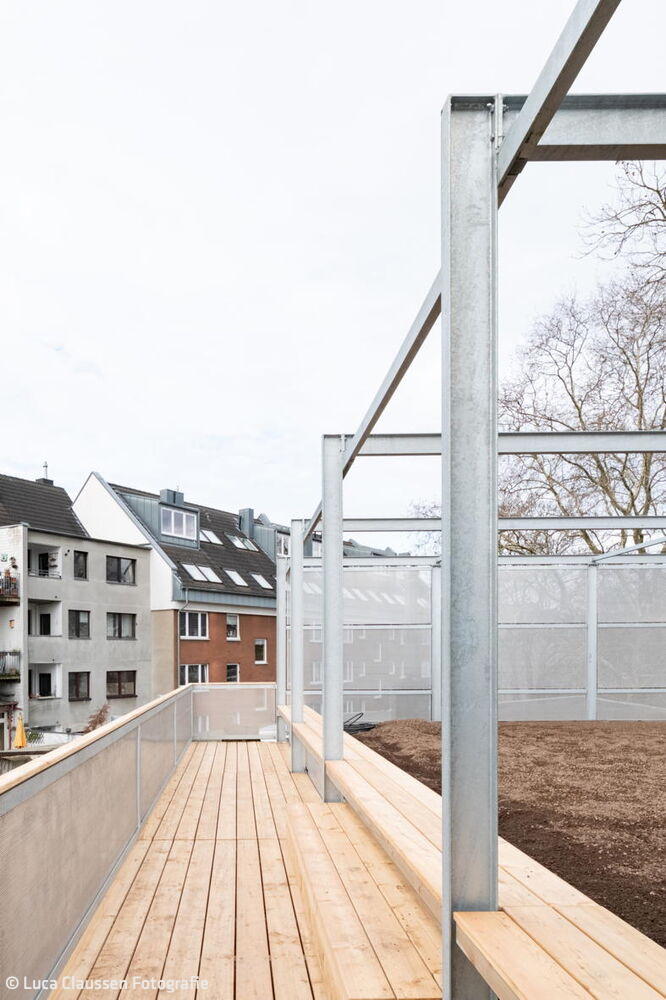
A steel and timber framework screens the south façade, providing structural sun protection without additional mechanical systems. This layered approach creates a buffer zone—balancing privacy with generous natural light. Access to the new building runs through the existing structure and courtyard, which also accommodates the required eight parking spaces in a flush underground system. Above the lower section of the new building, a generous pergola crowns the intensive green roof, establishing an additional shared outdoor sanctuary. The remaining roof surfaces feature extensive planting and host a photovoltaic array supporting the district heating network. Between the boundary wall and new building, a modest private garden—a rare urban refuge—now takes shape.
Photography:
Luca Claussen Photography
www.luca-claussen.de
(Published in CUBE Cologne Bonn 02|25)
Sheltered Sanctuary
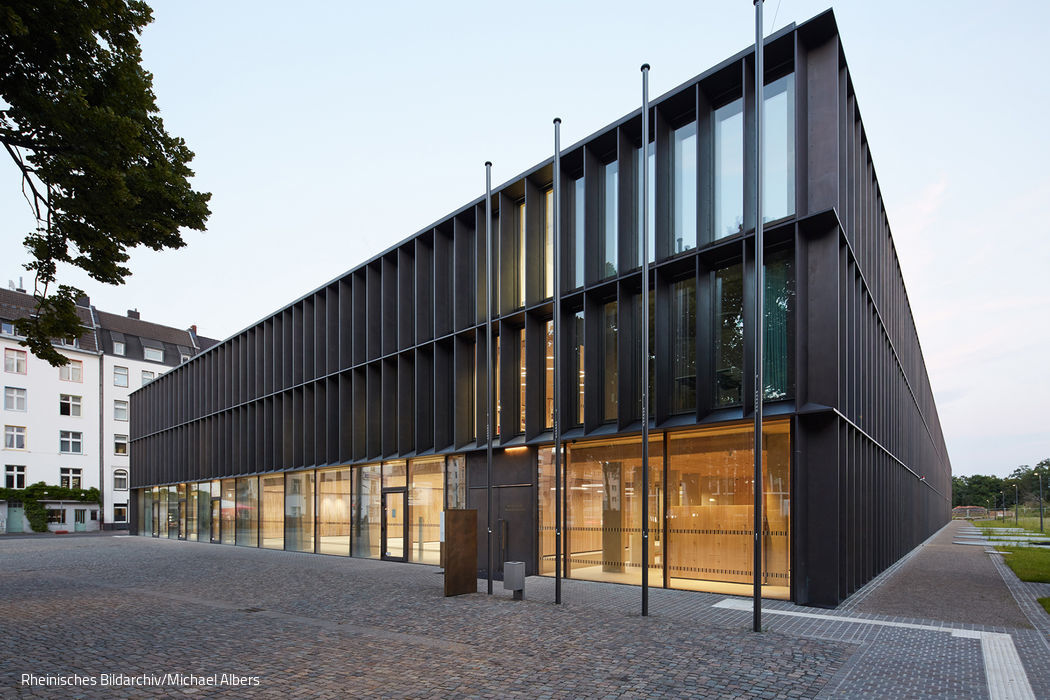
The new archive building safeguards the city's memory—while inviting the public to discover it.
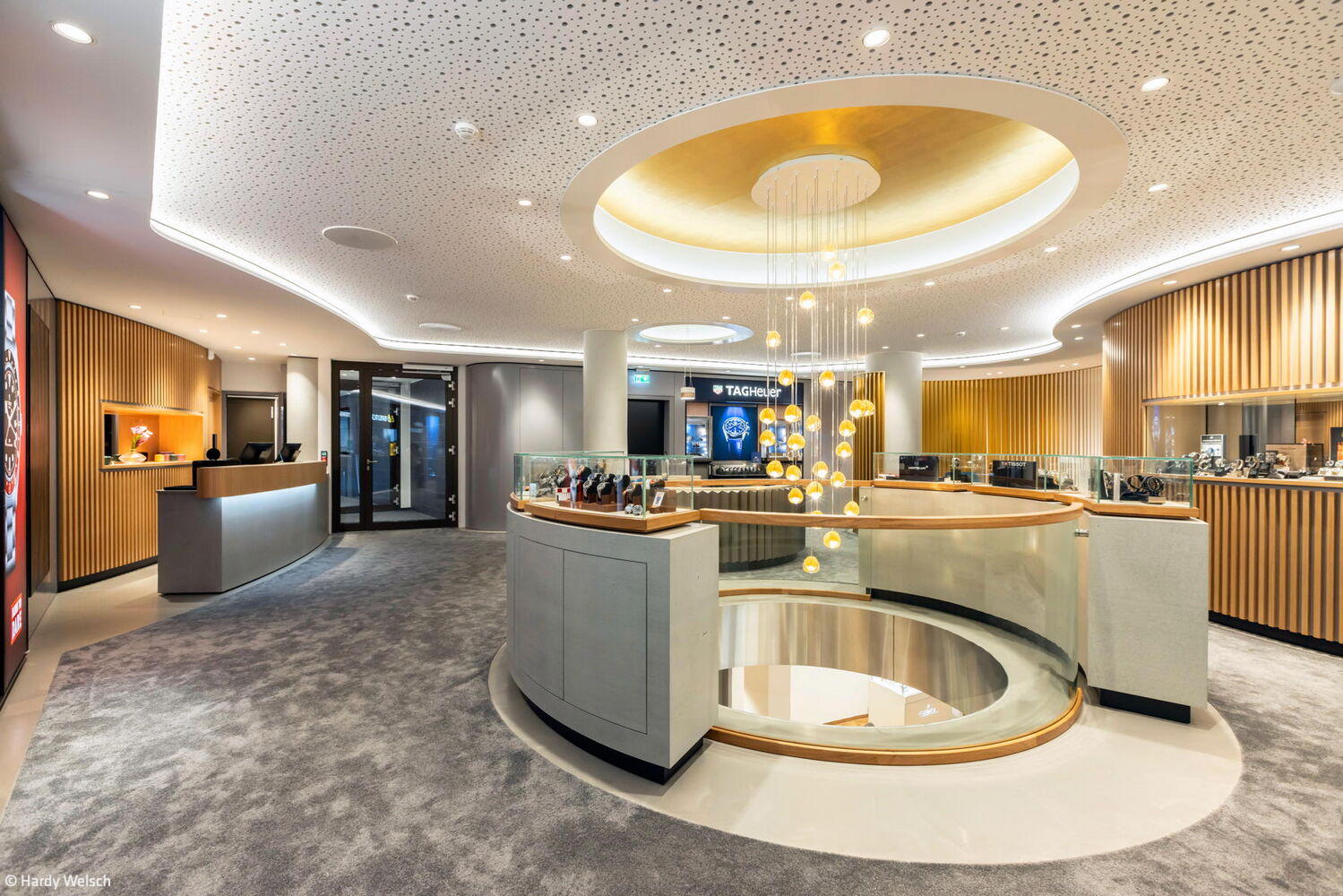
Immerse yourself in watchmaking
A showroom for fine timepieces that crafts an exceptional shopping experience
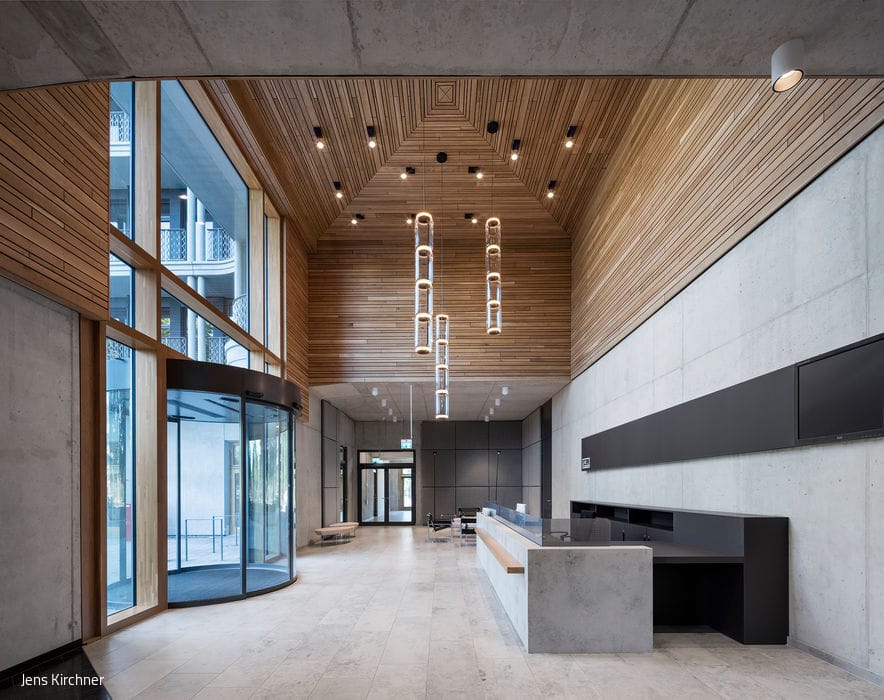
Understated elegance in focus
The Welcoming Design of K08: A New Office Building
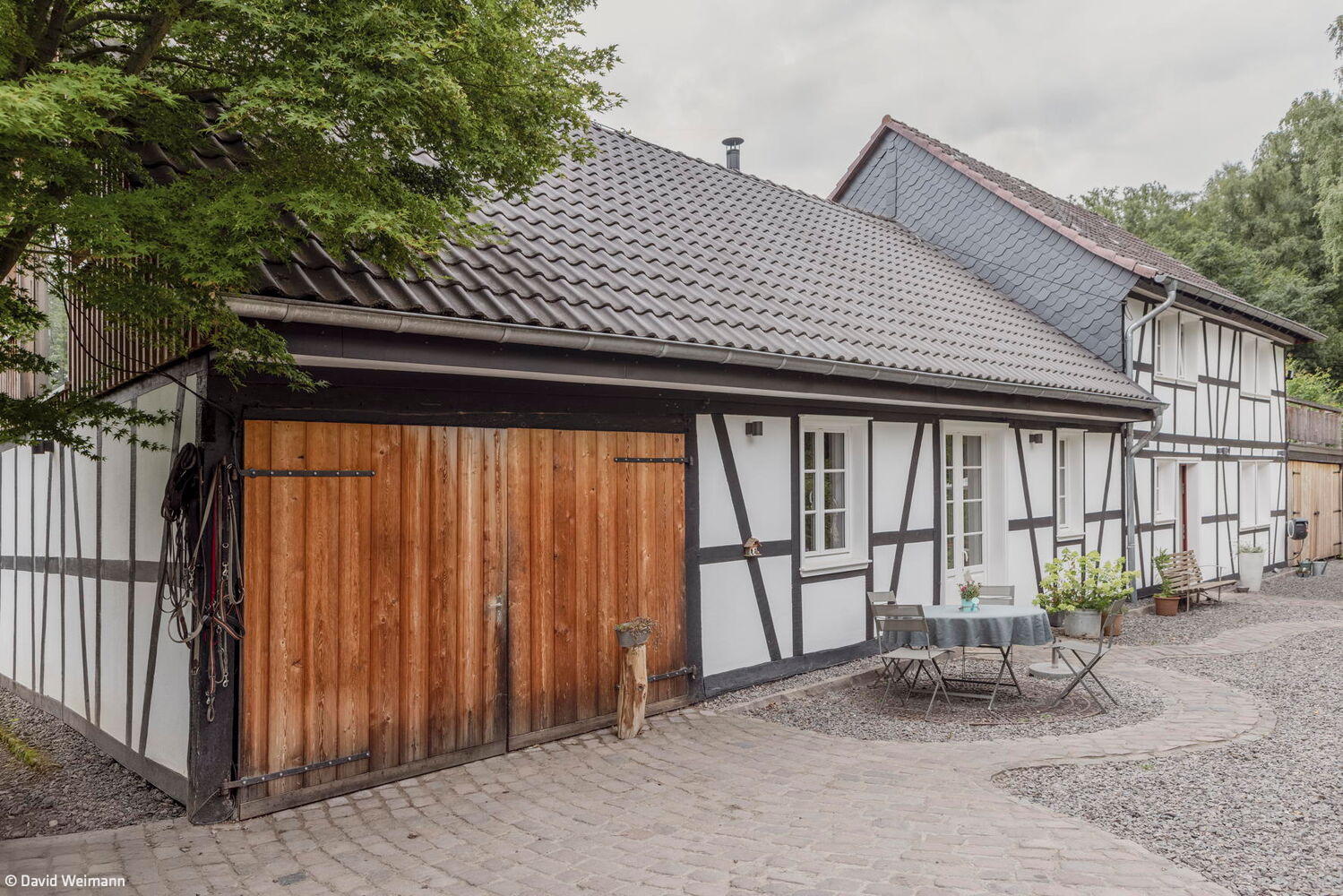
Charm Meets Modern
A half-timbered house restored to modern living standards