


Modern Interpretation
A supermarket concept in Westfield's Overseas Quarter that weaves together history, contemporary design, and culinary culture
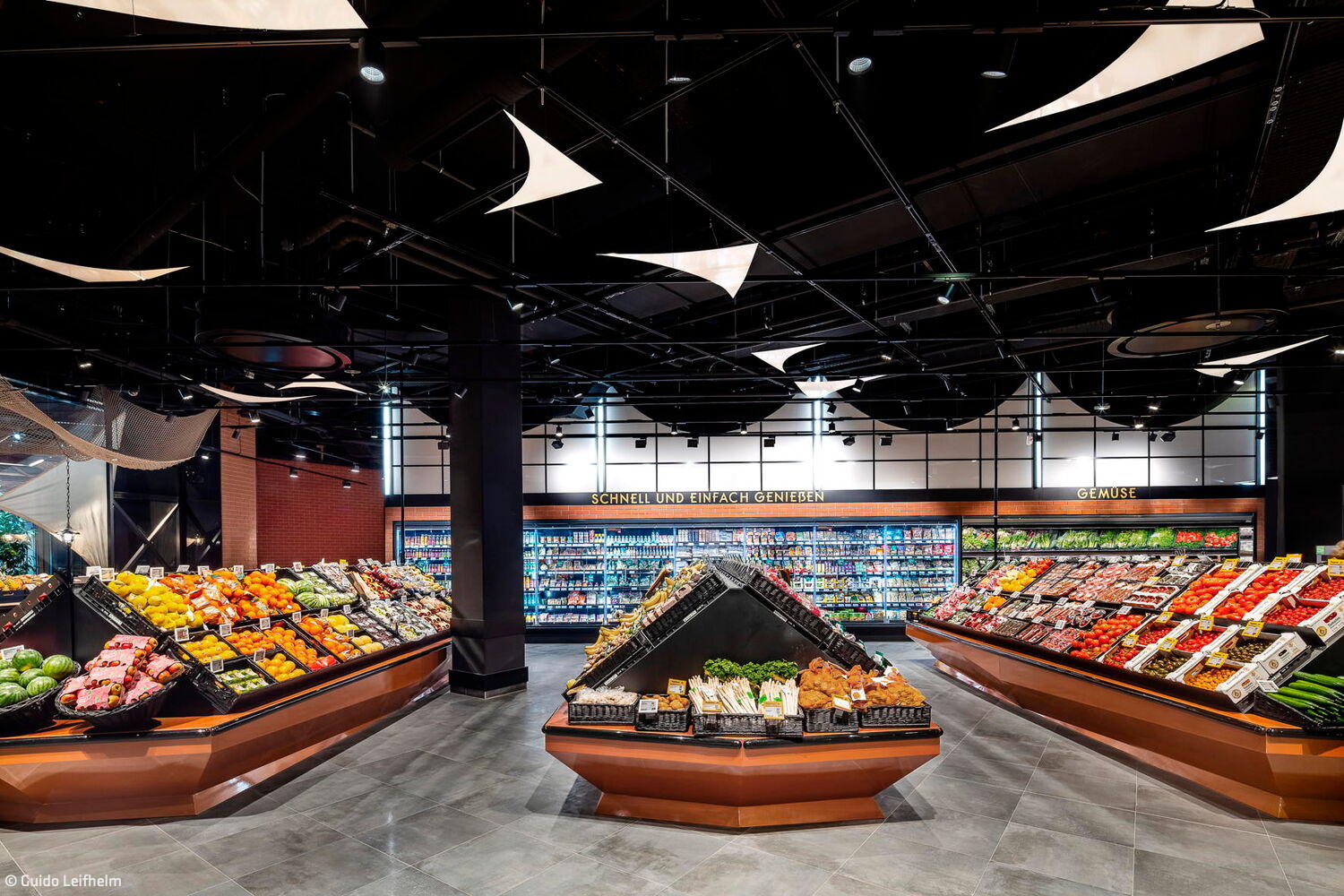
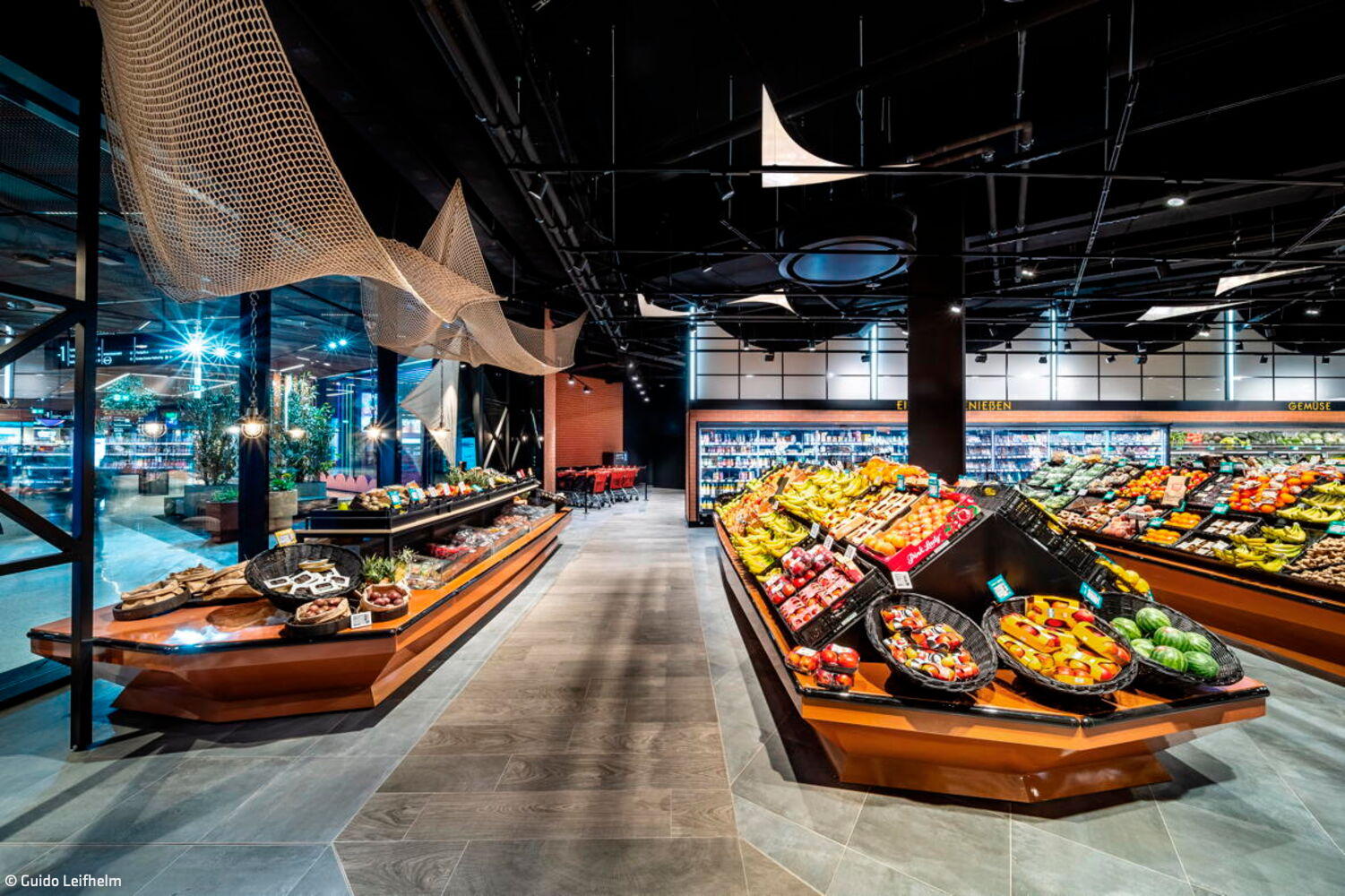
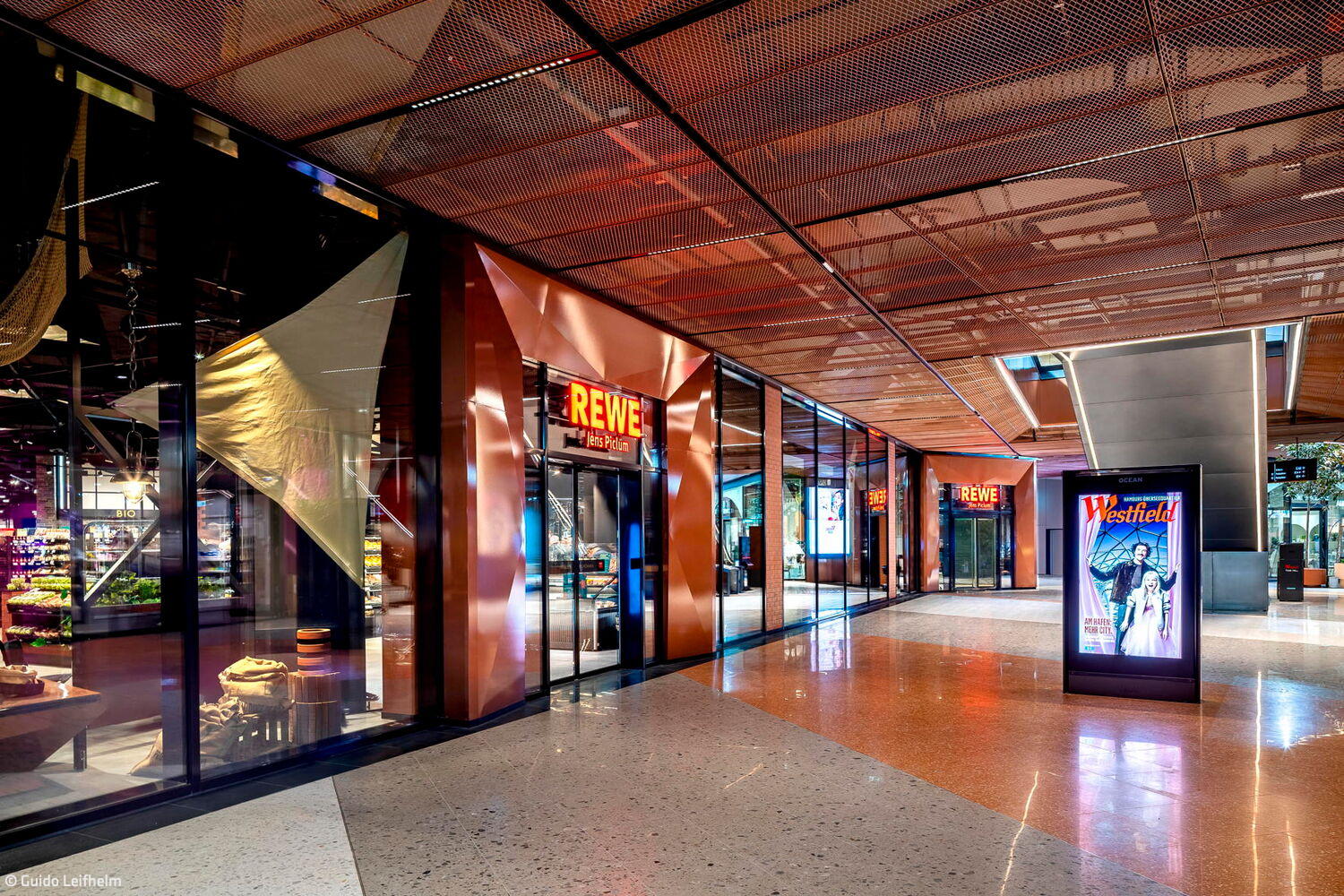
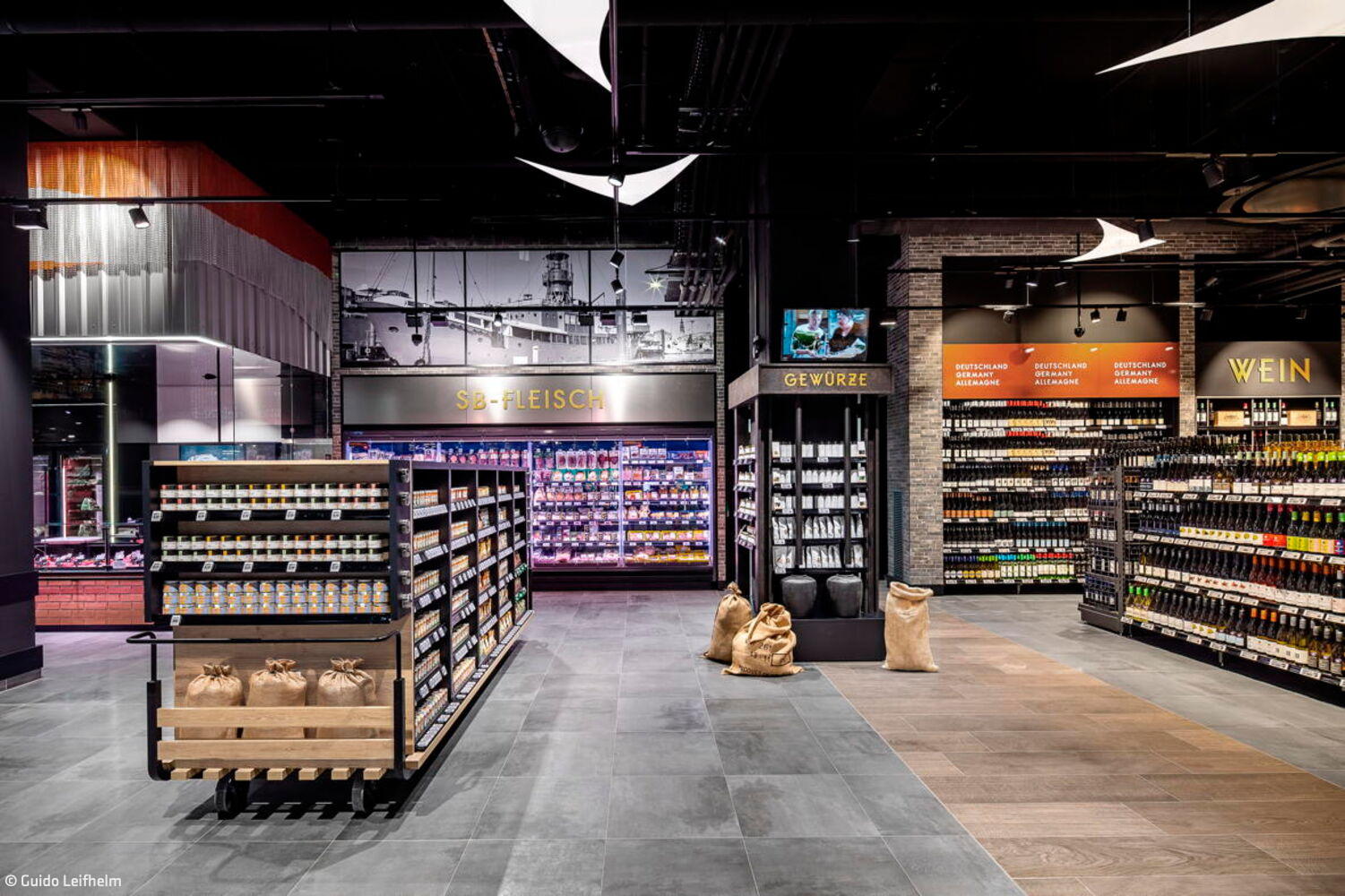
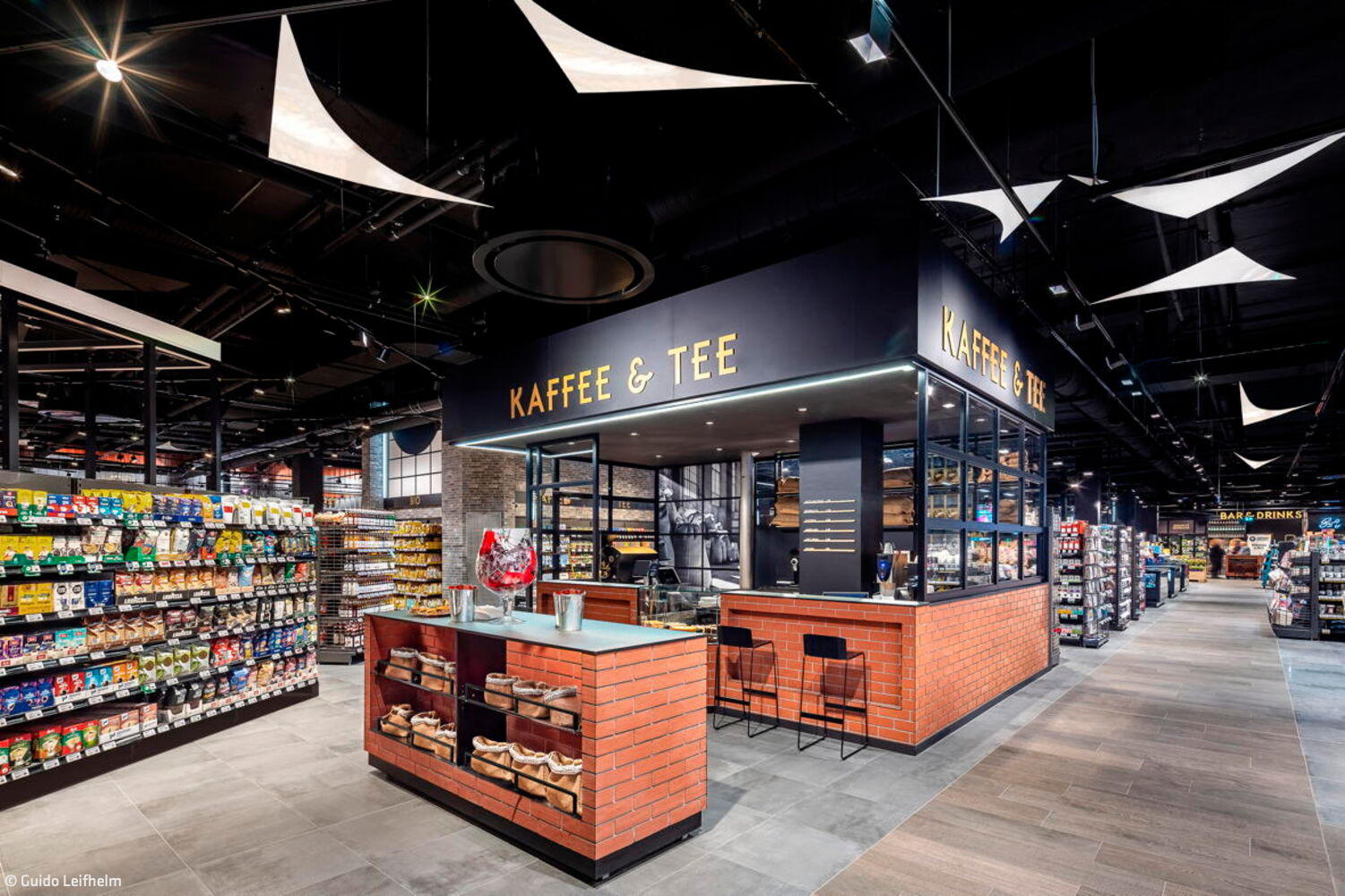
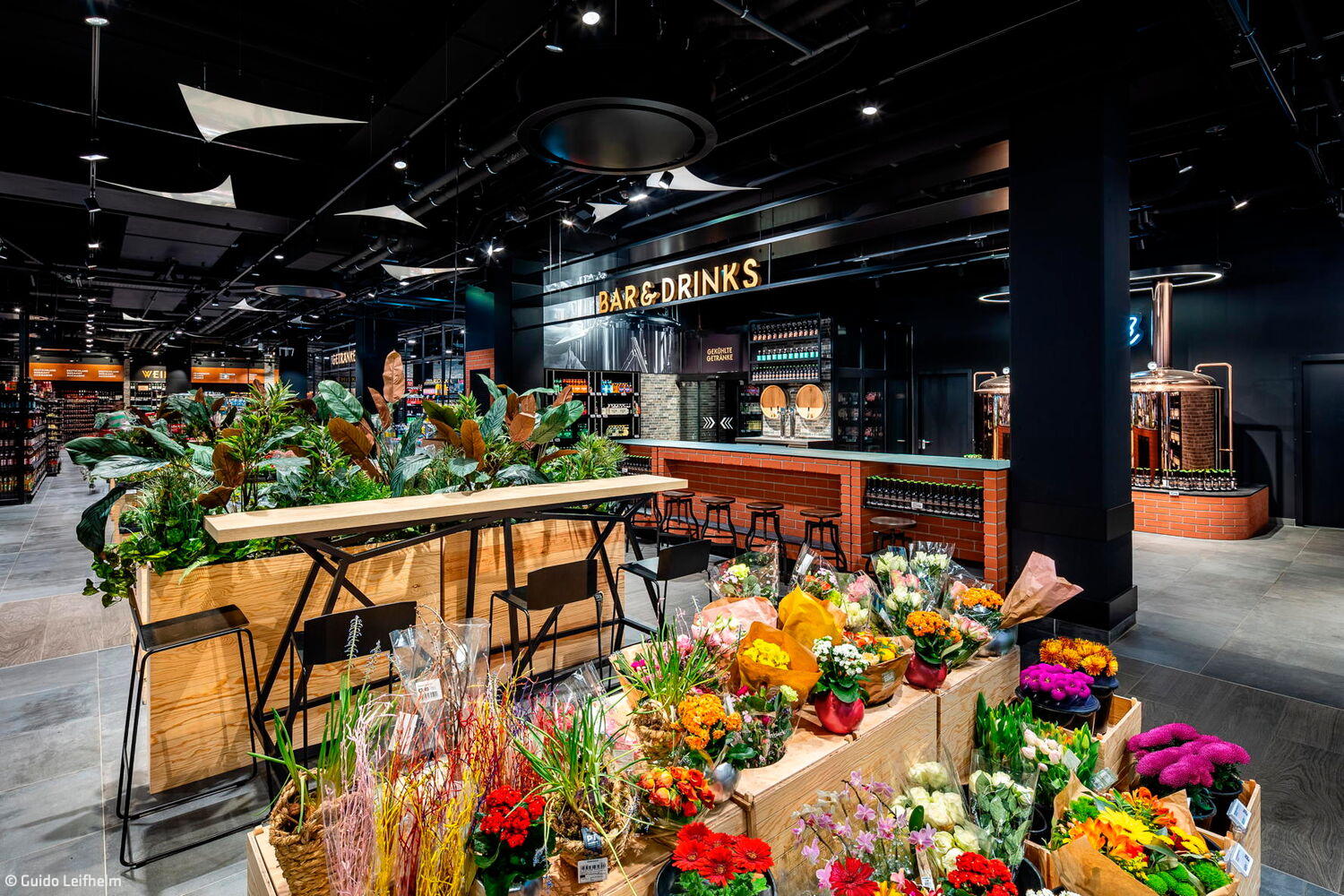
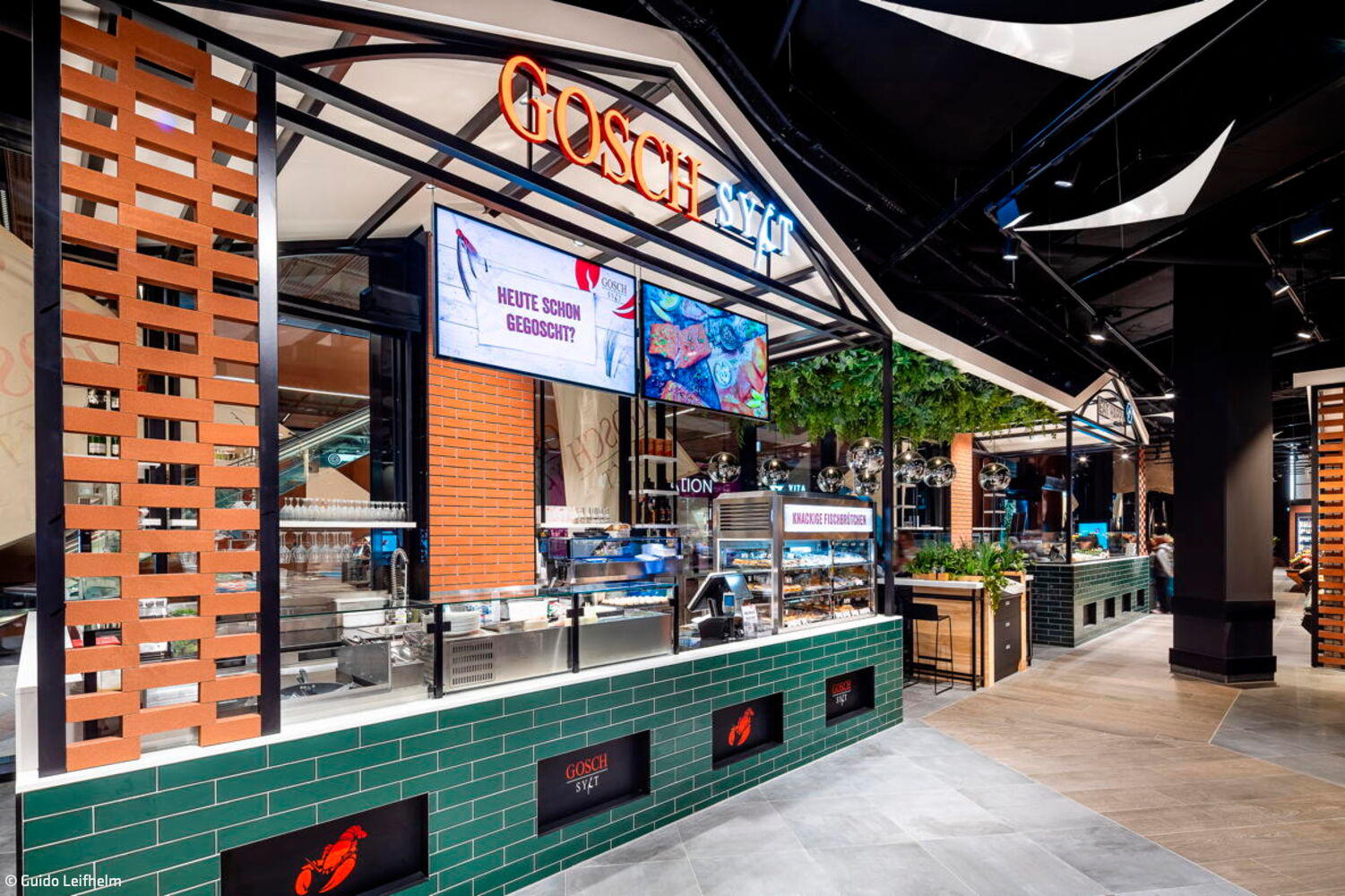
In the heart of Westfield's new Overseas Quarter, a Rewe supermarket is rising—one that sets new benchmarks in architecture, atmosphere, and concept alike. Developed by Kinzel Project, the design interprets Hamburg's values and cultural identity in a distinctly modern, abstracted language, creating a genuinely memorable shopping experience. The architecture draws inspiration from the city's maritime heritage and iconic landmarks—the Speicherstadt and Elbphilharmonie—translating them into spatial form. Brick, wood, steel structures, and signature metro tiles become the visual vocabulary of the city's identity. These foundational elements are layered with thoughtful details: sails, ropes, and wooden crates that make Hamburg's maritime character tangible and immersive. The market's entrance makes a bold statement with expansive copper portals in a striking diamond form.
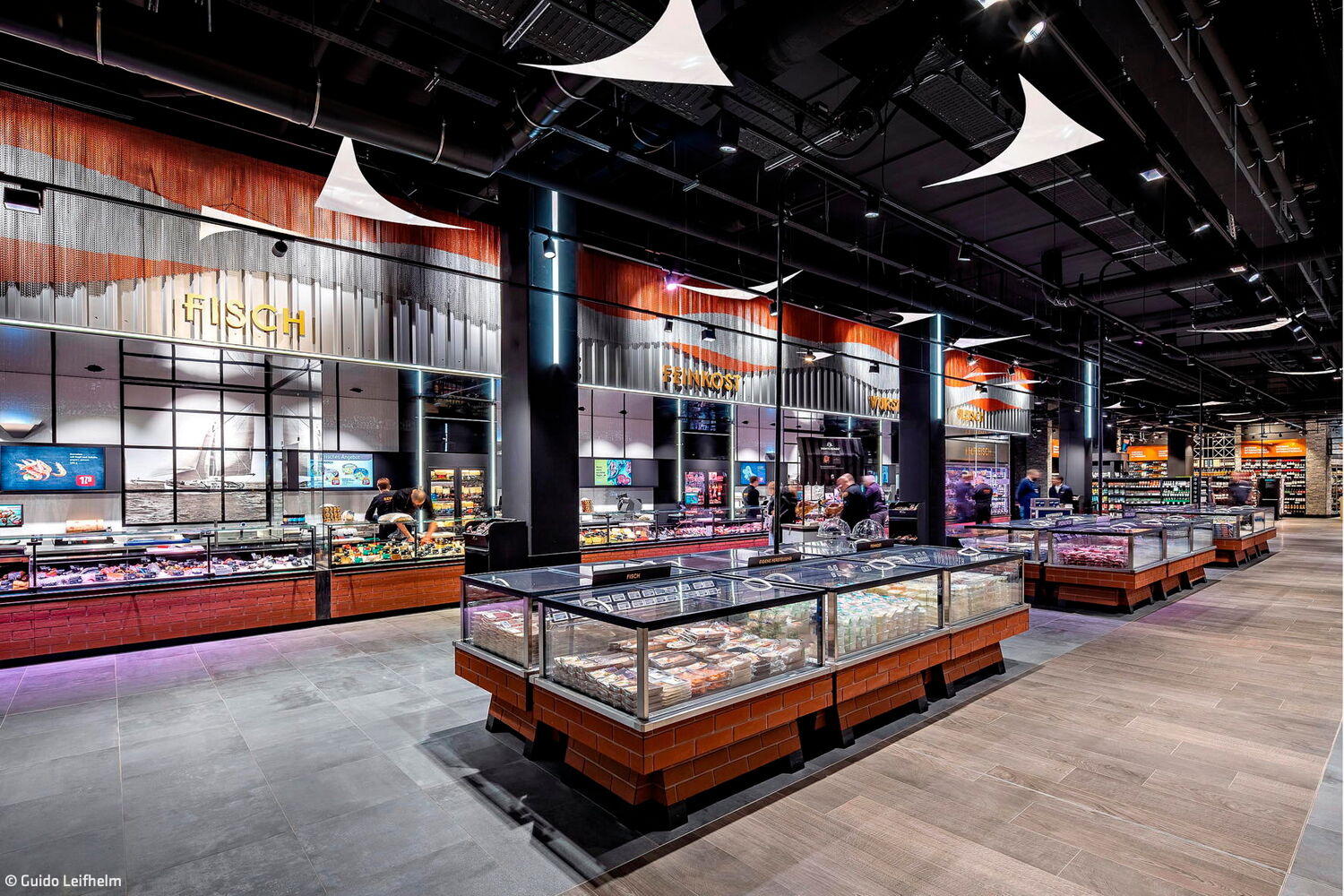
Every highlight within is strategically positioned to be visible from all three entrances and from the mall itself. The floor's dark, reflective surface mirrors the harbor waters, while the customer path unfolds as a generous, gently curved promenade—a route designed not just to direct, but to invite exploration. Suspended overhead, white sails represent abstracted flocks of gulls, creating an intuitive wayfinding system that guides visitors through the space. On the left, the fresh produce section emerges as you enter, its offerings displayed on prismatic, copper-toned presentation tables that evoke traditional fish boats, evoking the promise of fresh goods from distant shores. The bread station sits beneath an open black steel canopy with a pronounced gable—a recurring motif referencing classic market rooflines. Red brick reinforces the visual connection to Speicherstadt. The central fresh food counter becomes a focal point, designed as a stylized market hall where fish, meat, charcuterie, cheese, and specialty products are displayed with theatrical flair. The refrigerated cases themselves are sculptural statements, clad in reddish brick that echoes the Elbphilharmonie's distinctive aesthetic—an effect amplified by carefully calibrated accent lighting.
A copper and silver wave-shaped chain curtain captures the interplay of water and light across the harbor. Golden lettering traces the maritime narrative along the counters, bestowing the entire composition with an elegant, almost gallery-like presence. This visual narrative is enriched by oversized black-and-white graphics depicting scenes from Hamburg's seafaring past, complemented by dynamic digital displays offering ever-changing content. The wine section welcomes exploration and tasting, while the beverage area introduces an unexpected highlight: an on-site brewery whose design echoes the market's overarching theme, punctuated by vintage photography from historic breweries. Beyond the checkout, the market extends into a collection of food islands, notably featuring Gosch Sylt—making its supermarket debut.
Photography:
Guido Leifhelm
(Published in CUBE Hamburg 03|25)

Where Elbchausee Meets Reeperbahn
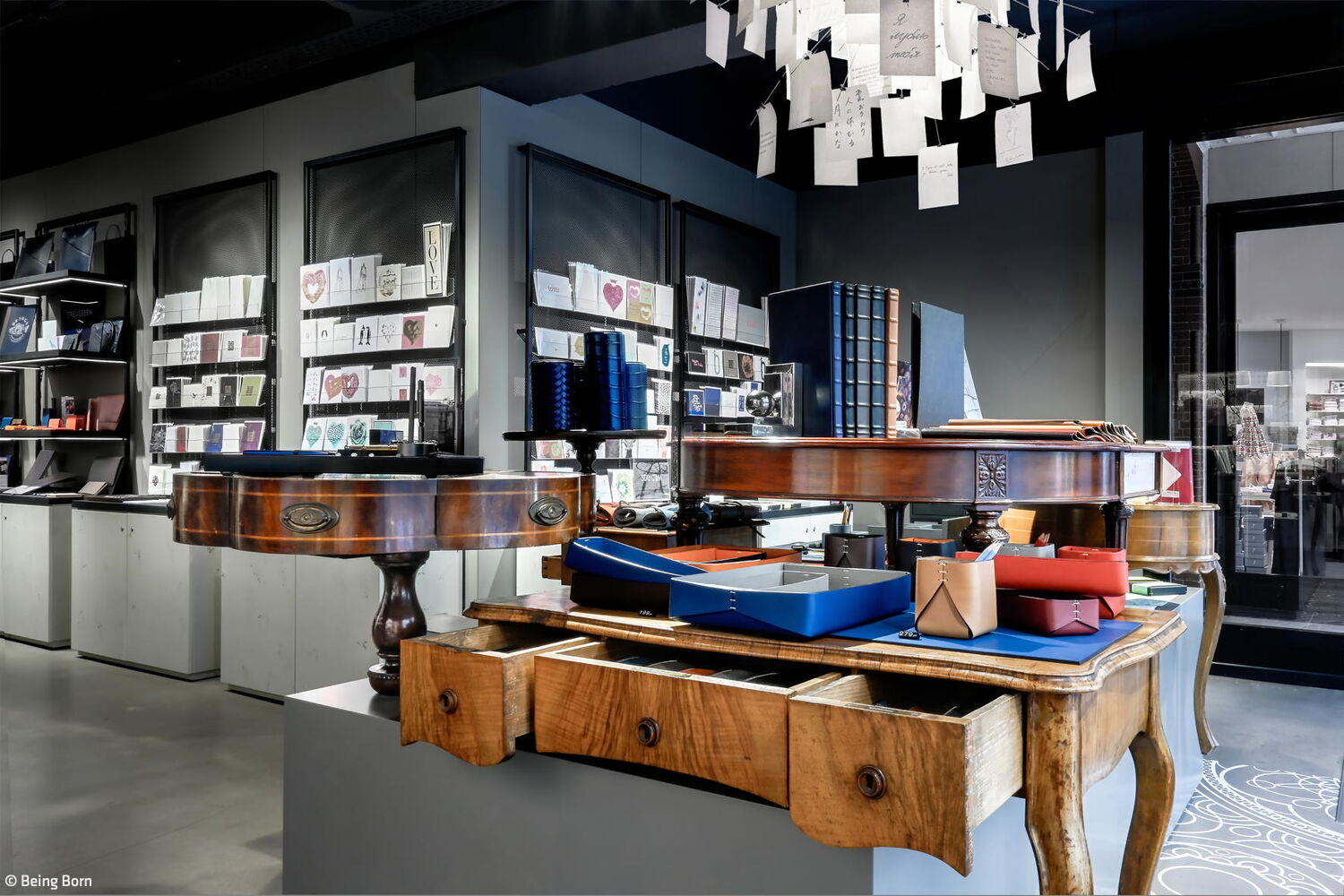
Boutique for Paper and Writing Instruments Unveils Fresh Identity
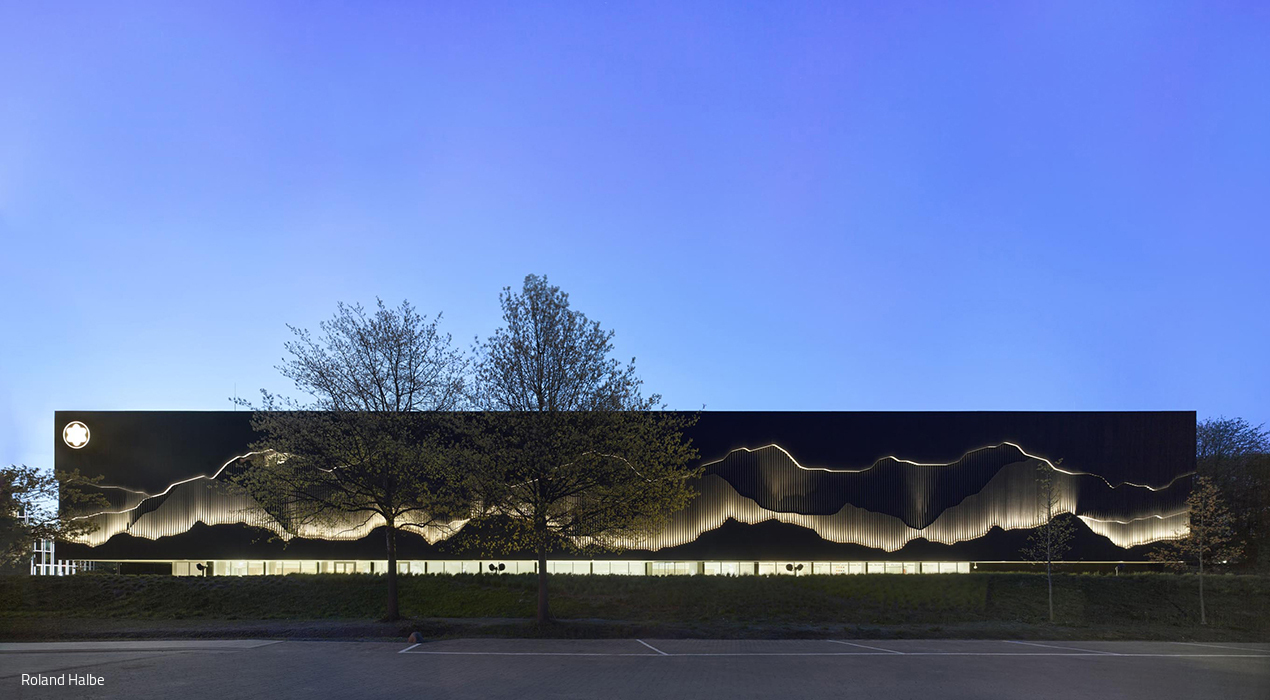
Brought into the Right Light
Sophisticated Lighting Design Elevates Montblanc House to Masterwork
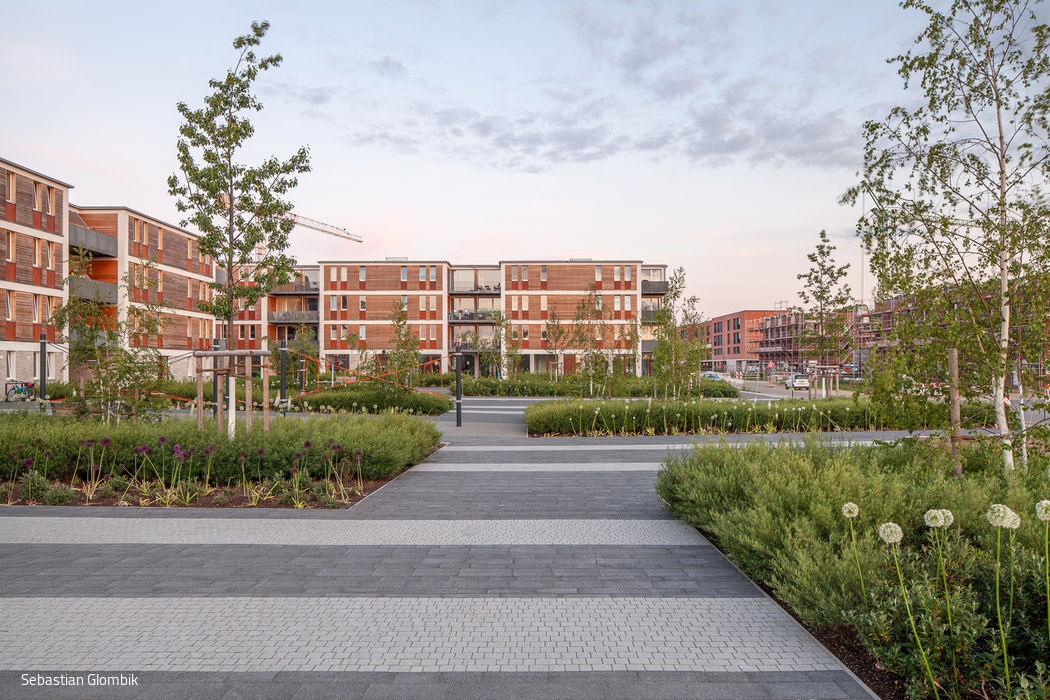
Good for People and Nature
Thoughtful landscape design that nurtures biodiversity and embraces natural water management
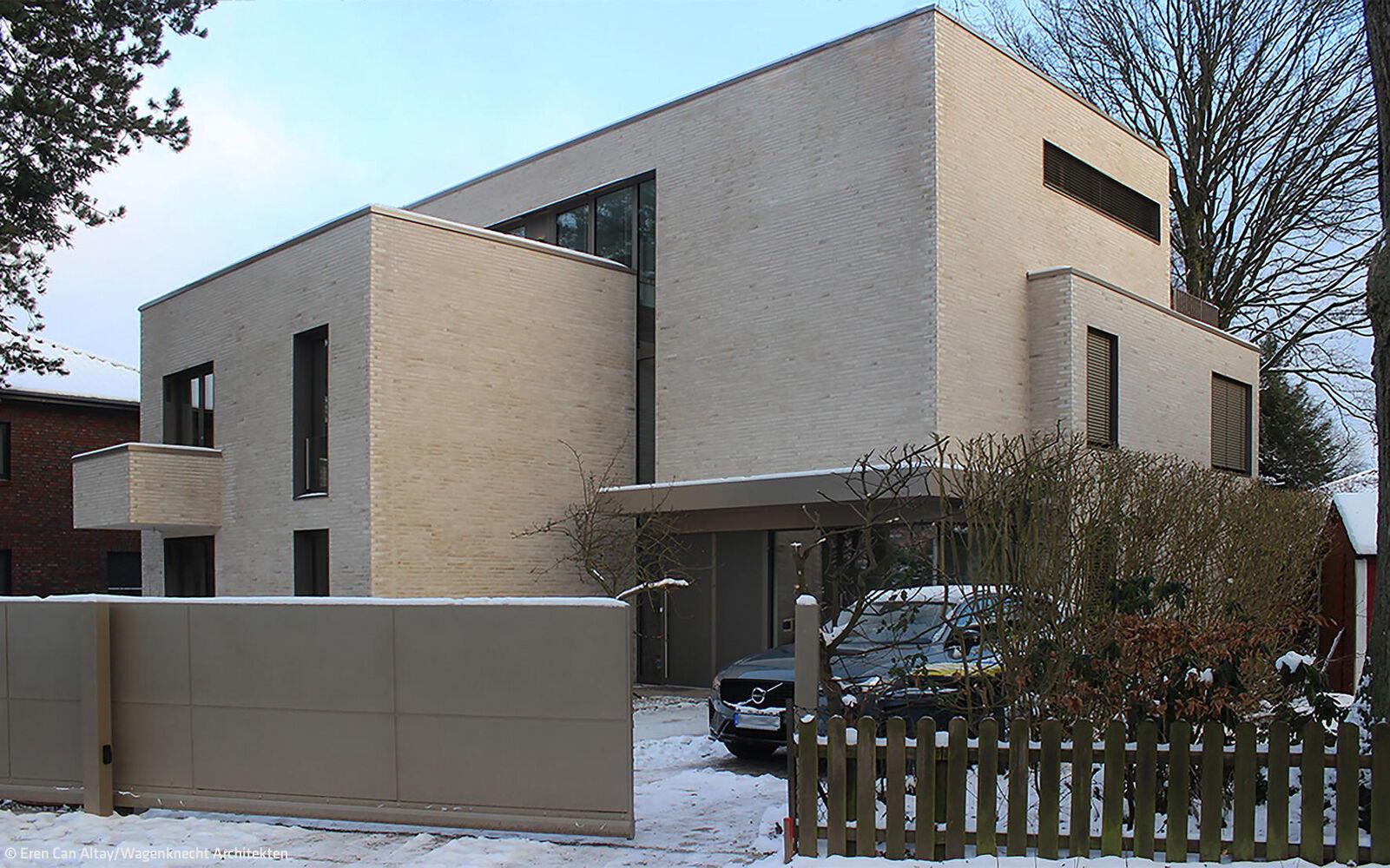
More Than Meets the Eye
Three Apartments, One Building, Three Separate Entrances