


Living Modules Amid Greenery
Highly adaptable housing in solid timber-hybrid construction, efficiently insulated with wood-fiber panels
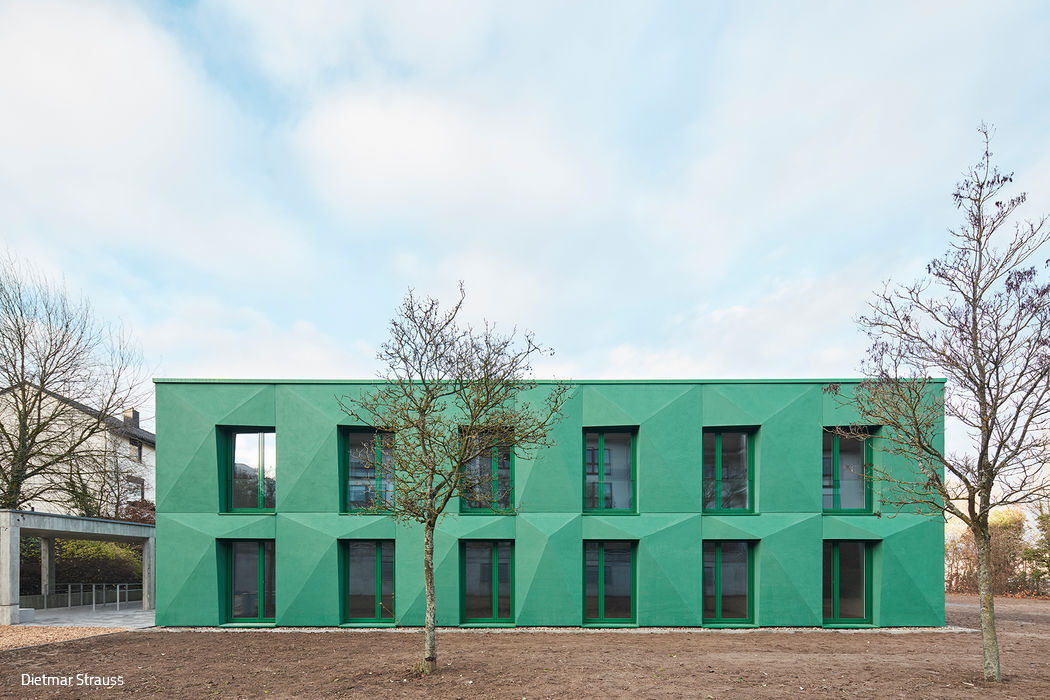
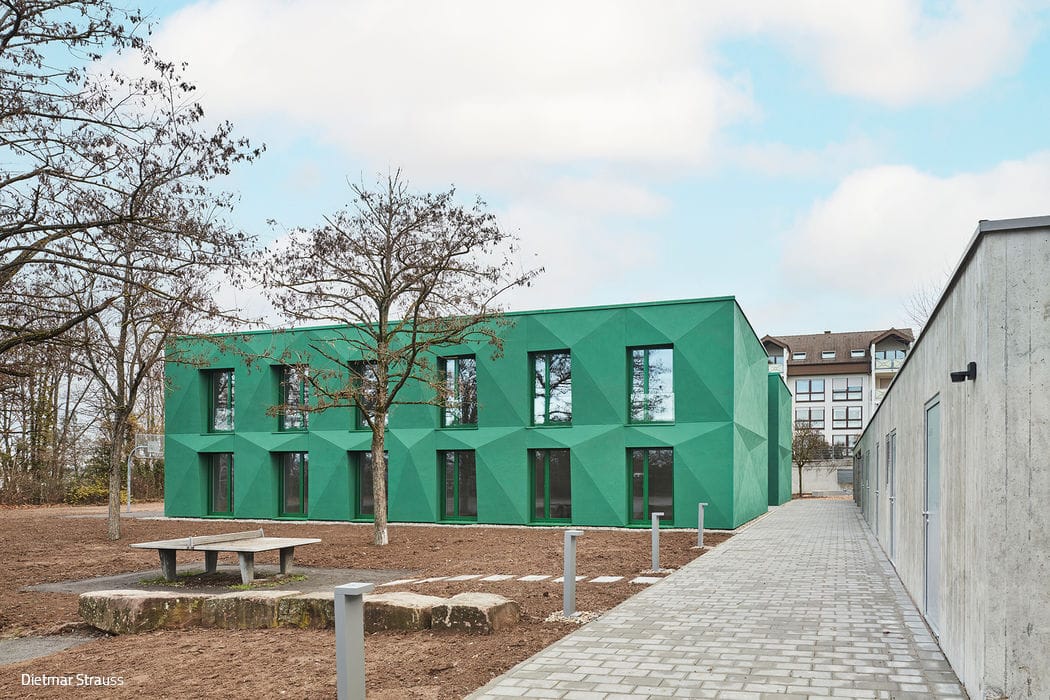
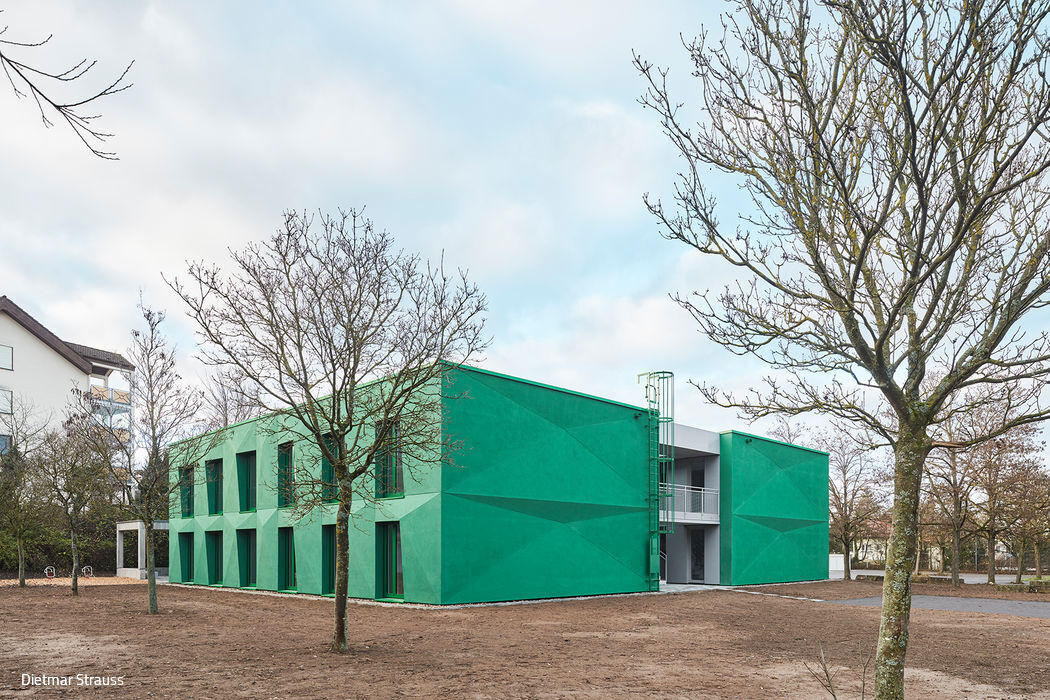
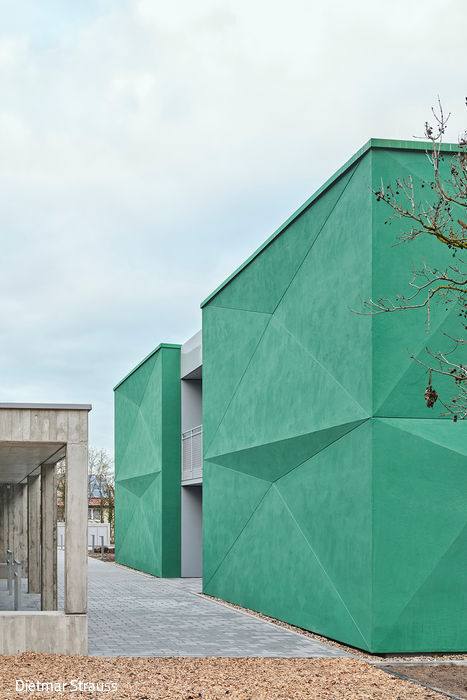
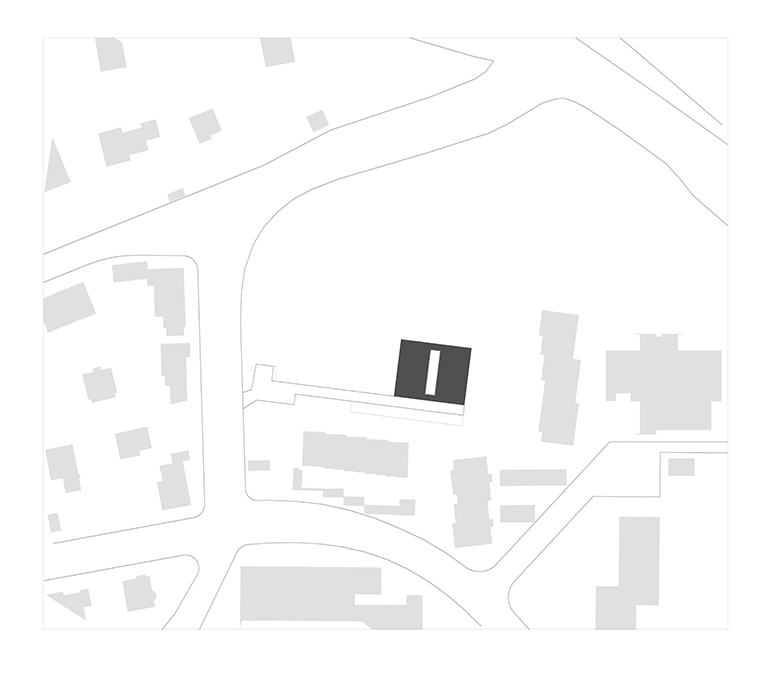
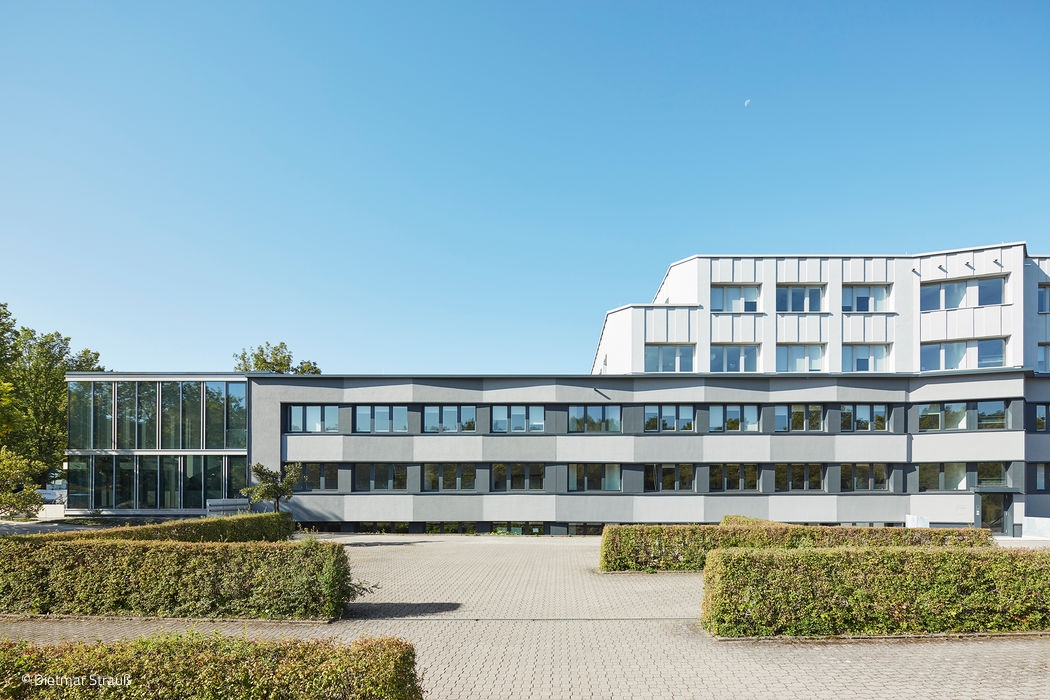
Besonders war diese Bauaufgabe in vielerlei Hinsicht: Zum einen war es das Ziel, ein weitestgehend nutzungsflexibles Wohngebäude zu schaffen. Von Beginn an war hierbei klar, dass sich die Erstnutzung als Nachfolgeunterbringung für Geflüchtete über nur wenige Jahre erstrecken würde. Für die Zeit danach wurden mehrere Nutzungsszenarien mitentwickelt: vom studentischen Wohnen über Wohngemeinschaften/-gruppen bis hin zum konventionellen Wohnen. Zum anderen war das Baugelände ein nicht mehr genutzter Bolzplatz, umgeben von einem Wohngebiet und sehr viel Bestandsgrün.
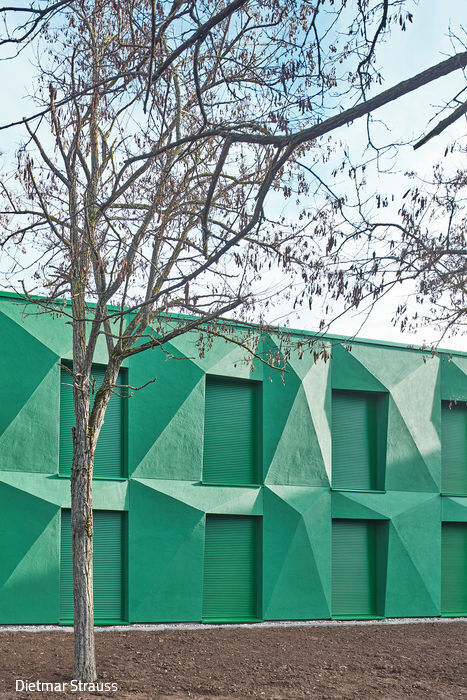
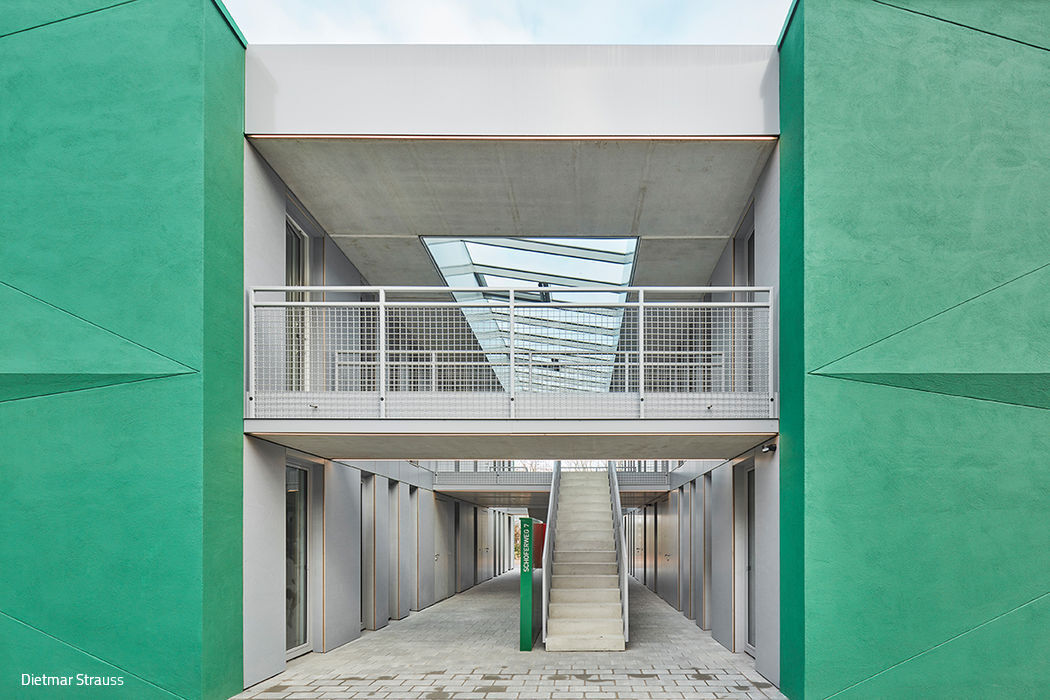
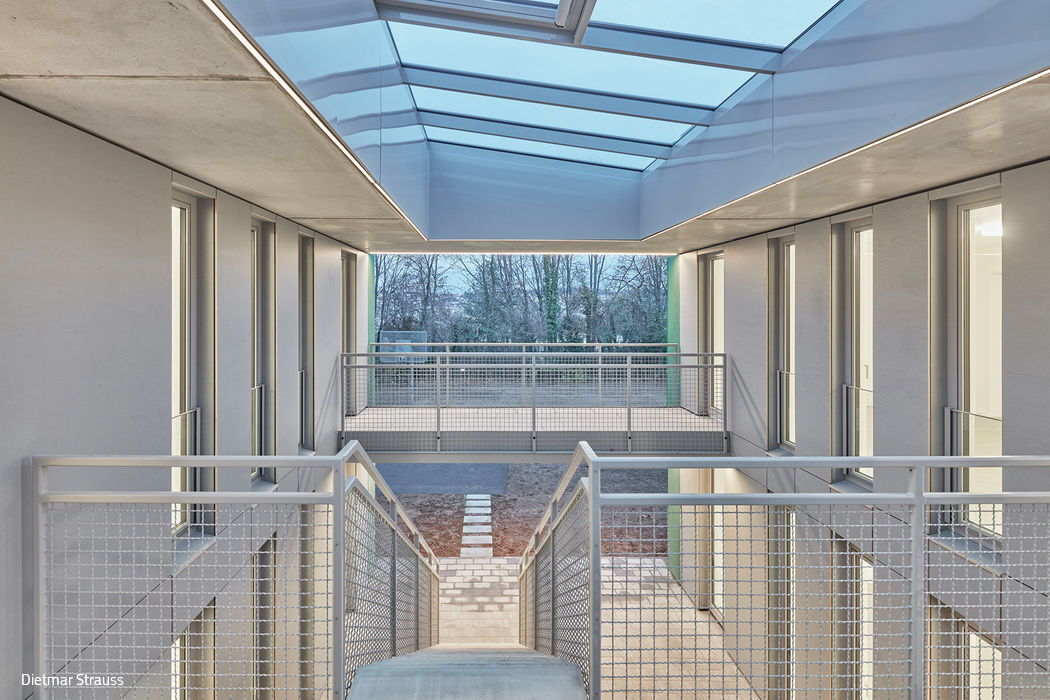
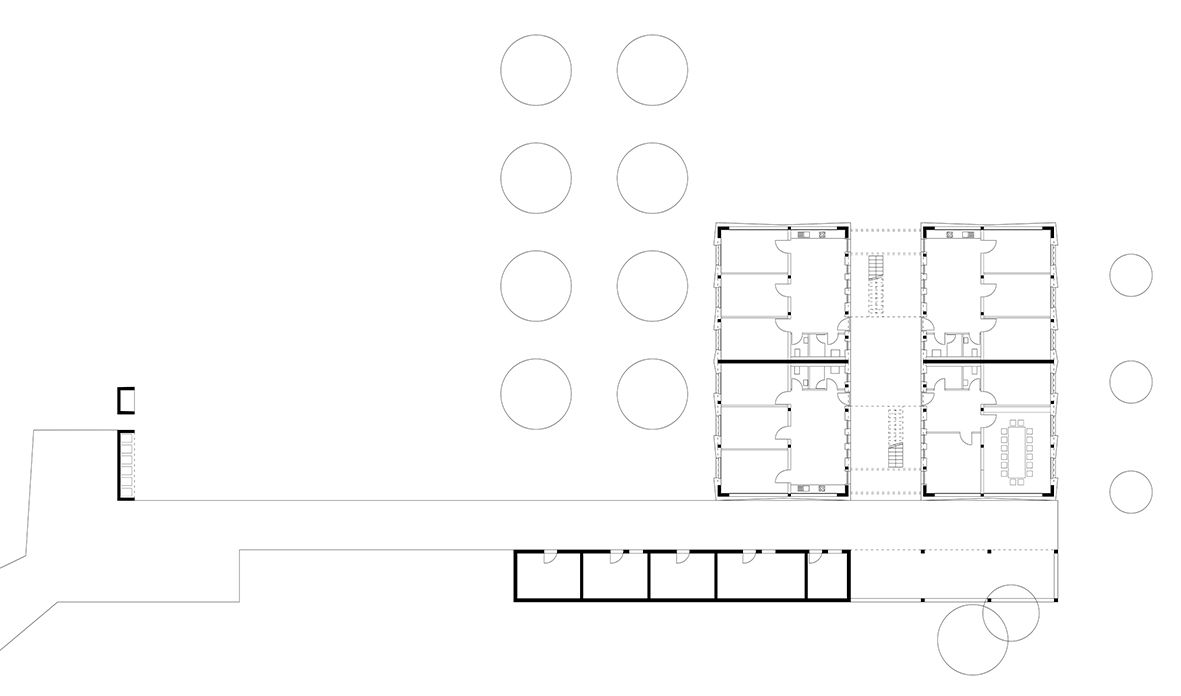
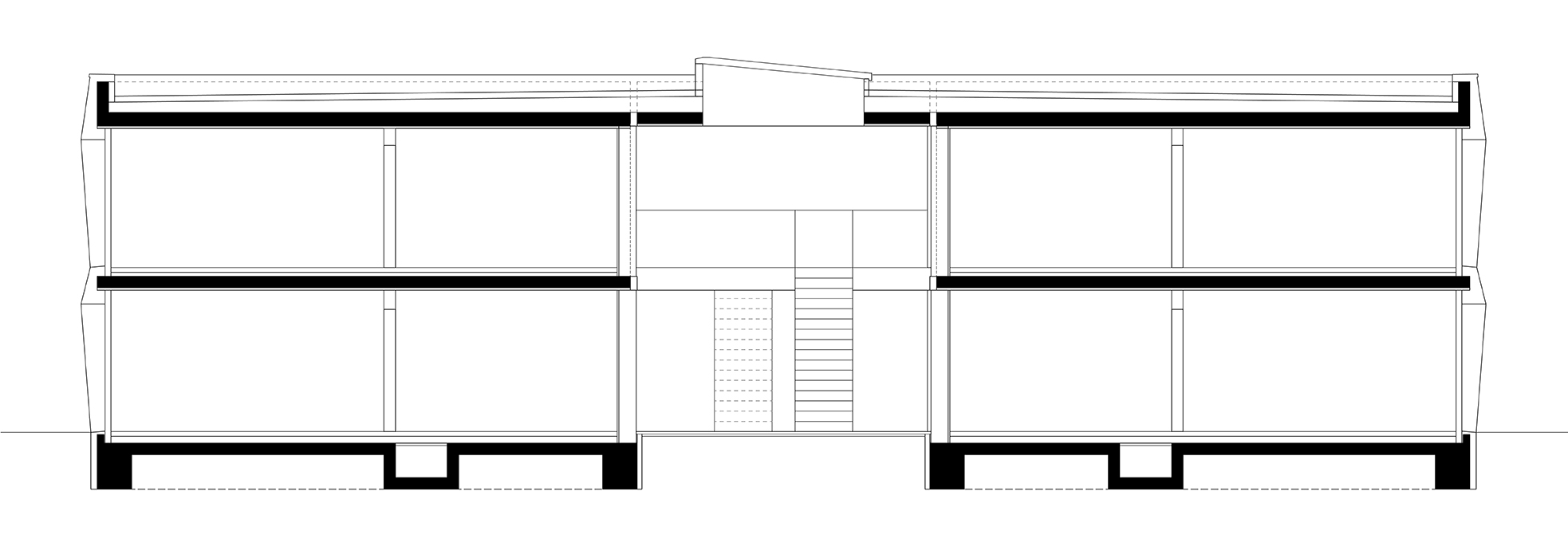
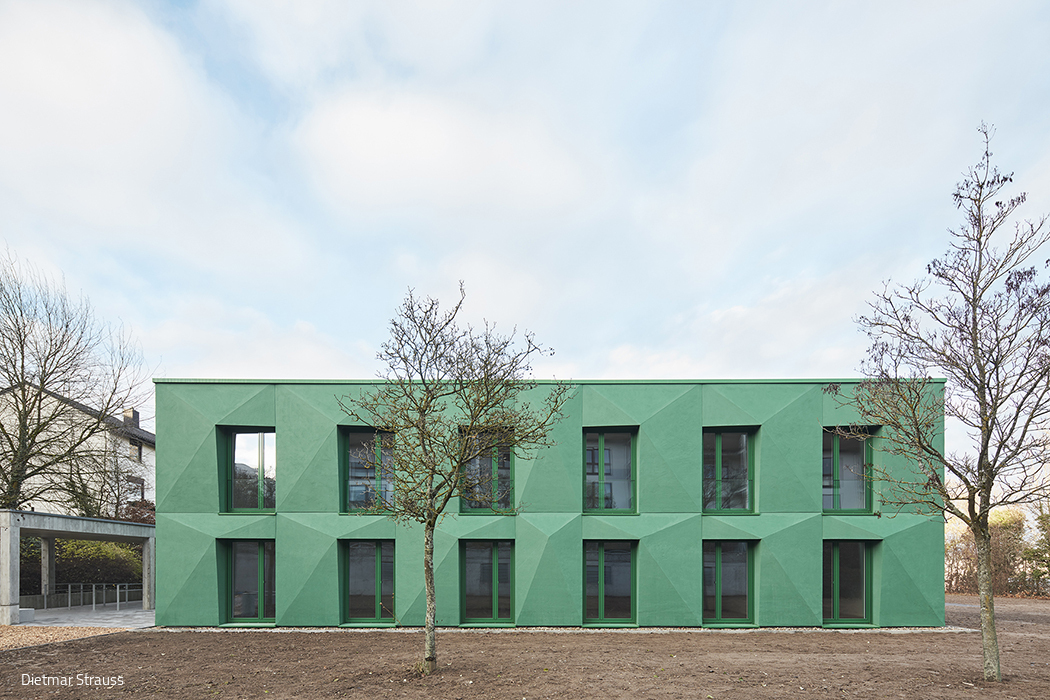
Für Freivogel Mayer Architekten war von Anfang an klar, dass das neue Gebäude auf diesem Baugelände keine klassische Wohnungsbauarchitektur werden konnte. Daher entschieden sich die Planer für eine weitestgehend autonome Formensprache, die sowohl mit den Faltungen der Außenhülle als auch durch ihre Farbgebung mit dem Grün der Umgebung unmittelbar kommuniziert. Das neue Gebäude sollte außerdem keine Assoziationen zu einer Flüchtlingsunterkunft herstellen. Stattdessen war es ihnen wichtig, trotz der Gebäudestruktur aus acht gleichen Modulen, eine neue identitätsstiftende Adresse zu schaffen. Um das Gebäude flexibel nutzen zu können, war die Minimierung von tragenden Bauteilen im Innern ein wichtiger Baustein. Die überdachte offene Erschließungszone zwischen den beiden Gebäudeflügeln dient als niederschwelliger Gemeinschafts- und Kommunikationsbereich für die Bewohner.
In Holz-Massiv-Hybridbauweise wurden die tragenden Bauteile als massiver Skelettbau mit Stützen und Flachdecken erstellt, die Außenhülle als Holzrahmenkonstruktion. Um die gewünschte Präzision zu erzielen und eine wirtschaftliche Erstellung in kurzer Bauzeit sicherzustellen, wurde die gesamte Holzkonstruktion der Fassaden nahezu vollständig vorgefertigt. Die Übergabe der Ausführungsplanung an das ausführende Holzbauunternehmen erfolgte via digitalem 3D-Modell, das die Grundlage der CNC-Herstellung bildete. Bei der Wahl des Fassadendämmstoffs wurden Holzfaser-Einblasdämmung und -Putzträgerplatten gewählt, um zusammen mit der Verwendung heimischen Nadelholzes aus dem Nordschwarzwald eine positive CO₂-Bilanz zu erreichen. Durch den sehr hohen Gebäudedämmstandard wird außerdem die Anschlussleistung an das städtische Fernwärmenetz minimiert. Das Wohngebäude mit einer Bruttogeschossfläche von 1.190 m² erfüllt den Primärenergiebedarfsstandard A und liegt damit 32 Prozent unter dem Standard der Energieeinsparverordnung.
www.freivogelmayer.de
www.pforzheimer.de
Photography Credits:
Dietmar Strauß
www.dietmar-strauss.de
(Published in CUBE Stuttgart 01|22)
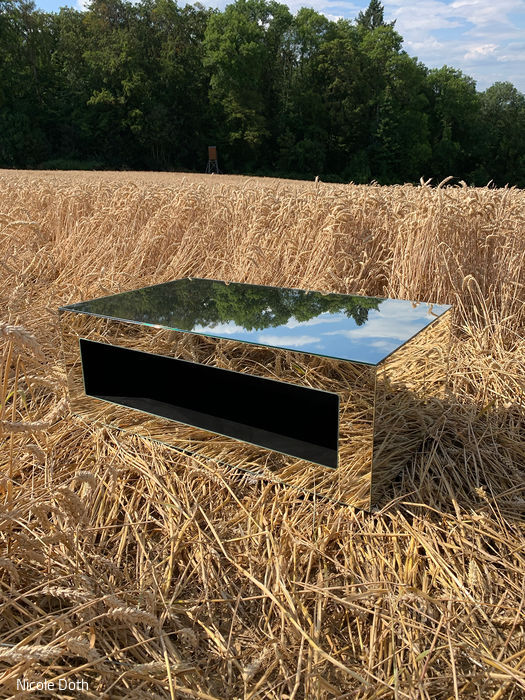
Mirror, mirror on the …
Nicole Doth's current collection showcases mirrored surfaces as a defining element in her art design objects.

With Ease
A refined structure with wooden slat facade—proof that exceptional design quality can thrive within strict building constraints
From Complex to Clear
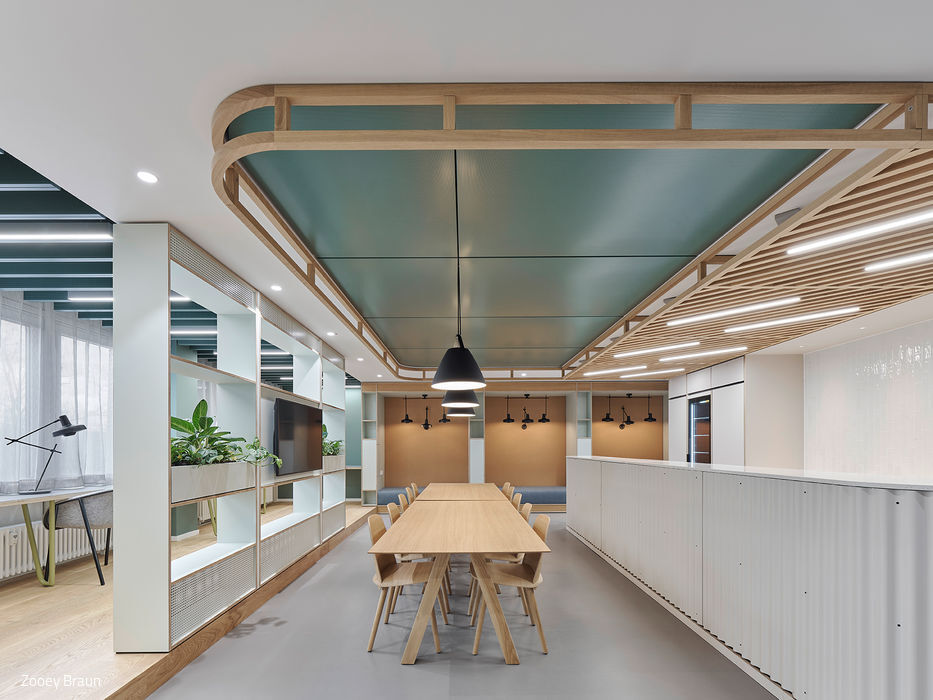
A contemporary workplace where open collaboration zones, focused private offices, meeting pods, and team areas centered around an innovation hub come together.
Built to Last
Contemporary Living for a Family of Seven