


One Space, Three Levels
Intelligent Design Unlocks Hidden Space
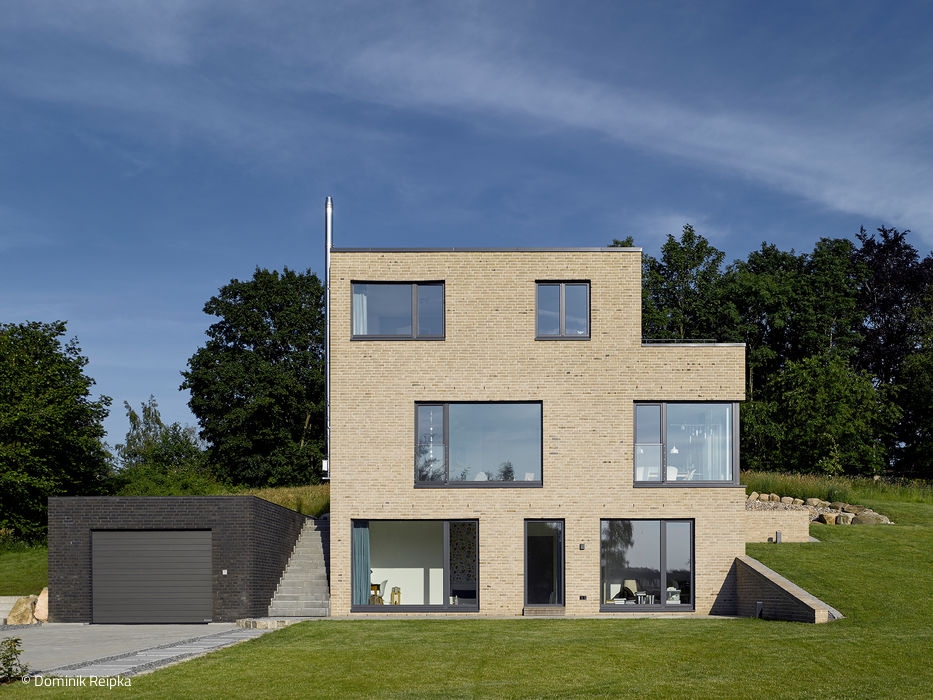
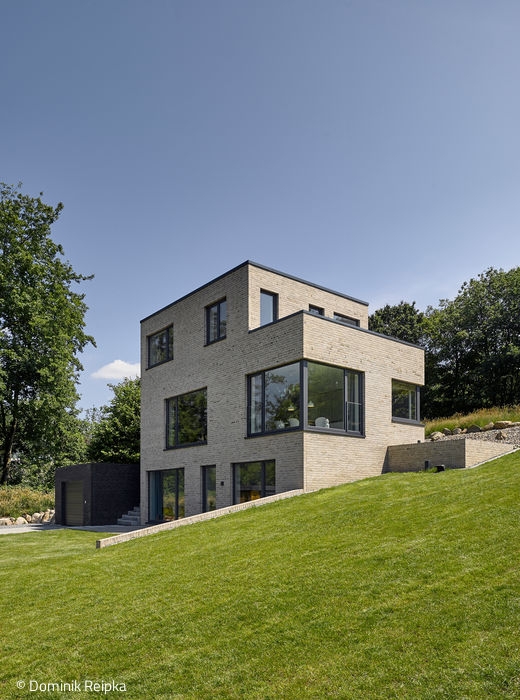
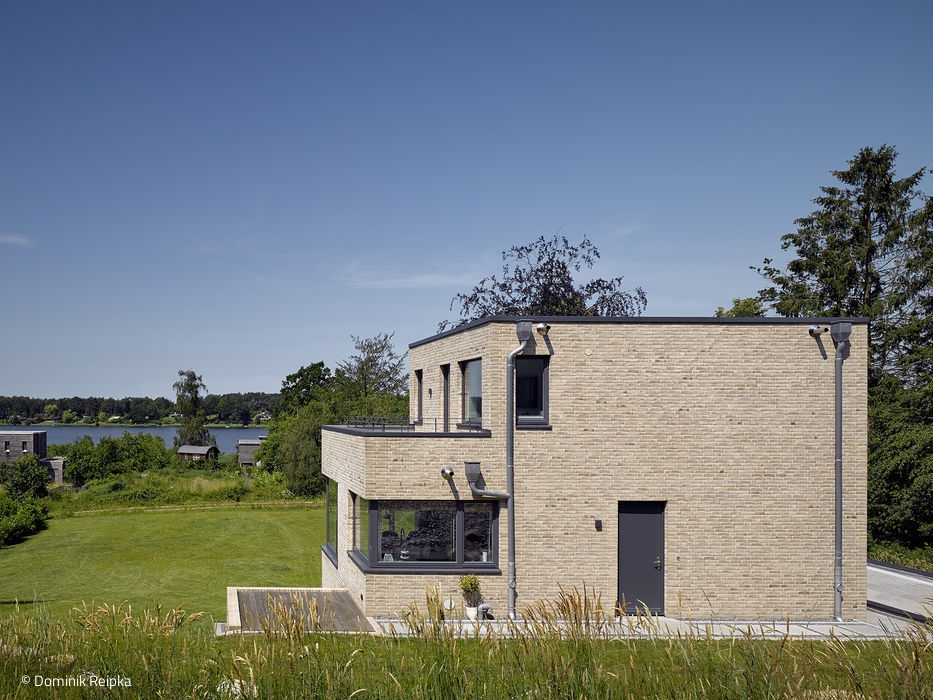
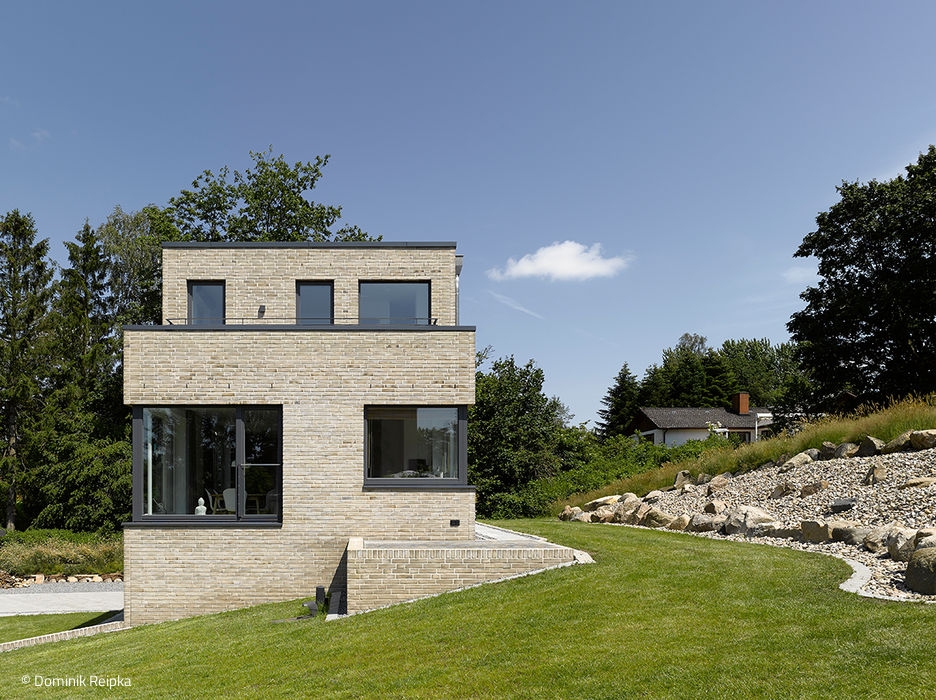
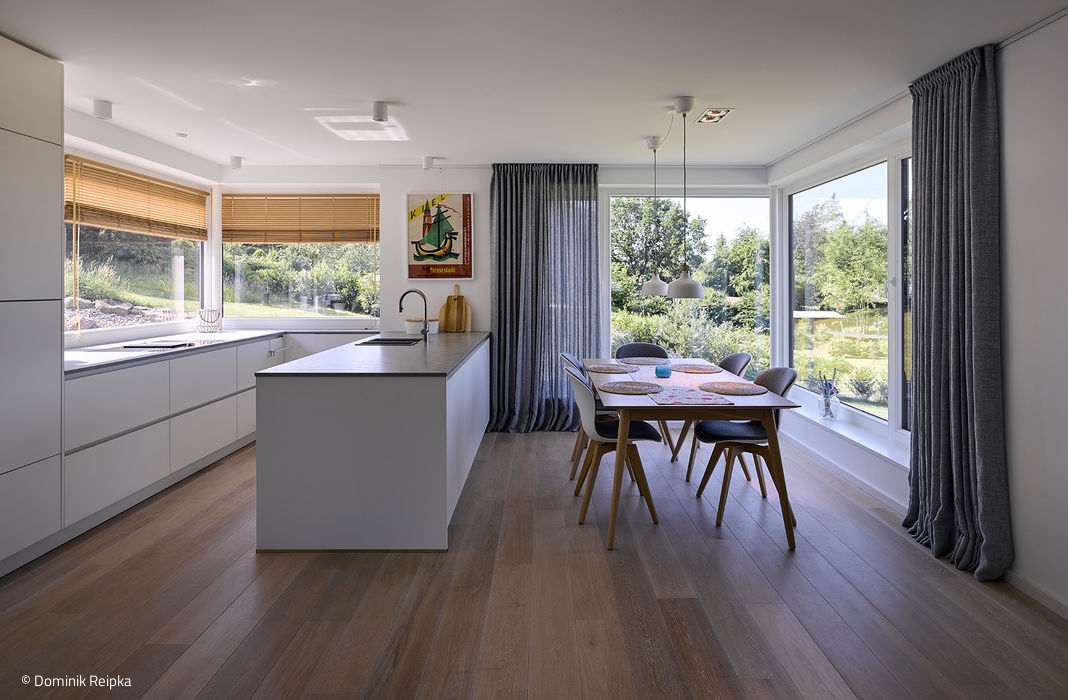
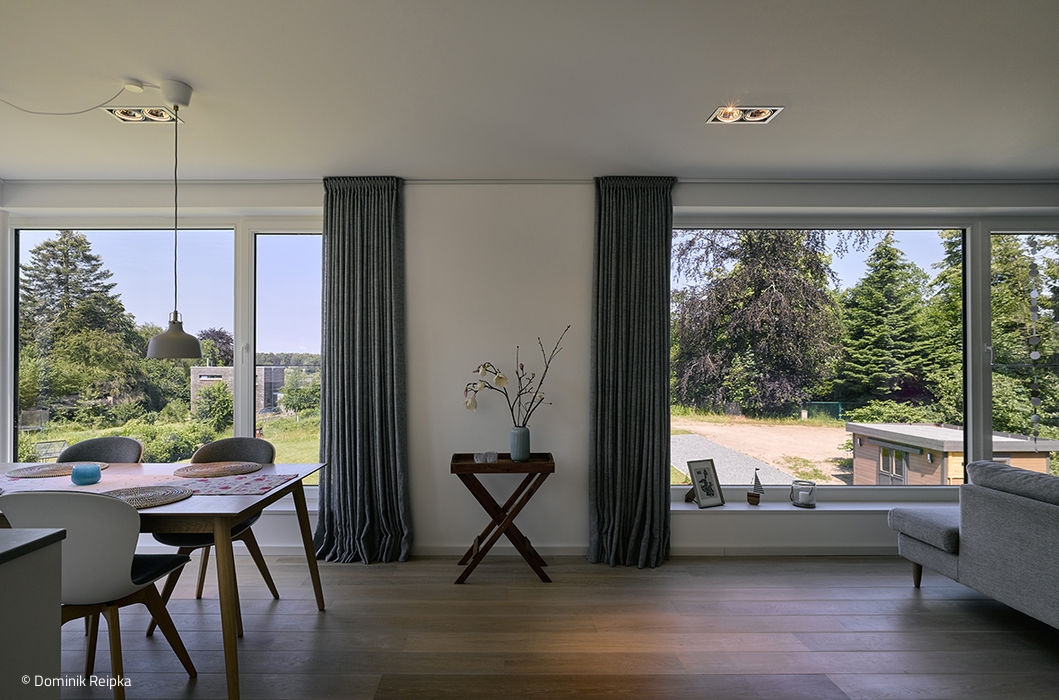
Northeast of Hamburg stretches a picturesque landscape of rolling hills and pristine lakes. Nestled on one of these Holstein lakes sits this family's weekend retreat. Architect Matthias Mecklenburg designed this luminous clinker brick home as a solid, hillside structure. Local building codes imposed strict constraints—a maximum gross floor area of 60 m² and single-storey construction. Rather than compromise, Mecklenburg leveraged the sloping terrain ingeniously. The result: a basement level that opens seamlessly onto a sprawling terrace overlooking the lake. Floor-to-ceiling windows blur the distinction between interior and landscape, making the basement feel like a full storey. Guest quarters, ancillary spaces, and a guest bath with views occupy this level. The main entry approaches from the east.
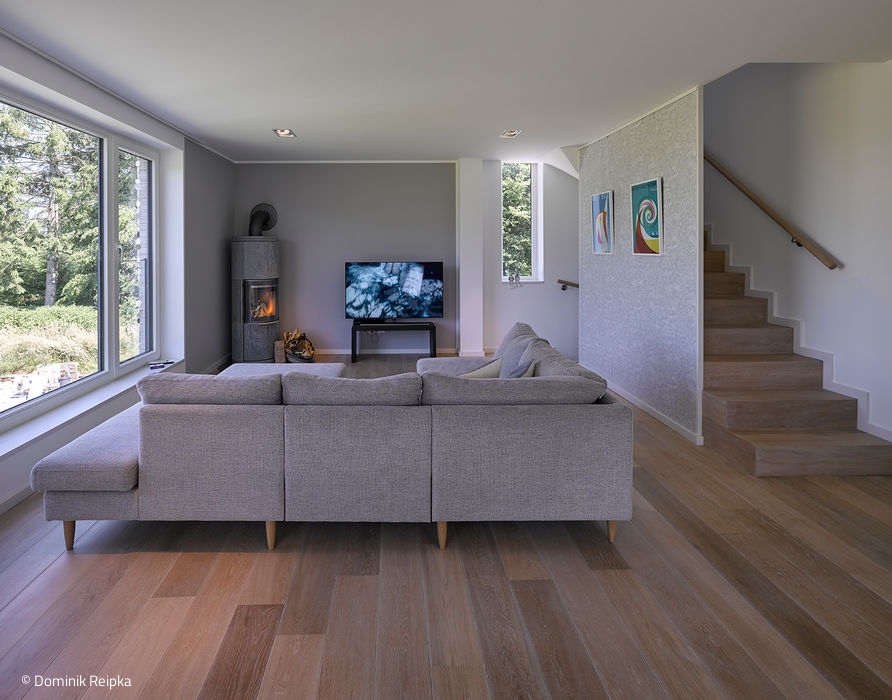
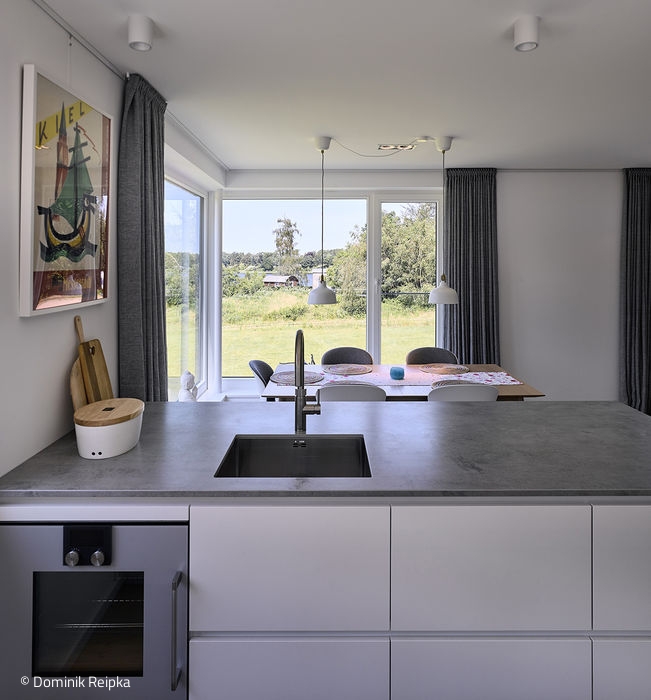
A second terrace graces the south-facing ground floor. The entirely open, column-free layout allows residents to experience lake views from virtually every vantage point. The kitchen, dining, and living areas align westward, oriented toward the water. A single flight of stairs ascends to the upper floor, which houses two bedrooms and the primary bathroom. The master bedroom flows onto a south-facing roof terrace—the ideal perch for sunset watching, with unobstructed western views across the lake.
The garage stands apart from the main house, separated by a robust staircase and distinguished by dark, contrasting clinker brick—a requirement of the zoning plan. Yet access remains seamless: a passage beneath the outdoor stairs connects the garage directly to the home's interior.
The landscape design embraces restraint—expansive, uncluttered surfaces and minimal materiality that honors the surrounding nature. Driveways, exterior stairs, and pathways employ concrete slabs and gravel, bordered by regionally sourced boulders. Thermally treated pine decking defines the terraces. To the east, field stone and gravel manage slope stabilization while allowing natural water infiltration. Sustainability extends to the building's energy strategy: the north and east façades remain largely solid, minimizing thermal loss. The home was built as a low-energy structure, equipped with a gas condensing boiler and rooftop photovoltaic array.
Photography Credits:
Dominik Reipka
www.reipka.de
(Originally published in CUBE Hamburg 04|19)


Multiple Award Winner
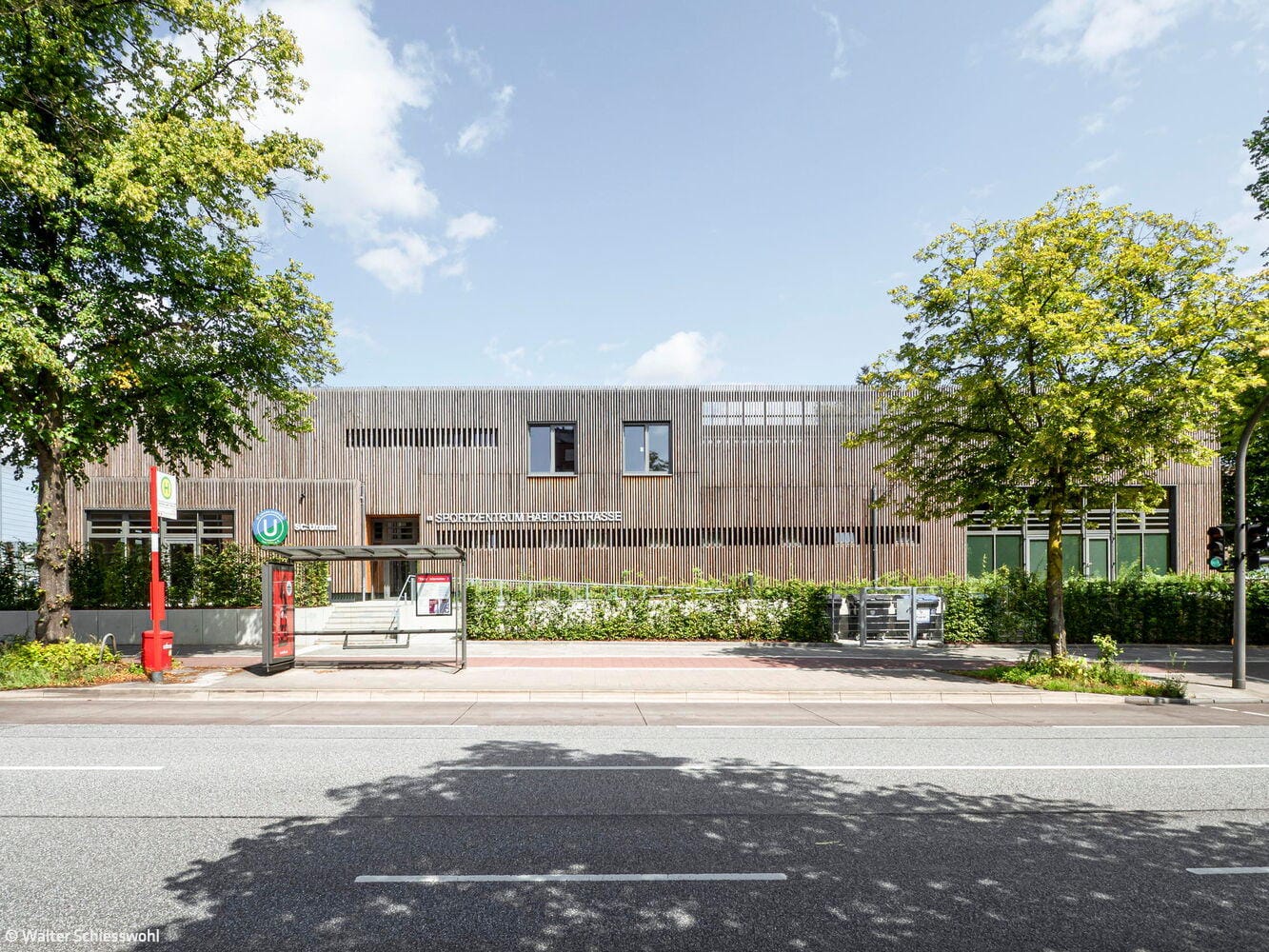
Through thoughtful renovation and expansion, creating a vibrant hub for sport, movement, and community
Seamless Construction Process
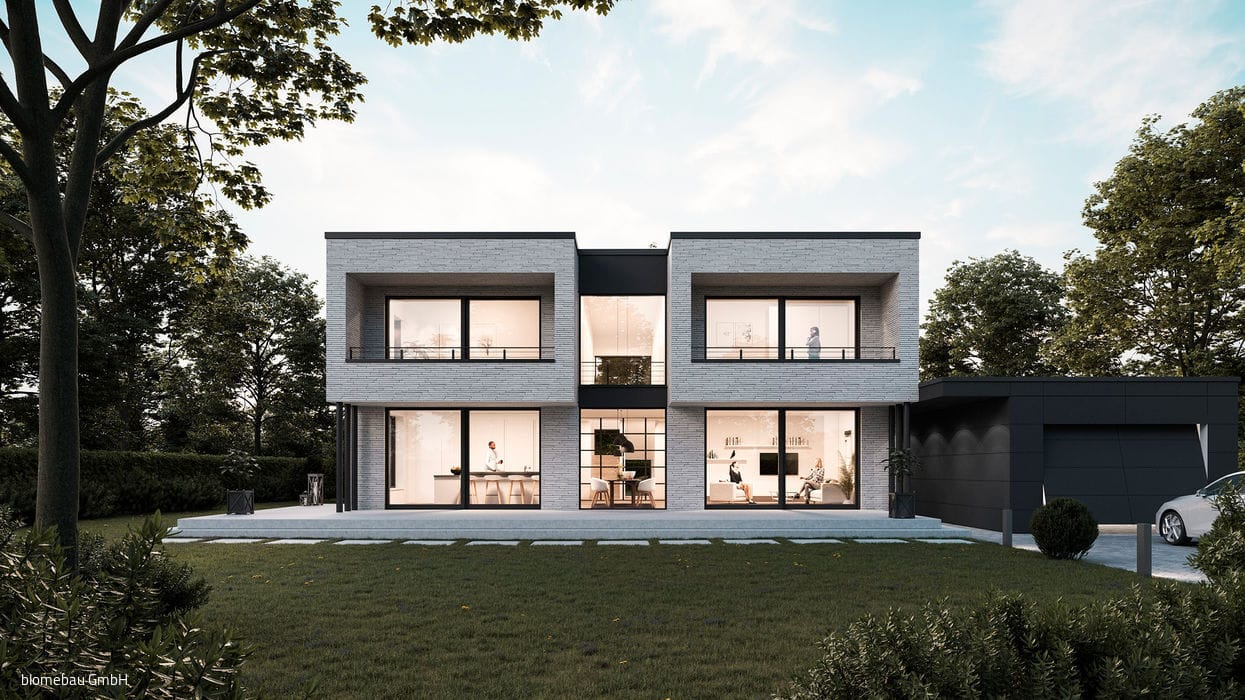
blomearchitektur dissolves the traditional boundary between architecture and construction.
100 Years Young
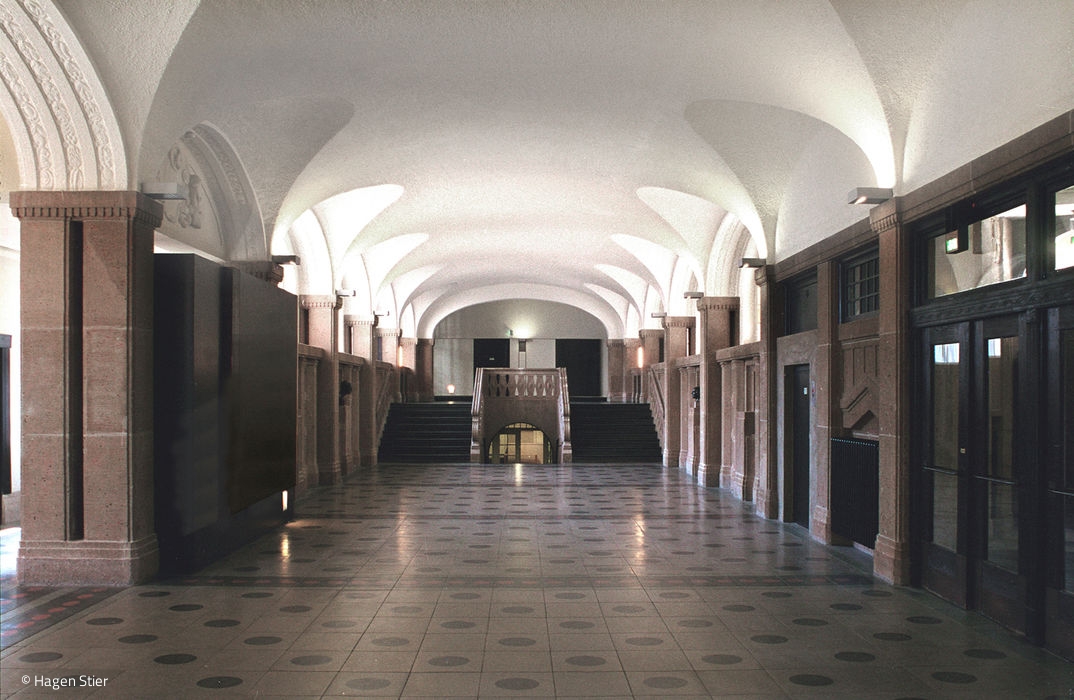
Heritage-Conscious Renovation and Modernization of the University's Main Building
Wood Takes Center Stage
The courage and openness of all involved created something truly extraordinary.