


Building in Contrasts
A restored semi-detached home that enchants through the interplay of its distinct historical eras
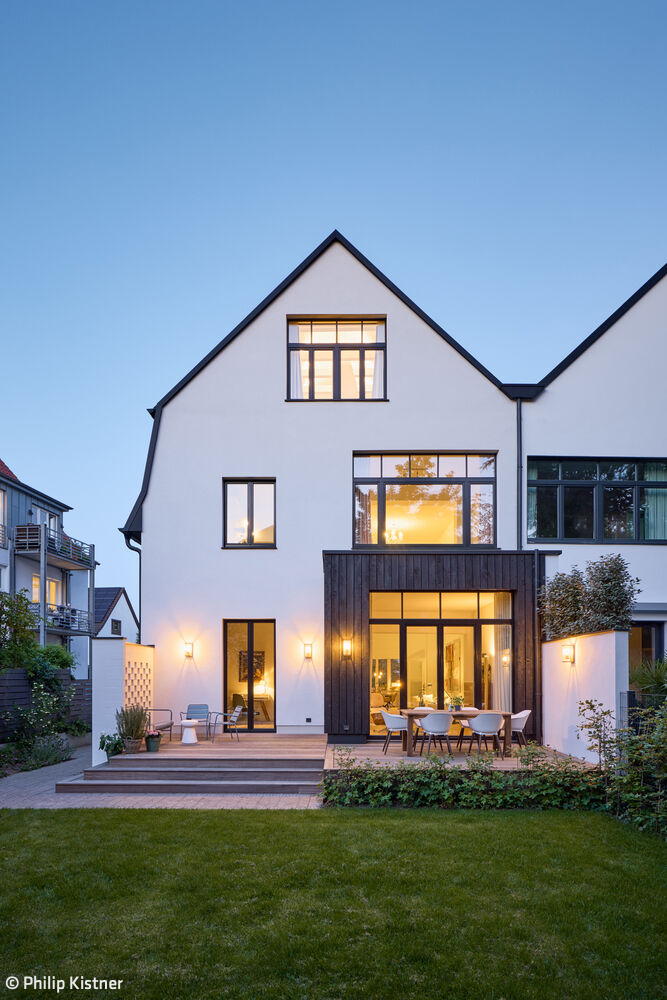
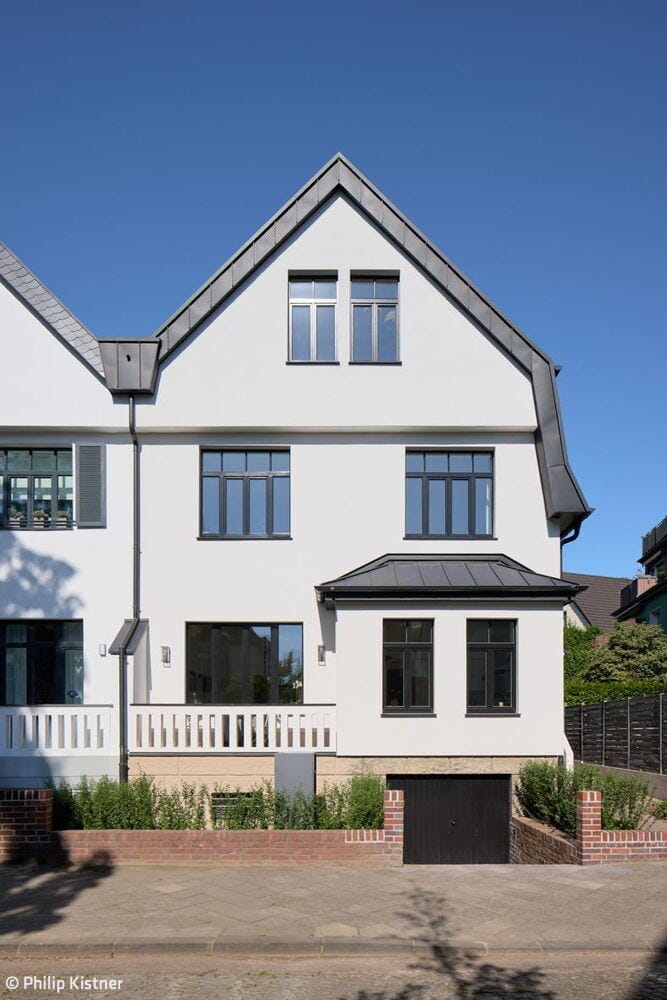
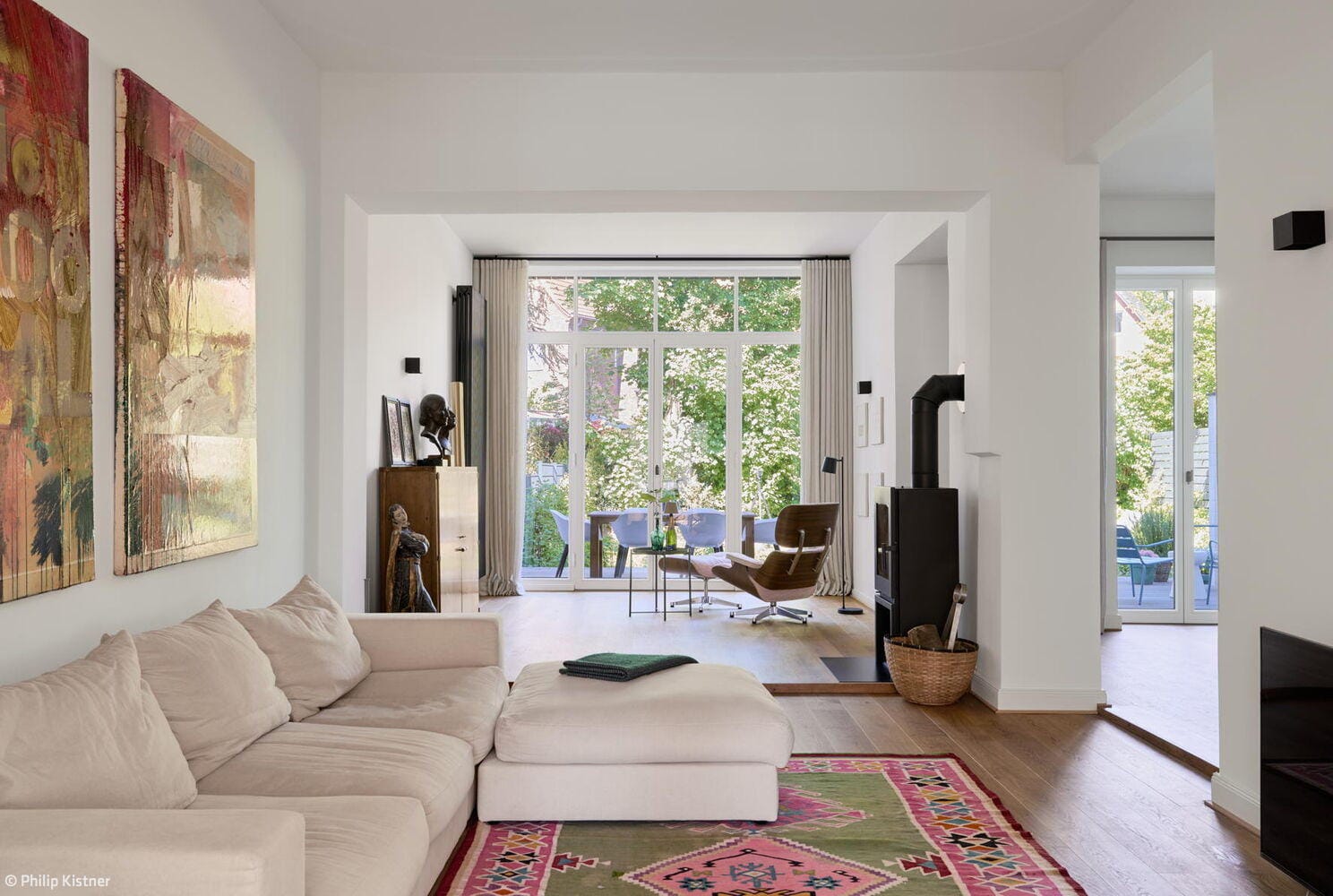
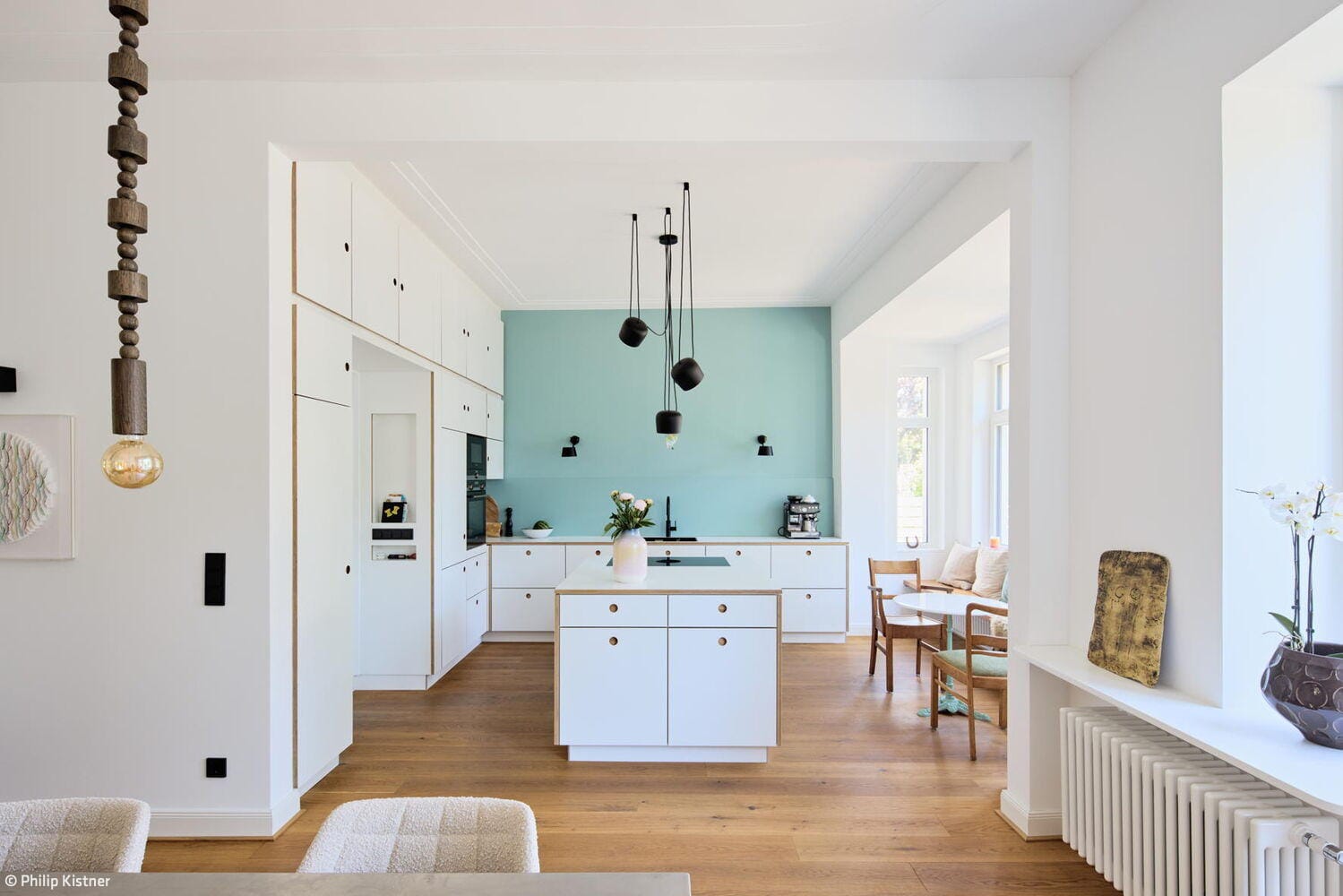
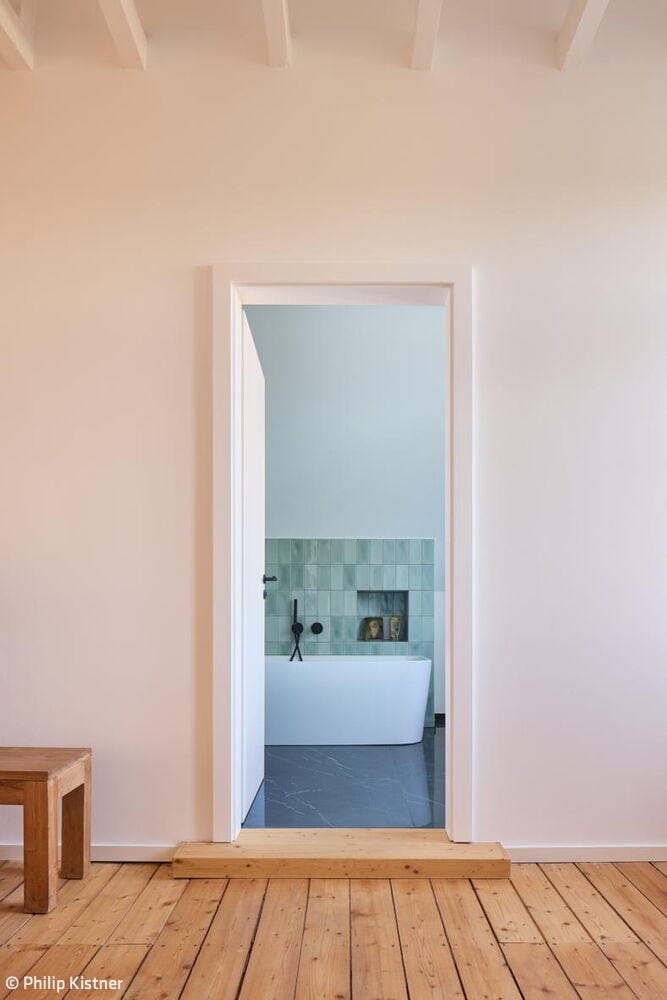
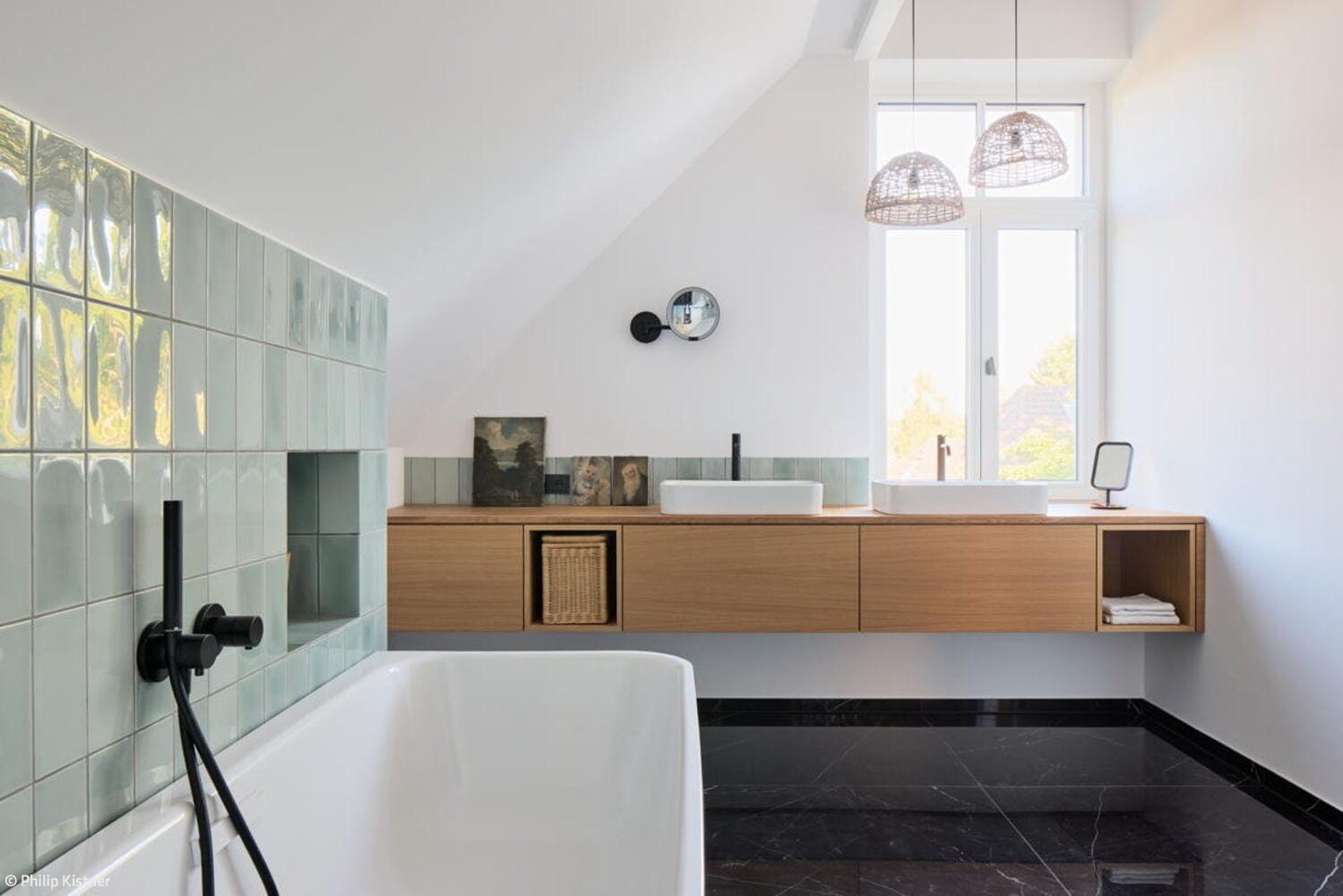
A 1909 semi-detached house, most recently divided among three households, needed to be reunited as a single home and transformed into a comfortable family residence. Tasked with the renovation and conversion, Lücker Beckmann Architects from Ratingen thoughtfully preserved the building's historic character while introducing contemporary living standards and high energy efficiency.
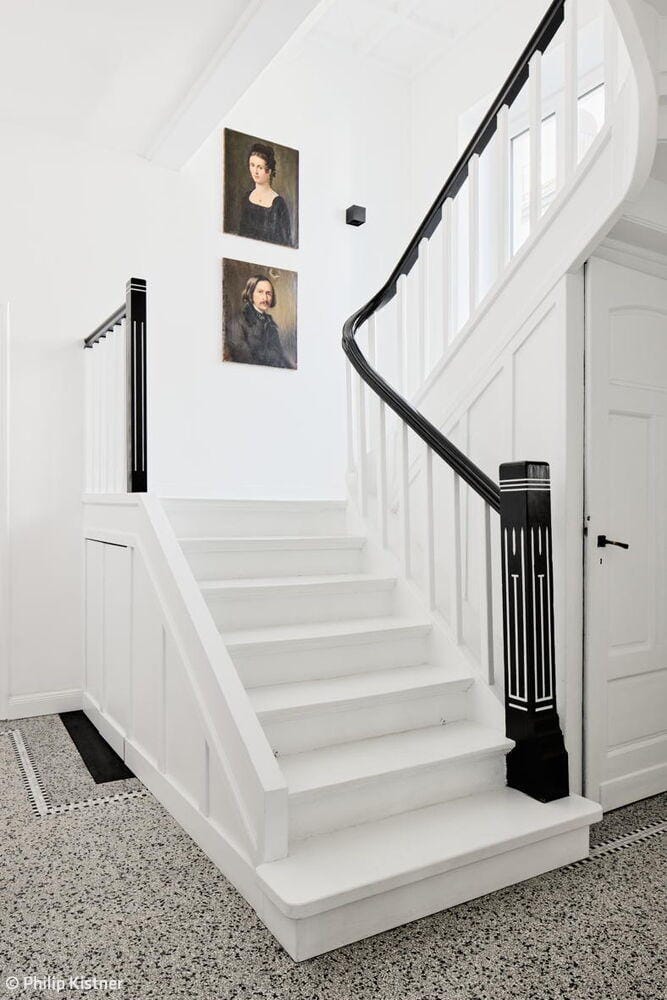
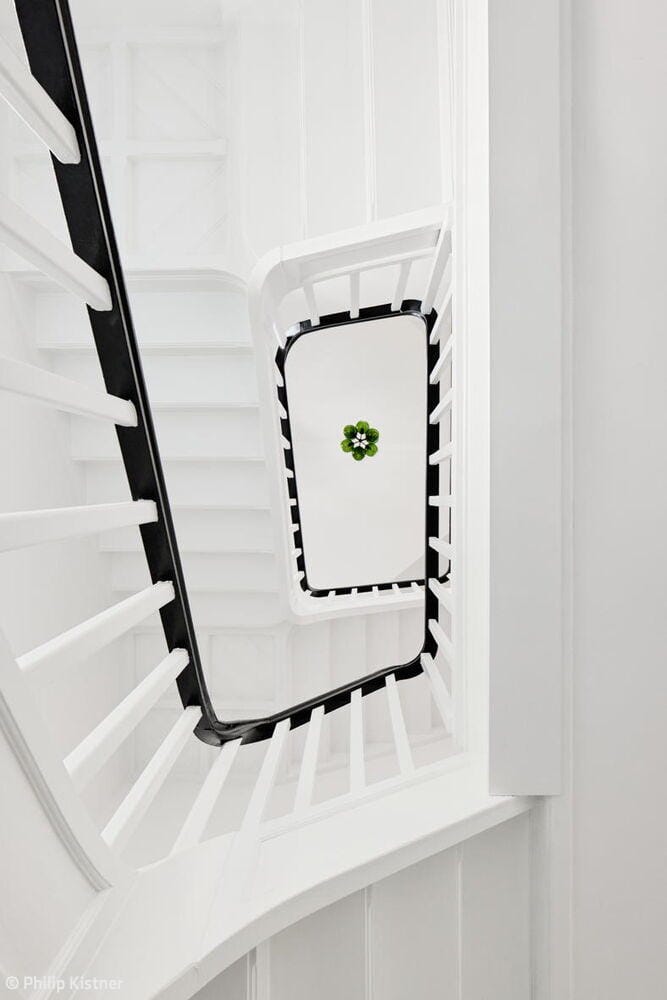
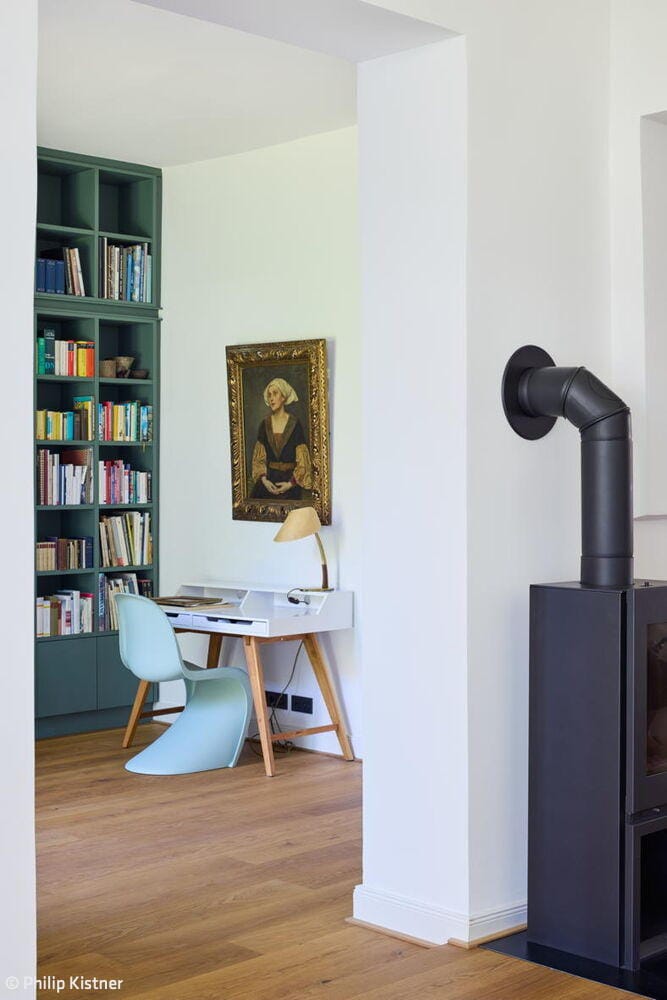
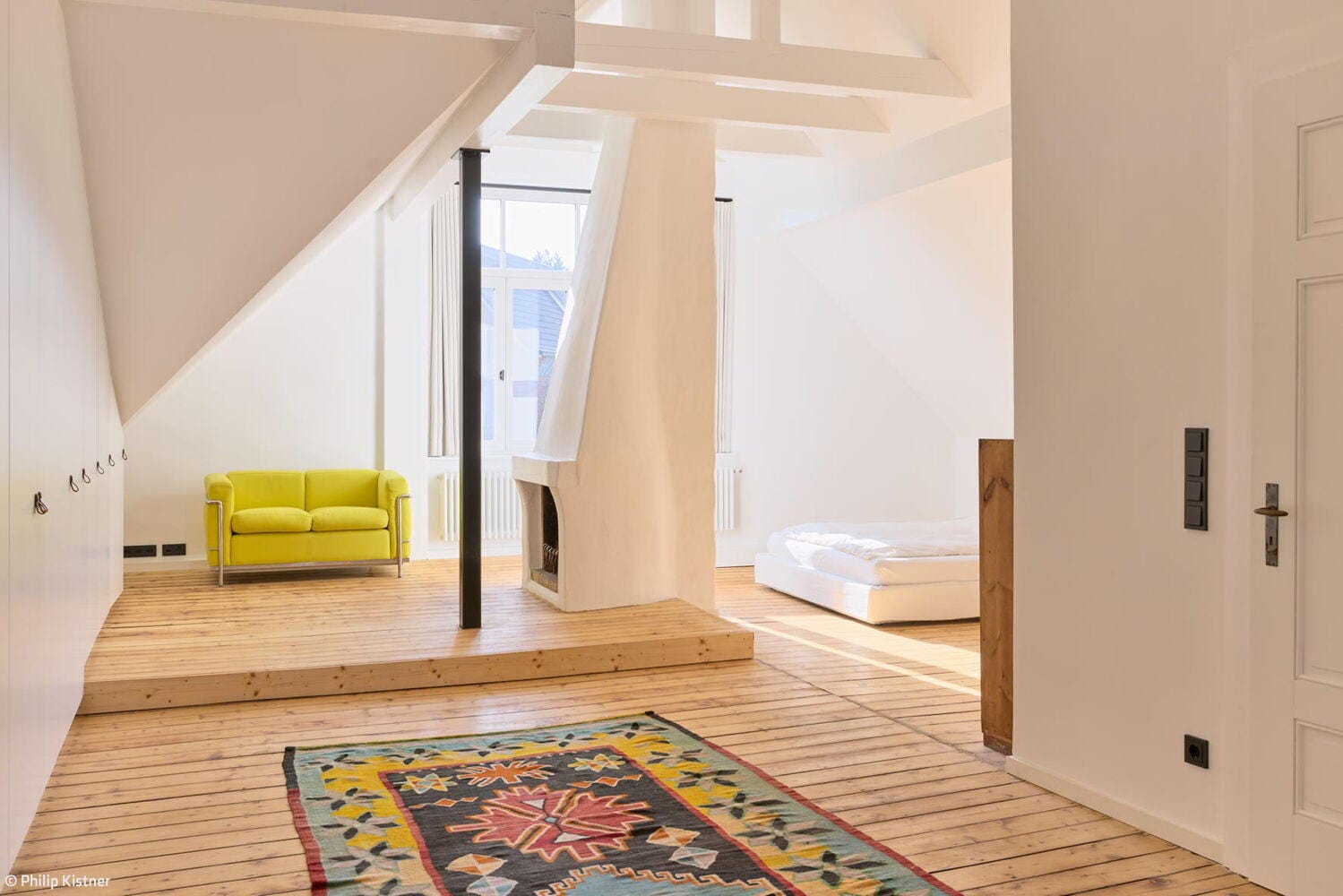
The entire building envelope was insulated and renovated in keeping with local preservation guidelines and the existing structure. The façades received a refined decorative plaster finish. The street-facing entrance canopy and balcony railing were carefully removed, faithfully reconstructed, and reinstalled. The original bossed plaster at the basement foundation was also preserved and meticulously restored. A rear extension was clad in vertically-oriented, blackened timber boarding—a deliberate contrast that distinguishes new from old. The historic timber-sash windows were replaced to meet high energy standards while retaining their original muntins and black-painted profiles. The roof structure required reinforcement for both structural and energy performance reasons. Interior redesign prioritized respectful engagement with the existing fabric: original features—including the terrazzo entrance floor, period-appropriate interior doors, the generous wooden staircase, and select vintage radiators—were preserved, restored, and in some cases faithfully reproduced. Even later modifications were treated with similar care. A minimalist approach extended the home's restrained colour palette, accented with strategic colour choices on walls and in tile areas. Existing fitted elements were preserved or thoughtfully adapted, including the former attic fireplace, now decommissioned. A new wood stove on the ground floor creates a contemporary warmth that seamlessly bridges the building's various temporal layers with its new components. Technical systems were upgraded with equal restraint and precise routing planning. All kitchen, bathroom, and living area finishes were custom-designed by the architects. Two floor-to-ceiling shelving units with sliding ladder rails deserve special mention for their functional elegance. The neighbouring property has since undergone similar restoration, and the two buildings now present a unified, harmonious streetscape.
Photography:
Philip Kistner
www.philipkistner.com
(Published in CUBE Düsseldorf 03|25)
Smiling Into Surgery
Where Functional Architecture Meets Creative Vision: A New Surgical Centre for Ophthalmology
Curating Beauty: A Gathering Place
The new multifunctional showroom "Atelier 1907" at Lüntenbeck Castle
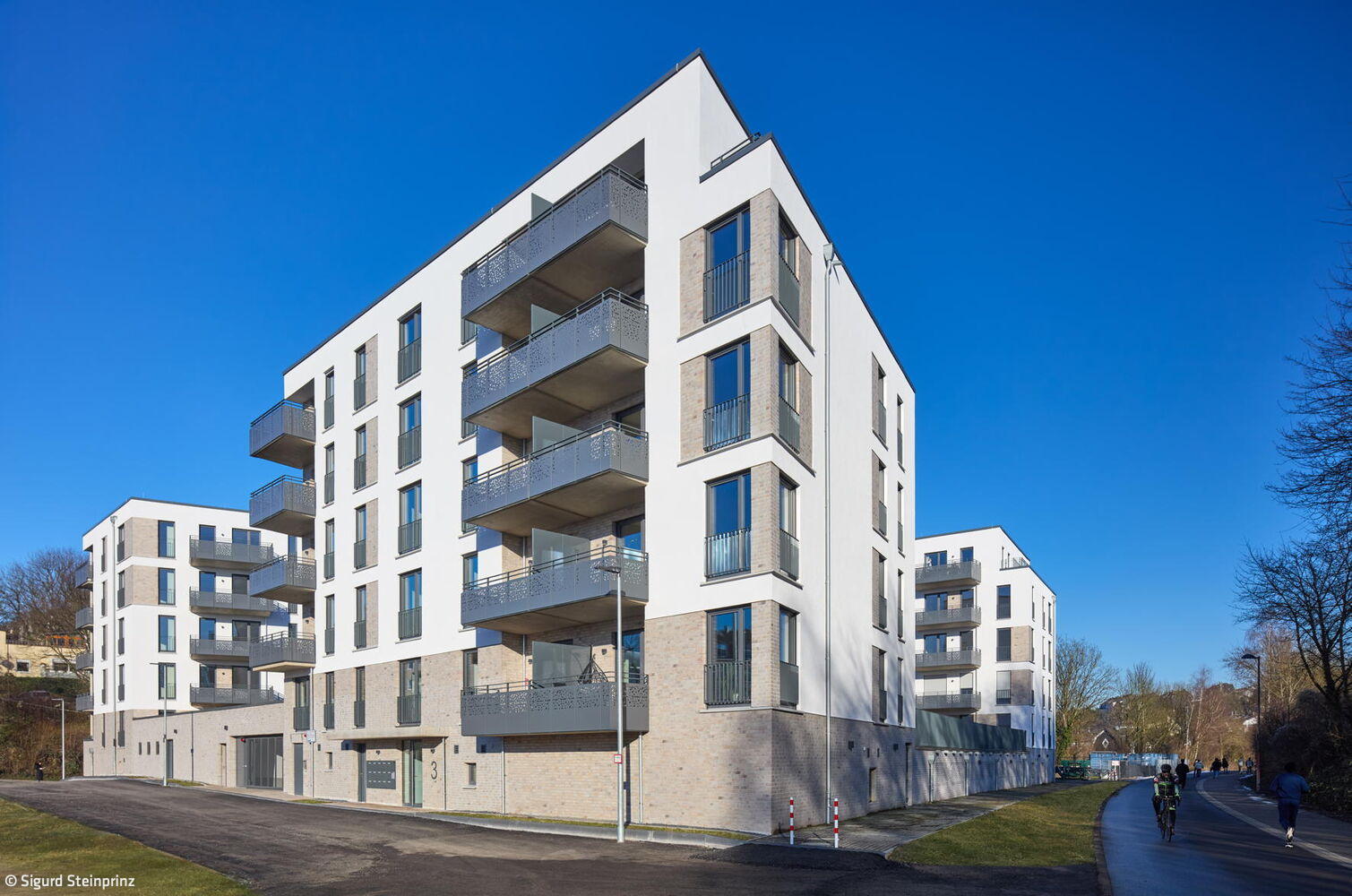
Active and robust
New residential quarter takes shape along Wuppertal's Nordbahntrasse
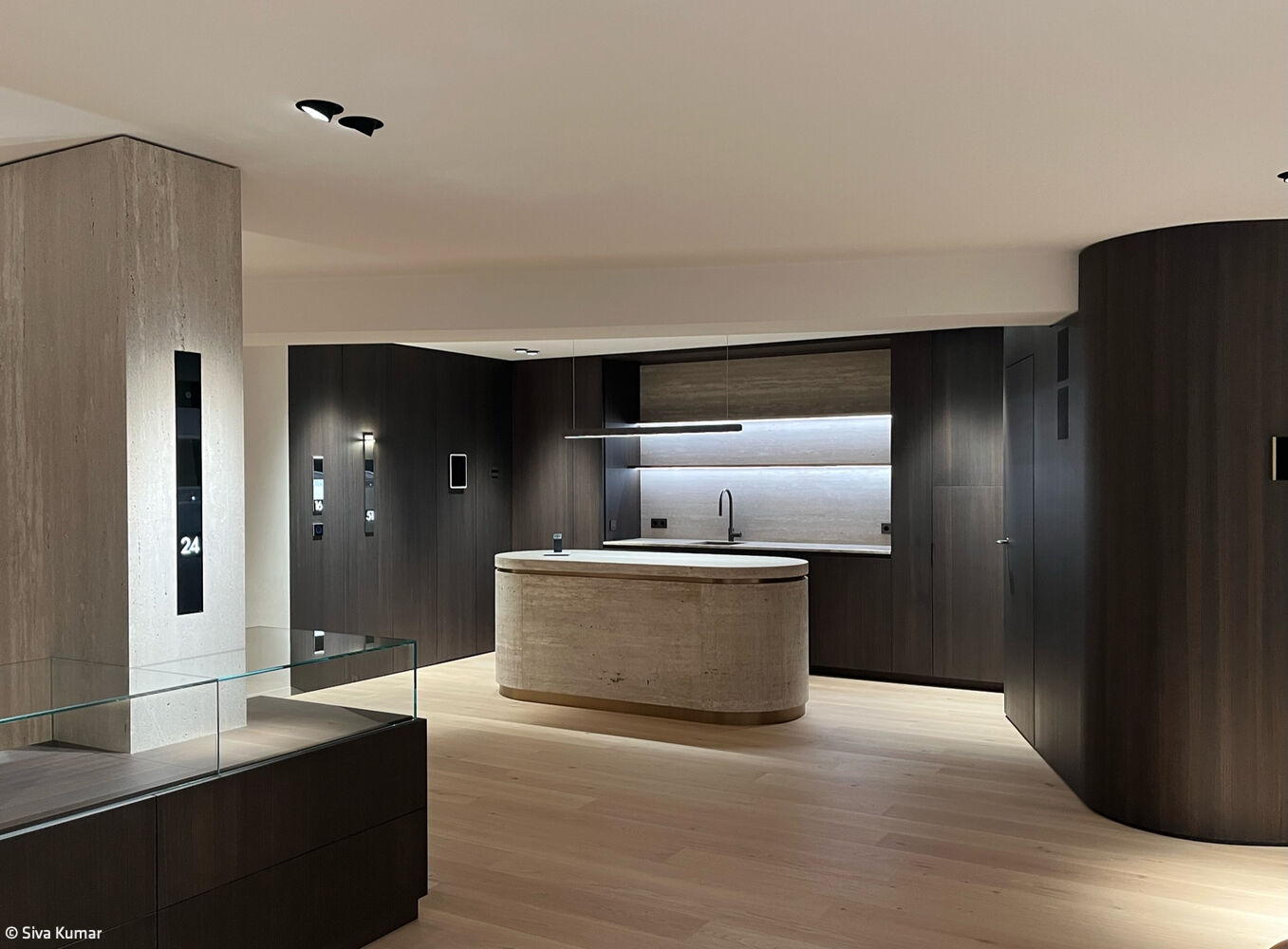
Smart living design
Germany's first outpost of this Belgian smart home innovator anchors Schadowplatz.