


Komorebi
Japanese poetry inspired the name for this residential building with its distinctly charred wooden façade.
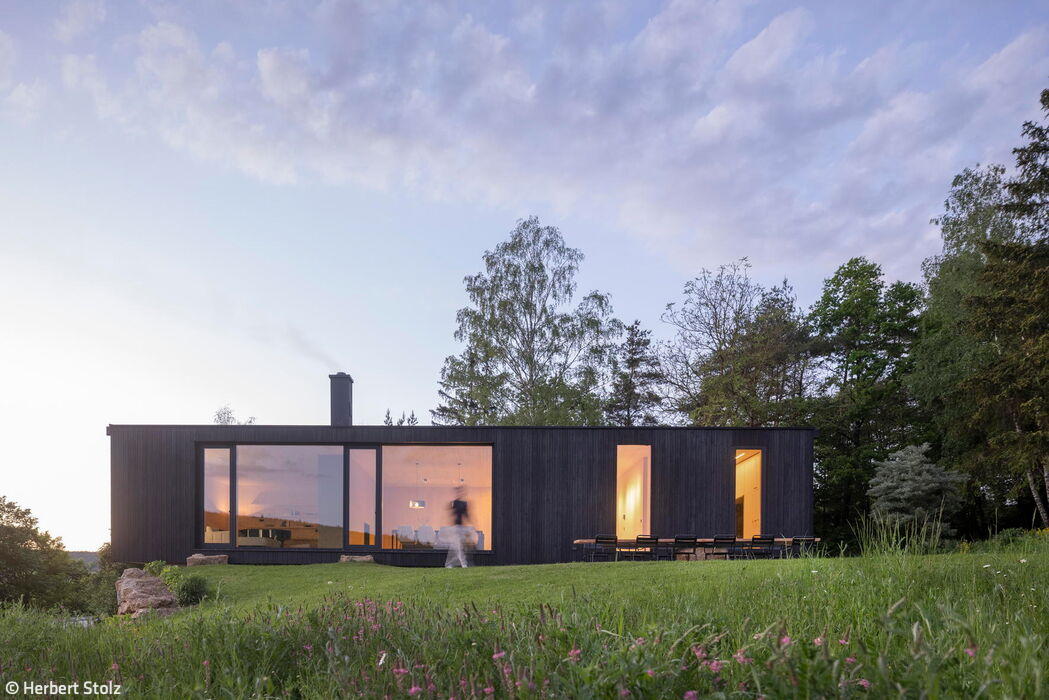


Perched on a hilltop with sweeping southern views across the Naab Valley in the Upper Palatinate, this new residential home takes its name—"Komorebi"—from a Japanese concept capturing the ethereal beauty of sunlight filtering through tree leaves. Architect Severin Queck drew inspiration from the traditional Japanese technique of "yakisugi" in treating the Japanese cedar cladding. This ancient method gently chars the wood's surface, rendering it remarkably resistant to water, mold, rot, and pests. Beyond its practical durability, the result is profoundly aesthetic: a richly textured façade that speaks to timeless craftsmanship. The owners envisioned a home nestled within nature—and more importantly, in true harmony with it. This vision has been realized with remarkable success.
Set within a protected landscape, this single-story bungalow—measuring 19 by 9 meters—settles unobtrusively among trees and grasses, its low profile and warm brown timber skin creating a seamless dialogue with nature. Accessible only by hiking trail, delivering the massive solid-wood prefabricated elements required ingenuity and specially adapted trucks. The design embraces natural materials throughout: spruce timber forms the exterior walls, roof and floor slabs; regional Marchinger Drosselfels stone surfaces the floors; even the linen curtains contribute to both atmosphere and acoustic performance. At the heart of the living space sits an imposing clay wall—18 tonnes of unfired clay bricks, clay mortar, and plaster—housing an integrated wood-burning stove that serves as the home's sole heating source. Photovoltaic panels with battery storage handle the energy needs. The 118 m² interior flows between entrance, utility space, living area with kitchen and dining zone, bedroom, and bath. Panoramic windows flood the spaces with natural light.
Photography:
Herbert Stolz
www.herbert-stolz.de
(Published in CUBE Munich 03|24)

Light-Filled Workspace
High-Performance Office Building in Maxvorstadt
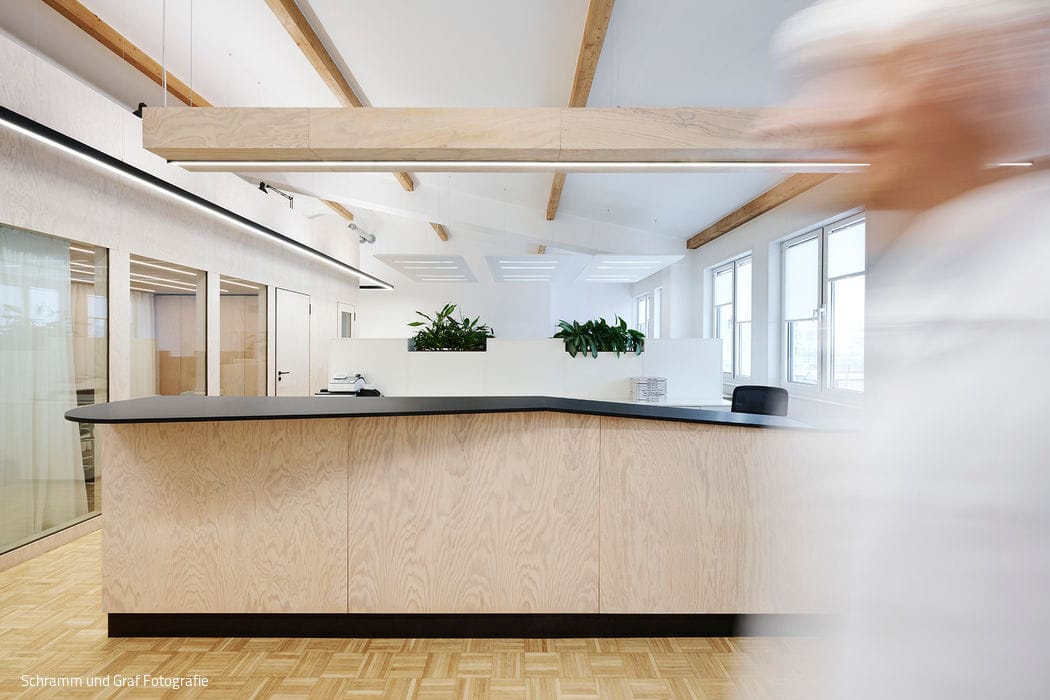
Pizza meets New Work
A food startup from Geretsried embraces its bold new workspace
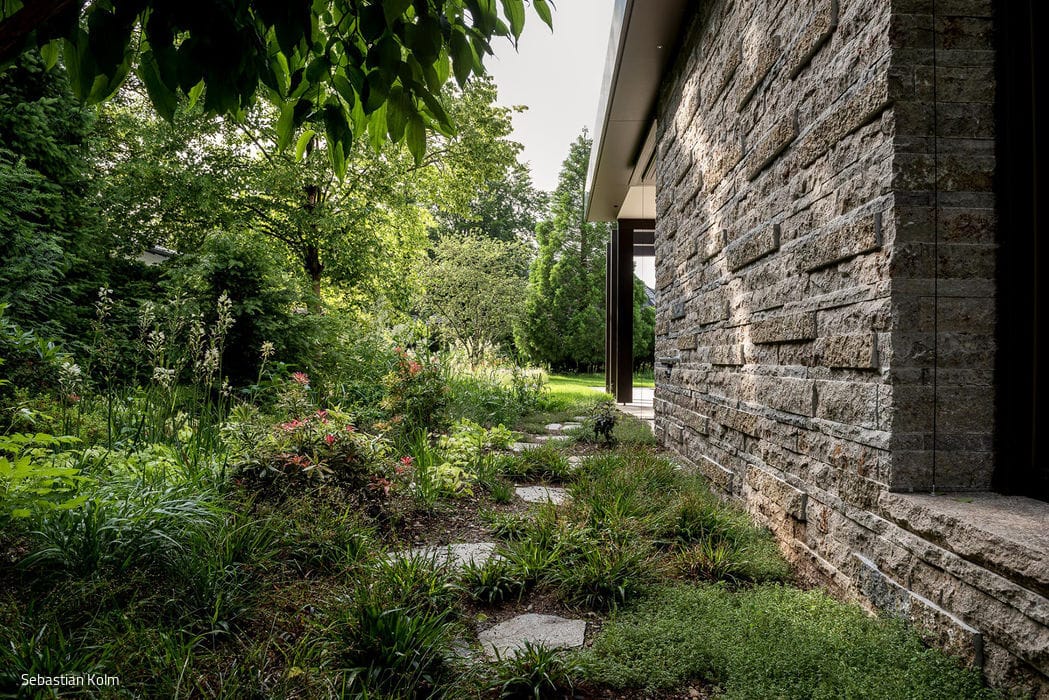
Elf Garden
A spellbound forest garden at the heart of the city
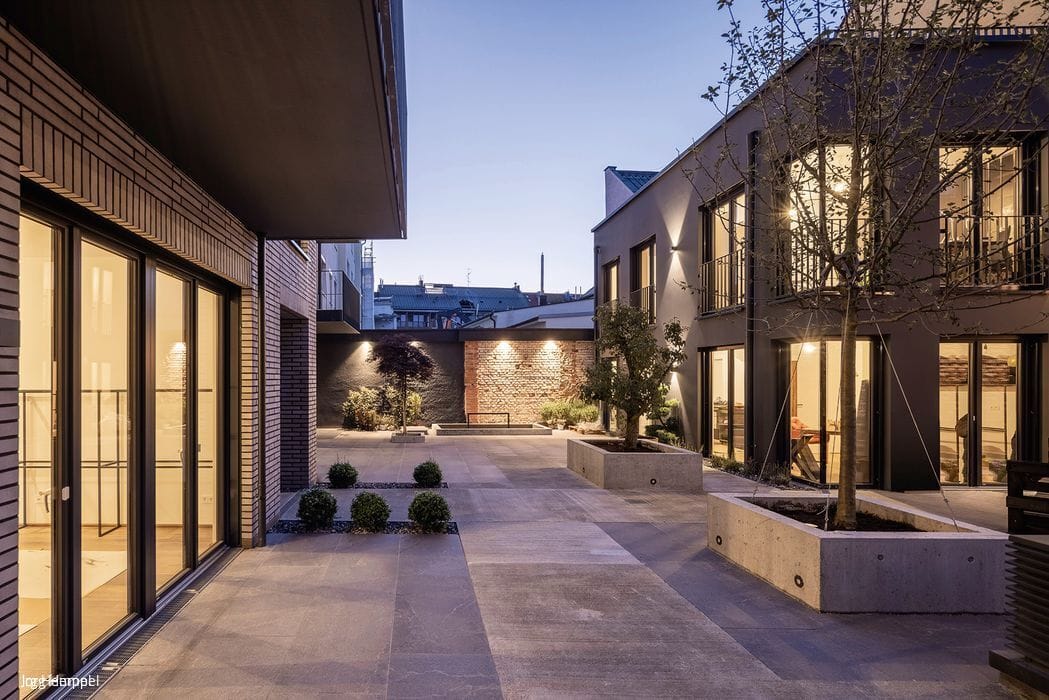
Living Together—Inclusively
Contemporary Living Reimagined: A New Vision for Neuhausen's Historic Neighbourhood