


Elfengarten
An enchanted woodland garden nestled within the urban landscape
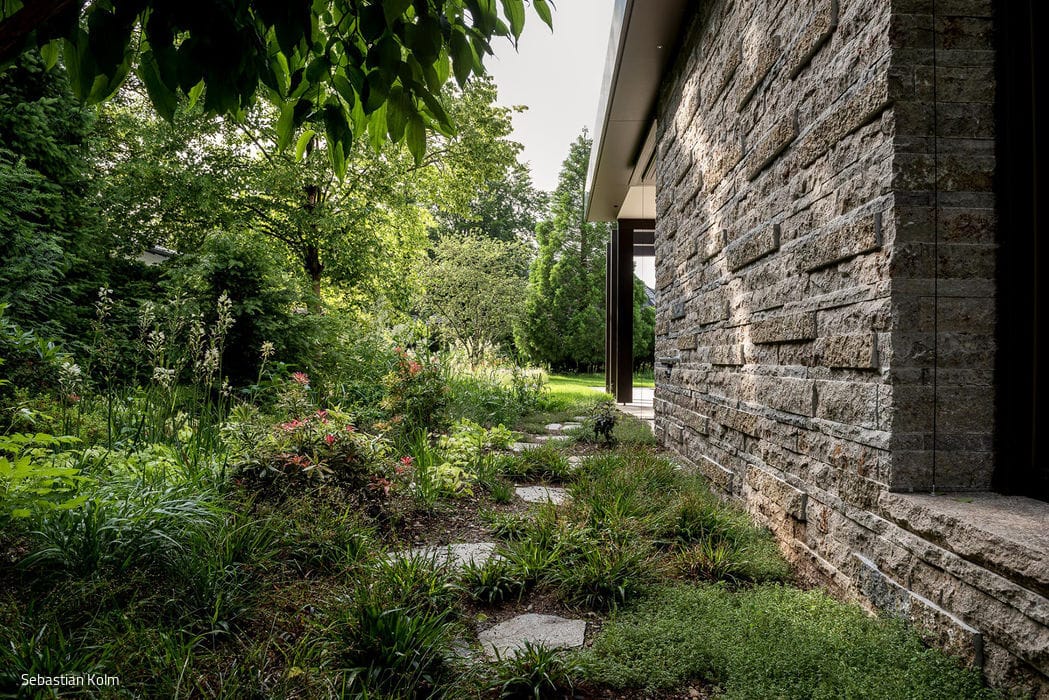
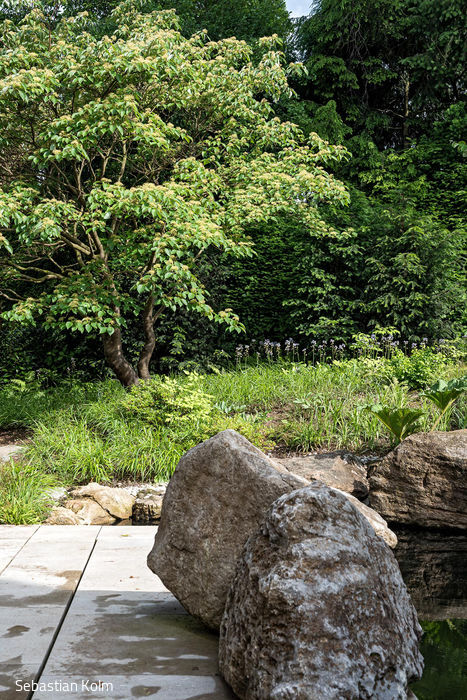
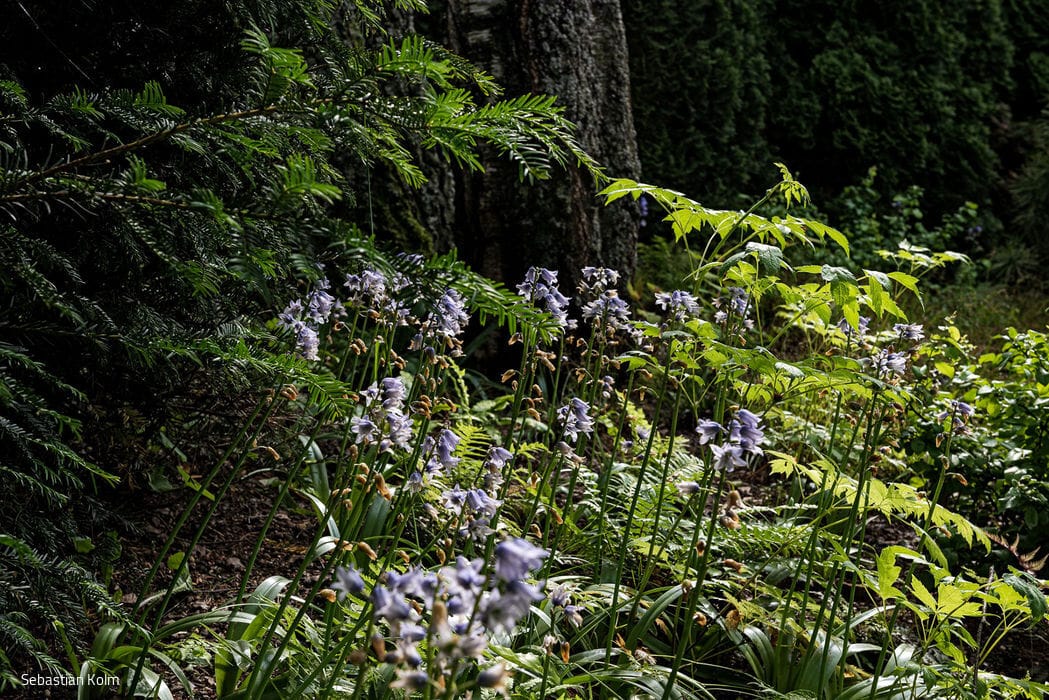
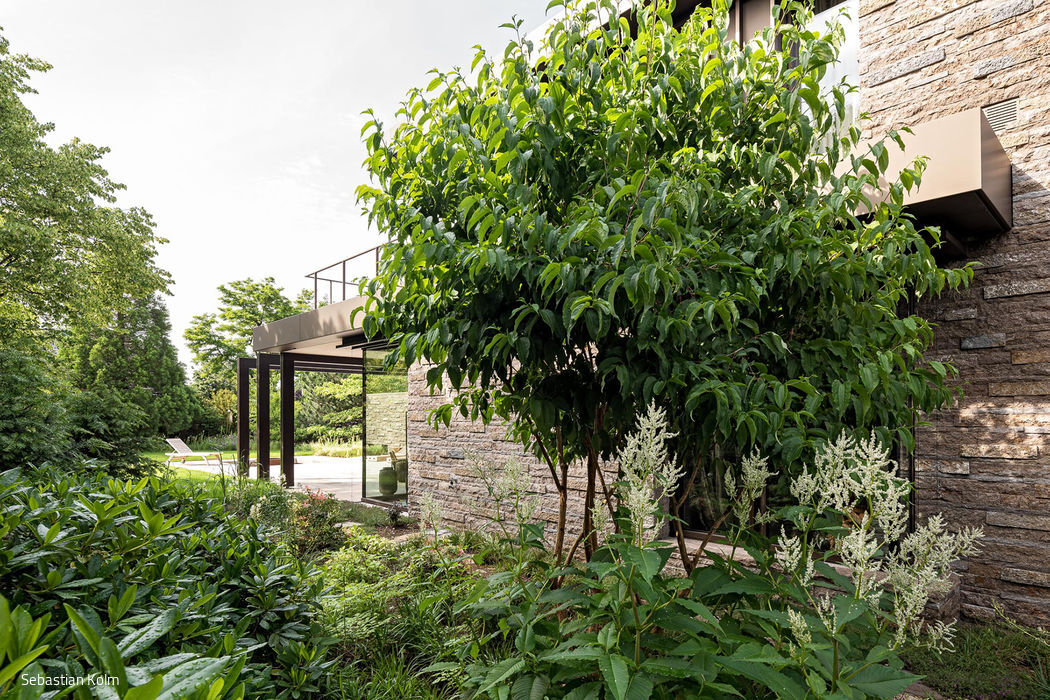
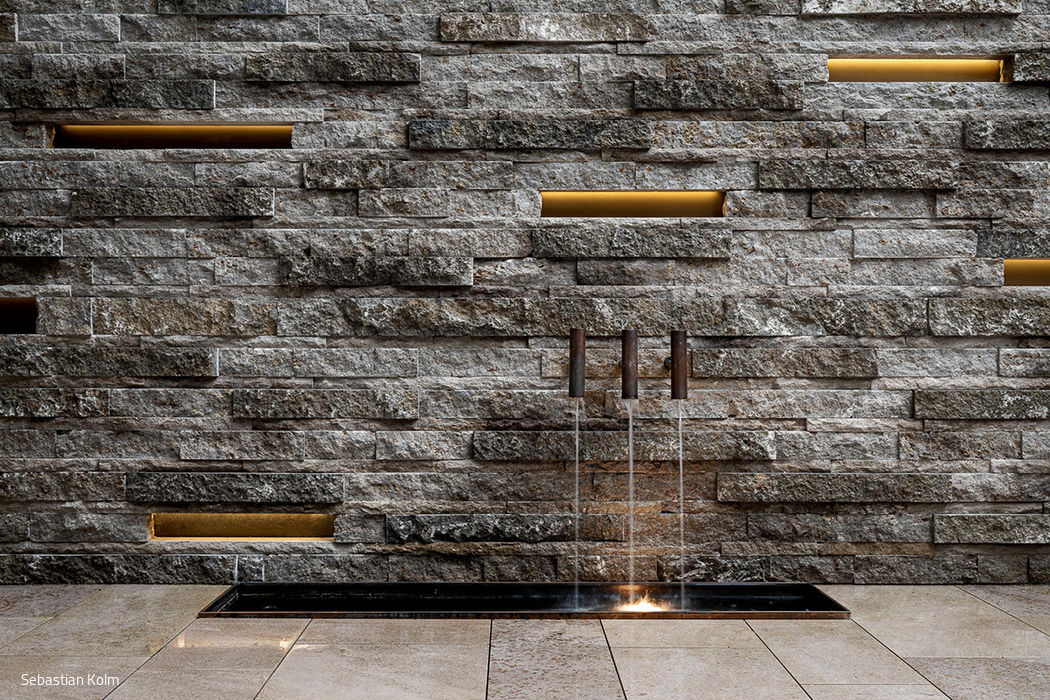
The whimsical name "Elfengarten" speaks volumes: this is a carefully orchestrated wilderness, though no actual elves reside here. Rather, the name celebrates the creative vision behind the thoughtful selection and arrangement of plants throughout the garden. Elfengarten is the work of landscape and architectural designer Stephan Maria Lang, whose distinctive approach sets him apart—he develops his buildings organically from the gardens themselves, treating architecture as the natural completion of the landscape.
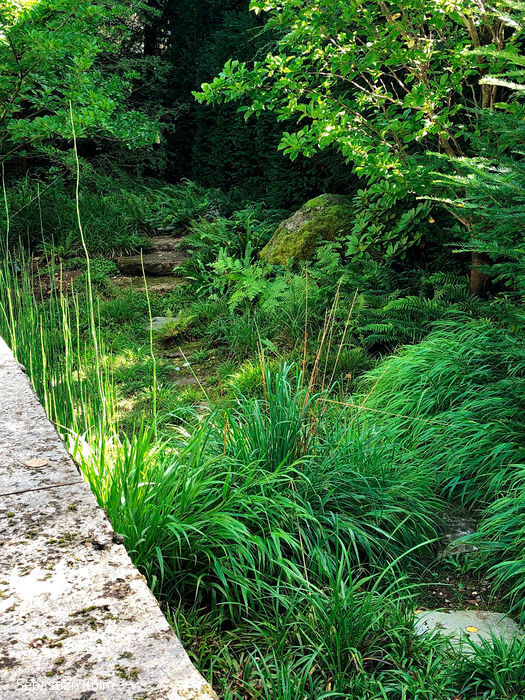
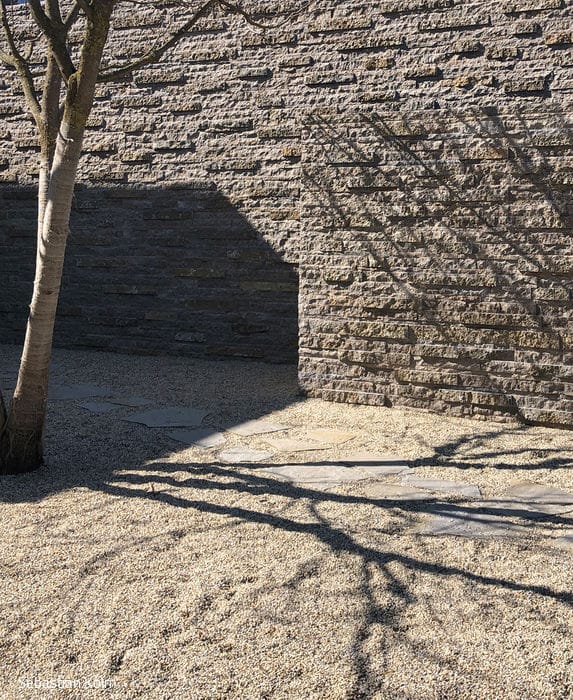
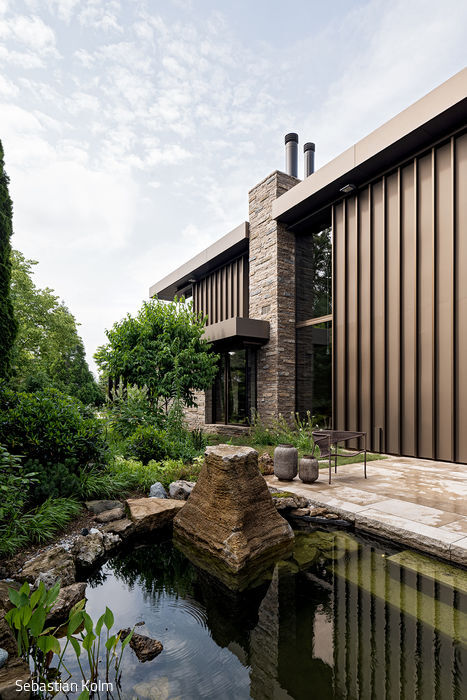
Elfengarten transformed a vacant lot in Grünwald into something magical. From an empty canvas, Stephan Maria Lang choreographed a sophisticated interplay of traditional and rare plantings. Natural stone walls, subtly offset from one another, divide the garden into distinct zones flowing like a sequence of interconnected rooms. The journey begins at the entrance gate, where a gravel plaza serves as a transitional threshold—this is where the outside world falls away and a new realm unfolds. A sculptural, multi-stemmed trumpet tree (Catalpa) stands as guardian. Stepping stones guide visitors through the entrance gorge toward the fairy gate on the western boundary, leading ultimately to the sunken courtyard with its water feature. House and garden are conceived as a unified sequence of interior and exterior spaces, each with its own purpose, all aligned with feng shui principles.
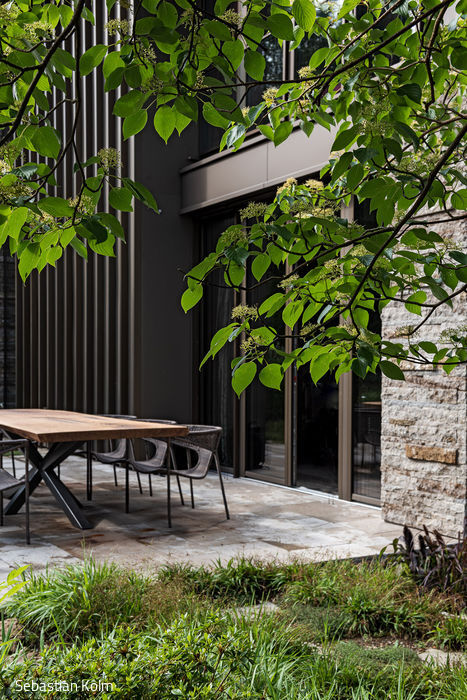
The planting scheme was developed in collaboration with landscape gardener Franz Wieland. The design hinges on a strategic placement of ten specimen trees that create clear sight lines, screen unwanted views, and blur the property boundaries through vegetation. In the northeast garden, ferns and bluebells flourish beneath the canopy, with carpet thyme blanketing the ground. The southeastern corner features nine-meter-high established thujas, creating an intimate, barely walkable space dedicated to the water element in feng shui practice. From the central fountain courtyard, a pathway descends to an indoor pool below. The western garden shifts the mood entirely—a grass garden punctuated by mowed clearings. A sheltered dining terrace edges a grounded faun pond ringed with substantial natural stones, screened by seven-sons-of-heaven shrubs (Heptacodium miconioides) and anchored by a central dogwood (Cornus), with snow marbel (Luzula nivea) and Japanese mountain grass (Hakonechloa macra) as verdant ground layers. Should elves truly exist, this garden would certainly enchant them.
Photography Credits:
Sebastian Kolm
www.sebastiankolm.de
(Published in CUBE Munich 02|22)
Worth Following
Office and Commercial Buildings: A Blueprint for Sustainable Design
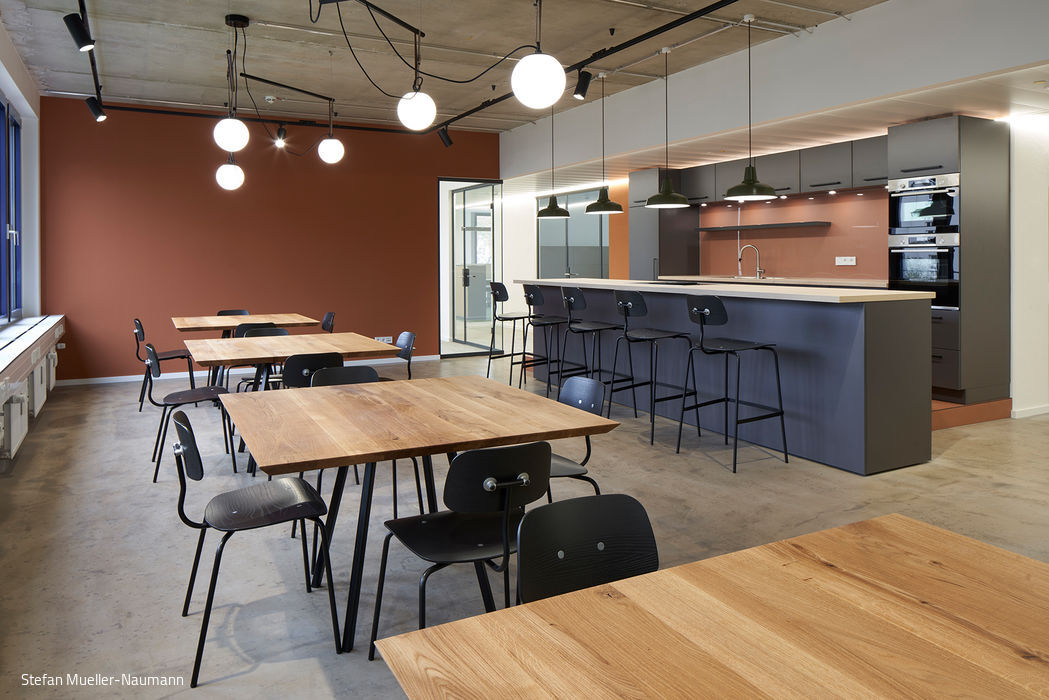
Office with "Marketplace"
An office concept that reimagines New Work with thoughtful design solutions
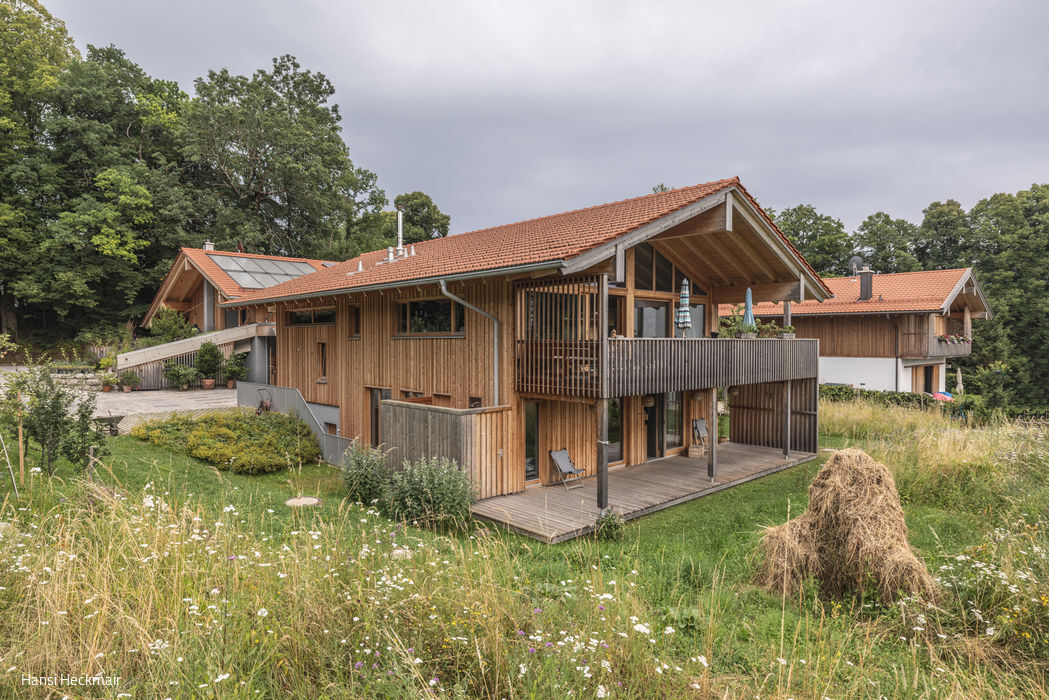
Farm 2.0
Three buildings—one ensemble—for living and working
Old and New for Young and Old
Restoring a Heritage Vicarage: Creating a Gathering Place for All Generations